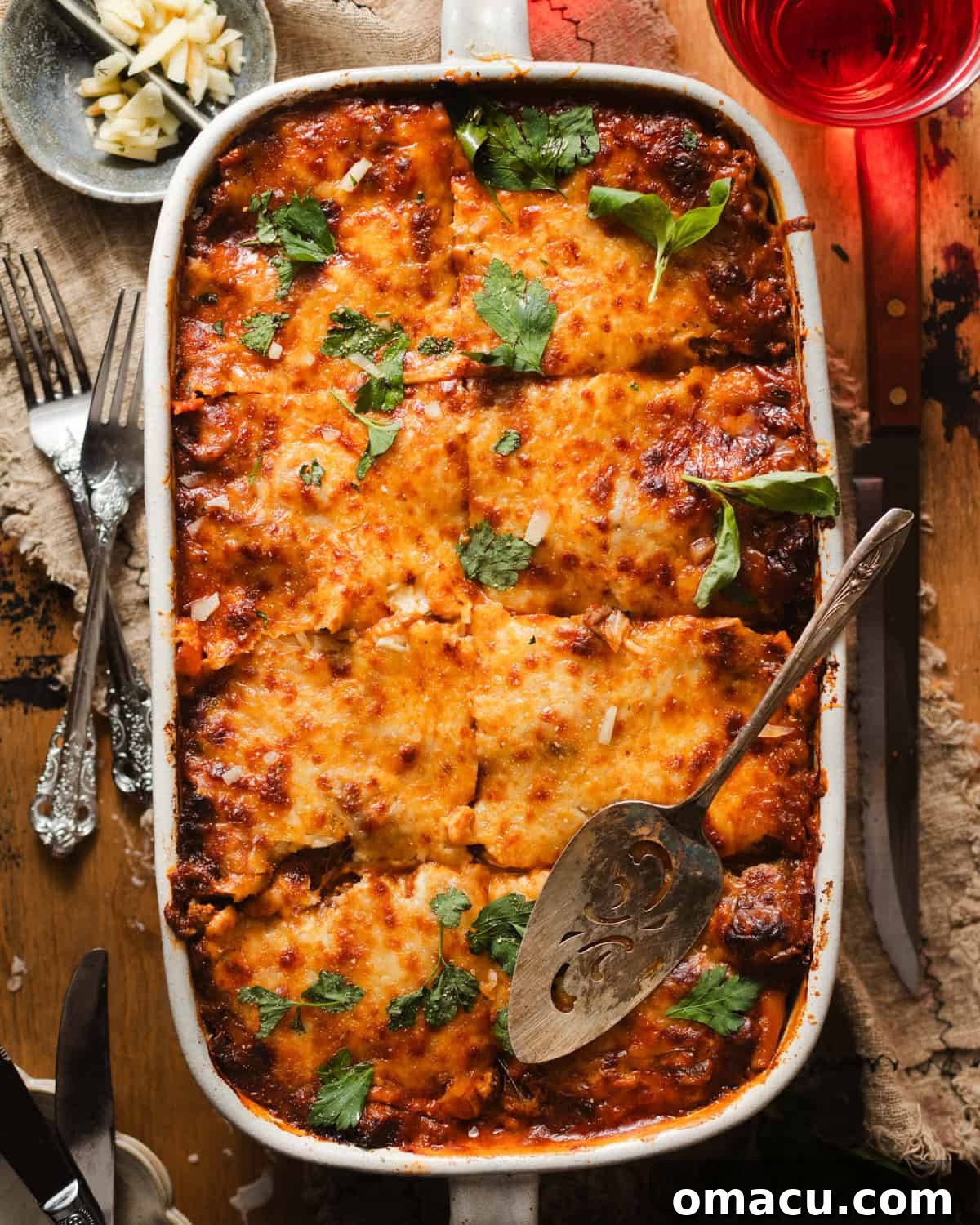
Lasagna alla Bolognese is more than just a dish; it’s a culinary journey to the heart of Italy, a symphony of rich and savory Bolognese sauce, velvety béchamel, and perfectly tender pasta sheets. Baked to a bubbly, golden perfection, this traditional lasagna recipe stands as the epitome of Italian comfort food, promising to transport your taste buds straight to the Emilia-Romagna region.
For those eager to explore more Italian-inspired culinary delights, be sure to try my Short Rib Bolognese, Baked Ziti with Ricotta, and the truly Authentic Italian Tiramisu. Each recipe offers a unique taste of Italy, prepared with love and authentic flavors.
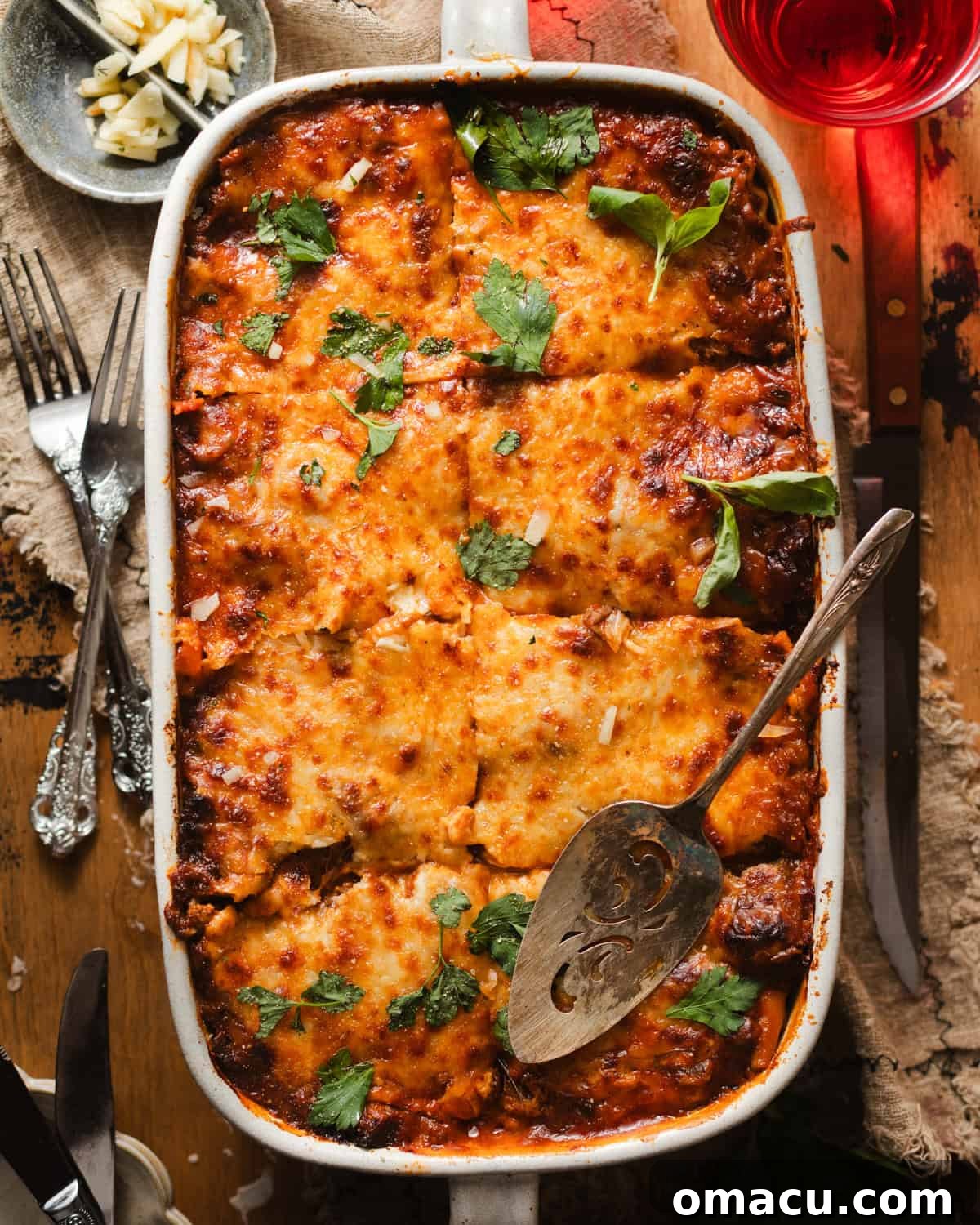
Lasagna Bolognese holds an incredibly special place in my heart, especially as the holiday season approaches. It’s a cherished tradition passed down through generations. I have vivid memories of my mom meticulously preparing this magnificent lasagna for our Christmas Eve dinner, always accompanied by warm, homemade cheesy garlic bread and a light side salad. After our satisfying meal, we’d gather to bake Christmas cookies for Santa, eventually drifting off to bed with full bellies and hearts brimming with happiness. This dish isn’t just food; it’s a profound connection to family, tradition, and pure joy.
Drawing deep inspiration from the culinary traditions of Emilia-Romagna, a region celebrated as the gastronomic heart of Northern Italy, this dish perfectly encapsulates everything comforting and soulful about Italian cuisine. With its meticulously crafted layers of delicate, tender pasta sheets, a slow-simmered, rich Bolognese ragù, and a lusciously creamy béchamel sauce, every single bite offers a profound sense of meaning, purpose, and an explosion of exquisite flavor. The masterful balance between the hearty meat sauce and the smooth, subtly spiced white sauce creates a harmonious experience that is utterly unforgettable.
The crowning glory of this magnificent dish is the final touch of freshly grated Parmigiano-Reggiano cheese. As it melts into a golden, bubbling crust during baking, it imparts an unparalleled depth of nutty, salty flavor and a wonderfully irresistible texture. This perfect cheesy topping is truly the highlight of each bite, transforming the lasagna into a grand feast, ideal for any special occasion or whenever you desire to indulge in truly exceptional food.
Today, I proudly uphold this beautiful tradition, preparing this authentic Bologna-style lasagna for my own family. I pour the same dedication, love, and meticulous care into every single step, ensuring that each iteration carries the warmth and flavor of my childhood memories. Preparing it is a genuine labor of love, from the patient hours spent perfecting the deeply flavorful ragù to the precise and careful assembly of each delicate layer. It’s far more than just a meal; it’s a powerful way to bring everyone together around the table, fostering connection and honoring the festive spirit. Serving this cherished dish evokes those precious childhood moments, and it is my heartfelt hope to pass down the joy and rich culinary heritage of this tradition for many, many years to come.
Table of Contents
- Key Ingredients for the Best Lasagna
- Substitutions and Variations
- How to Make Lasagna Alla Bolognese
- Pro Chef Tips
- How to Serve Lasagna Bolognese
- Recipe FAQs
- More Italian Inspired Recipes
- Lasagna Alla Bolognese Recipe Card
Key Ingredients for the Best Lasagna
Crafting a truly exceptional Lasagna alla Bolognese begins with selecting the finest ingredients. Each component plays a vital role in building the dish’s complex layers of flavor and texture:
- Ground Beef and Ground Pork: An authentic Bolognese sauce traditionally features a blend of ground beef and ground pork. This combination is crucial as it creates a balanced, deeply meaty base. The pork adds richness and moisture, while the beef contributes a robust flavor, ensuring the ragù is hearty without being overly heavy, complementing the creamy béchamel beautifully.
- Pancetta or Bacon: For an unparalleled depth of savory flavor, pancetta is the traditional choice, lending a subtle, cured meat essence. However, if pancetta is difficult to find at your local grocery store, high-quality thick-cut bacon can serve as an excellent substitute, providing a similar smoky, salty foundation to the sauce.
- Crushed Tomatoes: These are used to impart a delicate tomato flavor and a touch of acidity to the Bolognese. The crushed tomatoes form the essential backbone of the sauce without overwhelming the rich meat flavors, allowing them to shine through. Choose good quality Italian crushed tomatoes for the best results.
- Sofrito: This aromatic base is fundamental to Italian cooking. It comprises finely diced celery, onions, and carrots, slowly cooked in olive oil until softened and slightly caramelized. Alongside this traditional trio, we incorporate tomato paste, minced garlic, and the crushed tomatoes mentioned above. This flavorful blend is the heart and soul of the meat ragù, providing a complex and sweet foundation.
- Fresh Herbs: To infuse the ragù with an abundance of vibrant flavor, we use a carefully selected bouquet of fresh herbs: thyme, bay leaf, sage, parsley, and rosemary. Tying these herbs together with butcher’s twine (or unflavored dental floss) creates a convenient sachet that can be easily removed after cooking, preventing loose herb bits in the sauce while imparting maximum aroma and taste.
- Red Wine: A dry red wine is indispensable for adding extra body, complexity, and a profound savory depth to the sauce. It deglazes the pan, capturing all the browned bits of flavor, and then slowly reduces, concentrating its rich notes into the Bolognese, making it undeniably delicious. Opt for a Sangiovese or a good quality Merlot.
- Cheeses: A masterful blend of cheeses is key to the ultimate lasagna experience. Parmigiano-Reggiano, ideally freshly grated, offers the best texture and an intense, nutty, umami flavor that is characteristic of authentic Italian cooking. High-quality mozzarella cheese (preferably fresh or low-moisture, whole-milk) provides that glorious, irresistible meltiness, allowing the intricate flavors of the Bolognese and béchamel to remain the stars of the dish.
- Lasagna Sheets: The choice of pasta is paramount for the ideal lasagna. For truly traditional Lasagna alla Bolognese, fresh spinach pasta sheets or homemade pasta are superior, providing an exquisite, tender texture and absorbing the sauces beautifully without the need for precooking. For convenience, no-boil dried noodles offer a time-saving alternative. However, if using regular dried sheets (which I often do), ensure they are cooked al dente—just slightly firm—to prevent them from becoming mushy during the extended baking process.
Substitutions and Variations
While the classic Lasagna alla Bolognese recipe is a masterpiece in itself, don’t hesitate to personalize it to suit dietary needs or ingredient availability:
- Gluten-Free: Easily adapt this recipe by using gluten-free lasagna pasta noodles. For a low-carb alternative that’s also naturally gluten-free, thin slices of zucchini can be used in place of pasta sheets, adding a fresh, slightly crisp texture.
- Vegan Lasagna Bolognese: For a completely dairy-free and meatless version, you can craft a delicious vegan lasagna. Substitute the ground meats with plant-based ground meat alternatives or nutrient-rich lentils. For the béchamel, use a plant-based milk such as almond or oat milk, and finish the layers with your favorite vegan cheese.
- Pancetta Substitute: If authentic pancetta is unavailable, high-quality bacon is an excellent and readily accessible substitute. The smoky, salty notes of bacon will still contribute a wonderful depth of flavor to your Bolognese sauce.
- Vegetarian Bolognese: Aside from the vegan option, a hearty vegetarian Bolognese can be made using a mix of finely chopped mushrooms, walnuts, and lentils as a meat substitute, simmered in the same rich tomato and sofrito base.
- Spice Level: Adjust the amount of red pepper flakes to your preference. For a spicier kick, increase the quantity; for a milder flavor, reduce or omit them.
How to Make Lasagna Alla Bolognese
Creating this magnificent dish is a journey of patience and passion, yielding rewards that are truly worth every step. Follow these detailed instructions to achieve a perfect Lasagna alla Bolognese.
Prepare the Bolognese Sauce (Ragù)
The Bolognese is the heart of this lasagna, so taking your time here is crucial for developing deep, rich flavors.
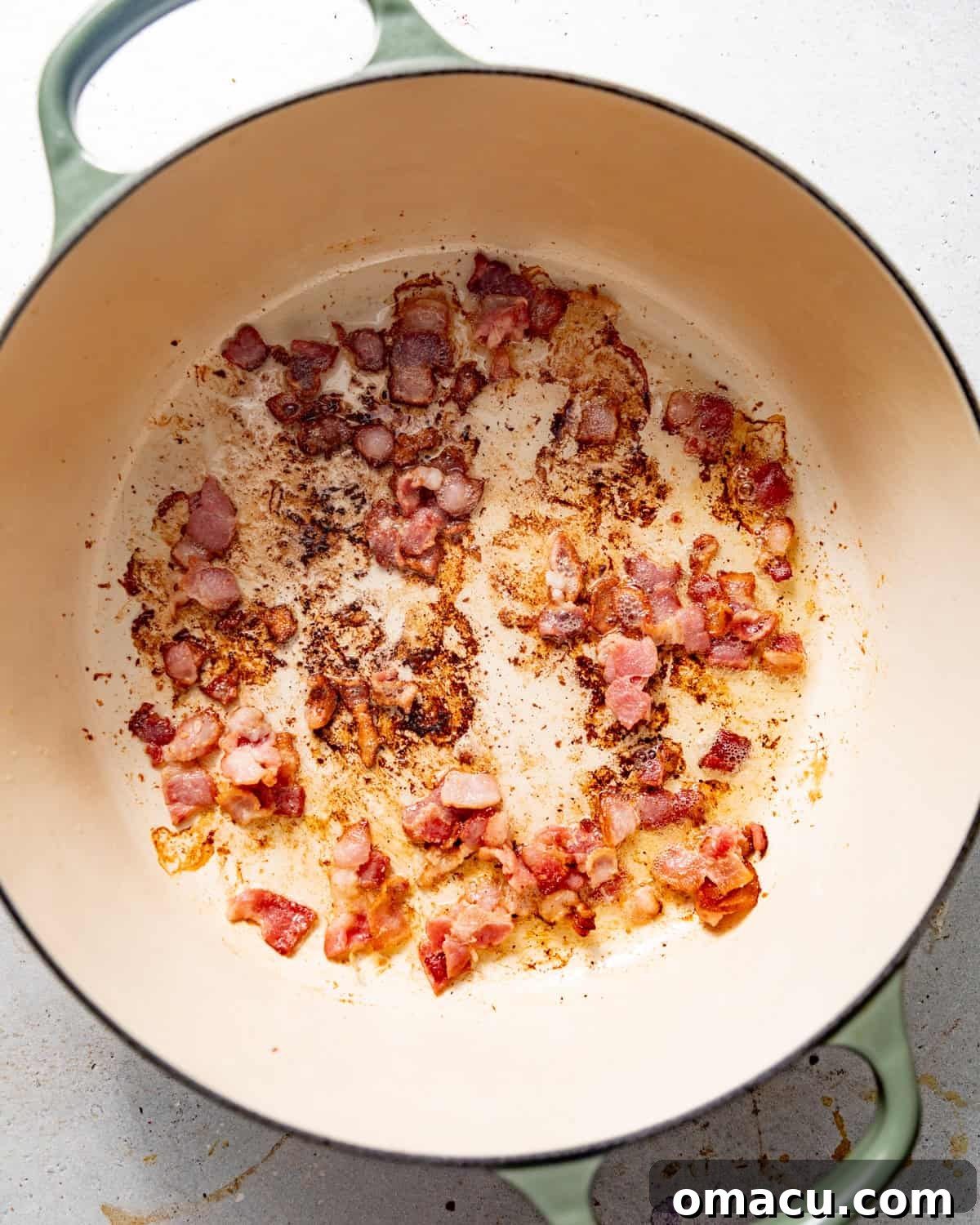
Step 1: Begin by finely chopping the pancetta or bacon. Add these savory bits to a large Dutch oven or a heavy-bottomed pot over medium heat. Cook for 8-10 minutes, stirring occasionally, until the bacon or pancetta is beautifully crisp and has rendered out its flavorful fat. This fat will be the foundation for cooking your sofrito.
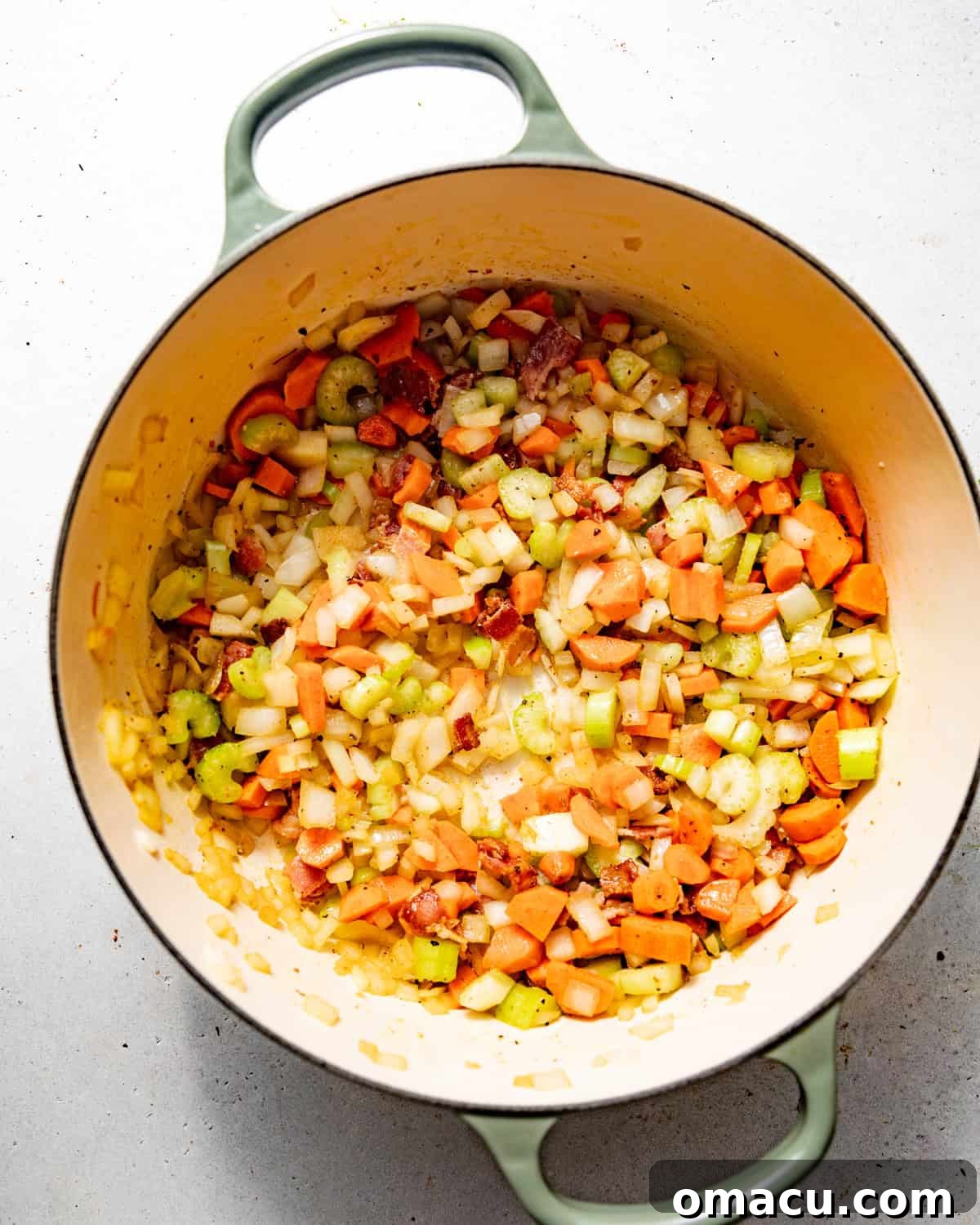
Step 2: Into the rendered fat, add your finely diced onion, carrots, and celery – your classic Italian sofrito. Continue to cook, stirring frequently, for about 5-7 minutes. The goal is for the vegetables to soften and begin to lightly brown, releasing their natural sweetness and building the aromatic base of your sauce. Don’t rush this step; patience here is key to flavor development.
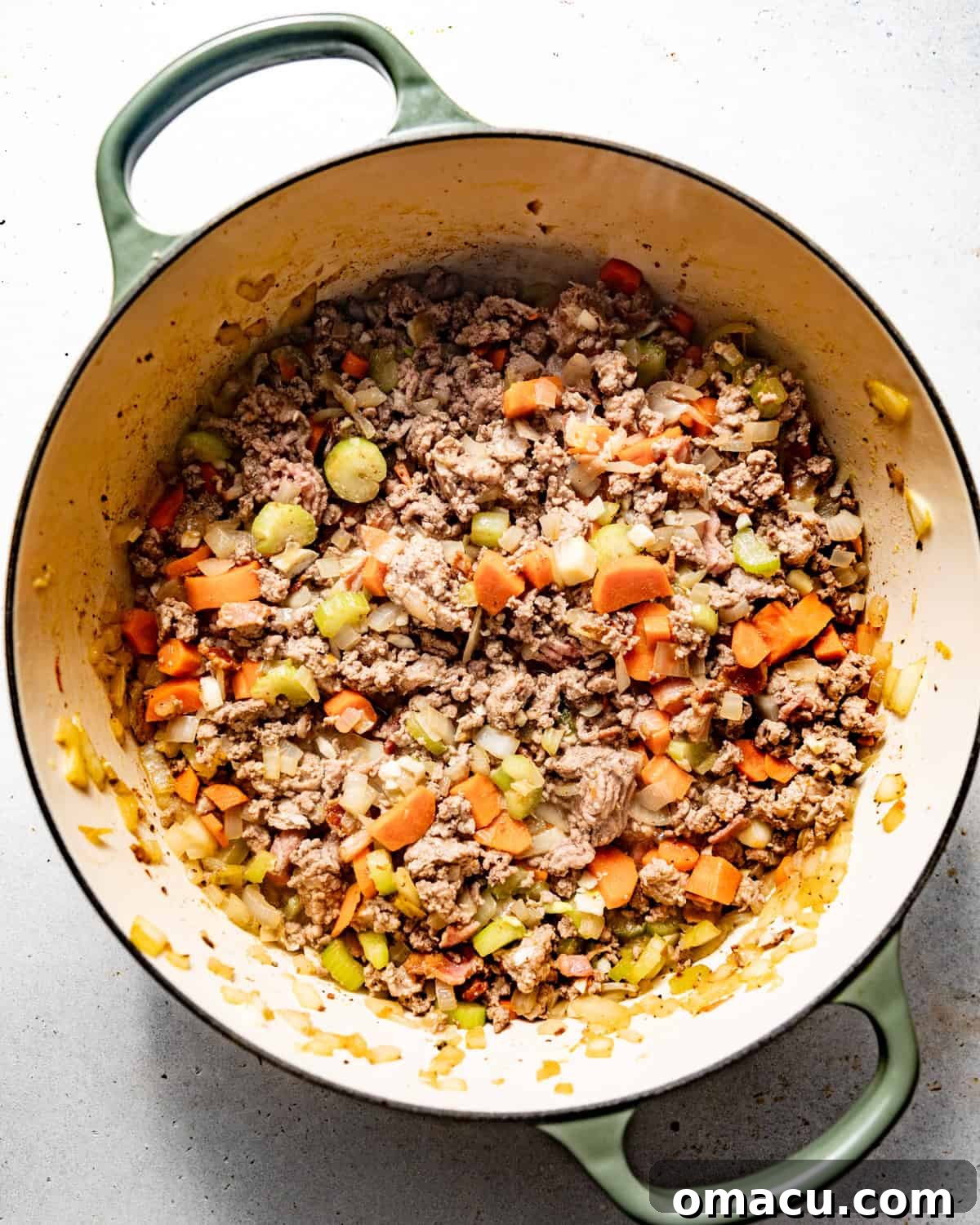
Step 3: Now, add the ground beef and ground pork to the pot. Break up the meat with a wooden spoon and cook until it is no longer pink, stirring occasionally to ensure even browning. Drain any excess fat if necessary. Once browned, stir in the minced garlic, tomato paste, red pepper flakes (if using), and a pinch of nutmeg. Cook for another 3-5 minutes, stirring constantly, allowing the tomato paste to caramelize slightly and coat the meat, and until the garlic becomes fragrant. This step deepens the tomato flavor significantly. Next, pour in the crushed tomatoes and the dry red wine. Use your wooden spoon to vigorously scrape up any browned bits that have accumulated on the bottom of the pan; this process, known as deglazing, incorporates a tremendous amount of flavor into your sauce.
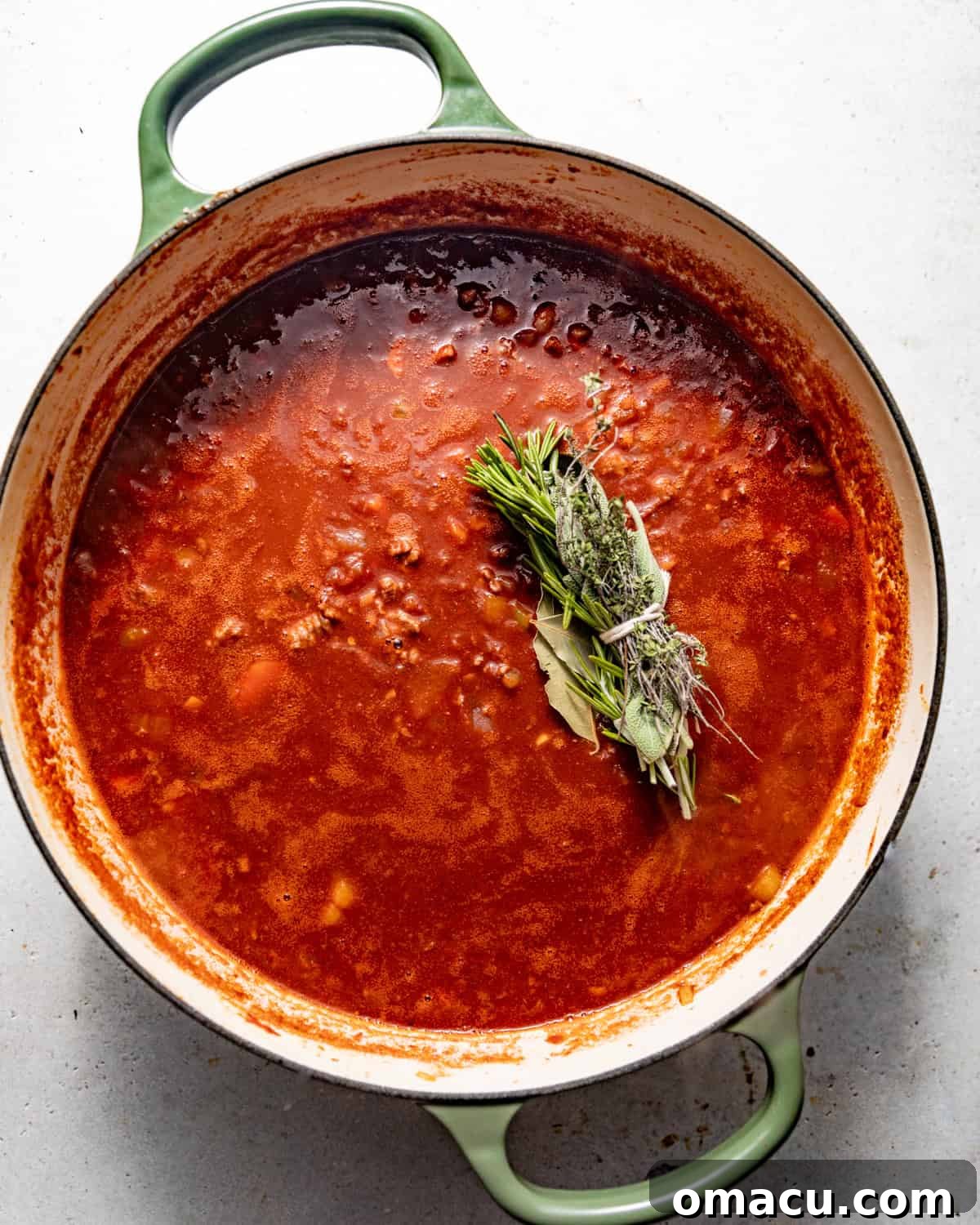
Step 4: Gather your fresh herbs (thyme, rosemary, sage, parsley) and tie them together securely with butcher’s twine – this makes them easy to remove later. Add this herb bundle along with the bay leaves and, optionally, a parmesan rind (which will melt and add even more umami) to the pot. Bring the sauce to a gentle boil, then immediately reduce the heat to low, cover partially, and let it simmer for a minimum of 70-90 minutes, or even longer for a richer flavor. As the Bolognese sauce slowly cooks down, you may notice a flavorful ring forming on the sides of the pan. Be sure to occasionally scrape this down and stir it back into the sauce, as these concentrated bits are packed with incredible flavor that will enhance the final dish. A longer simmer means a more developed and harmonious ragù.
Make the Bechamel Sauce
The creamy béchamel is the perfect counterpoint to the rich Bolognese, adding a delicate, smooth layer to the lasagna.
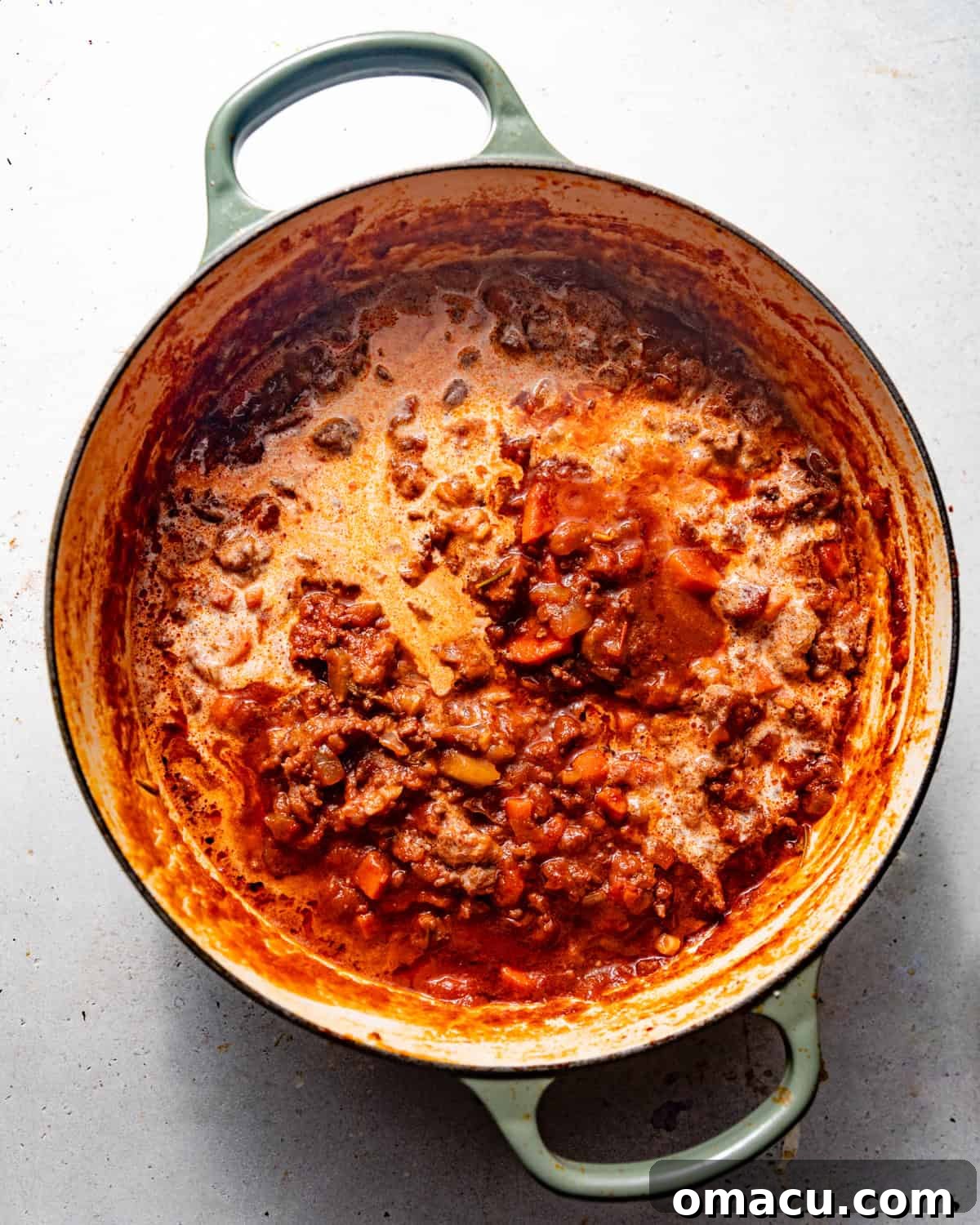
Step 5: Once your Bolognese sauce has simmered to perfection and reached your desired depth of flavor, remove the herb bundle and parmesan rind (if used). Stir in the heavy cream, a cup of freshly grated parmesan cheese, and the chopped fresh parsley. Mix until everything is well combined and the cream is fully incorporated into the sauce. Remove the pot from the heat and set the Bolognese aside, ready for assembly.
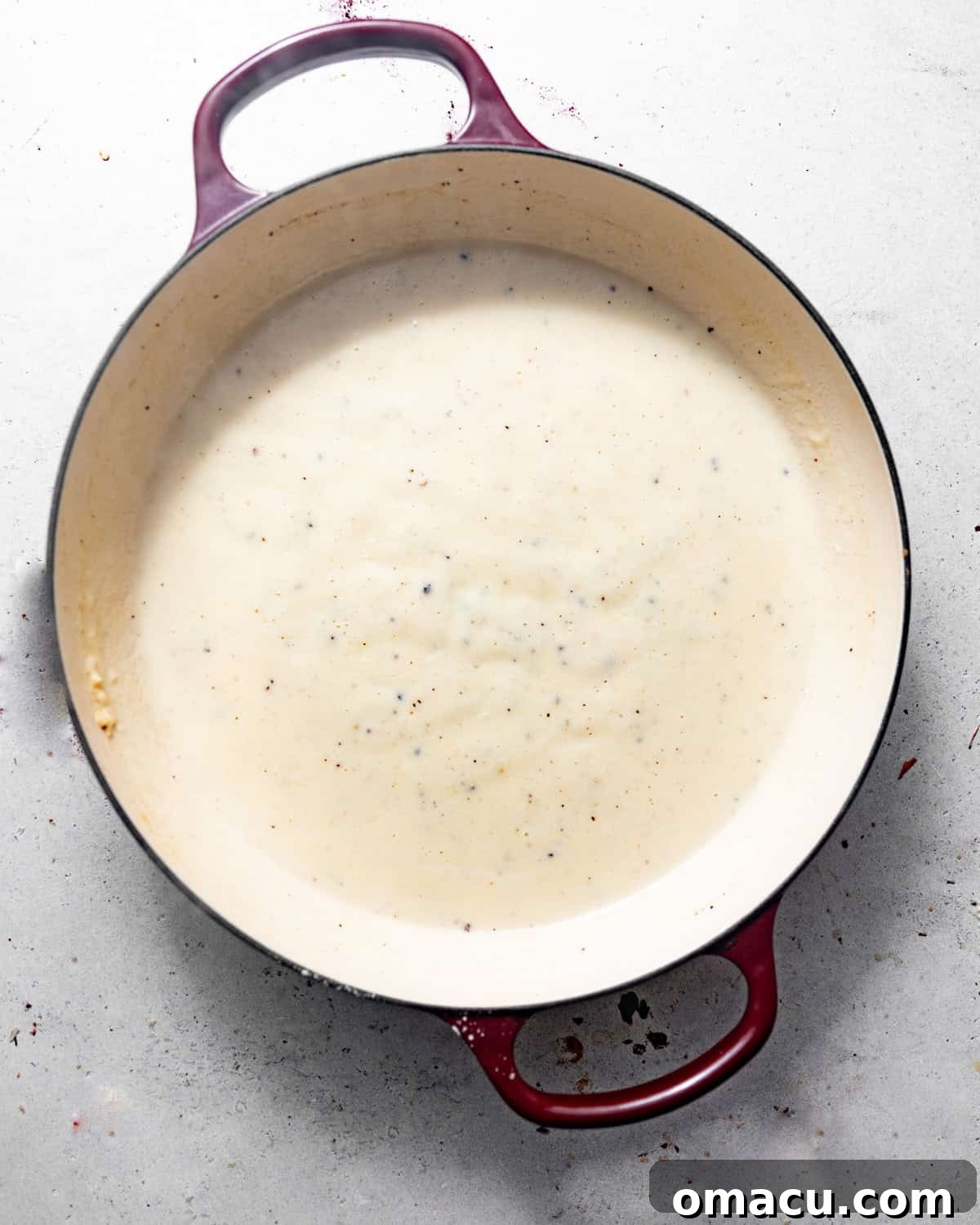
Step 6: Now, prepare the béchamel sauce. In a separate large skillet or saucepan, melt the butter over medium heat. Once the butter is completely melted and slightly bubbling, add in the all-purpose flour. Whisk constantly for 2-4 minutes, cooking out the raw flour taste, until the mixture forms a smooth, thick paste, known as a roux. Slowly begin to pour in the whole milk, adding about 1 cup at a time, whisking vigorously after each addition to prevent any clumps from forming. Continue whisking until all the milk is incorporated and the sauce is smooth. Add a bay leaf to the sauce and continue to cook, stirring frequently, for another 5-7 minutes, allowing the sauce to thicken to a luxurious, pourable consistency. Finally, remove the bay leaf, then stir in the grated parmesan cheese, nutmeg, salt, and black pepper. Taste and adjust seasoning as needed. Remove from heat and set aside.
Assemble the Lasagna
This is where all your hard work comes together, layer by delicious layer.
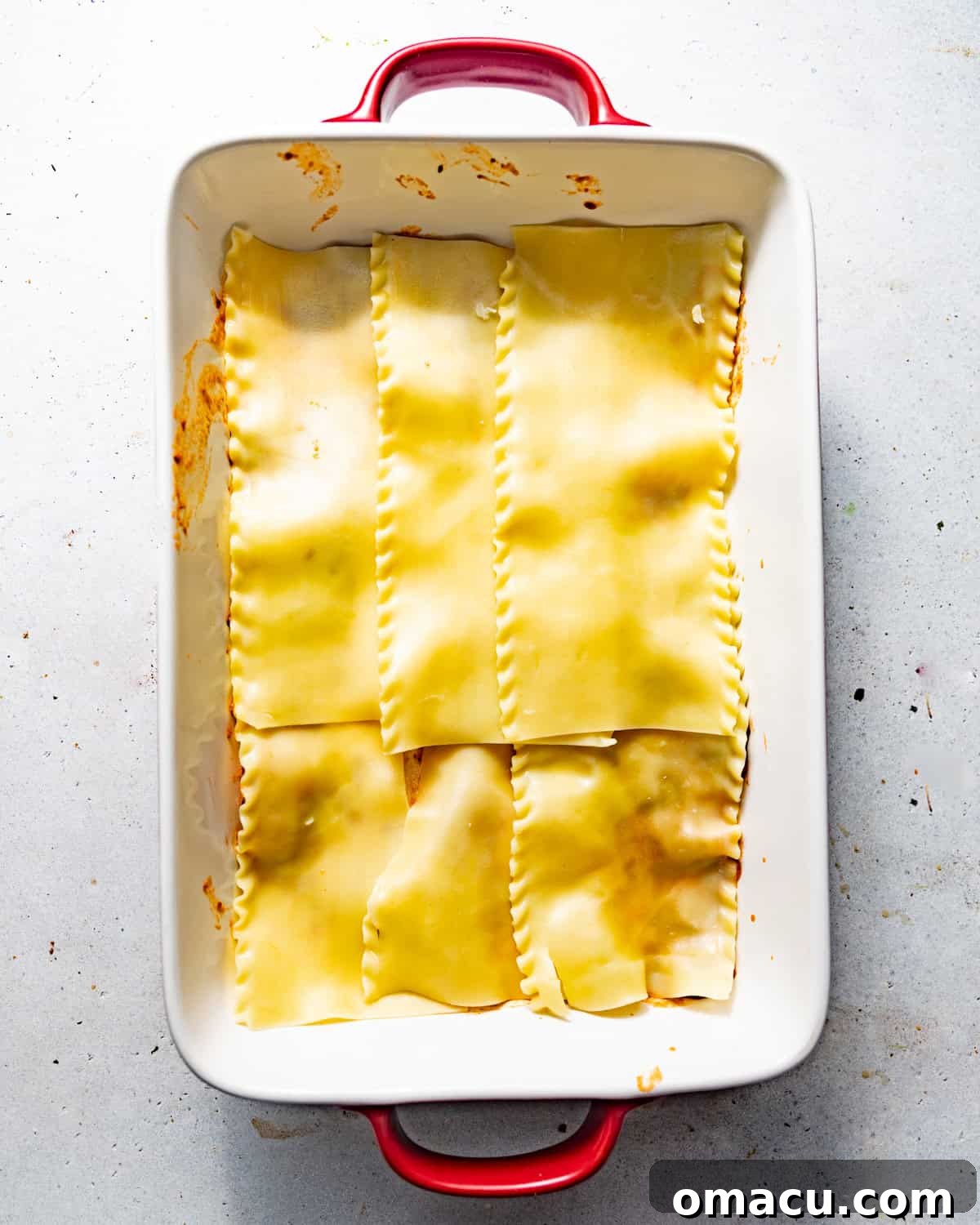
Step 7: If using regular dried lasagna noodles, bring a large pot of salted water to a boil and cook the noodles until al dente, according to package instructions. Drain and lay them flat on parchment paper to prevent sticking. To begin assembly, spread a thin, even layer of the prepared Bolognese sauce onto the bottom of a large lasagna dish (a 9×13 inch dish works well, though you might have some sauce leftover for serving with garlic bread or pasta if it’s too generous). This initial layer prevents the pasta from sticking and provides a flavorful base.
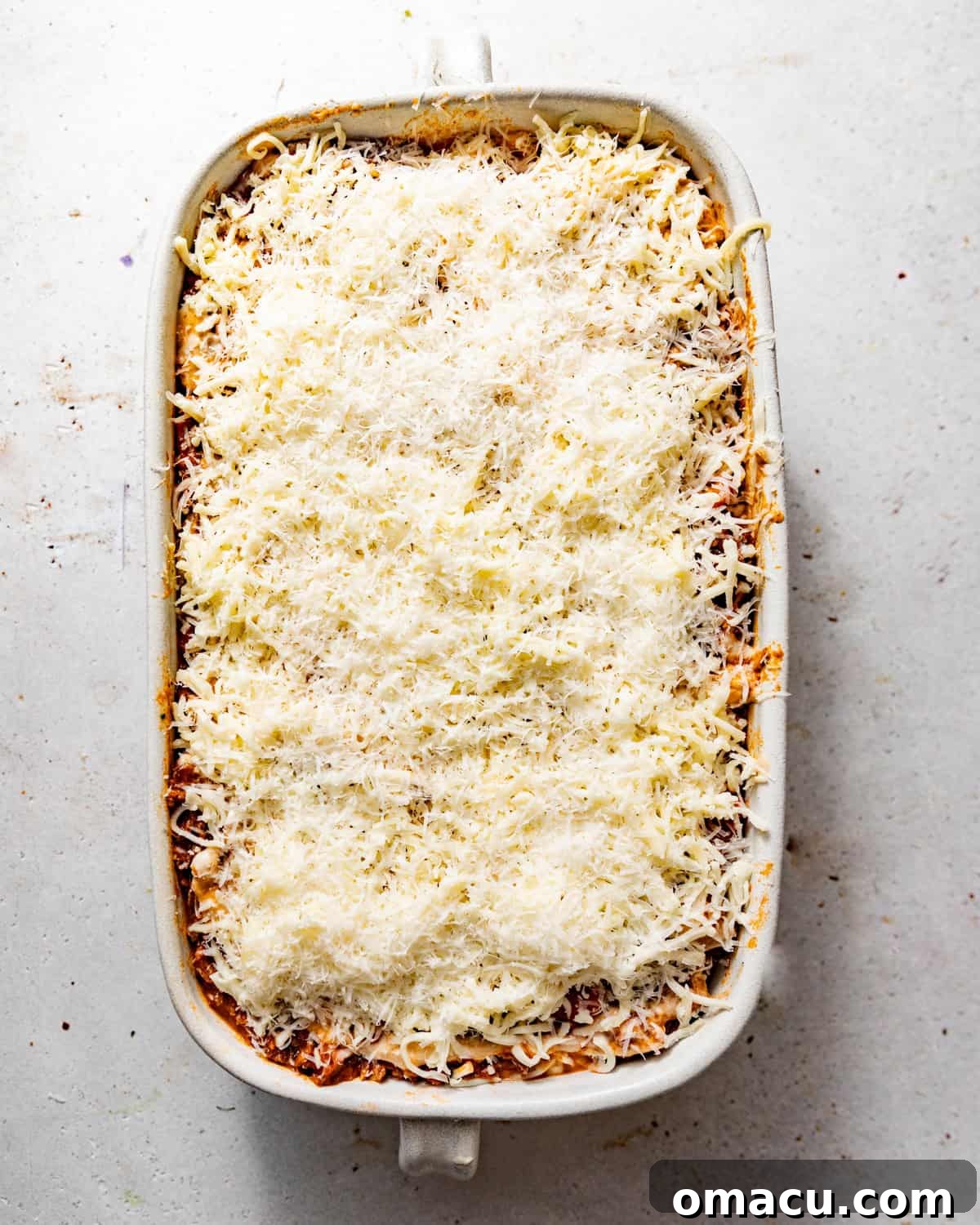
Step 8: Carefully place a single layer of lasagna noodles over the Bolognese sauce, ensuring the entire sauce layer is covered. Spoon approximately half of the remaining Bolognese sauce evenly over the noodles. Generously sprinkle a combination of freshly grated mozzarella and parmesan cheese over the meat sauce. Place another layer of noodles on top, completely covering the cheese and sauce. Now, spoon half of the creamy béchamel sauce over this noodle layer and sprinkle with more cheese. Repeat this layering process: noodles, remaining Bolognese, cheese, then another layer of noodles, and finally the remaining béchamel sauce. Finish the very top layer with a truly generous amount of both mozzarella and parmesan cheese for that irresistible golden crust.
Let it Rest, Then Bake!
This crucial resting step is what truly elevates your lasagna from good to magnificent.
Step 9: Once fully assembled, cover the lasagna dish tightly with aluminum foil. Place it into the refrigerator for at least 8-12 hours, or ideally, overnight. This resting period is not merely for convenience; it’s a vital step that allows the diverse flavors of the Bolognese, béchamel, and cheeses to thoroughly meld and deepen. Furthermore, the pasta sheets will absorb the moisture from the sauces, becoming perfectly hydrated and preventing the lasagna from falling apart when sliced after baking. This results in a cohesive, flavorful, and beautifully structured lasagna.
Finally, time to bake! Preheat your oven to 375 degrees F (190 degrees C). Before baking, remove the lasagna from the refrigerator and let it sit at room temperature for about 20-30 minutes to take the chill off. This helps ensure even baking. Place the covered lasagna on the middle rack of the oven and bake for 45 minutes. Then, carefully remove the aluminum foil and continue to bake for another 15-20 minutes, or until the edges are golden and crisp, and the cheese on top is bubbling beautifully. For an extra golden-brown and crispy top, you can broil it for 2-3 minutes, keeping a very close eye on it to prevent burning. Once out of the oven, allow the lasagna to cool and rest for at least 15-20 minutes prior to cutting into it. This resting time is essential for the layers to set properly, ensuring clean, perfect slices and preventing the lasagna from collapsing.
Pro Chef Tips for the Perfect Lasagna
Achieving a truly outstanding Lasagna alla Bolognese involves attention to a few key details that professional chefs often swear by:
- Don’t Skimp on the Parmesan: The quality of your Parmigiano-Reggiano significantly impacts the final flavor. Invest in a high-quality wedge and grate it fresh just before use. Pre-grated parmesan often contains anti-caking agents that can affect texture and flavor. Freshly grated Parmigiano-Reggiano provides a sharper, nuttier, and more authentic taste, creating a superior cheesy layer that truly stands out.
- Consider Fresh Pasta: If you have access to fresh pasta sheets, or are ambitious enough to make your own, I highly recommend using them. Fresh pasta is generally more tender and porous than dried varieties, meaning there’s often no need to pre-boil them before assembling the lasagna. They absorb the rich sauces better during baking, resulting in an incredibly silky and tender texture that is truly unparalleled. Look for fresh lasagna noodles for the best possible outcome.
- Layer Thoughtfully for Structural Integrity and Flavor: The order and distribution of your layers are crucial. Always start with a thin layer of Bolognese sauce at the very bottom of your baking dish. This prevents the first layer of pasta from sticking and ensures it bakes evenly. Alternate your layers meticulously: pasta, followed by a generous coating of rich Bolognese, then a sprinkle of cheese, another layer of pasta, followed by creamy béchamel, and more cheese. Finish the very top layer with béchamel and a liberal sprinkle of Parmesan cheese. This final cheesy layer will bake into a beautiful, crisp golden crust, adding wonderful texture.
- The Overnight Rest is Non-Negotiable: This is arguably the most important “make-ahead” tip for lasagna. Allowing the assembled lasagna to rest in the refrigerator overnight (for at least 8-12 hours) is transformative. This extended rest period gives all the ingredients ample time for their flavors to thoroughly meld and deepen, creating a more harmonious and complex taste profile. Crucially, the pasta sheets will fully absorb the moisture from both the Bolognese and béchamel sauces, resulting in perfectly tender pasta and a cohesive dish that is much easier to slice neatly after baking, preventing a crumbly mess.
- Use a Deep Pan: Opting for a deeper baking pan (such as a large roasting pan or a specialty lasagna pan) allows you to build more layers. More layers mean a richer, more satisfying, and visually impressive dish. If you are using a standard 9×13 inch baking dish, which can sometimes be less deep, it’s a good practice to place it on top of a larger baking sheet before putting it in the oven. This precaution will catch any potential overflow from the bubbling sauces, preventing them from seeping onto the bottom of your oven and causing a burnt mess.
How to Serve Lasagna Bolognese
When presenting your magnificent Lasagna alla Bolognese, carefully consider complementary flavors and textures to create a truly memorable meal. The richness of the lasagna can be beautifully balanced with fresh, bright notes and hearty accompaniments.
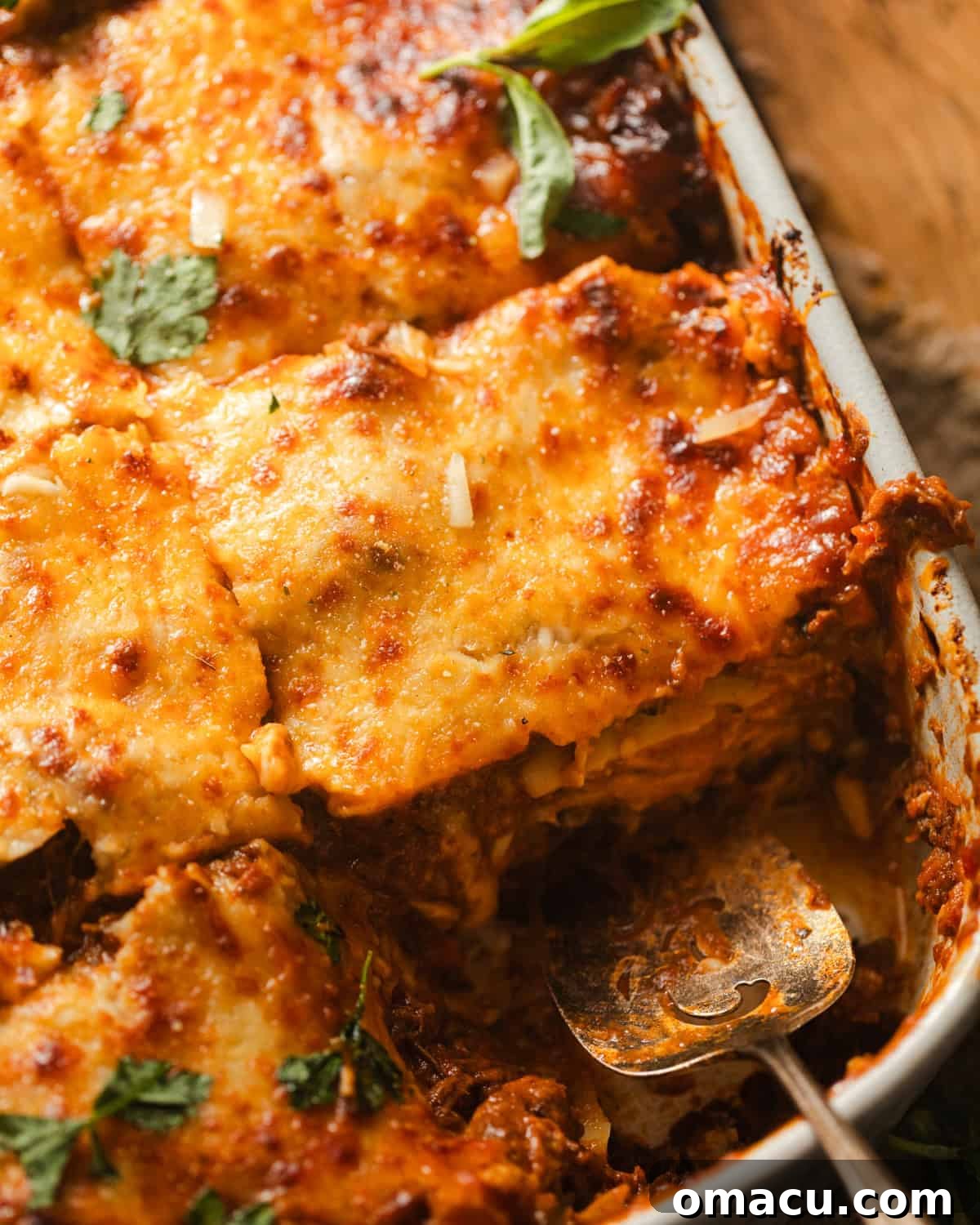
A classic, crisp Caesar salad, with its tangy dressing and crunchy croutons, offers a refreshing contrast to the hearty lasagna. Alongside this, no Italian-inspired feast is complete without garlic bread. Its warm, buttery, and garlicky goodness is not only a delicious pairing but also perfect for sopping up any extra remnants of the luscious Bolognese sauce from your plate.
For a truly elaborate and complete meal, consider making the Bolognese lasagna the main event and precede it with delightful appetizers. Elegant charcuterie skewers and fresh bruschetta with mozzarella offer a sophisticated start, perfectly complementing the meal to come. For side dishes, consider serving vibrant roasted green beans or a light and refreshing panzanella salad, which adds a wonderful textural element with its crusty bread and fresh tomatoes.
To conclude your magnificent meal, opt for a light and traditional Italian dessert. Classics such as an indulgent tiramisu, a silky smooth panna cotta, or a refreshing gelato are perfect choices. These desserts provide a sweet, satisfying finish without overwhelming your guests after the rich main course. The ultimate goal is to select sides, appetizers, and desserts that enhance the lasagna’s star-quality flavors rather than overpowering them, ensuring a harmonious and unforgettable dining experience.
Wine Pairing
Pairing the right wine with Lasagna Bolognese can significantly elevate your dining experience. The rich, meaty flavors of the Bolognese and the creamy béchamel call for a wine that can stand up to its intensity and complement its savory notes. Medium to full-bodied red wines are typically the best choice.
A classic and highly recommended choice is a Chianti Classico. This Tuscan wine, primarily made from Sangiovese grapes, offers bright acidity, firm tannins, and earthy undertones. Its acidity beautifully cuts through the richness of the meat and cheese, cleansing the palate with each bite. For a bolder and more robust option, consider a Barolo or Barbaresco. Both hail from Piedmont and are crafted from Nebbiolo grapes, renowned for their powerful tannins, high acidity, and complex notes of cherry, rose, and leather. These wines are perfect for special occasions and will provide an unforgettable pairing.
If you prefer something a bit more accessible or with a fruitier profile, a well-structured Malbec from Argentina or a zesty Californian Zinfandel can also work wonderfully. Malbec offers dark fruit flavors and a smooth finish, while Zinfandel brings notes of blackberry, pepper, and a touch of spice, both providing a delightful depth that balances the savory elements of the lasagna beautifully.
Recipe FAQs
Lasagna alla Bolognese, originating from the Emilia-Romagna region, distinguishes itself by using a slow-cooked, rich Bolognese sauce (ragù) made with a blend of meats (typically beef and pork), and layers of delicate, creamy béchamel sauce between the pasta sheets. Traditional Italian versions rarely feature ricotta cheese. Classic lasagna, particularly American-style versions, often incorporates a heartier, more tomato-centric meat sauce and primarily relies on ricotta or cottage cheese, along with mozzarella, to create its distinct cheesy profile. With Bolognese lasagna, the focus is on the savory depth of the ragù and the elegant creaminess of the béchamel, resulting in a more balanced and refined flavor, whereas classic lasagna often has a more pronounced tomato flavor and a stronger, tangier cheese presence.
Absolutely, Lasagna alla Bolognese is an ideal make-ahead dish, and in fact, it often tastes even better the next day! You can fully assemble the lasagna in advance, cover it tightly with aluminum foil, and refrigerate it for up to 24 hours before baking. This resting period allows the flavors to meld beautifully and the pasta sheets to thoroughly absorb the moisture from the sauces, resulting in a more cohesive and flavorful dish with perfectly tender pasta. Be sure to let it sit at room temperature for about 20-30 minutes before baking.
Yes, while homemade pasta is traditional and offers an authentic flavor and texture that is truly special, you can certainly use store-bought lasagna noodles. For this recipe, I often use them myself! If using regular dried lasagna sheets, ensure you cook them al dente according to the package instructions before assembling the lasagna to prevent them from becoming too soft during baking. If you find no-boil lasagna sheets, they can also be a convenient option, though some prefer the texture of pre-cooked regular noodles.
While a blend of ground beef and pork is traditionally recommended for Bolognese sauce to achieve the most authentic and balanced flavor profile (pork adds richness and moisture), you can certainly use just ground beef if preferred. The sauce will still be delicious and hearty, though it might have a slightly different texture and depth of flavor compared to the traditional mix. If you opt for all ground beef, consider using an 80/20 lean-to-fat ratio for sufficient moisture and flavor.
More Italian Inspired Recipes
Main Course
Chicken Alfredo Lasagna
Main Course
Tuscan Soup with Tortellini (one-pot meal)
Main Course
Short Rib Bolognese
Appetizers
Peach Caprese Salad with Balsamic Glaze
Want more delicious and beautiful recipes? Subscribe to my newsletter to receive the latest seasonal creations as soon as they’re released!
If you make this recipe, please leave a star rating on the recipe card and comment below! You can also tag @BritneyBreaksBread on Instagram and hashtag #britneybreaksbread so I can celebrate your beautiful creations!
Lasagna Alla Bolognese
Britney
25 mins
3 hrs 30 mins
8 hrs
11 hrs 55 mins
12

Equipment
-
Dutch Oven or Large Pot
-
Lasagna Pan or 9×13 Baking Dish
Ingredients
Bolognese Sauce
- 1/2 lb Pancetta, (or 4 pcs of bacon cut into chunks)
- 1 lb Ground Beef
- 1 lb Ground Pork
- 1 large Yellow Onion, (diced)
- 2 Carrots, (diced)
- 2 Celery Stalks, (diced)
- 6 oz Tomato Paste
- 6 cloves Garlic, (minced)
- 1/2 tsp Nutmeg
- 1/2 tsp Red Pepper Flakes
- 28 oz Crushed Tomatoes
- 750 ml Dry Red Wine, (one bottle)
- 2 Bay Leaves
- 4 sprigs Fresh Thyme
- 3 sprigs Fresh Rosemary
- 4 Sage Leaves
- Parmesan Rind, (optional)
- 1/2 cup Heavy Cream
- 1 cup Parmesan, (freshly grated)
- 3 tbsp Fresh Parsley, (chopped)
- 1 lb Lasagna Pasta
Bechamel Sauce
- 4 tbsp Salted Butter
- 4 tbsp All Purpose Flour
- 4 cups Whole Milk
- 1 Bay Leaf
- 1/4 tsp Nutmeg
- 1/2 tsp Kosher Salt
- 1/2 tsp Black Pepper
- 1/4 cup Parmesan, (freshly grated)
Additional Cheese for Assembling the Lasagna
- 3 cups Mozzarella, (freshly grated)
- 2 cups Parmesan, (freshly grated)
Instructions
-
Chop the pancetta or bacon and add to a large pot over medium heat. Cook for 8-10 minutes until crisp and the fat has rendered. Then add diced onion, carrots, and celery. Continue to cook until the vegetables soften and begin to brown, about 5-7 minutes. Add the ground beef and ground pork. Cook until no longer pink, stirring occasionally. Stir in minced garlic, tomato paste, red pepper flakes (if using), and nutmeg. Cook for 3-5 minutes until fragrant and tomato paste coats the meat.
-
Pour in the crushed tomatoes and dry red wine. Use a wooden spoon to deglaze the pan, scraping up all browned bits from the bottom. Tie fresh herbs together (thyme, rosemary, sage, parsley) with butcher’s twine, then add the herb bundle, bay leaves, and optional parmesan rind to the pot. Bring to a boil, then reduce heat to low and simmer, partially covered, for 70-90 minutes. Scrape down any flavorful rings forming on the sides of the pan and stir them back into the sauce periodically.
-
Once the Bolognese sauce has finished simmering, remove the herb bundle and parmesan rind. Stir in the heavy cream, 1 cup of freshly grated parmesan, and chopped fresh parsley. Remove from heat and set aside.
-
To make the béchamel, melt butter in a large skillet over medium heat. Add flour and cook, whisking constantly, for 2-4 minutes until it forms a thick paste (roux). Slowly whisk in the whole milk, about 1 cup at a time, to prevent clumps. Once all milk is added, add a bay leaf and continue to cook for 5-7 minutes, whisking frequently, until the sauce thickens. Remove bay leaf, then stir in 1/4 cup grated parmesan, nutmeg, kosher salt, and black pepper. Set aside.
-
If using regular dried lasagna noodles, bring a large pot of salted water to a boil. Cook noodles until al dente according to package instructions. Drain and lay flat to prevent sticking.
-
Spread a thin layer of Bolognese sauce on the bottom of a lasagna dish (9×13 inch). Place a single layer of noodles over the sauce. Spoon half of the remaining Bolognese evenly over the noodles. Generously sprinkle with mozzarella and parmesan cheese. Place another layer of noodles on top. Add half of the béchamel sauce over these noodles and sprinkle with cheese. Repeat this layering: noodles, remaining Bolognese, cheese. Add a final layer of noodles, then top with the remaining béchamel sauce and a generous amount of mozzarella and parmesan cheese.
-
Cover the assembled lasagna tightly with aluminum foil and refrigerate for at least 8-12 hours, or ideally overnight. This resting period allows the flavors to meld and the pasta to absorb moisture, ensuring the lasagna holds together beautifully after baking.
-
Preheat the oven to 375 degrees F (190°C). Let the lasagna sit at room temperature for 20-30 minutes before baking. Bake on the middle rack for 45 minutes, covered with foil. Remove the foil and continue to bake for 15-20 minutes more, until the edges are crisp and the cheese is bubbling and golden. For an extra crispy, golden top, broil for 2-3 minutes, watching carefully to prevent burning.
-
Allow the lasagna to cool and rest for 15-20 minutes before cutting and serving. This resting period is crucial for the layers to set, ensuring clean, perfect slices.
Notes
If using fresh pasta, there’s no need to boil the pasta before assembling the lasagna. Fresh sheets are more pliable and absorb the sauces better, creating a wonderfully tender texture without becoming mushy. If you can find fresh lasagna noodles, I highly recommend them!
Layer Thoughtfully: For optimal results, start with a thin layer of Bolognese sauce at the bottom of your baking dish; this prevents sticking and adds flavor. Alternate layers of pasta, Bolognese, and béchamel, and be sure to finish with a layer of béchamel and a generous sprinkle of Parmesan for that irresistible crisp, golden top.
Let it rest overnight! This is the ideal make-ahead recipe: Letting lasagna rest overnight before baking is a game-changer. It allows all the flavors to deeply meld and marry, and the pasta sheets to fully absorb the rich moisture from both the Bolognese and béchamel sauces. This process creates a truly cohesive, well-seasoned dish with perfectly tender pasta and balanced layers, making the lasagna significantly more flavorful and much easier to slice neatly after baking.
Use a Deep Pan: A deeper baking pan is essential as it ensures you can build ample layers without the risk of overflow during baking. More layers equate to a richer, more satisfying, and visually impressive dish! If you’re using a standard 9×13 inch dish, which can sometimes be shallower, it’s a smart idea to bake it on top of a larger baking sheet. This simple trick will catch any potential bubbling overflow, preventing it from dripping onto your oven floor and causing a smoky, burnt mess.
Nutrition
Carbohydrates: 48g,
Protein: 41g,
Fat: 47g,
Saturated Fat: 23g,
Polyunsaturated Fat: 3g,
Monounsaturated Fat: 17g,
Trans Fat: 1g,
Cholesterol: 138mg,
Sodium: 1148mg,
Potassium: 903mg,
Fiber: 4g,
Sugar: 12g,
Vitamin A: 1302IU,
Vitamin C: 13mg,
Calcium: 631mg,
Iron: 4mg
Nutrition information is automatically calculated, so should only be used as an approximation.
Tried this recipe?
Mention @BritneyBreaksBread or tag #BritneyBreaksBread!