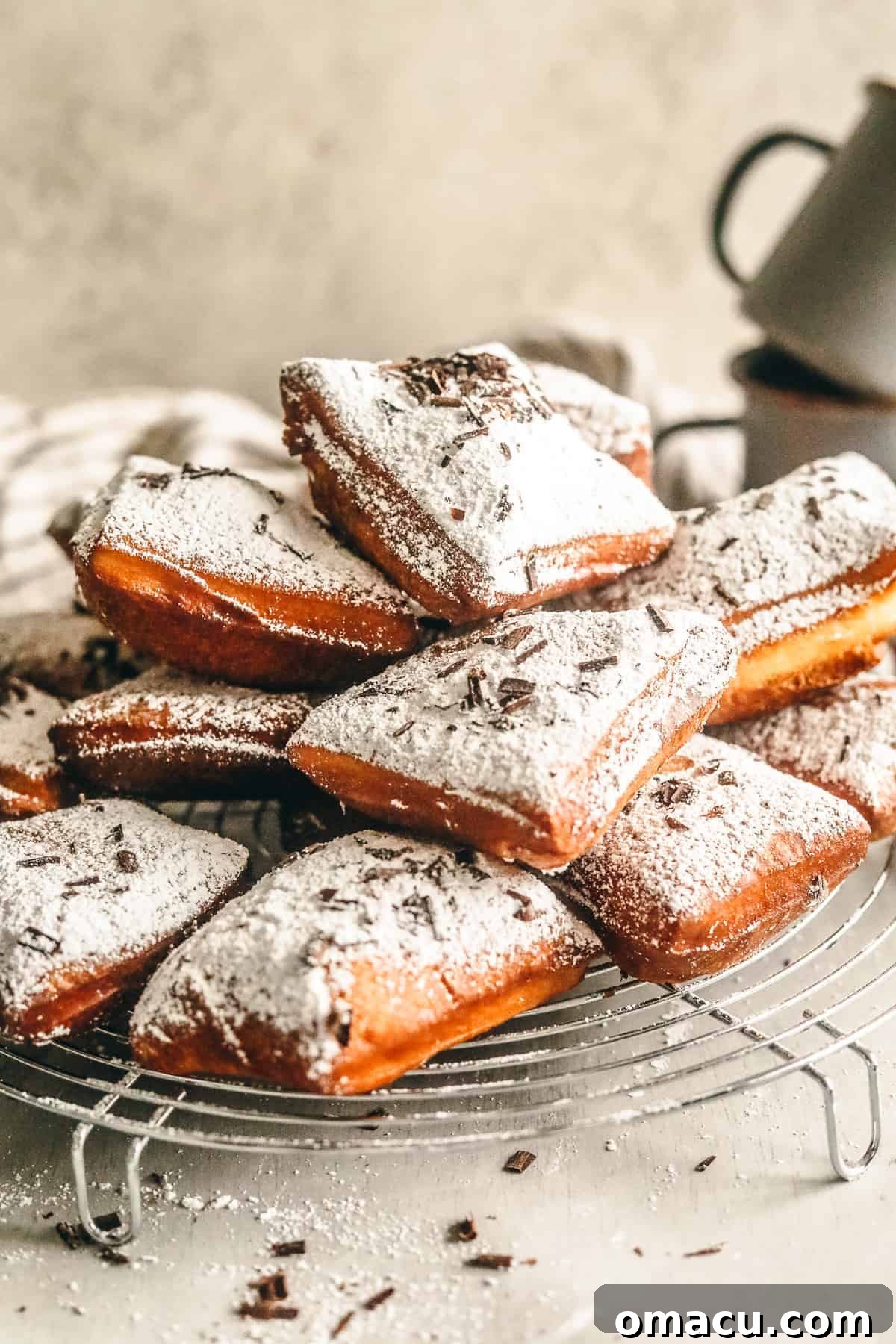
Indulge in the pure bliss of authentic New Orleans Style Beignets – the fluffiest, most delightful pastries you’ll ever experience! Smother them generously in powdered sugar and savor every bite with a warm cup of coffee for a truly iconic taste of Louisiana.
If you’re a fan of these heavenly fried treats, you absolutely must try our Nutella Beignets for a decadent twist, or explore other sweet breakfast ideas like Cinnamon Sugar Buttermilk Donuts and this comforting No-Knead Cinnamon Raisin Sourdough Bread!
Authentic New Orleans Style Beignets: Your Guide to Fluffy Perfection
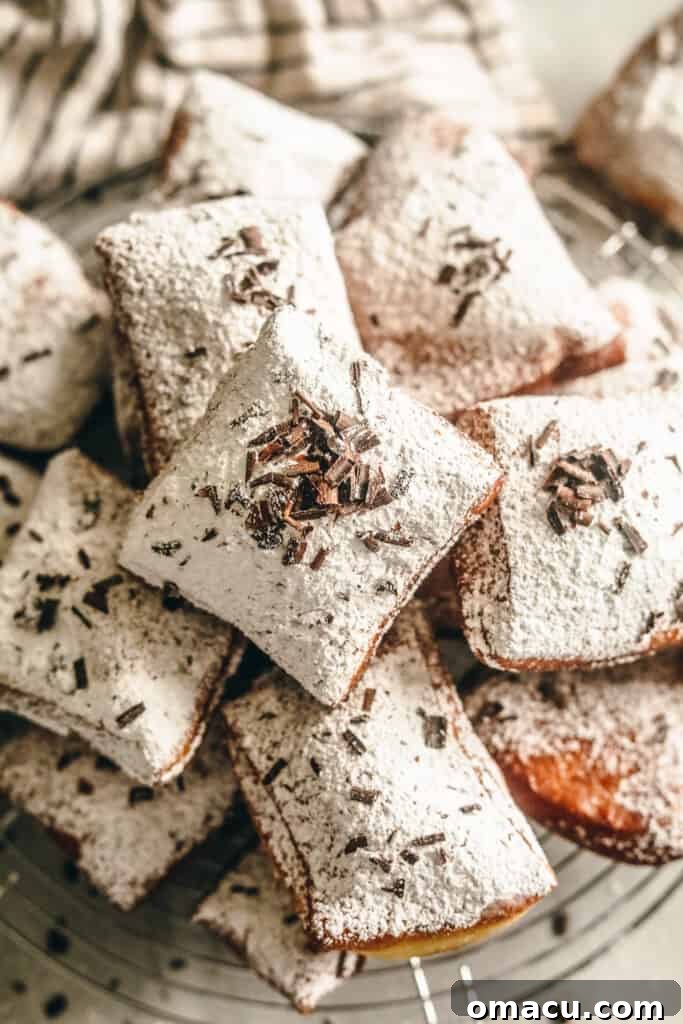
Who doesn’t adore the legendary New Orleans Style Beignet? The name Cafe Du Monde surely rings a bell for anyone who appreciates these iconic pastries. If you haven’t had the pleasure of visiting this historic French Market coffee stand, you’re missing out on a truly unparalleled culinary experience. Their beignets are simply out of this world: incredibly fluffy, perfectly deep-fried, and generously drenched in a snowy mountain of powdered sugar – what’s not to love?
In times when travel isn’t always possible, there’s immense joy in bringing the flavors of the world right into your own kitchen. That’s precisely why we’re sharing this incredible recipe for New Orleans Style Beignets. This recipe is surprisingly easy to follow, yielding beignets that are soft, airy, and delicately sweet, featuring a delightful crisp outer shell that gives way to a pillowy interior. Each bite offers a harmonious balance of textures and flavors, making these beignets an unforgettable treat that embodies pure comfort and tradition.
What Exactly Do New Orleans Style Beignets Taste Like?
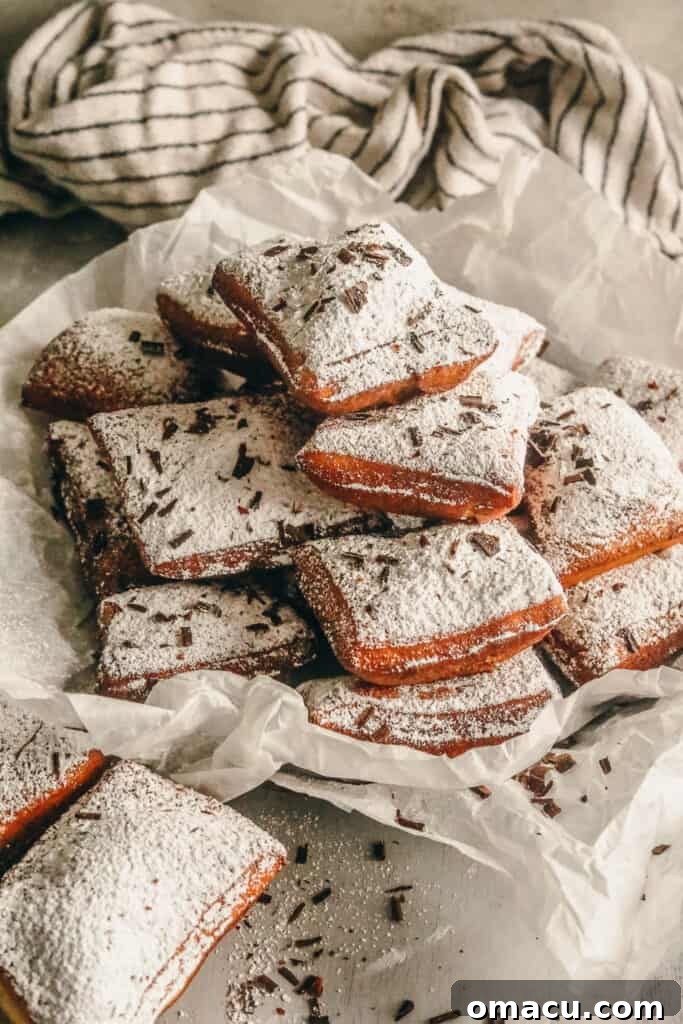
For those who have yet to experience the magic of a New Orleans Style Beignet, imagine a delightful fusion of a classic funnel cake and a rich brioche donut. The exterior boasts a slight crispness, reminiscent of a freshly fried funnel cake, while the interior is wonderfully buttery, soft, and remarkably fluffy, almost like eating a sweet cloud. The generous dusting of powdered sugar adds a familiar sweetness that enhances the deep-fried flavor profile, yet beignets are distinctively lighter and less crunchy than a typical funnel cake.
Their texture is a revelation: an airy, almost ethereal quality that makes them melt in your mouth, coupled with that irresistible warmth from the frying process. They possess a subtle richness without being heavy, making them profoundly satisfying. Each bite is a sweet, deep-fried perfection that conjures images of quaint New Orleans cafes, promising a moment of pure, unadulterated pleasure.
A Journey Through History: The Origin of Beignets
The story of the beignet in New Orleans is deeply intertwined with its rich French heritage. French colonists brought the tradition of making these fried dough pastries to Louisiana in the 18th century. The word “beignet” itself is French for “fritter.” Over centuries, the beignet evolved into the iconic square-shaped, yeast-leavened pastry dusted with powdered sugar that we know and love today.
Cafe Du Monde, established in 1862, played a pivotal role in cementing the beignet’s status as a quintessential New Orleans treat. For generations, visitors and locals alike have flocked to its open-air stalls for hot beignets and a cup of café au lait, a blend of coffee and chicory. This simple yet profound culinary experience became a hallmark of the city’s vibrant culture, symbolizing comfort, tradition, and the enduring spirit of New Orleans. Making beignets at home isn’t just baking; it’s participating in a beloved historical and cultural tradition.
Mastering the Art of Homemade Beignets: A Step-by-Step Guide
Creating these delightful New Orleans Style Beignets at home is a rewarding experience, and we’re here to guide you through each simple step. Don’t be intimidated by working with yeast; it’s easier than you think!
1. Activating the Yeast: The Key to Fluffiness
The first crucial step is activating your active dry yeast. Warm 1/2 cup of water to a lukewarm temperature (around 105-115°F or 40-46°C). It should feel warm to the touch but not hot. Stir in 1 tablespoon of sugar along with the yeast. This sugar feeds the yeast, helping it activate. Let this mixture sit for about 10 minutes. You’ll know it’s active when it becomes foamy and bubbly, indicating the yeast is alive and ready to make your beignets wonderfully airy.
2. Crafting the Perfect Dough
Next, in a stand mixer fitted with a dough hook attachment, combine your flour, buttermilk, the activated yeast mixture, the remaining sugar, baking powder, vanilla extract, softened salted butter, eggs, a pinch of nutmeg, kosher salt, and cinnamon. Mix on medium speed for about 5-8 minutes. The goal is to achieve a smooth, elastic dough that pulls away from the sides of the bowl. If the dough still feels a bit rough or isn’t coming together, add a teaspoon of melted butter, one at a time, until it reaches the desired consistency. While a stand mixer makes this step effortless, you can certainly knead the dough by hand on a lightly floured surface for about 10-15 minutes until it’s smooth and pliable.
3. The Rise to Perfection
Once your dough is perfectly smooth, transfer it to a large, well-oiled bowl. This prevents sticking and promotes an even rise. Cover the bowl tightly with plastic wrap or a clean kitchen towel. Find a warm spot in your kitchen – perhaps near a sunny window or in a slightly warmed, turned-off oven – and let the dough rise until it has doubled in size. This usually takes about 1-2 hours, depending on the warmth of your environment. This waiting period, though sometimes challenging, is essential for developing the beignets’ characteristic light and airy texture. You’re almost there!
4. Frying to Golden Deliciousness
After the dough has doubled, it’s time for the exciting part: frying! Heat about 5 cups of neutral oil (like vegetable oil, canola oil, or peanut oil) in a large pot or Dutch oven to a temperature between 360-380°F (182-193°C). A thermometer is highly recommended for accurate temperature control, which is key to perfectly cooked beignets. While the oil heats, gently roll out the risen dough onto a lightly floured work surface using a rolling pin. Aim for a rectangular shape, approximately 12 x 18 inches, and about 1/4 inch thick. Then, cut the dough into squares of your desired size. Consistency in size will ensure even cooking.
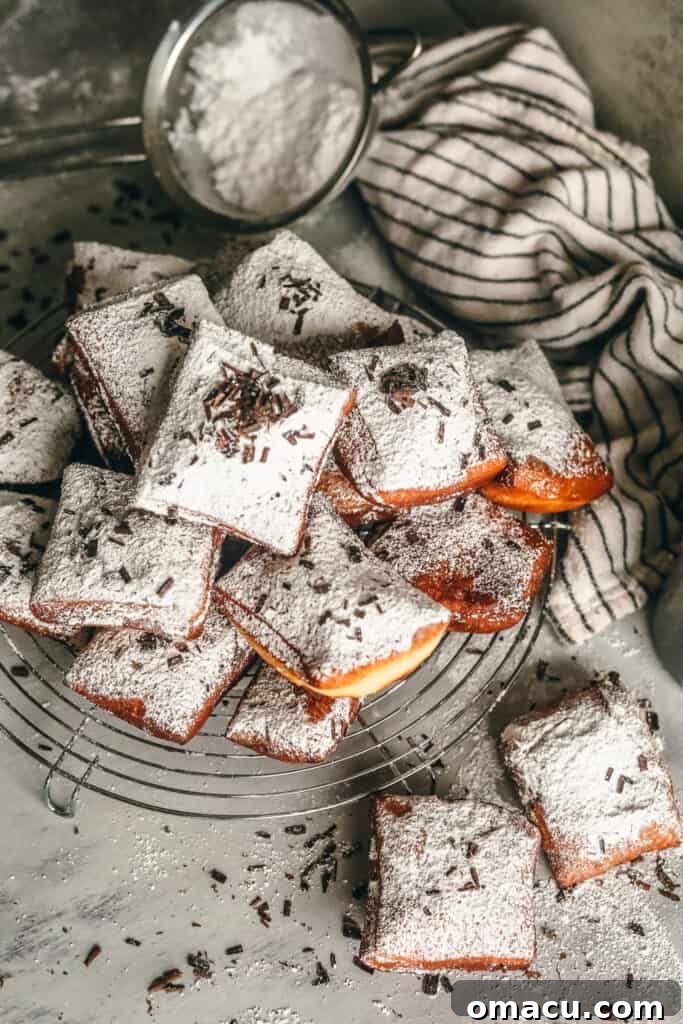
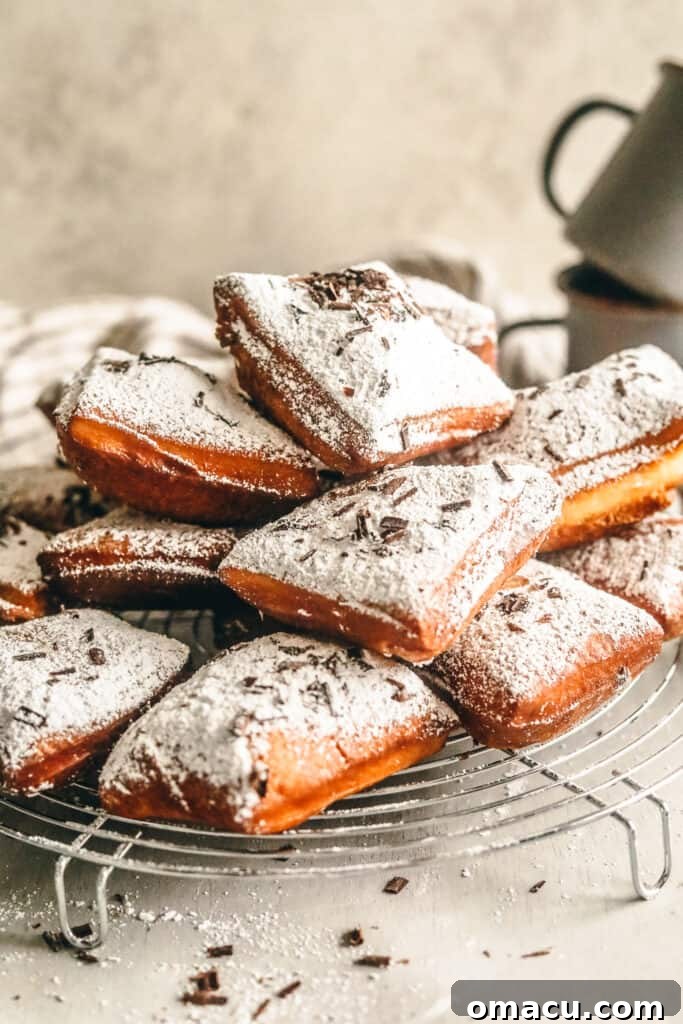
Carefully drop a few beignet squares into the hot oil, making sure not to overcrowd the pot. Fry them for about 2-3 minutes in total, flipping them once after 1-1.5 minutes on each side. The beignets should puff up beautifully and turn a lovely golden brown. Once fried, use a slotted spoon or spider to transfer them to a wire rack lined with paper towels to drain any excess oil. Allow them to cool for just 2-3 minutes – they are best served warm – then generously sprinkle with powdered sugar. For an extra touch of flavor and elegance, consider topping them with chocolate shavings or pieces. And just like that, you’ve created your very own New Orleans Style Beignets!
Frequently Asked Questions About Beignets
How Long Can You Store Beignets?
One of the few downsides of beignets is that they are undeniably best enjoyed fresh, straight out of the oil. Their optimal texture – a delicate crisp exterior and a light, airy interior – is most pronounced within the first hour of frying. While they can certainly be reheated (a quick 10-15 seconds in the microwave or a few minutes in a warm oven can refresh them), they won’t quite recapture that “just-fried” magic. However, if stored in an airtight container at room temperature, they will keep for about 3 days. Just manage your expectations regarding the texture after the first day; they’ll still be delicious, but a bit softer.
What’s the Difference Between a Beignet and a Donut?
While beignets and traditional donuts share many similar ingredients, the key differences lie in their ratios and preparation, leading to distinct textural outcomes. Donuts typically have a denser, more cake-like or chewy crumb. Beignets, on the other hand, are specifically designed to be lighter and more pillowy. This is often achieved through a higher liquid content in the dough and the specific type of yeast and leavening used, which contributes to their characteristic airy pockets when fried. Beignets also typically come in a square shape without a hole, distinguishing them visually from most ring-shaped donuts.
What Do You Eat With New Orleans Style Beignets?
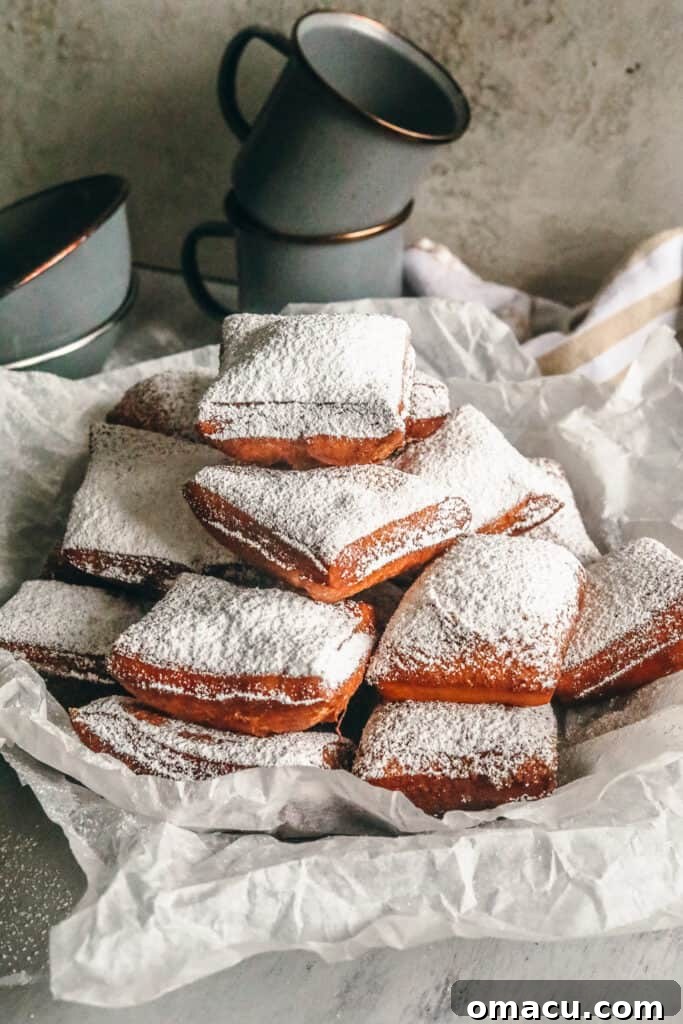
The possibilities are endless! Traditionally, New Orleans Style Beignets are paired with a strong cup of black coffee or, even better, a café au lait (coffee with chicory and milk). The slight bitterness of the coffee beautifully cuts through the sweetness of the powdered sugar. Beyond that classic combination, I personally adore eating them with a side of apricot preserves or a cup of herbal tea. My husband prefers his with a simple black coffee and, of course, an abundance of powdered sugar.
Fresh fruit, such as berries or sliced peaches, also complements beignets wonderfully. You can experiment with dipping sauces like warm chocolate ganache, caramel, or even a light lemon glaze for added flair. Truly, these delightful pastries are so delicious on their own that they require no accompaniment. However, the joy lies in pairing them with whatever your heart desires!
Can I Make Beignet Dough Ahead of Time?
Yes, you can! To prepare ahead, after the first rise, gently punch down the dough, cover it tightly, and refrigerate it for up to 24 hours. When you’re ready to fry, remove the dough from the refrigerator and let it come to room temperature for about 30-60 minutes before rolling and cutting. This will allow the dough to relax and make it easier to work with, ensuring your beignets are just as fluffy and delicious.
Tips for Achieving the Fluffiest Beignets
- **Fresh Yeast is Key:** Always ensure your active dry yeast is fresh and properly activated. If it doesn’t foam, it’s likely dead, and your dough won’t rise.
- **Proper Kneading:** Don’t skip the kneading step. It develops the gluten, which gives the beignets their structure and airy texture.
- **Warm Rising Environment:** A consistent warm environment helps the dough rise efficiently and become light.
- **Accurate Oil Temperature:** Use a deep-fry thermometer. Oil that is too cool will result in greasy beignets, while oil that is too hot will burn the outside before the inside cooks through.
- **Don’t Overcrowd the Pot:** Fry in batches to maintain the oil temperature and ensure even cooking.
- **Serve Immediately:** While they can be reheated, beignets are truly at their peak when served warm, fresh out of the oil and dusted with powdered sugar.
For more exciting beignet variations, explore these Matcha Beignets or even a unique savory option with these Cacio e Pepe Beignets!
Pin These New Orleans Style Beignets to Your Favorite Pinterest Board!

Connect With Us!
Let’s stay connected on social media and continue to cook together! If you decide to make this recipe, please leave a star rating in the recipe card below and share your thoughts in the comments. We hope you love this recipe as much as we do!
Tried this recipe?
Mention @BritneyBreaksBread or tag #BritneyBreaksBread!
New Orleans Style Beignets
Britney
2 hours
15 minutes
2 hours 15 minutes
20 servings
Equipment
-
Stand Mixer
-
Dutch Oven or Large Pot
Ingredients
- 4 cups All-Purpose Flour
- 1/2 cup Water
- 1/2 cup Buttermilk
- 1/2 cup Sugar + 1 tbsp sugar
- 1 tbsp Baking Powder
- 1 tbsp Vanilla Extract
- 2 1/4 tsp Active Dry Yeast
- 2 tbsps Salted Butter, room temperature
- 2 eggs
- Pinch of Nutmeg
- 1/4 tsp kosher salt
- 1/4 tsp ground cinnamon
- 5 cup vegetable oil, any neutral oil with high smoke point
- 2 cups Powdered Sugar
Instructions
-
Warm 1/2 cup of water in the microwave for about 20 seconds, until lukewarm (105-115°F). Add 2 1/4 tsp of active dry yeast and 1 tbsp of sugar, then whisk together gently. Allow yeast to dissolve and activate for about 10 minutes, until foamy.
-
In a stand mixer bowl, combine the all-purpose flour, buttermilk, the activated yeast mixture, the remaining 1/2 cup of sugar, baking powder, vanilla extract, softened salted butter, eggs, a pinch of nutmeg, kosher salt, and ground cinnamon. Using the dough hook attachment, knead on medium speed for about 5-8 minutes, allowing the dough to come together and become smooth and elastic. If the dough is still a little rough or not quite cohesive, add an additional teaspoon of melted butter, one at a time, until it reaches the correct consistency.
-
Once the dough is smooth and elastic, transfer it to a large, well-oiled bowl. Cover the bowl tightly with plastic wrap or a clean kitchen towel. Place the bowl in a warm area and allow the dough to rise for about 1-2 hours, or until it has visibly doubled in size.
-
When the dough has finished rising, begin heating approximately 5 cups of neutral oil (such as vegetable, canola, or peanut oil) in a large Dutch oven or heavy-bottomed pot. Heat the oil to a consistent temperature between 360-380°F (182-193°C). Use a deep-fry thermometer for accuracy.
-
Lightly flour a clean work surface. Roll out the risen dough into a rectangle, roughly 12 x 18 inches in size and about 1/4 inch thick. Use a sharp knife or pizza cutter to cut the dough into individual squares of your preferred size. Carefully place a few beignet squares into the hot oil, ensuring not to overcrowd the pot. Fry each beignet for a total of 2-3 minutes, approximately 1-1.5 minutes on each side, until they are golden brown and puffed up. Transfer the fried beignets to a wire rack lined with paper towels to drain excess oil. Allow them to cool for just 2-3 minutes, then liberally dust them with powdered sugar while still warm.
-
For an extra layer of flavor and elegance, top with chocolate shavings or pieces before serving! Enjoy your homemade New Orleans Style Beignets immediately.
Nutrition Information
Carbohydrates: 37g,
Protein: 3g,
Fat: 2g,
Saturated Fat: 1g,
Polyunsaturated Fat: 0.2g,
Monounsaturated Fat: 1g,
Trans Fat: 0.05g,
Cholesterol: 20mg,
Sodium: 116mg,
Potassium: 46mg,
Fiber: 1g,
Sugar: 17g,
Vitamin A: 69IU,
Vitamin C: 0.002mg,
Calcium: 49mg,
Iron: 1mg
Nutrition information is automatically calculated, so should only be used as an approximation.
More Delicious Dessert Recipes to Try
Desserts
Eggnog Pound Cake with Spiced Eggnog Glaze
Desserts
Cranberry and Orange Loaf Cake with Buttermilk Glaze
Desserts
Red Velvet Cake with Cream Cheese Frosting
Desserts
Almond Shortbread Cookies