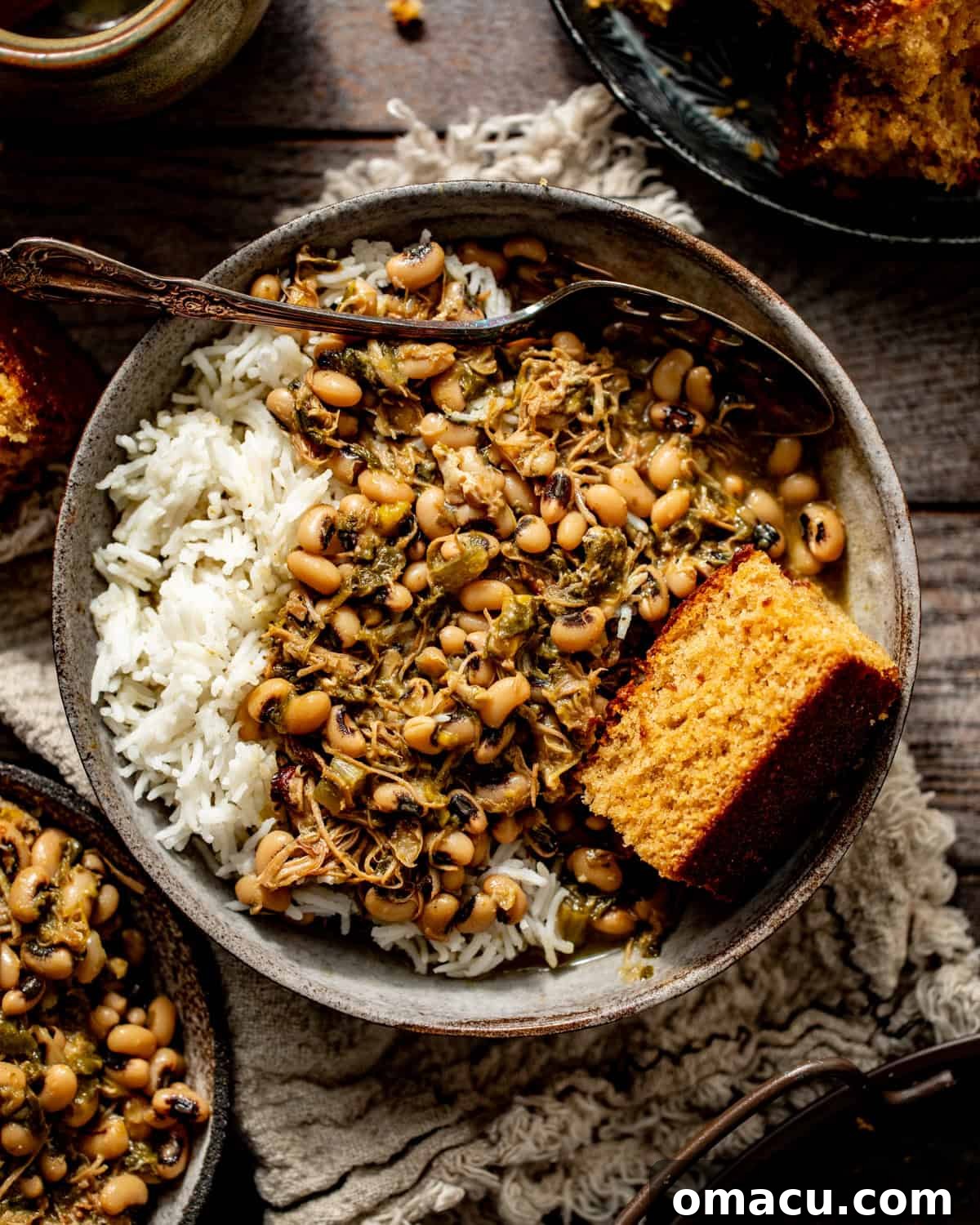
Black-eyed peas with collard greens is more than just a dish; it’s a cherished Southern classic, deeply rooted in history and flavor. This soul-warming meal, brimming with smoky spices, tender greens, and savory garlic, is perfect for any occasion, from a festive holiday gathering to a cozy weeknight dinner.
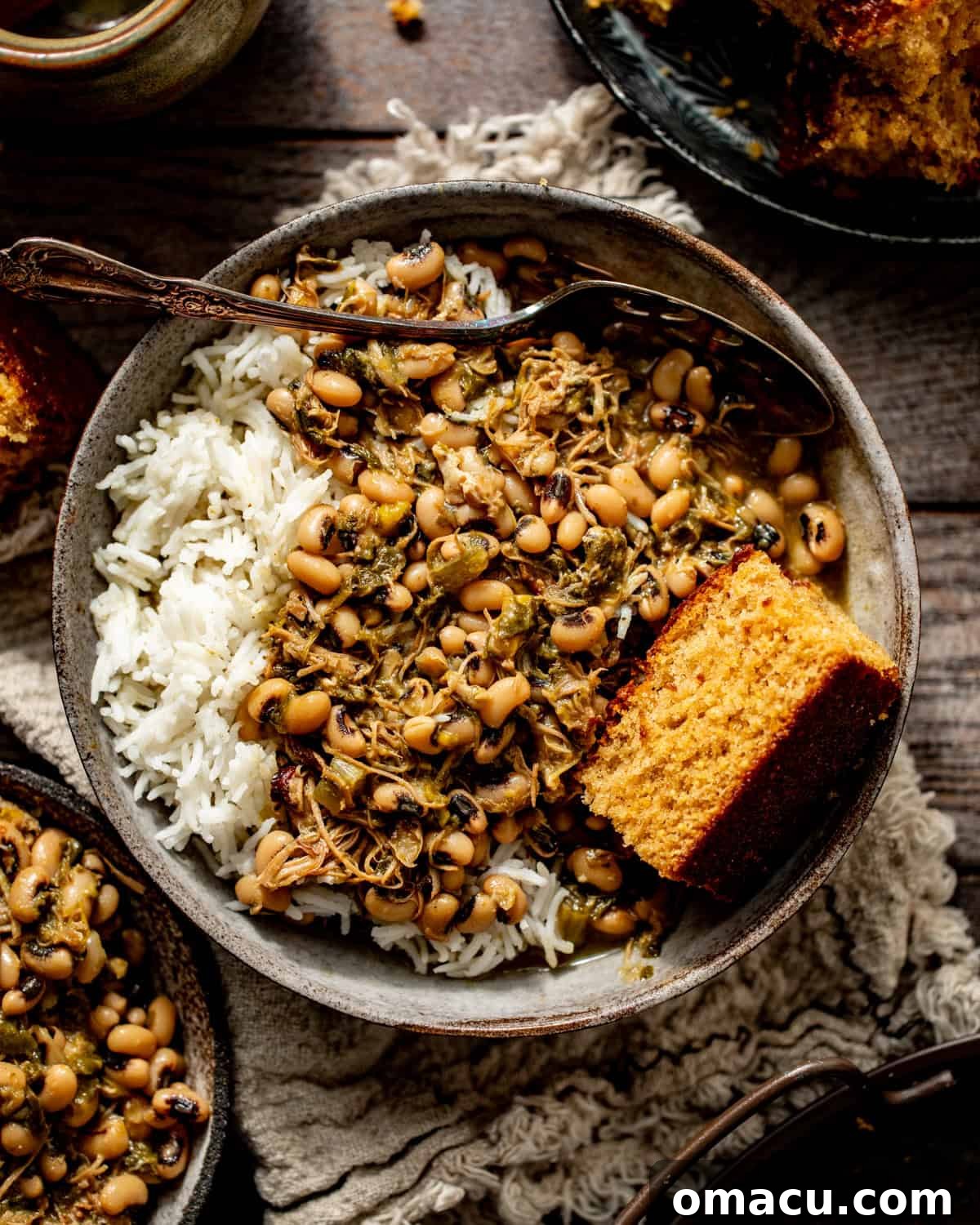
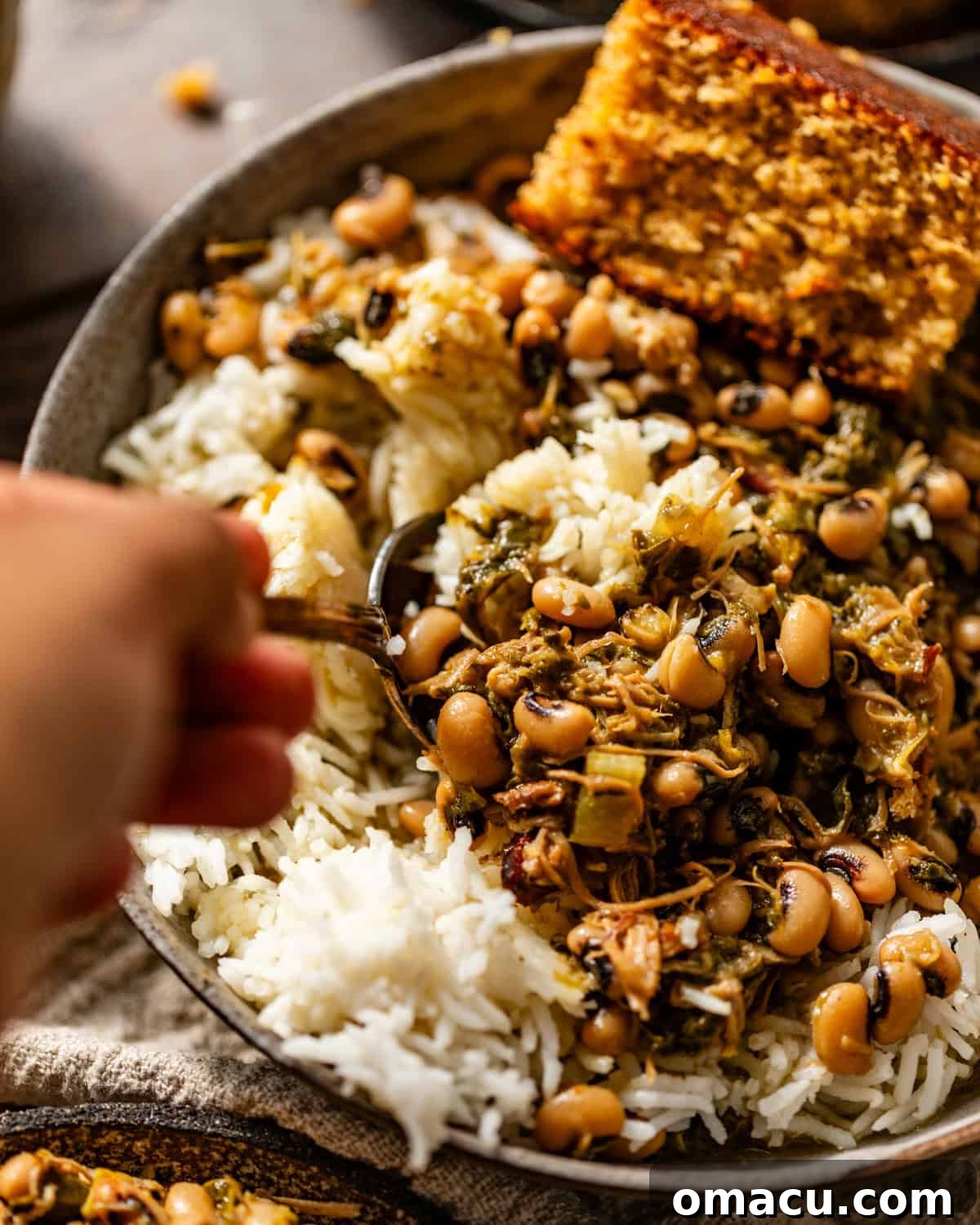
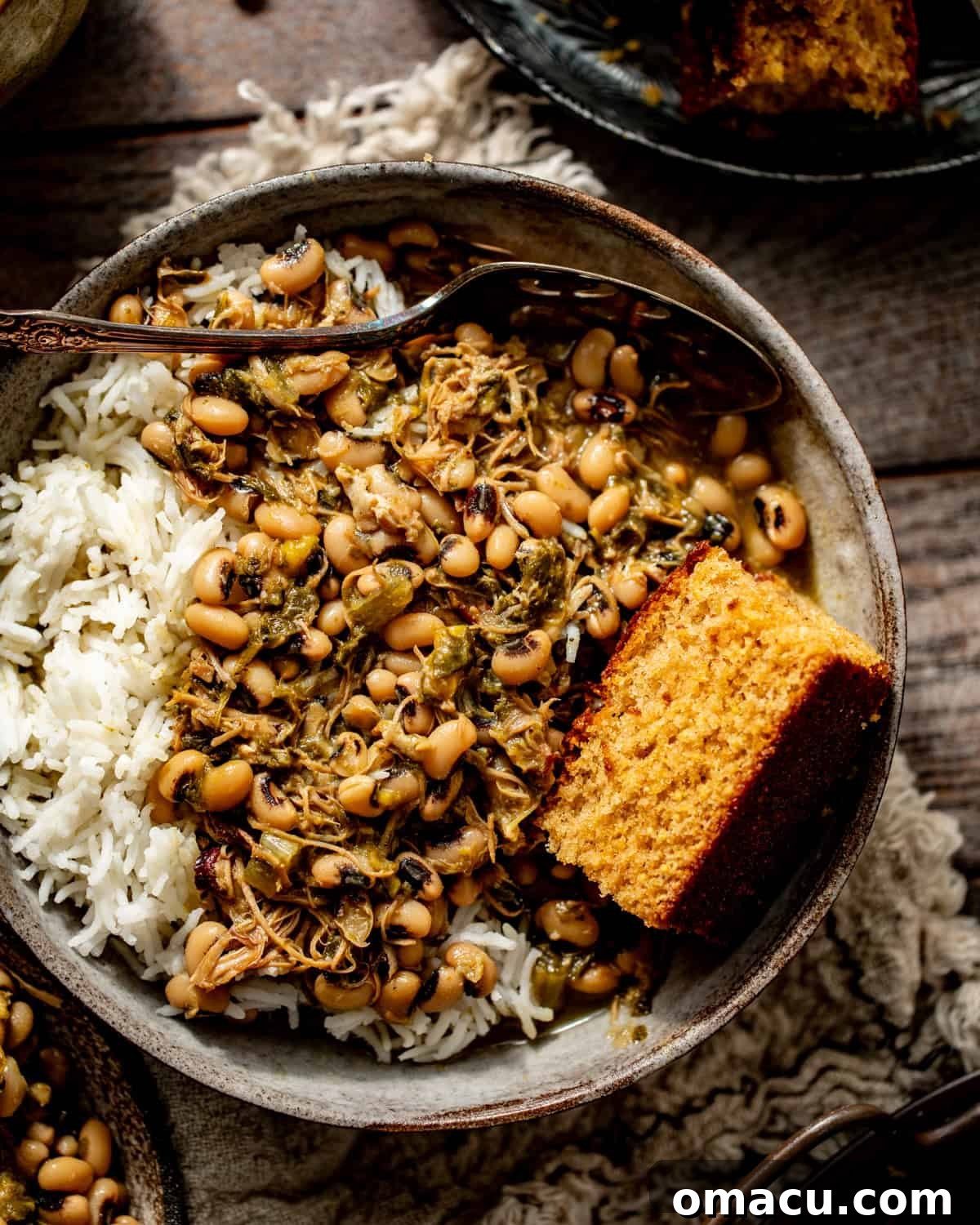
For an authentic Southern experience, serve this hearty stew alongside fluffy rice and a slice of homemade cornbread, allowing the golden bread to soak up every drop of the rich potlikker.
The Enduring Tradition of Black-Eyed Peas and Collard Greens
The culinary journey of black-eyed peas with collard greens recipe is a captivating one, steeped in the rich tapestry of Southern history and tradition. This dish transcends mere sustenance, becoming a symbol of hope, prosperity, and cultural heritage, particularly as a New Year’s Day staple.
Growing up, my husband shared stories of his mother’s steadfast New Year’s Day rituals. Every year, without fail, she would ensure a male family member, usually him, would be the first to enter the house after midnight, symbolizing good fortune for the year ahead. And just as imperative was the first meal: a hearty plate of black-eyed peas. These cherished traditions highlight the deep-seated belief that consuming this specific dish on New Year’s Day ushers in good luck and prosperity. The vibrant collard greens are said to symbolize crisp dollar bills, while the humble black-eyed peas represent coins, promising wealth and abundance in the coming year.
My own exploration into this tradition revealed its fascinating origins in West Africa. Through the transatlantic diaspora, these culinary customs traveled across the ocean, firmly planting their roots in the American South. Here, they evolved into a cornerstone of soul food, a cuisine that speaks volumes about resilience, community, and the transformative power of food. What began as a necessity often became a celebrated ritual, passed down through generations, each pot simmered with stories and love.
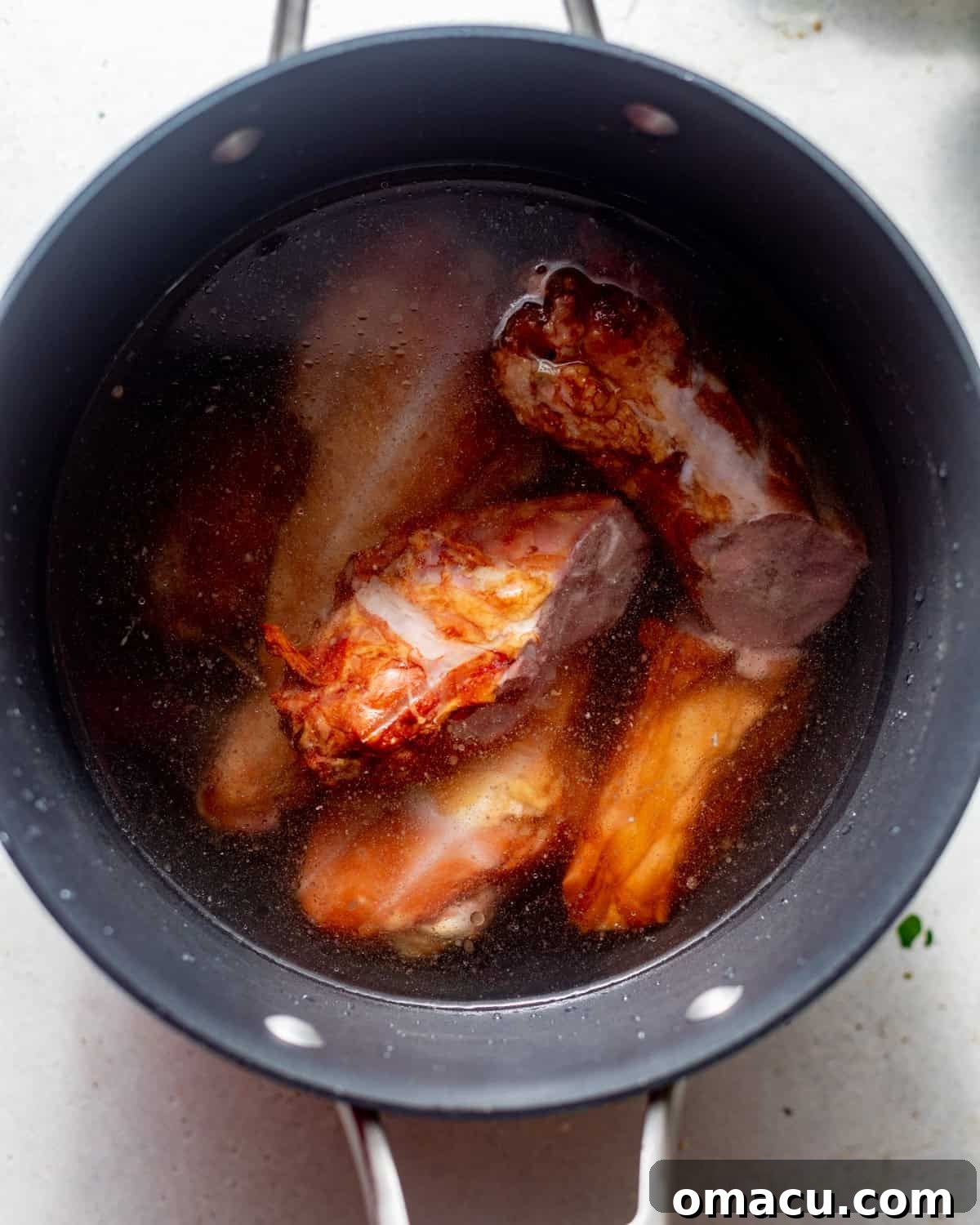
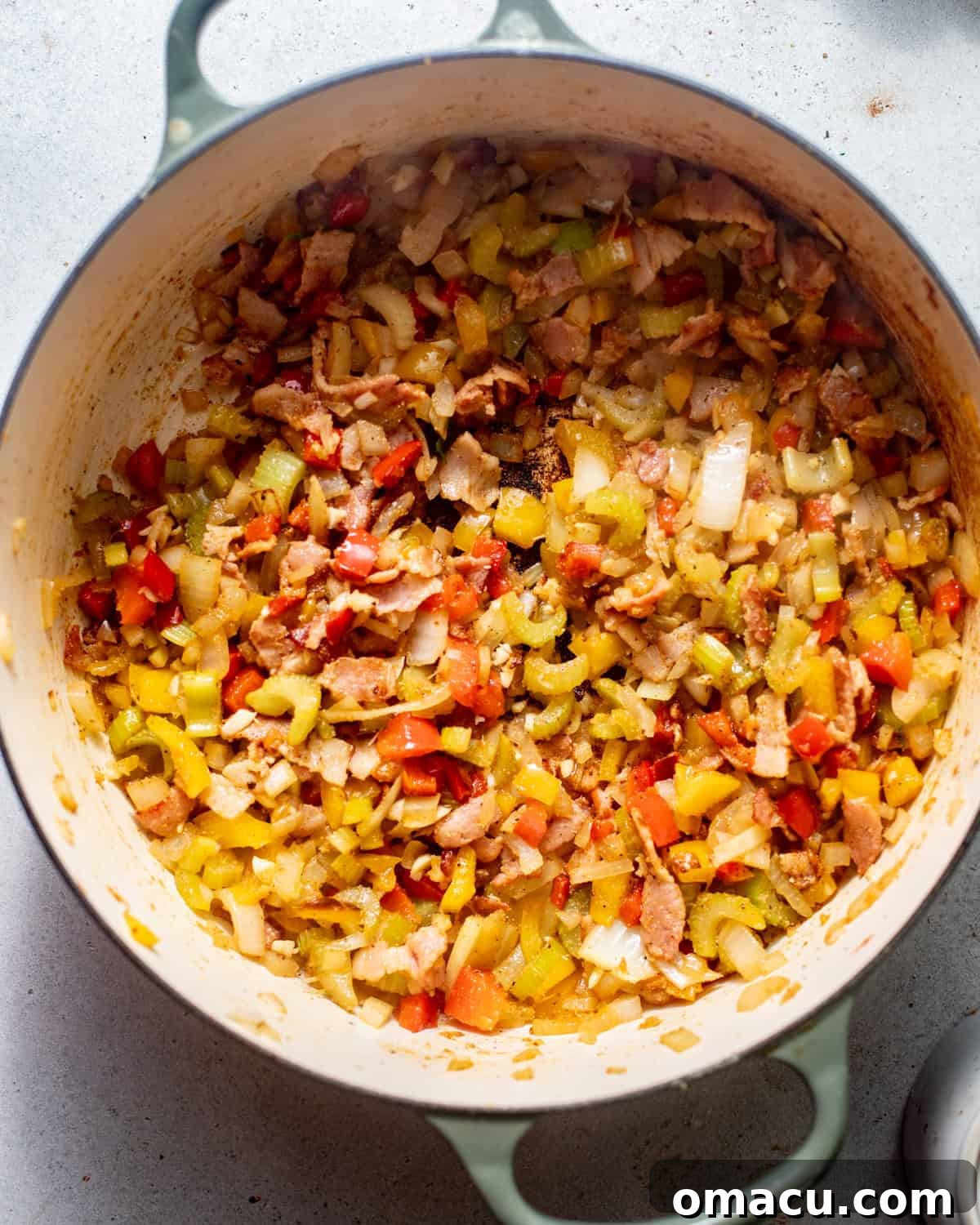
Crafting the perfect pot of black-eyed peas and collard greens begins with building a robust flavor base. Smoked turkey legs and necks are gently simmered in a flavorful liquid, enriched with bay leaf, chicken bouillon paste, and a sprig of fresh thyme. This slow rendering process infuses the broth with an unparalleled depth of smoky goodness. Next, crispy bacon is rendered, and its savory fat is used to sauté aromatic vegetables, adding layers of irresistible flavor.
When paired with a warm, crumbly piece of cornbread, you truly experience the “good stuff”—a dish that is not only profoundly flavorful but also deeply meaningful. Each spoonful offers a taste of history, a nod to tradition, and a comforting embrace that nourishes both body and soul.
Table of Contents
- Key Ingredients
- How to Make Black-Eyed Peas with Collard Greens
- Pro Tips for Success
- How to Serve This Southern Delight
- Recipe FAQs
- More Southern-Inspired Dishes to Explore
- Black-Eyed Peas with Collard Greens Full Recipe
Key Ingredients for Authentic Flavor
Crafting a truly authentic and flavorful pot of black-eyed peas with collard greens relies on a selection of key ingredients, each playing a crucial role in building the dish’s signature taste profile. While the full list of ingredients can be found in the detailed recipe card below, here’s a closer look at what makes this Southern classic sing:
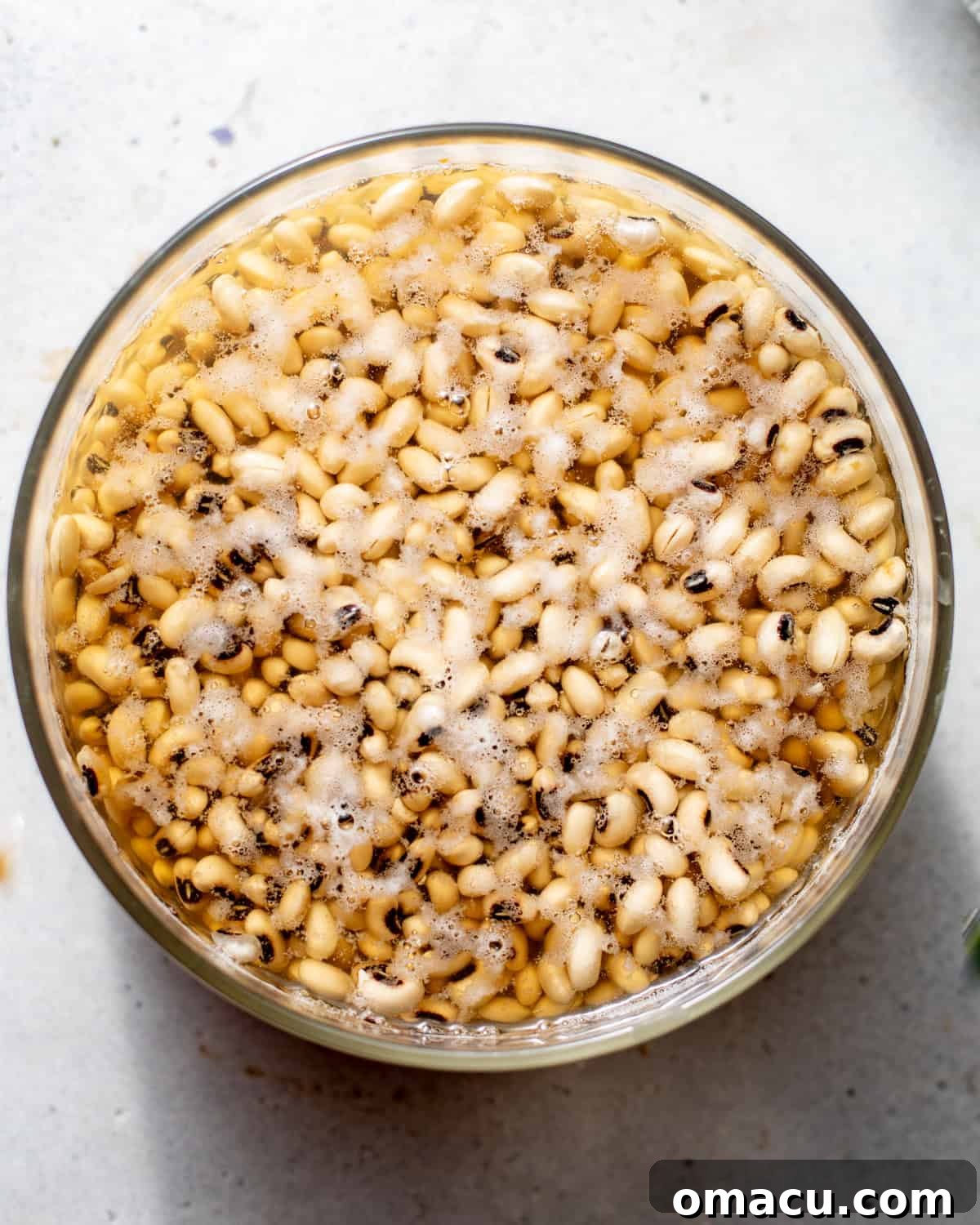
- Dry Black-Eyed Peas: For the best texture and flavor, starting with dry beans is essential. These will need to soak overnight in cool water, which helps to rehydrate them and significantly reduce cooking time, ensuring they cook evenly and become perfectly tender without turning mushy.
- Smoked Turkey Neck and Legs: These are the heroes that infuse our dish with that essential smoky, rich flavor. Using both the neck and leg adds a depth of meaty flavor and a beautiful savory broth. If you prefer a less meat-heavy dish, you can opt for just one or the other. Traditionally, many Southern cooks, like my grandma, used ham hocks, creating a dish sometimes known as Hoppin’ John. Feel free to use ham hock if that’s your preference—it delivers an equally delicious and authentic smoky profile.
- Bacon: We’ll render the bacon until it’s perfectly crispy, not only for its delightful crunch but also for its invaluable bacon grease or fat. This flavorful fat becomes the foundation for sautéing our aromatics, adding another layer of irresistible smoky depth that truly defines Southern cooking.
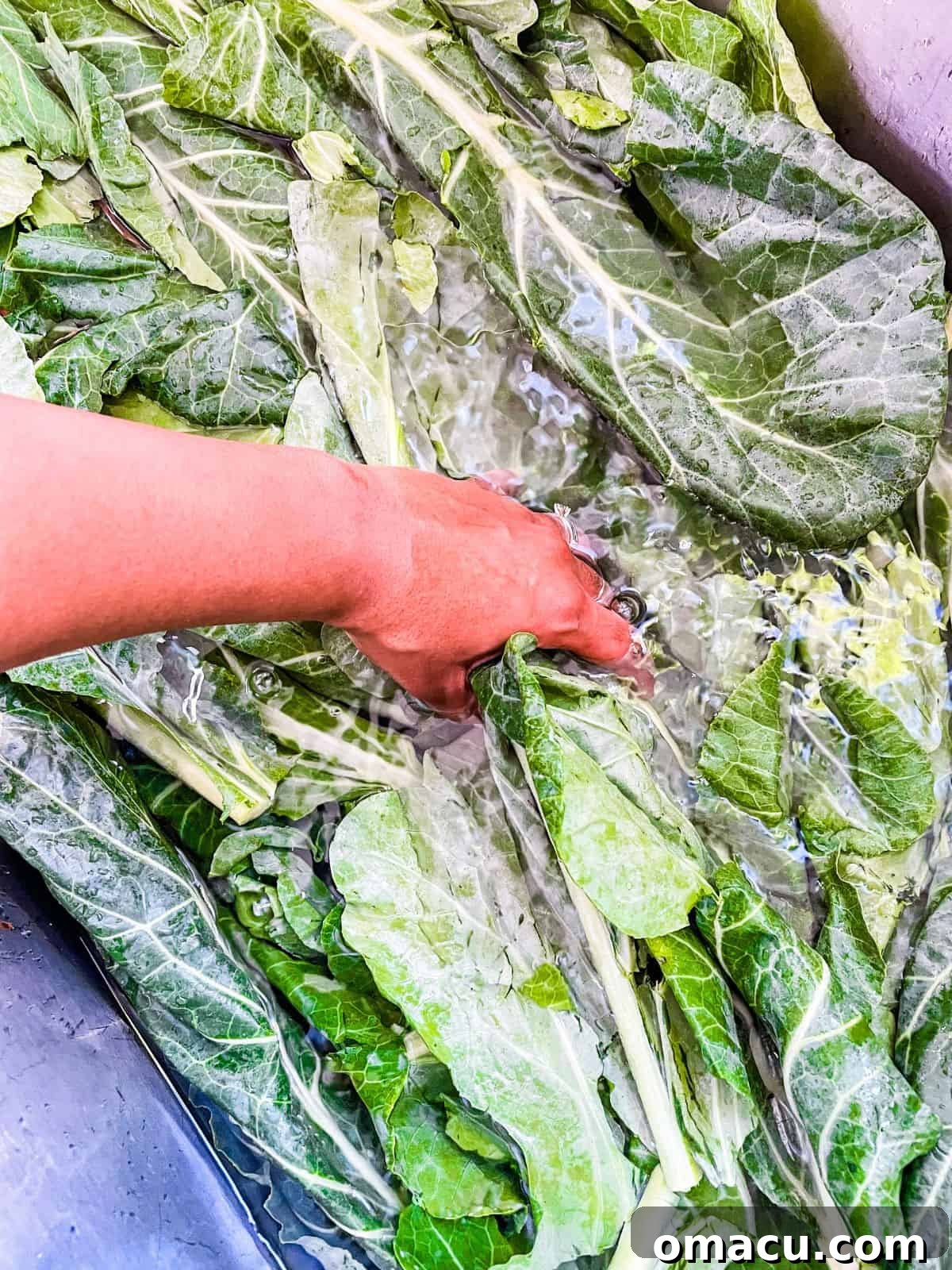
- Fresh Collard Greens: Please, for the love of good food, do not use canned collard greens! Fresh is always best. Whether you purchase pre-washed greens or a whole bunch, thorough cleaning is paramount to avoid a gritty texture in your final dish. For this recipe, I prefer to let the freshly sliced greens wilt and braise directly in the rich cooking liquid with the peas. This method ensures they become wonderfully tender and absorb all the complex flavors of the pot.
- Vinegar (for cleaning greens): A simple yet effective trick for cleaning collard greens. Filling your sink with warm water and adding a cup of vinegar, then soaking the greens, helps to loosen and remove any lingering grit and dirt, leaving them squeaky clean and ready for cooking.
- Aromatics: The foundation of flavor for many Southern dishes. A vibrant blend of yellow onion, fresh garlic, colorful bell peppers, and crisp celery creates a fragrant base that elevates the entire dish, contributing sweetness, pungency, and a subtle vegetal note.
- Southern Seasonings: A carefully curated blend brings all the vibrant flavors of the American South together. This includes savory Cajun seasoning, aromatic onion powder, potent garlic powder, a touch of cayenne pepper for warmth, and red pepper flakes for a gentle kick. Don’t forget the bay leaf, which adds a subtle, herbaceous note to the simmering broth.
- Worcestershire Sauce: This secret ingredient adds an incredible depth of umami, a savory richness, and a tangy complexity that perfectly complements the smoky and earthy flavors of the peas and greens. It’s a game-changer for enhancing the overall savoriness.
- Chicken Bouillon Paste and Chicken Broth: Both are vital for building a deeply flavored cooking liquid. The bouillon paste concentrates the chicken flavor, while the broth provides the necessary liquid for simmering the peas and greens to perfection, ensuring every component is infused with deliciousness.
- Hot Sauce: Serving this dish with a dash (or more!) of hot sauce is absolutely mandatory in my book. Just like fried chicken, black-eyed peas and collard greens benefit immensely from a splash of fiery, tangy goodness. It cuts through the richness and adds a vibrant zing that brightens every bite.
How to Make Black-Eyed Peas with Collard Greens: A Step-by-Step Guide
Creating this iconic Southern dish is a labor of love that rewards you with an incredibly comforting and flavorful meal. Follow these steps to achieve perfectly tender peas, rich smoky greens, and a truly unforgettable experience.
Phase 1: Prepare the Beans and Cook the Smoked Turkey Base
Phase 2: Prepare the Greens and Sauté the Aromatics
Phase 3: Combine and Simmer to Perfection
- Step 5: Carefully transfer the seasoned onion and black-eyed peas mixture, along with the cleaned and sliced collard greens, into the large stockpot with the simmering smoked turkey. Stir in the Worcestershire sauce and season with an additional dash of salt and pepper to taste. Bring the entire pot to a gentle boil, cooking uncovered for 30-45 minutes. Continue cooking until the water level has reduced and is almost even with the peas. This step concentrates the flavors and begins to tenderize the greens.
- Step 6: At this point, pour in the chicken broth. Cover the pot with a lid and reduce the heat to a gentle simmer. Continue to cook for another 1 ½ to 2 hours. During this final simmering stage, stir occasionally to prevent anything from sticking to the bottom of the pan. You’ll know the dish is ready when the black-eyed peas are incredibly tender and creamy, and the smoked turkey meat is falling effortlessly off the bone. This slow cook time is crucial for developing maximum flavor and a comforting texture.
- Step 7: Once cooked, carefully remove the turkey legs and necks from the pot. Remove as much of the tender turkey meat as possible from the bones, shredding it gently, and return the meat to the pot. Discard any bones or cartilage.
- Step 8: Taste the black-eyed peas and greens. Adjust the seasoning as needed, adding more salt, pepper, or a pinch of your favorite Southern spices until the flavor is perfectly balanced to your liking.
- Step 9: Serve immediately, ideally with a generous dash of your favorite hot sauce for an extra kick!
Pro Tips for Perfect Black-Eyed Peas & Collard Greens
Achieving a truly outstanding pot of black-eyed peas with collard greens involves a few expert tricks that can elevate your dish from good to unforgettable. Here are some pro tips to ensure your recipe is always a success:
- Always Soak the Peas: This step is non-negotiable for the best results. Soaking dried black-eyed peas in cold water for at least 6-8 hours (or preferably overnight) significantly reduces their cooking time and promotes even cooking. This prevents them from becoming tough on the outside and undercooked on the inside. If you’re short on time, a “quick soak” method can be used: bring the peas to a boil in water for a few minutes, then remove from heat and let them sit, covered, for an hour before draining and continuing with the recipe.
- Properly Prep the Greens: The key to delicious collard greens is a thorough wash to eliminate any grit or soil. Fill a sink with water and a splash of vinegar, submerge the greens, and swish them around vigorously. Repeat this process until the water runs clear. Next, strip the leaves from the tough central stems, which can be fibrous and unpleasant to eat. Finally, stack the leaves and slice them into 1-inch ribbons for easier cooking and a more pleasing texture.
- Mind the Canned/Pre-Cooked Ingredients: If you opt for the convenience of canned black-eyed peas or pre-cooked collard greens, be mindful of their cooking time. Since they are already cooked, add them towards the very end of the simmering process, typically during the last 20-30 minutes. Adding them too early will result in mushy peas and overly soft greens, detracting from the overall texture of the dish.
- Season (Again) at the End: Seasoning is not a one-time event with this dish. Once your beans are beautifully tender and the greens have melded with the smoky broth, taste the dish critically. The flavors will have deepened and concentrated during cooking. This is the perfect moment to adjust the seasoning, adding more salt, pepper, or any other spices you feel are missing. Don’t be shy about adding an extra dash of hot sauce or a splash of vinegar to brighten the flavors.
- Customize the Meatiness: This recipe calls for a generous amount of smoked turkey, which lends incredible flavor and heartiness. However, you can easily adjust this to your preference. If you prefer a less meaty dish, use only one pound of smoked turkey (either legs or necks) instead of two. For a vegetarian option, you can omit the meat entirely and use a high-quality vegetable broth, adding a touch of liquid smoke for that desired smoky essence.
- Consider a Slow Cooker Option: While the stovetop method yields fantastic results, this dish adapts beautifully to a slow cooker. After sautéing your aromatics and browning the bacon, combine all ingredients (except possibly a portion of the broth, adding as needed) in your slow cooker. Cook on low for 6-8 hours or on high for 3-4 hours, until the peas are tender and the turkey falls off the bone. This is a great hands-off approach for busy days.
- Make Ahead and Freeze: Black-eyed peas and collard greens often taste even better the next day as the flavors continue to meld. This dish freezes exceptionally well, making it perfect for meal prep. Allow it to cool completely before portioning into airtight containers or freezer bags. It can be stored in the freezer for up to 3 months and reheated gently on the stovetop or in the microwave.
How to Serve This Southern Delight
The beauty of black-eyed peas with collard greens lies not only in its rich flavor but also in its versatility. This soulful dish can be the star of your meal or a vibrant, comforting side. Here’s how to serve it for a truly memorable Southern feast:
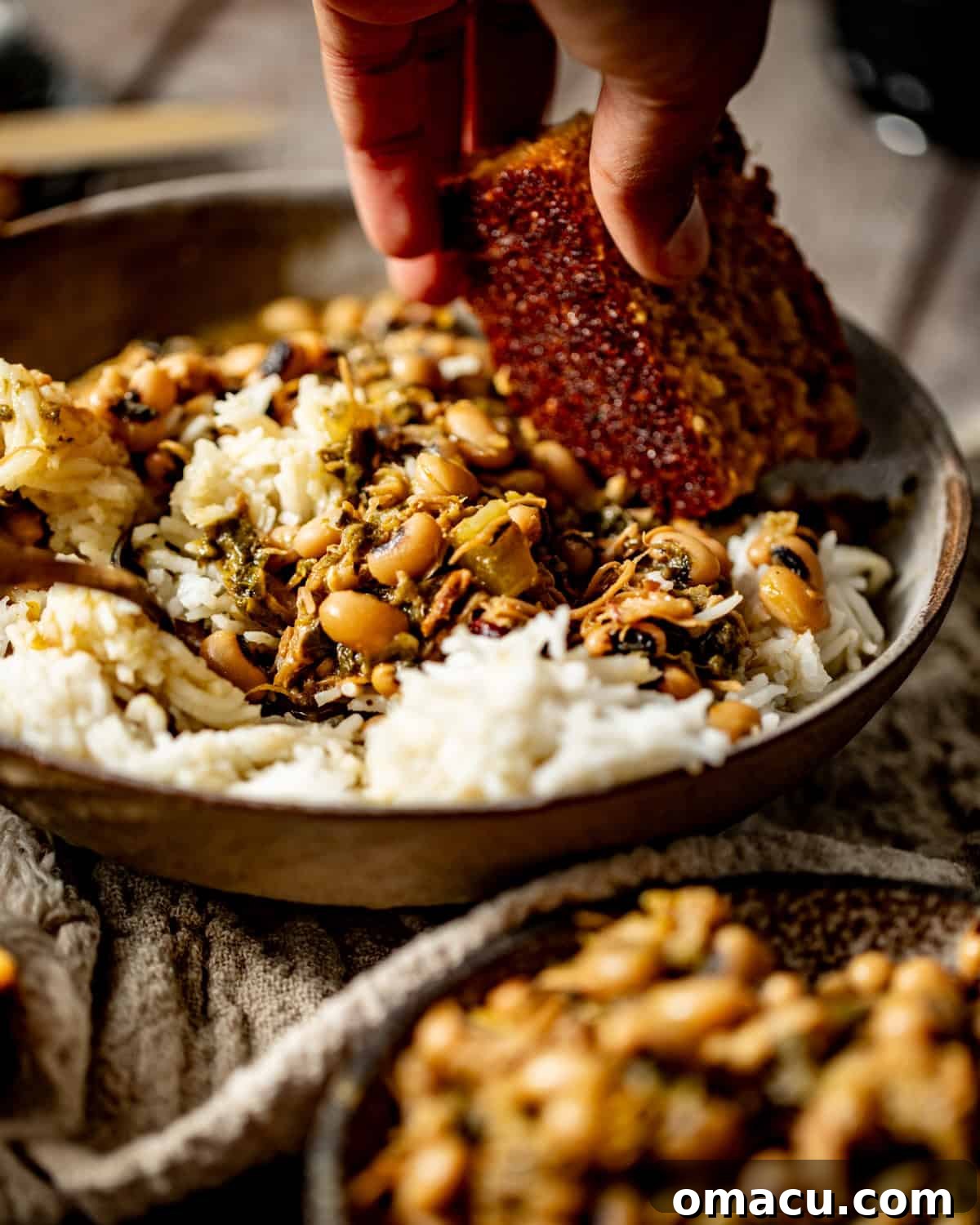
The quintessential pairing for black-eyed peas and collard greens is undeniably warm, buttery cornbread. Whether you choose a classic buttermilk cornbread or my indulgent honey butter cornbread, its slightly sweet and crumbly texture is perfect for soaking up every drop of the rich bean broth and the flavorful “potlikker”—the savory liquid left behind after cooking the greens. Serve it plain, or slather it with extra butter for an added layer of richness. Beyond cornbread, a simple bed of fluffy white rice is another excellent accompaniment, providing a neutral canvas for the bold flavors of the peas and greens.
To add an extra layer of smoky goodness or to create a more substantial meal, consider pairing this dish with other classic Southern meats. Grilled or roasted pork chops, pan-fried chicken, or even a generous slice of baked ham would complement the earthy flavors beautifully. The smoky undertones of the meat in the peas and greens harmonize perfectly with any additional protein.
For those seeking an indulgent and complete Southern spread, elevate your meal with a selection of classic side dishes. A dish of sweet and tender candied yams, a creamy and rich old-fashioned baked macaroni and cheese, or even decadent scalloped potatoes—all Southern staples—pair exceptionally well with the robust flavors of the peas and greens, creating a symphony of comfort food. Don’t forget a simple green salad with a light vinaigrette to add a fresh counterpoint to the richness of the meal.
No matter how you choose to serve it, this versatile dish comes together as a feast that honors the beloved traditions of soul food while satisfying every craving for warmth, flavor, and comfort. It’s a meal that brings people together, steeped in history and designed to delight the palate.
Recipe FAQs: Your Questions Answered
Curious about black-eyed peas and collard greens? Here are some frequently asked questions to help you master this Southern classic and understand its nuances:
Yes, black-eyed peas are incredibly nutritious and a wonderful addition to any diet. They are naturally high in protein, which supports muscle growth and satiety, and rich in dietary fiber, which aids digestive health and helps regulate blood sugar levels. They are also low in fat and packed with essential nutrients like folate (crucial for cell growth), iron (important for energy and blood health), and potassium (vital for heart function). Including them in your diet can provide sustained energy and contribute to overall well-being.
Absolutely, canned black-eyed peas are a convenient and time-saving alternative to dried ones, especially when you’re in a rush. Since they are pre-cooked, you can add them directly to your recipe, but be sure to drain and rinse them thoroughly first. Rinsing helps remove excess sodium and any starchy liquid, which can improve the overall flavor and texture of your dish. Because they are already cooked, it’s crucial to add them towards the end of the cooking process—typically during the last 20-30 minutes of simmering—to prevent them from becoming overcooked and mushy.
Yes, despite their name, black-eyed peas are indeed a type of bean. They belong to the legume family, which includes other common beans, lentils, and peas. Specifically, they are a variety of cowpea (Vigna unguiculata), a widely cultivated plant in warm climates for its edible beans. So, when you’re enjoying black-eyed peas, you’re actually enjoying a delicious and versatile bean!
Potlikker (sometimes spelled pot liquor) is the highly nutritious and flavorful liquid left behind after cooking collard greens or other leafy greens. It’s often considered the best part of the meal by many Southerners, packed with vitamins and minerals leached from the greens, along with all the savory flavors from the smoked meats and seasonings used in cooking. It’s traditionally enjoyed by soaking it up with cornbread, ensuring no delicious drop goes to waste.
Yes, you can absolutely adapt this recipe to be vegetarian or vegan. To do so, simply omit the smoked turkey and bacon. Replace the chicken bouillon paste and chicken broth with a high-quality vegetable broth. For a smoky flavor, you can add a small amount of liquid smoke (start with 1/4 teaspoon and add more to taste) or use smoked paprika. Ensure all other ingredients, like Worcestershire sauce, are vegan-friendly (some brands contain anchovies, so check the label).
More Southern-Inspired Dishes to Explore
If you love the comforting flavors of black-eyed peas and collard greens, you’ll surely appreciate these other delightful Southern recipes that celebrate hearty ingredients and rich traditions:
Discover More Southern Favorites
Thanksgiving
Slow Cooker Collard Greens
Main Course
Green Beans and Potatoes Recipe
Main Course
Grandma’s Old Fashioned Baked Macaroni and Cheese
Thanksgiving
Stove Top Candied Yams
Want more delicious and beautiful recipes? Subscribe to my newsletter to receive the latest seasonal creations as soon as they’re released! Don’t miss out on more Southern comfort food and delightful culinary inspirations.
If you make this recipe, please consider leaving a star rating on the recipe card below and a comment sharing your experience! Your feedback is invaluable. You can also tag @BritneyBreaksBread on Instagram and use the hashtag #britneybreaksbread so I can celebrate your beautiful creations and see how you enjoyed this classic Southern dish!
Black-Eyed Peas with Collard Greens
Britney
6 hrs
3 hrs 30 mins
8 hrs 30 mins
8
Equipment
-
Large Pot or Dutch Oven
-
Stock Pot
-
Skillet
-
Mixing Bowls
Ingredients
- 1 lb Dry Black-Eyed Peas (see notes about using canned black-eyed peas)
- 1 lb Smoked Turkey Legs
- 1 lb Smoked Turkey Neck
- 10 cups Water
- 2 tsp Chicken Bouillon Paste
- 3 Bay Leaves
- 1 lb Collard Greens (washed and sliced, stalks removed)
- 1 cup Vinegar (for washing the greens)
- 6 slices Bacon (cut into chunks)
- 3 stalks Celery (diced)
- 1 large Yellow Onion (diced)
- 2 Bell Peppers (diced, seeds removed)
- 6 cloves Garlic (diced)
- 2 tsp Cajun Seasoning
- 1 tsp Onion Powder
- 1 tsp Garlic Powder
- 1/2 tsp Red Pepper Flakes
- 1/2 tsp Cayenne Pepper (optional)
- 2 tbsp Worcestershire Sauce
- 4 cups Chicken Broth
Instructions
-
Add dry beans to a large bowl and fill with water. Allow this to sit for at least 6 hours, ideally 24 hours. When you’re ready to cook them, drain and set aside.
-
Over medium-high heat, add 10 cups of water to a large stockpot. Add the smoked turkey leg and turkey neck, bay leaves, and chicken bouillon paste. Bring to a boil, cover with a lid, and reduce heat to a simmer. Cook for at least 40 minutes, moving on to prep the ingredients for the black-eyed peas.
-
Clean your sink thoroughly and fill with at least 2-3 inches of water. Add one cup of vinegar and add the collard greens into the sink. Let them sit for at least 10-15 minutes, then rinse once more and place onto a cutting board. Slice into 1-inch pieces, removing the stalk in the center.
-
In a separate pot/Dutch oven, add chopped bacon over medium heat. Cook for 8-10 minutes, until the bacon becomes crispy and renders off all of the fat. Increase heat to medium-high heat and add the chopped bell pepper, onion, and celery. Season with salt and pepper and cook for 5 minutes, until softened. (If the pot begins to look a little dry, add 2 tablespoons of olive oil.) Then add Cajun seasoning, onion powder, garlic powder, red pepper flakes, cayenne pepper, and the soaked peas. Toss to coat.
-
Pour the onion/black-eyed peas mixture and the washed greens into the pot with the smoked turkey. Add Worcestershire sauce and season with a dash of salt and pepper.
-
Bring to a boil and cook uncovered for 30-45 minutes, until the water has reduced to the same level as the peas, then pour in the chicken broth.
-
Cover with a lid, reduce heat to a gentle simmer, and continue to cook for 1 ½-2 hours, stirring occasionally to ensure that the bottom of the pan does not burn. (You’ll know it’s done when the meat is falling off of the bone and the cooked black-eyed peas are nice and tender.)
Tip: Try to remove as much of the bones from the turkey as possible after cooking.
-
Taste for seasoning, add salt and pepper as needed.
-
Serve with a dash of hot sauce.
Notes
Prep the greens properly: Wash thoroughly to remove grit, then strip the leaves from the stems. Slice into ribbons for easier cooking.
If using canned peas or pre-cooked greens, don’t add them until the end of the cooking process to avoid them becoming mushy.
Season (again) at the end: Once the beans are nice and tender, taste and season again to add anything you think may be missing.
Nutrition
Carbohydrates: 45g,
Protein: 28g,
Fat: 12g,
Saturated Fat: 3g,
Polyunsaturated Fat: 2g,
Monounsaturated Fat: 4g,
Trans Fat: 0.02g,
Cholesterol: 78mg,
Sodium: 775mg,
Potassium: 1054mg,
Fiber: 10g,
Sugar: 8g,
Vitamin A: 3359IU,
Vitamin C: 48mg,
Calcium: 254mg,
Iron: 7mg
Nutrition information is automatically calculated, so should only be used as an approximation.
Tried this recipe?
Mention @BritneyBreaksBread or tag #BritneyBreaksBread!