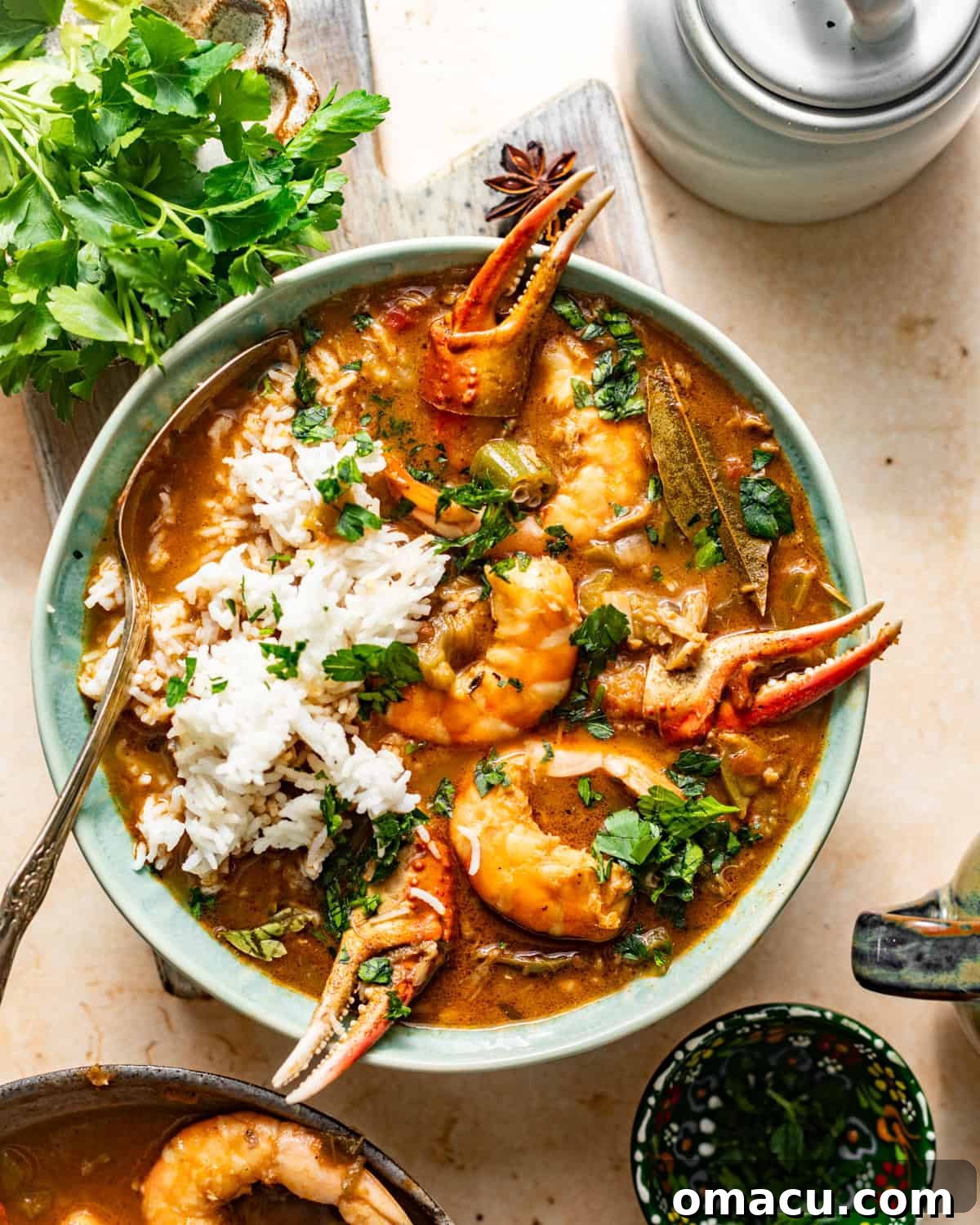
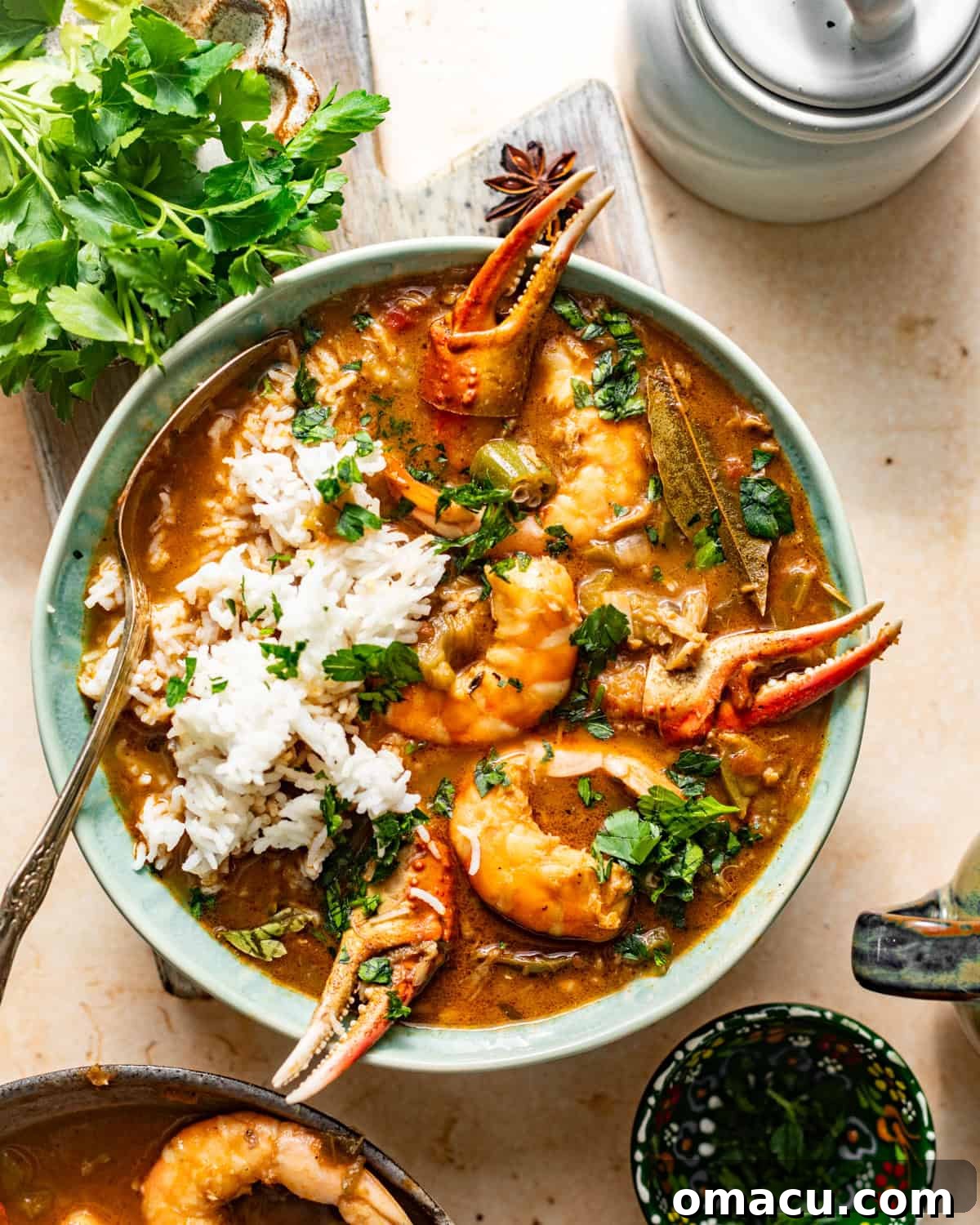
Prepare yourself for a culinary journey to the heart of Louisiana with this incredible **Cajun Seafood Gumbo**. This isn’t just any gumbo; it’s a soul-warming concoction brimming with succulent shrimp, delicate crab, and spicy Andouille sausage, all brought together in a deeply flavored, savory broth. Served over fluffy white rice, it’s the ultimate comfort meal, perfect for any occasion that calls for a taste of authentic Southern hospitality.
Craving more vibrant Cajun flavors? Explore our Cajun Seafood Boil, perfectly paired with our signature Seafood Boil Sauce, for another unforgettable seafood experience!
Authentic Cajun Seafood Gumbo: A Louisiana Tradition
There’s nothing quite like a homemade batch of Cajun Seafood Gumbo to transport you straight to the lively streets of New Orleans, where jazz music fills the air and the spirit of Mardi Gras is ever-present. This recipe is more than just food; it’s a celebration of rich culinary heritage, passed down through generations. With its robust flavors and comforting warmth, this gumbo stands out as the best seafood gumbo recipe I’ve ever crafted, and I’m thrilled to share its secrets with you, especially as festive occasions like Fat Tuesday approach.
The foundation of any great Louisiana-style gumbo is a truly exceptional roux. Our journey begins by stirring a deep, dark roux until it achieves the color of rich, dark chocolate, a process that infuses the gumbo with its characteristic depth and nutty flavor. Following this essential step, we introduce the aromatic “Holy Trinity” – a classic blend of onions, bell peppers, and celery – sautéed to perfection. These foundational vegetables are then seasoned with our homemade Cajun seasoning and a touch of fiery cayenne pepper, adding that signature kick. The magic truly happens as everything simmers, allowing the flavors to meld beautifully before the fresh, tender seafood is added just moments before serving, ensuring it remains perfectly cooked.
The name “gumbo” itself holds a fascinating history, derived from a West African word for okra. This humble vegetable plays a dual role in our recipe: it not only contributes a subtle, earthy flavor but also naturally thickens the savory broth. We further enhance this with a sprinkle of filé powder, made from ground sassafras leaves, which adds another layer of unique earthiness and traditional texture. The result is a truly authentic and incredibly satisfying dish that promises a delightful treat for your taste buds.
So, what truly elevates a seafood gumbo from good to extraordinary? The answer lies in two critical elements: a meticulously prepared, dark roux and ensuring your seafood is never overcooked. Don’t be intimidated by the roux; while it requires patience, it’s a labor of love that is incredibly rewarding. With my detailed, step-by-step instructions below, you’ll master these techniques and create a seafood gumbo that will undoubtedly be the star of your table. Let’s dive into crafting this unforgettable Louisiana masterpiece!
Table of Contents
- Key Ingredients for Cajun Seafood Gumbo
- Step-by-Step Guide: How to Make Cajun Seafood Gumbo
- Expert Tips for the Best Cajun Gumbo Ever
- How to Serve Your Delicious Seafood Gumbo
- Frequently Asked Questions About Seafood Gumbo
- More Irresistible Cajun Recipes
- Cajun Seafood Gumbo Recipe Card
Key Ingredients for Cajun Seafood Gumbo
Crafting an authentic Cajun Seafood Gumbo starts with selecting the right ingredients. Each component plays a vital role in building the complex layers of flavor that make this dish so iconic. Below are the star players you’ll need, with insights into why they’re essential and how to choose the best ones.
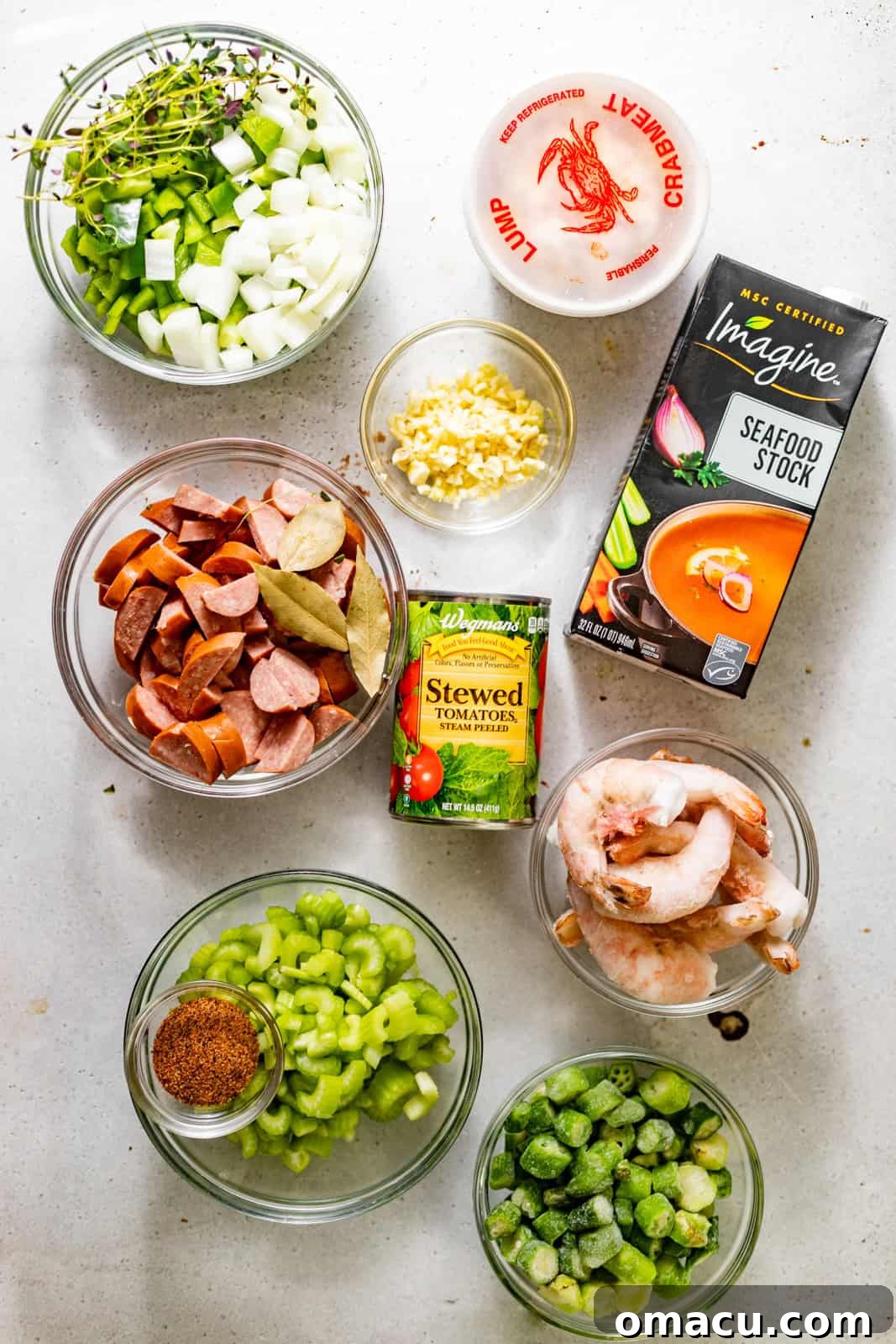
- **The Holy Trinity (Bell Pepper, Onion, & Celery):** This trio is the aromatic soul of Cajun and Creole cooking. These vegetables are not just fillers; they sauté down to create a foundational flavor base that is rich and savory, adding incredible depth and a delightful chunky texture to the gumbo. You’ll find this essential combination in many of our other beloved dishes, like Cajun Shrimp and Grits and Red Beans and Rice, proving their indispensable role in infusing dishes with incredible flavor.
- **Gumbo Filé Powder:** Made from ground sassafras leaves, filé powder is a traditional Cajun thickening agent that also imparts a distinct earthy and slightly citrusy flavor. While optional, it’s highly recommended for an authentic taste and texture. If you can find it, don’t hesitate to include it for that genuine Louisiana touch.
- **Assorted Seafood:** The beauty of seafood gumbo lies in its versatility. For this recipe, we use succulent jumbo lump crab meat and large, peeled, and deveined Gulf shrimp. For an even more authentic presentation, consider using whole shrimp with heads on for added flavor in the stock. Beyond these, feel free to get creative! You can incorporate any firm white fish like cod, catfish, or whiting, plump oysters, hearty crab legs, or even whole blue crabs. The key is to add the seafood towards the very end of cooking and closely monitor it to prevent overcooking, which can result in rubbery textures.
- **Andouille Sausage:** While any smoked sausage can work, Andouille sausage is truly king in this Louisiana seafood gumbo. Its coarse texture, smoky flavor, and spicy kick are quintessential to the dish’s character, providing a wonderful contrast to the delicate seafood.
- **Okra:** Another traditional thickener, okra is highly recommended for its unique texture and mild, slightly sweet flavor. It contributes to the gumbo’s body and mouthfeel. If fresh okra is hard to come by, frozen okra is an excellent and convenient substitute that performs just as well.
- **Canned Stewed Tomatoes:** Traditionally, tomatoes are a hallmark of Creole gumbo, as seen in dishes like our Creole Jambalaya. While some Cajun gumbos omit them, I find that stewed tomatoes add a delightful layer of flavor, a subtle acidity, and a touch of sweetness that beautifully complements the rich seafood broth. Don’t drain them; the liquid adds to the complexity.
- **Seafood Stock & Chicken Broth:** A blend of these two stocks is crucial. Seafood stock provides a deep, briny essence that enhances the oceanic flavors, while chicken broth adds a savory, robust richness, balancing the overall profile of the gumbo. This combination creates a truly harmonious and flavorful liquid base.
Step-by-Step Guide: How to Make Cajun Seafood Gumbo
Crafting a truly authentic Cajun Seafood Gumbo is a rewarding experience. Follow these detailed steps to ensure a rich, flavorful, and perfectly textured dish that will impress everyone at your table.
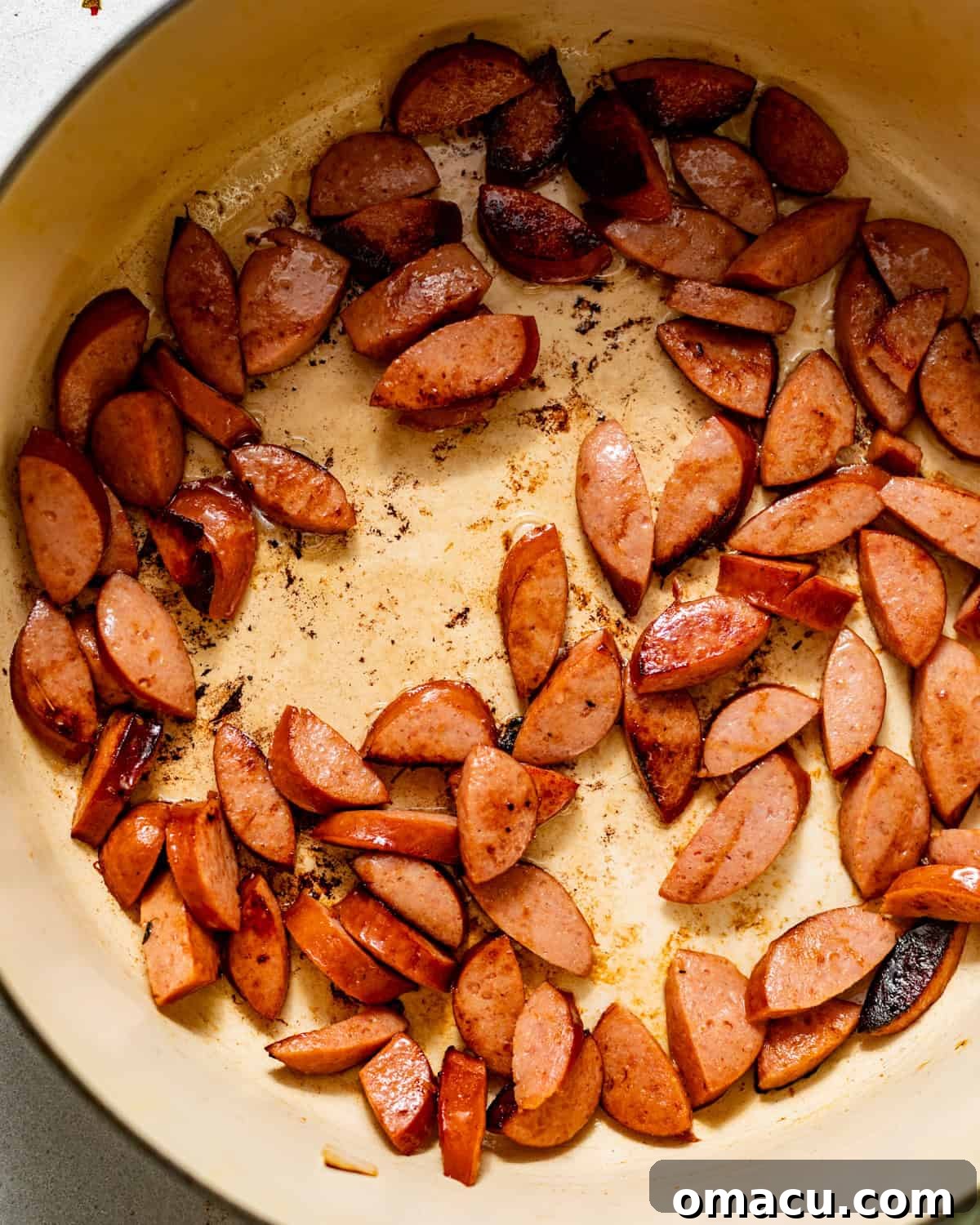
Step 1: Brown the Andouille Sausage. Begin by drizzling a small amount of olive oil into a large, heavy-bottomed pot or Dutch oven over medium heat. Allow the pot to warm for about 3 minutes. Add your sliced Andouille sausage and cook until it’s beautifully browned and has rendered some of its flavorful fat, which usually takes about 5 minutes. This step is crucial for building a flavorful base. Once browned, remove the sausage from the pot and set it aside, leaving the flavorful drippings behind.
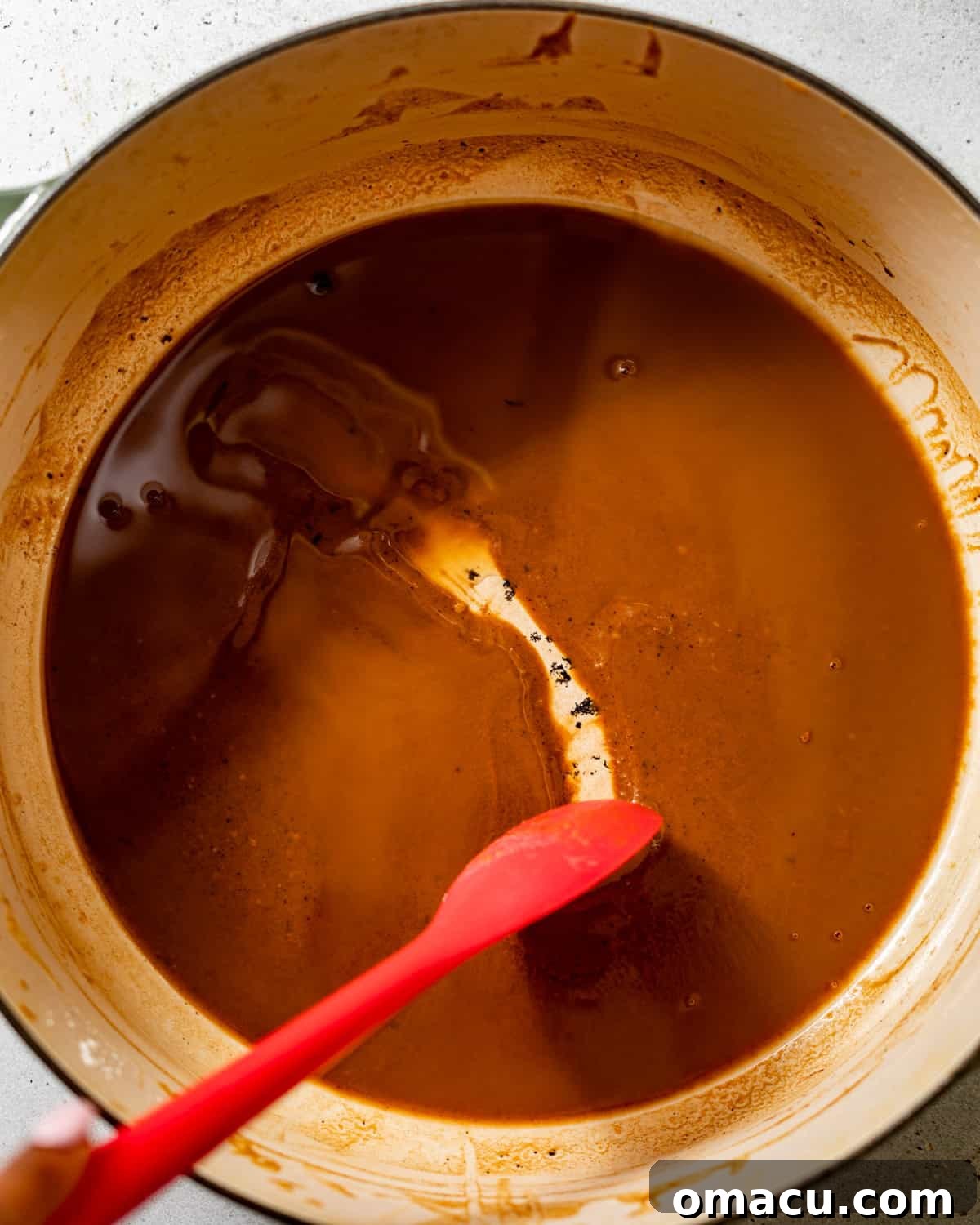
Step 2: Master the Dark Roux. To the same pot with the sausage drippings, add the vegetable oil and all-purpose flour. Reduce the heat to medium-low. Whisk or stir constantly to combine the oil and flour, ensuring there are no clumps. This is the most crucial step in gumbo making, requiring patience and constant attention. Continue stirring for approximately 30-40 minutes, or until the roux transforms into a rich, dark brown color, similar to dark chocolate or black coffee. This “labor of love” develops the deep, nutty flavor essential to authentic gumbo. Do not rush or burn it!
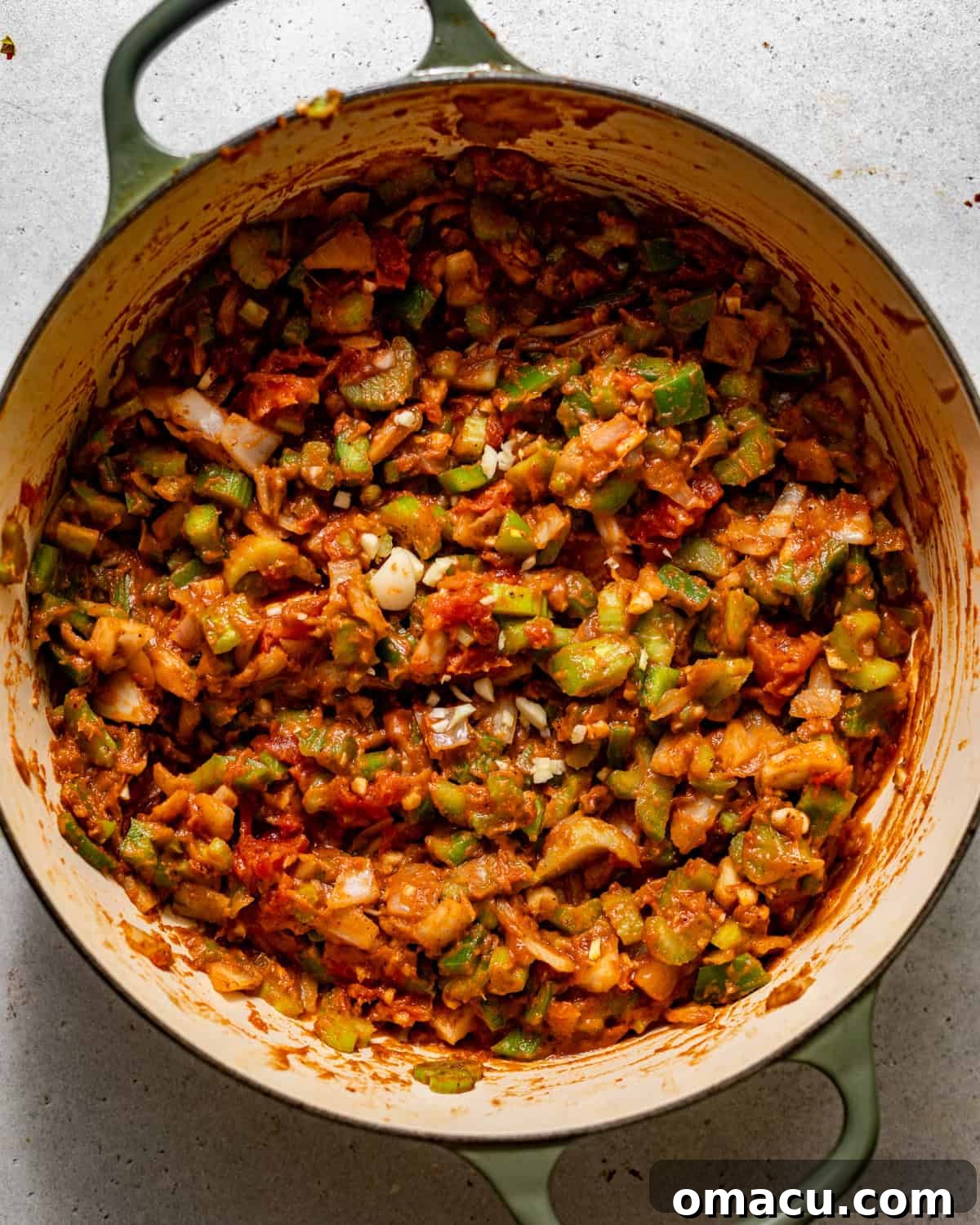
Step 3: Sauté the Holy Trinity and Seasonings. Once your roux has reached its desired dark hue, carefully add the diced green bell pepper, onion, and celery to the pot. Be mindful as the hot oil may pop slightly. Cook these vegetables for about 8 minutes, stirring occasionally, until they begin to soften. Next, stir in the minced garlic, Cajun seasoning, cayenne pepper (adjusting to your preferred level of heat), stewed tomatoes (undrained), and bay leaves. Mix thoroughly to ensure all ingredients are well combined and cook for another 5 minutes, allowing the aromatics and spices to release their full fragrance.
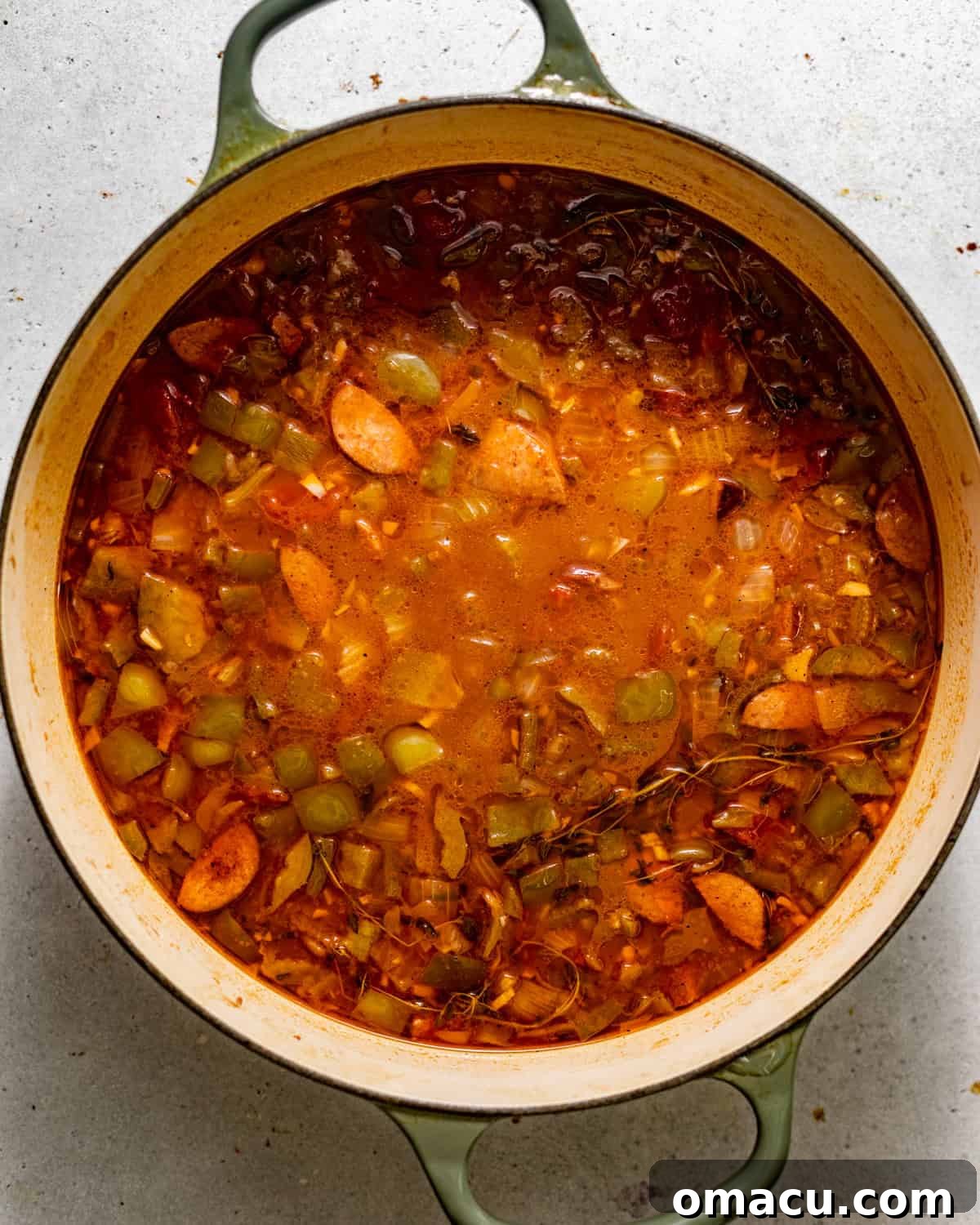
Step 4: Simmer the Gumbo Base. Pour in the seafood stock and chicken broth, then add the fresh thyme sprigs. Return the browned Andouille sausage slices to the pot. Bring the mixture to a gentle boil, then immediately reduce the heat to low. Cover the pot with a lid and allow the gumbo to simmer slowly for at least 1 hour. This extended simmering time is essential for the flavors to fully meld and deepen, creating a truly rich and complex broth.
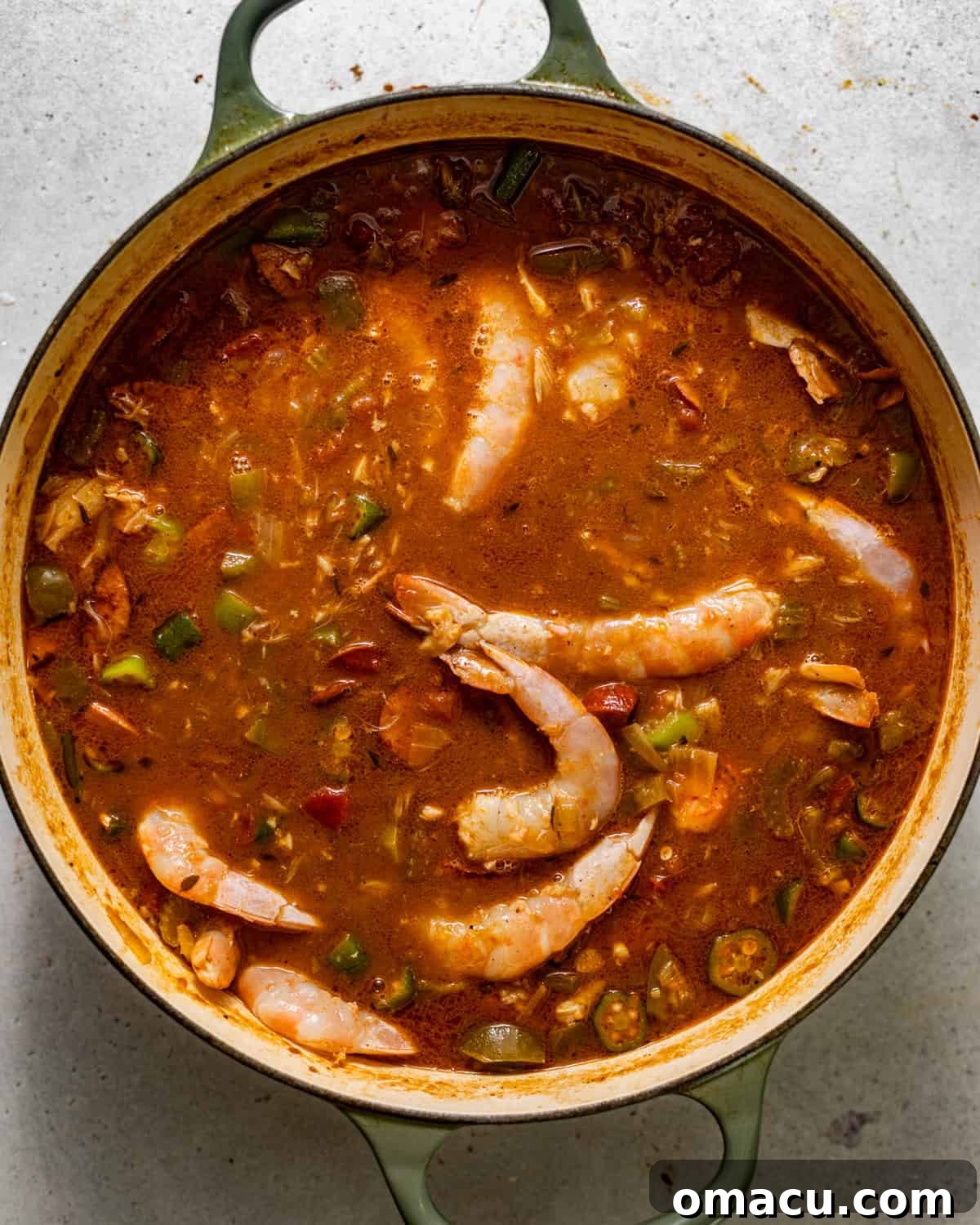
Step 5: Add Okra and Seafood. After the gumbo has simmered for 1 hour, remove the lid. Stir in the gumbo filé powder and frozen okra. Cook uncovered for another 10 minutes, allowing the okra to soften and contribute to the gumbo’s thickness. Next, add the lump crab meat, and if using, the crab claws, along with Worcestershire sauce and chopped fresh parsley. Gently mix these ingredients into the gumbo and cook for about 4-6 minutes, ensuring the crab claws (if used) are warmed through. Finally, add the large shrimp and cook just until they turn pink and curl slightly, which typically takes only 3-5 minutes. Remove the pot from the heat immediately to prevent the seafood from overcooking.
Taste the gumbo and adjust for salt and pepper as needed. Serve your exquisite Cajun Seafood Gumbo piping hot over a bed of fluffy white rice for the ultimate comforting experience.
Expert Tips for the Best Cajun Gumbo Ever
Achieving gumbo perfection is all about attention to detail. These expert tips will help you create a truly memorable and authentic Cajun Seafood Gumbo.
- Don’t Overcook the Seafood! This is perhaps the most critical tip. Seafood, especially shrimp and crab, cooks very quickly. Add them in the final 5-10 minutes of cooking. Overcooked seafood becomes rubbery and loses its delicate texture. Watch closely for shrimp to turn pink and curl, then remove from heat.
- Don’t Rush the Roux! The roux is the heart and soul of your gumbo. It’s a labor of love that cannot be hurried. Take your time, stir constantly, and keep the heat at medium-low to prevent burning. The goal is a deep, dark, almost black coffee-colored roux, which will provide immense depth of flavor and a beautiful color to your gumbo. A properly cooked roux is non-negotiable for authentic taste.
- Use Quality Seafood Stock: A good seafood stock elevates the entire dish. While store-bought seafood stock works well, for an even richer, more profound seafood flavor, consider making your own. A homemade stock made from shrimp shells and crab shells adds an unparalleled depth that can truly transform your gumbo.
- Embrace Okra and/or Filé Powder for Thickness: These traditional ingredients are key to achieving the right consistency. Okra adds body and helps thicken the gumbo naturally, contributing a subtle flavor. Filé powder, made from ground sassafras leaves, not only thickens but also imparts a unique earthy aroma. It should be stirred in towards the end of cooking, just before serving, or even directly into individual bowls to preserve its distinct flavor and texture. If filé powder isn’t available at your local grocery store, many specialty online retailers carry it, and it’s well worth seeking out for authenticity.
- Freshness Matters for Seafood: If you’re using fresh shrimp or any other fresh seafood, aim to purchase it as close to your cooking time as possible, ideally within 24 hours. Freshness directly impacts the flavor and texture of your gumbo.
- Layer Your Flavors: Cajun cooking is all about building layers of flavor. Don’t skip browning the sausage or sautéing the Holy Trinity until fragrant. Each step contributes to the final complex profile.
- Adjust Seasoning Gradually: Different brands of Cajun seasoning and stocks can vary in sodium content. Taste your gumbo throughout the simmering process and adjust salt, pepper, and cayenne pepper as needed, especially before adding the seafood.
How to Serve Your Delicious Seafood Gumbo
Serving Cajun Seafood Gumbo is an experience in itself, an invitation to savor the rich flavors and comforting embrace of Louisiana cuisine. Here’s how to present it for the ultimate enjoyment:
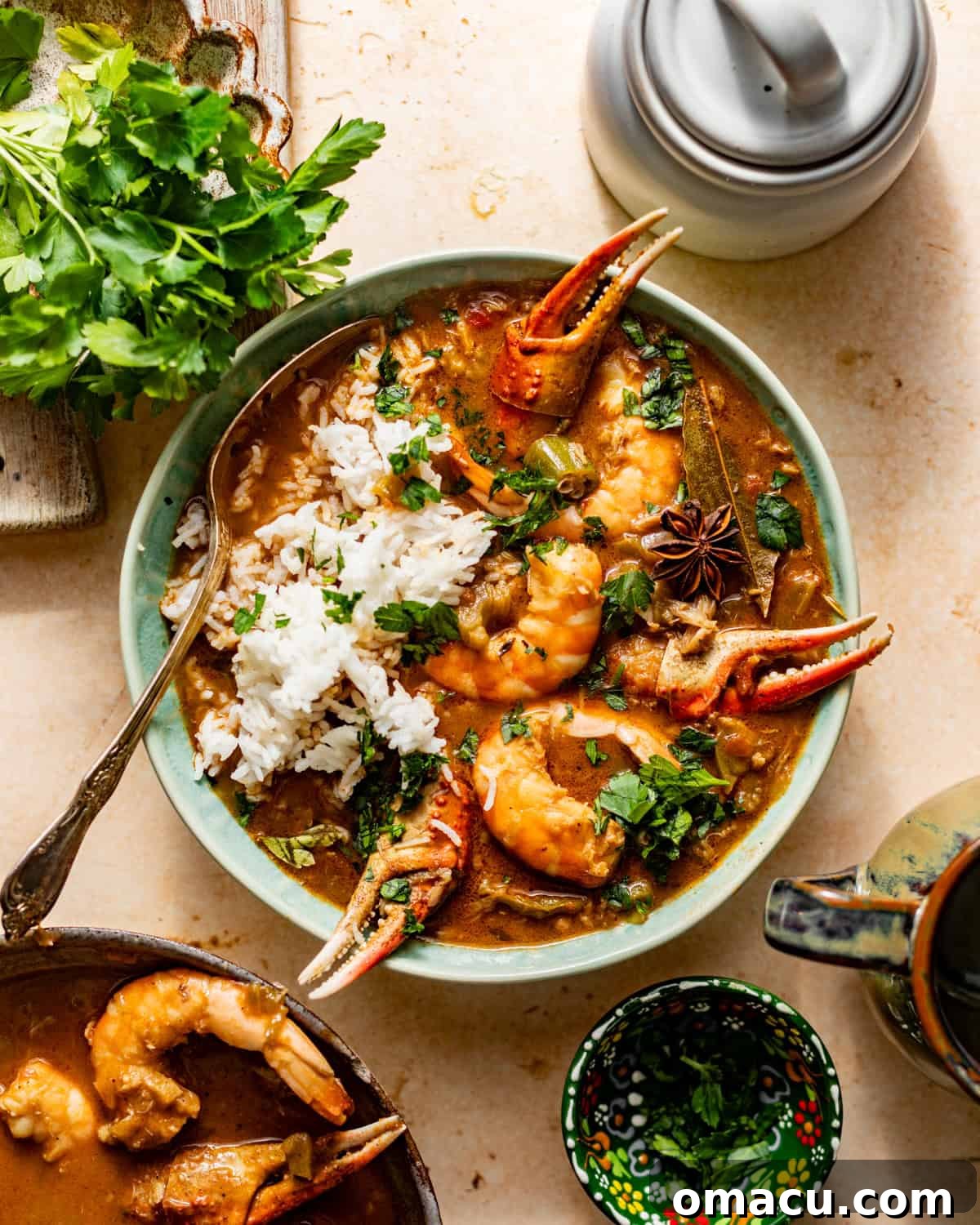
Gumbo is best enjoyed piping hot, generously ladled over a mound of fluffy white rice. The rice is essential; it perfectly soaks up every drop of the rich, flavorful broth, ensuring no deliciousness goes to waste. A final sprinkle of fresh green onions or finely chopped parsley adds a vibrant touch of color and a fresh, herbaceous note. For those who love a bit more heat, a dash of your favorite hot sauce is the perfect finishing touch, allowing each diner to customize their spice level.
To truly complete the meal, serve your gumbo with a side of crusty French bread or warm, buttery cornbread. These are ideal for scooping up every last bit of that incredible broth. For an authentic Louisiana experience, pair your meal with a cold beer or a glass of refreshing peach sweet tea, and enjoy it in the company of good friends and family. This dish is designed for sharing and celebration!
Frequently Asked Questions About Seafood Gumbo
Yes, gumbo freezes remarkably well, making it an excellent meal prep option. Allow the gumbo to cool completely to room temperature before transferring it to airtight containers or freezer-safe bags. It can be stored in the freezer for up to three months. To reheat, thaw it overnight in the refrigerator, then gently warm it on the stovetop over low heat. Be careful not to boil, especially with seafood, to prevent it from becoming rubbery.
Absolutely! Gumbo is one of those magical dishes that often tastes even better the next day, as the flavors have more time to meld and deepen. You can prepare the gumbo base (everything except the seafood) a day or two in advance. Store it in the refrigerator. When you’re ready to serve, reheat the base gently on the stovetop, then add the fresh seafood and cook just until done. This ensures the seafood is perfectly cooked and not overdone.
The total cooking time for seafood gumbo can vary, largely depending on the time taken to perfect your roux. From start to finish, you should plan to allot approximately 2 hours. This includes about 20 minutes for prep, 30-40 minutes for the roux, and a good hour for simmering the base, plus the final quick cooking of the seafood.
The most common and traditional seafood choices for gumbo are shrimp, various types of crabmeat (lump, claw, or whole blue crabs), and oysters. However, the beauty of gumbo is its adaptability. Many regional variations also include white fish such as red snapper, cod, catfish, or whiting. You can also experiment with crawfish, scallops, and mussels to customize your gumbo to your preference.
While both are delicious and deeply rooted in Louisiana culture, the main differences lie in their origins and ingredients. Cajun gumbo typically starts with a dark roux and often includes only the “Holy Trinity” (onion, celery, bell pepper) and meat/seafood, often without tomatoes. Creole gumbo, stemming from New Orleans’ more urban and diverse culinary traditions, also uses a roux (sometimes lighter) but often includes tomatoes and may feature a wider variety of seafood, sometimes poultry, and sausage.
More Irresistible Cajun Recipes
Discover More Cajun Delights
Seafood Recipes
Cajun Honey Butter Salmon
Main Course
Cajun Seafood Boil Recipe with Garlic Butter Sauce
Main Course
Creamy Cajun Orzo with Sausage
Main Course
Easy Cajun Chicken and Rice
Want more delicious and beautiful recipes delivered straight to your inbox? Subscribe to my newsletter to receive the latest seasonal creations as soon as they’re released!
If you make this incredible Cajun Seafood Gumbo recipe, please share your experience! We’d love for you to leave a star rating on the recipe card below and drop a comment to tell us what you thought. You can also tag @BritneyBreaksBread on Instagram and use the hashtag #britneybreaksbread so I can celebrate your beautiful creations!
Cajun Seafood Gumbo Recipe

Print Recipe
An authentic Cajun seafood gumbo recipe featuring shrimp, crab, and spicy Andouille sausage simmered in a savory, deeply flavored broth. The perfect comfort food, best enjoyed with fluffy white rice!
Equipment
- Large Pot or Dutch Oven
Ingredients
- 1 lb Andouille Sausage, sliced
- 1/2 cup Vegetable Oil
- 1/2 cup All-purpose Flour
- 2 Green Bell Peppers, diced
- 1 Yellow Onion, diced
- 4 Celery Stalks, chopped
- 6 cloves Garlic, minced
- 1 tbsp Cajun Seasoning
- 2 tsp Cayenne Pepper, (more or less as desired)
- 14.5 oz Stewed Tomatoes, (do not drain)
- 2 Bay Leaves
- 4 cups Seafood Stock
- 2 cups Chicken Broth
- 4 sprigs Fresh Thyme
- 1 lb Large Shrimp, peeled and deveined
- 1 tbsp Gumbo Filé Powder
- 2 cups Frozen Okra
- 1 lb Lump Crab Meat
- 1 lb Crab Claws (optional)
- 2 tbsp Worcestershire Sauce
- 1/4 cup Fresh Parsley, chopped
- Salt and freshly ground Black Pepper, to taste
Instructions
- Add a drizzle of olive oil to a large pot or Dutch oven over medium heat. Warm for about 3 minutes, then add sliced Andouille sausage and cook until browned, about 5 minutes. Remove from the pot and set aside, leaving rendered fat in the pot.
- To the same pot, add 1/2 cup vegetable oil and 1/2 cup all-purpose flour. Reduce heat to medium-low. Stir constantly for 30-40 minutes, until a dark roux forms, the color of dark chocolate or black coffee. This slow cooking is essential for flavor development.
- Once the roux is formed, carefully add diced green bell pepper, onion, and celery. Cook for 8 minutes, until vegetables soften slightly. Then, stir in minced garlic, Cajun seasoning, cayenne pepper, undrained stewed tomatoes, and bay leaves. Mix well and cook for about 5 minutes, allowing flavors to deepen.
- Pour in seafood stock and chicken broth, then add the fresh thyme sprigs and return the browned sausage to the pot. Bring to a boil, then reduce heat to low. Cover and simmer for 1 hour, allowing the flavors to fully meld.
- After 1 hour, remove the lid. Stir in gumbo filé powder and frozen okra. Cook uncovered for 10 minutes. Then, add lump crab meat, crab claws (if using), Worcestershire sauce, and chopped parsley. Mix gently and cook for 4-6 minutes, or until crab claws are warmed through.
- Finally, add the large shrimp and cook just until they turn pink and curl slightly, about 3-5 minutes. Immediately remove from heat to prevent overcooking the seafood.
- Taste and adjust for salt and pepper as needed. Serve your authentic Cajun Seafood Gumbo piping hot over fluffy white rice.
Notes
- Don’t Overcook the Seafood! This is crucial for tender, delicious shrimp and crab. Add them only in the last few minutes of cooking.
- Don’t Rush the Roux! Patience is key. A dark, properly cooked roux is the foundation of authentic gumbo flavor.
- Use a Quality Seafood Stock. Store-bought is fine, but homemade stock from seafood shells will provide an even deeper, more authentic flavor.
- Okra and Filé Powder. These are traditional thickeners. Okra adds body, while filé powder offers a unique earthy flavor. Add filé powder towards the end or directly to individual bowls.
- Fresh Seafood. If using fresh shrimp or other seafood, aim to cook it within 24 hours of purchase for optimal taste and texture.
Nutrition
Carbohydrates: 27g,
Protein: 46g,
Fat: 42g,
Saturated Fat: 10g,
Polyunsaturated Fat: 15g,
Monounsaturated Fat: 13g,
Trans Fat: 0.3g,
Cholesterol: 194mg,
Sodium: 2721mg,
Potassium: 1163mg,
Fiber: 4g,
Sugar: 9g,
Vitamin A: 2698IU,
Vitamin C: 75mg,
Calcium: 220mg,
Iron: 5mg
Nutrition information is automatically calculated and should only be used as an approximation.
Tried this recipe?
Mention @BritneyBreaksBread or tag #BritneyBreaksBread!