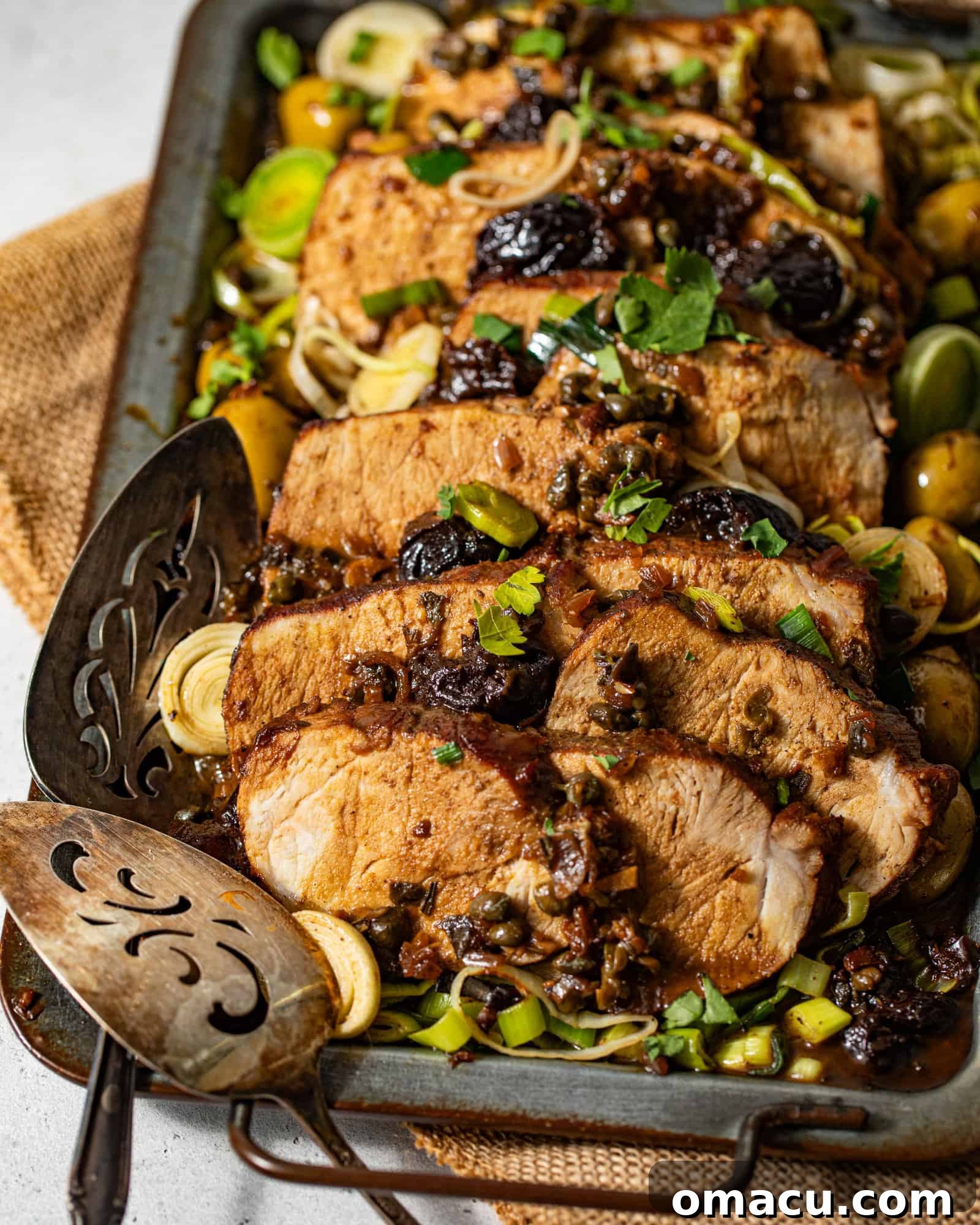
Welcome to a culinary journey that transforms a beloved classic into an unforgettable experience: Pork Marbella. This exquisite dish masterfully blends the rich, savory notes of tender pork with an enticing sweet and tangy olive oil marinade. Imagine succulent pork, cooked to absolute perfection, elegantly presented over a bed of gently sautéed leeks, adorned with vibrant green olives, luscious prunes, briny capers, and aromatic shallots. If you’re searching for a truly show-stopping meal that impresses without demanding hours in the kitchen, this reimagined Pork Marbella is an absolute revelation. It’s a dish designed to elevate any occasion, from a special family dinner to a festive holiday gathering, promising a symphony of flavors in every bite.
For more incredible pork recipes that delight the palate, explore my collection including Smothered Pork Chops, Pulled Pork Sliders, and Shake and Bake Pork Chops!
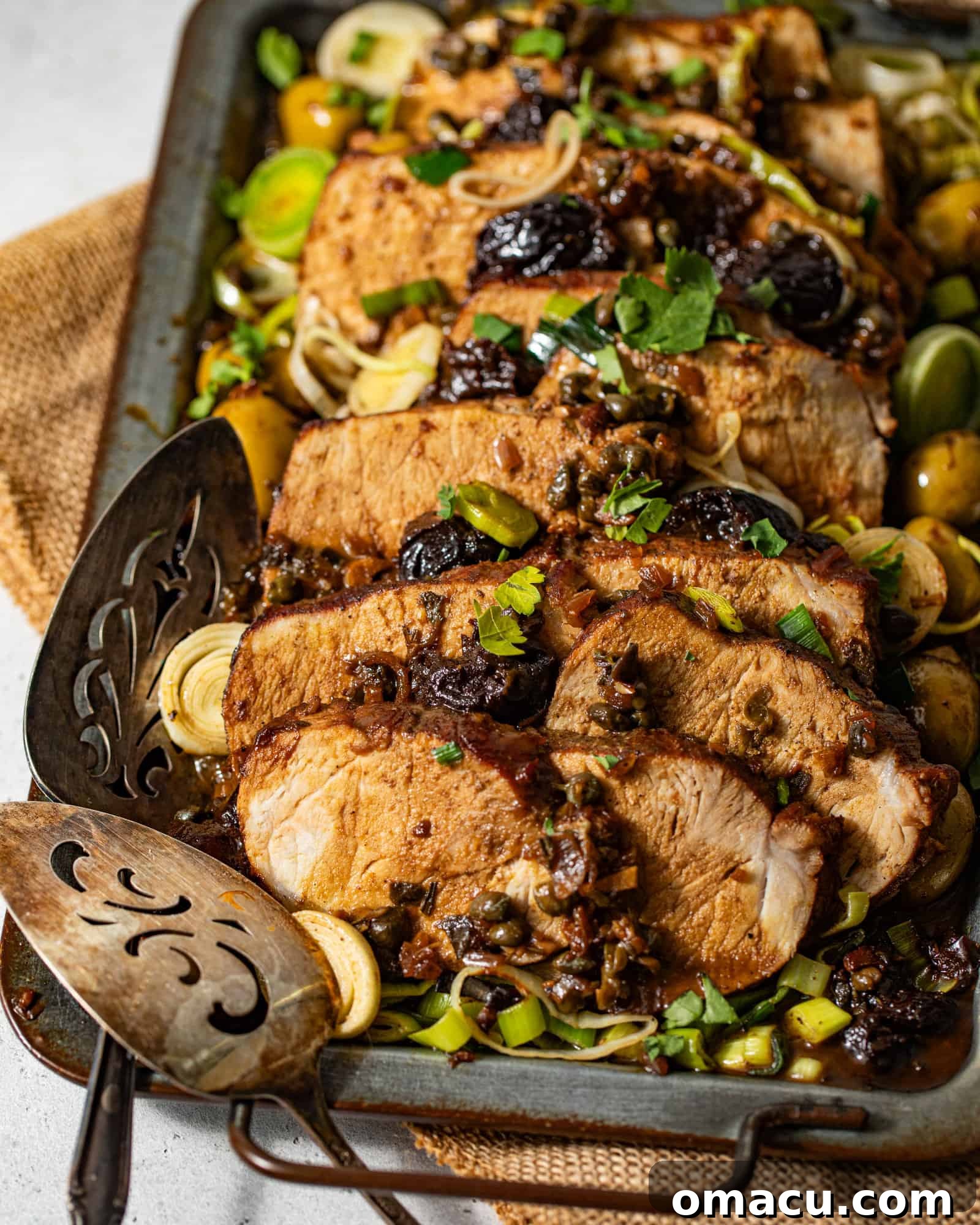
A Modern Twist on a Timeless Classic: Pork Marbella Reinvented
Crafting this Pork Marbella recipe was an absolute joy! It’s a delightful reimagining of the iconic Chicken Marbella, a celebrated Jewish-American dish that first captivated home cooks in the 1970s. The traditional Chicken Marbella typically features a marinade of dry white wine, red wine vinegar, capers, bay leaves, prunes, olives, and fresh herbs. However, staying true to my culinary philosophy, I love to infuse classic recipes with a unique and elevated touch.
Instead of chicken, this recipe showcases the incredible versatility of pork tenderloin, a lean yet flavorful cut of meat that truly shines in this preparation. We’ve also taken the flavor profile to new heights by introducing a few thoughtful substitutions. I’ve swapped the tart red wine vinegar for the rich, sweet complexity of balsamic vinegar, and opted for a deep red wine instead of white, which imparts a profound richness to the sauce that is simply irresistible.
But the innovation doesn’t stop there. To enhance the dish’s texture and aroma, I’ve incorporated tender, sautéed shallots and sweet leeks. The marinade, once the pork is cooked, is masterfully reduced and then enriched with a touch of piquant Dijon mustard and velvety sour cream, creating an incredibly luscious and smooth sauce that coats every morsel of pork. This transformation brings a vintage dish into the modern culinary landscape, replete with all the sophisticated flavors and textures of 2023. With this recipe, even everyday home cooks can confidently present a dish that rivals the creations of a five-star Michelin chef. And the best part? It’s surprisingly straightforward to prepare! Enough talk, let’s dive into making this culinary masterpiece.
Table of Contents
- Why You’ll Love This Pork Marbella Recipe
- Essential Ingredients for Pork Marbella
- Expert Tips for Perfect Pork Tenderloin
- Step-by-Step Guide: How to Make Pork Marbella
- Serving Suggestions: What to Pair with Pork Marbella
- The Ultimate Pork Marbella Recipe Card
- More Delicious Recipes to Explore
Why You’ll Love This Pork Marbella Recipe
This Pork Marbella isn’t just another dinner recipe; it’s an experience waiting to happen in your kitchen. Here’s why it’s destined to become a new favorite:
- Gourmet Flavor, Effortless Execution: Despite its impressive presentation and complex flavor profile, this dish is surprisingly easy to make. The marinade does most of the heavy lifting, infusing the pork with incredible depth.
- Sweet & Savory Harmony: The unique combination of prunes, capers, olives, and balsamic vinegar creates a perfectly balanced sweet and savory taste that is utterly addictive.
- Tender & Juicy Pork: Pork tenderloin, when marinated and cooked correctly, remains incredibly tender and juicy, making every bite a delight.
- Velvety Rich Sauce: The reduced marinade, finished with Dijon mustard and sour cream, transforms into a luxurious, velvety sauce that is truly the star of the show.
- Perfect for Any Occasion: Whether it’s a casual weeknight dinner or a sophisticated holiday meal, Pork Marbella fits seamlessly, making you look like a culinary genius.
- Unique Ingredient Pairings: Discover how ingredients like prunes and capers contribute not just flavor, but also a wonderful texture and intriguing complexity to the dish.
Essential Ingredients for Pork Marbella
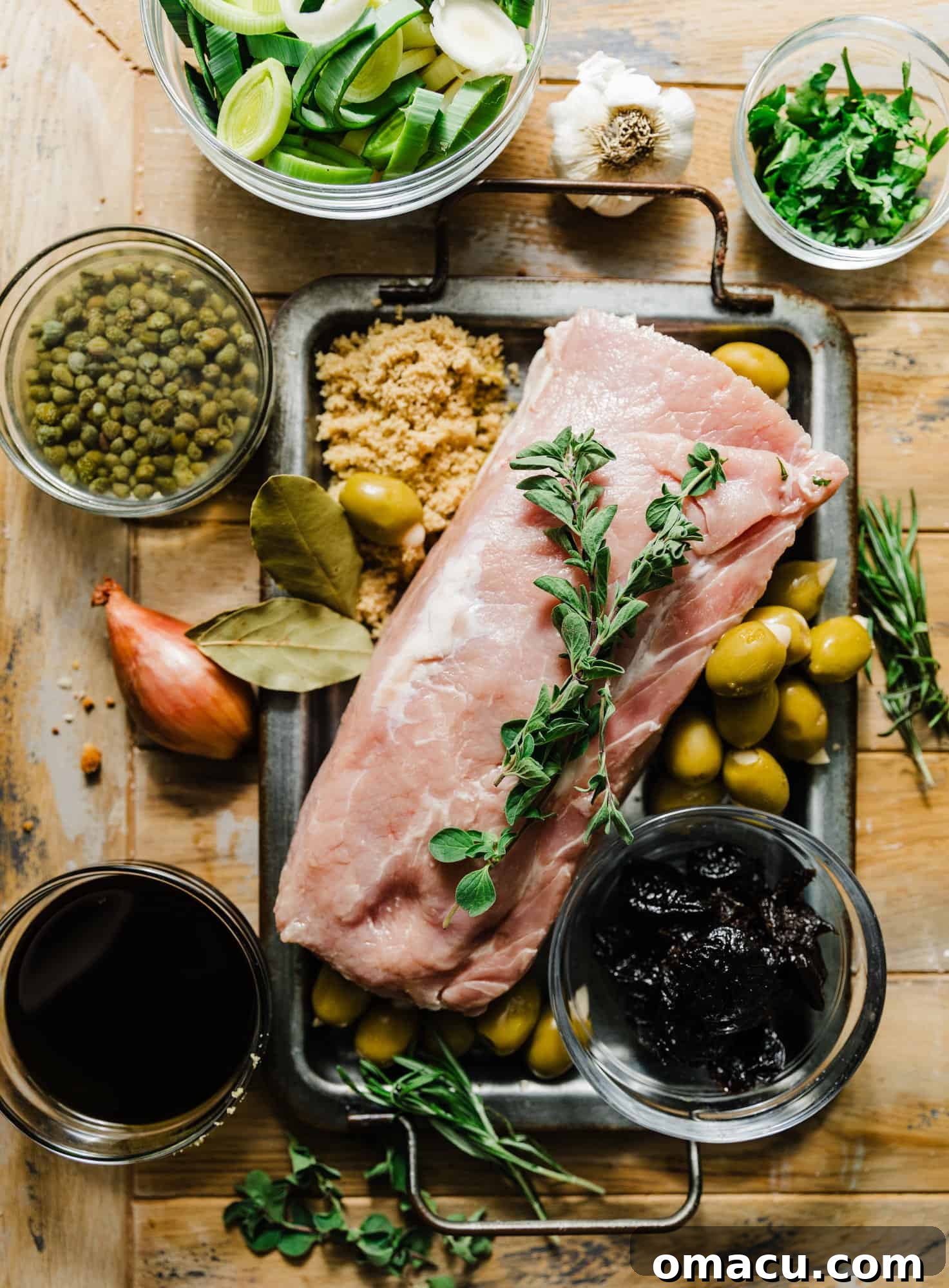
(For the full list of ingredients and precise quantities, please refer to the comprehensive recipe card below.)
- Pork Tenderloin: This lean cut of pork is ideal for marinating and quick cooking, ensuring a tender and moist result. When selecting your tenderloin, look for one with a slight layer of fat or good marbling if possible, as fat equals flavor and moisture.
- Extra Virgin Olive Oil: The foundation of our rich marinade. It’s crucial to use a high-quality extra virgin olive oil. A good olive oil will impart a fruity, slightly peppery flavor that truly enhances the overall taste of the dish.
- Balsamic Vinegar: Replacing the traditional red wine vinegar, balsamic vinegar offers a sweeter, more complex, and fruitier tang. It contributes a beautiful depth of flavor that perfectly complements the prunes and red wine.
- Green Olives: Even if you’re not typically an olive enthusiast, prepare to be converted! When cooked in this dish, the olives undergo a magical transformation, developing a subtly sweet and incredibly savory flavor that’s utterly divine.
- Prunes: Do not skip these! Prunes are not just delicious; they are incredibly nutritious. Packed with fiber and antioxidants, they can aid in lowering cholesterol and blood pressure. In this recipe, prunes are a non-negotiable ingredient, adding a deep, caramel-like sweetness and unique texture that is essential for the authentic Marbella flavor and creates an unmatched richness in the sauce.
- Capers: Use capers straight from the jar, along with their briny juice! This liquid gold adds a wonderful punch of salty, tangy flavor that cuts through the richness of the pork and balances the sweetness of the prunes and balsamic.
- Shallots: A gourmet alternative to onions, shallots offer a delicate, nuanced flavor profile that sits beautifully between onion and garlic. While you *can* substitute with regular onion, the subtle sweetness and milder aroma of shallots are worth the extra trip to the grocery store.
- Fresh Herbs: A fragrant trio of fresh rosemary, parsley, and oregano elevates the aromatic complexity of our Pork Marbella. These herbs are key to imparting a fresh, vibrant, and earthy essence.
- Leeks: When sautéed, leeks become wonderfully tender and buttery, adding a mild, sweet onion flavor and a delightful texture to the dish. They create a perfect savory bed for the pork.
- Light Brown Sugar: A touch of brown sugar is added to the marinade to help balance the acidity of the balsamic and red wine, while also promoting beautiful caramelization on the pork and in the sauce.
Expert Tips for Perfect Pork Tenderloin
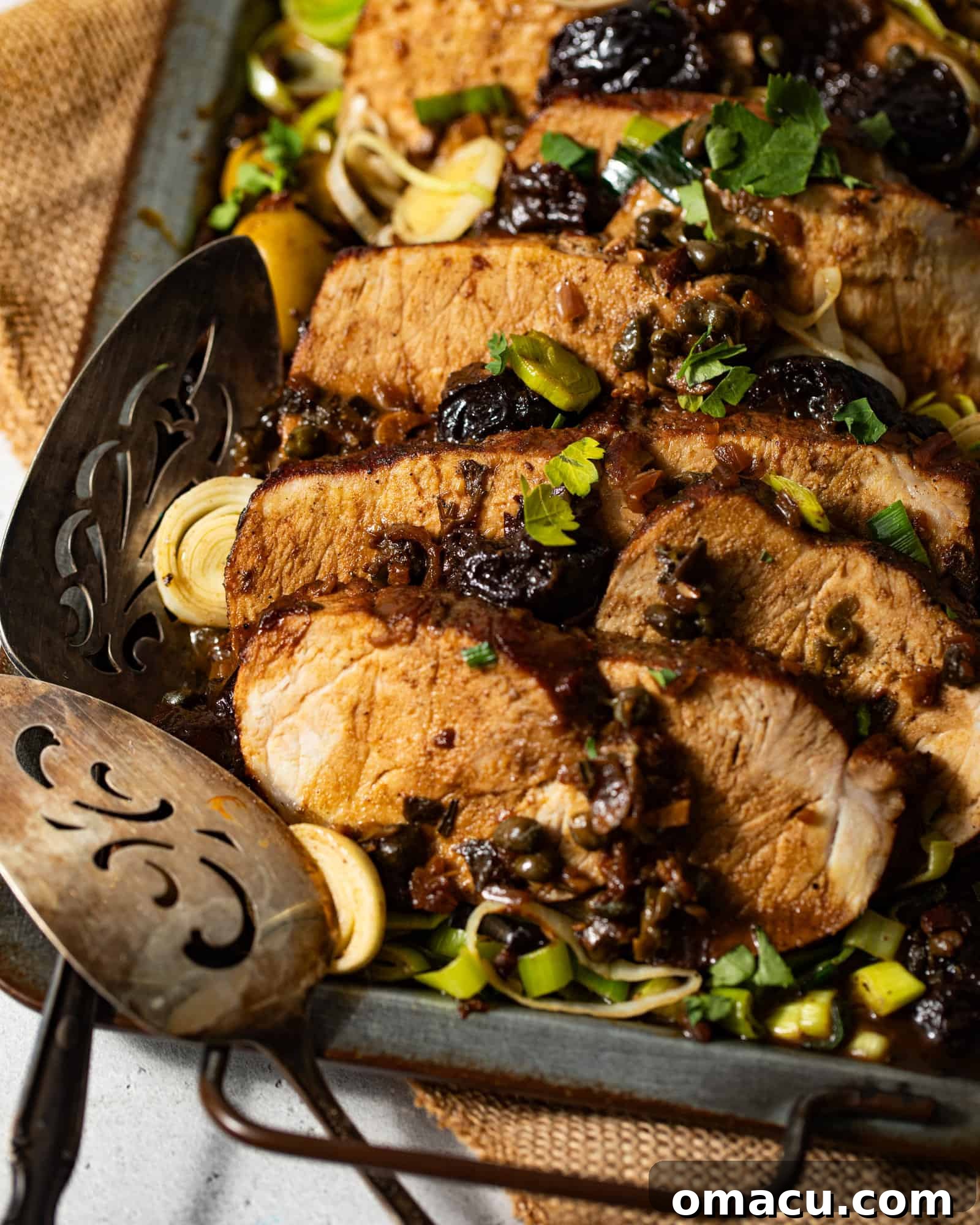
- Always Marinate for Flavor: While a minimum of 2-4 hours is recommended, marinating your pork tenderloin overnight in the refrigerator allows the flavors to truly penetrate the meat, resulting in a more tender and intensely flavorful dish. Don’t rush this step!
- Bring to Room Temperature: Before searing, allow the marinated pork to sit at room temperature for about 30 minutes. This ensures more even cooking and helps achieve a better sear, preventing the outside from burning before the inside is cooked.
- Use a Meat Thermometer: The absolute best way to ensure perfectly cooked, juicy pork tenderloin without overcooking is to use a reliable instant-read meat thermometer. Pork tenderloin is best cooked to an internal temperature of 145°F (63°C) for medium-rare, or 160°F (71°C) for medium. Remove from heat just before it reaches your desired temperature, as it will continue to cook slightly while resting.
- Let it Rest: After cooking, always allow the pork tenderloin to rest for 5-10 minutes before slicing. This crucial resting period allows the juices, which have been pushed to the center during cooking, to redistribute throughout the meat. The result? A remarkably moist, tender, and flavorful cut every single time.
- Slice Against the Grain: When it’s time to carve your beautiful pork, be sure to slice against the grain of the meat. This technique shortens the muscle fibers, making each bite incredibly tender and easy to chew.
- Don’t Discard the Marinade: The used marinade, after the pork is removed, is packed with incredible flavor. It forms the base of our luxurious sauce, so make sure to reserve it!
Step-by-Step Guide: How to Make Pork Marbella
Follow these simple steps to create a Pork Marbella that will impress even the most discerning palates.
- Step 1: Prepare the Marinade: In a large bowl or a robust resealable plastic bag, combine the extra virgin olive oil, balsamic vinegar, prunes, green olives, and capers (including all the flavorful brine). Add the pork tenderloin to this mixture, ensuring it is fully submerged. Seal and refrigerate for at least 2 to 4 hours, or ideally, overnight, allowing the flavors to deeply infuse the meat.
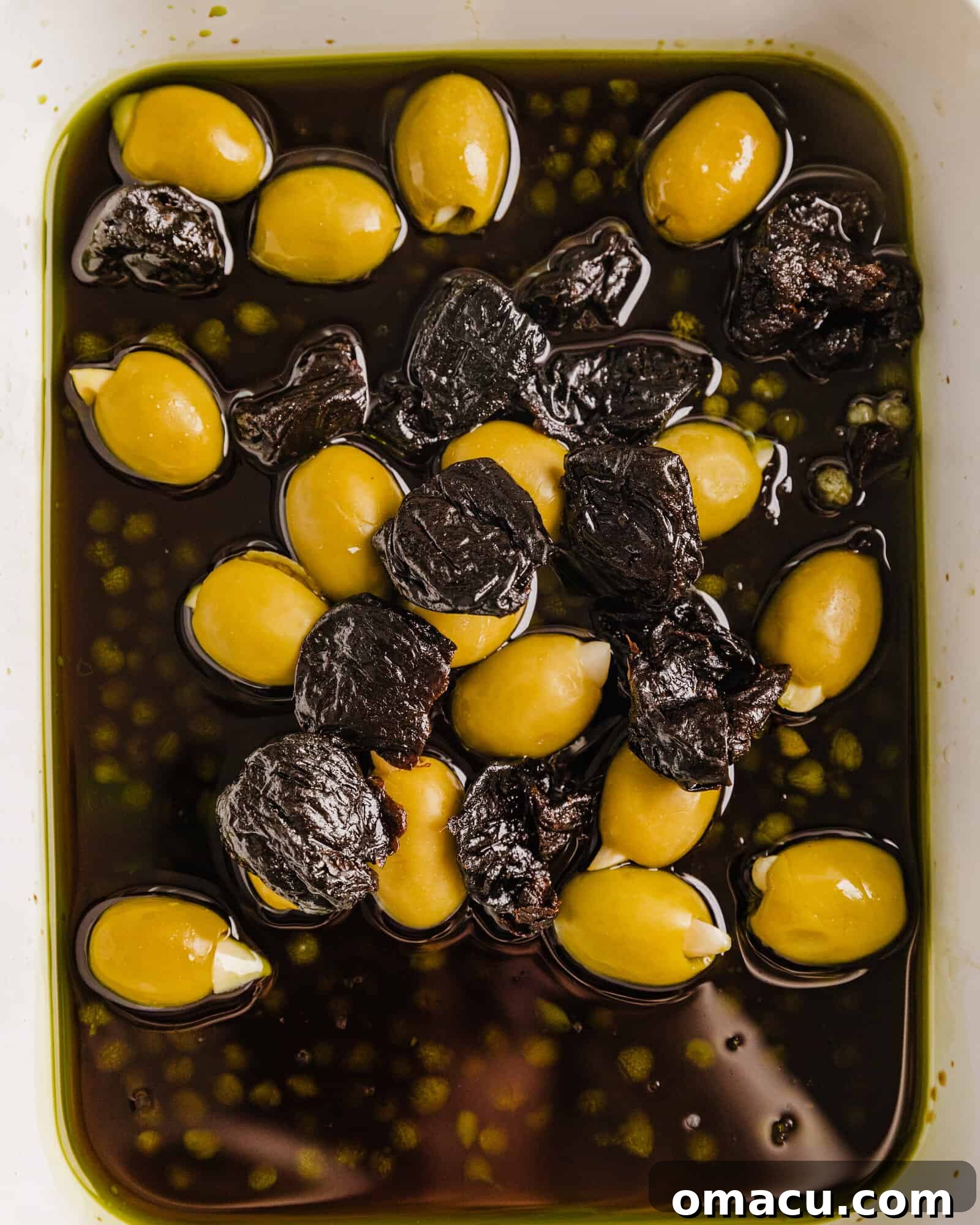
- Step 2: Sear the Pork: Preheat your oven to a robust 425°F (220°C). Remove the pork from the refrigerator and let it sit at room temperature for 30 minutes. Carefully remove the pork from the marinade (reserving the marinade!) and pat it thoroughly dry with paper towels to ensure a beautiful sear. Season the pork generously with freshly ground black pepper and kosher salt.
- Step 3: Build the Flavor Base: Heat a generous amount of extra-virgin olive oil in a Dutch oven or a large oven-safe pan over medium-high heat. Sear the pork on all sides until it achieves a rich, golden-brown crust. Reduce the heat to medium-low, then add the diced garlic cloves, shallots, fresh rosemary, and oregano to the pan. Sauté until the shallots are slightly softened and fragrant, typically 2-3 minutes.
- Step 4: Braise and Roast: Pour the reserved marinade over the pork in the pan. Stir in the brown sugar and pour in the red wine. Add the bay leaves, ensuring they are submerged in the liquid. Bring the mixture to a gentle boil, then cover the pan with a lid and transfer it to the preheated oven. Cook for 20 minutes, covered, then remove the lid and continue cooking for another 5-10 minutes, or until the internal temperature of the pork reaches 140°F (60°C). Remember, it will continue to cook while resting.
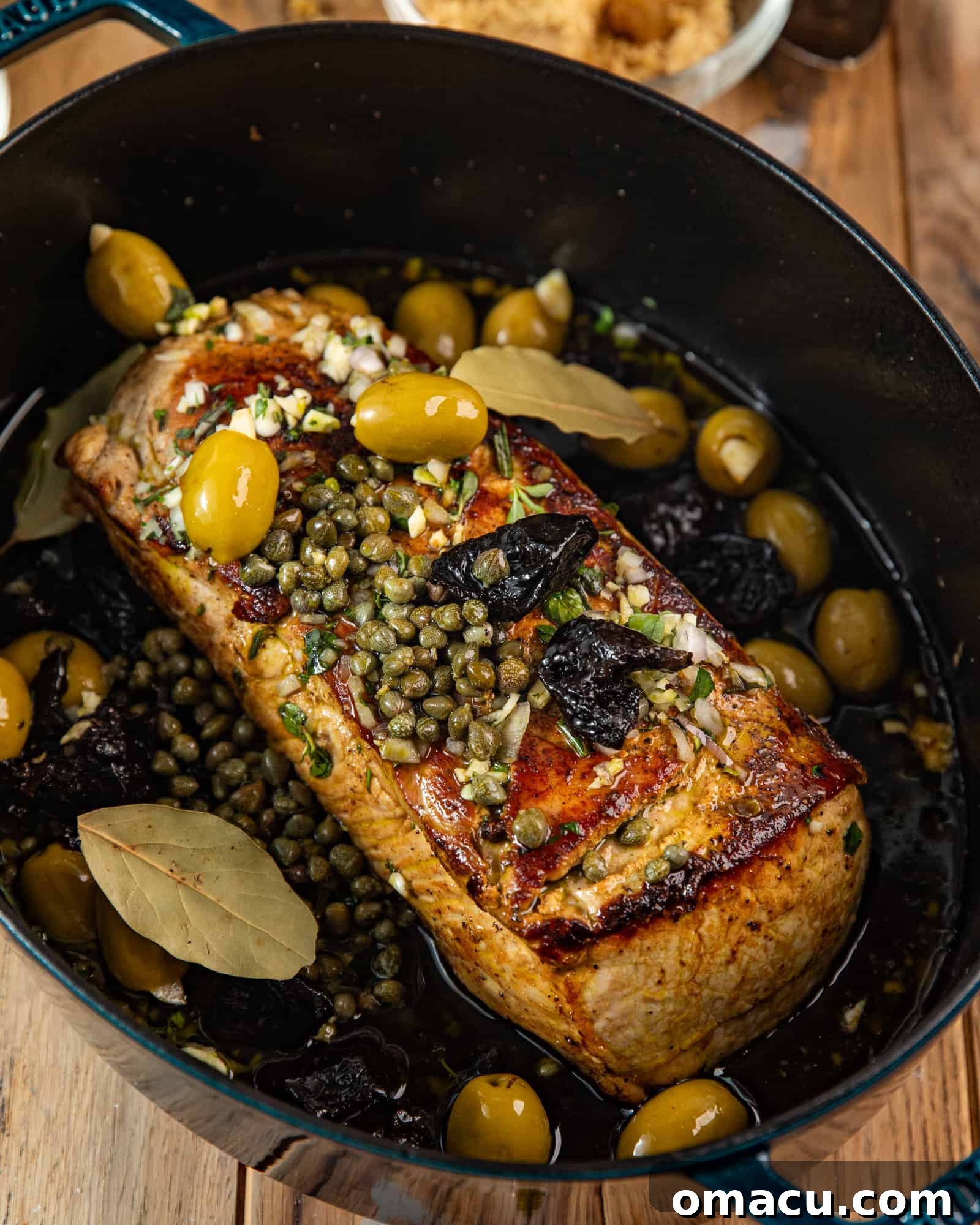
- Step 5: Sauté the Leeks: While the pork is roasting, prepare the leeks. Melt salted or unsalted butter (depending on your preference) in a separate skillet over medium-high heat. Add the sliced leeks, season with a pinch of salt and pepper, and sauté for about 4-6 minutes, or until they are softened and lightly browned, acquiring a sweet, buttery flavor. Remove from heat.
- Step 6: Craft the Velvety Sauce: Carefully remove the cooked pork from the pan and set it aside to rest on a cutting board. Strain the pan juices into a large bowl, discarding the cooked prunes, olives, shallots, and herbs from the pan, but save them for later! Return the strained juices to the pan and bring to a boil over medium-high heat, allowing the liquid to reduce by half, concentrating its rich flavors. Once reduced, whisk in the Dijon mustard. Remove the pan from the heat and stir in the sour cream, whisking continuously until the sauce is beautifully smooth and creamy.
- Step 7: Assemble and Serve: Arrange the sautéed leeks artfully on the bottom of your chosen serving dish. Slice the rested pork tenderloin against the grain into thick medallions and arrange them on top of the leeks. Pour the luscious, velvety sauce over the pork. Finally, scatter the reserved cooked olives, capers, and prunes from the straining step back over the dish. Garnish generously with fresh, chopped parsley for a burst of color and freshness. Serve immediately and enjoy the applause!
Serving Suggestions: What to Pair with Pork Marbella
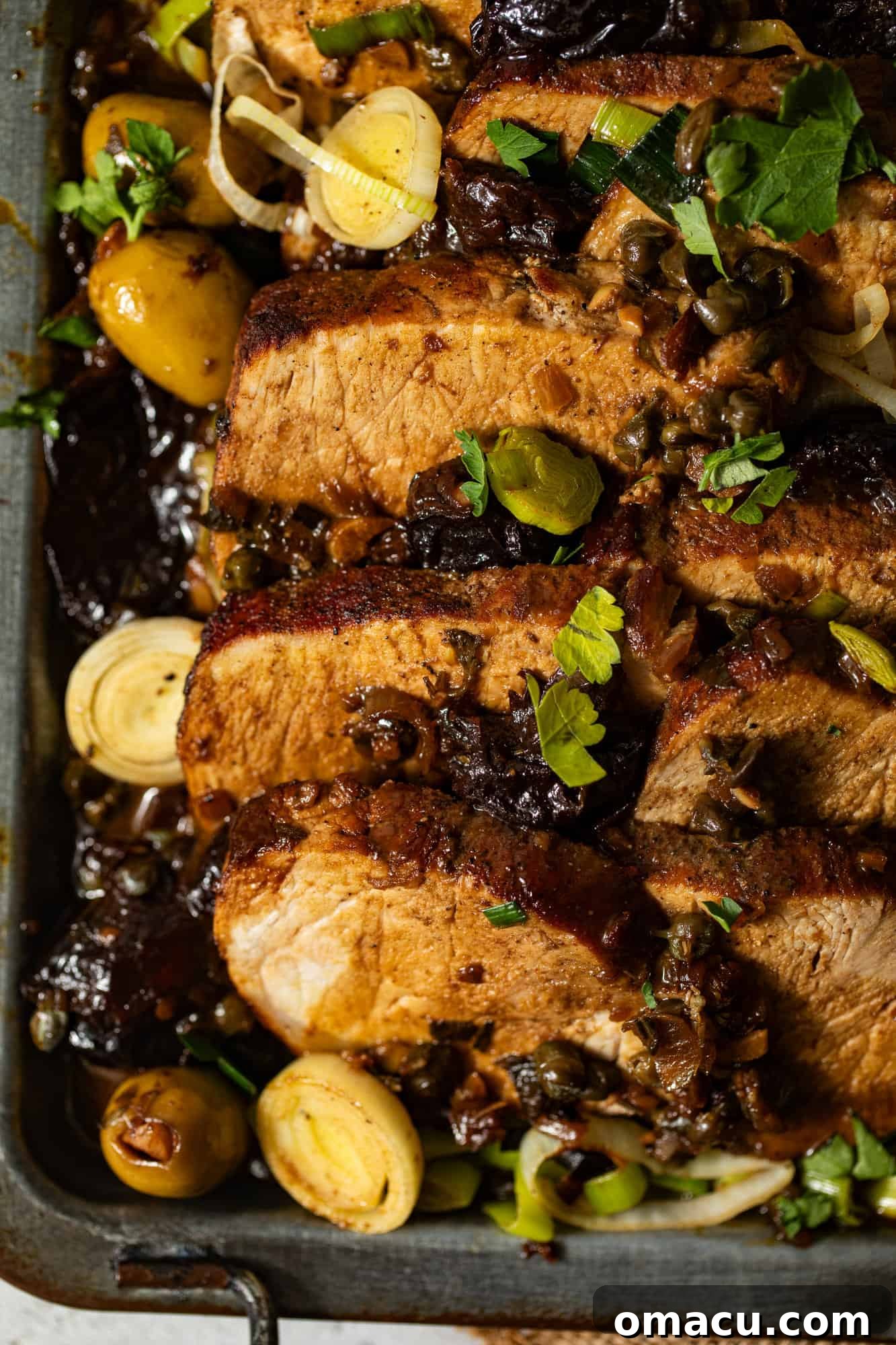
Pork Marbella is a truly versatile and complete meal on its own, but it pairs wonderfully with a variety of side dishes that enhance its rich flavors. I particularly enjoy it alongside a creamy polenta and a crisp, refreshing side salad.
Other phenomenal pairings include a generous helping of brown butter garlic and herb mashed potatoes, which soak up the exquisite sauce beautifully. Roasted sweet and spicy Brussels sprouts offer a delightful counterpoint with their slightly bitter and charred notes. Don’t forget some warm, fluffy brioche dinner rolls to sop up every last drop of that incredible sauce. Yum!
And for a truly cohesive and delightful dessert, especially if you’re a prune lover like me, consider making a vintage prune cake to round out the meal perfectly.
This delightful recipe and accompanying blog post were created in proud partnership with California Prunes. I received compensation and product in exchange for this work, and my opinions on their wonderful prunes are, as always, entirely genuine. Thank you for your continued support of the brands that make this content possible!
More Delicious Recipes to Explore
Discover Your Next Favorite Meal
Main Course
Beef Osso Buco
Main Course
Italian Stuffed Peppers Recipe
Main Course
Ground Turkey Shepherd’s Pie
Main Course
Mississippi Chicken Recipe
Want more delicious and beautiful recipes delivered straight to your inbox? Subscribe to my newsletter to receive the latest seasonal creations as soon as they’re released!
If you try this incredible Pork Marbella recipe, please take a moment to leave a star rating on the recipe card below and share your thoughts in the comments! You can also tag @BritneyBreaksBread on Instagram and use the hashtag #britneybreaksbread so I can celebrate your beautiful culinary creations!
Pork Marbella

Equipment
-
Braising Pan or 9×13 Baking Pan (pan should be suitable for the stove and oven)
Ingredients
- 1/2 cup Olive Oil
- 1/2 cup Balsamic Vinegar
- 1 cup Prunes
- 1/2 cup Green Olives
- 1/2 cup Capers, (with brine/juice)
- 4 lbs Pork Tenderloin
- 6 cloves Garlic, (diced)
- 2 Shallots, (diced)
- 1 tbsp Fresh Rosemary, (stems removed and chopped)
- 3 tbsp Fresh Oregano, (stems removed and chopped)
- 1/4 cup Brown Sugar
- 1 cup Dry Red Wine
- 4 Bay Leaves
- 2 Leeks, (sliced)
- 2 tbsp Salted Butter
- 1 tbsp Dijon Mustard
- 2 tbsp Sour Cream
- 1 tbsp Fresh Parsley, (diced)
Instructions
-
Combine olive oil, balsamic vinegar, prunes, green olives, capers (with the juice/brine) together in a bowl or a large resealable plastic bag. Add the pork tenderloin and submerge in the marinade. Let the meat marinate for at least 2-4 hours, ideally overnight in the refrigerator.
-
Preheat the oven to 425 degrees F (220°C). Let the meat sit at room temperature for 30 minutes. Remove the heat from the marinade (don’t throw it out!) and pat dry with paper towels. Season pork with black pepper and kosher salt. Then add a generous amount of extra-virgin olive oil to a dutch oven or large oven safe pan.
-
Sear the pork on all sides until golden brown, then lower the heat to medium-low and add the diced garlic cloves, shallots, rosemary, and oregano. Cook until shallots are slightly softened. Remove from heat and pour the reserved marinade on top of the pork along with the brown sugar and pour in red wine. Add bay leaves and ensure they’re submerged in the sauce. Toss together, and bring mixture to a boil. Cover with a lid, and cook for 20 minutes, covered, and then 5-10 minutes uncovered, or until the internal temperature reaches 140 degrees F (60°C).
-
While the pork is cooking, saute the leeks. Add salted or unsalted butter (whatever your preference) to a skillet over medium-high heat and add the leeks. Season with salt and pepper and remove from heat when the leeks begin to soften and brown, about 4-6 minutes.
-
Remove pork and strain the juices into a large bowl, removing all of the prunes, olives, shallots etc from the pan. Add the juices back into the pan and bring to a boil to reduce by half. Once reduced, whisk in dijon mustard and remove from heat and add sour cream, whisking until smooth.
-
Add the leeks to the bottom of a serving dish, place the pork on top, and pour the sauce, olives, capers, and prunes on top. Garnish with fresh parsley.
Notes
Pro Tips
-
Let it Rest:
- Allow the pork tenderloin to rest for about 5-10 minutes after cooking. This resting period allows the juices to redistribute throughout the meat, ensuring a moist and tender result when you cut into it.
-
Slice Against the Grain:
- When carving the pork tenderloin, slice against the grain. This helps break up the muscle fibers, making each bite more tender.
- Cooking Temperature:
- Use a meat thermometer to monitor the internal temperature of the pork. Cook the pork tenderloin to an internal temperature of 145°F (63°C). Avoid overcooking, as this can lead to dryness.
Nutrition
Carbohydrates: 42g,
Protein: 65g,
Fat: 36g,
Saturated Fat: 9g,
Polyunsaturated Fat: 4g,
Monounsaturated Fat: 20g,
Trans Fat: 0.3g,
Cholesterol: 209mg,
Sodium: 812mg,
Potassium: 1588mg,
Fiber: 5g,
Sugar: 25g,
Vitamin A: 1048IU,
Vitamin C: 7mg,
Calcium: 131mg,
Iron: 6mg
Nutrition information is automatically calculated, so should only be used as an approximation.