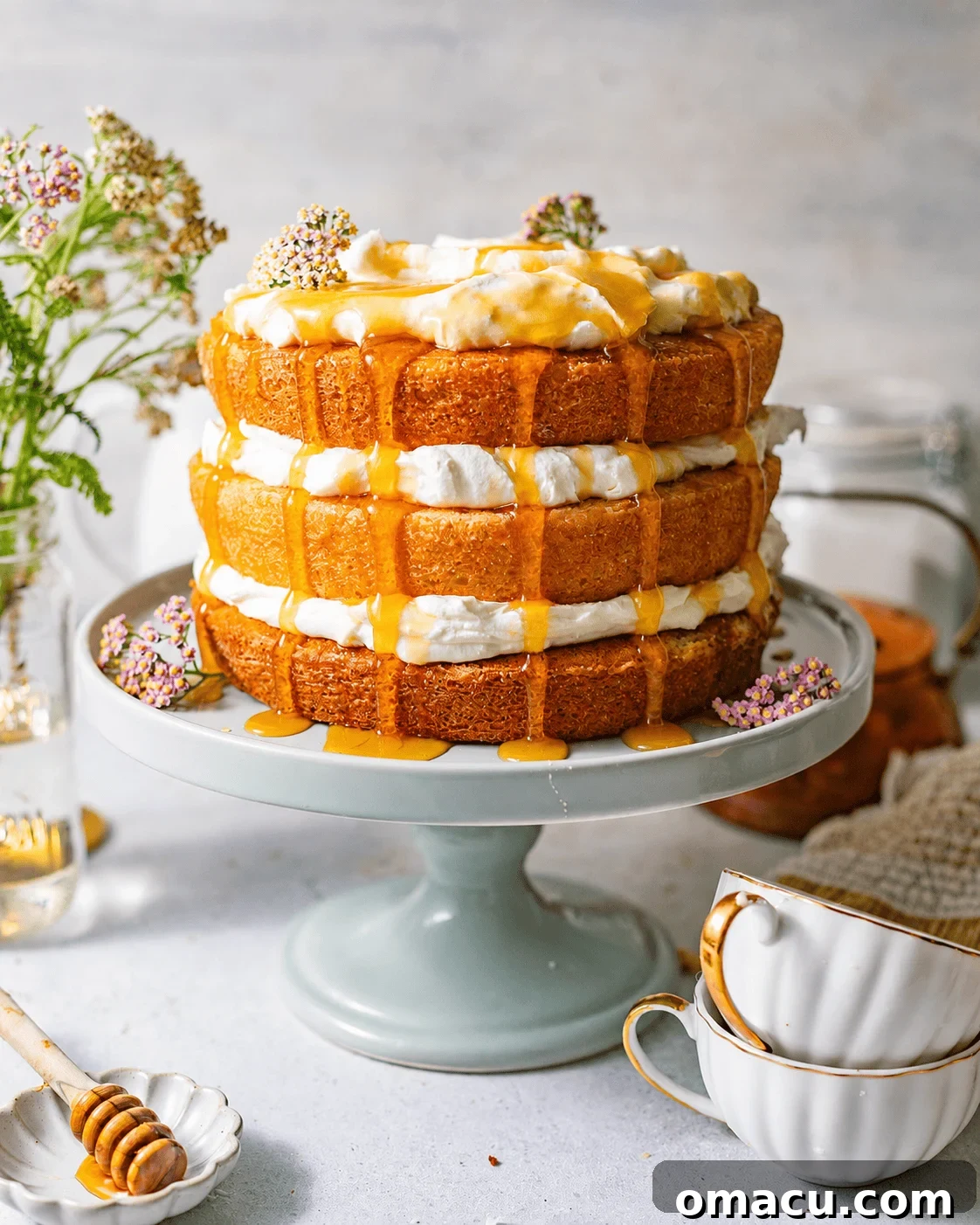
This Milk and Honey Cake is the kind of layer cake I crave: an ultra-moist vanilla crumb, pillowy whipped cream, and ribbons of golden honey between each layer. It’s rich without being heavy, sweet without being cloying, and somehow both comforting and refined. One bite and you’ll understand why this cake keeps lingering in my thoughts.
If you enjoy layered cakes, try other favorites like a coconut layer cake or a classic yellow cake with chocolate frosting for more inspired baking.
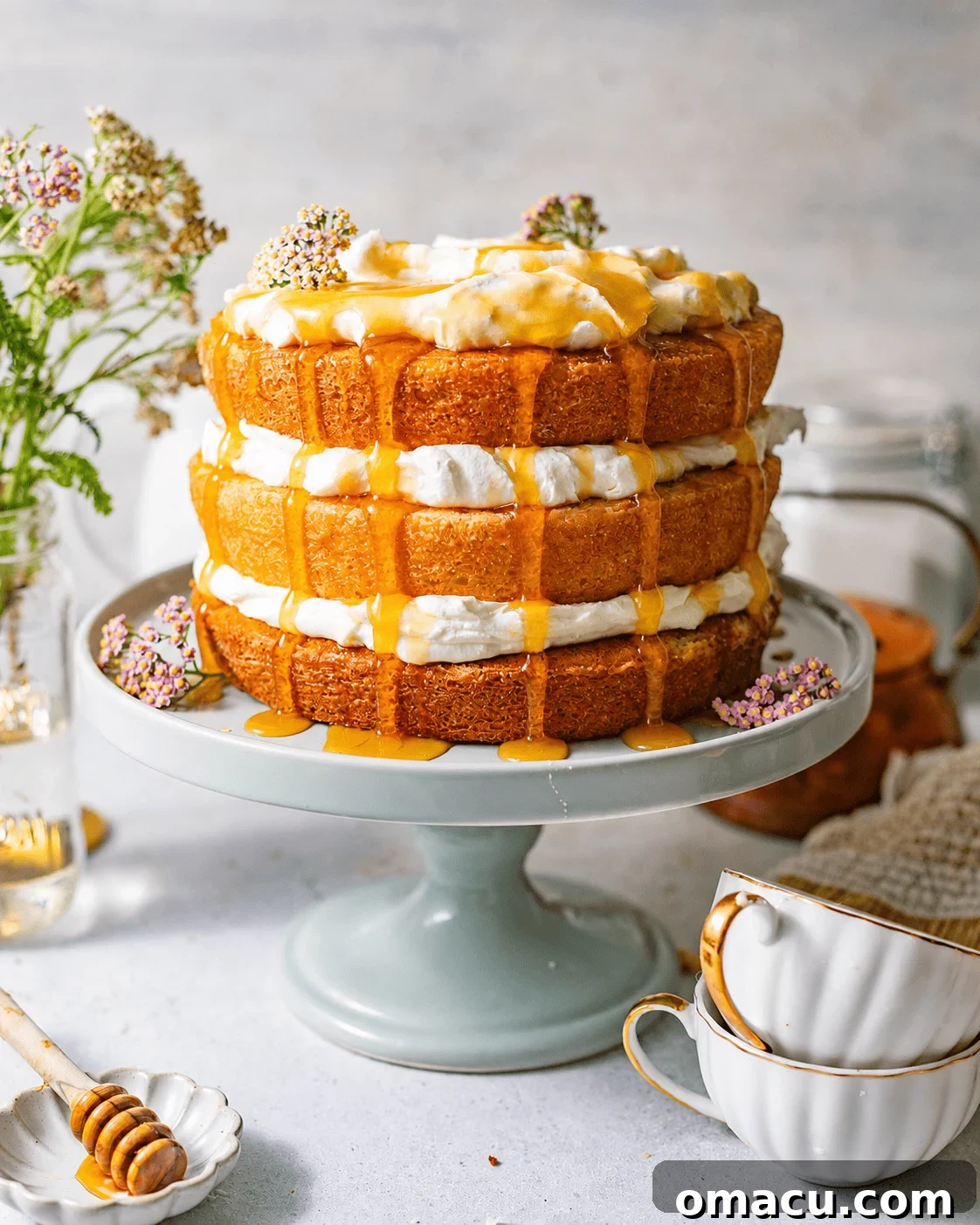
Today is my birthday, and while I usually reach for my banana pudding cake, this year I wanted something different. I baked this milk and honey cake for Memorial Day and haven’t stopped thinking about it since. The vanilla layers are soft and buttery. The filling is a light whipped cream enhanced with sweetened condensed milk for a distinctive milky richness. The finishing touch is honey brushed between every layer and drizzled down the sides for a beautiful, glossy finish.
This cake is sweet without overwhelming the palate, straightforward without being plain, and exactly the cake I want on my birthday — and probably for many birthdays to come.
Table of contents
- Key Ingredients
- How To Make Milk and Honey Cake
- Pro Baking Tips
- More Cake Recipes
Key Ingredients
(Full ingredient list and measurements appear in the recipe card below.)
- Cake flour yields a tender, delicate crumb. It helps the cake stay light and soft rather than dense or chewy.
- Milk powder deepens the milky flavor in both cake and filling while contributing to a softer texture.
- Salted butter and vegetable oil are used together so you get rich buttery flavor with the lasting moistness that oil provides.
- Whole milk, heavy cream, and sour cream create a moist, tender cake. The cream adds richness, and the sour cream gives extra softness to the crumb.
- Sweetened condensed milk lightly sweetens and stabilizes the whipped cream filling while reinforcing that milky profile.
- Cold heavy cream is essential for a thick, fluffy whipped filling; keep it very cold before whipping for best results.
- Honey is used two ways: mixed with warm milk as a soak to add moisture and brushed between layers, and drizzled over the finished cake for flavor and presentation.
How To Make Milk and Honey Cake
Below is a concise, step-by-step overview to guide you. Scroll to the printable recipe card for full measurements and timed instructions.
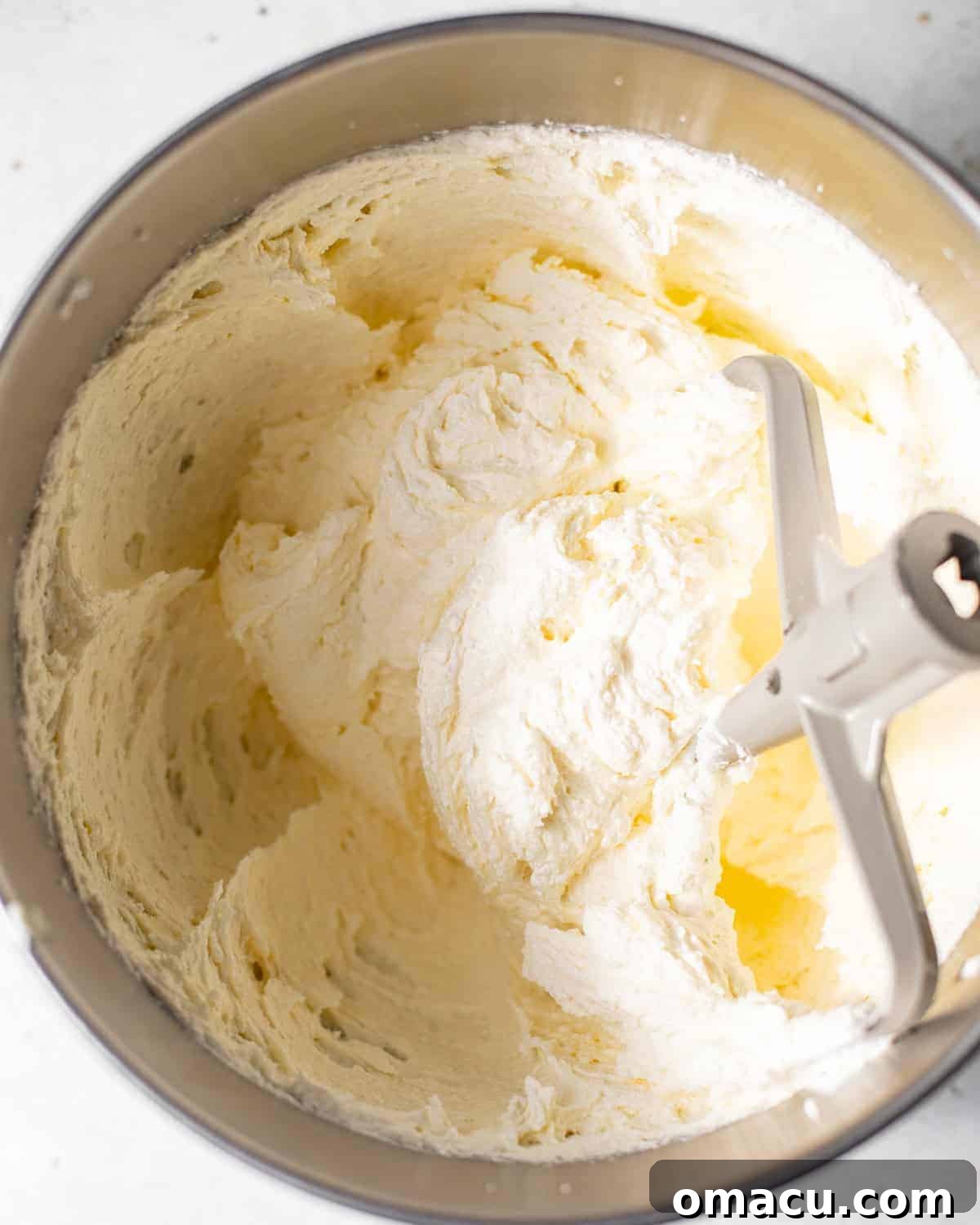
Make the cake batter. Cream room-temperature butter, oil, and sugar until light and fluffy. Add eggs one at a time, mixing until each is incorporated. Stir in vanilla and mix until smooth.
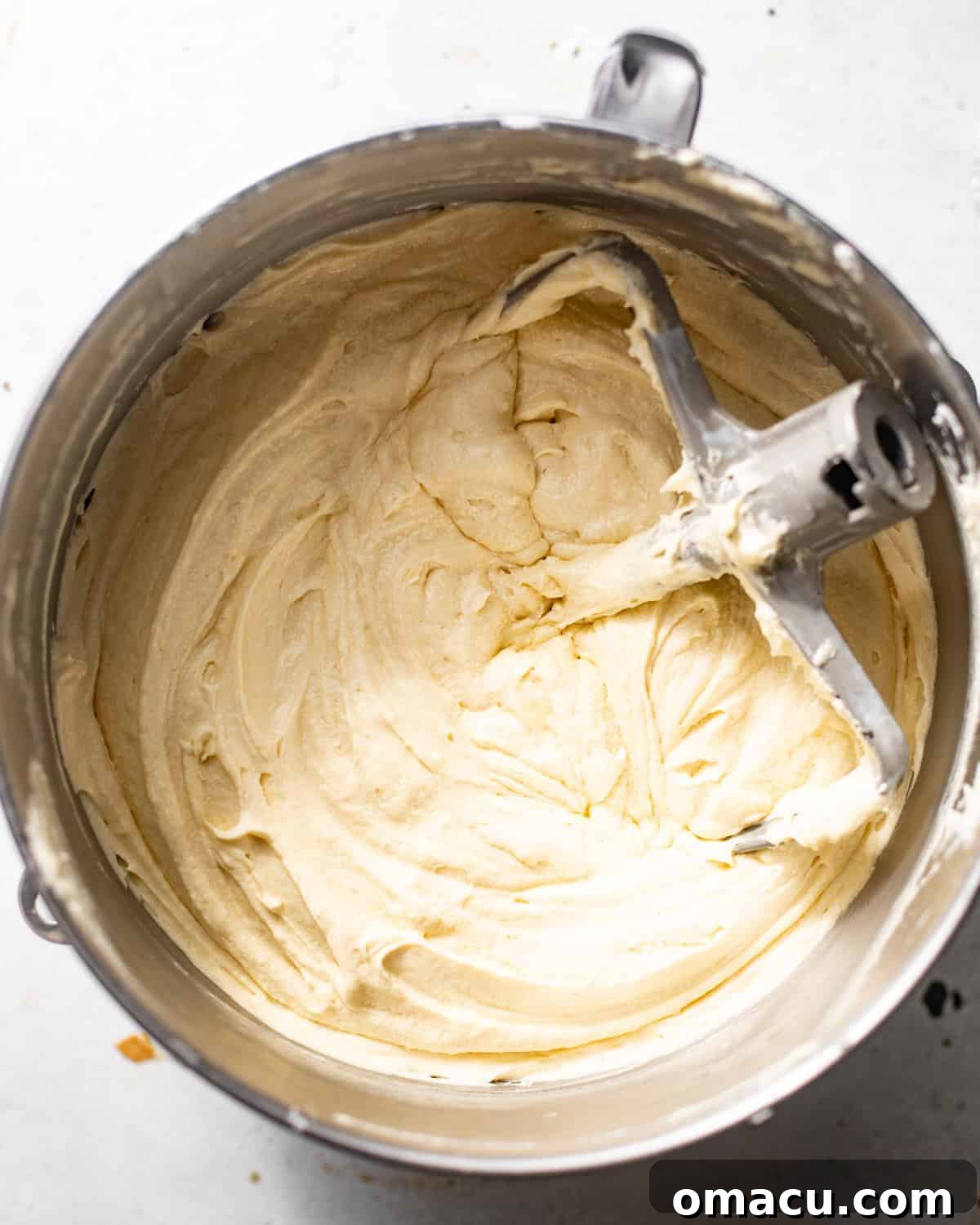
Alternate adding the dry ingredients with the milk, heavy cream, and sour cream mixture until just combined. Divide the batter evenly between three prepared 8-inch pans and bake at 350°F for about 28–33 minutes, or until a toothpick inserted in the center comes out with a few moist crumbs.
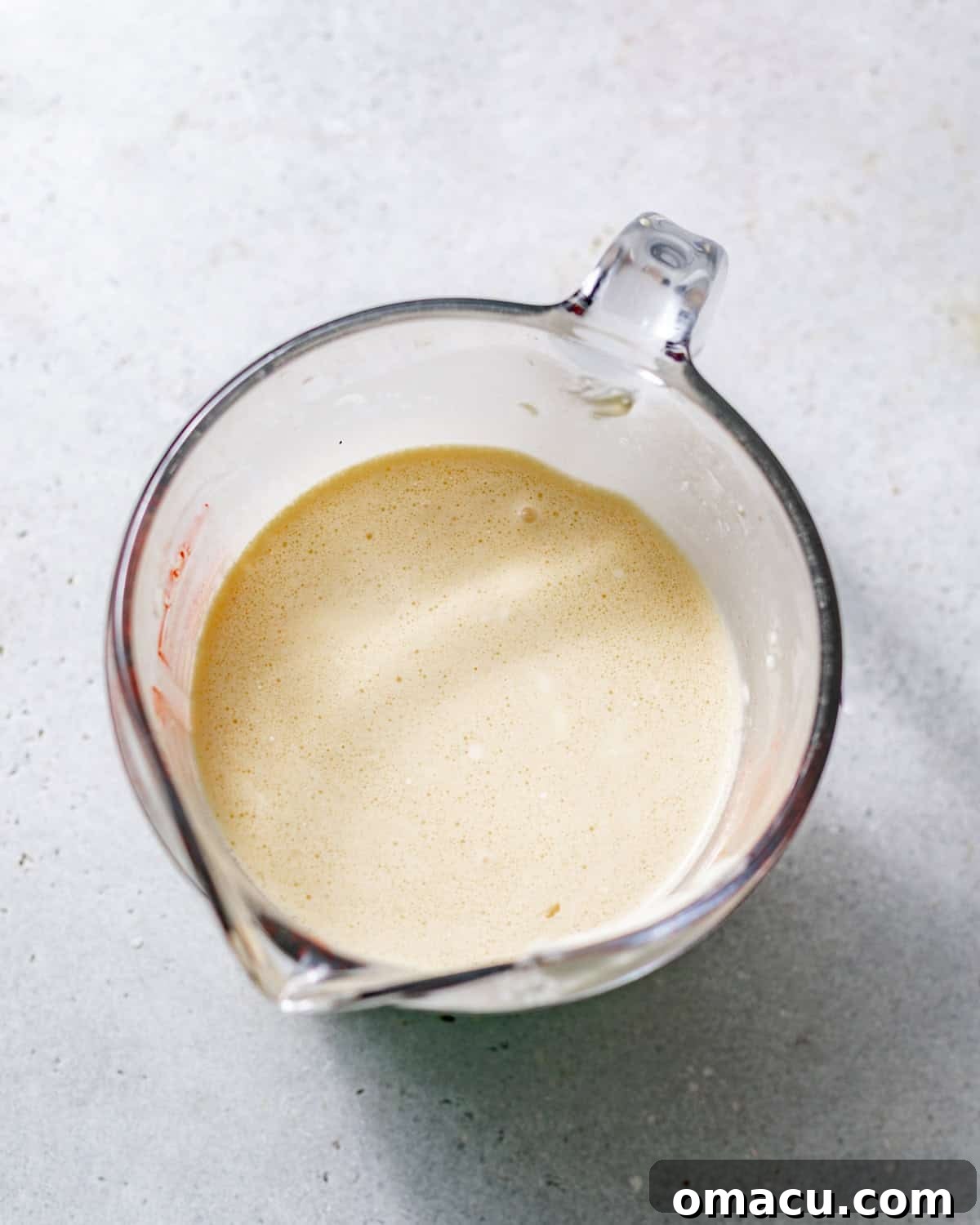
Make the honey milk soak. Stir warm milk with honey until dissolved. Brush this soak over each cake layer to add moisture and subtle honey flavor.
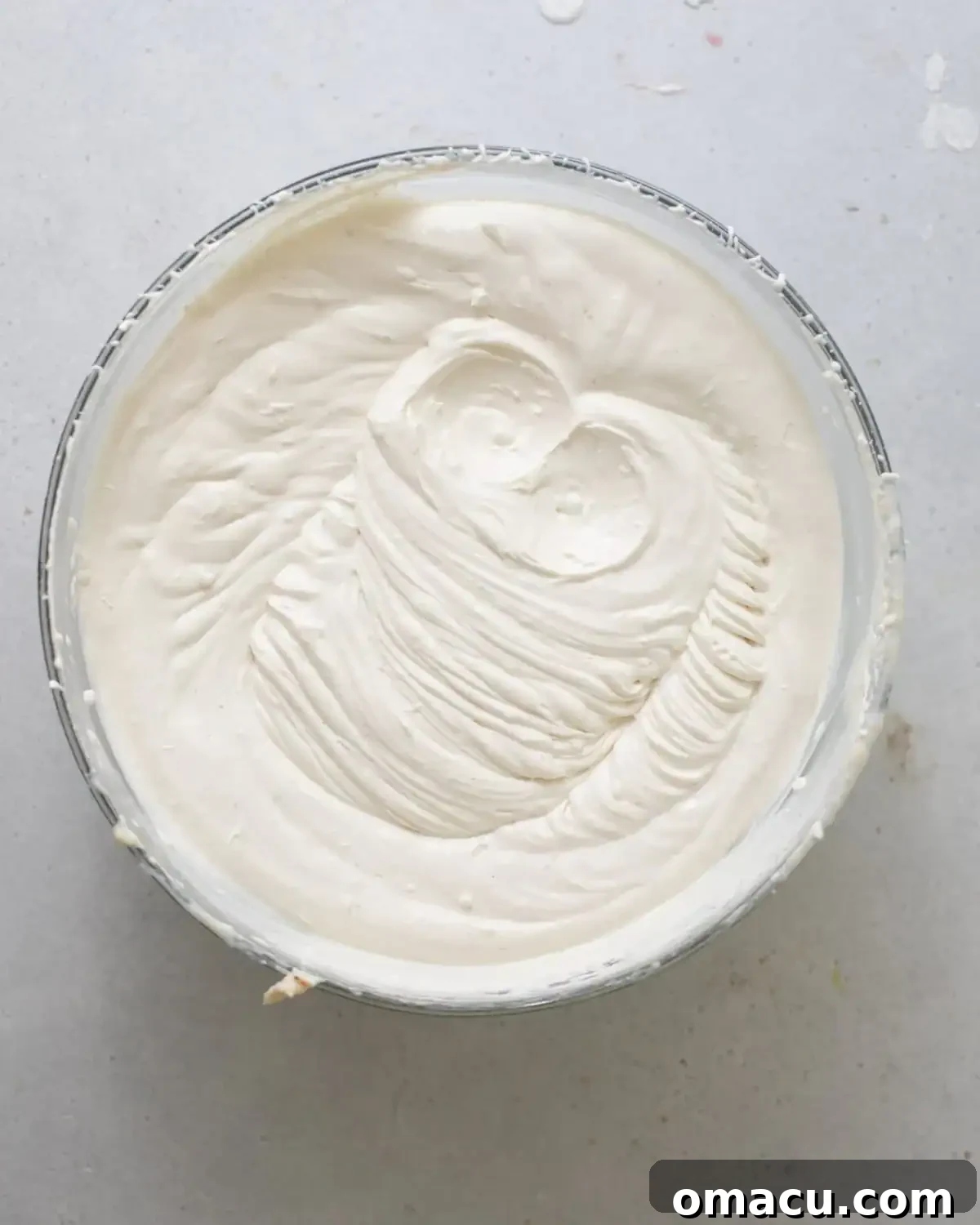
Whip the cream. Beat cold heavy cream with sweetened condensed milk, milk powder, vanilla bean paste, and a pinch of salt until the mixture thickens and holds medium to stiff peaks.
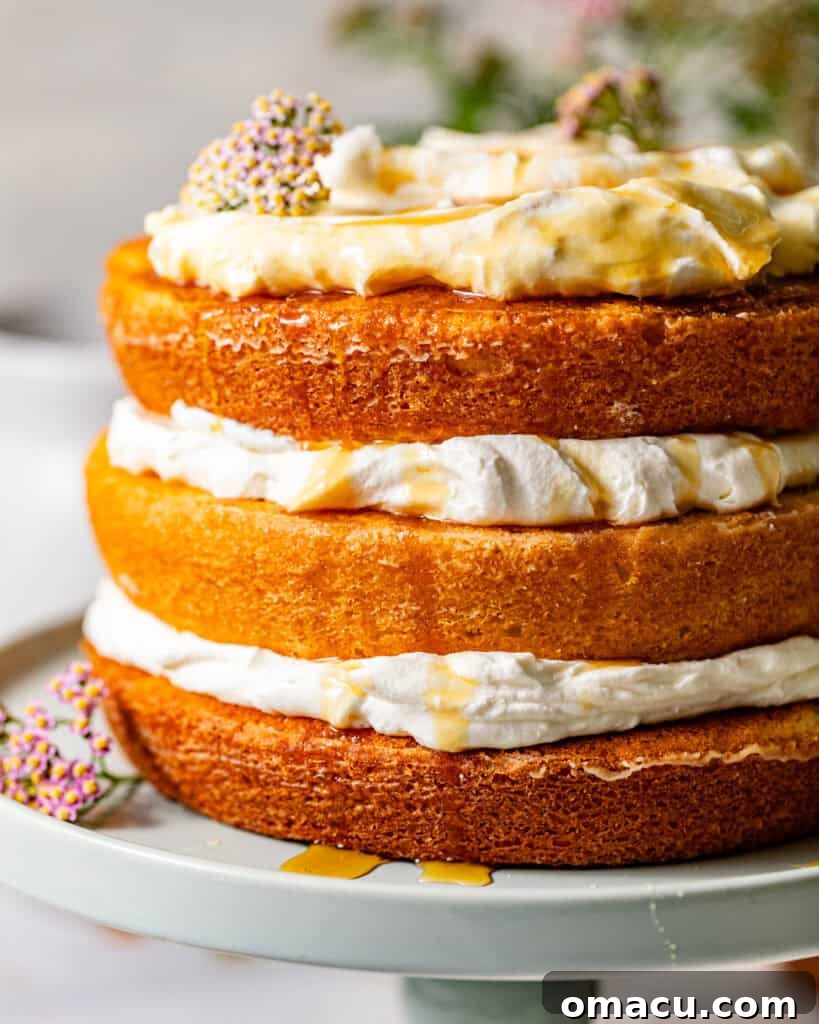
Assemble the cake. Brush each cooled layer with the honey milk, then spread a generous layer of whipped cream, leaving about 1/2 inch around the edge so the filling can spread naturally. Stack layers, top with remaining whipped cream, and drizzle with honey, allowing some to run down the sides for a dramatic finish. Serve soon after drizzling for the best texture and shine.
Pro Baking Tips
This recipe is straightforward, but a few practical tips will help it turn out perfectly every time.
- Use room-temperature ingredients. Butter, eggs, milk, and sour cream blend more smoothly at room temperature, which helps the batter emulsify properly and gives a consistent, tender crumb.
- Mix gently once flour is added. Overmixing after adding flour develops gluten and can make the cake tough. Mix only until the ingredients are combined.
- Watch your bake time. Begin checking the cakes around 28 minutes. Remove them when a skewer comes out with a few moist crumbs to avoid drying the layers.
- Keep the cream cold and avoid overwhipping. Very cold cream whips faster and holds structure better. Stop when peaks are firm but still slightly glossy at the tip.
More Cake Recipes
Desserts
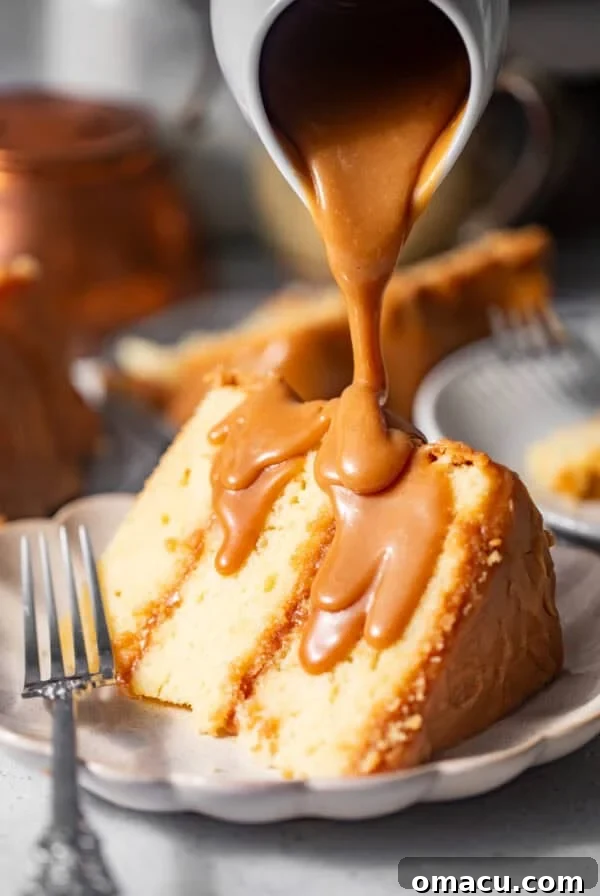
Caramel Cake Recipe
Desserts
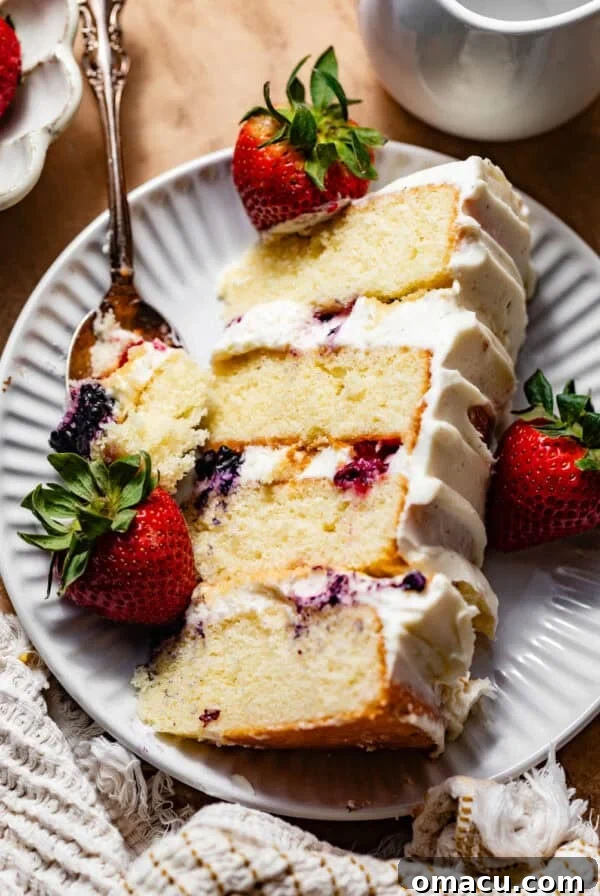
Chantilly Cake Recipe
Desserts
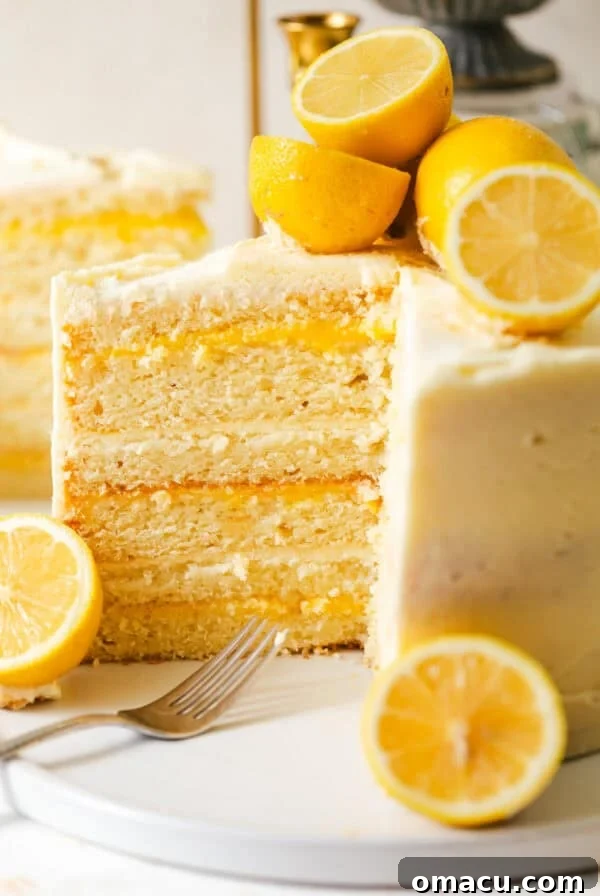
Moist Lemon Cake with Lemon Curd
Desserts
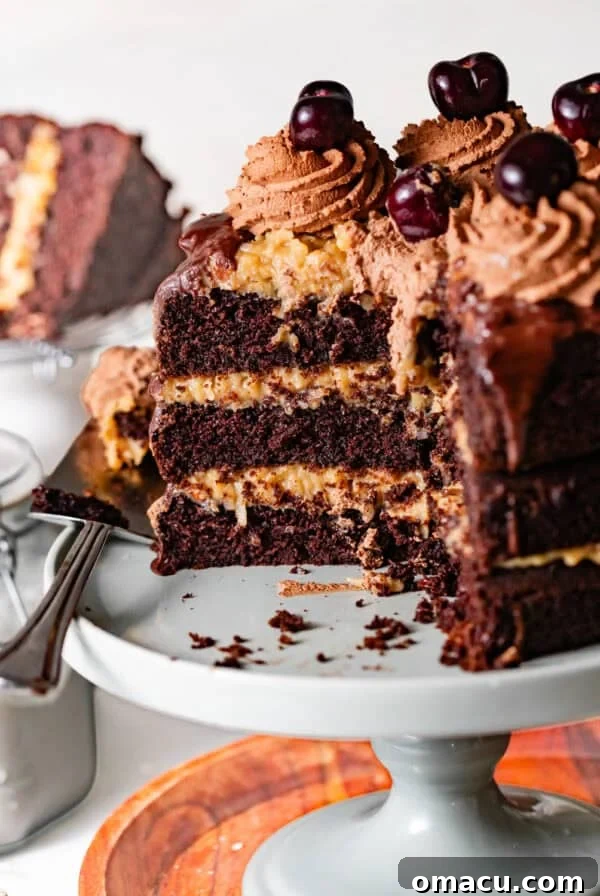
German Chocolate Cake
Want more recipes? Subscribe to newsletters from your favorite bakers to receive seasonal creations and new recipes as they are released.
If you try this cake, please leave feedback or share a photo so others can see how it turned out. Tagging the recipe author on social platforms helps bakers celebrate your results.
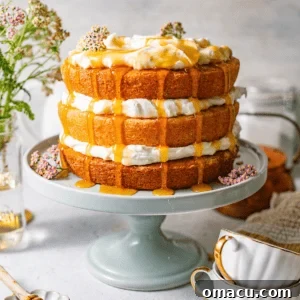
Milk and Honey Cake
Equipment
- 3 8-inch cake pans
- Stand mixer (or hand mixer)
- Mixing bowls
- Pastry brush
Ingredients
- 10 tbsp (140 g) salted butter, room temperature
- 3/4 cup (168 g) vegetable oil
- 2 1/2 cups (500 g) sugar
- 4 large eggs, room temperature
- 3 3/4 cups (468 g) cake flour
- 2 tbsp milk powder (optional but recommended)
- 1 tbsp baking powder
- 1 tsp kosher salt
- 1 1/2 cups (360 g) whole milk, room temperature
- 1/4 cup (60 g) heavy cream, room temperature
- 1/4 cup (60 g) sour cream, room temperature
- 1 tbsp vanilla extract
Milk and Honey Cake Soak
- 1/4 cup (60 g) whole milk
- 2 tbsp (40 g) honey
Whipped Cream Filling
- 2 1/2 cups (600 g) heavy cream, very cold
- 1/3 cup (130 g) sweetened condensed milk
- 3 tbsp milk powder
- 1 tbsp vanilla bean paste
- Pinch kosher salt
- Honey, for drizzling
Instructions
- Preheat the oven to 350°F (175°C). Grease and line three 8-inch round cake pans with parchment paper. Set aside.
- In the bowl of a stand mixer fitted with the paddle attachment, beat the room-temperature butter, vegetable oil, and sugar on medium-high speed for 2–3 minutes until light and fluffy. Scrape the bowl, then add eggs one at a time on low speed, ensuring each egg is incorporated before adding the next.
- Whisk together the dry ingredients in a separate bowl: cake flour, milk powder, baking powder, and kosher salt.
- Combine whole milk, heavy cream, sour cream, and vanilla extract in a measuring cup or bowl and mix until smooth.
- Add half the milk mixture to the mixer and blend until smooth, about 30 seconds. Add half the dry ingredients and mix just until combined, 10–15 seconds. Repeat with the remaining milk mixture and dry ingredients, mixing only until the batter comes together.
- Divide the batter evenly between the prepared pans and smooth the tops. Bake for 28–33 minutes, or until the centers spring back lightly and a skewer comes out clean or with a few moist crumbs.
- Cool the cakes in the pans for 10–15 minutes, then turn them out onto a wire rack to cool completely. Cover loosely with plastic wrap while cooling.
- Stir together 1/4 cup warm whole milk and 2 tbsp honey until the honey dissolves. Let cool slightly before using as a soak.
Make the Whipped Cream
- In a chilled bowl with the whisk attachment, combine the very cold heavy cream, sweetened condensed milk, milk powder, vanilla bean paste, and a pinch of salt.
- Whip on medium speed until the mixture begins to thicken, then increase to medium-high and whip until medium-stiff to stiff peaks form, about 2–3 minutes. The cream should be thick and stable but not grainy.
Assemble the Cake
- Place the first cake layer on a serving plate. Use a pastry brush to generously brush the top with honey milk soak, letting it absorb.
- Spread an even layer of whipped cream over the cake, stopping about 1/2 inch from the edge. Drizzle lightly with honey.
- Add the second layer and repeat with soak, cream, and honey. Finish with the final layer and brush with the remaining honey milk.
- Spread the remaining whipped cream over the top. Leave the sides exposed for a rustic look or smooth lightly for a cleaner finish.
- Just before serving, drizzle up to 1/2 cup honey over the top, adding more or less to taste. Serve immediately for best texture.
Notes
- Room temperature ingredients: Ensure butter, eggs, milk, and sour cream are at room temperature for optimal mixing and texture.
- Do not overmix: Mix just until combined after adding flour to avoid a dense cake.
- Avoid overbaking: Check the cakes starting at 28 minutes and remove them when a skewer shows a few moist crumbs.
- Whip cream carefully: Use very cold cream and stop when peaks are firm but still slightly glossy to avoid graininess.
Nutrition
Nutrition information is an approximation and should be used as a guideline only.