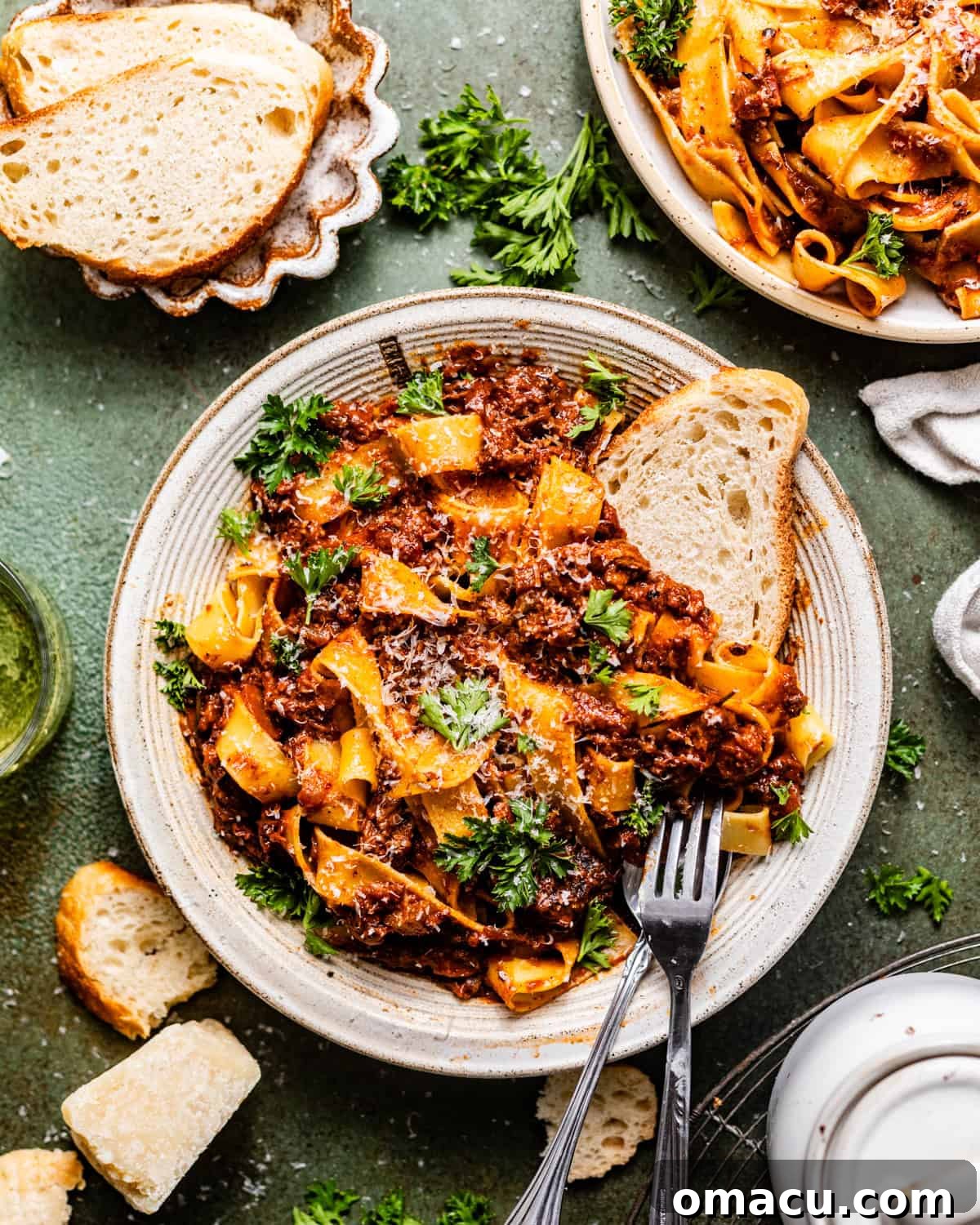
Ultimate Short Rib Bolognese: A Slow-Cooked Italian Classic
Indulge in the unparalleled richness of **Short Rib Bolognese**, a pasta dish that redefines comfort food. This luxurious Italian meat sauce features succulent beef short ribs, slow-braised to perfection in a deeply savory tomato sauce. Infused with aromatic bacon, garlic, sweet onions, a generous splash of robust red wine, fragrant herbs, and finished with a creamy touch and a mountain of freshly grated Parmesan, this recipe promises an unforgettable culinary experience. It’s the ideal centerpiece for a special Sunday dinner, a cozy chilly evening, or any moment demanding a truly soul-soothing meal that resonates with deep, complex flavors.
To further explore the world of amazing slow-braised beef recipes and expand your culinary repertoire, we invite you to try our equally exquisite dishes. For a classic and elegant preparation, master our Wine Braised Short Ribs. Delve into the robust, rich flavors and tender texture of Beef Osso Buco, a true Italian masterpiece. Or, for a festive and hearty layered dish, our Lasagna Alla Bolognese offers another delightful take on slow-cooked perfection. Each recipe promises a journey into deeply satisfying, slow-cooked beef.
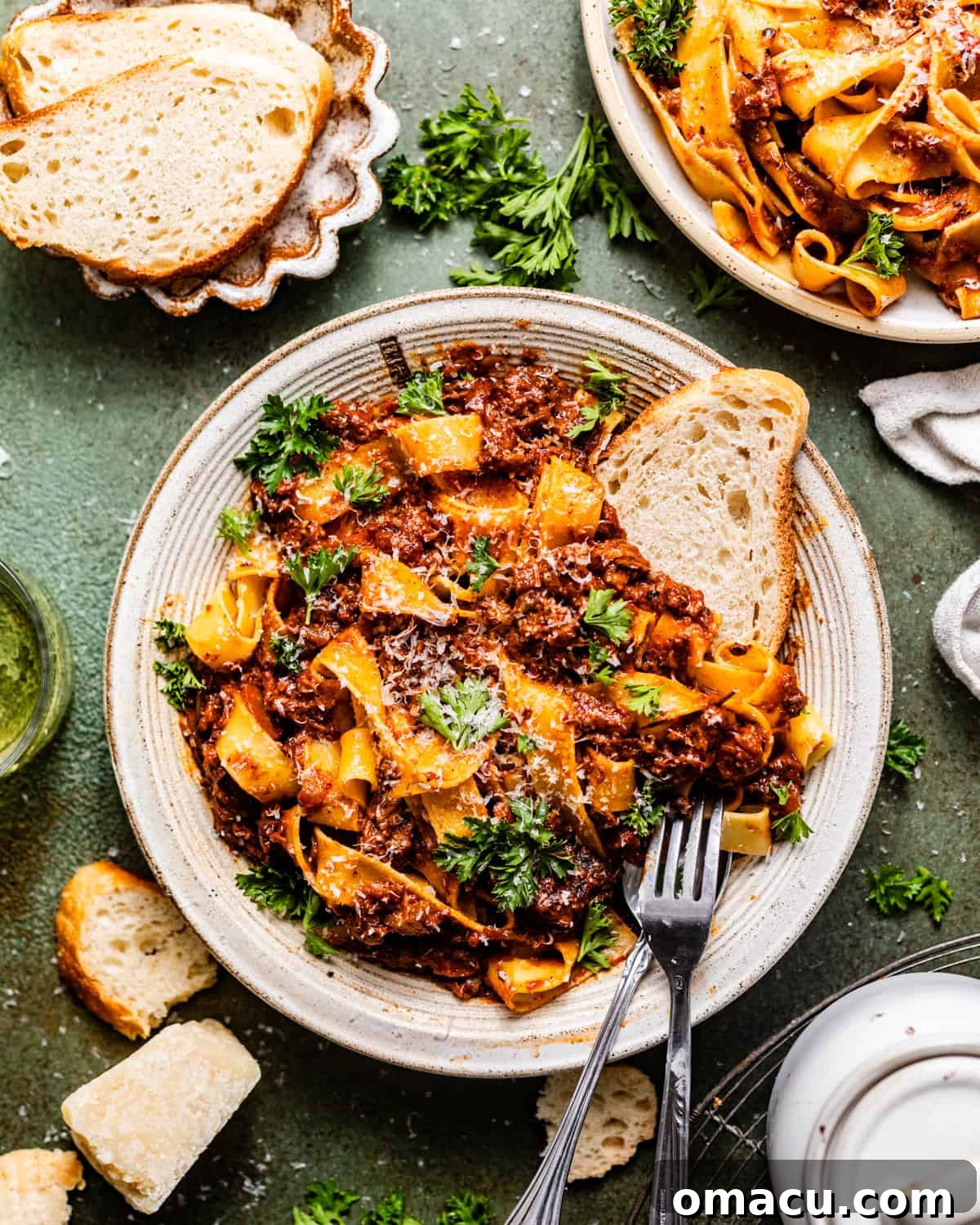
Let’s truly appreciate the magic of Bolognese. It’s more than just a sauce; it’s an experience, a culinary embrace in edible form – the ultimate Italian meat-based comfort food that brings profound warmth to both body and soul. After extensive dedication to perfecting this short rib ragu recipe, through countless simmering hours and meticulous adjustments, I can confidently attest that the result is nothing short of culinary bliss. This recipe masterfully transforms humble short ribs into incredibly tender, fall-apart meat, seamlessly integrated into an intensely flavorful, thick, and hearty ragu. Its velvety texture perfectly clings to every strand of pasta, creating an exquisite harmony of tastes and textures in every single bite. While this Short Rib Bolognese recipe does require a significant investment of time, the majority of the cooking is delightfully hands-off. It’s a patient process of gentle bubbling, allowing the robust flavors to meld and deepen beautifully while simultaneously filling your entire home with an irresistibly savory and comforting aroma. The exceptional payoff, a dish of profound depth and satisfaction, is undeniably worth every minute spent.
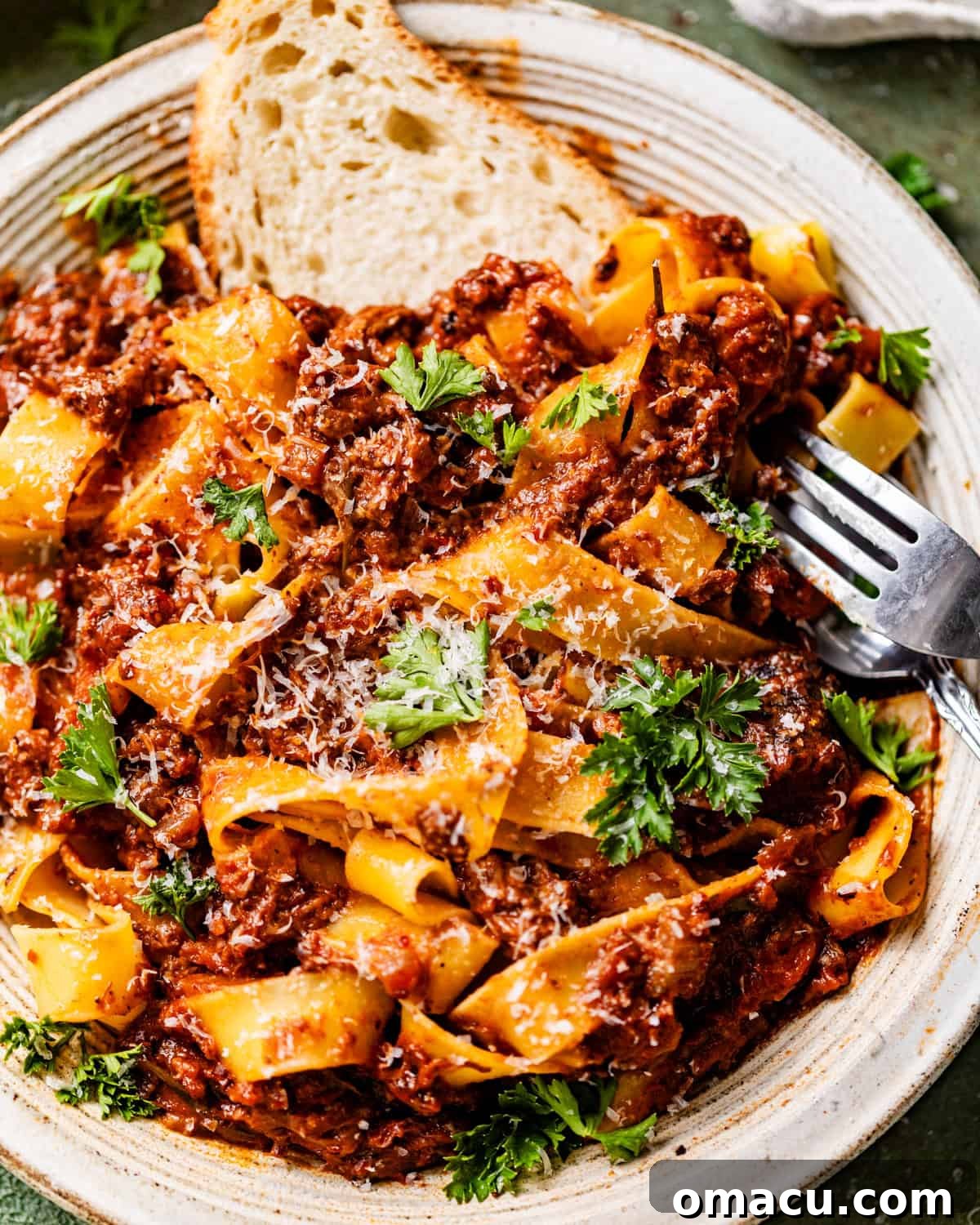
Traditionally, for the ultimate experience, I prefer serving this magnificent ragu over wide, flat noodles such as pappardelle pasta. Their broad surface is ideally suited for capturing and showcasing every luxurious drop of the rich, chunky sauce. A final, generous adornment with a snowy shower of aged Parmesan cheese on top adds that irresistible touch of salty, nutty perfection, completing a truly memorable meal.
Table of Contents
- Why You’ll Adore This Short Rib Beef Ragu
- What Exactly Is Short Rib Bolognese?
- Essential Ingredients and Smart Substitutions
- Versatile Cooking Methods
- Step-by-Step: Crafting Your Short Rib Bolognese
- Expert Tips for the Best Short Rib Bolognese
- Perfect Pairings: What to Serve with Bolognese
- Make Ahead, Storage, and Reheating Guide
- Frequently Asked Questions About Short Rib Bolognese
- Discover More Delectable Pasta Recipes
- Short Rib Bolognese Recipe Card
Why You’ll Adore This Short Rib Beef Ragu
This Short Rib Bolognese is far more than just a meal; it’s an experience meticulously crafted to bring profound warmth, satisfaction, and culinary delight to your table. Here’s a detailed look at why this recipe is destined to become a cherished favorite in your kitchen:
- **Unforgettable Melt-in-Your-Mouth Tenderness:** The true magic of this dish lies in the transformative power of slow cooking. Tough cuts of short ribs are gradually broken down over hours, becoming incredibly tender, succulent meat that effortlessly falls off the bone. This process integrates the tender beef seamlessly into the rich sauce, resulting in a luxurious texture that is simply divine and deeply satisfying. Each bite offers a sensation of exquisite tenderness.
- **Flavors That Deepen Over Time (The “Even Better Next Day” Factor):** Like many great stews and robust sauces, this Bolognese possesses the incredible quality of tasting even more spectacular the day after it’s prepared. Allowing the dish to rest overnight in the refrigerator gives all the complex flavors of the meat, aromatic vegetables, robust red wine, and fragrant herbs ample time to fully meld, infuse, and intensify. This creates a more cohesive, profound, and deeply satisfying taste experience that is truly unmatched. This characteristic makes it an ideal make-ahead meal, perfect for effortless entertaining or delicious, stress-free weeknight dinners.
- **The Art of Low and Slow Cooking for Maximum Flavor:** Patience is not just a virtue but a necessity in achieving the exceptional depth of this Bolognese. Cooking this ragu over a sustained low heat for several hours allows the connective tissues within the short ribs to break down gradually, rendering them unbelievably tender and moist. This extended cooking time also provides all the individual ingredients—from the caramelized soffritto to the herbs and wine—with ample opportunity to fully release their unique flavors and integrate them into a harmonious symphony. The result is a rich, multi-layered sauce that is both robustly flavorful and beautifully nuanced.
- **Hearty, Comforting, and a True Hug-in-a-Bowl Experience:** This recipe embodies the very essence of quintessential comfort food. A generous serving of this deeply rich, meaty ragu, draped over your favorite wide pasta or a bed of creamy polenta, provides a profoundly satisfying and warming meal. It’s the perfect antidote for chilly evenings, a much-needed pick-me-up, or whenever you crave something truly fulfilling that brings a sense of coziness and well-being.
- **Impressively Simple Elegance That Always Delights:** While the final dish boasts an impressive depth of flavor, sophisticated presentation, and gourmet appeal, the actual cooking process is surprisingly straightforward and manageable. The majority of the cooking time is hands-off simmering, allowing you to attend to other tasks while the magic happens. Its rich, complex, and comforting flavors make it an excellent choice for impressing guests during festive holidays, at an elegant dinner party, for a romantic Valentine’s Day meal, or simply for a special date night at home, effortlessly elevating any occasion.
What Exactly Is Short Rib Bolognese?
Short Rib Bolognese represents a magnificent and truly decadent iteration of the traditional Italian Bolognese sauce. This luxurious twist elevates the classic rustic staple into a gourmet culinary experience by substituting the more common ground beef or pork with premium, fork-tender beef short ribs. It’s a celebration of slow cooking, rich flavors, and unparalleled texture.
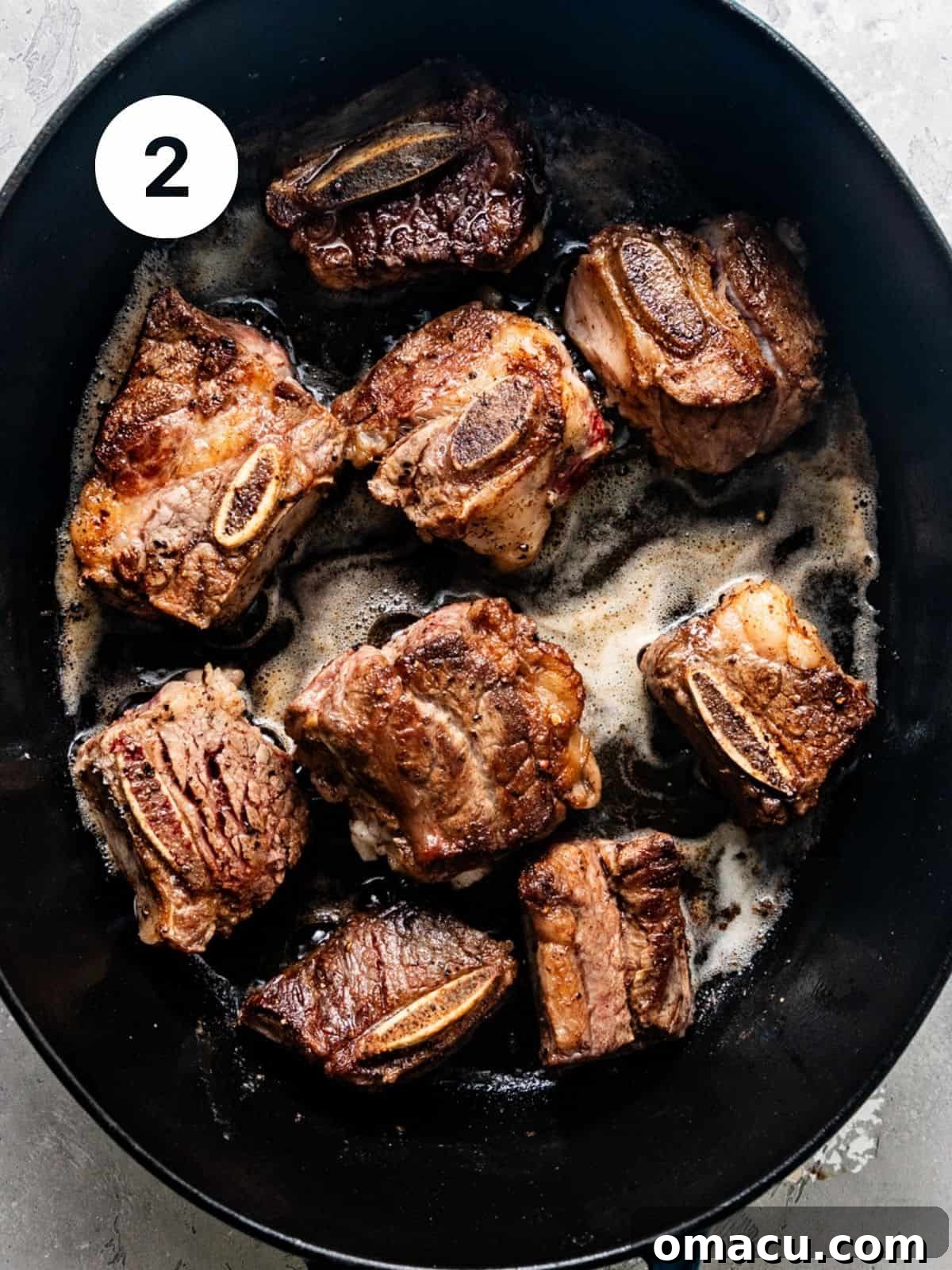
The intricate preparation of this ragu begins with a crucial first step: searing the beef short ribs. This process is essential for developing a beautiful, caramelized crust on the exterior of the meat, which locks in their natural juices and creates intensely flavorful browned bits, known as “fond,” at the bottom of the pot. Following this, the ribs embark on a journey of long, slow braising. They simmer patiently for hours in a robust red wine and tomato sauce, which is meticulously built upon a classic Italian aromatic foundation known as *soffritto*. This indispensable base consists of finely diced onions, carrots, and celery, which are gently sautéed until sweet and translucent.
Crushed tomatoes provide the essential tangy and vibrant backbone to the sauce, while a generous splash of full-bodied red wine, such as Cabernet Sauvignon or Chianti, introduces a crucial layer of complex, savory depth and helps to deglaze those rich fond bits. To achieve an unparalleled richness, a silken texture, and to beautifully temper the acidity of the tomatoes, a touch of whole milk or heavy cream is often incorporated into the sauce towards the end of the cooking process. This addition creates a beautifully balanced and harmonious flavor profile that coats the palate.
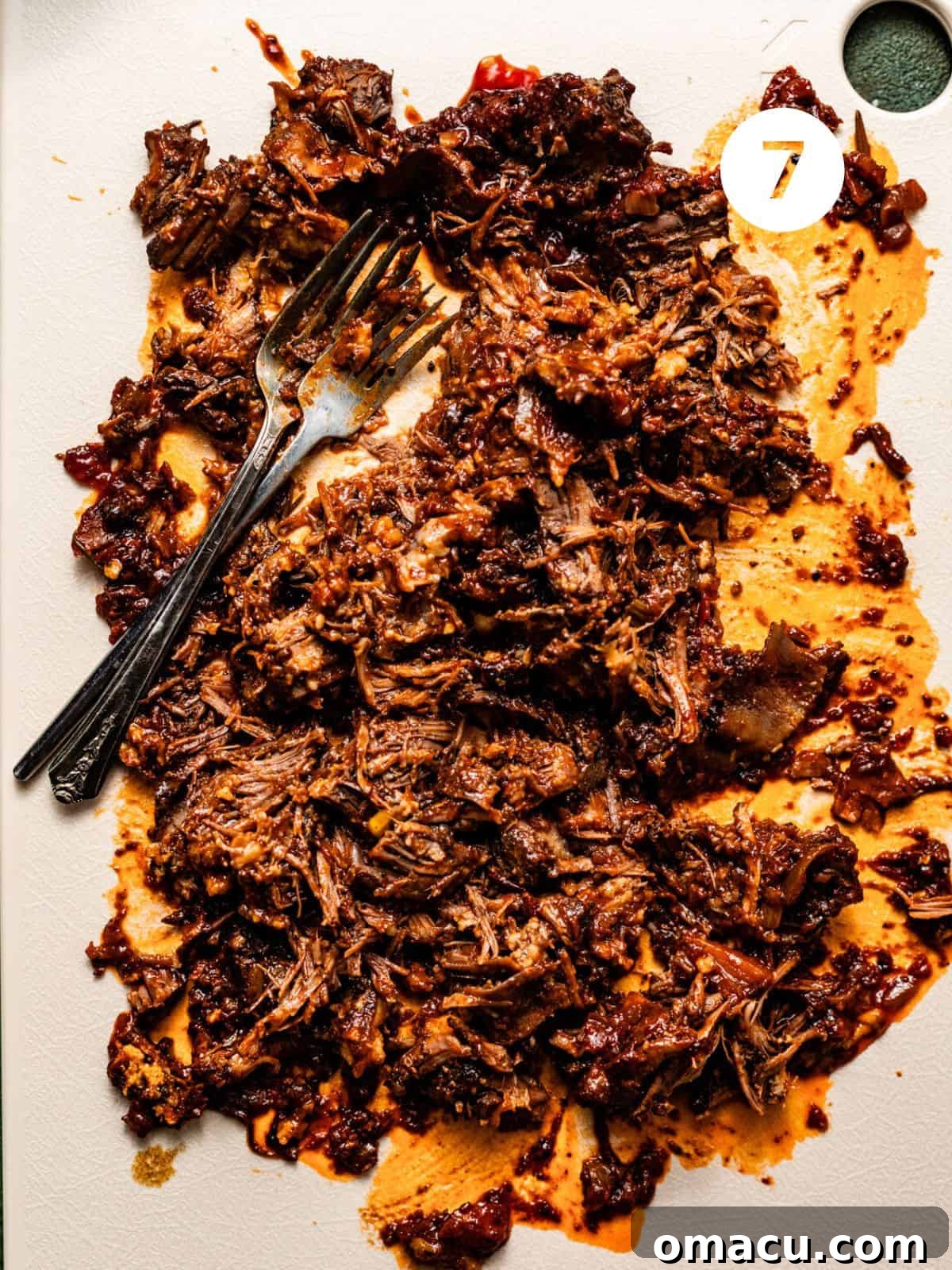
Once the beef short ribs have reached their peak tenderness, effortlessly falling apart with the gentlest touch of a fork, the meat is carefully removed from the bones. It is then shredded into succulent pieces and returned directly to the simmering sauce. This final step imbues the Bolognese with substantial body, an incredibly satisfying meaty texture, and a luxurious feel, transforming it into an ideal and unforgettable companion for hearty pasta shapes like wide pappardelle, classic tagliatelle, or even creamy, dreamy polenta.
Essential Ingredients and Smart Substitutions
Crafting the perfect Short Rib Bolognese relies on a selection of high-quality ingredients, each playing a vital and distinct role in building the sauce’s rich, multi-layered flavor profile. Here’s a closer look at what you’ll need, along with some helpful insights and smart substitutions to ensure your culinary success:
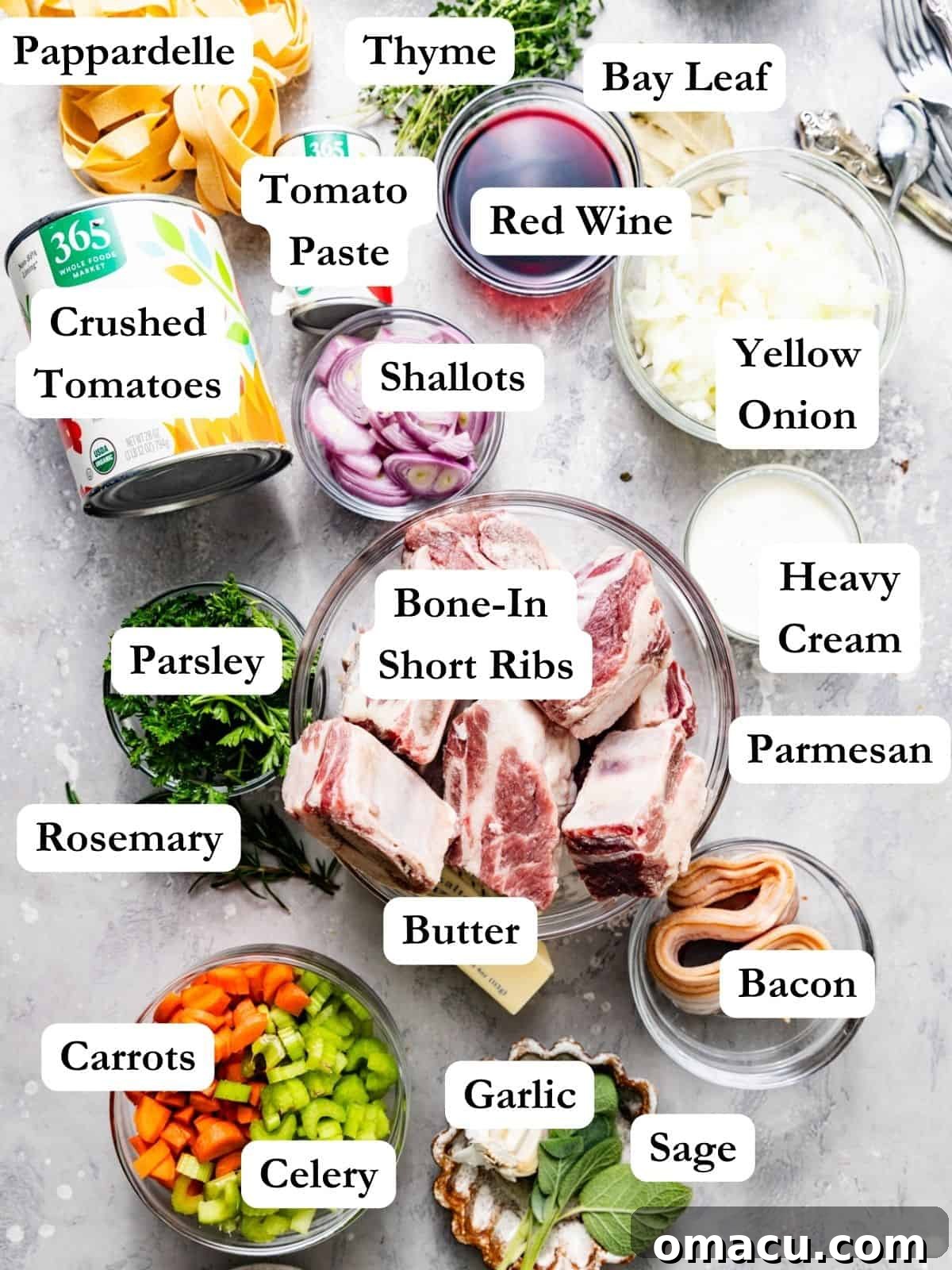
- **Bone-In Short Ribs (3 lbs):** These are unequivocally the star of our magnificent dish. Beef short ribs, specifically a cut taken from the lower ribcage of the cow, are celebrated for their intensely rich, beefy flavor and generous marbling. This intramuscular fat content is critically important, as it renders slowly and beautifully during the prolonged braising process, not only tenderizing the meat to an exquisite degree but also profoundly infusing the entire sauce with incredible depth and lusciousness. Should bone-in short ribs be unavailable in your local market, boneless short ribs, a well-marbled beef chuck roast, or even robust beef shank (as successfully demonstrated in our Osso Buco recipe) make excellent and equally succulenr alternatives when subjected to the same slow-cooking methods.
- **Bold Dry Red Wine (750 ml / 1 bottle):** A full bottle of dry red wine is an absolutely indispensable component for bestowing beef short rib bolognese with its signature deep, complex, and sophisticated flavor profile. Opt for a robust variety that you would enjoy drinking, such as a full-bodied Cabernet Sauvignon, a rustic Chianti, or a smooth Merlot. The alcohol will completely cook off during the long simmer, leaving behind a concentrated, rich essence that greatly enhances the sauce’s depth. For those who prefer to cook without alcohol, a high-quality beef broth can be used as a suitable substitute, though the flavor profile will be slightly different.
- **Bacon or Pancetta (4 pcs bacon or 1/2 lb pancetta, cut into chunks):** This savory addition contributes a delightful smoky and savory foundation that kickstarts the flavor development of the sauce. Pancetta, an Italian cured pork belly, offers a milder, sweeter, and often more refined flavor. However, good quality smoked bacon, cut into generous chunks, works perfectly in a pinch and still delivers that crucial layer of rich pork fat and savory notes.
- **Fresh Herbs (Bay leaf, Rosemary, Sage, Thyme):** A fragrant and vibrant bouquet of fresh herbs – specifically bay leaf, rosemary, sage, and thyme – is absolutely essential for layering deep, aromatic nuances into the ragu. These classic Mediterranean herbs infuse the sauce with a timeless, earthy, and fragrant character that magnificently complements and elevates the rich beef flavors.
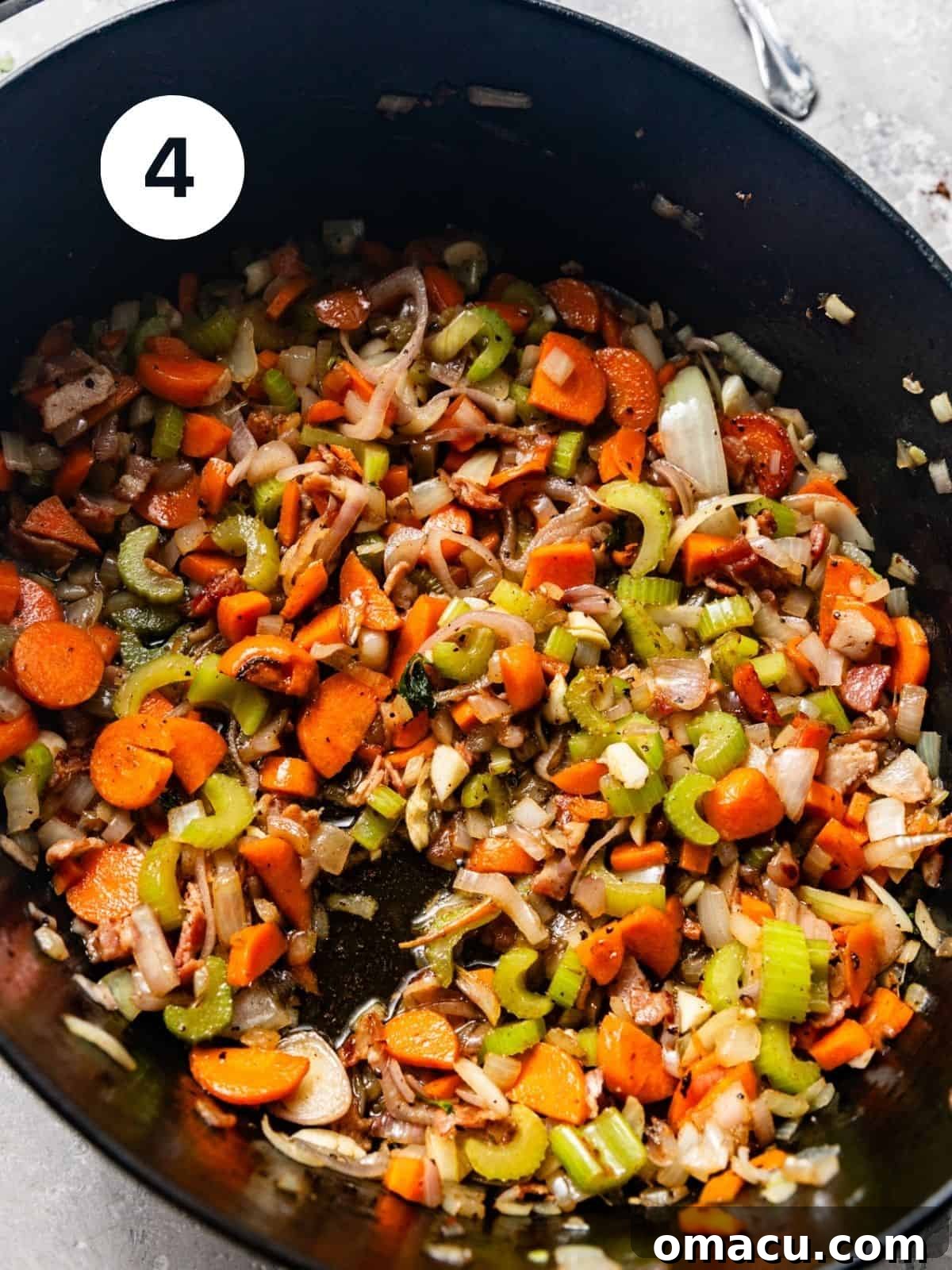
- **Soffritto (1 large Yellow Onion, 2 Carrots, 2 Celery Stalks – all diced):** This essential Italian aromatic base is a non-negotiable trio for crafting the very best short rib bolognese recipe. Finely diced and gently sautéed, this combination of vegetables forms the foundational aromatic base for your braising liquid, slowly releasing their natural sugars and adding a crucial layer of sweetness and profound depth to the sauce.
- **Nutmeg (1/2 tsp, freshly grated recommended):** Often a surprising ingredient in savory dishes, a hint of freshly grated nutmeg imparts a unique warmth, subtle spice, and nutty complexity. This unexpected addition beautifully balances the inherent richness of the meat and the bright acidity of the tomatoes, subtly elevating the sauce beyond mere expectation.
- **Shallots (2, diced) and Garlic Cloves (4, minced):** These provide an additional, distinct layer of aromatic sweetness (from the shallots) and pungent, savory depth (from the garlic) to your sauce. If shallots are not readily available, you can easily replace them with an equal amount of finely diced white onion for a similar, though slightly less nuanced, effect.
- **Crushed Tomatoes (28 oz can):** The quality of your crushed tomatoes significantly impacts the final taste and color of your Bolognese. San Marzano tomatoes are often highly preferred for their balanced sweetness, low acidity, and vibrant flavor profile, but any good quality canned crushed tomatoes will yield excellent results. For an even smoother texture, tomato passata can also be used effectively.
- **Parmesan Rind (optional, but highly recommended):** Never discard that precious Parmesan rind! Adding it to the simmering bolognese is a revered chef’s secret for infusing the sauce with an extraordinary, rich, and profound umami flavor. As the rind gently simmers and softens, it slowly releases subtle, savory notes of aged cheese that perfectly balance the acidity of the tomatoes and subtly thickens the sauce, contributing to a silkier, more luxurious texture.
- **Heavy Cream (1/2 cup) and Grated Parmesan (1/2 cup):** These luxurious additions are artfully folded in at the very end of the cooking process to lend an irresistible creamy richness and a smoother, more decadent texture to the finished sauce. The cream mellows the flavors, while the Parmesan adds a final layer of cheesy depth. Half-and-half can be used as a slightly lighter alternative if desired, though heavy cream provides the most opulent finish.
- **Pappardelle (1 lb, or pasta of choice):** Wide, flat noodles like pappardelle are absolutely ideal for serving with this hearty ragu. Their broad surface area provides the perfect canvas for capturing and holding the thick, luxurious, and chunky sauce, ensuring every bite is a perfect mouthful. While hand-cut pappardelle is a gourmet treat, feel free to use your favorite pasta shape—tagliatelle, fettuccine, or even rigatoni work beautifully and are excellent choices for clinging to the rich sauce.
Versatile Cooking Methods for Short Rib Bolognese
While the traditional stovetop method yields exceptional results, Short Rib Bolognese is remarkably adaptable to various cooking appliances, offering excellent flexibility to suit your preferences, kitchen setup, and schedule. Each method ensures tender, flavorful results, allowing you to choose the approach that best fits your lifestyle:
- **Traditional Oven Braising:** For an equally rich, deeply flavored, and consistently tender outcome, you can easily adapt this recipe for oven braising. Prepare all the initial searing and sautéing steps on the stovetop within a heavy-bottomed Dutch oven, ensuring you build that crucial flavor base. After adding all the liquid and other ingredients, simply cover the Dutch oven tightly with its lid and transfer it to a preheated oven at 325°F (165°C). Allow it to slow-braise for approximately 2.5 to 3 hours, or until the short ribs are exceptionally tender and easily pull apart with a fork, much like our highly acclaimed oven-baked chuck roast.
- **Convenient Slow Cooker Method:** The slow cooker is a fantastic tool for this recipe, making it incredibly convenient for busy schedules. After completing the crucial steps of browning the short ribs and sautéing the soffritto and other aromatics on the stovetop (these initial steps are vital for developing deep flavor), transfer all ingredients to your slow cooker. Add the remaining sauce components, set your slow cooker to the “low” setting, and cook for an extended period of 8-10 hours. This method is perfect for days when you need to “set it and forget it,” allowing the flavors to meld and deepen beautifully with minimal hands-on effort throughout the day.
- **Time-Saving Instant Pot/Pressure Cooker:** If time is of the essence but you still crave the tender results of slow cooking, an Instant Pot or pressure cooker is your best friend. Utilize the “sauté” function directly in your appliance to brown the meat and sauté the vegetables, building flavor efficiently. Once these initial steps are complete, add all remaining ingredients, securely seal the lid, and cook on high pressure for approximately 45 minutes. Following the cooking cycle, allow for a natural pressure release for about 10 minutes, then carefully quick-release any remaining pressure. This method significantly reduces the total cooking time from hours to under an hour of active pressure cooking, all while retaining excellent flavor development and achieving remarkably tender meat.
Step-by-Step: Crafting Your Short Rib Bolognese
Creating this magnificent Short Rib Bolognese is a labor of love that promises to reward you with an incredibly rich, satisfying, and deeply flavorful meal. While it requires patience, each step contributes to the ultimate depth of flavor. Follow these detailed instructions for culinary success:
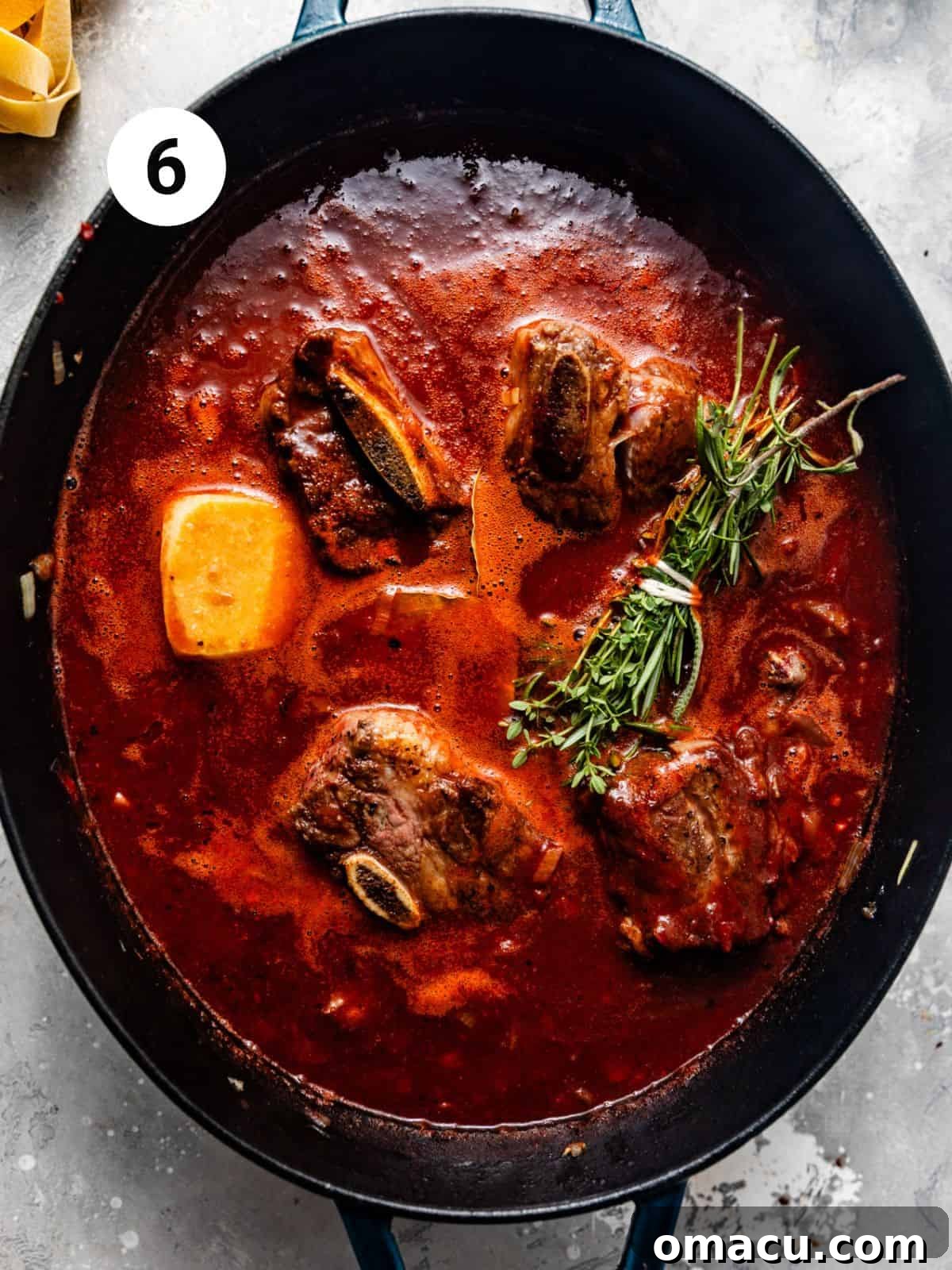
Expert Tips for the Best Short Rib Bolognese
Achieving a truly exceptional Short Rib Bolognese is a culmination of careful technique, patience, and attention to detail. Here are some expert tips to guide you in crafting the most flavorful and satisfying dish possible:
- **Manage Fat for a Perfect Sauce:** Nobody appreciates a greasy bolognese. Throughout the long simmering process, excess fat from both the short ribs and the bacon will naturally rise to the surface of the sauce. It is highly recommended to periodically skim this rendered fat off the top using a ladle or a large spoon. This crucial step ensures a cleaner, richer, and ultimately more palatable final product, allowing the true flavors of the sauce to shine without being weighed down by grease.
- **Deglaze with Wine for Unrivaled Depth:** After successfully browning your short ribs and sautéing the bacon, you’ll notice a layer of caramelized brown bits—known as “fond”—sticking to the bottom of your pot. Deglazing the pan with either red or white wine (or beef broth if you’re opting out of alcohol) is a critical step that should never be skipped. As the wine simmers and you scrape the bottom of the pot, it helps release these intensely flavorful fond bits, integrating them into your nascent sauce and adding a profound, umami-rich layer of savory complexity that is impossible to achieve otherwise. (For your next trivia night, remember: those delicious browned bits are indeed called “fond”!).
- **Remember to Remove the Rind and Herbs:** While the Parmesan rind and any herb bundles (if you tied them with twine) are invaluable for infusing incredible depth of flavor into the sauce during the long cooking process, they are not intended to be consumed. Always ensure you carefully remove them from the pot prior to serving your bolognese. A quick check before the final stirring will suffice.
- **Season with Caution and Taste Frequently:** Be exceedingly mindful when adding salt throughout the entire cooking process. As the bolognese simmers for hours, the liquids will naturally reduce and the flavors will become significantly more concentrated. This concentration can also intensely amplify the saltiness. It is always far easier to add more salt at the very end to achieve perfect balance than it is to correct an over-salted dish. Therefore, taste your sauce frequently as it cooks and adjust seasoning incrementally and cautiously.
- **Embrace Patience for Big Flavors:** Great bolognese, truly outstanding bolognese, simply cannot be rushed. Each individual step in this recipe—from thoroughly sweating your aromatics until they are soft and sweet, to achieving a deep, golden-brown crust on your short ribs, and rendering the bacon until perfectly crisp—contributes significantly to building the complex layers of flavor. Allow adequate time for each stage to unfold without haste. This patient and deliberate approach is precisely how you cultivate the truly magnificent, rich, and profound flavors that are the hallmark of a stellar, unforgettable bolognese.
Perfect Pairings: What to Serve with Short Rib Bolognese
While a generous plate of Short Rib Bolognese draped over pappardelle is undeniably a complete and satisfying meal in itself, pairing it with thoughtfully chosen complementary sides can significantly elevate the dining experience. These accompaniments offer a delightful contrast and enhance the richness of the main dish:
- **Crusty Bread for Sopping:** A culinary essential! Hearty, crusty breads are absolutely perfect for soaking up every last drop of that incredible, flavorful sauce. Consider warm, pillowy Brioche Dinner Rolls for a soft, rich option that melts in your mouth, or truly treat yourself to homemade Sourdough Garlic Bread for a delightful savory crunch and garlicky aroma that pairs exquisitely with the ragu.
- **Fresh, Crisp Green Salad:** To beautifully balance the inherent richness and robust flavors of the Bolognese, a light, crisp, and refreshing salad is always a welcome addition to the table. A simple mixed green salad, tossed with a vibrant vinaigrette, such as our classic house salad, provides a refreshing textural and flavor contrast that cleanses the palate between bites of the hearty pasta.
- **Grilled or Roasted Vegetables:** For a slightly heartier and more substantial vegetable side, consider serving marinated grilled vegetables or simply prepared roasted asparagus, tender broccoli florets, or crisp green beans. These additions introduce additional textures, vibrant colors, and a touch of freshness without ever overpowering the star of the meal. Our specific recommendation includes these flavorful marinated grilled vegetables with avocado whipped feta for an elevated side.
- **Creamy Polenta:** For a wonderfully comforting and gluten-free alternative to pasta, consider serving the Short Rib Bolognese over a bed of creamy, rich polenta. The fine cornmeal provides a smooth, velvety, and subtly sweet base that beautifully complements the robust, savory meat sauce, creating a deeply satisfying and harmonious combination.
Make Ahead, Storage, and Reheating Guide
One of the many exceptionally wonderful qualities of Short Rib Bolognese is its incredible ability to be made in advance. In fact, like many slow-cooked dishes, it often tastes even better on the second or third day as the flavors have more time to deepen and meld. Here’s a comprehensive guide on how to manage your delicious leftovers and plan for future meals:
- **Making Ahead (Highly Recommended):** For the most profound, complex, and harmonious flavor, I cannot stress enough how much I recommend preparing your Short Rib Bolognese a full day or even two days before you plan to serve it. This crucial resting period allows all the incredible components – the rich, tender beef, the aromatic vegetables, the bold wine, and the fragrant herbs – to fully integrate, infuse, and develop. The result is a sauce with a more cohesive, well-rounded, and deeply satisfying taste profile that truly shines. Making it ahead also significantly reduces stress on the day of serving.
- **Storing Leftovers:** Once your Bolognese has cooled completely to room temperature (this is very important to prevent bacterial growth), transfer it to an airtight container. It will keep beautifully and safely in the refrigerator for a generous 3-4 days. For longer-term storage, this magnificent sauce freezes exceptionally well. Portion it into freezer-safe containers, sturdy freezer bags (removing as much air as possible to prevent freezer burn), or even individual serving-sized containers. Frozen Bolognese will maintain its quality for up to 3 months. This is a fantastic “pro tip” for preparing easy, delicious, and gourmet-level weeknight dinners in advance, making meal prep a breeze!
- **Reheating Instructions:** For optimal flavor and to preserve the wonderful texture, gently reheat the bolognese slowly on the stovetop over low heat. Stir occasionally to ensure even warming and prevent scorching. If the sauce has thickened too much during refrigeration or freezing, add a splash of beef broth or water (or even a little reserved pasta water) to achieve your desired luxurious consistency. While the microwave offers a quicker reheating option, be sure to stir the sauce halfway through the heating process to ensure it warms evenly and prevents any parts from drying out.
Frequently Asked Questions About Short Rib Bolognese
What cut of meat is best for Bolognese?
For a truly luxurious and tender short rib bolognese, cuts of beef with excellent marbling are paramount. Bone-in beef short ribs are the absolute top choice, as their intramuscular fat renders beautifully and slowly into the sauce, contributing immense flavor, richness, and ensuring the meat becomes incredibly tender and succulent. Other excellent alternatives that benefit greatly from slow cooking methods include boneless short ribs, well-marbled beef chuck roast, or even beef shank. These cuts all provide the necessary richness and connective tissue to break down into a luscious sauce.
What is the best pasta to use for bolognese?
The ideal pasta for bolognese is one that can stand up to and effectively cling to the thick, hearty, and often chunky sauce. Pappardelle is my absolute favorite and top recommendation; its wide, flat ribbons are perfect for capturing every rich morsel. Tagliatelle or fettuccine are also excellent choices, offering a similar broad surface area. These larger, flatter pasta shapes provide the perfect vehicle for a robust ragu. However, don’t hesitate to use what you have on hand; bolognese is incredibly versatile and remains delicious with almost any pasta shape, including more tubular options like rigatoni, penne, or even classic spaghetti!
How to thicken Bolognese sauce?
The most authentic and effective way to thicken bolognese sauce and achieve that rich, desirable consistency is through slow reduction. Simply remove the lid from your pot during the final stages of cooking and allow it to simmer gently over low heat, letting excess moisture evaporate gradually. This process naturally concentrates the flavors and thickens the sauce without needing additional thickeners. For quicker thickening, you can stir in a little extra tomato paste, a generous amount of freshly grated Parmesan cheese, or a touch of heavy cream. Additionally, the starchy water reserved from cooking your pasta is an excellent natural binder and can be added gradually, a tablespoon at a time, to help bind the sauce and achieve the perfect luscious consistency.
Is short ribs the same as spare ribs?
No, short ribs and spare ribs are distinctly different cuts of meat, originating from different animals and sections. Short ribs are almost exclusively cut from beef, specifically from the brisket, chuck, rib, or plate sections of the cow. They are renowned for their rich, beefy flavor and become incredibly tender and gelatinous when slow-cooked. Spare ribs, on the other hand, almost always refer to pork ribs. These are cut from the belly area of a pig, closer to the sternum, and are typically longer, flatter, and contain less meat than beef short ribs, often used for grilling or smoking.
Discover More Delectable Pasta Recipes
Main Course
Main Course
Main Course
Main Course
Want more delicious and beautiful recipes? Subscribe to our newsletter to receive the latest seasonal creations as soon as they’re released directly to your inbox!
If you make this irresistible Short Rib Bolognese recipe, please consider leaving a star rating on the recipe card below and sharing your thoughts and experiences in the comments section! Your feedback is invaluable. You can also tag @BritneyBreaksBread on Instagram and use the hashtag #britneybreaksbread so we can celebrate your beautiful culinary creations!
Short Rib Bolognese Recipe Card
Short Rib Bolognese
By: Britney
Cook Time: 4 hrs
Total Time: 4 hrs 25 mins
Servings: 8
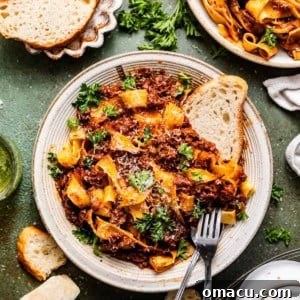
Short rib bolognese is a luxurious pasta sauce, slow-braised to perfection with tender beef, rich tomatoes, red wine, aromatic vegetables, and fragrant fresh herbs, finished with cream and Parmesan. A truly comforting and satisfying gourmet meal for any occasion!
Equipment
- Large Pot or Dutch Oven
Ingredients
- 3 lbs Bone-In Short Ribs
- 2 tbsp Salted Butter
- 2 tbsp Olive Oil
- 4 pcs Bacon, cut into chunks (or 1/2 lb pancetta cut into chunks)
- 1 large Yellow Onion, diced
- 2 Shallots, diced
- 2 Carrots, diced
- 2 Celery Stalks, diced
- 6 oz Tomato Paste
- 4 cloves Garlic, minced
- 1/2 tsp Nutmeg, freshly grated
- 1/2 tsp Red Pepper Flakes (adjust to taste for mild heat)
- 28 oz Crushed Tomatoes (San Marzano recommended for best flavor)
- 750 ml Dry Red Wine (one bottle, e.g., Cabernet Sauvignon, Chianti, Merlot)
- 1 cup Beef Broth
- 2 Bay Leaves
- 4 sprigs Fresh Rosemary
- 3 Fresh Sage Leaves
- 6 sprigs Thyme
- 1 Parmesan Rind (optional, but highly recommended for umami depth)
- 1/2 cup Heavy Cream
- 1/2 cup Parmesan, freshly grated (plus more for serving)
- 1 lb Pappardelle (or other robust pasta of choice like tagliatelle, fettuccine)
- 2 tbsp Fresh Parsley, chopped (for garnish)
Instructions
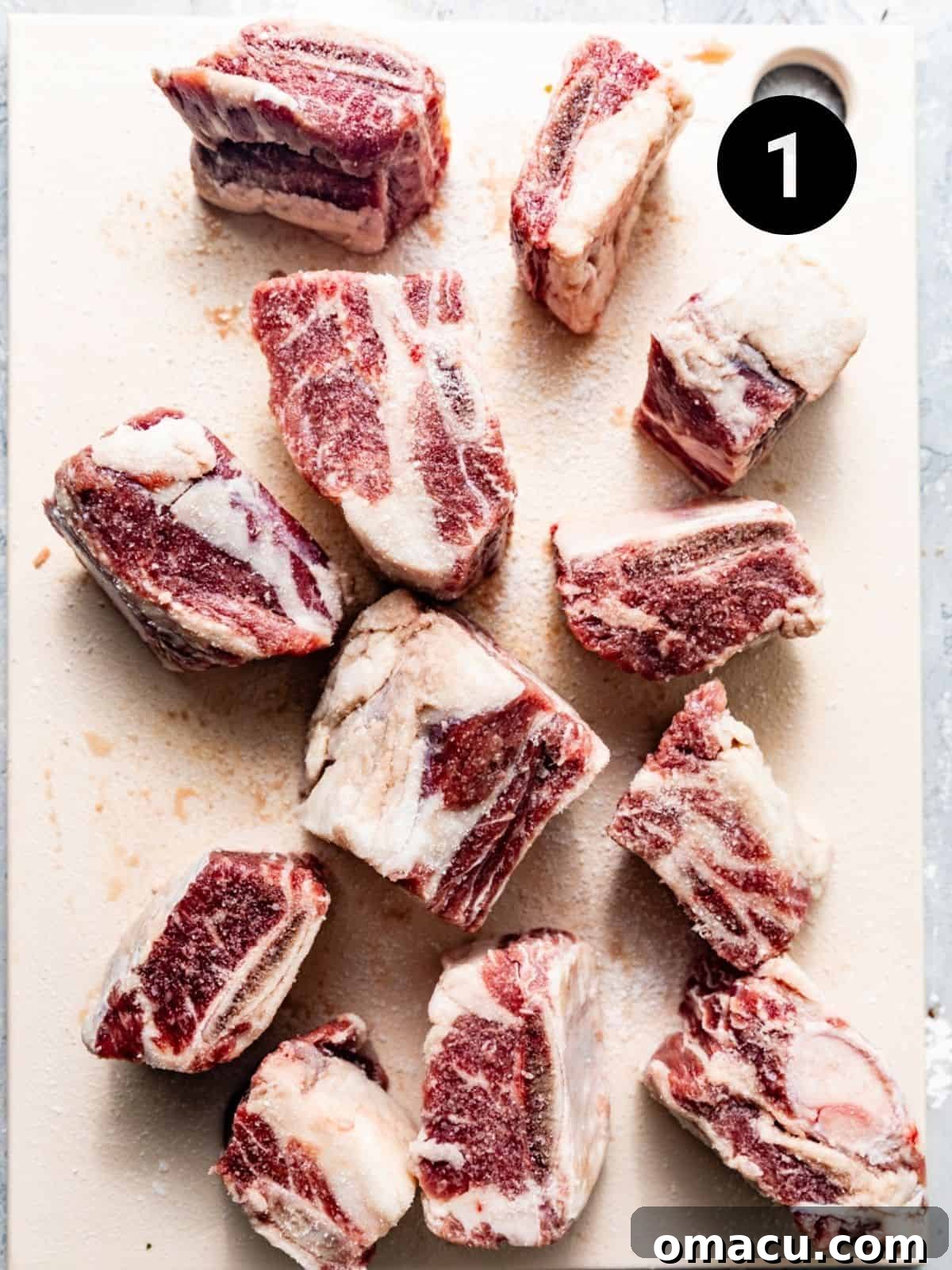
- Prepare and Season Ribs: Pat the short ribs thoroughly dry. Season generously on all sides with kosher salt and black pepper.
- Sear Short Ribs: In a large Dutch oven or heavy-bottomed pot, heat butter and olive oil over medium-high heat. Sear short ribs on all sides until deeply browned and a crust forms. Remove ribs from the pot and set aside.
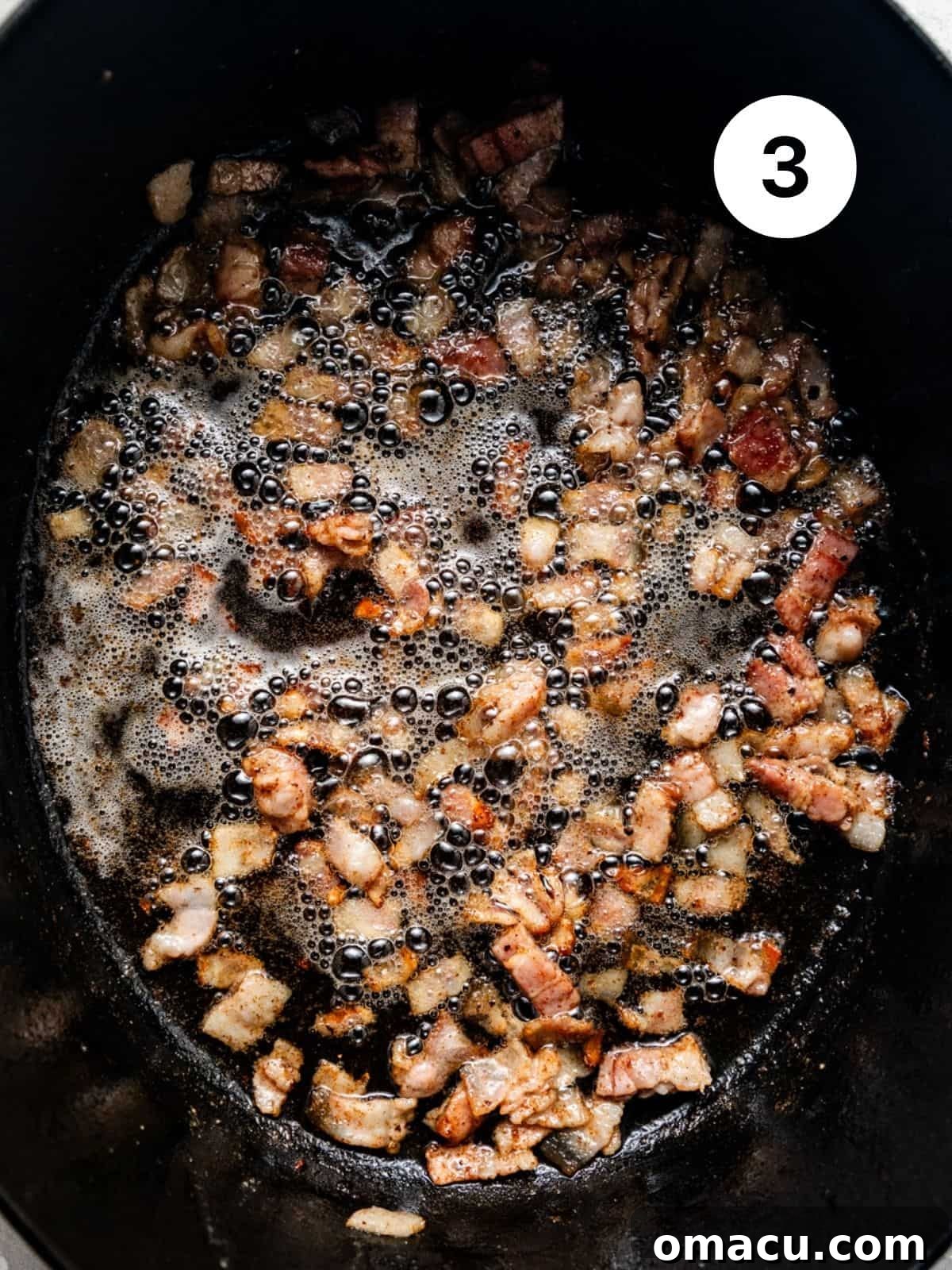
- Cook Bacon and Soffritto: Reduce heat to medium. Add diced bacon and cook until crispy and fat is rendered. Remove crispy bacon. Add shallots, yellow onion, carrots, and celery. Season with salt and pepper. Cook for 5-7 minutes until vegetables soften.
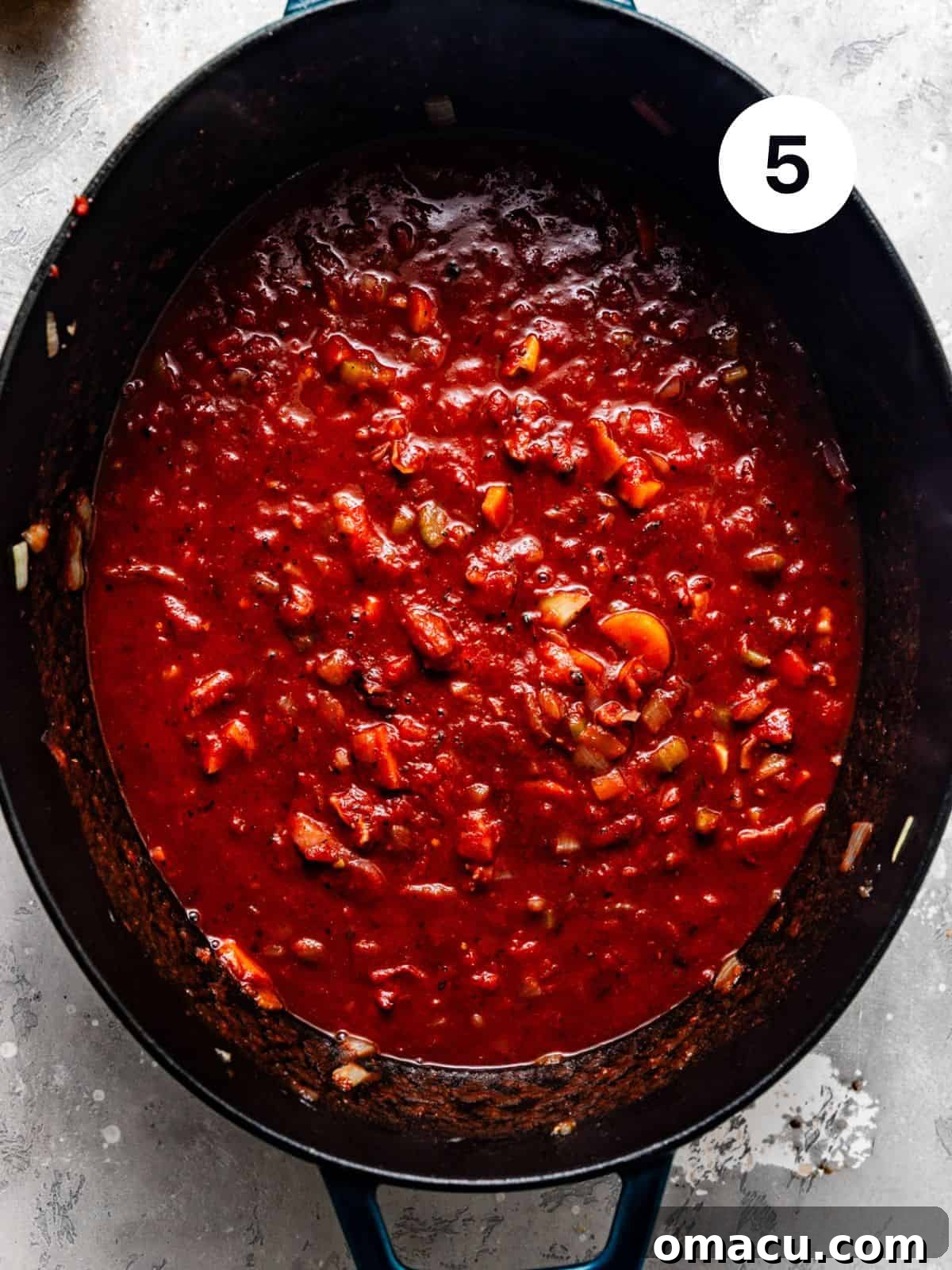
- Build Flavor Base: Stir in tomato paste, minced garlic, nutmeg, and red pepper flakes. Cook for another 5 minutes, stirring, until thickened and tomato paste darkens. Deglaze by adding crushed tomatoes, red wine, and beef broth, scraping up browned bits.
- Braise the Ragu: Return seared short ribs to the pot. Add bay leaves, rosemary, sage, thyme (tied together or loose), and the Parmesan rind. Bring to a gentle boil, then reduce heat to low, cover, and simmer for 3-4 hours, or until short ribs are fork-tender and falling apart.
- Shred Meat: Carefully remove bay leaves and Parmesan rind. Transfer short ribs to a cutting board. Using two forks, shred the meat from the bones, discarding bones. Return shredded meat to the pot and stir into the sauce.
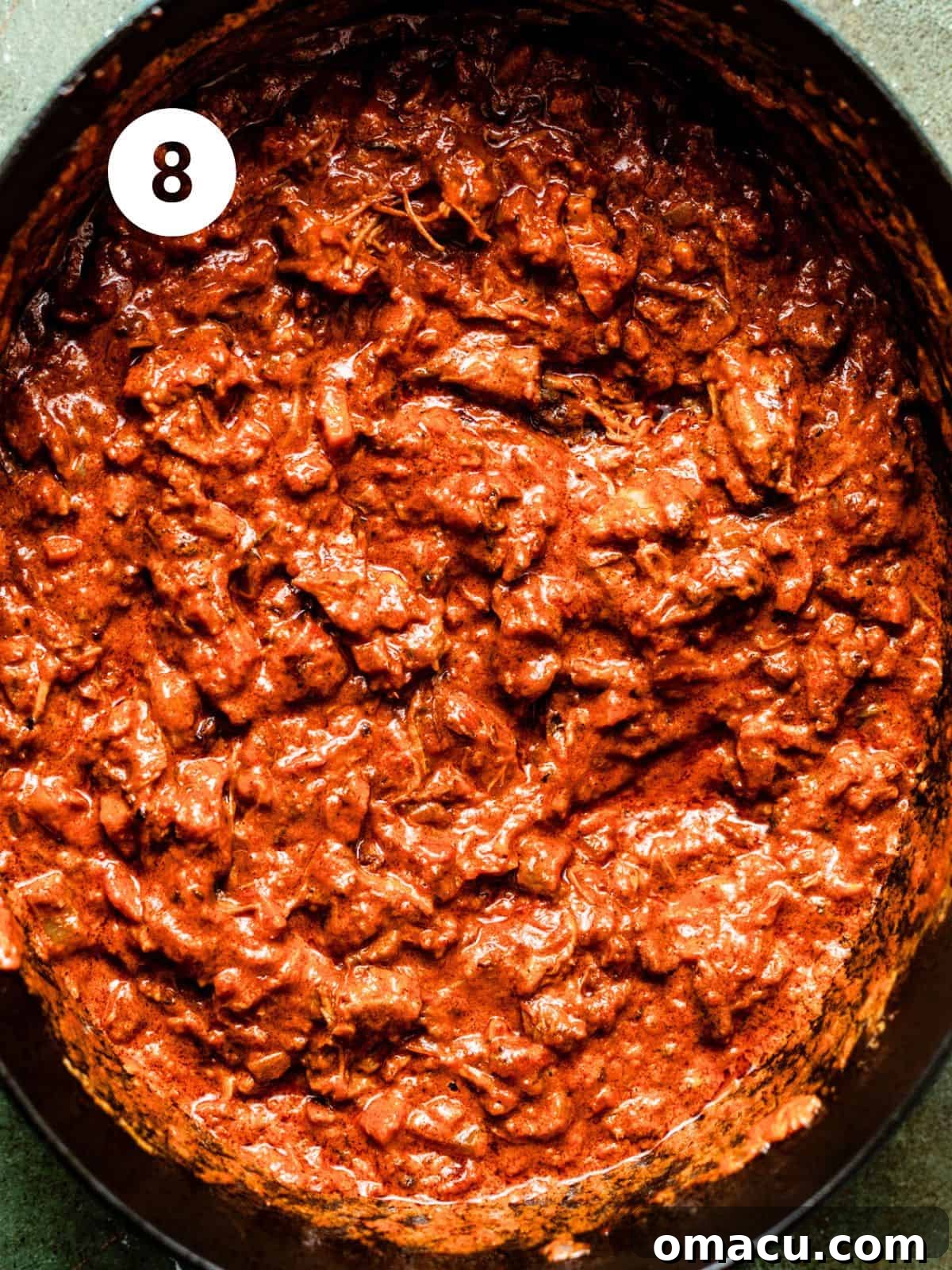
- Finish Sauce: Remove pot from heat. Pour in heavy cream and stir in the 1/2 cup of grated Parmesan until well combined and smooth.
- Cook Pasta: Bring a large pot of salted water to a rolling boil. Add pappardelle (or chosen pasta) and cook until al dente. Reserve about 1 cup of pasta water before draining. DO NOT RINSE THE PASTA. (Pro Tip: If bolognese is too thick, gradually add some reserved pasta water until desired consistency is reached.)
- Combine and Serve: Add cooked pasta directly to the finished bolognese sauce and toss to coat thoroughly. Serve immediately, garnished with additional grated Parmesan and fresh chopped parsley.
Notes
- Skim Excess Fat: Periodically skim any excess fat from the surface of the sauce during simmering to prevent a greasy final dish.
- Deglaze for Depth: Always deglaze the pot with wine after searing the meat to incorporate all the flavorful browned bits (fond) into your sauce.
- Remove Non-Edibles: Remember to remove the Parmesan rind and bay leaves before serving.
- Season Cautiously: Flavors concentrate during slow cooking, so add salt gradually and taste often to avoid over-salting.
- Patience Pays Off: Allow each step (searing, sweating aromatics, long simmering) adequate time to build profound flavor layers.
Nutrition (Approximate per serving)
The following nutrition information is automatically calculated and should be used as an approximation.
- Calories: 769kcal
- Carbohydrates: 60g
- Protein: 39g
- Fat: 36g
- Saturated Fat: 17g
- Polyunsaturated Fat: 2g
- Monounsaturated Fat: 6g
- Trans Fat: 0.2g
- Cholesterol: 154mg
- Sodium: 635mg
- Potassium: 754mg
- Fiber: 5g
- Sugar: 11g
- Vitamin A: 1022IU
- Vitamin C: 18mg
- Calcium: 288mg
- Iron: 7mg