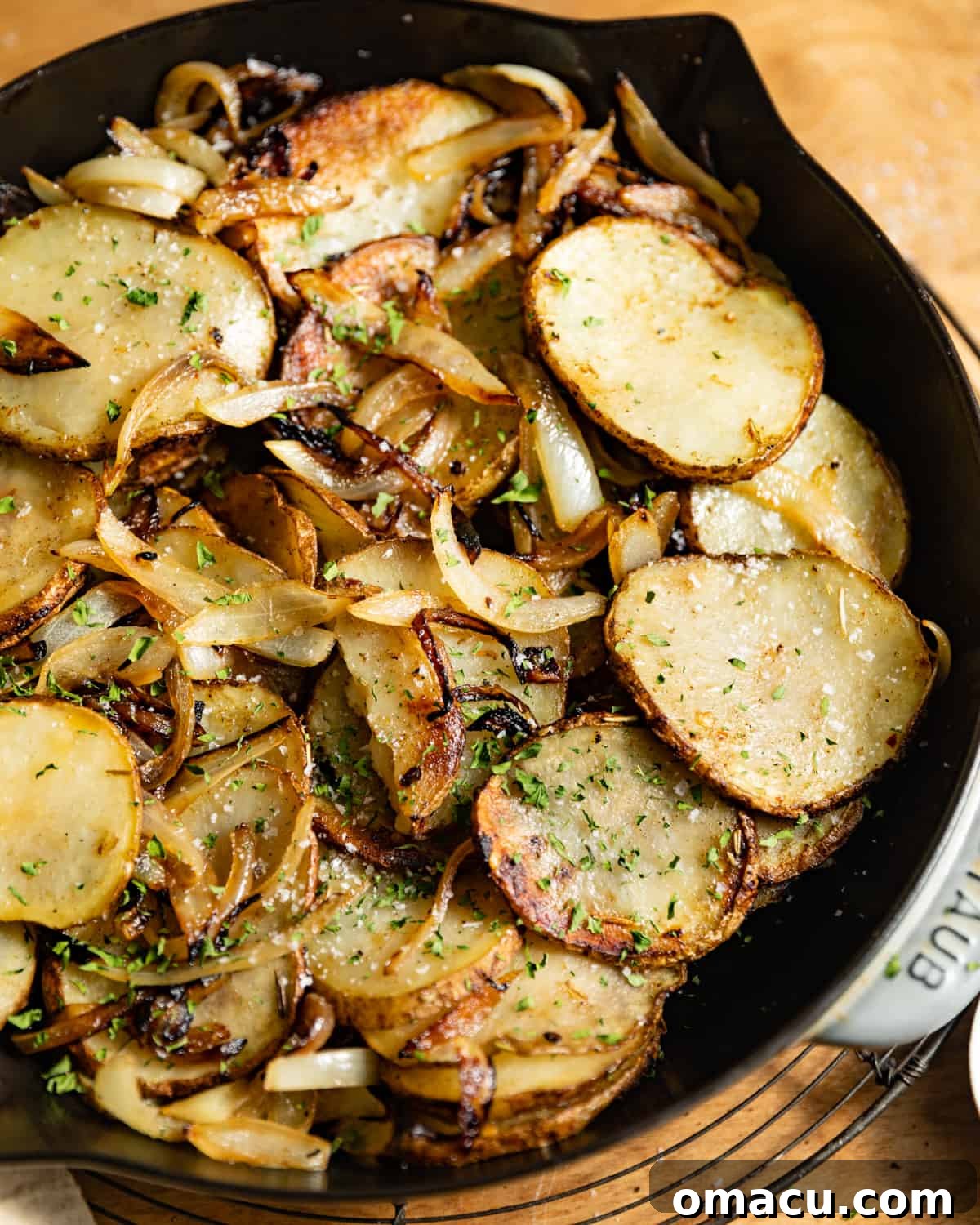
There’s something truly magical about a plate of perfectly cooked Fried Potatoes and Onions. It’s a dish that transcends mere sustenance, landing squarely in the realm of ultimate comfort food. Yet, for many home cooks, achieving that ideal balance – golden brown, irresistibly crispy edges without being burned, and tender, fluffy interiors without a hint of sogginess – often feels like a culinary enigma. You’re not alone in facing the challenge of finding that sweet spot, but fret not! I’m here to guide you through the foolproof method to create the most delicious fried potatoes you’ve ever tasted, every single time.
Imagine these savory, perfectly seasoned potatoes served alongside a stack of fluffy Maple Bacon Cinnamon Rolls for an unforgettable brunch. Or perhaps, envision a hearty breakfast featuring a generous mound of creamy scrambled eggs, these crispy potatoes, and warm, flaky Air Fryer Biscuits. Whether it’s a weekend breakfast, a quick weeknight side, or a holiday brunch centerpiece, these fried potatoes are incredibly versatile and guaranteed to become a family favorite.
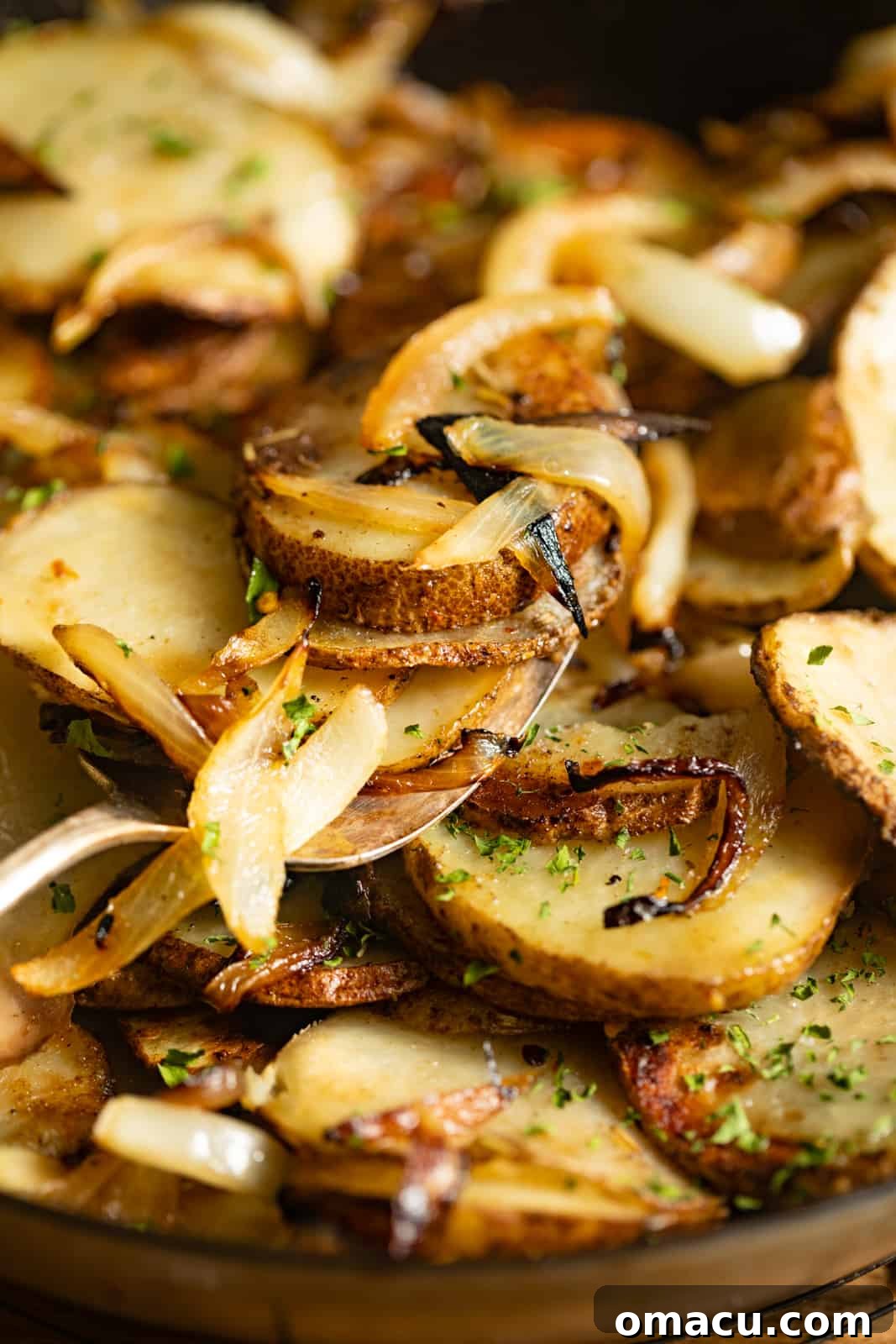
Table of Contents
- Why You’ll Love This Recipe
- Essential Ingredients for Perfect Fried Potatoes and Onions
- Expert Tips for Crispy Fried Potatoes
- Step-by-Step Guide: How to Make Fried Potatoes and Onions
- Butter vs. Oil: The Best Fat for Frying
- What to Serve with Your Golden Fried Potatoes
- Storing and Reheating Leftover Fried Potatoes
- Frequently Asked Questions About Fried Potatoes
- More Delicious Potato Recipes to Explore
- The Ultimate Fried Potatoes and Onions Recipe
Why You’ll Love This Crispy Fried Potato Recipe
This recipe isn’t just about frying potatoes; it’s about mastering the art of a classic comfort food. Here’s why these fried potatoes will quickly become a staple in your kitchen:
– Surprisingly Quick to Prepare: Don’t let the thought of frying intimidate you. The hands-on time for these potatoes is minimal, with much of the cooking happening while you attend to other tasks. Once you have your potatoes sliced, the cooking process flies by, making this an ideal dish even on busy mornings or evenings.
– Versatile for Any Meal: While often associated with breakfast and brunch, these delectable fried potatoes are incredibly versatile. Their savory, seasoned flavor makes them a fantastic side dish for dinner entrees like roasted chicken, juicy pork chops, steak, or even a simple grilled fish. They can elevate a casual weeknight meal into something special.
– Achieve the Perfect Texture, Every Time: Say goodbye to sad, soggy potatoes or charred, overcooked chunks. This recipe focuses on precise techniques to ensure your potatoes are beautifully crispy and golden on the outside, with a soft, tender interior. We’ll walk you through the secrets to preventing burning while maximizing that coveted crunch.
– Infinitely Customizable Flavor Profile: The beauty of this dish lies in its adaptability. While we provide a fantastic base seasoning, you can easily adjust it to suit your palate or complement your main course. Want a smoky kick? Add a pinch of paprika. Craving Italian flair? A dash of oregano and basil will do the trick. The possibilities are endless!
Essential Ingredients for Perfect Fried Potatoes and Onions
Crafting the best fried potatoes begins with selecting the right ingredients. Here’s a closer look at what you’ll need to create this comforting dish:
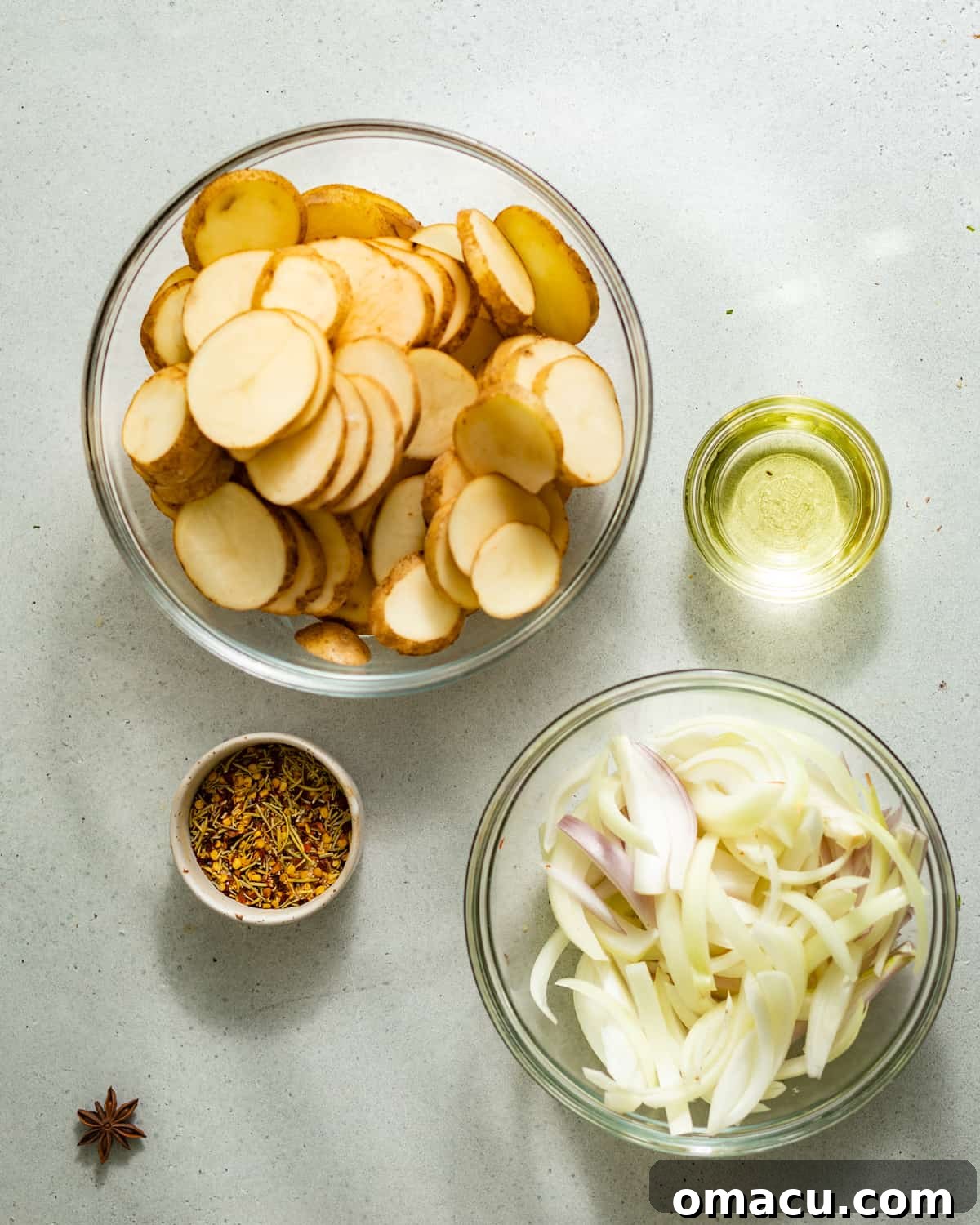
Refer to the comprehensive recipe card below for exact measurements and a complete list of ingredients.
Potatoes: For truly exceptional fried potatoes, I highly recommend using classic russet potatoes. Their high starch content makes them ideal for frying, resulting in a wonderfully crispy exterior and a fluffy, tender inside. There’s no need to peel them; leaving the skin on adds fantastic rustic visual appeal and contributes to their structural integrity, ensuring the slices hold together beautifully during cooking. If russets aren’t available, Yukon Gold potatoes can be a good substitute, offering a slightly creamier texture.
Onions: Yellow onions are the go-to choice for this recipe due to their balanced flavor and widespread availability. They caramelize beautifully, adding a natural sweetness and aromatic depth that perfectly complements the potatoes. However, feel free to experiment with a sweet onion for a milder, sweeter note, or even red onions if you enjoy a slightly sharper taste and a pop of color.
Vegetable Oil: The choice of cooking fat is crucial for successful frying. Vegetable oil is my top recommendation because of its high smoke point, which allows it to get hot enough to crisp the potatoes without burning. This means you can achieve that golden, crunchy texture without imparting an off-flavor. Other neutral oils with high smoke points like canola oil or grapeseed oil also work wonderfully.
Seasonings: The recipe card provides a carefully balanced blend of seasonings designed to enhance the natural flavors of the potatoes and onions. This typically includes seasoned salt, black pepper, dried rosemary, and onion powder for an aromatic base. For those who enjoy a little heat, a touch of red pepper flakes is an excellent optional addition. Remember, feel free to adjust these to your personal preference – perhaps a hint of garlic powder, paprika, or even a dash of cayenne for extra spice.
Expert Tips for Crispy Fried Potatoes
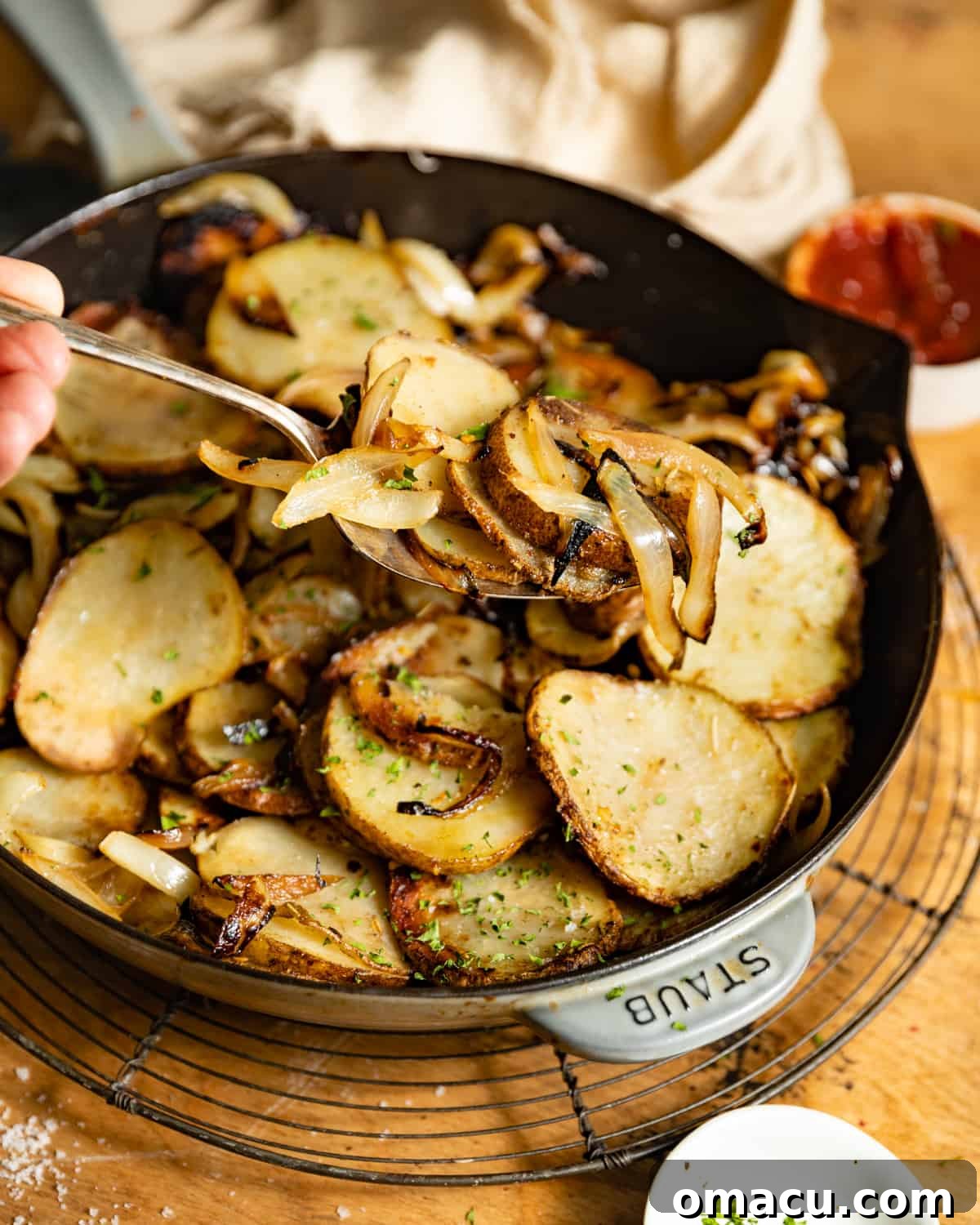
Achieving perfectly crispy fried potatoes is more than just throwing them in a pan. These expert tips will help you master the technique and avoid common pitfalls:
– Ensure Even Potato Slices: This is arguably the most critical step for uniform cooking. Potatoes that are sliced inconsistently will cook at different rates, leading to some being burnt while others are still raw or soggy. If your knife skills aren’t perfectly honed for thin, even slices, consider using a mandoline slicer. A mandoline will give you consistent thickness effortlessly, ensuring every potato piece cooks beautifully. Alternatively, some food processors come with slicing discs that can make this task quick and easy. Aim for slices roughly 1/8 to 1/4 inch thick.
– Dry Your Potatoes Thoroughly: Moisture is the enemy of crispiness when frying. After washing and slicing your potatoes, it’s essential to pat them thoroughly dry with a clean tea towel or paper towels. Excess water creates steam in the hot oil, which prevents browning and leads to soggy, rather than crispy, results. A quick dry will make a huge difference.
– Don’t Overcrowd the Pan: Frying in batches might seem like an extra step, but it’s crucial. If you overcrowd your skillet, the temperature of the oil will drop too quickly, and the potatoes will steam instead of fry. This again results in a less crispy texture. Cook the potatoes in a single layer, giving each piece enough space to develop that coveted golden crust.
– Heat the Oil Properly: Before adding your potatoes, ensure your oil is hot enough. A good test is to add a small potato slice to the pan; if it sizzles gently, the oil is ready. Too low heat will make the potatoes absorb too much oil and become greasy, while too high heat will burn the outsides before the insides are cooked.
– Patience is Key: Resist the Urge to Stir Constantly: When the potatoes first hit the hot oil, it’s tempting to start stirring immediately. Don’t! Allow them to cook undisturbed for at least 5 minutes on one side. This critical initial phase allows a crust to form, which is the foundation of their crispiness. Once a nice golden-brown crust has developed, then you can flip and continue cooking.
– Customize Your Seasonings: While our recommended seasonings are a perfect starting point, don’t hesitate to experiment! Match the flavors of your fried potatoes to your meal. For instance, if you’re serving them with a Mexican-inspired dish, consider adding cumin and chili powder. For an Italian theme, incorporate dried oregano and basil. A dash of smoked paprika can add a wonderful depth, and fresh herbs like chopped parsley or chives stirred in at the end can brighten the flavors considerably.
Step-by-Step Guide: How to Make Fried Potatoes and Onions
Let’s get cooking! Follow these simple steps for perfectly crispy and flavorful fried potatoes and onions:
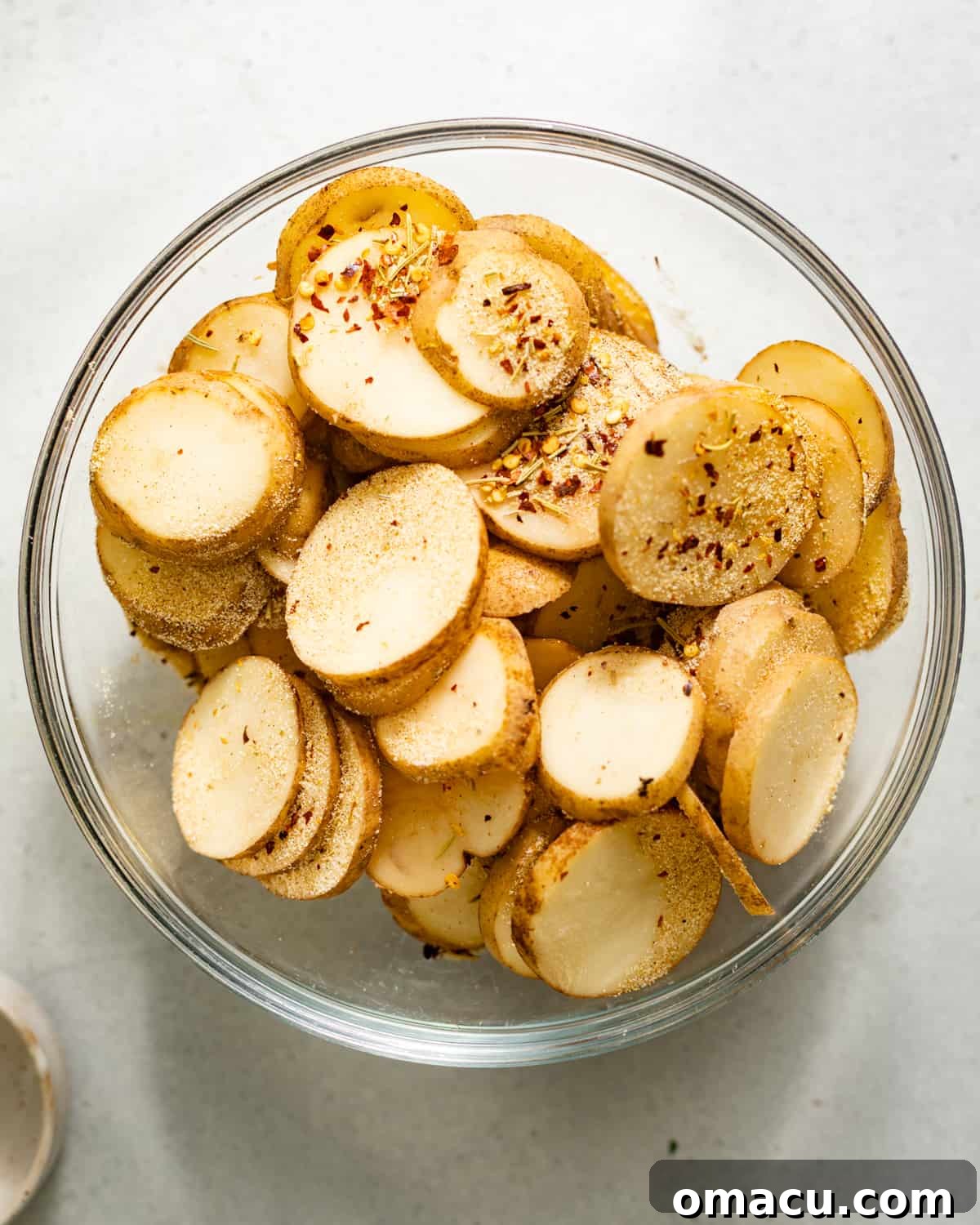
– Begin by thoroughly washing your russet potatoes. Once clean, slice them thinly and uniformly. Remember, even slices are key to even cooking. Transfer the sliced potatoes into a large mixing bowl. Add your chosen seasonings (seasoned salt, black pepper, dried rosemary, onion powder, and red pepper flakes if desired) and toss everything together until the potatoes are thoroughly coated. This ensures every bite is bursting with flavor.
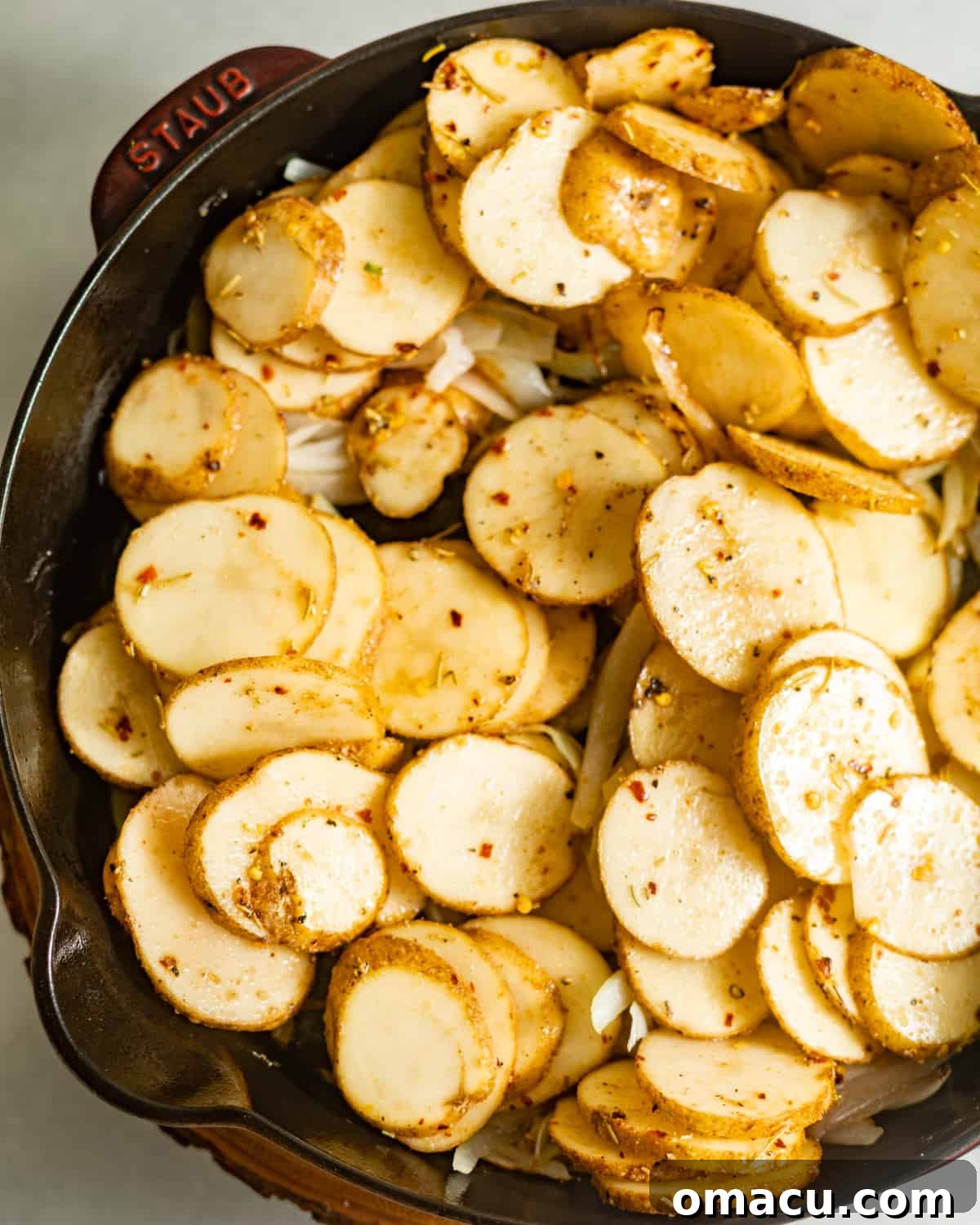
– In a large 12-inch skillet (a cast iron skillet works wonderfully for even heat distribution and superb browning), heat the vegetable oil over medium heat. Once the oil is shimmering and hot, carefully add the seasoned potato and onion slices to the skillet in a single layer. Resist the urge to stir or move them around immediately! Allow the potatoes to cook undisturbed for a full 5 minutes. This crucial step lets a beautiful golden crust form on the bottom, which is essential for crispiness.
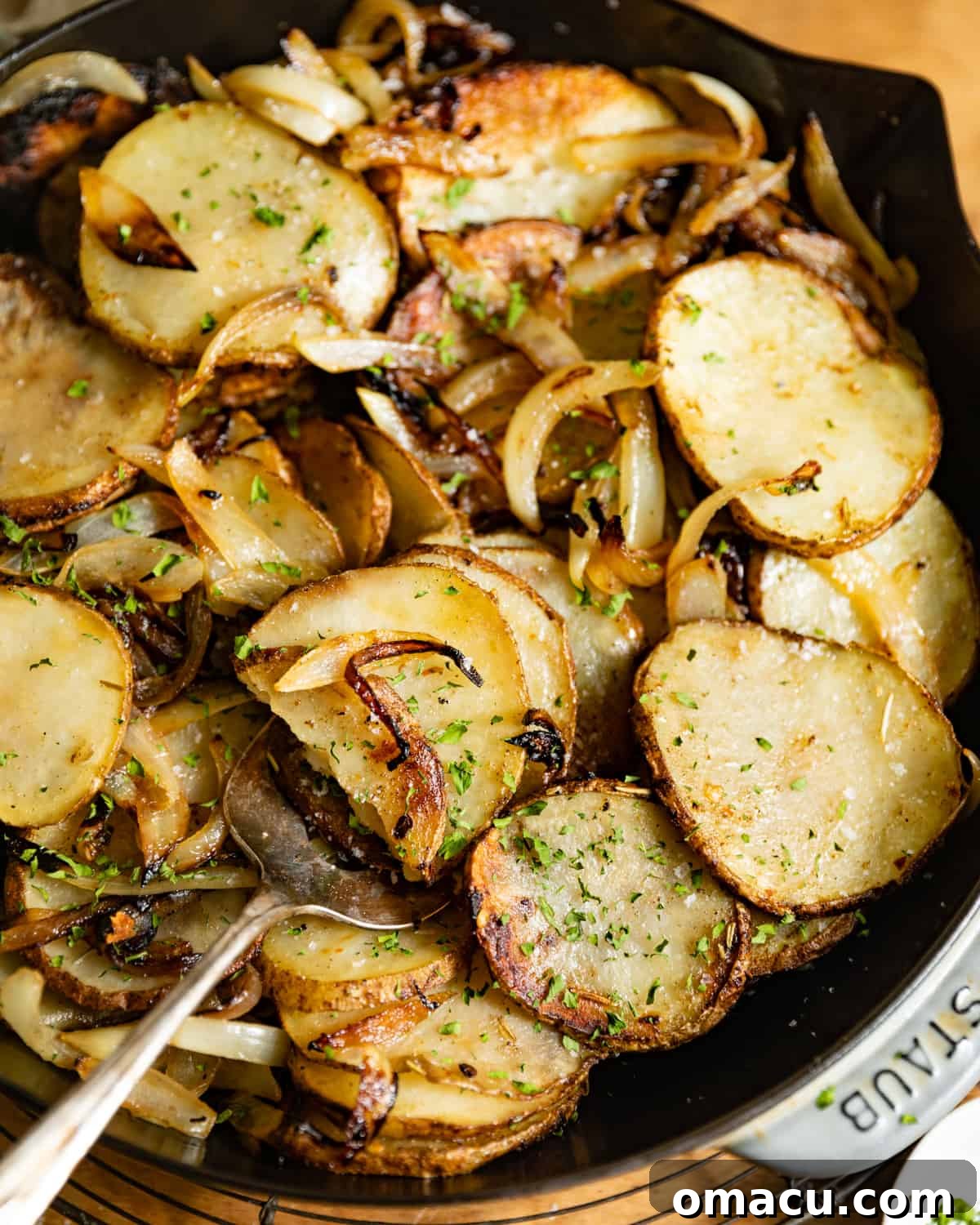
– After the initial 5 minutes, gently flip the potatoes over. You should see a lovely golden-brown crust. Continue to cook the potatoes for an additional 18-20 minutes, flipping and rearranging them every 3-5 minutes. This regular movement ensures even cooking, prevents sticking, and builds multiple layers of crispiness without any part burning. Keep an eye on them; the goal is deep golden-brown and tender throughout.
– Once the potatoes are perfectly golden and tender, remove them from the skillet and place them on a plate lined with paper towels. This will help to drain any excess oil, ensuring they stay delightfully crisp and less greasy. Serve immediately and enjoy the fruits of your frying labor!
Butter vs. Oil: The Best Fat for Frying
It’s a common question: can you use butter for fried potatoes? While we all adore the rich, savory flavor that butter brings to dishes, I specifically recommend vegetable oil for this recipe, and here’s why. Butter has a significantly lower smoke point compared to vegetable oil. This means that when subjected to the medium-high heat required for crisping potatoes over 20 minutes, butter will quickly burn. Burnt butter not only imparts an unpleasant, acrid taste to your food but also creates a smoky mess in your kitchen.
Vegetable oil, with its higher smoke point, can withstand the necessary heat for an extended period, allowing the potatoes to achieve that perfect golden-brown crispness without charring the fat. If you simply can’t imagine fried potatoes without that wonderful buttery aroma and taste, there’s a trick: use vegetable oil for the initial frying process, and then, in the last few minutes of cooking, add a pat or two of butter to the skillet. This way, the butter melts and coats the already crispy potatoes, imparting its flavor without the risk of burning. You get the best of both worlds!
What to Serve with Your Golden Fried Potatoes
These crispy fried potatoes are incredibly versatile and can accompany a wide array of dishes, transforming any meal into a more satisfying experience. Here are some fantastic serving suggestions:
For a classic breakfast or decadent brunch spread, pair them with a towering stack of fluffy lemon poppy seed pancakes or warm, golden brown butter waffles topped with cinnamon apples. Complete the meal with sizzling breakfast sausage and perfectly crisp oven-baked bacon. While your potatoes are browning, it’s super easy to whip up a fluffy pan of scrambled eggs – just set them to cook on another burner. If you’re hosting, assign someone to handle the pancakes and fruit salad, and a glorious brunch will be ready in no time!
Beyond breakfast, these fried potatoes shine as a side dish for dinner. They are a delightful accompaniment to hearty main courses like roasted chicken, pan-seared pork chops, grilled steaks, or even a simple meatloaf. Their robust flavor and satisfying texture make them an excellent alternative to mashed potatoes or plain baked potatoes. Don’t forget to garnish with fresh herbs like chopped chives or parsley for a burst of color and freshness!
Storing and Reheating Leftover Fried Potatoes
While freshly fried potatoes are undeniably the best, sometimes you might find yourself with leftovers. Don’t let them go to waste! Properly stored and reheated, they can still be quite delicious:
To store, allow the potatoes to cool completely to room temperature. Transfer them to an airtight container and place it in the refrigerator. They will keep well for 3-4 days.
- Reheating on the Stovetop: The best way to bring back their crispiness is to reheat them in a skillet. Heat a touch of fresh oil (about 1-2 teaspoons) in a non-stick or cast iron skillet over medium heat. Add the leftover potatoes in a single layer and cook, stirring occasionally, until they are hot, crispy, and re-golden, about 5-8 minutes.
- Reheating in the Air Fryer: For quick and excellent results, pop them into the air fryer! Preheat your air fryer to 375°F (190°C). Arrange the potatoes in a single layer in the air fryer basket (work in batches if necessary) and cook for 3-5 minutes, shaking the basket halfway through, until they are heated through and crispy.
- Reheating in the Oven: Preheat your oven to 375°F (190°C). Spread the potatoes on a baking sheet in a single layer. Bake for 10-15 minutes, flipping halfway, until hot and re-crisped.
Avoid reheating in the microwave, as this will almost certainly result in soggy potatoes.
Frequently Asked Questions About Fried Potatoes
For perfectly even and consistent slices, a mandoline slicer is highly recommended. It takes the guesswork out and ensures every piece is the same thickness, leading to uniform cooking. Depending on the size of your potatoes, you might also be able to use your food processor’s slicing disk for quick work. However, with a steady hand and a very sharp chef’s knife, you can certainly slice the potatoes by hand. The key is to aim for slices roughly 1/8 to 1/4 inch thick. Consistency is crucial for achieving that desirable crispy texture without burning some pieces while others remain undercooked.
The easiest and most aesthetically pleasing way to slice onions into nice half-moons, as often seen in professional dishes, is to first cut the onion in half from the root to the tip. Peel off the outer papery skin and any discolored or tough layers. Then, hold the onion half firmly near the root end (keeping the root intact helps hold the onion together). From the opposite end, slice downwards in nice, neat, and thin rows. This method yields beautiful, uniformly sized onion pieces that will cook evenly and caramelize beautifully alongside the potatoes.
While freshly fried potatoes are always best, you can certainly prepare some elements in advance if you’re short on time. Potatoes tend to brown when sliced and exposed to air, but you can prevent this by slicing them the night before and submerging them completely in a bowl of cold water. Store the bowl in the refrigerator overnight. This method effectively prevents oxidation and browning. However, it’s absolutely crucial that the potatoes are completely dry before they hit the hot oil. Before cooking, drain them very well and then pat them thoroughly dry with a clean tea towel or several layers of paper towels. Any residual moisture will cause the oil to splatter and prevent the potatoes from crisping up properly.
Soaking sliced potatoes in cold water for about 30 minutes can help remove excess starch, which can contribute to crispier results. If you have the extra time, this is a beneficial step. However, if you’re in a hurry, simply washing and thoroughly drying them as instructed in the recipe is usually sufficient for great results, especially with russet potatoes.
While this recipe is optimized for fresh potatoes, you can use frozen sliced potatoes in a pinch. However, you’ll need to ensure they are completely thawed and patted very, very dry before adding them to the skillet. They may also take a bit longer to cook and achieve the same level of crispiness as fresh potatoes, as they tend to hold more moisture.
More Delicious Potato Recipes to Explore
If you’re a potato lover, you know the possibilities are endless! From comforting mashed potatoes to exciting appetizers, here are more incredible potato recipes to satisfy your cravings:
Thanksgiving
Creamy Red Skin Mashed Potatoes
Appetizers
Crispy Smashed Potatoes with Whipped Herb Ricotta
Thanksgiving
Old Fashioned Candied Sweet Potatoes
Gluten Free Recipes
Brown Butter Garlic and Herb Mashed Potatoes
Hungry for more delicious and beautiful recipes? Make sure to subscribe to my newsletter to receive the latest seasonal creations and culinary inspiration delivered straight to your inbox as soon as they’re released!
If you try this recipe for fried potatoes and onions, please consider leaving a star rating on the recipe card below and sharing your thoughts in the comments! Your feedback is invaluable. You can also tag @BritneyBreaksBread on Instagram and use the hashtag #britneybreaksbread. I love seeing your beautiful creations and celebrating your kitchen successes!
Fried Onions and Potatoes
Equipment
-
12-inch Skillet (cast iron recommended)
Ingredients
- 1 1/2 lbs russet potatoes, sliced thinly
- 2 yellow onions, thinly sliced
- 1 1/2 teaspoons seasoned salt
- 1 teaspoon black pepper
- 1/2 teaspoon dried rosemary
- 1 teaspoon onion powder
- 1 teaspoon red pepper flakes, optional
- 3 tablespoons vegetable oil
Instructions
-
Wash russet potatoes thoroughly, then thinly slice them into even rounds (approximately 1/8 to 1/4 inch thick). Place the sliced potatoes and thinly sliced onions into a large mixing bowl. Add the seasoned salt, black pepper, dried rosemary, onion powder, and optional red pepper flakes. Toss well to ensure all potato and onion slices are evenly coated with the seasonings.
-
Add 3 tablespoons of vegetable oil to a 12-inch skillet (cast iron works best) and heat over medium heat until the oil is shimmering. Carefully add the seasoned potato and onion mixture to the skillet, spreading them into a single layer. Allow the potatoes to cook undisturbed for 5 minutes to form a golden crust.
-
After 5 minutes, gently flip the potatoes and onions. Continue to cook for another 18-20 minutes, flipping and rearranging the potatoes every 3-5 minutes to ensure even cooking and prevent any burning. Cook until the potatoes are tender on the inside and deeply golden and crispy on the outside.
-
Once cooked to perfection, transfer the fried potatoes and onions to a plate lined with paper towels to absorb any excess grease. Serve immediately and enjoy!
Nutrition
Nutrition information is automatically calculated, so should only be used as an approximation.