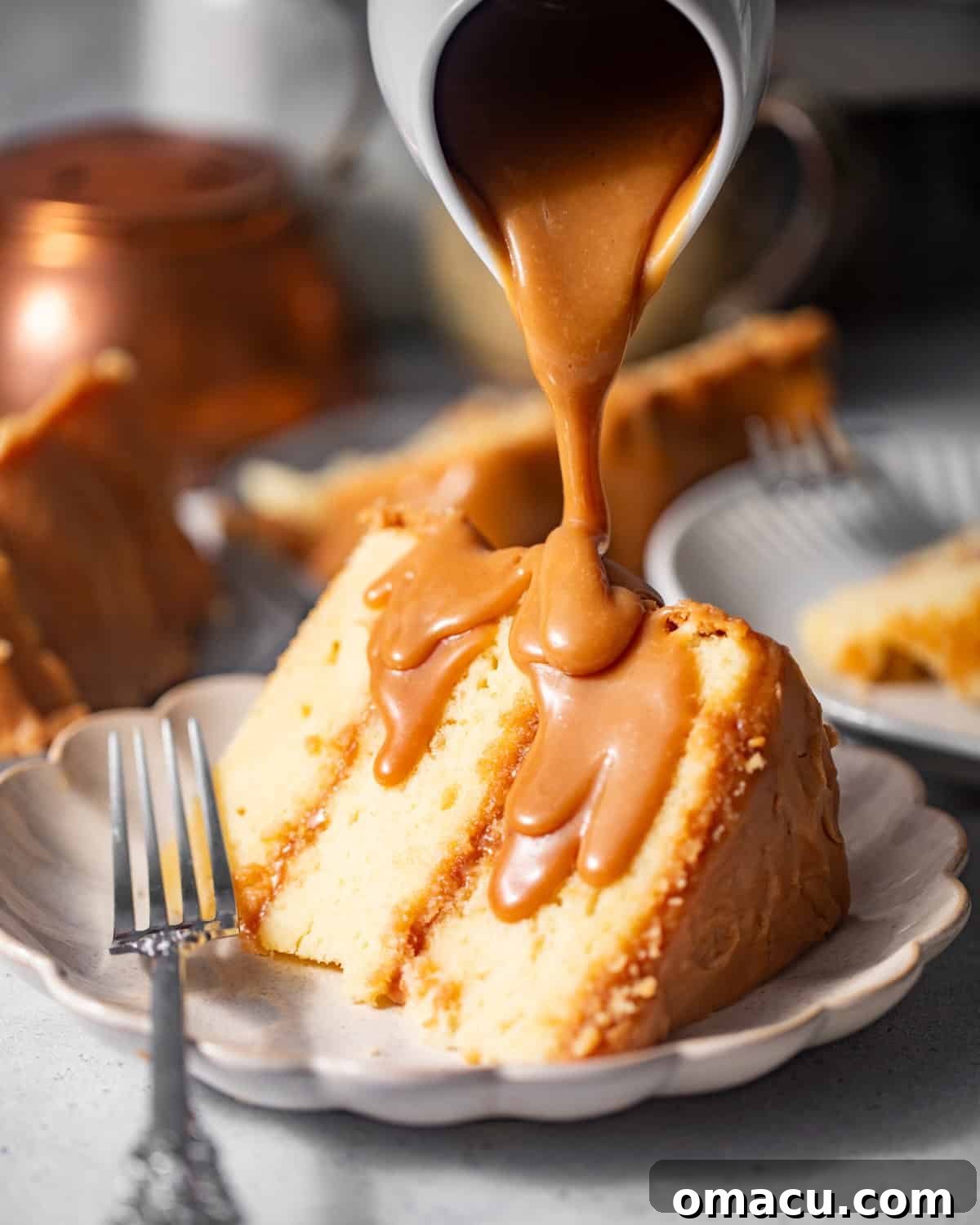
A true classic of Southern baking, this homemade Caramel Cake is an absolute masterpiece. Imagine a magnificent three-layer vanilla yellow cake, incredibly buttery and moist, crowned with a glossy, slow-cooked caramel frosting that simply melts in your mouth. This isn’t just any dessert; it’s a show-stopping, taste-bud-pleasing creation that promises to have everyone clamoring for a second slice and asking for the recipe!
For those who cherish traditional Southern layer cakes, be sure to explore my beloved Old Fashioned Red Velvet Cake and the wonderfully unique Hummingbird Cake!
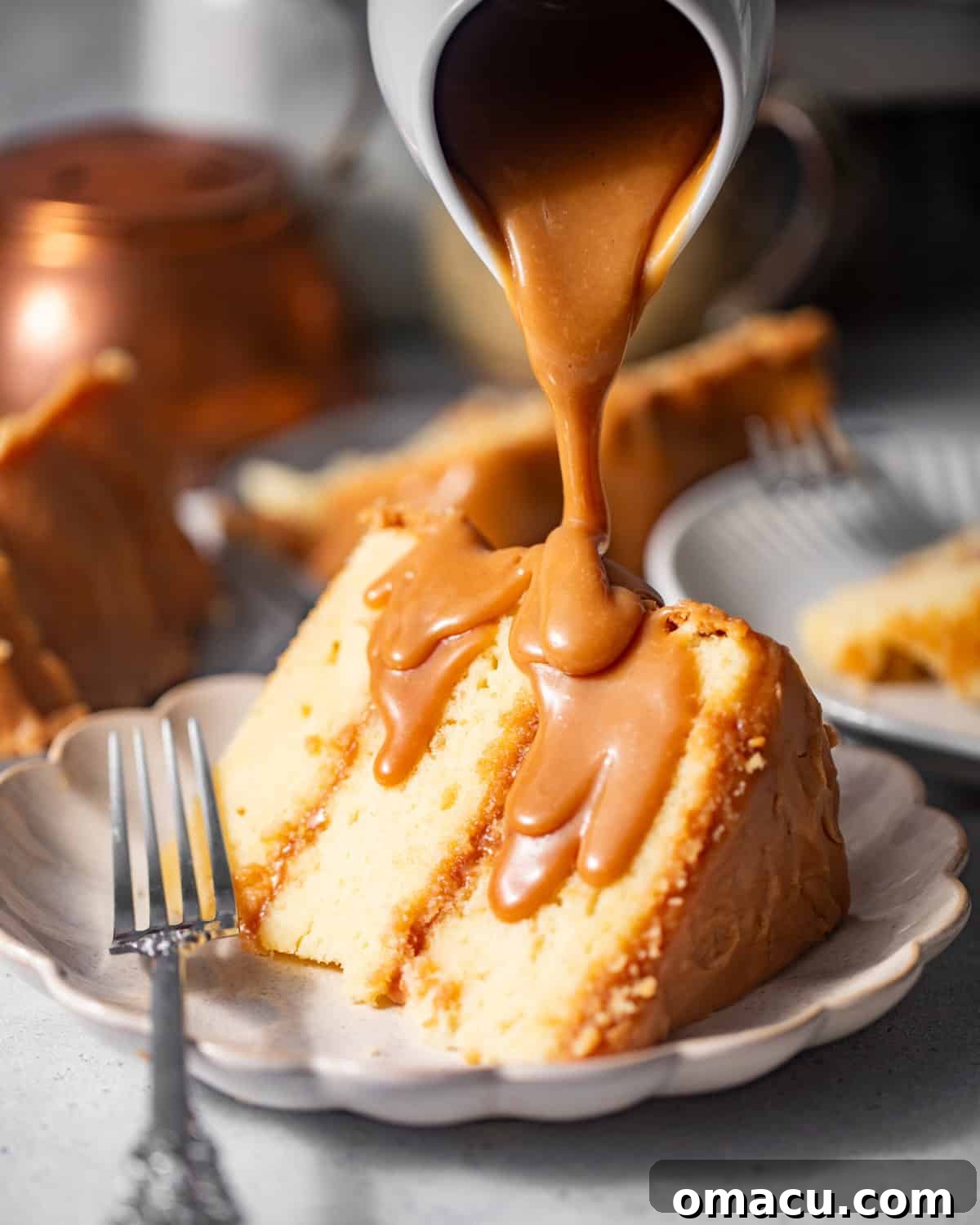
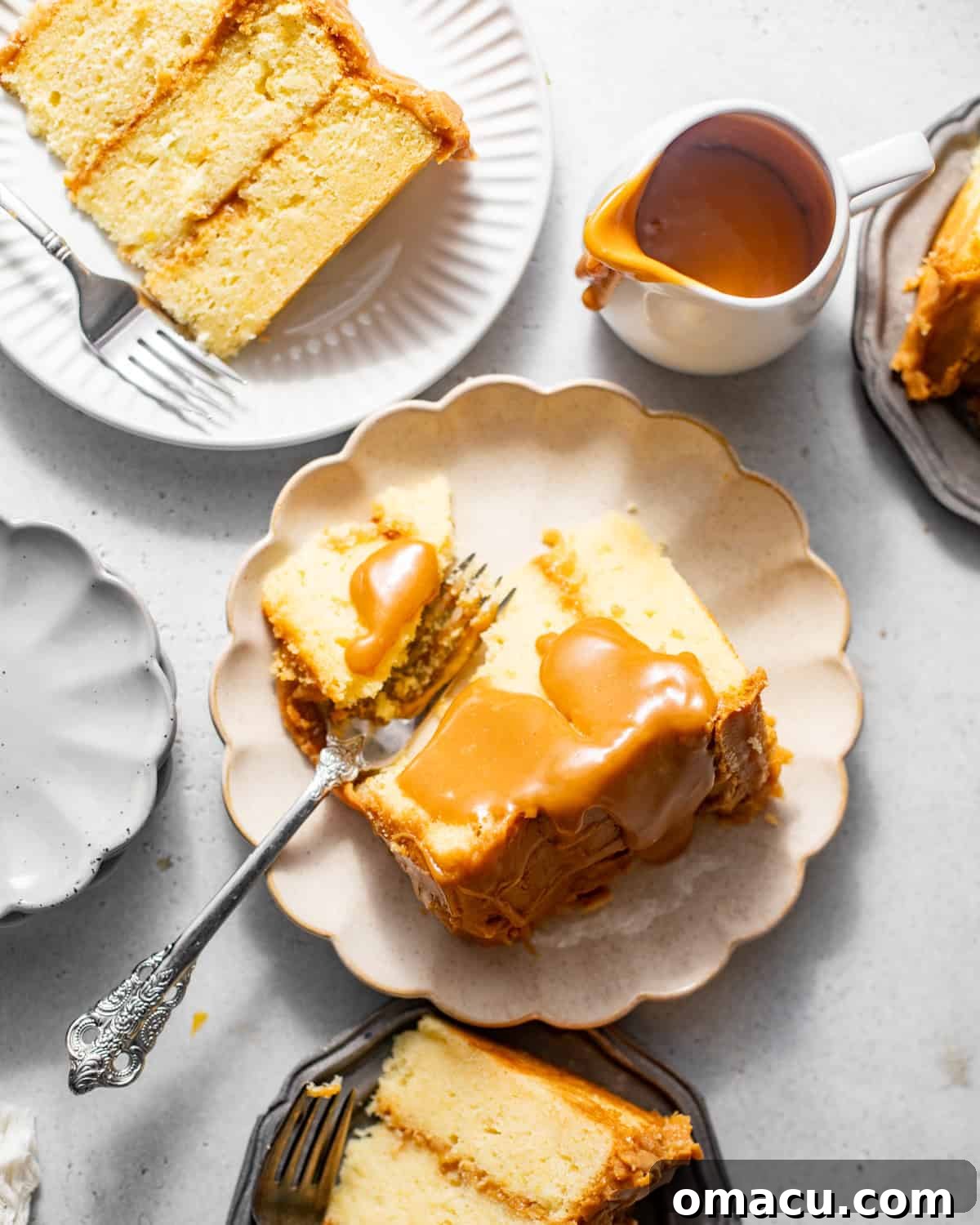
This caramel cake, my friends, is the kind of dessert that commands attention and brings a hush to the room. It’s a testament to the comforting power of rich, buttery cake layers enveloped in a glistening caramel icing so profound in flavor, it tastes like it came straight from a cherished family recipe, passed down through generations. Each bite of this tender, soft cake, paired with the unbelievably next-level homemade caramel sauce, is an experience in itself.
I’ve poured my heart into perfecting this recipe, meticulously testing, tweaking, and fussing over every minute detail to ensure your baking journey is effortless and rewarding. And when I say this cake will be the undeniable star of any dessert table, I truly mean it. It exudes “special occasion,” “holiday centerpiece,” and “who made this incredible creation?” energy from the moment it’s presented.
This isn’t just a delicious caramel cake; it’s the most exquisite I’ve ever crafted. The caramel icing is slowly simmered to achieve a luxurious, silky texture and a perfect balance of deep sweetness with a nuanced toffee-like complexity. As it cools, it sets into that dreamy, soft, fudgy layer that seamlessly merges with the moist cake beneath, creating a harmonious blend of textures and flavors. If you’re seeking a dessert that feels both deeply heartfelt and utterly delicious, you’ve found your new favorite recipe right here.
Table of Contents
- Why You’ll Love This Caramel Cake Recipe
- Key Ingredients for Southern Caramel Cake
- Making the Buttery Yellow Cake Layers
- Crafting the Silky Caramel Frosting
- Pro Tips for the Best Caramel Cake
- Caramel Cake Recipe FAQs
- More Classic Cake Recipes to Explore
Why You’ll Love This Caramel Cake Recipe
- The Caramel Frosting is Pure Magic: This isn’t your average store-bought caramel. Our slow-cooked, homemade caramel is unbelievably silky, with just the right depth of sweetness and a hint of a buttery toffee note. It pours over the cake like molten gold, then transforms into a soft, fudge-like layer that clings to every crumb, creating an unforgettable texture and flavor experience. It’s truly the crowning jewel of this cake.
- A Tender and Plush Cake Base: The foundation of this incredible dessert is a rich, tender, and incredibly moist yellow cake. Thanks to the thoughtful inclusion of ingredients like buttermilk and sour cream, combined with proper creaming techniques, the cake achieves a velvety crumb that isn’t too dense, yet strong enough to support the luscious caramel frosting without crumbling. It’s the perfect balance of buttery richness and delicate texture.
- It’s a Recipe People Talk About: Be prepared for compliments and requests! When you bring this Southern Caramel Cake to any gathering – a holiday feast, a casual potluck, or a Sunday dinner – it won’t just be eaten; it will be savored and remembered. Guests will undoubtedly be asking, “Who made this masterpiece?” before their plates are even cleared. It’s a true conversation starter and a testament to your baking prowess.
- Achievable Bakery-Level Results with the Right Technique: Don’t be intimidated by the idea of homemade caramel. This recipe is designed to be foolproof when you follow the detailed steps and dedicate a little patience to the caramel-making process. With clear guidance, you’ll be able to create a professional-looking and tasting cake right in your own kitchen, impressing everyone (including yourself!) with your newfound skill.
Key Ingredients for Southern Caramel Cake
(A comprehensive list of exact measurements can be found in the recipe card at the end of this article.)
- Cake Flour: This is a crucial ingredient for achieving that signature soft, melt-in-your-mouth crumb that defines a truly exceptional caramel cake. With its lower protein content compared to all-purpose flour, cake flour develops less gluten, ensuring your cake remains wonderfully tender and plush, rather than dense or chewy. While all-purpose flour can be substituted, cake flour is what truly elevates this to a bakery-quality dessert.
- Butter and Vegetable Oil: The combination of these two fats is a baker’s secret for both superior flavor and unparalleled moisture. Butter contributes its rich, classic dairy flavor, while vegetable oil ensures a supremely moist and incredibly soft cake texture that stays fresh for days. This dynamic duo is a trick I also use in my coconut cake, and the results are consistently outstanding!
- Yellow Pudding Mix (Instant): It’s important not to confuse this with yellow cake mix! A small box of instant vanilla pudding mix is a clever addition that infuses the cake with extra moisture and that nostalgic, old-school vanilla flavor. More importantly, it acts as a tenderizer and helps the cake maintain its soft, delectable texture for several days, preventing it from drying out prematurely.
- Brown Sugar: Used in both the cake and the caramel frosting, brown sugar is vital for its deep caramel notes and moistening properties. Its natural molasses content adds a rich, complex sweetness that white sugar alone cannot provide, enhancing the overall caramel and toffee-like profile of the entire dessert.
- Buttermilk and Sour Cream: These acidic dairy ingredients are champions of moisture and tenderness in baking. The acidity in buttermilk works to break down gluten strands, resulting in an exceptionally tender crumb. Sour cream, on the other hand, contributes a luxurious richness and helps create a cake that is dense yet incredibly soft and velvety. Together, they create a wonderfully nuanced flavor and texture.
- Large Eggs: Essential for both structure and rise, large eggs bind all the ingredients together, providing stability to the cake batter. They help the cake layers rise evenly and ensure they are sturdy enough to support the generous weight of the luscious caramel frosting without collapsing.
- Sweetened Condensed Milk: This magical ingredient is a cornerstone of the rich caramel flavor and consistency in the frosting. It adds an intense creaminess, developing an almost dulce de leche-like texture as it cooks. As the frosting cools, the sweetened condensed milk helps it set into that signature soft, fudgy caramel layer that makes this cake so irresistible.
- Evaporated Milk: Unlike regular milk, evaporated milk has a deeper, more concentrated flavor due to the removal of water. It reduces beautifully when heated, making it ideal for creating a smooth, rich caramel without the risk of curdling, contributing to the frosting’s complexity.
- Heavy Cream: Added at the end of the caramel-making process, heavy cream is key for lending additional richness and maintaining the frosting’s silky-smooth texture. It helps achieve that perfect pourable consistency before the caramel begins to set, ensuring even coverage over your cake.
How To Make This Irresistible Caramel Cake
Creating this stunning caramel cake is a delightful process that yields truly rewarding results. Follow these detailed steps for a perfect outcome every time.
Preparation: Begin by preheating your oven to a precise 325 degrees Fahrenheit (160 degrees Celsius). Lightly spray three 8-inch round cake pans with a nonstick baking spray, or line the bottoms with parchment paper circles for easy release. Set them aside.
Making the Buttery Yellow Cake Layers
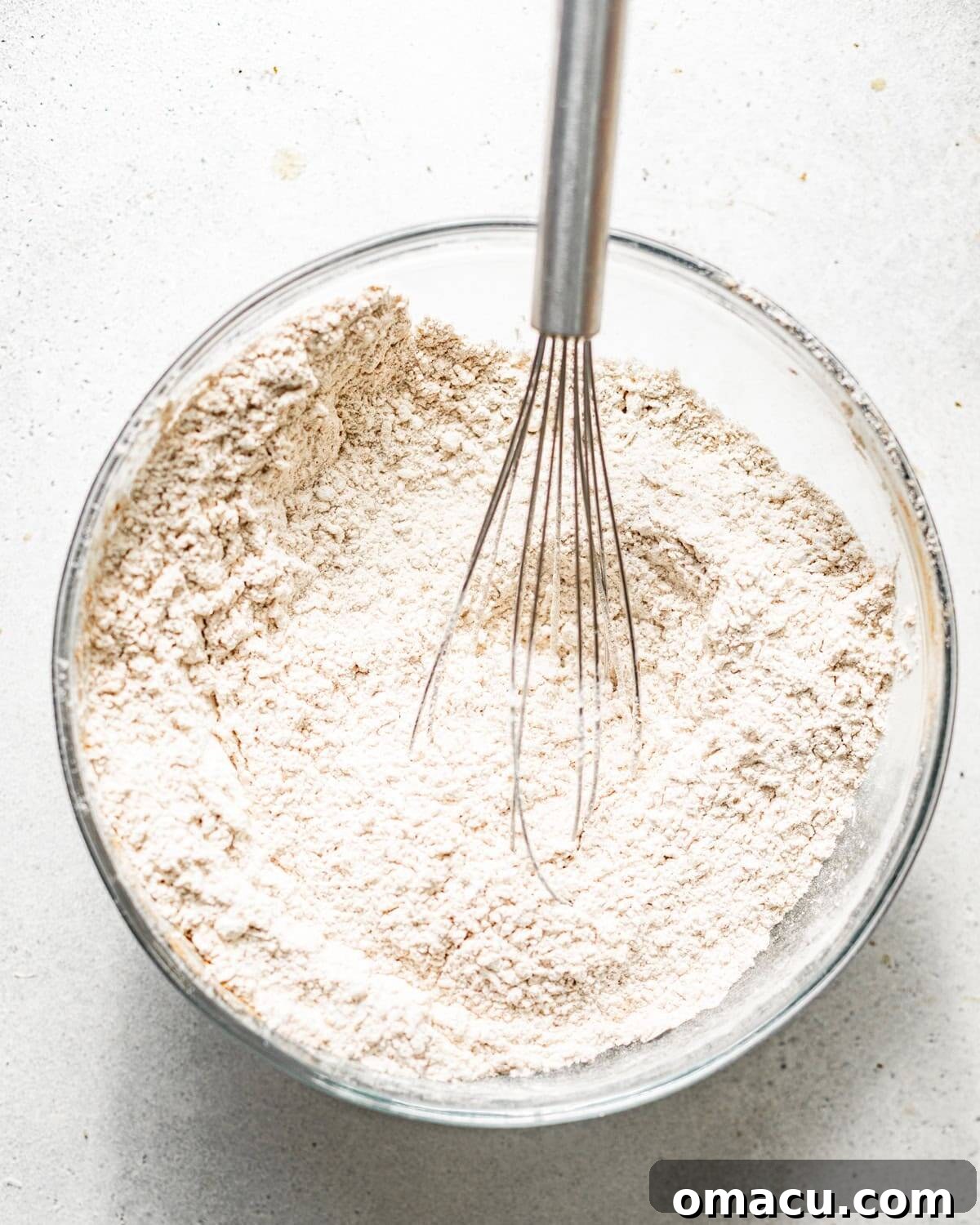
Step 1: Combine Dry Ingredients. In a large mixing bowl, thoroughly whisk together the cake flour, instant vanilla pudding mix, baking powder, baking soda, kosher salt, and nutmeg. Ensure all ingredients are well combined and lump-free. This step helps to evenly distribute the leavening agents and spices throughout the cake batter.
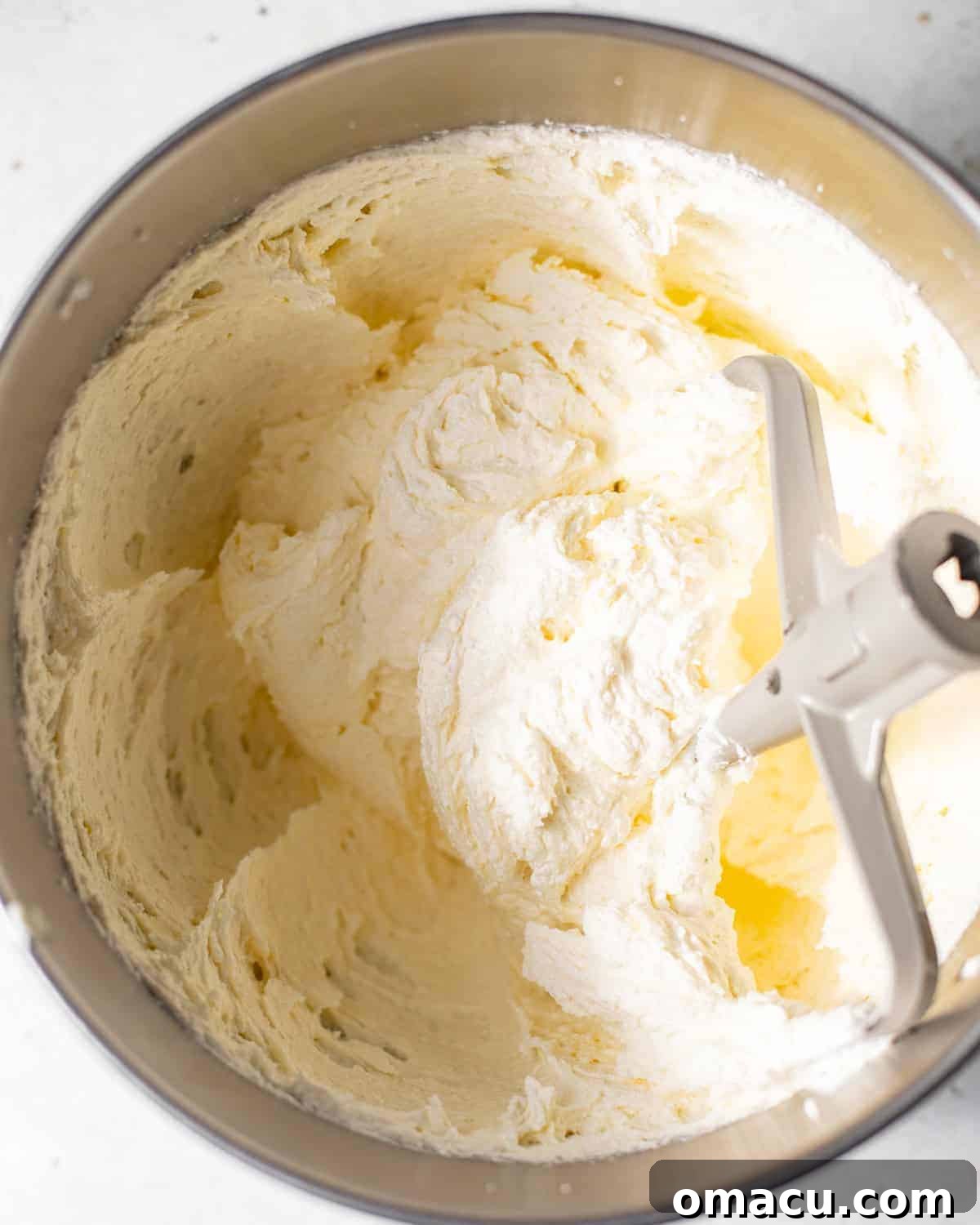
Step 2: Cream Butter and Sugars. In the bowl of a stand mixer equipped with the paddle attachment, combine the room-temperature salted butter, granulated sugar, brown sugar, and vegetable oil. Cream these ingredients together on medium speed for about 3 minutes until the mixture is light, fluffy, and pale in color. Stop the mixer, scrape down the sides of the bowl, and continue mixing for an additional 2 minutes to ensure everything is thoroughly incorporated and aerated. Reduce the mixer speed to low. Begin adding the large eggs one at a time, allowing each egg to be fully incorporated into the batter before adding the next. This prevents the batter from curdling. After each egg addition, scrape down the sides of the bowl. Finally, add the egg whites and mix until just incorporated, approximately 20 seconds. Do not overmix.
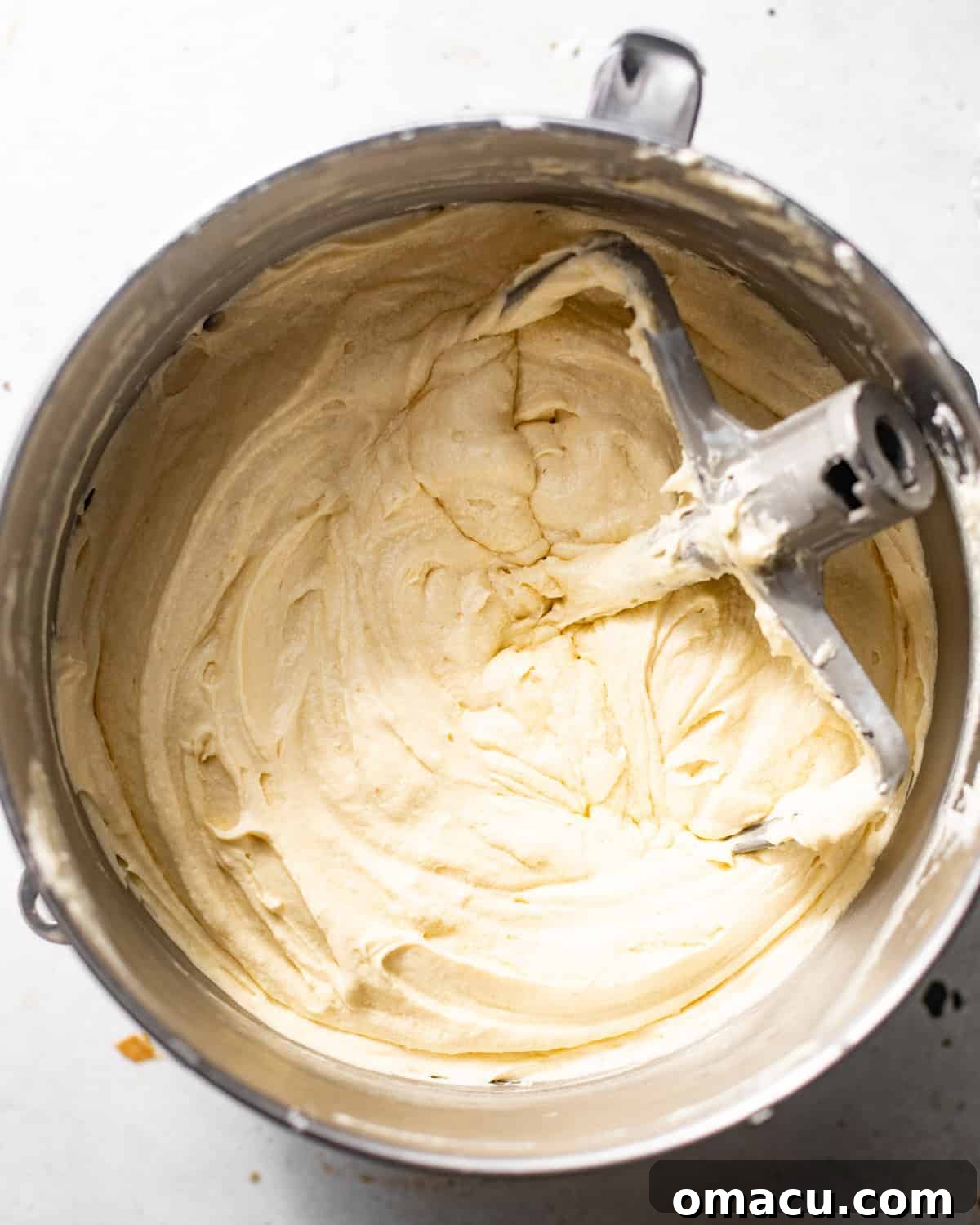
Step 3: Alternate Wet and Dry Ingredients. In a separate bowl or a large measuring cup, whisk together the room-temperature full-fat buttermilk, sour cream, vanilla extract, butter vanilla emulsion (or butter extract), and almond extract until well combined, about 10-20 seconds. With the stand mixer still on low speed, add half of the dry ingredient mixture to the butter-sugar mixture and mix until just combined, approximately 15 seconds. Then, slowly pour in the entire buttermilk-sour cream mixture, mixing until it’s just incorporated, about 30 seconds. Scrape down the sides of the bowl once more, then add the remaining dry ingredients. Mix on low speed until the batter is smooth and no streaks of flour remain. Be careful not to overmix, as this can lead to a tough cake.
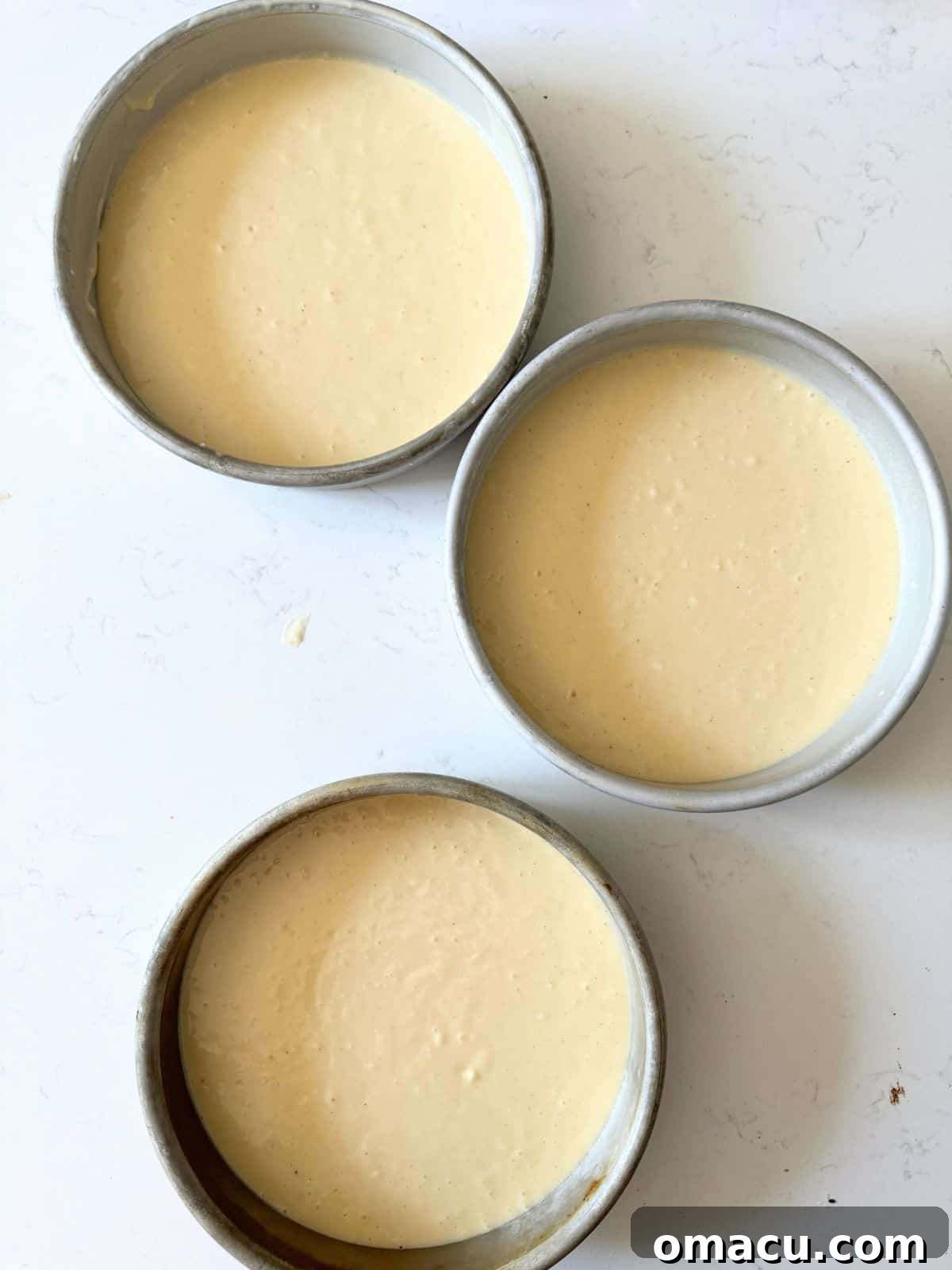
Step 4: Bake the Cake Layers. Divide the smooth cake batter evenly among the three prepared 8-inch cake pans. Place them in the preheated oven and bake for 40-45 minutes, or until a wooden toothpick inserted into the center of a cake layer comes out clean. The cakes should be golden brown and spring back lightly when touched. Allow the baked cakes to cool in their pans for 10 minutes. This allows them to firm up slightly. After 10 minutes, carefully invert the cakes onto a wire rack to cool completely. Ensure they are fully cooled before frosting; warm cakes will cause the caramel frosting to melt and slide off.
Crafting the Silky Caramel Frosting
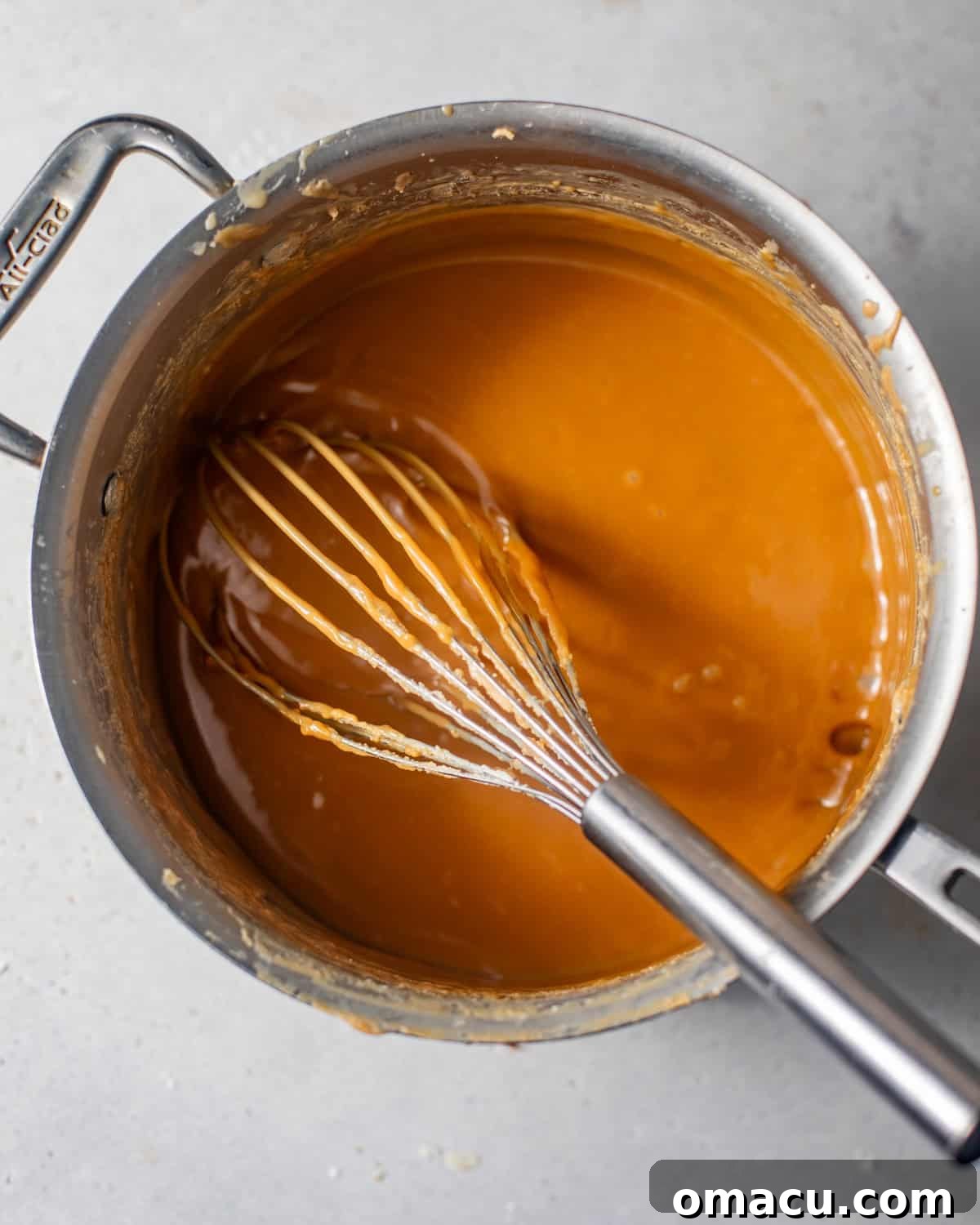
Step 5: Cook the Caramel Base. While your cake layers are cooling, begin preparing the decadent caramel frosting. In a medium to large heavy-bottomed saucepan, melt the salted butter over medium heat. Once completely melted, add the brown sugar and whisk continuously for 2-3 minutes, ensuring the sugar fully dissolves and combines with the butter. Pour in the evaporated milk and sweetened condensed milk. Reduce the heat to low to medium-low. This is the crucial stage: stir continuously for approximately 40 minutes to 1 hour. The caramel needs constant attention to prevent burning. You’ll know it’s ready when it transforms into a deep golden brown color and thickens to a consistency similar to pudding. Do not leave the pan unattended during this cooking time; constant stirring is mandatory to prevent scorching. Once the caramel reaches this desired deep golden color and thick pudding-like consistency, remove it immediately from the heat.
Step 6: Finish and Cool the Frosting. Off the heat, swiftly whisk in the vanilla bean paste (or vanilla extract), kosher salt, baking soda, and heavy cream into the hot caramel. The mixture will bubble up slightly due to the baking soda; whisk constantly for about 3 minutes until smooth. Now, allow the hot caramel frosting to sit and cool for approximately 20-30 minutes. This cooling period is vital, as it allows the frosting to thicken further, making it much easier to spread and manage when assembling the cake layers. It will transform from a thin pourable sauce to a richer, spreadable consistency.
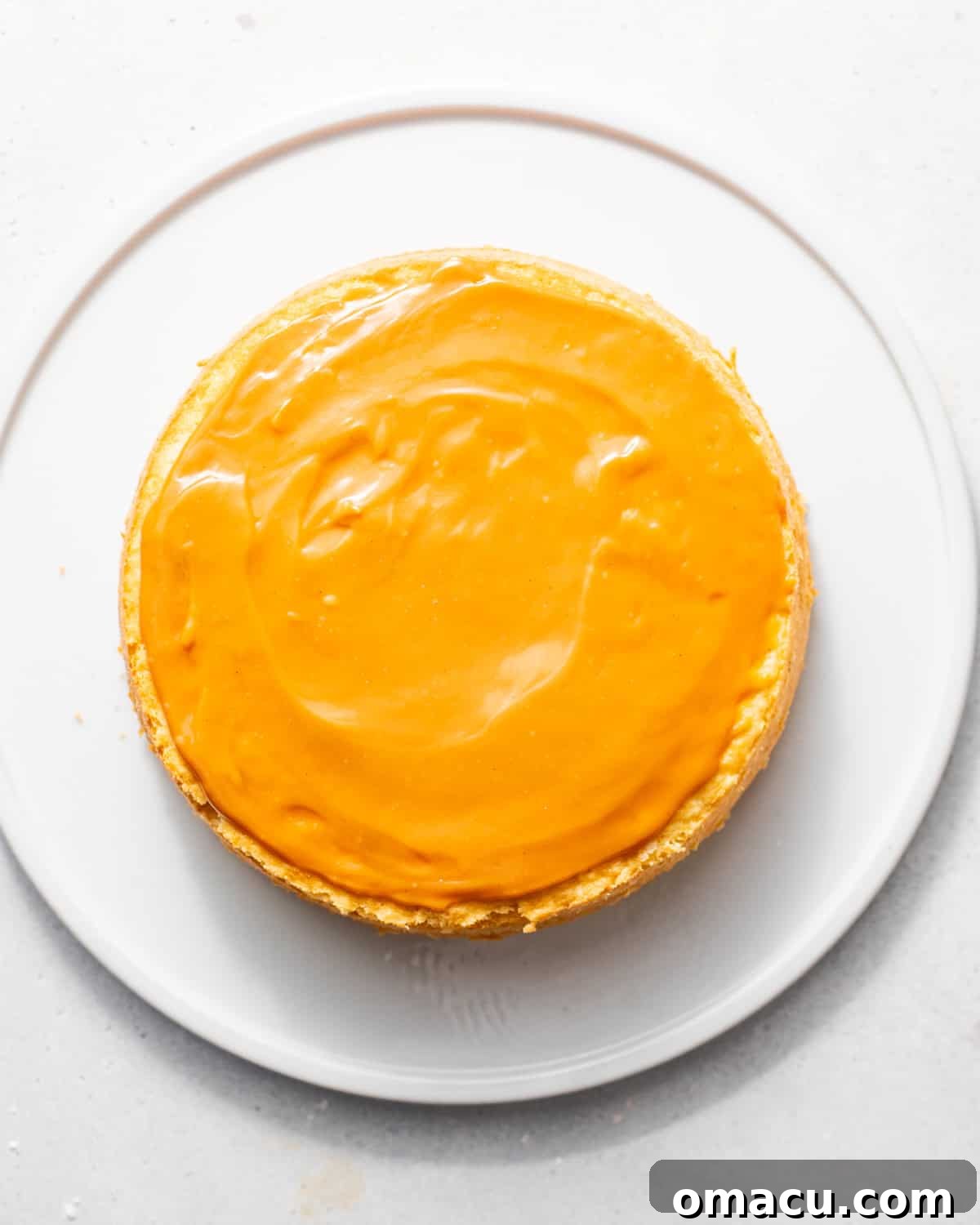
Step 7: Assemble the Caramel Cake. Once your cake layers are completely cool and your caramel frosting has thickened appropriately, it’s time to assemble your masterpiece. Place the first cooled cake layer onto a cake stand or serving plate. Generously smear a thin, even layer of the still-warm (but thickened) caramel frosting over the top of the cake, ensuring it reaches the edges. This initial layer is just enough to coat the cake and prepare it for the next. Carefully place the second cake layer on top, then repeat the process with another thin, even layer of caramel frosting. Be gentle when stacking, as the warm caramel can be slippery. Allow the stacked layers to sit for about 10 minutes after applying the second layer of frosting; this brief rest helps prevent the layers from slipping. A cake collar can also be helpful here for stability, especially if you’re new to stacking layer cakes.
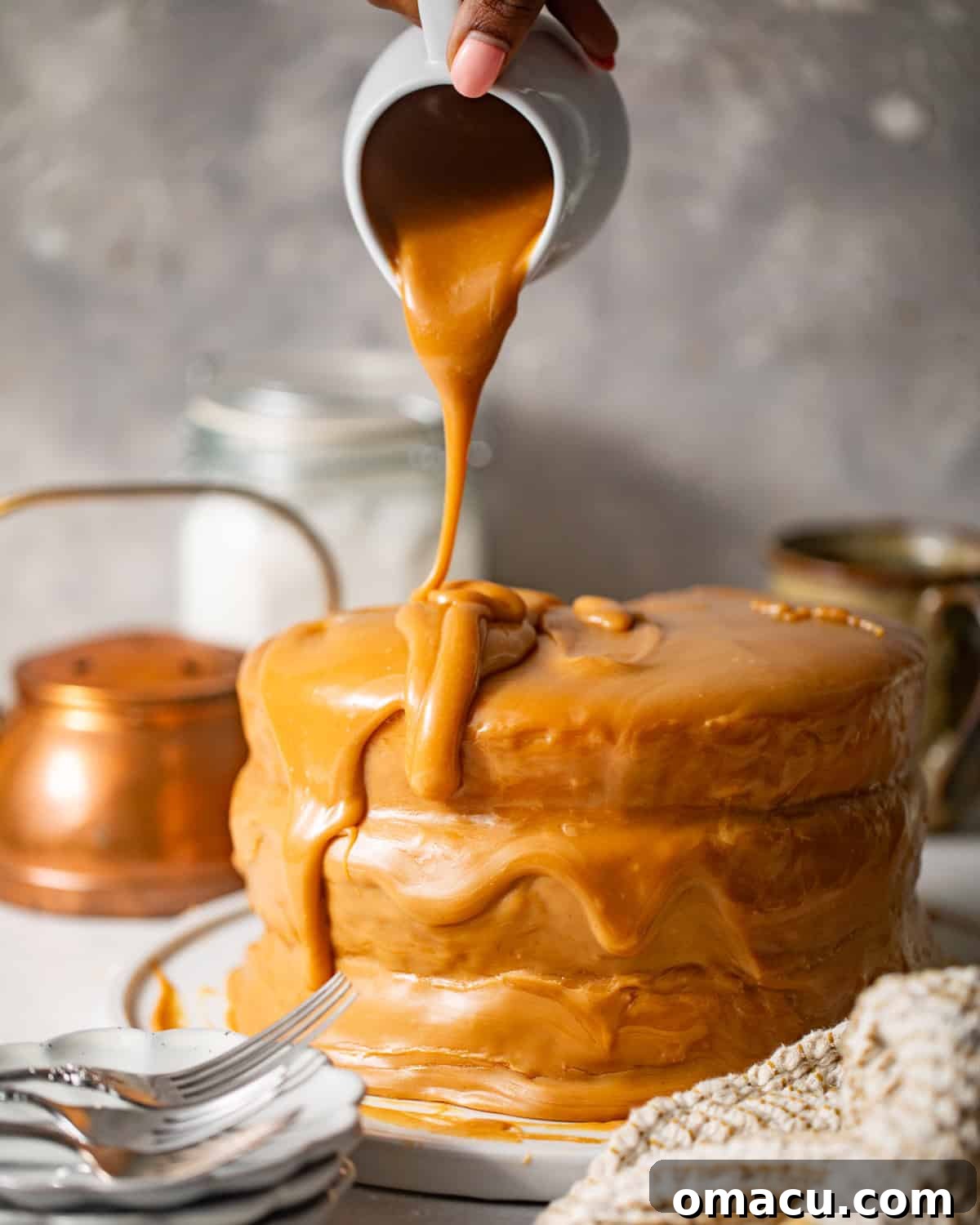
Step 8: Final Frosting Application. Place the third and final cake layer on top. Now, pour about half of the remaining caramel sauce over the top. Using an offset spatula, gently smooth the caramel around the top and sides of the cake, encouraging it to drip attractively down the edges. This initial pour helps set a base. Let this layer set for another 20 minutes to firm up slightly. Then, pour the remaining caramel sauce over the entire cake, ensuring full coverage, and use your spatula for any final smoothing. Allow the cake to set completely at room temperature before slicing and serving. This allows the caramel to firm into its signature fudgy texture, making for cleaner slices and an even more delightful eating experience.
Pro Tips for the Best Caramel Cake
- Achieve Room Temperature for All Ingredients: This is a golden rule in baking, especially for cakes. Ensure your butter, eggs, sour cream, and buttermilk are all at room temperature before you begin. Room temperature ingredients emulsify more smoothly, blend together seamlessly, and trap more air during the mixing process. This aeration is crucial for creating that plush, tender, and light cake crumb we all desire.
- Allow Cake Layers to Cool Completely: Patience is key here! Caramel frosting is applied warm and is designed to be pourable. If your cake layers are even slightly warm, the frosting will melt and slide right off, creating a messy situation. Give your baked layers ample time to cool completely on a wire rack before even thinking about frosting them. Chilled cake layers provide a stable base for the caramel.
- Cook the Caramel Frosting Slowly and Steadily: Resisting the urge to rush the caramel is paramount. Keep the heat on a consistent medium-low setting and allow the sugar, butter, and milk to slowly come together and deepen in flavor. Stir frequently to prevent any sugar crystals from forming on the sides of the pan and, more importantly, to avoid scorching the bottom, which can impart a burnt taste. This gradual cooking process builds the caramel’s complex flavor.
- Invest in a Heavy-Bottomed Pot: This isn’t just a recommendation, it’s a game-changer for caramel making. A heavy-bottomed pot distributes heat much more evenly than a thin one. This even heat distribution significantly reduces the risk of the caramel burning at the bottom while the rest of the mixture cooks, saving you from potential heartbreak and wasted ingredients.
- Never Walk Away from the Caramel: Consider this your strict caramel commandment! Not even for a quick text or to check on something else. Caramel transitions from a beautiful golden color to a burnt, bitter mess in mere seconds. Dedicate your full attention to the pan. Put on some music, settle in, and enjoy the meditative process of stirring until it reaches perfection.
- Troubleshooting: If it gets too thick, add a splash of warm milk. If your caramel frosting sets up a bit too much or becomes too thick to pour or spread easily, don’t despair! Gently rewarm it over very low heat on the stovetop, adding just a tablespoon of warm milk (or heavy cream) at a time, whisking constantly until it returns to a glaze-able consistency. Be careful not to overheat.
- Pour Immediately: Once your caramel frosting reaches the desired consistency after cooling slightly, work quickly. Caramel frosting sets rather fast as it continues to cool. As soon as it’s ready for application, pour it over your completely cooled cake layers and use the back of a spoon or an offset spatula to gently guide it to the edges. Avoid overworking it; let the caramel flow naturally for that gorgeous, rustic drip effect.
Caramel Cake Recipe FAQs
Yes, you absolutely can! While the cake’s texture will be slightly less soft and tender (as all-purpose flour has a higher protein content, leading to more gluten development), it will still be incredibly delicious. If you opt for all-purpose flour, it’s crucial to measure it correctly: spoon the flour into your measuring cup and then level it off with a straight edge, or better yet, use a kitchen scale for precise measurement in grams to avoid accidentally compacting too much flour into your batter.
The addition of yellow pudding mix is a classic Southern baking secret! It’s not to be confused with a full cake mix, but rather it serves a specific purpose. The pudding mix significantly boosts the cake’s moisture content, enhances its structure, and contributes to that signature velvety soft crumb that Southern cakes are renowned for. It also helps the cake stay incredibly moist and tender for several days after baking, ensuring a delightful texture long after it’s made.
The caramel frosting is ready when it is thick, glossy, and has achieved a deep golden-brown color, often likened to a slightly darker shade than peanut butter. When you lift your spoon or whisk, the caramel should fall back into the pan in slow, thick ribbons, rather than running off quickly. Remember, it will continue to thicken considerably as it cools, so err on the side of slightly less thick on the stove if you’re unsure.
You can certainly prepare the caramel frosting in advance. However, keep in mind that caramel frosting will firm up significantly as it cools. If you choose to make it ahead, you will need to gently rewarm it over very low heat on the stovetop, stirring constantly, until it becomes pourable again. Be vigilant during reheating, as caramel can go from perfectly smooth to burnt very quickly once again. Do not walk away from it!
For optimal flavor and texture, store your caramel cake covered tightly at room temperature for 2-3 days. The caramel frosting will remain soft and delectable. If you choose to refrigerate it for longer storage, allow the cake to come back to room temperature for at least an hour before serving. This allows the caramel to soften to its intended luscious consistency. You can also freeze the unfrosted cake layers wrapped tightly for up to a month, but I do not recommend freezing the cake once it has been assembled and frosted, as the caramel’s texture can change upon thawing.
Absolutely, and this is one of the most wonderful qualities of a homemade caramel cake! As the cake rests overnight, the rich, deeply flavored caramel frosting has ample time to meld with the moist cake layers. The flavors deepen and become more harmonious, and the cake’s texture often becomes even softer and more luscious. It’s truly a dessert that improves with a little patience!
More Classic Cake Recipes to Explore
Desserts
Pineapple Upside Down Cake Recipe
Desserts
Old Fashioned Hummingbird Cake
Desserts
Million Dollar Pound Cake
Desserts
Red Velvet Cake with Cream Cheese Frosting
Want more delicious and beautiful recipes delivered straight to your inbox? Subscribe to my newsletter to receive the latest seasonal creations as soon as they’re released!
If you make this incredible Southern Caramel Cake recipe, please take a moment to leave a star rating on the recipe card below and share your thoughts in the comments section! You can also tag @BritneyBreaksBread on Instagram and use the hashtag #britneybreaksbread so I can celebrate your beautiful creations and see your stunning cakes!
Southern Caramel Cake Recipe
By: Britney
Prep Time: 25 mins
Cook Time: 1 hr 45 mins
Total Time: 2 hrs 10 mins
Yields: 15 servings
This classic Southern caramel cake features a luxurious glossy caramel frosting and a tender, buttery vanilla yellow cake that truly melts in your mouth! It’s a show-stopping, crowd-pleasing dessert that will be the highlight of any gathering.
Equipment
- Stand Mixer
- Large Heavy-Bottomed Saucepan
- Mixing Bowls (various sizes)
- Offset Spatula (optional, but highly recommended for smooth frosting application)
Ingredients
For the Yellow Cake Layers:
- 4 cups Cake Flour
- 3.4 oz Instant Vanilla Pudding Mix (not cake mix)
- 1 tbsp Baking Powder
- 1/4 tsp Baking Soda
- 1/2 tsp Kosher Salt
- 1/4 tsp Nutmeg
- 1 1/4 cups Salted Butter (room temperature)
- 2 cups Granulated Sugar
- 1/4 cup Brown Sugar
- 2/3 cup Vegetable Oil
- 4 large Eggs (room temperature)
- 2 Egg Whites (room temperature)
- 1 1/3 cups Full Fat Buttermilk (room temperature)
- 2/3 cup Sour Cream (room temperature)
- 1 tbsp Vanilla Bean Paste (or vanilla extract)
- 1 tbsp Butter Vanilla Emulsion (or 2 tsp butter extract)
- 1/4 tsp Almond Extract
For the Caramel Frosting:
- 1 cup Salted Butter
- 1 1/2 cups Brown Sugar
- 12 oz Evaporated Milk
- 14 oz Sweetened Condensed Milk
- 1 tbsp Vanilla Bean Paste (or vanilla extract)
- 1/4 tsp Baking Soda
- 1/2 tsp Kosher Salt
- 1/4 cup Heavy Cream
Instructions
- Prepare for Baking: Preheat your oven to 325°F (160°C). Grease and flour three 8-inch round cake pans, or line the bottoms with parchment paper and spray the sides.
- Combine Dry Ingredients: In a large bowl, whisk together the cake flour, vanilla pudding mix, baking powder, baking soda, kosher salt, and nutmeg until thoroughly combined.
- Cream Butter and Sugars: In a stand mixer with the paddle attachment, cream the room-temperature butter, granulated sugar, brown sugar, and vegetable oil on medium speed for 3 minutes. Scrape down the bowl sides and continue mixing for another 2 minutes until light and fluffy.
- Incorporate Eggs: Reduce mixer speed to low. Add eggs one at a time, ensuring each is fully incorporated before adding the next. Scrape the bowl after each addition. Then, add egg whites and mix for 20 seconds until just combined.
- Mix Wet Ingredients: In a separate bowl or cup, whisk together the buttermilk, sour cream, vanilla extract, butter vanilla emulsion, and almond extract until combined (10-20 seconds).
- Combine Wet and Dry into Batter: Add half of the dry ingredients to the butter mixture and mix on low for 15 seconds until just combined. With the mixer still running, slowly pour in the buttermilk mixture and mix for 30 seconds. Scrape the bowl, then add the remaining dry ingredients. Mix until smooth and no dry streaks remain, being careful not to overmix.
- Bake Cake Layers: Divide the batter evenly among the three prepared 8-inch pans. Bake for 40-45 minutes, or until a toothpick inserted into the center comes out clean. Let the cakes cool in the pans for 10 minutes, then invert onto a wire rack to cool completely.
- Start Caramel Frosting: While the cakes cool, melt the salted butter in a medium to large heavy-bottomed saucepan over medium heat. Add brown sugar and whisk for 2-3 minutes until combined and dissolved. Pour in the evaporated milk and sweetened condensed milk.
- Cook Caramel to Perfection: Reduce heat to low-medium low. Stir continuously for 40 minutes to 1 hour, until the caramel turns a deep golden brown and thickens to a pudding-like consistency. Do not leave the pan unattended; constant stirring prevents burning.
- Finish Caramel Frosting: Once the caramel reaches the desired color and consistency, remove from heat. Whisk in vanilla bean paste, kosher salt, baking soda, and heavy cream. It will bubble up; whisk constantly for about 3 minutes until smooth. Let the hot caramel sit and cool for 20-30 minutes to thicken for spreading.
- Assemble Cake Layers: Place the first cooled cake layer on a cake stand. Spread a thin, even layer of the thickened caramel frosting on top. Carefully place the second layer and repeat with another thin caramel layer. Let the stacked layers sit for about 10 minutes to help prevent slipping.
- Final Frosting Application: Place the third layer on top. Pour half of the remaining caramel sauce over the top, using an offset spatula to smooth it around the top and sides, allowing it to drip attractively. Let this layer set for 20 minutes. Then pour the rest of the caramel sauce, covering the entire cake, and smooth as needed. Allow the cake to set completely at room temperature before slicing and serving.
Notes
- Use room-temperature ingredients: This ensures smoother blending, better air incorporation, and a truly plush, tender crumb.
- Cool cake layers completely: Warm cake will melt the caramel frosting, making assembly impossible. Ensure layers are fully chilled.
- Cook caramel slow and steady: Patience is vital. Medium-low heat and frequent stirring prevent scorching and develop deep flavor.
- Use a heavy-bottomed pot: This distributes heat evenly, minimizing the risk of the caramel burning.
- Do NOT walk away from the caramel: Caramel can burn very quickly, changing from perfect to ruined in moments. Stay by the stove.
- If caramel gets too thick: Gently rewarm it over low heat with a tablespoon of warm milk or cream, stirring constantly, until it reaches the desired consistency again.
- Pour caramel immediately: The frosting sets quickly as it cools. Once ready, pour it over the cake and gently spread without overworking it.
Nutrition Information (Approximate per Serving)
Calories: 854 kcal, Carbohydrates: 102g, Protein: 11g, Fat: 46g, Saturated Fat: 23g, Polyunsaturated Fat: 7g, Monounsaturated Fat: 12g, Trans Fat: 1g, Cholesterol: 146mg, Sodium: 656mg, Potassium: 322mg, Fiber: 1g, Sugar: 77g, Vitamin A: 1241IU, Vitamin C: 1mg, Calcium: 268mg, Iron: 1mg
Nutrition information is automatically calculated and should be used as an approximation. It may vary based on specific ingredients and preparation methods.

Tried this recipe?
Mention @BritneyBreaksBread or tag #BritneyBreaksBread!