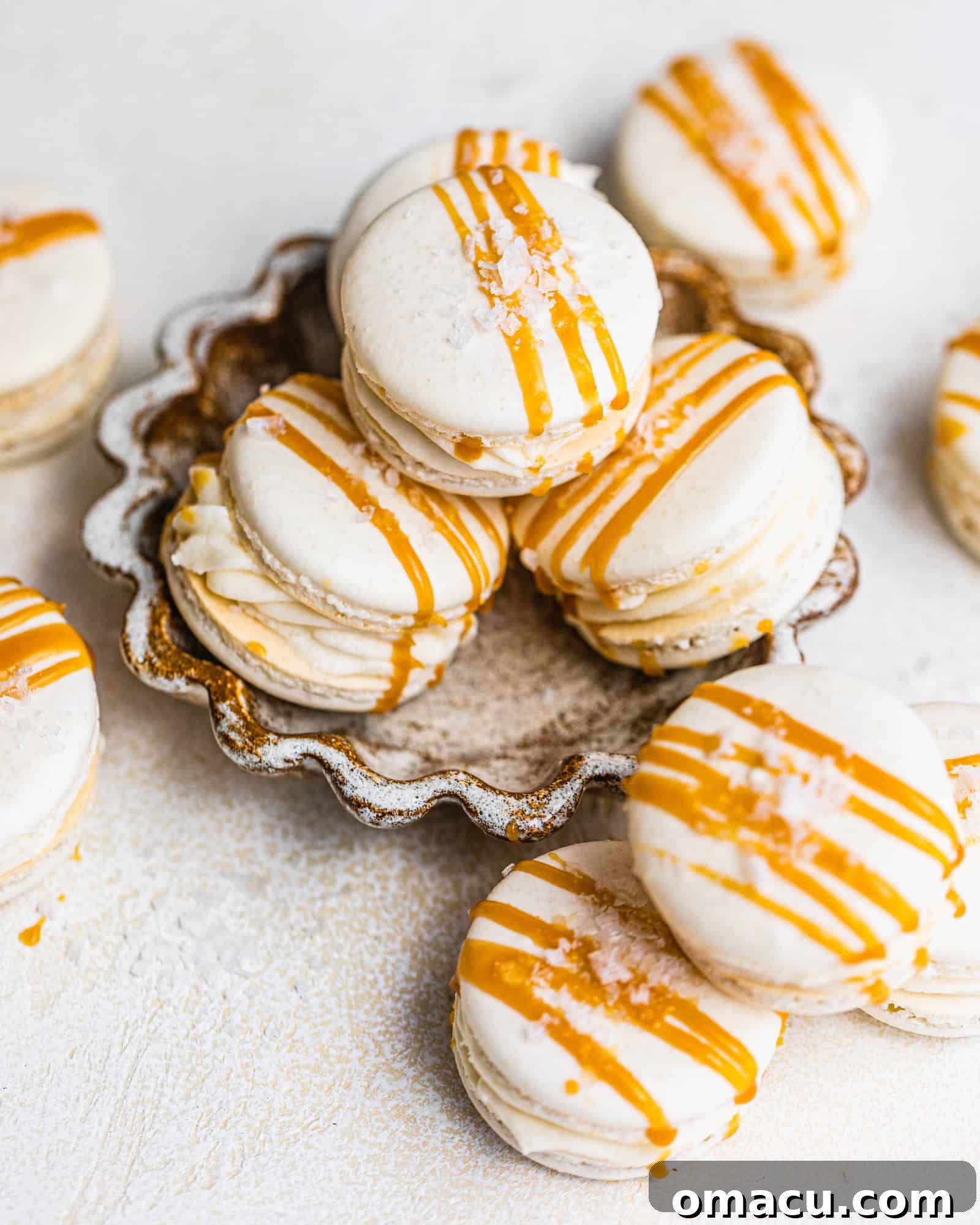
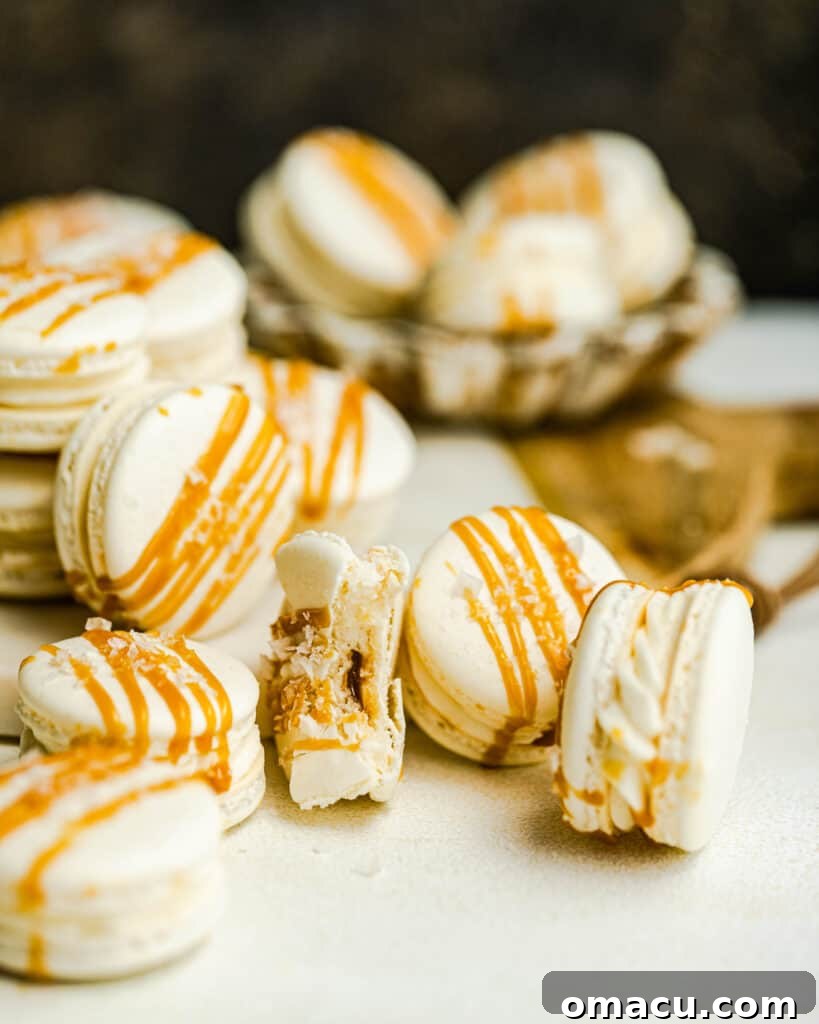
There are certain confections that simply captivate, and the Salted Caramel Macaron stands proudly among them. These delicate French pastries are a symphony of textures and tastes, featuring crisp yet chewy almond meringue shells, a cloud-like vanilla buttercream, and a luscious, gooey salted caramel center. It’s the ultimate salty-sweet indulgence, an exquisite balance that satisfies every craving and leaves an unforgettable impression. Once you experience the magic of these macarons, you’ll understand why they’re cherished by dessert enthusiasts worldwide.
If you have a passion for baking delightful cookies and exquisite treats, you might also enjoy exploring our Gingerbread Macarons, Strawberry Macarons, or our comforting Snickerdoodle Whoopie Pies!
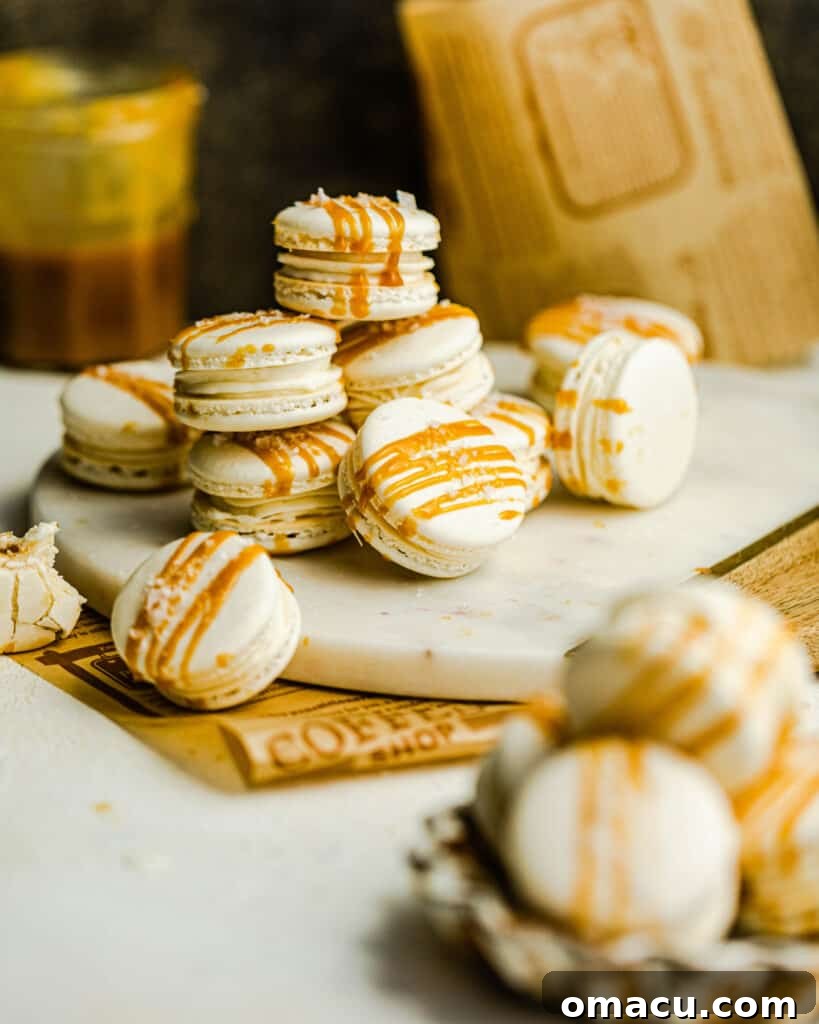
The Ultimate Guide to Crafting Salted Caramel Macarons
Calling all salted caramel aficionados and dessert enthusiasts! This recipe is a dedicated ode to your favorite flavor profile. These exquisite treats are not only visually stunning, making them perfect for parties, gatherings, or a sophisticated afternoon tea, but they are also bursting with an unparalleled depth of flavor. If you’ve fallen in love with macarons, prepare for these salted caramel beauties to become your new signature bake. Their irresistible combination of sweet and salty is truly a match made in heaven.
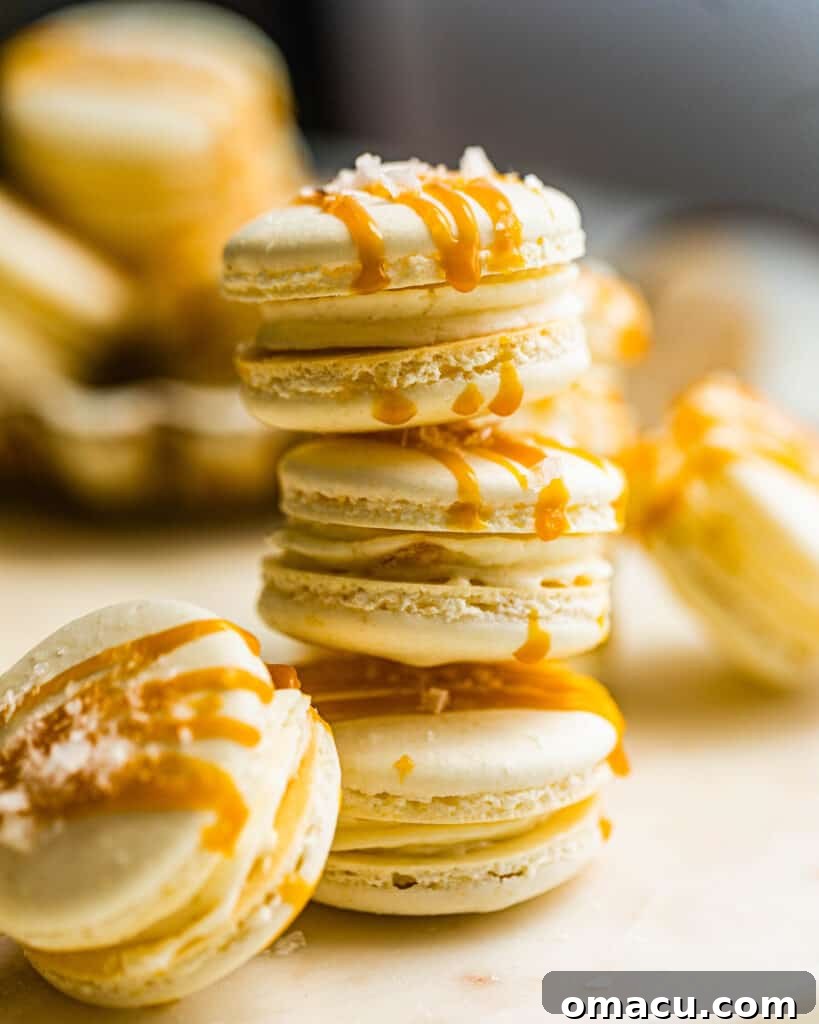
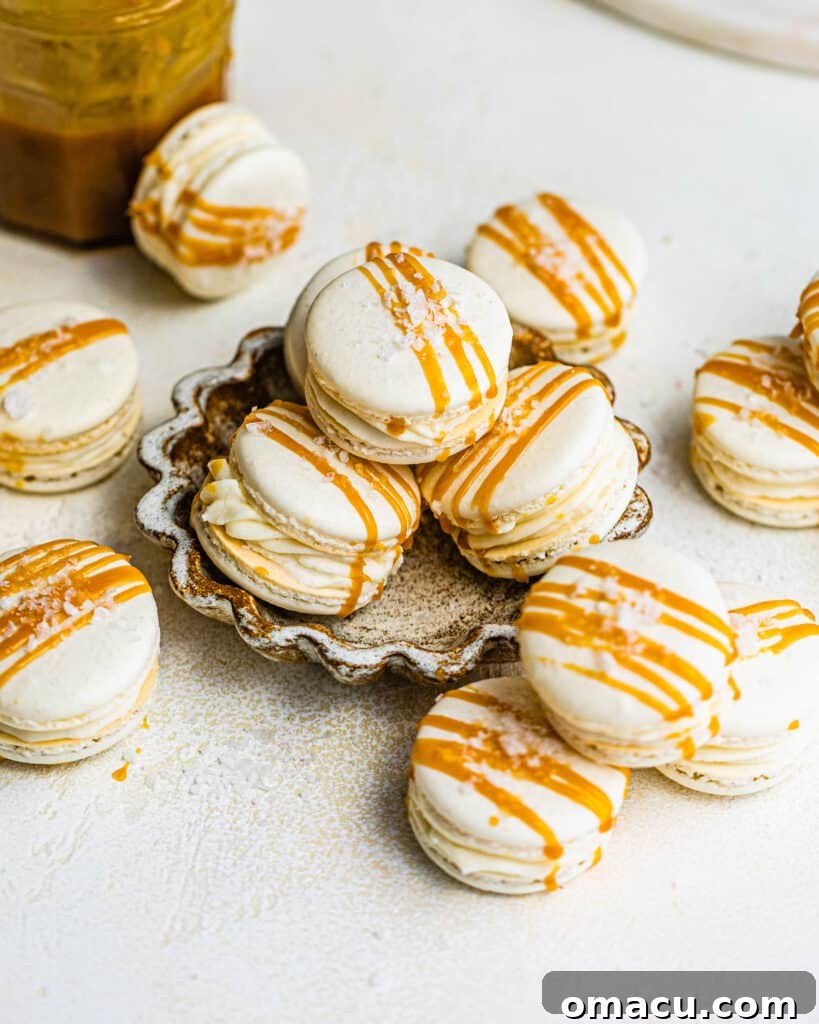
Each macaron boasts a subtly flavored vanilla shell, providing the perfect canvas for the opulent filling. Inside, you’ll discover a rich, creamy vanilla buttercream embracing a molten core of homemade salted caramel. To elevate the experience further, we crown each macaron with an additional drizzle of salted caramel and a sprinkle of delicate flake salt, enhancing both the visual appeal and the flavor complexity. The delightful contrast between the crunchy exterior and the smooth, decadent filling makes this recipe an absolute triumph that you simply must try!
Mastering Macaron Ingredients: What You Need to Know
Creating perfect macarons begins with understanding the role of each ingredient. Precision is key in macaron making, and using the right components in the correct proportions will ensure your success. Here’s a detailed look at the essential ingredients for your salted caramel macarons and why they matter:
For the Perfect Macaron Shells:
- Superfine Almond Flour: This is the cornerstone of macaron shells. Using superfine almond flour is crucial to achieving that signature smooth, non-gritty texture. Coarser almond flours can result in bumpy, uneven shells. It also contributes to the characteristic chewy, melt-in-your-mouth quality of a classic macaron. Ensure it’s not almond meal, which contains skins and is too coarse.
- Powdered Sugar (Confectioners’ Sugar): Beyond sweetness, powdered sugar plays a vital role in soaking up moisture from the batter. It also helps in creating the desired crispness of the shell and, critically, aids in forming those distinctive “feet” – the ruffled base that lifts the macaron off the baking sheet.
- Egg Whites: The backbone of the macaron’s structure. Whipped egg whites form the meringue, which traps air and provides the necessary lift and stability for the shells. Room temperature egg whites are essential as they whip up with greater volume and stability.
- Granulated Sugar: This sugar stabilizes the egg white meringue, preventing it from collapsing and ensuring a glossy, firm structure. It also contributes to the overall sweetness and delicate crunch of the macaron.
- Cream of Tartar: A small but mighty ingredient, cream of tartar is an acidic stabilizer that helps the egg whites whip up faster and achieve stiffer, more resilient peaks. This extra stability is crucial for a strong meringue that can hold its shape during macaronage and baking.
- Vanilla Extract: Added for its aromatic flavor, vanilla extract infuses the macaron shells with a subtle warmth that complements the rich caramel filling beautifully. Use a good quality extract for the best results.
For the Velvety Vanilla Buttercream Filling:
- Unsalted Butter: The foundation of any good buttercream. Using unsalted butter allows you to control the overall saltiness of the filling, ensuring it perfectly balances the salted caramel. Ensure it’s at room temperature for a smooth, lump-free consistency.
- Powdered Sugar: Provides sweetness and structure to the buttercream, yielding a smooth and pipeable consistency. Sifting it can prevent lumps.
- Heavy Cream: Adds richness and helps achieve that light, fluffy, and creamy texture that defines a delightful buttercream.
- Vanilla Extract: Enhances the buttercream with a classic, comforting vanilla flavor, providing a harmonious counterpoint to the caramel.
For the Decadent Homemade Salted Caramel:
- Granulated Sugar: The base for the caramel, melting down to form the rich, amber liquid.
- Unsalted Butter: Adds a luscious, buttery flavor and helps to create a smooth, emulsified caramel.
- Heavy Cream: Essential for stopping the cooking process of the sugar and creating a creamy, pourable caramel sauce.
- Salt (Kosher or Flake): The star of the “salted caramel.” Salt perfectly accentuates the sweetness of the caramel, creating that addictive salty-sweet contrast. Kosher salt is good for the cooking process, and flake salt is perfect for finishing.
Your Step-by-Step Journey to Homemade Salted Caramel Macarons
Embark on the delightful journey of creating these exquisite salted caramel macarons. While macarons have a reputation for being finicky, following these detailed steps using the French method will guide you to success. Let’s begin the baking adventure!
Part 1: Mastering the Macaron Shells (French Method)
The French method for macarons is often favored by home bakers for its straightforward approach, requiring fewer steps compared to the Italian method. Attention to detail at each stage is crucial for achieving those signature smooth tops and delicate “feet.”
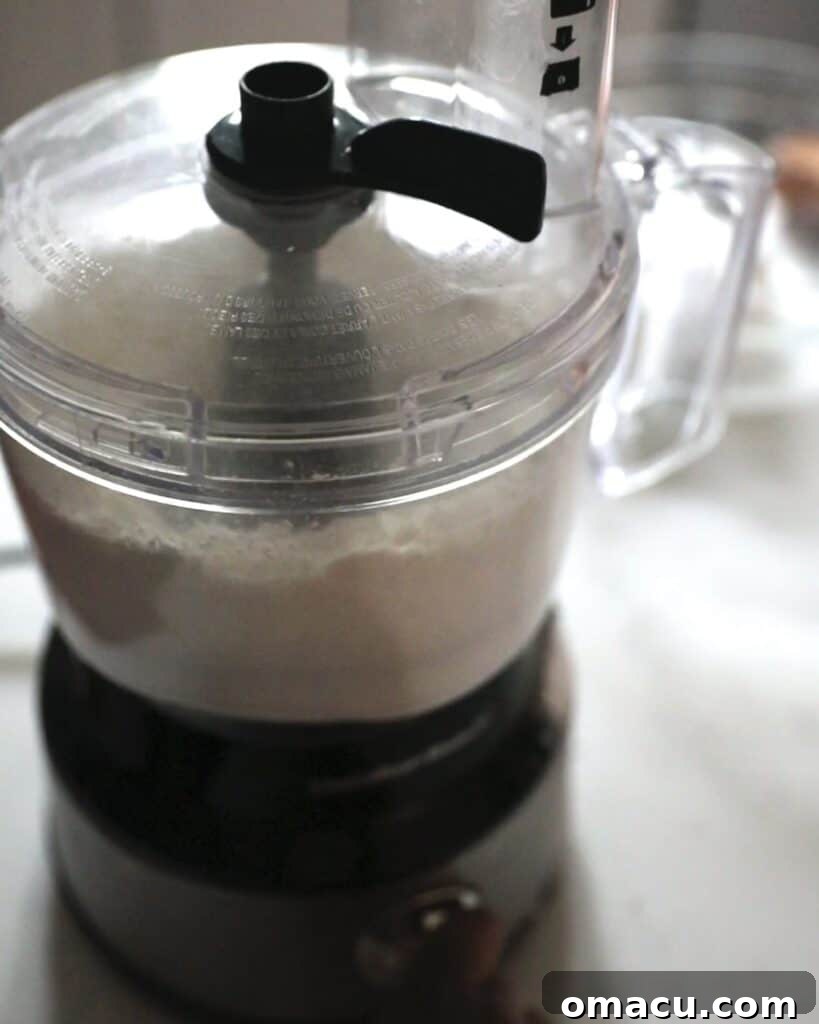
- Prepare Your Dry Ingredients: Begin by combining the superfine almond flour and powdered sugar in a food processor. Pulse for about 20-30 seconds. This step is vital to further break down any remaining lumps and ensure an incredibly fine, smooth mixture, which is key to achieving perfectly smooth macaron shells.
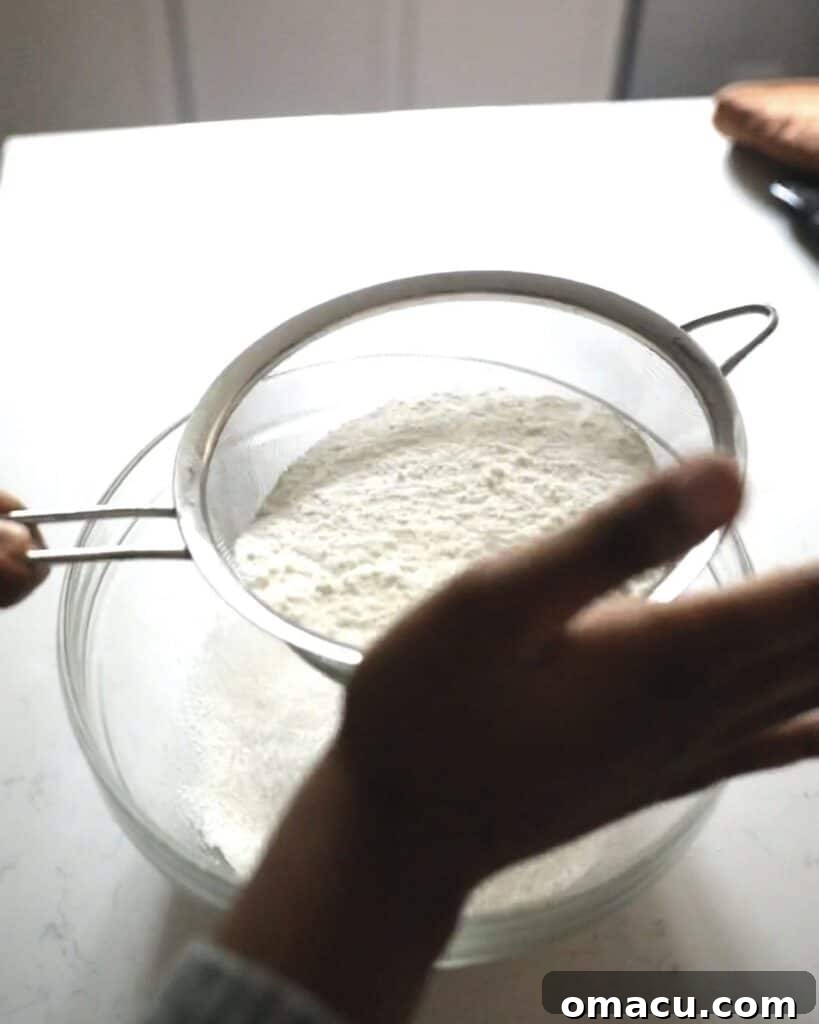
- Sift with Precision: Sift the processed almond flour and powdered sugar mixture into a large mixing bowl. Sift thoroughly, at least twice, to eliminate any larger granules or lumps. This meticulous sifting process is fundamental for the smooth texture of your macaron shells. If any significant bits remain in the sifter, discard them rather than forcing them through. Set this bowl aside.
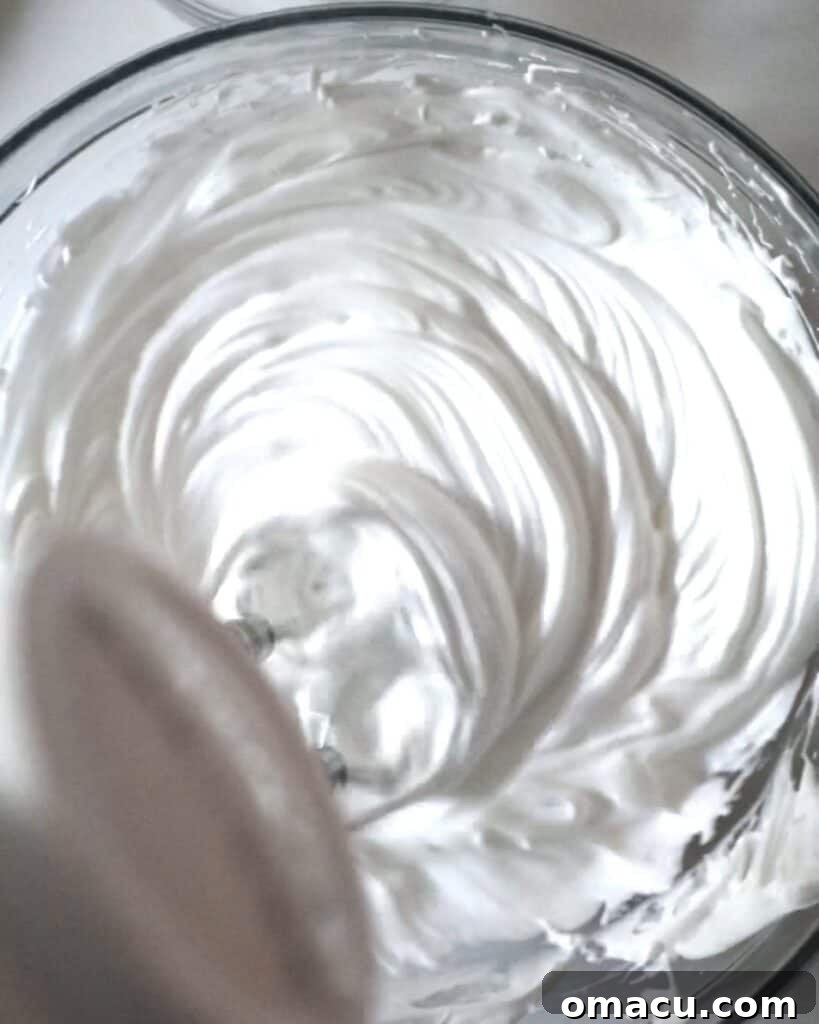
- Whip the Meringue: In the clean bowl of a stand mixer fitted with the whisk attachment, add your room temperature egg whites. Begin whisking on medium speed until the egg whites become foamy and bubbly, resembling soap suds, and are no longer translucent.
- Introduce Cream of Tartar and Sugar: Add the cream of tartar to the foamy egg whites. Continue whisking, then slowly and gradually begin to incorporate the granulated sugar, adding it a tablespoon at a time. Increase the mixer speed to high. Continue whisking until the meringue forms stiff, glossy peaks. When you lift the whisk, the meringue should hold its shape firmly, with a slight curl at the tip, and the bowl can be inverted without the meringue sliding out. Finally, gently fold in the vanilla extract.
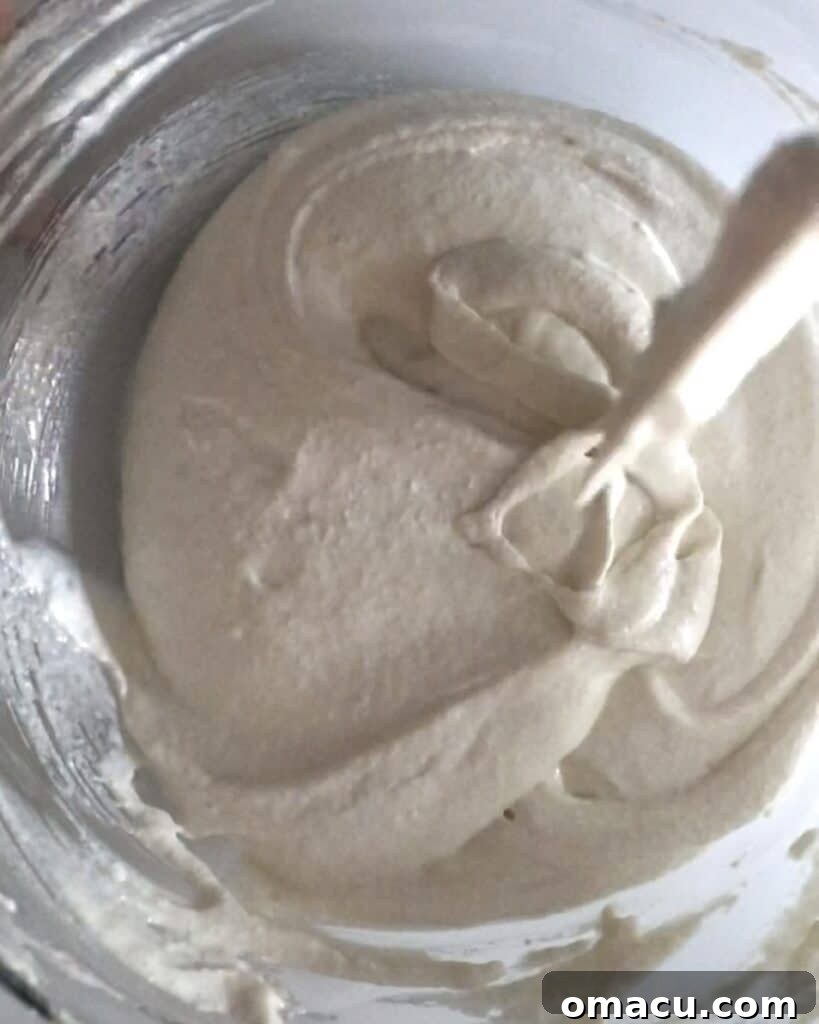
- The Macaronage Technique: This is perhaps the most critical stage. Add half of the sifted almond flour and powdered sugar mixture to the stiff meringue. Using a flat spatula, gently fold the dry ingredients into the meringue, using a scraping and folding motion, rotating the bowl as you go. Once partially incorporated, add the remaining dry ingredients. Continue the folding process, known as macaronage, until the batter reaches the perfect consistency.
- Achieving “Flowing Lava” Consistency: The ideal macaron batter should have the consistency of “flowing lava” or molten cake batter. When you lift your spatula, the batter should fall off in a continuous, thick ribbon, allowing you to draw a figure “8” without the stream breaking. This indicates that the batter is perfectly mixed – stop mixing immediately to avoid over-macaronage.
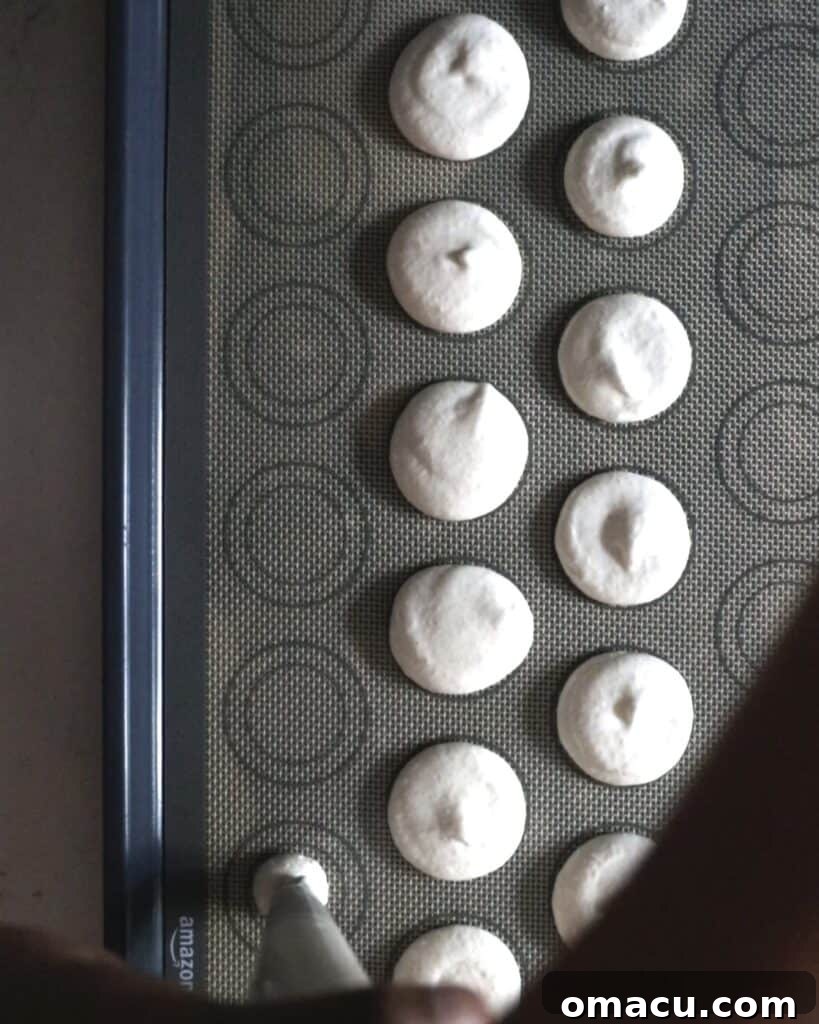
- Pipe Your Shells: Transfer the macaron batter to a piping bag fitted with a large round piping tip (a Wilton 1A tip is excellent for this). Line two large baking sheets with parchment paper or specialized macaron silicone mats. Pipe uniform 1-inch diameter circles, spacing them about an inch apart.
- Tap and Degas: Once all shells are piped, firmly tap each baking sheet against your counter several times. This action helps to release any trapped air bubbles within the batter and encourages any larger particles to settle, preventing hollow or cracked shells. If any stubborn air bubbles rise to the surface, gently pop them with a toothpick.
- The Crucial Drying Stage: Allow the piped macarons to “rest” or “dry” at room temperature for approximately one hour. This drying period, often called “croutage,” allows a thin skin to form on the surface of the shells. You’ll know they’re ready when you can gently touch a shell without any batter sticking to your finger and the surface appears dull, not shiny. This skin is vital for the macarons to rise evenly and form their distinctive “feet” during baking.
- Bake to Perfection: Preheat your oven to 300°F (150°C). Bake one sheet of macarons at a time for 14-15 minutes. Macarons are done when they feel firm to the touch and don’t wiggle when gently nudged. The “feet” should be well-formed. Remove from the oven and allow them to cool completely on the baking sheet, undisturbed, for at least 40 minutes. They will be delicate when warm but firm up as they cool.
Part 2: Preparing the Decadent Fillings
While your delicate macaron shells cool, it’s the perfect time to prepare the star fillings that will complete your masterpieces: the rich homemade salted caramel and the fluffy vanilla buttercream.
Crafting Homemade Salted Caramel Perfection:
Homemade salted caramel elevates these macarons from delicious to truly extraordinary. It’s surprisingly simple to make, and the depth of flavor is incomparable.
- Melt the Sugar: In a heavy-bottomed skillet or saucepan over medium-low heat, add the granulated sugar. Stir occasionally as it melts. It’s crucial to be patient and keep the heat moderate to prevent burning. The sugar will first clump, then gradually melt into a clear, amber-colored syrup. Continue to cook until it reaches a beautiful, deep golden-amber hue.
- Incorporate Butter: Once the sugar is fully melted and golden, reduce the heat to low. Carefully add the unsalted butter, a tablespoon at a time, whisking continuously. The mixture will bubble vigorously and might seize initially, but keep whisking until the butter is completely melted and smoothly incorporated.
- Add Heavy Cream: Gradually pour in the heavy cream while continuing to whisk. Again, the caramel may seize and clump, but persist in whisking gently over low heat. If needed, you can slightly increase the heat to medium-low to help the caramel melt back into a smooth sauce. Continue whisking until the caramel is silky smooth and uniform.
- Season with Salt: Remove the caramel from the heat and stir in the kosher salt. Mix until fully combined. Pour the finished salted caramel into a heat-safe jar or container and allow it to cool completely to room temperature. It will thicken as it cools.
Whipping Up Silky Vanilla Buttercream:
This classic vanilla buttercream provides a creamy texture and a balanced sweetness that beautifully complements the intense flavor of the salted caramel.
- Cream Butter and Sugar: In a mixing bowl, combine the room temperature unsalted butter and powdered sugar. Using a hand mixer or a stand mixer with the paddle attachment, beat on medium-high speed until light and fluffy.
- Add Liquids and Flavor: Gradually add the heavy cream, continuing to beat on high speed until the buttercream is incredibly light, airy, and fluffy. This can take several minutes.
- Finish with Vanilla: Finally, mix in the vanilla extract and a tiny pinch of salt (this enhances the vanilla flavor, but be mindful of the salted caramel). Beat just until incorporated.
- Prepare for Piping: Transfer the vanilla buttercream to a piping bag fitted with your desired tip (a Wilton 21 open star tip works wonderfully for a decorative edge).

Part 3: Assembling Your Macaron Masterpieces!
With cooled shells and perfectly prepared fillings, it’s time for the most rewarding step: assembling your gorgeous salted caramel macarons. Handle your shells with care, as they are delicate.
- Carefully Detach Shells: Once the macarons are completely cool, very gently lift the silicone mat or parchment paper away from the baking sheet. Then, carefully peel each macaron shell off the paper. Do not try to pick the shells directly off the sheet, as they are very delicate and may break.
- Pair Similar Sizes: Arrange your macaron shells and match them with other shells of similar size. This ensures that your finished macarons look uniform and professional.
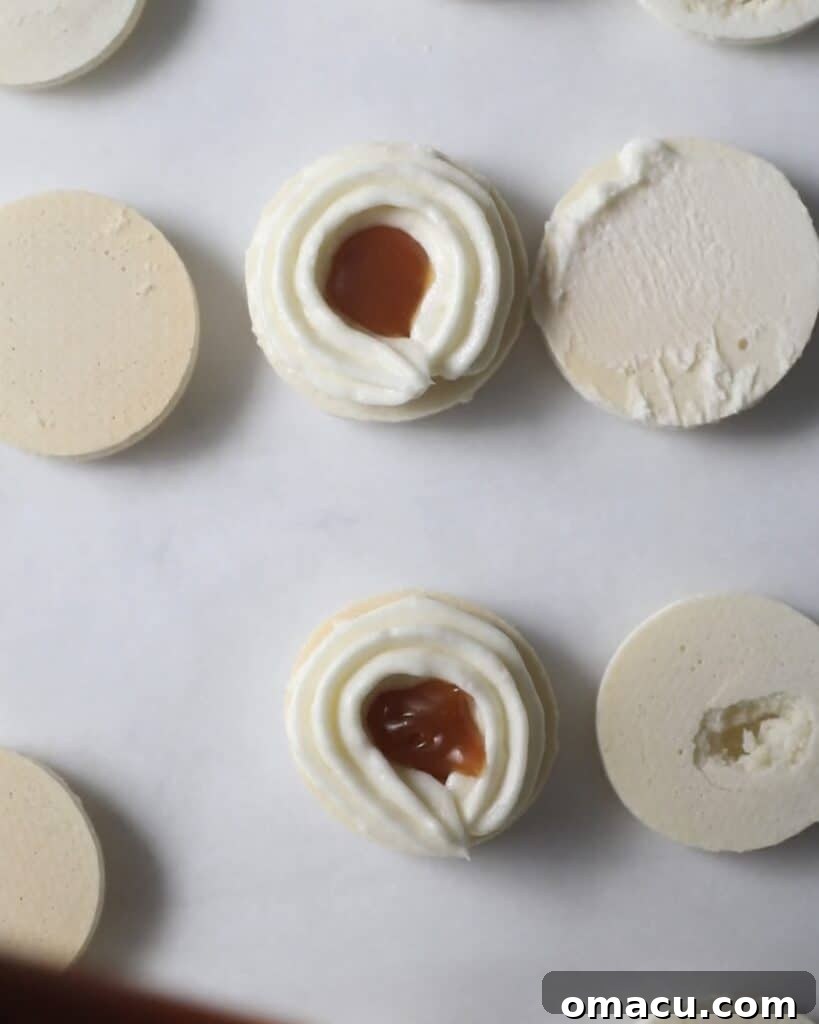
- Fill with Love: Take one macaron shell and pipe a perimeter of vanilla buttercream around the edge. Then, fill the center of the buttercream ring with a spoonful of the cooled homemade salted caramel. The buttercream acts as a delicious barrier, preventing the caramel from oozing out.
- Create the Sandwich: Gently place a second macaron shell of the matching size on top, pressing down very lightly until the filling spreads slightly to the edges.
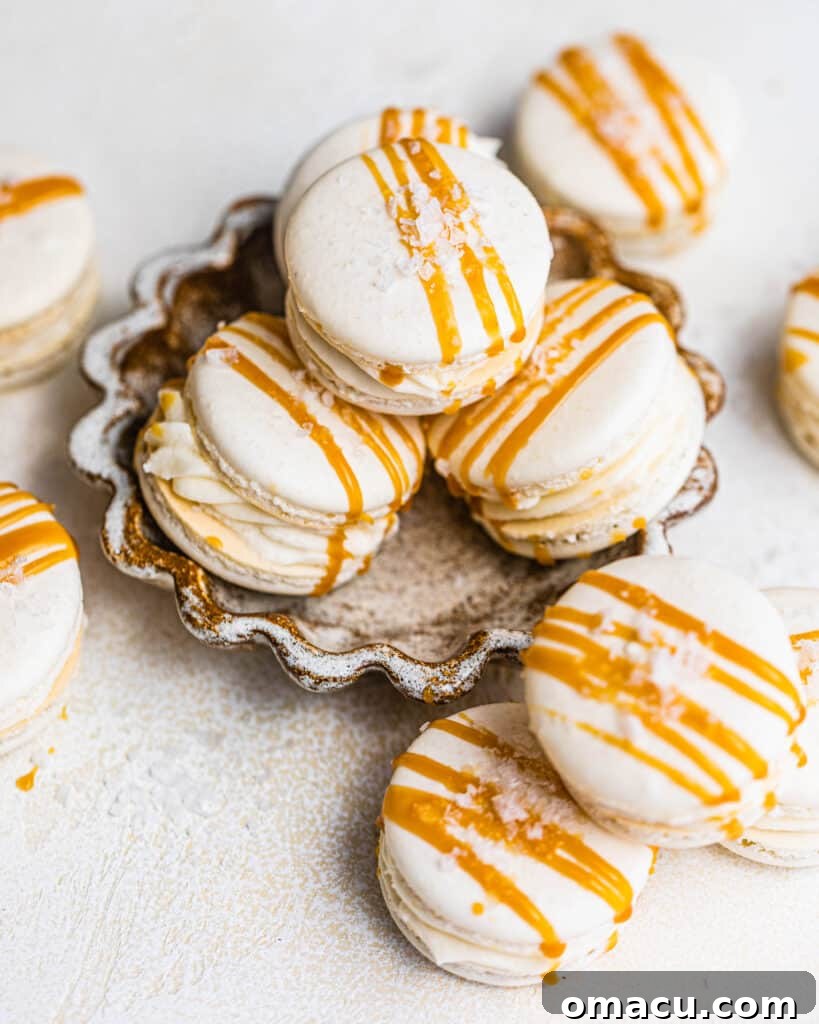
- Garnish and Finish: For an extra touch of elegance and flavor, drizzle a tiny bit more salted caramel on top of each assembled macaron. Finish with a sprinkle of delicate flake salt. Repeat this process until all your macaron shells are filled and beautifully decorated.
- Storage and Enjoyment: These macarons are best enjoyed after a day or two of “maturing” in the refrigerator, allowing the flavors to meld and the shell to soften slightly. Eat them immediately or store them in an airtight container in the refrigerator for up to 7 weeks.
Expert Tips for Macaron Success
Macarons are known for being a delightful challenge, but with these expert tips, you can significantly increase your chances of baking perfect shells and delicious fillings every time. Precision and patience are your best allies!
- Room Temperature Butter is Non-Negotiable: Always ensure your unsalted butter for the buttercream is at true room temperature. This means soft enough to indent with a finger, but not melted or greasy. Typically, 1-2 hours on the counter is sufficient, but be mindful of your kitchen’s ambient temperature. If it’s too soft, your buttercream may be runny; a quick 5-10 minute chill in the fridge can help. If it’s too cold, you’ll end up with stubborn butter chunks in your otherwise smooth buttercream. This seemingly small detail is vital for the final texture.
- Prevent Caramel from Burning and Crystallizing: Caramel is notoriously quick to burn. Using a heavy-bottomed saucepan or skillet is your best defense against scorching, which can lead to a bitter taste and unwanted crystallization. Cook over medium-low heat and keep a close eye on it. Patience is key; don’t rush the melting process.
- Degassing for Smooth Tops: After piping your macaron shells, firmly tap your baking sheets on the counter a few times. This isn’t just a suggestion; it’s a critical step to remove trapped air bubbles that can cause hollow shells or cracked tops. Any remaining surface bubbles can be gently popped with a toothpick, ensuring a perfectly smooth dome.
- Cleanliness for a Stable Meringue: Before whipping egg whites, ensure your mixing bowl and whisk attachment are impeccably clean and free from any grease or oil. Even a tiny speck of fat can prevent egg whites from whipping up properly. A trick is to wipe your bowl and whisk with lemon juice or white vinegar before starting; the acidity helps cut through any residual grease.
- Measure Ingredients with a Kitchen Scale: For macarons, accuracy is paramount. Volume measurements can vary, so a kitchen scale is your best friend. This recipe, like most professional macaron recipes, provides measurements in grams for optimal precision. Trust the scale for consistent results.
- Prepare Everything in Advance (Mise en Place): Macaron making involves several quick, sequential steps. Measuring out all your ingredients and having them ready before you start (known as “mise en place”) will make the process much smoother and less stressful. This organized approach minimizes errors and helps you stay focused.
- Understand Macaronage: The folding technique known as “macaronage” is the most crucial part of achieving the correct batter consistency. It’s about deflating the meringue just enough to create a flowable batter without losing too much air. Practice will help you recognize the “flowing lava” consistency – when the batter falls off your spatula in a continuous ribbon that forms a figure-eight pattern before breaking.
- Embrace the Drying Stage: Don’t skip or shorten the resting period after piping. This allows a skin to form on the macaron shells. This skin prevents the air from escaping through the top, forcing it out of the bottom to create those characteristic “feet.” Humidity can affect drying time, so be prepared to adjust.
Remember, macarons are often considered a challenging bake, and it’s perfectly normal if your first few attempts aren’t absolutely perfect. Each batch offers a learning opportunity. Don’t be discouraged; persistence and attention to these tips will lead you to beautiful, delicious macarons!

Frequently Asked Questions (FAQs)
Navigating the world of macaron baking can bring up several questions. Here are answers to some of the most common queries, designed to help you achieve macaron mastery.
Can I Use Regular Flour for Macarons?
Absolutely not. For this recipe, almond flour is not interchangeable with regular all-purpose flour. Almond flour is fundamental to the unique flavor, delicate texture, and structure of macarons. It provides the light, slightly chewy, and melt-in-your-mouth quality that defines these French pastries. Using all-purpose flour would result in a completely different cookie—likely crunchy, dense, and lacking the signature macaron characteristics. Stick to superfine almond flour for authentic results.
Store-Bought vs. Homemade Caramel: What’s Best?
While homemade salted caramel is truly unmatched in flavor and texture, store-bought caramel sauce is certainly a convenient time-saver. If you’re short on time, a high-quality store-bought option can work. However, for the most authentic and decadent salted caramel macarons, we highly recommend making your own; the richness and depth of flavor are simply superior. You can easily prepare the homemade caramel sauce in advance, store it in your fridge, and gently warm it to room temperature before filling your macarons. To warm cold caramel, microwave it in short bursts (10-15 seconds), stirring well in between, until it reaches a smooth, pourable consistency. Be careful not to overheat it, as it can burn quickly!
Can I Prepare Buttercream in Advance?
Yes, absolutely! Preparing your buttercream in advance is an excellent strategy to streamline your baking process. Buttercream is quite versatile for storage. It will keep well in an airtight container at room temperature for up to two days. For longer storage, you can refrigerate it for up to two weeks or even freeze it for up to three months. When you’re ready to use it, simply bring it back to room temperature and then re-whip it with a mixer until it regains its smooth, fluffy consistency. This will ensure it’s pipeable and perfect for filling your macarons.
How to Store Salted Caramel Macarons for Optimal Freshness?
Proper storage is essential to maintain the freshness and delicate texture of your homemade salted caramel macarons. For short-term storage, place them in an airtight container with layers separated by parchment paper in the refrigerator. Stored this way, they can last wonderfully for up to 7 weeks. For longer preservation, macarons freeze exceptionally well. First, place them in a single layer on a parchment paper-lined baking sheet and freeze until solid. Once frozen, you can transfer them to an airtight freezer-safe container, again separating layers with parchment paper, and store them for several months. Thaw them in the refrigerator before serving for the best texture.
Troubleshooting Common Macaron Issues
Even experienced bakers encounter macaron challenges. Here are quick solutions for common problems:
- Hollow Shells: Often a sign of under-macaronage or incorrect oven temperature. Ensure your meringue is stiff and your macaronage produces the “lava” consistency. Experiment with slightly lower baking temperatures or longer drying times.
- Cracked Tops: Usually due to insufficient drying time (no skin formed) or oven temperature being too high. Make sure the shells form a dry skin before baking and check your oven’s accuracy with a thermometer.
- No “Feet”: This can result from under-whipped meringue, over-macaronage, or lack of a dry skin. Revisit your meringue technique, macaronage process, and ensure adequate drying time.
- Lopsided Macarons: Often caused by uneven heat distribution in the oven or piping on an uneven surface. Rotate your baking sheets halfway through baking, and ensure your oven rack is level.
Recipe Card: Salted Caramel Macarons
Salted Caramel Macarons
By Britney
- Prep Time: 2 hrs 30 mins
- Cook Time: 15 mins
- Total Time: 2 hrs 45 mins
- Servings: 30 sandwiches
Equipment
- Stand Mixer with Whisk Attachment
- Mixing Bowls
- Kitchen Scale
- Baking Sheets
- Piping Bags or Ziploc Bag
- Large Round Piping Tip
- Macaron Silicone Mat or Parchment Paper
- Heavy-bottomed Skillet/Saucepan
Ingredients
Macarons
- 120 g superfine almond flour
- 240 g powdered sugar
- 130 g egg whites (room temperature)
- 120 g granulated sugar
- 1/2 tsp cream of tartar
- 1/2 tsp vanilla extract
Homemade Salted Caramel
- 1 cup granulated sugar
- 6 tbsp unsalted butter
- 1/2 cup heavy cream
- 2 tsp kosher salt
Buttercream Filling
- 1/2 cup unsalted butter, room temperature
- 2 cups powdered sugar
- 1/4 cup heavy cream
- 1 tsp vanilla extract
Instructions
- Prepare Macaron Shells: Pulse together almond flour and powdered sugar in a food processor for about 20 seconds. Then sift the mixture 2-3 times into a large bowl, ensuring no clumps remain. Discard any large granules that do not pass through the sifter.
- Whip Meringue: In a stand mixer bowl, add egg whites. Beat on medium speed until foamy. Add cream of tartar and continue beating. Slowly add granulated sugar, increasing speed to high, until stiff, glossy peaks form (meringue should not move if the bowl is inverted). Fold in vanilla extract.
- Perform Macaronage: Add half of the sifted dry ingredients to the meringue and gently fold. Add the remaining dry ingredients and continue folding until the batter is smooth and flows like “flowing lava” or a thick ribbon that can form a figure eight without breaking. Stop immediately once this consistency is achieved.
- Pipe Shells: Transfer batter to a piping bag fitted with a Wilton 1A round tip. Line two baking sheets with parchment paper or silicone mats. Pipe 1-inch macaron shells onto each sheet.
- Degas: Tap baking sheets firmly on the counter several times to release air bubbles. Gently pop any remaining surface bubbles with a toothpick.
- Dry Shells: Let the piped macarons sit at room temperature for 40 minutes to an hour, or until a dry skin forms (the surface should be dull, and no batter should stick to your finger when lightly touched). Drying time may vary with humidity.
- Bake: Preheat oven to 300°F (150°C). Bake one sheet at a time for 14-15 minutes, or until shells are firm and don’t wiggle. Allow them to cool completely on the baking sheet before handling (at least 40 minutes).
- Make Salted Caramel: While macarons cool, add 1 cup sugar to a heavy-bottomed pan over medium-low heat. Stir occasionally until completely melted and golden amber. Reduce heat to low, add 6 tbsp butter, and whisk continuously for 2-3 minutes. Slowly add 1/2 cup heavy cream, continuing to whisk until smooth (increase heat slightly if needed to melt clumps). Remove from heat, stir in 2 tsp kosher salt. Pour into a heat-safe container and cool completely.
- Make Buttercream: In a mixing bowl, beat 1/2 cup room temperature unsalted butter and 2 cups powdered sugar on medium-high until combined. Add 1/4 cup heavy cream and continue beating on high until light and fluffy. Mix in 1 tsp vanilla extract and a pinch of salt. Transfer buttercream to a piping bag (Wilton 21 tip recommended).
- Assemble: Gently peel cooled macaron shells from the baking surface. Match shells of similar size. Pipe a ring of buttercream onto the flat side of one macaron shell, then fill the center with cooled salted caramel. Top with a matching shell. Garnish with a drizzle of salted caramel and flake salt. Repeat for all macarons.
- Serve and Store: Enjoy immediately or store in an airtight container in the refrigerator for up to 7 weeks.
Video Tutorial
Nutrition Information
Nutrition information is an approximation.
- Calories: 196 kcal
- Carbohydrates: 28g
- Protein: 2g
- Fat: 10g
- Saturated Fat: 5g
- Polyunsaturated Fat: 1g
- Monounsaturated Fat: 2g
- Trans Fat: 1g
- Cholesterol: 21mg
- Sodium: 165mg
- Potassium: 23mg
- Fiber: 1g
- Sugar: 27g
- Vitamin A: 252 IU
- Vitamin C: 1mg
- Calcium: 15mg
- Iron: 1mg
Explore More Delicious Recipes!
- Salted Caramel Chocolate Tart with Candied Peanuts
- Caramel Pretzel Skillet Cookie
- Salted Caramel Peanut Butter Cups
- Salted Caramel Snickerdoodle Bars
- Strawberry Macarons
Stay Connected and Share Your Creations!
We love seeing your culinary adventures! Let’s stay connected on social media and continue to cook together. Never miss a delicious recipe by following us on Pinterest, Facebook, and Instagram! If you create this amazing Salted Caramel Macaron recipe, please share your success with us! Don’t forget to tag @BritneyBreaksBread and use the hashtag #BritneyBreaksBread so we can admire your beautiful creations. We truly hope you cherish this recipe as much as we do!