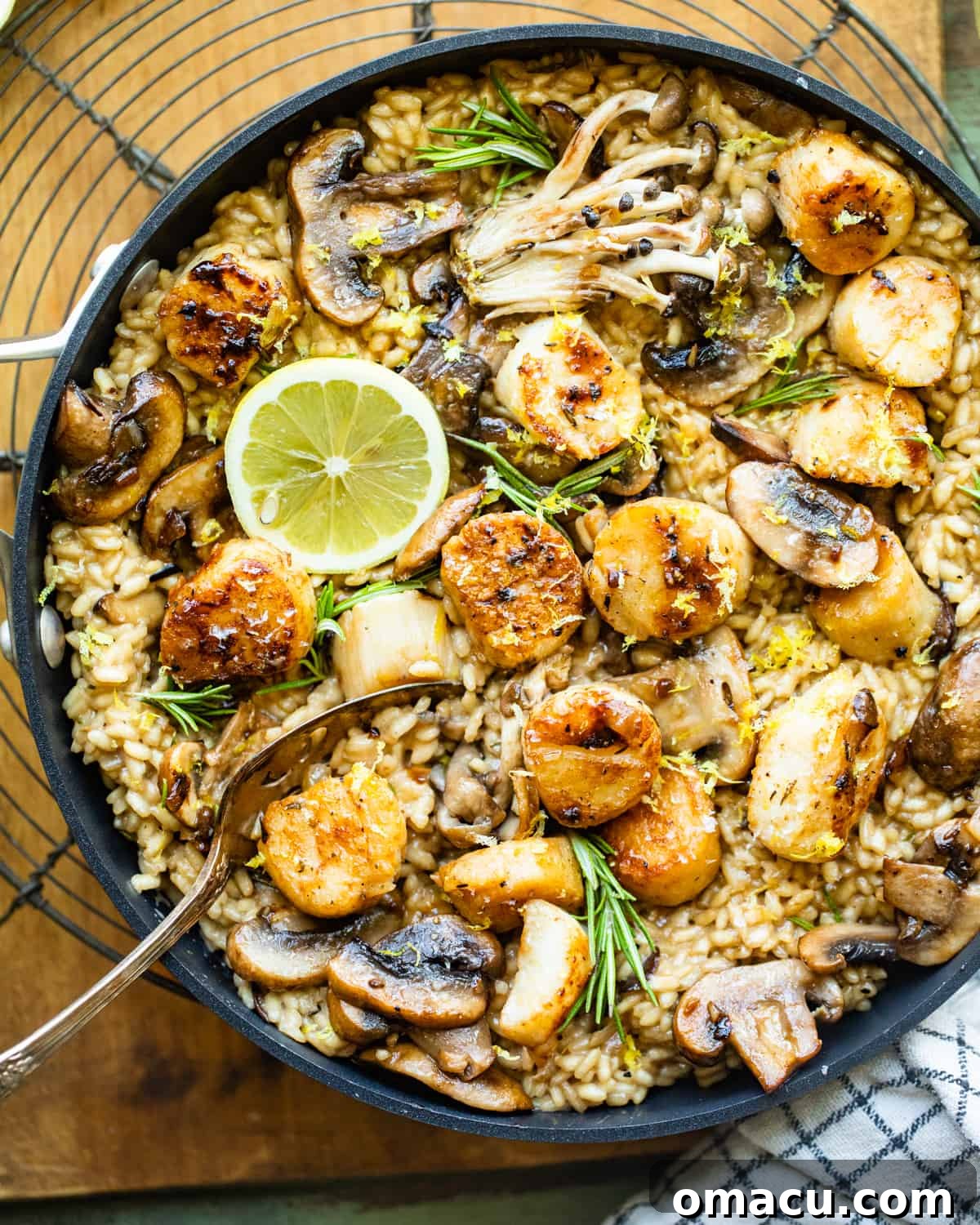
Elevate your dining experience with a dish that effortlessly combines elegance with incredible flavor: a rich and creamy mushroom risotto crowned with succulent, perfectly seared scallops. This culinary masterpiece is far simpler to create than its impressive presentation suggests, making it an ideal choice for a romantic date night, a cozy family gathering, or any occasion when you desire a truly memorable meal without the stress.
Imagine spooning into a velvety risotto, each grain of Arborio rice infused with the earthy essence of mushrooms and a hint of vibrant white wine, then savoring the delicate sweetness of garlic and herb-marinated scallops, caramelized to golden perfection. It’s a symphony of textures and tastes that promises to delight your palate and impress your guests.
If you’re looking to explore more delightful risotto creations, be sure to check out my Spring Risotto with Garlic Butter Shrimp for another fantastic option!
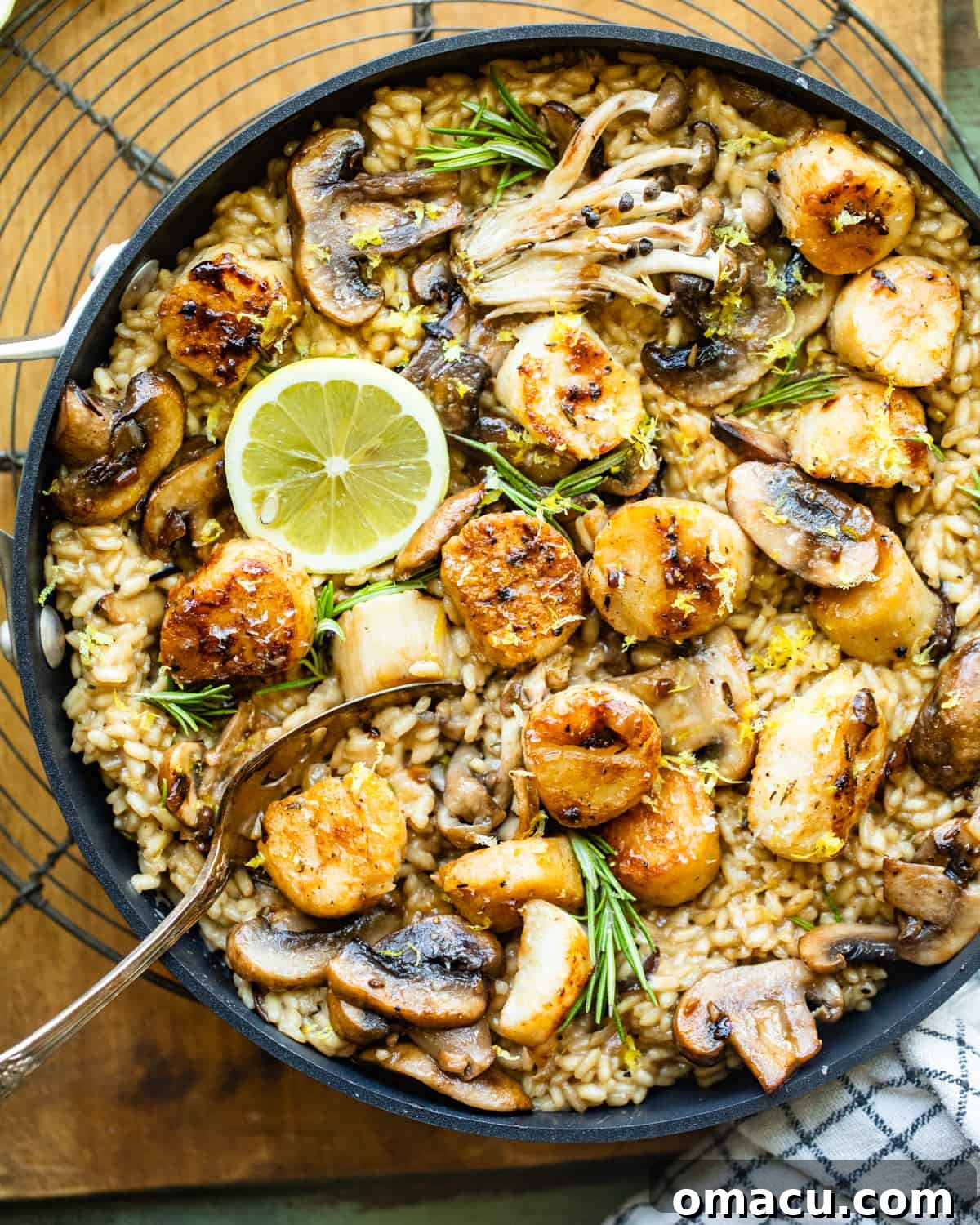
Table of Contents
- Why You’ll Love This Recipe
- Ingredient Notes
- Substitutions
- Expert Tips for Success
- How to Make Mushroom Risotto with Scallops
- Serving Suggestions
- Storage and Reheating
- Recipe FAQs
- More Dinner Recipes
- Mushroom Risotto with Scallops Recipe
Why You’ll Love This Recipe
This mushroom risotto with scallops isn’t just a meal; it’s an experience. It’s truly my favorite risotto recipe, especially as the seasons shift and we crave comforting yet refined dishes. Many home cooks perceive risotto as a challenging dish to master, but I’m here to demystify the process and show you just how accessible and rewarding it can be. The savory, creamy texture of the risotto, perfectly balanced by the sweet, firm pan-seared scallops, creates a dish that feels incredibly gourmet without demanding hours of complicated prep.
Whether you’re celebrating a special milestone or simply treating yourself to a luxurious weeknight dinner, this recipe delivers on all fronts. It’s an impressive starter course or a robust main dish, and the addition of plump, juicy sea scallops takes it to an entirely new level of deliciousness. After all, anything with fresh seafood tends to be a crowd-pleaser – just take a look at my popular seafood boil and indulgent butter-poached lobster recipes!
Join me as we embark on this culinary journey together. I’ll guide you through every step of the cooking process, ensuring your mushroom risotto with scallops turns out perfectly creamy and incredibly flavorful, every single time.
Ingredient Notes
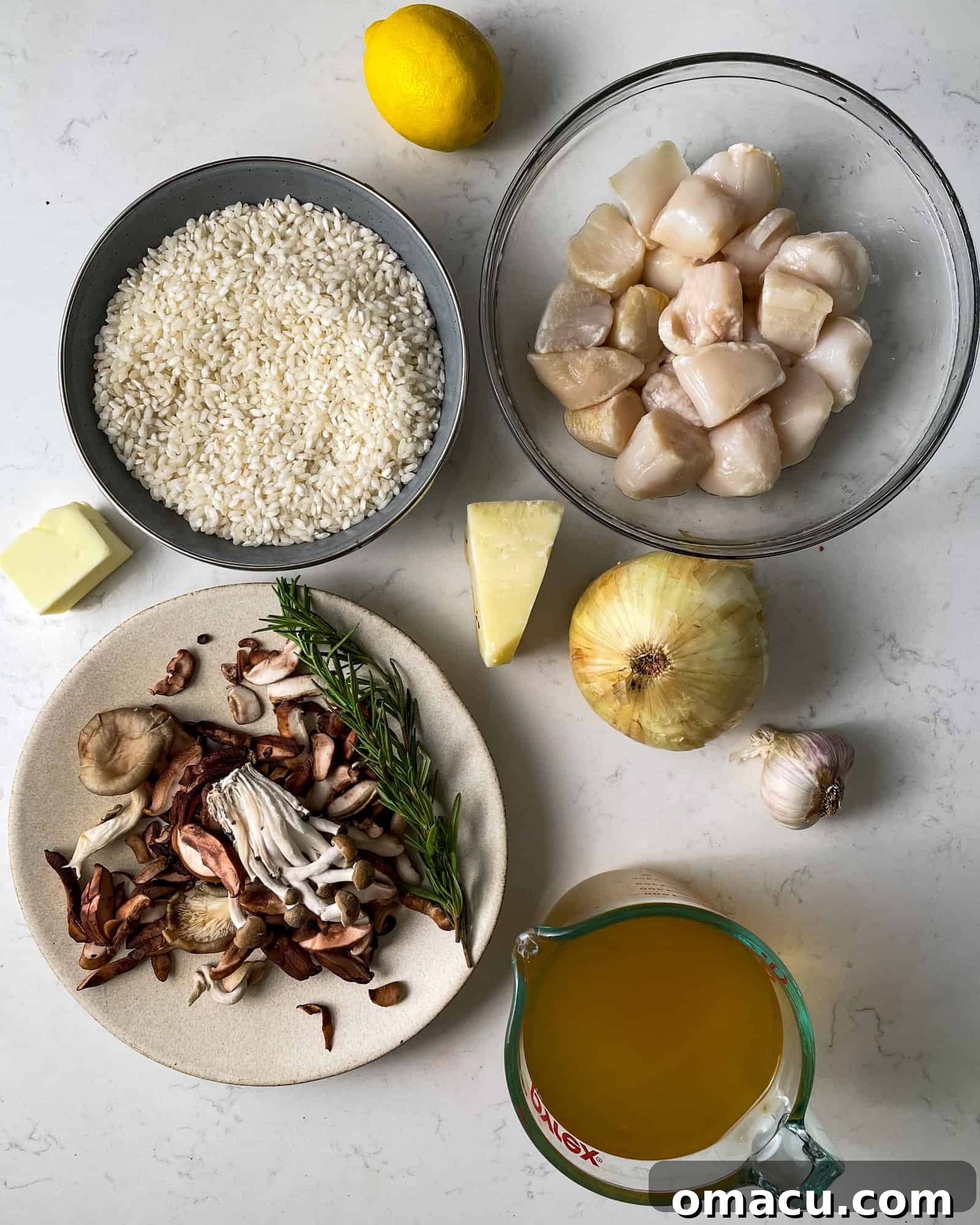
Success in cooking often comes down to the quality of your ingredients. Here are a few key components that will make all the difference in this dish:
Arborio Rice: This short-grain Italian rice is not just any rice; it’s the heart and soul of authentic risotto. Arborio rice is celebrated for its high starch content, specifically amylopectin, which is released as you stir the rice, creating that signature creamy, velvety texture without needing added cream. While other short-grain rices like Carnaroli or Vialone Nano can also be used, Arborio is widely available and consistently delivers excellent results. Do not substitute with long-grain rice, as it won’t achieve the desired creaminess.
Mushrooms: To achieve a deep, earthy flavor in your risotto, I highly recommend using a variety of meaty mushrooms. This not only adds layers of umami but also provides a wonderful textural contrast. My personal favorites include porcini mushrooms for their intense flavor, shiitake mushrooms for their rich, savory notes, button mushrooms for their versatility, and king oyster mushrooms for their substantial texture. Feel free to use a mix of these or whatever fresh, high-quality mushrooms are available to you.
Scallops: The star of this dish, fresh sea scallops are paramount. Sea scallops are significantly larger and meatier than their bay scallop counterparts, allowing for a beautiful, golden-brown sear and a tender, juicy interior. When purchasing, look for scallops that are firm, opaque, and have a fresh, sweet ocean scent. Avoid any that appear milky or have a strong fishy odor. Proper preparation of scallops is key to their exquisite taste and texture.
Dry White Wine: A splash of dry white wine is transformative in risotto. It adds a crucial layer of acidity and complexity, deglazing the pan and picking up all the delicious browned bits (fond) left behind by the sautéed vegetables. This acidity cuts through the richness of the butter and cheese, balancing the flavors beautifully. Opt for a crisp, dry wine like Sauvignon Blanc, Pinot Grigio, or even an unoaked Chardonnay. Avoid sweet wines, as they will alter the overall flavor profile of the dish.
Chicken or Vegetable Broth: This is the liquid that slowly builds the risotto’s creamy base. Using a high-quality broth is essential. Keep it warm throughout the cooking process, as adding cold broth will shock the rice, slowing down the starch release and potentially leading to a less creamy risotto.
Substitutions
- For a vegetarian version of this delectable dish, simply swap out the chicken broth for an equal amount of high-quality vegetable broth. The rich mushroom flavors will still shine through beautifully.
- If you prefer to avoid alcohol or don’t have dry white wine on hand, you can easily omit it. Replace the wine with an additional two cups of warmed vegetable or chicken broth. While the wine adds a unique depth, the risotto will still be incredibly delicious without it.
- Experiment with different herbs! While thyme and rosemary are classic pairings, fresh oregano or a touch of sage can also complement the mushrooms and scallops beautifully.
Expert Tips for Success
- Achieving the Perfect Scallop Sear: This is perhaps the most crucial tip for flawless scallops. It is absolutely essential to thoroughly pat your scallops dry with paper towels before placing them in the hot pan. Any moisture on the surface will steam the scallops rather than sear them, preventing the coveted Maillard reaction from occurring. The Maillard reaction is a chemical process responsible for the browning and development of complex flavors, aromas, and appealing golden-brown crust. High heat and dry surfaces are your best friends here. Don’t overcrowd the pan; cook the scallops in batches if necessary to ensure even searing.
- The Right Cookware Makes a Difference: For both the scallops and the risotto, using a deep skillet with a high-quality non-stick surface is paramount. A good non-stick pan ensures that the scallops release easily without tearing and that the risotto doesn’t stick or burn, allowing for continuous stirring. I personally rely on my Calphalon Premier Nonstick Cookware for its exceptional performance. Its durable, three-layer nonstick coating, made from the Earth’s hardest materials, provides an incredibly smooth surface that makes cooking and cleanup a breeze.
- Constant Stirring is Key for Risotto: Risotto demands your attention. Stirring continuously is not a suggestion; it’s a fundamental technique. This constant agitation gently rubs the Arborio rice grains against each other, encouraging them to release their starches into the cooking liquid. This process is what creates the characteristic creamy texture of risotto. Without sufficient stirring, the rice grains won’t release enough starch, and you’ll end up with a watery, less satisfying dish.
- Cook to Al Dente Perfection: Overcooked risotto is mushy risotto. The ideal texture for risotto is “al dente,” meaning the rice grains should be tender but still retain a slight bite or firmness in the center. This gives the dish a pleasant chew and prevents it from becoming overly soft. Taste frequently towards the end of the cooking process to gauge the perfect doneness.
- Keep Your Broth Warm: As mentioned in the ingredients, always add warmed broth to your risotto. Cold broth will significantly drop the temperature of the rice, hindering the starch release and elongating the cooking time. A simmering saucepan of broth next to your risotto pan is a small step that makes a big difference.
How to Make Mushroom Risotto with Scallops
Crafting this elegant dish involves a few distinct stages, but each is straightforward. Follow these steps for a perfect meal:
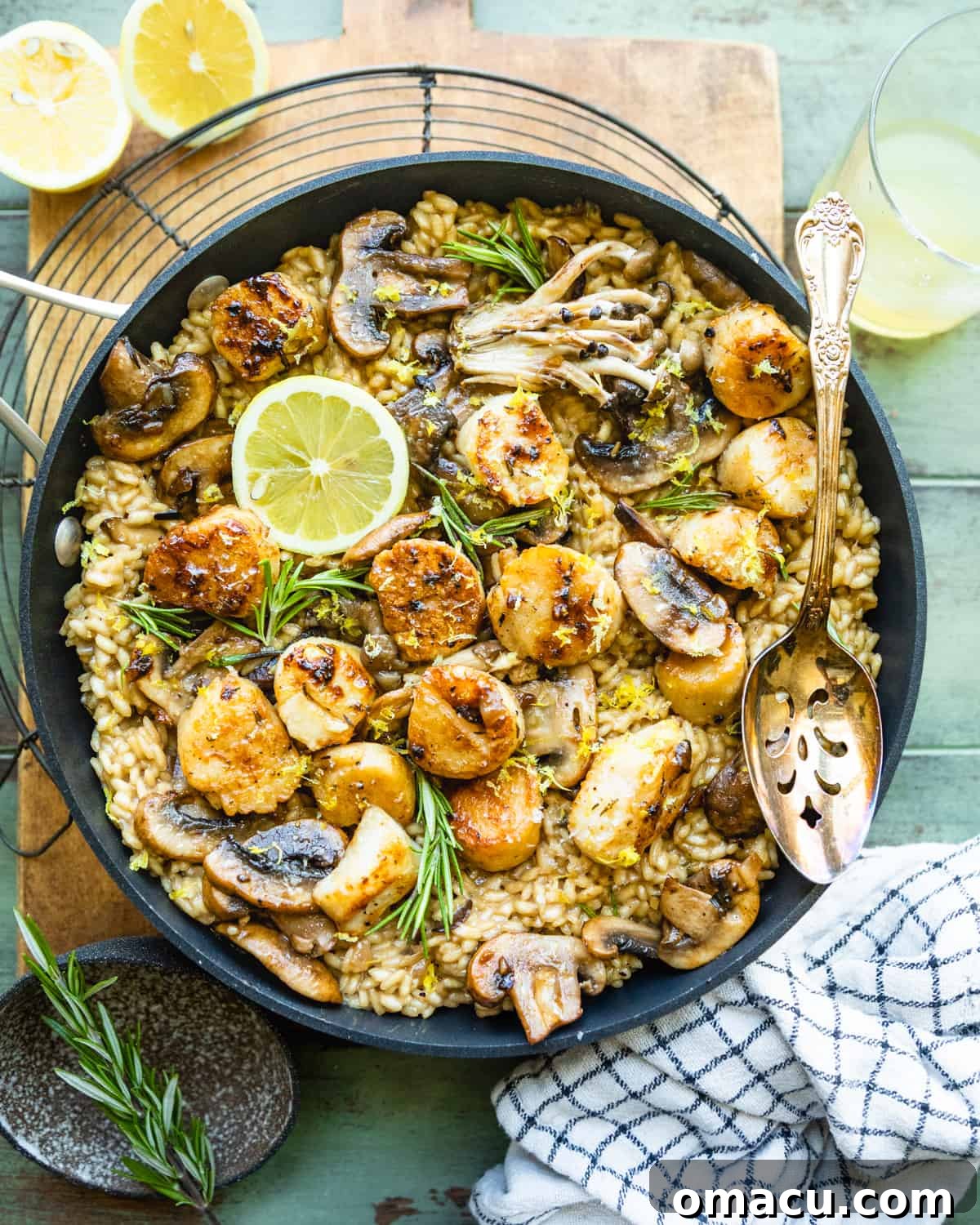
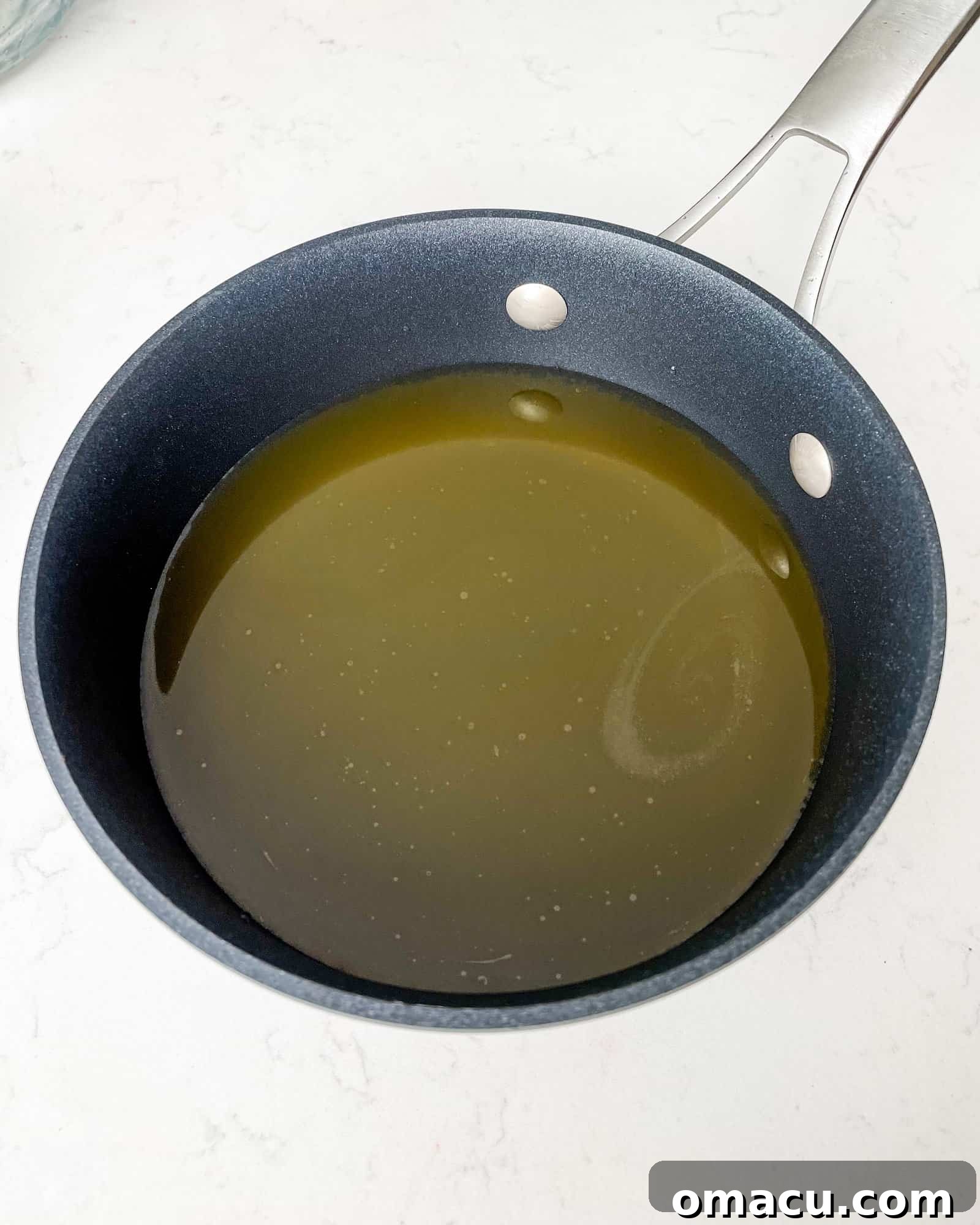
- Prepare the Broth: Begin by pouring your chicken or vegetable stock into a large saucepan and place it over low heat to keep it warm. Maintaining a warm broth is crucial for achieving a consistently creamy risotto, as adding cold broth would inhibit the Arborio rice from releasing its starches properly.
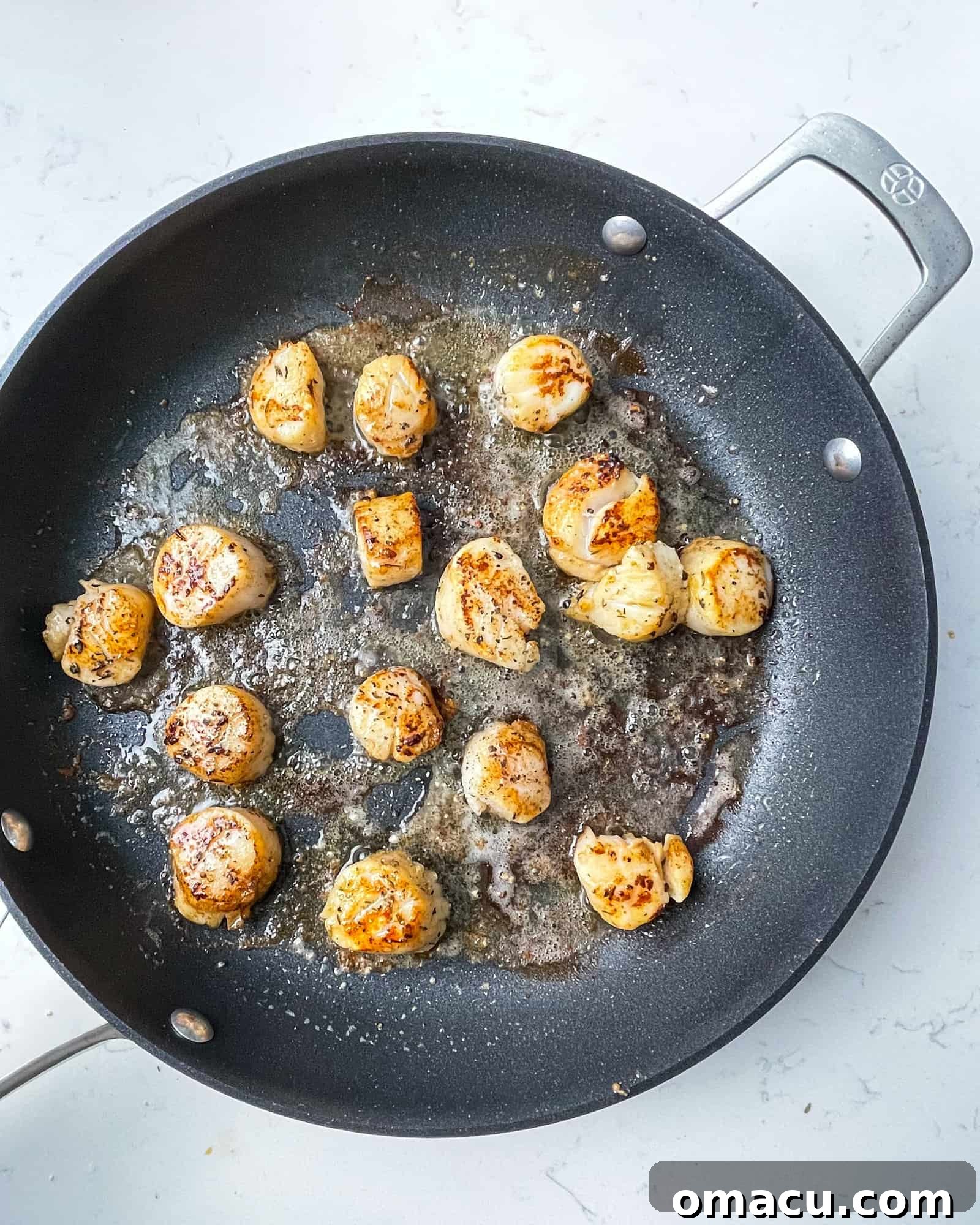
- Season and Sear the Scallops: Gently pat the scallops thoroughly dry with paper towels to remove any excess moisture; this is the secret to a beautiful sear. In a separate bowl, toss the dried scallops with a blend of thyme, onion powder, garlic powder, and a generous pinch of salt and black pepper. In a large, heavy-bottomed skillet (preferably non-stick), melt 2 tablespoons of butter with olive oil over medium-high heat until shimmering. Carefully place the seasoned scallops into the hot skillet in a single layer, ensuring not to overcrowd the pan. Sear them for about 3-4 minutes per side, until they develop a gorgeous golden-brown crust and are opaque throughout. Remove the seared scallops from the skillet and set them aside on a plate; they will be added back in at the end.
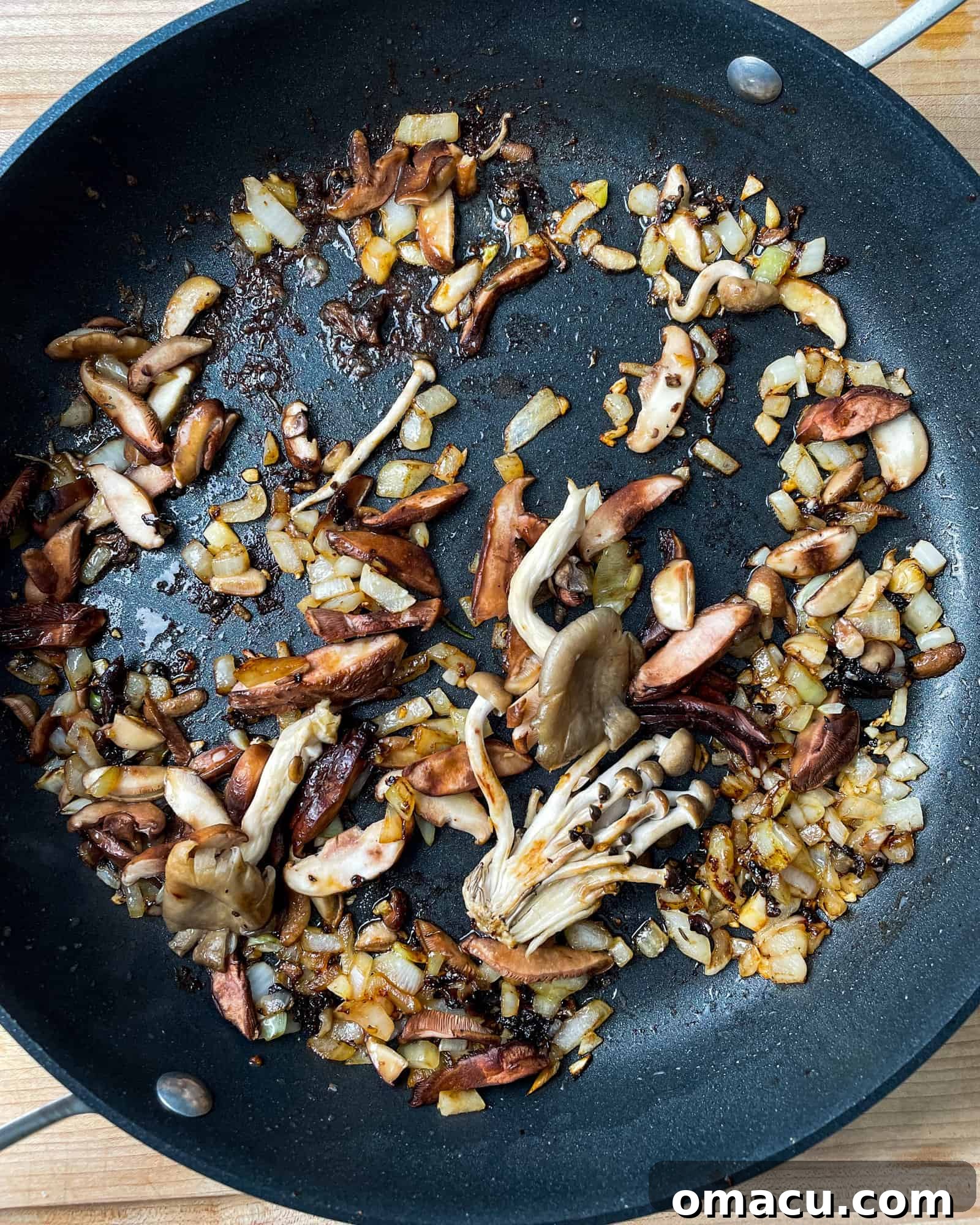
- Sauté the Aromatics and Mushrooms: Reduce the heat to medium. Add the remaining butter to the same skillet. Add the sliced mushrooms and season them with a touch of salt and pepper. Sauté for a few minutes until they release their moisture and begin to brown. Then, add the diced yellow onions and cook for 2-3 minutes until they soften and become translucent. Finally, stir in the diced garlic and a pinch more salt. Continue to cook for another 3 minutes until the garlic is fragrant, being careful not to burn it. Remove the cooked mushrooms and aromatics from the pan and set them aside with the scallops.
- Toast the Rice and Begin Adding Broth: Add a little more olive oil to the now empty skillet if needed. Add the Arborio rice, fresh rosemary, and fresh thyme leaves. Toast the rice in the pan for about 1-2 minutes, stirring constantly, until the edges of the grains become slightly translucent. This step, called “tostatura,” helps to seal the grain and prevents it from becoming mushy.
- Develop the Creaminess: Reduce the heat to low. Begin adding the warmed chicken broth to the rice, one cup at a time. Stir the risotto constantly until each addition of broth is almost completely absorbed by the rice before adding the next cup. This slow, gradual process and continuous stirring are vital for releasing the starches and creating that luxurious, creamy texture. Repeat this process until all the broth is used, and the rice is tender but still al dente.
- Deglaze with Wine: Once the broth is mostly absorbed and the rice is nearly cooked, pour in the dry white wine, one cup at a time. Continue to stir, allowing the wine to be absorbed. This adds a beautiful depth of flavor and acidity to the risotto.
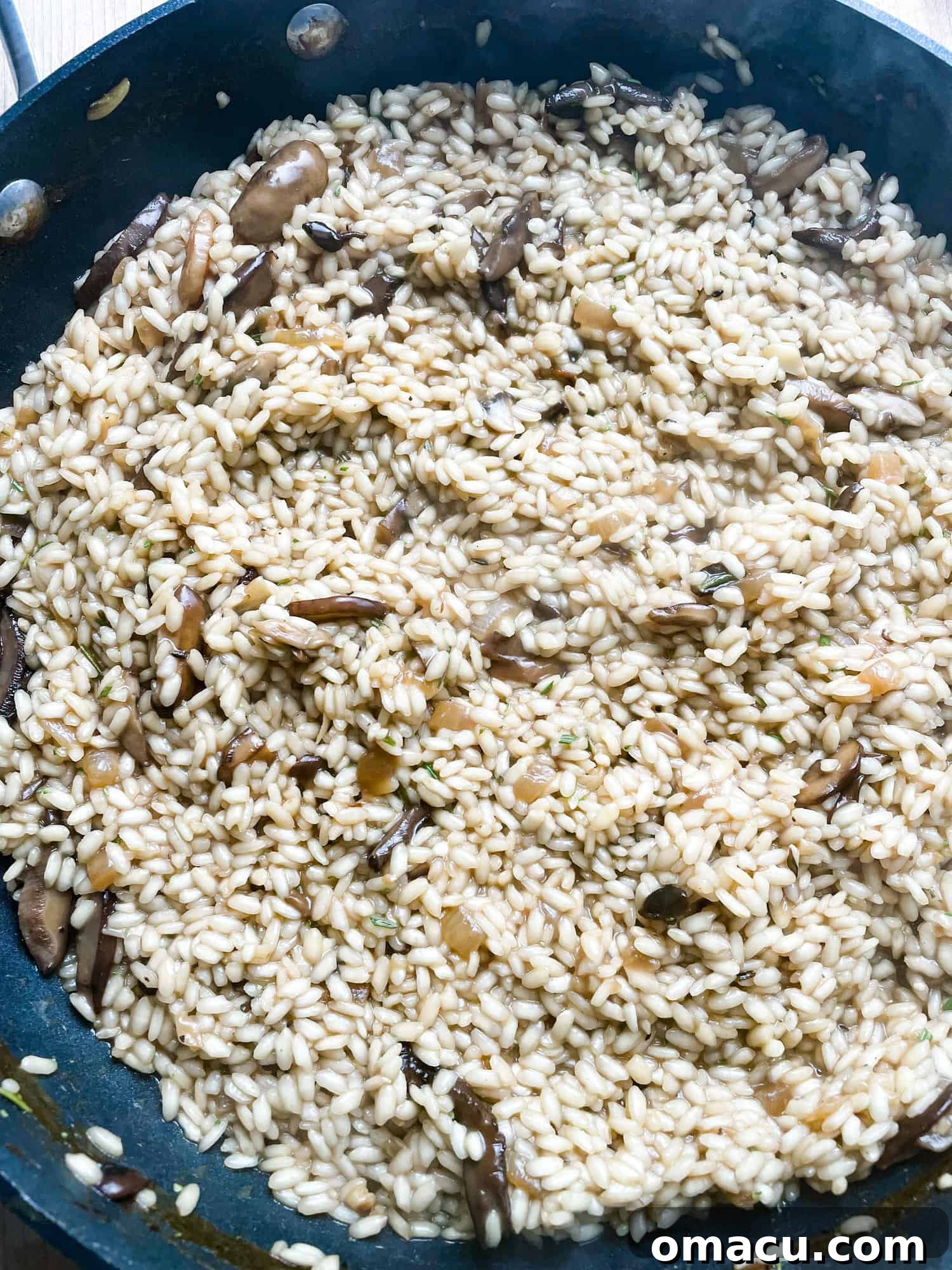
- Finish the Risotto: Once all the liquid is absorbed and the rice is perfectly al dente, remove the skillet from the heat. Stir in the milk to enhance the creaminess. Grate in a generous amount of fresh Parmesan cheese, a bright squeeze of lemon juice, and about a tablespoon of lemon zest. Taste the risotto and adjust seasonings with salt and pepper as needed. Finally, gently fold in the sautéed mushrooms and return the seared scallops to the pan.
- Serve and Garnish: Serve immediately while hot. Garnish with a little more fresh lemon zest and a sprinkle of grated Parmesan cheese for an extra touch of flavor and visual appeal.
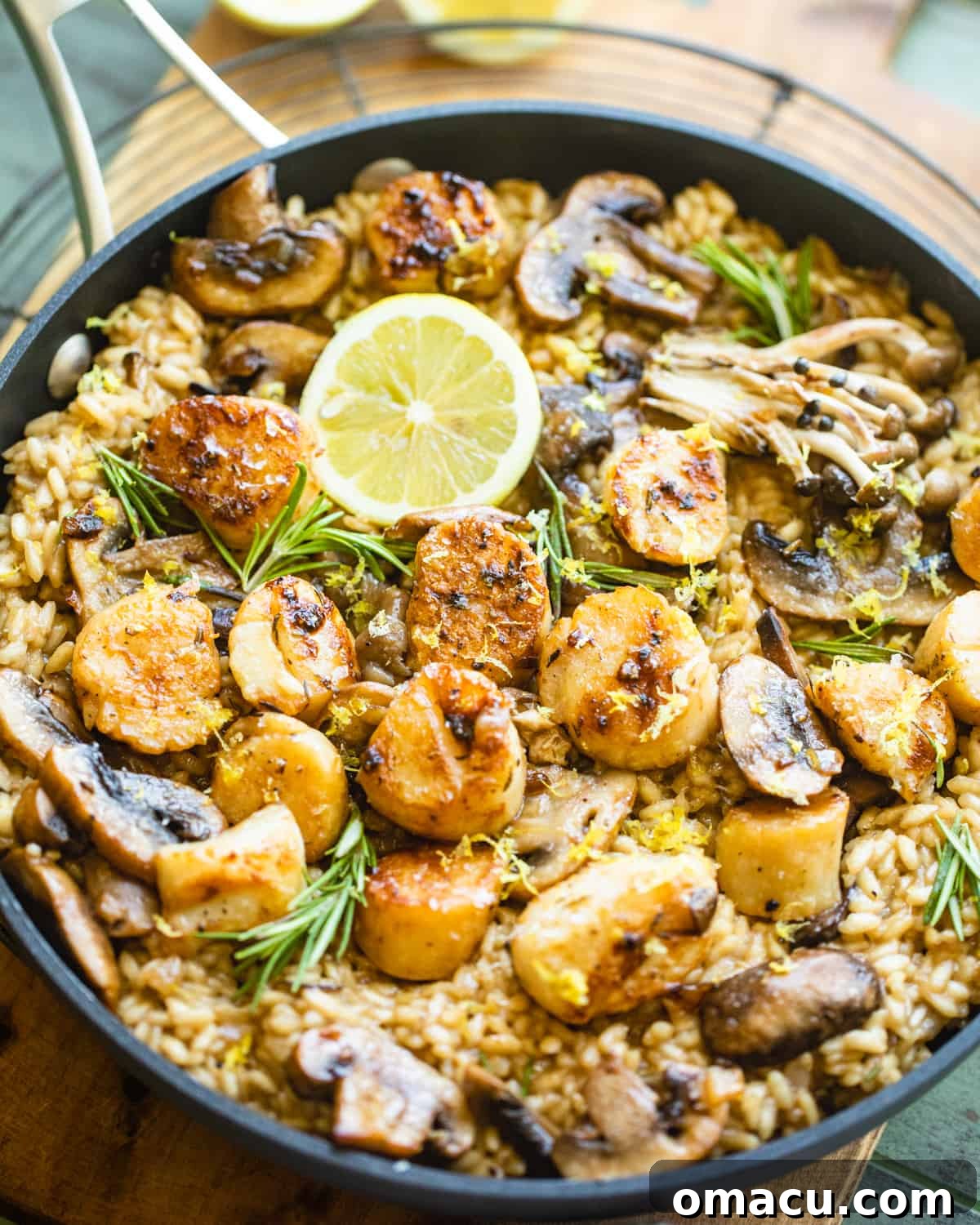
My favorite way to truly savor this exquisite dish is with a perfectly paired glass of crisp white wine. Cheers to a magnificent meal!
Serving Suggestions
This creamy mushroom risotto with seared scallops is a complete and satisfying meal on its own, but you can enhance the dining experience with a few thoughtful accompaniments:
- Fresh Green Salad: A simple, crisp green salad with a light vinaigrette provides a refreshing contrast to the richness of the risotto.
- Crusty Bread: A warm, crusty baguette is perfect for soaking up any leftover creamy sauce.
- Steamed Asparagus or Green Beans: Lightly steamed or roasted vegetables can add a pop of color and extra nutrients to your plate.
- Wine Pairing: Continue with the same dry white wine you used in the recipe, such as a Sauvignon Blanc or Pinot Grigio, to complement the flavors beautifully.
Storage and Reheating
Risotto is always best enjoyed fresh, right off the stove, when its creamy texture is at its peak. However, if you happen to have leftovers, they can be stored and reheated:
- Storage: Allow the risotto to cool completely, then transfer it to an airtight container. Store in the refrigerator for up to 2-3 days.
- Reheating: Reheating risotto can be tricky, as it tends to thicken and dry out. For best results, reheat gently on the stovetop over low heat, adding a splash of warm chicken or vegetable broth (or even water) and a knob of butter or a spoonful of milk to restore its creamy consistency. Stir constantly until heated through. Avoid reheating scallops too much, as they can become rubbery. It’s often best to remove scallops before reheating the risotto and then add them back in just to warm through.
Recipe FAQs
Risotto is an iconic Italian dish made with a special type of short-grain rice, typically Arborio rice. It is definitively a rice dish, not a pasta dish, although both are popular Italian carbohydrates.
The undisputed main ingredient in risotto is Arborio rice. Its unique starchy composition is what gives risotto its characteristic creamy texture when cooked slowly and stirred consistently.
Achieving the best sear on scallops involves three critical steps: first, thoroughly patting the scallops dry with paper towels to remove all surface moisture; second, ensuring your frying pan is very hot before adding the scallops; and third, not overcrowding the pan so that each scallop has direct contact with the hot surface. This combination promotes the Maillard reaction, resulting in a beautiful, golden-brown crust and a tender, perfectly cooked interior.
Risotto is best served immediately after cooking to enjoy its optimal creamy texture. While you can prepare components like the broth and pre-chop vegetables, preparing the entire risotto ahead of time is not recommended, as it will lose its desired consistency. If you must, reheat gently with extra broth or water.
For the richest flavor and texture, a mix of mushrooms is ideal. Porcini, shiitake, cremini (baby bellas), and oyster mushrooms all contribute distinct earthy notes and meaty textures. Using dried porcini, rehydrated in hot water (and saving the soaking liquid!), can also add an intense depth of umami.
More Dinner Recipes
Main Course
Crispy Chilli Beef
Main Course
Cacio e Pepe Gnocchi
Main Course
Cajun Seafood Boil Recipe with Garlic Butter Sauce
Main Course
The Best Creamy Salmon Pasta Recipe
This blog post and recipe were proudly created in partnership with Calphalon, whose exceptional cookware helped bring this dish to life. My thoughts and opinions are always genuine and my own. Thank you for your continued support!
Want to receive more delicious and beautifully crafted recipes straight to your inbox? Subscribe to my newsletter to get the latest seasonal creations and culinary inspiration as soon as they’re released!
If you try this incredible Mushroom Risotto with Scallops recipe, please show your love by leaving a star rating on the recipe card below and sharing your thoughts in the comments! You can also tag @BritneyBreaksBread on Instagram and use the hashtag #britneybreaksbread so I can celebrate your beautiful cooking creations!
Mushroom Risotto with Scallops

Pin
Equipment
-
Frying Pan
Ingredients
- 4 cups Chicken Stock, or vegetable broth
- 1 lb Sea Scallops
- 4 tbsps Salted Butter
- 3 tbsps Olive Oil
- 2 tsps Onion Powder
- 1 tsp Garlic Powder
- 1 tsp Parsley, fresh
- 1/2 Yellow Onion, diced
- 4 cloves Garlic, diced
- 2 cups Mushrooms, sliced
- 1 tbsp Thyme, fresh
- 1 tbsp Rosemary, fresh
- 1 cup Arborio Rice
- 2 cups Dry White Wine
- 1/2 cup Parmesan
- 1/4 cup Milk
- 1 Lemon, zested and juiced
- Salt and Pepper
Instructions
-
1. Add chicken broth to a large saucepan over low heat to keep it warm.
-
2. Thoroughly pat the scallops dry with paper towels. Season them with onion powder, garlic powder, parsley, salt, and black pepper.
-
3. In a large skillet, warm olive oil and 2 tablespoons of butter over medium-high heat. Place the seasoned scallops in the hot skillet in a single layer and sear on each side for about 3-4 minutes, until golden brown and cooked through. Remove scallops and set aside.
-
4. Add the remaining butter to the skillet, reducing the heat to medium. Sauté diced onions and season with salt and pepper until softened. Add diced garlic and cook for 2-3 minutes until fragrant. Then, add sliced mushrooms and a pinch of salt. Continue to cook until the mushrooms are tender and fragrant, about another 3 minutes. Remove mushrooms and aromatics and set aside with the scallops.
-
5. Add a little more olive oil to the pan if needed. Add Arborio rice, fresh thyme leaves, and rosemary. Toast the rice for 1-2 minutes until it becomes slightly translucent around the edges. Reduce the heat to low and begin adding the warmed broth, one cup at a time, stirring constantly until each addition is absorbed before adding the next. Repeat until all broth is used and the rice is al dente. Then, add in the dry white wine, one cup at a time, stirring until absorbed.
-
6. Once all liquid is absorbed and the risotto is creamy, remove from heat. Stir in the milk. Taste for salt and pepper and adjust accordingly. Grate in fresh Parmesan cheese, a squeeze of lemon juice, and about a tablespoon of lemon zest. Gently fold the sautéed mushrooms back into the risotto, then carefully add the seared scallops. Serve immediately, topped with a little more lemon zest and Parmesan.
Notes
- Be sure to pat the scallops dry with paper towels to ensure that they will brown when seared. Any moisture will prevent the scallops from browning properly. This is the key to getting the perfect scallops!
- A major key to this recipe is to use a deep skillet non-stick pan. I used my new Calphalon Premier Nonstick Cookware which was ideal for this recipe!
- Stir the risotto constantly so that it does not burn and to release the starches for maximum creaminess.
- Do not overcook the risotto; it should only be cooked until al dente, meaning tender with a slight bite in the center.
Nutrition
Nutrition information is automatically calculated, so should only be used as an approximation.