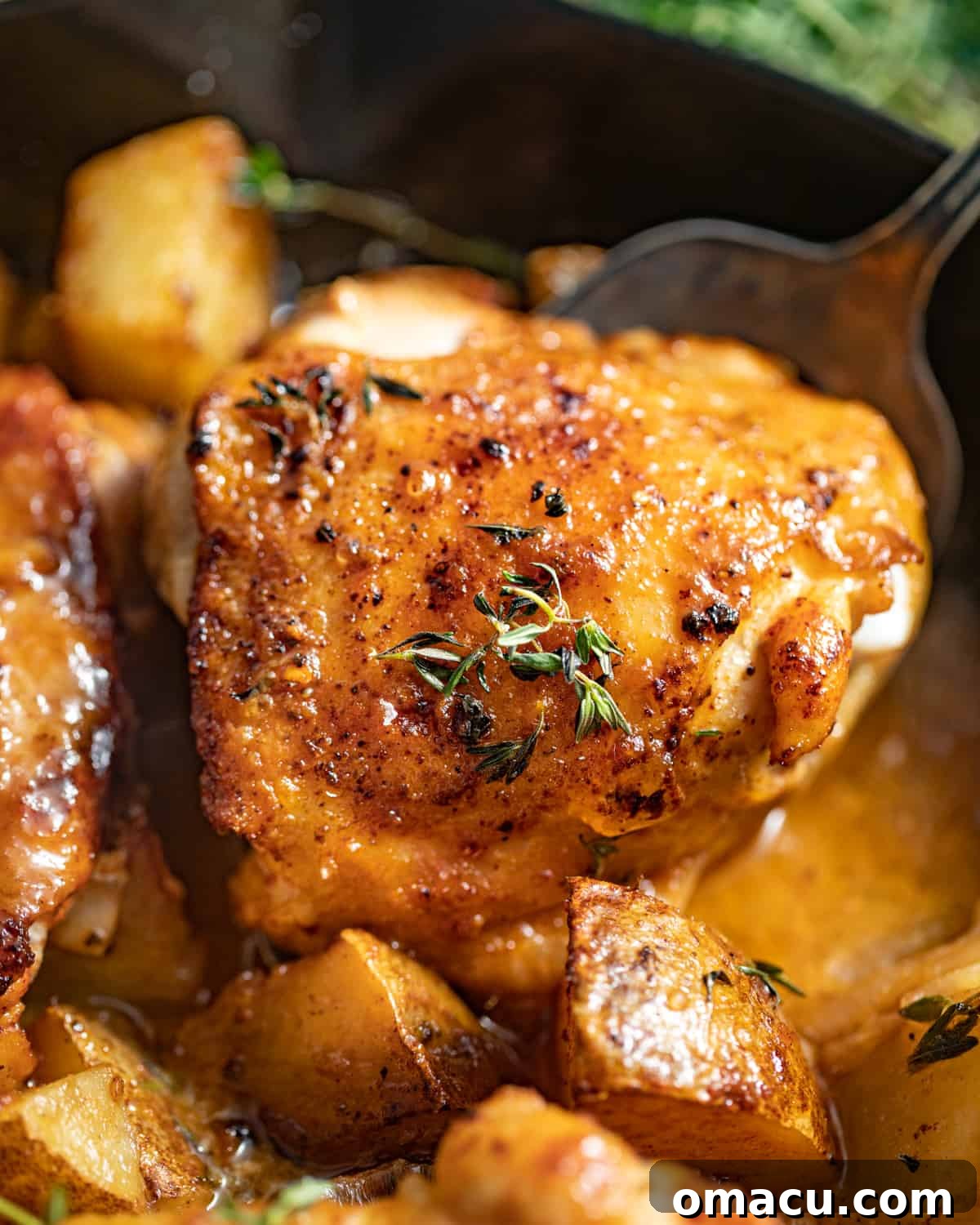
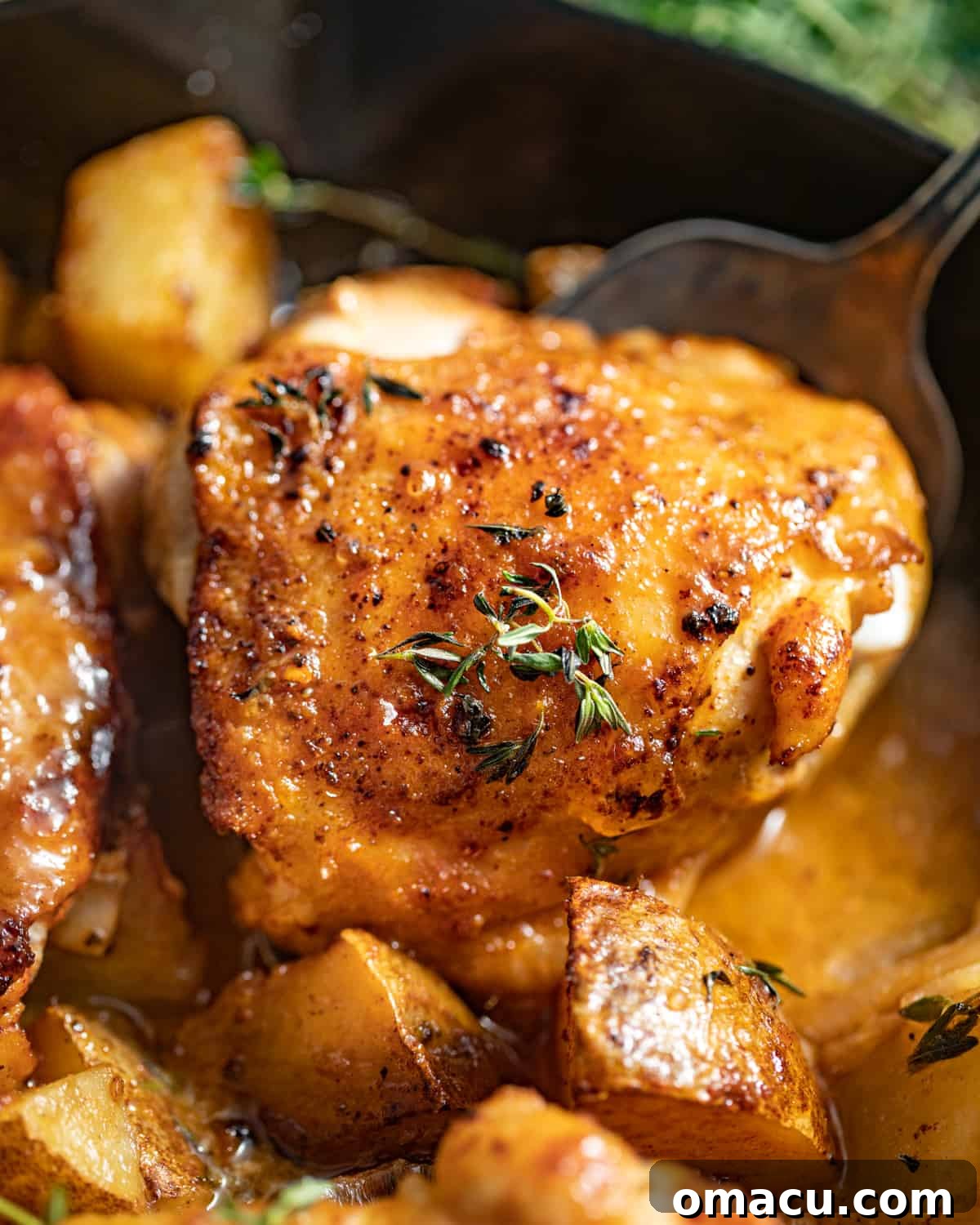
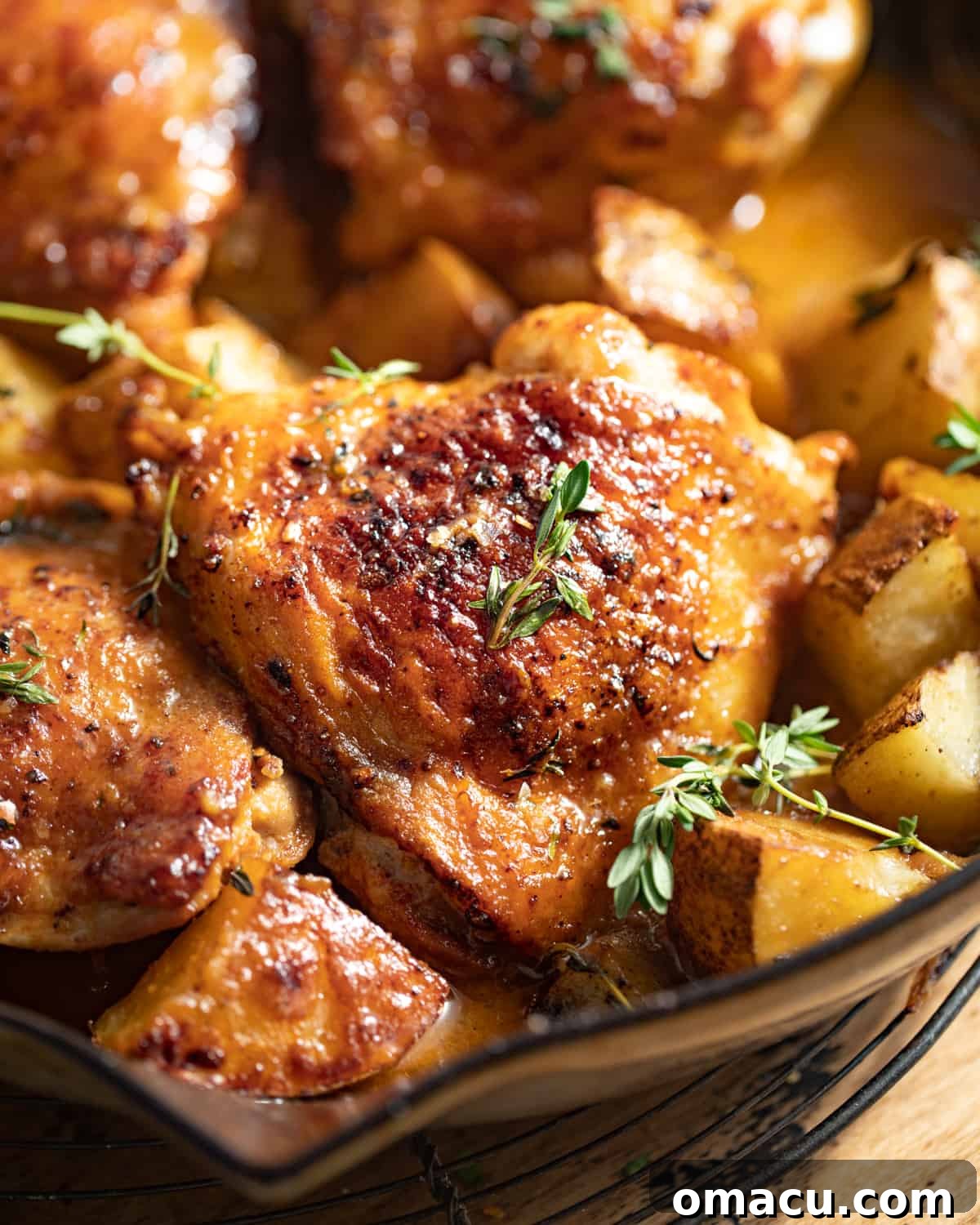
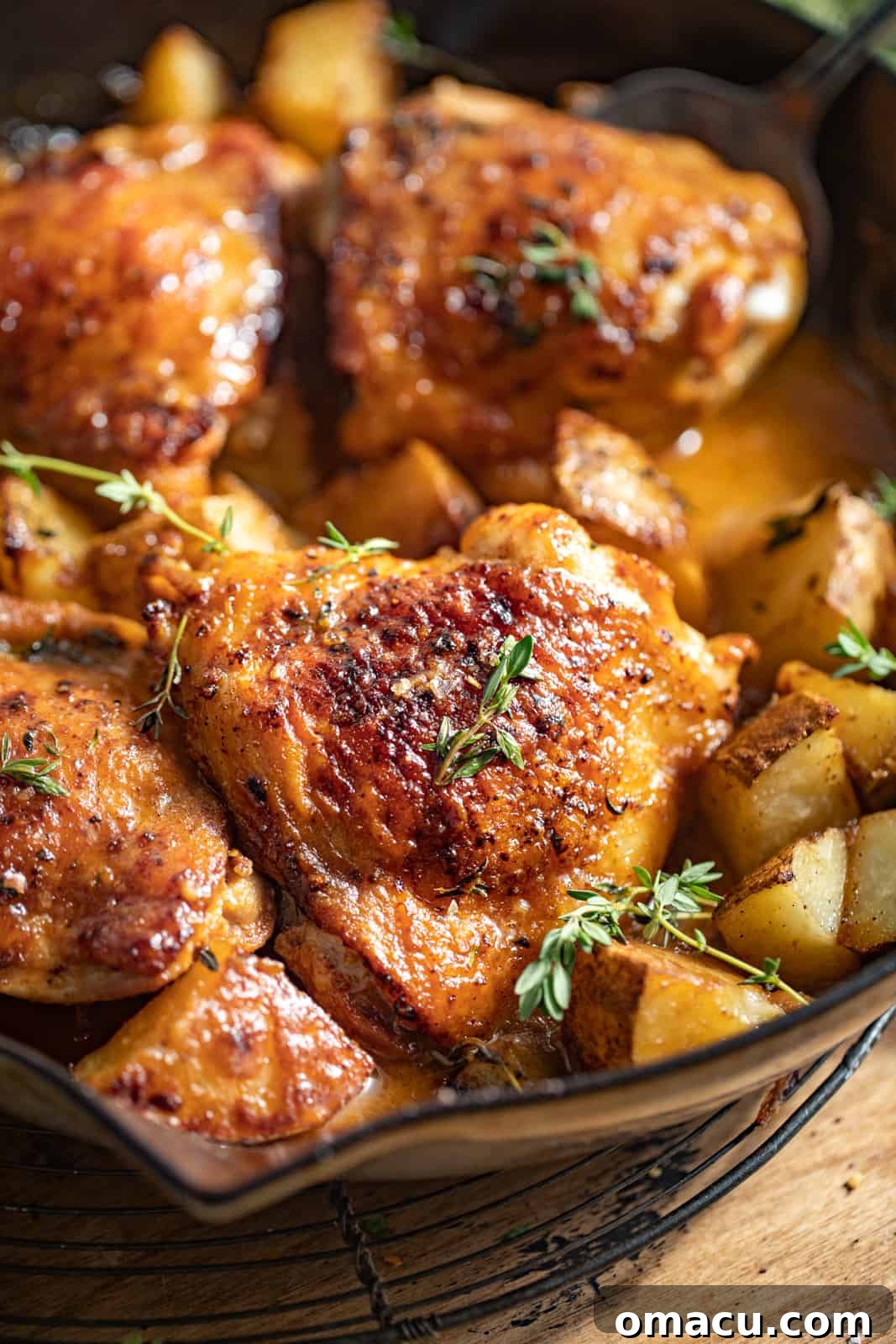
Imagine a dish that’s rich, savory, slightly sweet, and tangy, all brought together with a wonderfully creamy texture. These Maple Dijon Chicken Thighs are exactly that – an exquisite blend of flavors that will tantalize your taste buds. This recipe isn’t just about delicious chicken; it’s a complete meal featuring perfectly roasted potatoes, all cooked together in a single pan. The luxurious sauce effortlessly coats both the chicken and the potatoes, ensuring every bite is infused with its incredible taste. It’s the ideal solution for those seeking a comforting yet elegant main course with minimal cleanup.
If you’re a fan of chicken enveloped in a delectable creamy sauce, you’re in for a treat! You might also enjoy exploring other creamy chicken dishes like my Creamy Mushroom Chicken or the classic Coq au Vin Blanc. The beauty of chicken lies in its versatility; by simply varying the sauce and spices, you can transform the same core ingredient into a completely new culinary experience, each one as satisfying as the last.
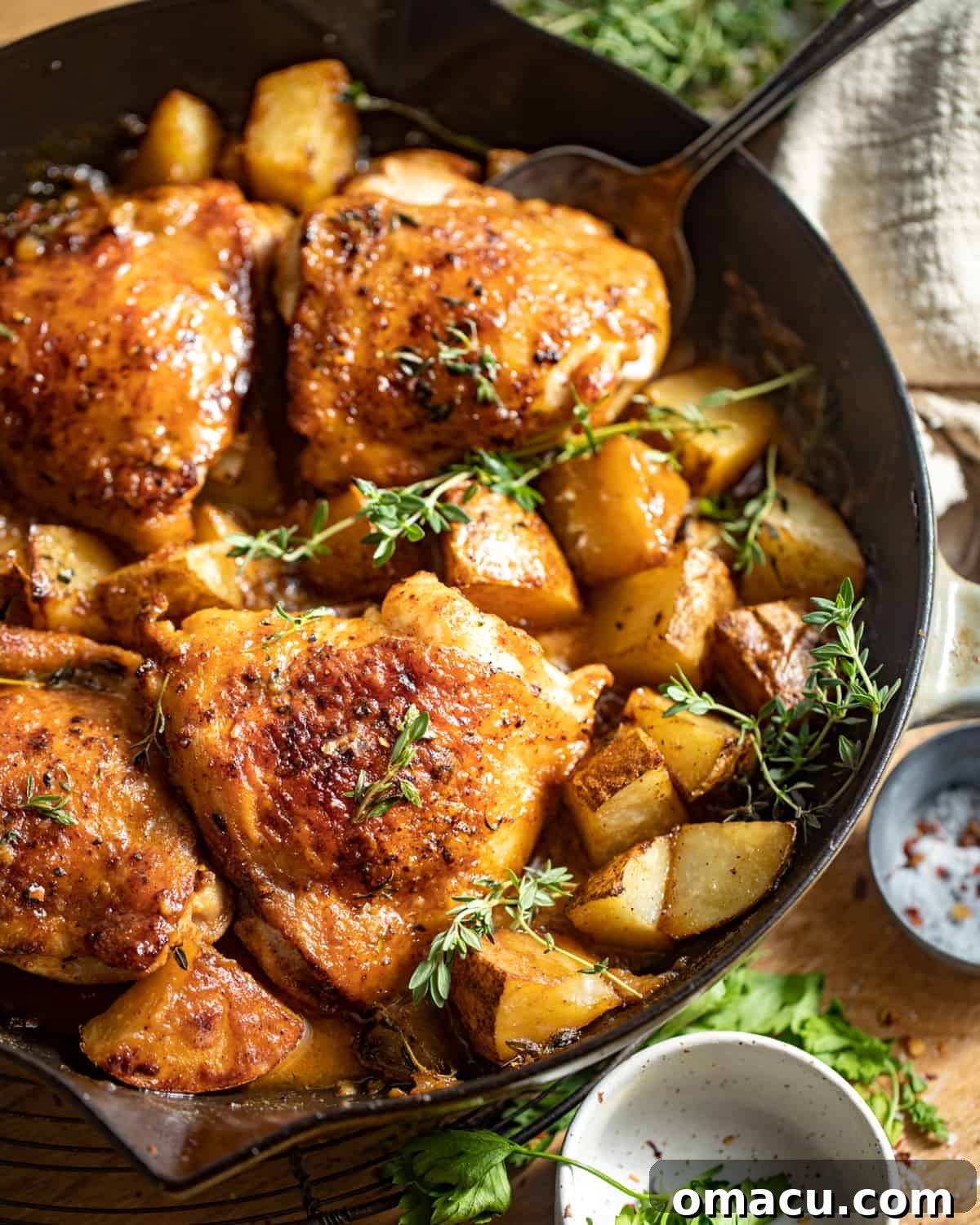
Table of Contents
- Why You’ll Love This Maple Dijon Chicken Recipe
- Essential Maple Dijon Chicken Ingredients
- Pro Tips for Perfect Maple Dijon Chicken
- Step-by-Step: How to Make Maple Dijon Chicken
- Can I Use Other Cuts of Chicken for This Recipe?
- What to Serve with Maple Dijon Chicken and Potatoes
- Storing Leftovers & Reheating Tips
- Recipe FAQs
- More Delicious Chicken Recipes to Explore
- Full Maple Dijon Chicken and Potatoes Recipe Card
Baked chicken thighs often get an unfair reputation, with many home cooks gravitating towards chicken breasts. However, the chicken thigh is a true culinary gem, celebrated for its inherent juiciness and robust flavor profile. It’s incredibly forgiving to cook, making it difficult to dry out, especially when the skin is left intact. The skin not only crisps up beautifully in the oven, adding a delightful texture contrast, but it also helps to keep the meat moist and renders flavorful fat that enriches the entire dish. This characteristic is particularly beneficial in a one-pan meal like our Maple Dijon Chicken Thighs, as it allows the potatoes ample time to cook through and become wonderfully tender without the chicken becoming overdone. The rich, savory essence of the thighs perfectly complements the sweet and tangy maple dijon sauce, creating a harmonious and deeply satisfying meal.
Why You’ll Love This Maple Dijon Chicken Recipe
This one-pan Maple Dijon Chicken with Potatoes isn’t just another dinner recipe; it’s a culinary experience designed for both flavor and convenience. Here are a few compelling reasons why this dish is sure to become a staple in your kitchen:
– Effortless One-Pan Wonder: Say goodbye to piles of dirty dishes! This entire meal, from searing the chicken to roasting the potatoes and simmering the exquisite sauce, comes together in a single skillet. The integrated cooking process not only simplifies cleanup but also allows the flavors to meld beautifully, creating a more cohesive and delicious result. When it’s time to temporarily remove ingredients, simply use your already-dirty cutting board or a plate, keeping your kitchen tidy and stress-free. It’s truly a weeknight hero, minimizing fuss without sacrificing flavor.
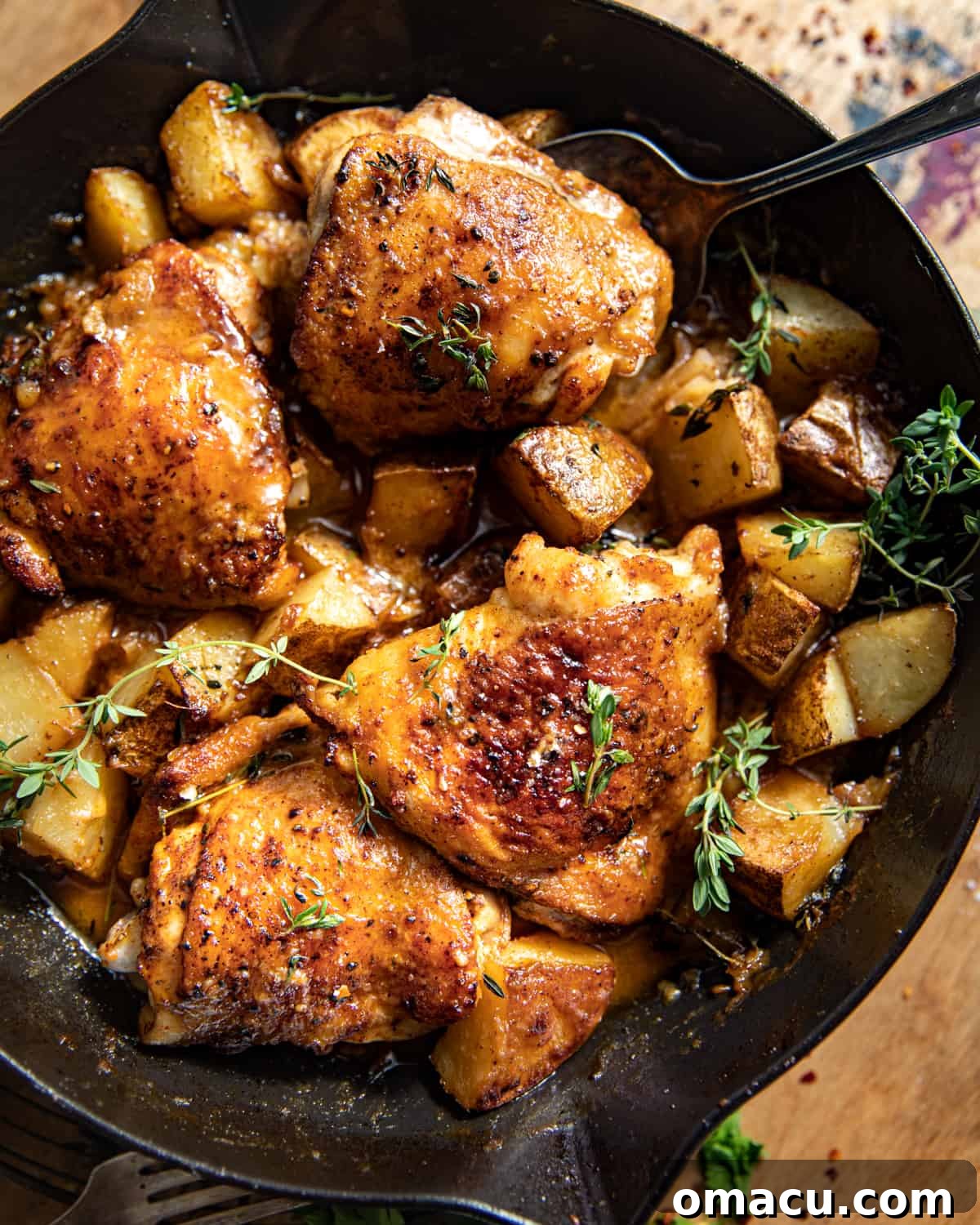
– Stunning Presentation: Elevate your dining experience with minimal effort. The beauty of cooking this dish in a cast-iron skillet (or any oven-safe pan) is that it can go straight from the oven to your table. The golden-brown chicken thighs, glistening with the creamy maple dijon sauce, alongside tender, caramelized potatoes, create a visually appealing feast. This rustic yet elegant presentation is guaranteed to impress your family and guests, making even a casual dinner feel special and memorable. It’s comfort food that looks as good as it tastes.
– Explosion of Flavor: Prepare for a truly unforgettable taste sensation. The harmonious blend of sweet maple syrup, pungent Dijon mustard, and a touch of rich heavy cream creates a sauce that is nothing short of magical. This perfectly balanced sauce generously coats every piece of juicy chicken and every tender potato, imparting layers of sweet, savory, and tangy notes. You’ll be amazed at how well these distinct flavors marry, producing a dish that is deeply satisfying, incredibly aromatic, and wonderfully creamy without being overly heavy. It’s a flavor profile that appeals to nearly everyone, making it an instant crowd-pleaser.
Essential Maple Dijon Chicken Ingredients
The success of these Maple Dijon Chicken Thighs and Potatoes lies in a thoughtful selection of fresh, high-quality ingredients. Each component plays a vital role in building the dish’s incredible flavor and texture:
For detailed quantities and comprehensive nutritional information, please refer to the complete recipe card at the bottom of this article.
Chicken Thighs: For this recipe, I highly recommend using bone-in, skin-on chicken thighs. The bone contributes to a richer flavor and helps the meat stay moist during cooking. More importantly, the skin, when seared and roasted, becomes incredibly crispy and delicious, rendering flavorful fat into the pan that forms the base for our rich sauce. Boneless, skinless thighs can also be used, but adjust cooking times accordingly to prevent drying out.
Maple Syrup: Opt for pure maple syrup, not pancake syrup, for its authentic, warm sweetness and complex flavor. It provides the perfect counterpoint to the sharp Dijon mustard and contributes to a beautiful glaze on the chicken and potatoes as the sauce reduces in the oven.
Dijon Mustard: This is the backbone of our tangy sauce. Dijon mustard offers a sophisticated, sharp, and slightly spicy kick that elevates the entire dish. Its nuanced flavor is far more refined than traditional yellow mustard, lending an upscale feel to this home-cooked meal.
Chicken Broth: A good quality chicken broth helps to thin the sauce to the ideal consistency while adding an essential layer of savory depth. It ensures the sauce coats everything beautifully without being too thick or overwhelming.
Heavy Cream: Just a small amount of heavy cream is all it takes to transform the sauce into a luscious, velvety emulsion. When combined with the rendered chicken fat and other sauce ingredients, it creates an incredibly rich and satisfying mouthfeel that coats the palate without feeling overly heavy. This touch of cream makes the sauce truly indulgent.
Fresh Thyme: Fresh herbs are paramount in this recipe, especially thyme. Its earthy, slightly peppery, and floral notes are released during cooking, infusing the sauce and the entire dish with a vibrant, aromatic freshness that simply cannot be replicated with dried alternatives. Using fresh thyme truly brings the flavors to the forefront.
Creamer Potatoes: Look for small, uniform “creamer” or “new potatoes” at your local grocery store. These varieties, such as small Yukon Golds or red potatoes, are harvested early, resulting in tender flesh and delicate skins that don’t require peeling. Their small size means they cook quickly and evenly alongside the chicken, absorbing the delicious sauce. Halving them ensures maximum surface area for caramelization and flavor absorption.
Pro Tips for Perfect Maple Dijon Chicken
Achieving culinary perfection with this Maple Dijon Chicken and Potatoes recipe is straightforward with a few expert tips:
– Evenly Dice Your Potatoes: The key to uniformly cooked potatoes is consistency. Ensure all your potato pieces are roughly the same size. This guarantees that every piece becomes perfectly tender at the same time, preventing some from being undercooked while others turn to mush. Small creamer potatoes are ideal as they often only require halving, simplifying this step.
– Embrace Fresh Aromatics: The difference fresh herbs and garlic make cannot be overstated. For this recipe, absolutely use fresh thyme and garlic. Their strong, vibrant flavors are essential for creating the robust aromatic base that defines this dish. Dried herbs and jarred garlic simply won’t deliver the same intensity and bright notes, leaving your dish lacking that extraordinary depth. Take the extra minute to chop fresh garlic and strip fresh thyme leaves – it’s truly worth it.
– Pat Chicken Thighs Dry: Before seasoning and searing, always pat your chicken thighs thoroughly dry with paper towels. Excess moisture on the skin prevents it from browning effectively and achieving that coveted crispiness. A dry surface allows for better contact with the hot pan, leading to a beautiful, golden crust and locking in the juices.
– Don’t Crowd the Pan: When searing the chicken, ensure you leave enough space between the pieces. If the pan is overcrowded, the chicken will steam rather than sear, resulting in pale, rubbery skin instead of a deep golden-brown, crispy exterior. If necessary, sear the chicken in two batches to achieve the best results.
– Deglaze for Extra Flavor: After searing the chicken and sautéing the shallots, you’ll notice delicious browned bits (fond) stuck to the bottom of your skillet. These bits are packed with flavor! When you add the chicken broth as part of your sauce, gently scrape the bottom of the pan with a wooden spoon to release these flavorful morsels. This process, called deglazing, incorporates all those caramelized flavors into your sauce, adding an incredible depth to the overall dish.
Step-by-Step: How to Make Maple Dijon Chicken
Crafting this delightful Maple Dijon Chicken and Potatoes is a straightforward process, making it accessible even for novice cooks. Follow these simple steps for a truly rewarding meal:
– Prepare Your Oven and Sauce: Begin by preheating your oven to a robust 425 degrees F (220 degrees C). This ensures it’s hot and ready when your skillet goes in. While the oven heats, whisk together your luscious maple dijon sauce. In a small bowl, combine the pure maple syrup, heavy cream, chicken broth, Dijon mustard, and fresh thyme. Whisk vigorously until the mixture is completely smooth and well-emulsified. Set this flavorful sauce aside.
– Season the Chicken Thighs: Pat your chicken thighs thoroughly dry with paper towels. This crucial step helps achieve a crispy skin. Generously season both sides of the chicken with smoked paprika, onion powder, salt, and freshly ground black pepper. Ensure an even coating to infuse the chicken with savory flavor.
– Sear for a Golden Crust: Heat a large, oven-safe skillet (preferably cast iron) over medium-high heat. Add the olive oil and allow it to shimmer. Carefully place the seasoned chicken thighs, skin-side down, into the hot skillet. Sear for 3-4 minutes per side, or until a beautiful, golden-brown crust forms. This searing step adds tremendous flavor and texture to the chicken.
– Sauté Aromatics and Potatoes: Remove the seared chicken from the skillet and set it aside on a plate or your cutting board. In the same skillet, add the sliced shallots and sauté for 3-4 minutes, stirring occasionally, until they become softened and fragrant. Next, add the halved creamer potatoes to the skillet, stirring to coat them in the residual chicken fat and shallot aromatics. Cook the potatoes for 5-7 minutes, allowing them to brown slightly and begin to soften. Finally, add the minced garlic and cook for just another two minutes, stirring constantly, until it becomes fragrant. Be careful not to burn the garlic.
– Combine and Bake: Return the seared chicken thighs to the skillet, nestling them among the potatoes. Pour the prepared maple dijon sauce evenly over the chicken and potatoes. Transfer the entire skillet to the preheated oven and bake for 20-25 minutes. The chicken is done when it reaches an internal temperature of 165°F (74°C) as measured with a meat thermometer, and the potatoes are fork-tender and slightly caramelized. The sauce will thicken beautifully during baking.
Can I Use Other Cuts of Chicken for This Recipe?
While chicken thighs are highly recommended for this particular Maple Dijon Chicken and Potatoes recipe due to their flavor and forgiving nature, you do have some flexibility, though with considerations:
Bone-in, Skin-on Chicken Thighs: These are absolutely ideal and will yield the best results. The bone adds flavor and moisture, and the skin crisps up beautifully, enriching the sauce.
Boneless, Skinless Chicken Thighs: These will work well too, offering a quicker cooking time. However, be mindful that without the bone and skin, they might not offer the same depth of flavor or crisp texture. You may need to reduce the baking time slightly to prevent them from drying out.
Bone-in Chicken Breasts: If you prefer chicken breast, bone-in options are a better choice than boneless for this recipe. The bone helps them cook more evenly and retain moisture, similar to thighs, and they can withstand the longer cooking time required for the potatoes. However, chicken breasts are leaner than thighs, so they still carry a higher risk of drying out. Keep a close eye on their internal temperature.
Boneless, Skinless Chicken Breasts: I strongly advise against using boneless, skinless chicken breasts for this particular preparation. They cook significantly faster than chicken thighs or bone-in breasts, meaning they would likely be overcooked and dry long before the potatoes have a chance to become tender. This would result in an imbalanced dish with tough chicken and possibly still crunchy potatoes. If you must use them, consider cutting them into thicker medallions or adding them later in the cooking process, but the overall harmony of the dish might be compromised.
Your Best Friend: A Meat Thermometer! No matter which cut of chicken you choose, an instant-read meat thermometer is your absolute best tool. It removes all guesswork and ensures your chicken is perfectly cooked to the safe internal temperature without being overdone. This guarantees juicy, tender results every time.
What to Serve with Maple Dijon Chicken and Potatoes
Since this Maple Dijon Chicken and Potatoes recipe thoughtfully includes a hearty main and a satisfying side all in one pan, your accompanying dishes can be kept wonderfully simple. The rich flavors of the chicken and the tender potatoes provide a robust foundation, meaning you primarily just need to round out the meal with a fresh vegetable or a light complement.
We’ve already covered the starch component with our delicious potatoes, so focusing on adding some greens or other colorful vegetables is ideal. Here are some fantastic pairing suggestions:
- Roasted Green Beans: Quick and easy, frozen roasted green beans are a perfect choice. Toss them with a little olive oil, salt, and pepper, and roast them in a separate pan (or even alongside the chicken if your oven is large enough) until tender-crisp. Their fresh, slightly bitter notes cut through the richness of the chicken and sauce beautifully.
- Simple Side Salad: A crisp, refreshing side salad with a light vinaigrette is always a welcome addition. Think mixed greens, cherry tomatoes, cucumber, and a simple lemon-herb dressing. It adds a lovely textural contrast and a burst of freshness.
- Honey Glazed Roasted Carrots: For another touch of sweetness and vibrant color, honey glazed roasted carrots make an excellent accompaniment. Their inherent sweetness and soft texture complement the maple notes in the chicken sauce.
- Steamed Asparagus: Lightly steamed or quickly sautéed asparagus spears are another elegant and healthy option. Their subtle flavor and tender-crisp texture make them an ideal partner for the creamy chicken.
- Crusty Bread: Don’t forget the crusty bread! A warm, crusty baguette or artisanal loaf is absolutely perfect for soaking up every last drop of that incredible creamy maple dijon sauce from your plate. It’s a simple pleasure that enhances the entire meal.
Any of these additions will complete your meal, providing balance and freshness without overshadowing the star of the show.
Storing Leftovers & Reheating Tips
While this Maple Dijon Chicken and Potatoes dish is undeniably at its best when served fresh, hot, and straight from the oven, it can certainly be enjoyed as leftovers. The textures, particularly the crispy chicken skin, are most delightful immediately after cooking. This recipe is designed to be a perfect portion for two individuals with hearty appetites, or a small family of four with younger children, often leaving just enough for a light lunch the next day.
Should you find yourself with any delicious leftovers, proper storage is key to maintaining their quality. Transfer any cooled chicken and potatoes, along with the remaining sauce, into an airtight container. Store it promptly in the refrigerator, where it will keep well for up to three days. Beyond this, the quality and safety may diminish.
When it comes to reheating, you can opt for a few methods to try and revive some of that initial magic:
- Skillet Reheating (Recommended): For the best results, especially for the chicken, gently reheat in a skillet on the stovetop over medium-low heat. You might find it beneficial to cut the chicken into pieces similar in size to the potatoes before reheating, ensuring more even warmth. Add a splash of chicken broth or water to loosen the sauce if it has thickened too much in the fridge. Cover and heat until warmed through, stirring the potatoes occasionally. This method helps to prevent the chicken from drying out and can even bring back a little crispness to the skin if done carefully.
- Oven Reheating: You can also reheat the entire dish in the oven. Preheat your oven to around 300°F (150°C). Place the leftovers in an oven-safe dish, cover loosely with foil to prevent drying, and heat for 15-25 minutes, or until thoroughly warmed through. Remove the foil for the last few minutes if you want to try and crisp up the chicken skin slightly.
- Microwave Reheating: While the quickest option, microwaving is generally the least recommended for preserving texture, especially for the chicken skin. The chicken can become rubbery, and the potatoes might lose their firmness. If you opt for this, reheat in short bursts, stirring occasionally, until heated through.
No matter the reheating method, ensure your leftovers are piping hot before serving to ensure food safety.
Recipe FAQs
If creamer potatoes aren’t available, look for “new potatoes” or any small, firm potato variety. Excellent alternatives include small Yukon Gold or red potatoes, which have tender skins that don’t require peeling. Fingerling potatoes are also a fantastic option due to their thin skin and creamy texture; some might not even need slicing depending on their size. The most important factor is to ensure your chosen potatoes are cut into even-sized pieces to guarantee uniform cooking. This way, every potato piece will be perfectly tender when the chicken is ready.
The definitive way to ensure your chicken is fully cooked and safe is to use an instant-read meat thermometer. The magic number for poultry is 165°F (74°C). Insert the thermometer into the thickest part of the chicken thigh, being careful not to touch the bone, as bones can give a misleadingly high reading. Also, avoid pushing the thermometer all the way through to the pan, which can also affect the accuracy. Once it registers 165°F, your chicken is perfectly cooked, juicy, and safe to enjoy.
Yes, absolutely! Preparing the maple dijon sauce in advance is a great way to save time on a busy weeknight. Simply combine all the sauce ingredients (maple syrup, heavy cream, chicken broth, Dijon mustard, and fresh thyme) in a small bowl, whisk until smooth, and store it in an airtight container in the refrigerator for up to 2-3 days. When you’re ready to cook, just give it a quick whisk before pouring it over the chicken and potatoes.
While fresh thyme is highly recommended for its vibrant, aromatic flavor, you can substitute with dried thyme if necessary. As a general rule, use one-third the amount of dried herbs compared to fresh. So, if the recipe calls for 1 tablespoon of fresh thyme, use 1 teaspoon of dried thyme. Keep in mind that the flavor profile will be slightly different, as dried herbs tend to have a more concentrated, earthy taste rather than the bright notes of fresh.
More Delicious Chicken Recipes to Explore
Discover More Chicken Delights
If you loved this Maple Dijon Chicken, you’re in for a treat! Explore more versatile and flavorful chicken recipes perfect for any occasion, from family dinners to weekend feasts.
Main Course
Baked BBQ Chicken Thighs
Main Course
Buttermilk Fried Chicken
Main Course
Smoked Chicken Thighs
Main Course
Rosemary Apple Cider Chicken
Want more delicious and beautiful recipes delivered straight to your inbox? Subscribe to my newsletter to receive the latest seasonal creations as soon as they’re released and never miss a delightful dish!
If you’ve had the pleasure of making this Maple Dijon Chicken and Potatoes recipe, please consider leaving a star rating on the recipe card below and sharing your thoughts in the comments section! Your feedback is invaluable. You can also share your beautiful culinary creations by tagging @BritneyBreaksBread on Instagram and using the hashtag #britneybreaksbread. I love seeing your inspired dishes and celebrating your kitchen successes!
Maple Dijon Chicken and Potatoes
Britney
10 minutes
35 minutes
45 minutes
4
servings

Ingredients
Sauce
-
2 tablespoons
Maple syrup -
2 tablespoons
heavy cream -
3 tablespoons
chicken broth -
1/3 cup
Dijon mustard -
1 tablespoon
fresh Thyme
Chicken
-
1 tablespoon
Olive oil -
4
chicken thighs -
2 teaspoons
Smoked paprika -
1 teaspoon
onion powder -
Salt and pepper, to taste
Potatoes
-
2
Shallots, sliced -
1/2 lb
creamer Potatoes, halved -
2 cloves
Garlic
Instructions
-
Preheat oven to 425 degrees F (220 C). Make the maple dijon sauce: Combine maple syrup, heavy cream, chicken broth, dijon mustard, and fresh thyme in a small bowl. Whisk together until smooth and well-combined. Set aside.
-
Pat chicken thighs dry with paper towels and season generously with smoked paprika, onion powder, salt, and pepper on both sides.
-
Add olive oil to a large, oven-safe skillet (like cast iron) over medium-high heat. Sear chicken on both sides until golden brown and crispy, about 3-4 minutes per side. Remove chicken from the skillet and set aside.
-
To the same skillet, add sliced shallots and sauté for 3-4 minutes, stirring occasionally, until softened and fragrant. Add the halved creamer potatoes and cook for 5-7 minutes, stirring, until lightly browned and slightly softened. Finally, add the minced garlic and cook for another two minutes, until fragrant.
-
Place the seared chicken thighs back into the pan, nestling them among the potatoes. Pour the prepared maple dijon sauce evenly over the chicken and potatoes. Bake in the preheated oven for 20-25 minutes, or until the chicken is fully cooked (internal temperature reaches 165°F/74°C) and the potatoes are fork-tender.
Nutrition
Carbohydrates: 22g,
Protein: 25g,
Fat: 25g,
Saturated Fat: 7g,
Polyunsaturated Fat: 5g,
Monounsaturated Fat: 11g,
Trans Fat: 0.1g,
Cholesterol: 95mg,
Sodium: 360mg,
Potassium: 606mg,
Fiber: 3g,
Sugar: 8g,
Vitamin A: 865IU,
Vitamin C: 18mg,
Calcium: 68mg,
Iron: 3mg
Nutrition information is automatically calculated, so should only be used as an approximation.
Tried this recipe?
Mention @BritneyBreaksBread or tag #BritneyBreaksBread!