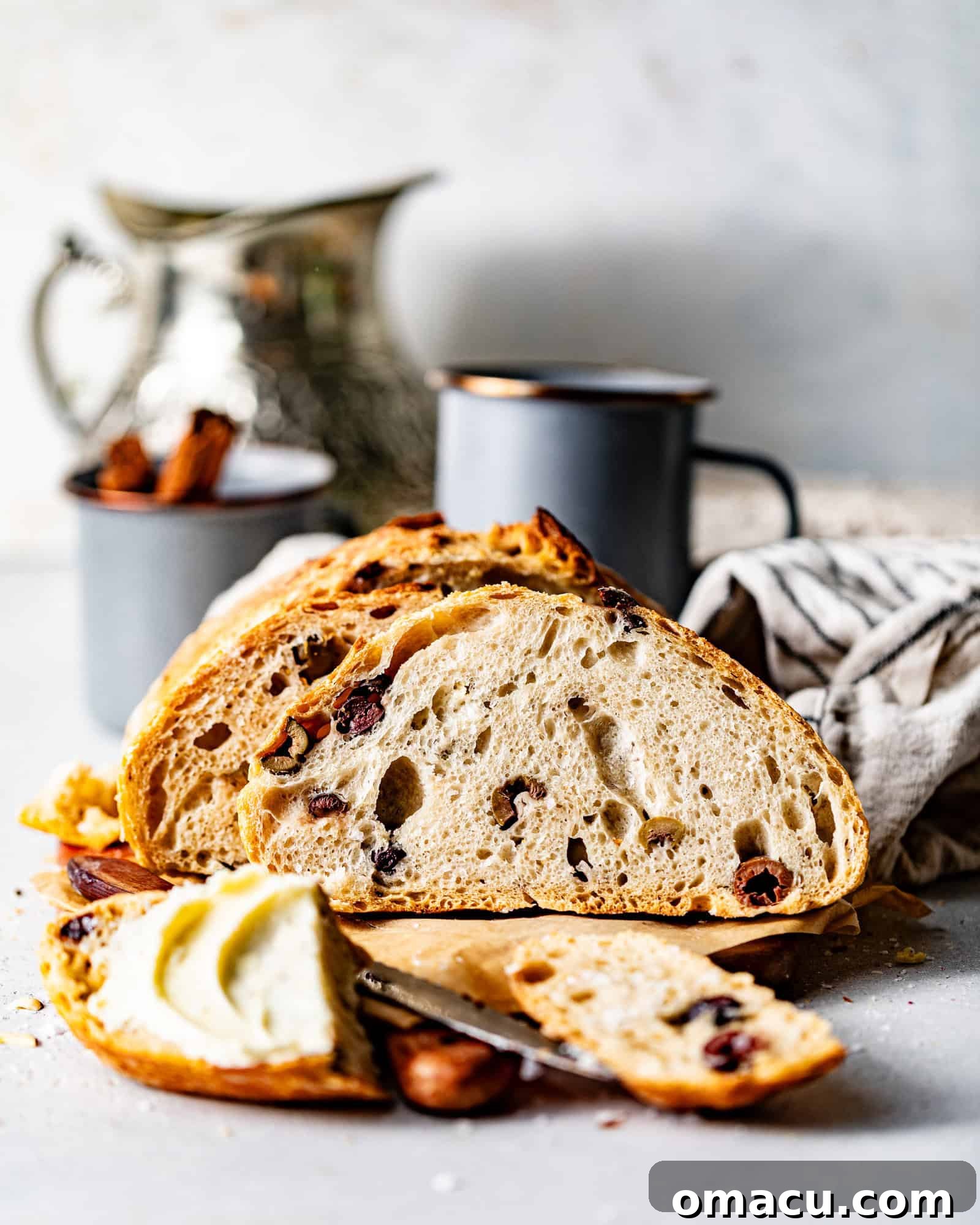
Discover the joy of baking with this incredibly simple No-Knead Rosemary Olive Bread recipe. Forget complicated techniques and endless kneading; this recipe lets the yeast do all the hard work, ensuring a perfect loaf every time. Featuring the rich, briny flavors of black olives and the aromatic freshness of rosemary, this homemade olive bread boasts an irresistibly crispy crust and a wonderfully tender, open crumb. It’s truly the best no-knead olive bread recipe you’ll ever make, guaranteed to impress with minimal effort. Let’s bake a delicious, artisan-quality loaf!
For more delightful bread creations, explore my Focaccia Bread Pizza and my No-Knead Cinnamon Raisin Sourdough Bread!
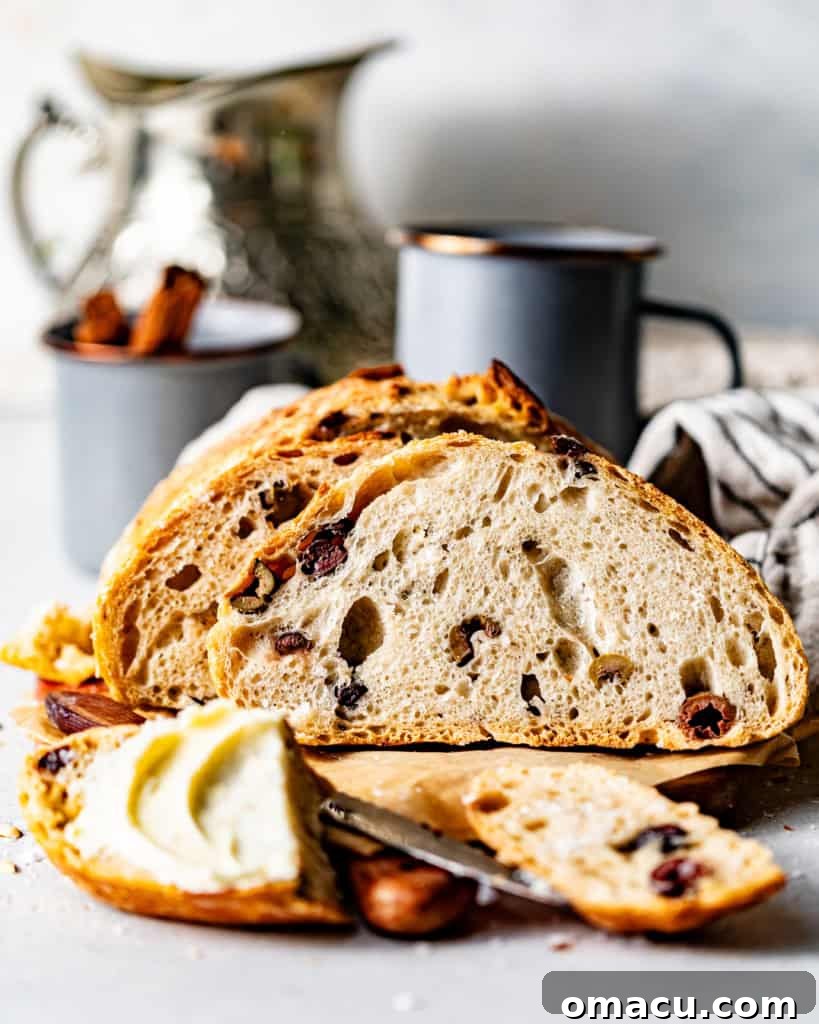
A Personal Journey to Healthier Homemade Bread
My journey into homemade bread baking began unexpectedly, sparked by a realization about the ingredients in our daily food. After my toddler had a stomach bug over the weekend, my husband picked up some bread from the grocery store for toast. Reading the ingredients list was a real eye-opener – I was shocked by the long list of preservatives, artificial colors, and unpronounceable additives. It made me determined to provide my family with healthier, more wholesome options, free from unnecessary “stuff.” That very day, I decided to take bread-making into my own hands, starting with a simple, yet incredibly rewarding, no-knead bread.
If you follow me on Instagram, you might have seen me making this flavorful olive loaf from scratch on my stories yesterday. It was so much fun and incredibly satisfying, I knew I had to share the recipe! I’ve become a huge fan of making no-knead bread in my house all the time now. It’s truly far better than any store-bought alternative, and with a little butter, it’s an absolute game-changer. You simply can’t go wrong with the fresh taste and wholesome goodness of homemade bread.
Why You’ll Love This Easy No-Knead Olive Bread Recipe!
- Effortlessly Beginner-Friendly: This **easy olive bread recipe** requires no complex techniques or specialized skills. If you can stir ingredients in a bowl, you can make this bread. It’s the perfect entry point for anyone new to baking, offering professional-tasting results without the fuss.
- No Stand Mixer Needed: Save yourself the hassle of hauling out heavy kitchen appliances. All you need is a large bowl and your hands (or a sturdy wooden spoon!) to mix the dough. This truly is a hands-off approach to **artisan-style bread**, simplifying your baking experience.
- Bursting with Authentic Flavor: The combination of savory Kalamata olives, fragrant fresh rosemary, and a hint of garlic powder creates an incredibly rich and complex flavor profile. This elevates a simple loaf far beyond any store-bought alternative, making every bite a delight.
- Minimal Ingredients, Maximum Impact: With just eight simple, wholesome ingredients, you’ll create a loaf that tastes gourmet. No obscure items, just pantry staples and fresh additions that pack a powerful punch in both taste and aroma.
- Dietary Friendly & Wholesome: This recipe is naturally egg-free and dairy-free, making it suitable for various dietary needs. Moreover, by baking at home, you control exactly what goes into your family’s food, avoiding unwanted preservatives and artificial additives often found in commercial breads. It’s a healthier, more transparent choice for delicious homemade goodness.
- Impressive & Rewarding: There’s nothing quite like the aroma of freshly baked bread filling your home. This **rustic olive bread** looks as impressive as it tastes, making it perfect for entertaining or simply enjoying a special meal with your loved ones. The satisfaction of pulling a golden, crusty loaf from your oven is truly unparalleled.
Key Ingredients and Essential Equipment for Your Olive Bread
The Ingredients:
Bread Flour: Essential for achieving that desirable chewy texture and robust structure without kneading. Its higher protein content (compared to all-purpose flour) is crucial for developing strong gluten networks during the long fermentation process. While all-purpose flour can work, bread flour guarantees superior results for this **rustic bread**, providing better rise and chew.
Active Dry Yeast: Our magical leavening agent. Active dry yeast is ideal for **no-knead recipes** because it thrives in longer proofing times, allowing the dough to develop complex flavors. If using instant yeast, you might find the rise time is shorter, so keep an eye on your dough – it may double in size in as little as 1.5 hours. Always ensure your yeast is fresh and active for the best results.
Kalamata Olives: These briny, slightly sweet olives are a game-changer! Their robust flavor perfectly complements the rosemary and adds wonderful pockets of savory goodness throughout the loaf. Feel free to experiment with your favorite olives – black olives offer a milder sweetness, while green olives provide a sharper, more piquant note. The key is their briny goodness, which adds moisture and a burst of flavor to every bite.
Fresh Rosemary: A non-negotiable for this **rosemary olive bread**. Its herbaceous, piney aroma and flavor transform a simple bread into something truly special. Finely chop it to distribute its essence evenly throughout the loaf. The fresh herbs are vital for the authentic Mediterranean taste.
Kosher Salt: Not just for seasoning, salt plays a vital role in controlling yeast activity, strengthening the gluten structure, and enhancing the overall flavor and crust development. Don’t skip it!
Honey: A touch of honey provides just enough sugar to kickstart the yeast activity, contributing to a beautiful golden-brown crust and a subtle sweetness that perfectly balances the savory olives.
Warm Water: The ideal temperature (105-110°F or 40-43°C) is crucial for activating the yeast. Water that’s too cold won’t activate it, and water that’s too hot will kill it, preventing your bread from rising. Use a kitchen thermometer for accuracy.
Equipment Needed:
- 5 or 7 Quart Dutch Oven: The secret to that perfectly crispy crust! A heavy-duty **Dutch oven** traps steam during the initial baking phase, mimicking a professional bakery oven. This steam prevents the crust from hardening too quickly, allowing the bread to expand fully before developing a magnificent, crackly exterior.
- Large Mixing Bowl: For combining all your ingredients. A generously sized bowl ensures you have ample space to mix and for the dough to rise comfortably overnight, allowing for proper air circulation.
- Bread Lame or Sharp Knife: For scoring the dough. Scoring isn’t just for aesthetics; it helps control where the bread expands in the oven, preventing uncontrolled tearing and ensuring a beautiful, even rise. A very sharp knife or even kitchen shears can work in a pinch for creating those perfect slits.
- Parchment Paper: Makes transferring the delicate dough to the hot Dutch oven incredibly easy and mess-free. It prevents sticking and aids in lifting the dough safely.
- Plastic Wrap or Clean Kitchen Towel: Essential for covering your dough during its resting and rising periods to prevent it from drying out and forming a crust too soon.
- Kitchen Scale (Optional but Recommended): While cup measurements are provided, for consistently perfect results, especially in bread baking, measuring ingredients in grams using a kitchen scale is highly recommended. It eliminates variables from packing flour differently and ensures accuracy.
Pro Bread Baking Tips for a Perfect Loaf
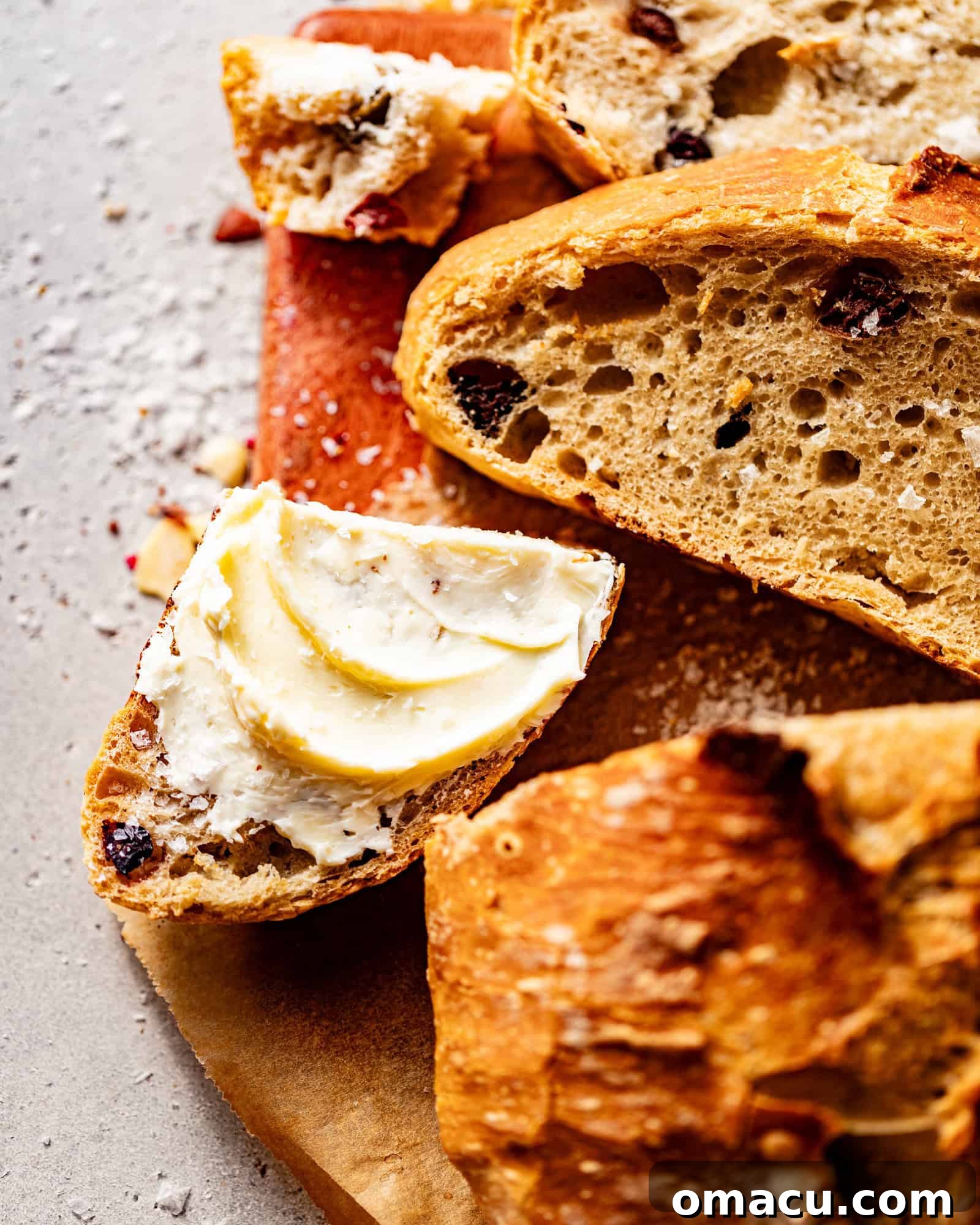
- For the Perfect Crispy Crust: The Dutch oven is your best friend here. Ensure its lid fits snugly to trap as much steam as possible during the initial baking phase. This moist environment allows the bread to rise optimally before developing its signature golden, crispy crust when the lid is removed. If steam escapes, your crust might be softer, which can still be delicious but not quite the artisan texture we’re aiming for. Always preheat your Dutch oven thoroughly.
- Precision with a Kitchen Scale: While cup measurements are provided in the recipe card, for consistently perfect results in any baking project, especially bread, using a kitchen scale to measure ingredients in grams is highly recommended. The metric measurements provided eliminate variables caused by different packing methods for flour and ensures accuracy, leading to a more reliable outcome every time.
- Always Test Your Yeast: Before you begin, always ensure your active dry yeast is still viable. Combine it with warm water and a touch of honey; if it becomes foamy, frothy, and bubbly within 5-10 minutes, it’s alive and ready to work its magic. If it doesn’t get frothy, it’s time for a fresh pack from the grocery store, as inactive yeast will result in a dense, unrisen loaf.
- Don’t Rush the Rise: The long, slow fermentation (10-12 hours, or even up to 18 hours in cooler environments) is fundamental to **no-knead bread**. This extended period allows for deep flavor development and a wonderfully open crumb structure. Patience is truly a virtue in this recipe, yielding complex flavors that rushed bread cannot achieve.
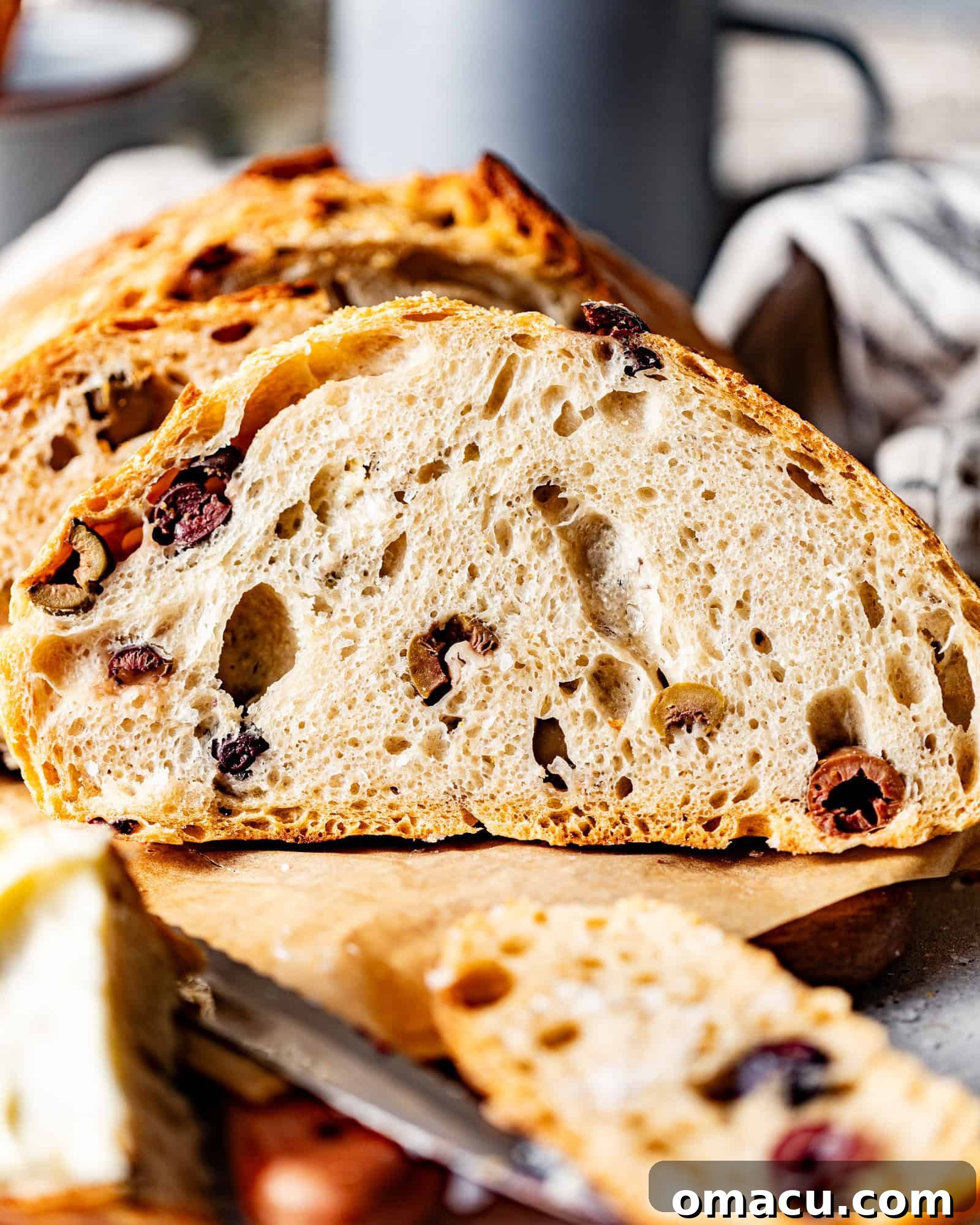
- Proper Cooling is Crucial: It’s incredibly tempting to slice into a warm loaf straight out of the oven, but resist the urge! Allowing the bread to cool completely on a wire rack for at least 1 hour (or even two) allows the internal structure to set, preventing a gummy texture. This waiting period is essential for achieving that perfect, airy crumb and sliceable texture.
- Understanding Scoring: Scoring the dough (making slits on the surface) is more than just decorative. It helps control where the bread expands during its final oven spring, allowing for an even rise and preventing uncontrolled cracks. Experiment with different patterns for a unique artisan look.
How to Make the Best No-Knead Rosemary Olive Bread
- Activate the Yeast: In a large mixing bowl, combine the warm water (ensure its temperature is about 105-110 degrees F / 40-43 degrees C – use a thermometer for accuracy!), a teaspoon of honey, and the active dry yeast. Gently whisk these ingredients together until combined. Allow the mixture to sit undisturbed for about 5-10 minutes until it becomes beautifully foamy and bubbly. This indicates your yeast is active and thriving, ready to work its magic.
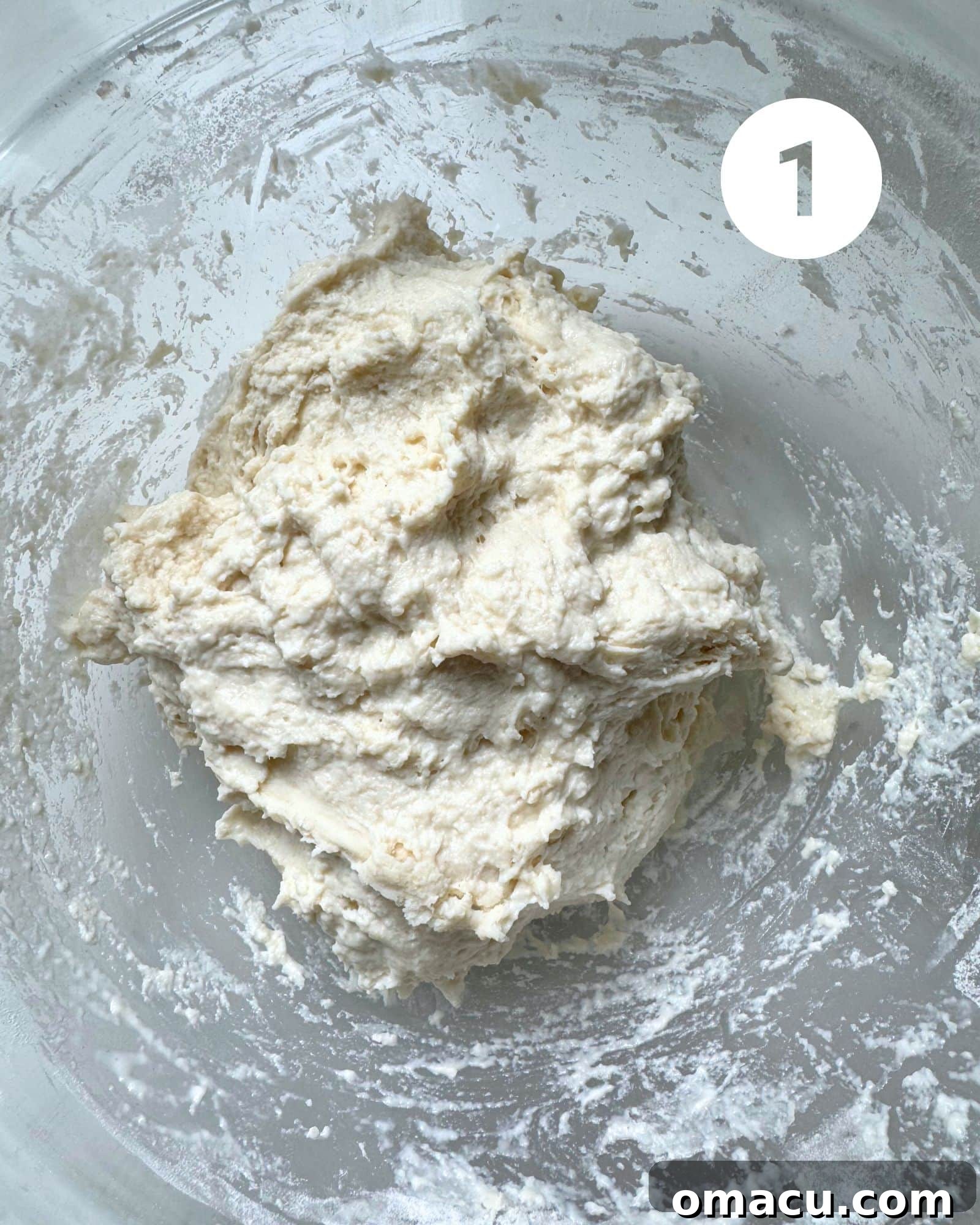
- Form the Shaggy Dough: Add the measured bread flour to the activated yeast mixture. Using your hands or a danish dough whisk, gently mix everything together until a rough, shaggy dough forms. It doesn’t need to be smooth or fully developed at this stage; just ensure all the flour is hydrated. Cover the bowl with a clean kitchen towel and let the dough rest at room temperature for 1 hour. This initial rest allows the flour to fully absorb the liquid, starting the gluten development process.
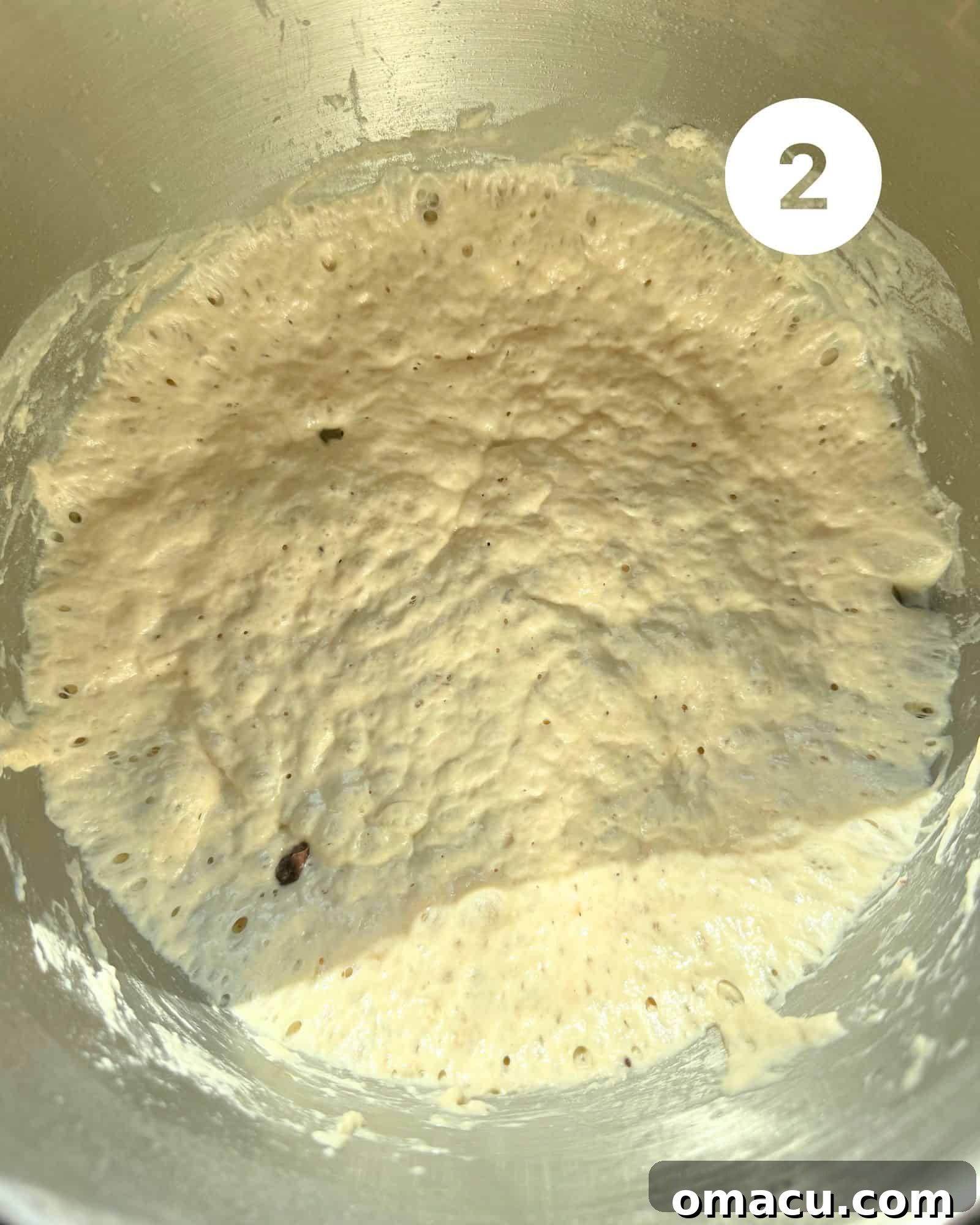
- Incorporate Flavors & Long Fermentation: After the initial rest, sprinkle the garlic powder, chopped olives, kosher salt, and chopped rosemary evenly on top of the dough. Using your hands or a sturdy wooden spoon, gently press and mix these flavorful additions into the dough until they are fully incorporated. The goal is to distribute them throughout the dough without overworking it. Cover the bowl tightly with plastic wrap (or an airtight lid) to prevent the dough from drying out, and let it rise on your kitchen counter for an extended period of 10-12 hours. This long, slow fermentation is where the magic happens, developing incredible flavor and texture.
- Prepare for Shaping (Morning After): The next morning, your dough should look significantly risen and very bubbly, full of air pockets (refer to Image 2 above). Gently transfer the dough from the bowl onto a lightly floured surface. Now, we’ll perform a simple “stretch and fold” technique to build tension and shape the loaf: simply grab one edge of the dough, gently stretch it upward until a flap forms – about 6-inches long. Place that flap across the other side of the dough to create a bit of an “envelope.” Rotate the dough a quarter turn and repeat this process four times. This helps to create a taut surface and a rounder loaf, known as a boule. (Refer to Image 3 below for the shaped loaf).
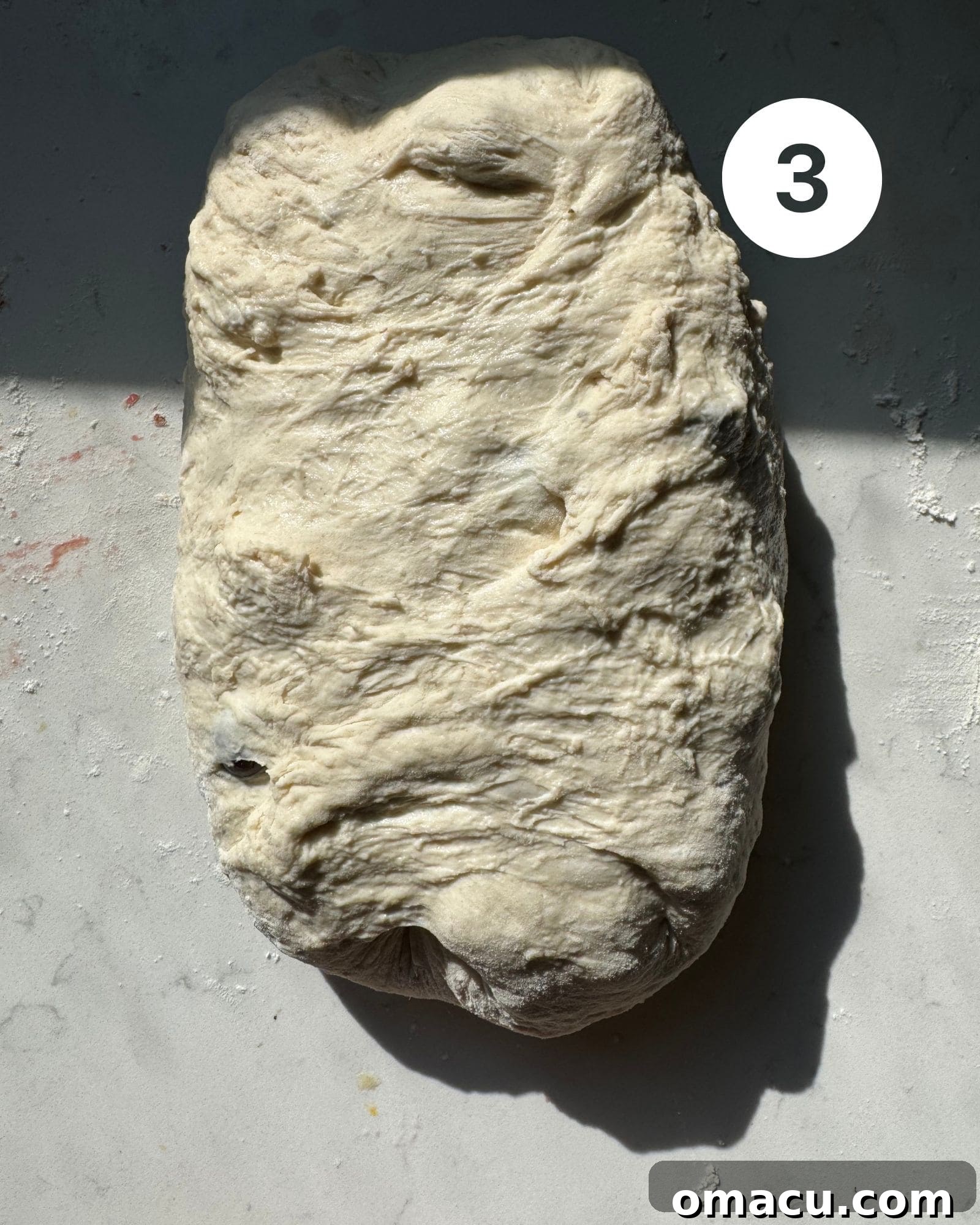
- Preheat Oven & Dutch Oven: Place the shaped loaf, seam-side down, onto a piece of parchment paper. Preheat your oven to a blazing 450 degrees F (230°C). Crucially, place your empty 5 or 7-quart cast iron Dutch oven with its lid into the preheating oven for a full 30 minutes. This ensures the Dutch oven is scorching hot, which is key for creating that initial burst of steam and a superb, crispy crust on your bread.
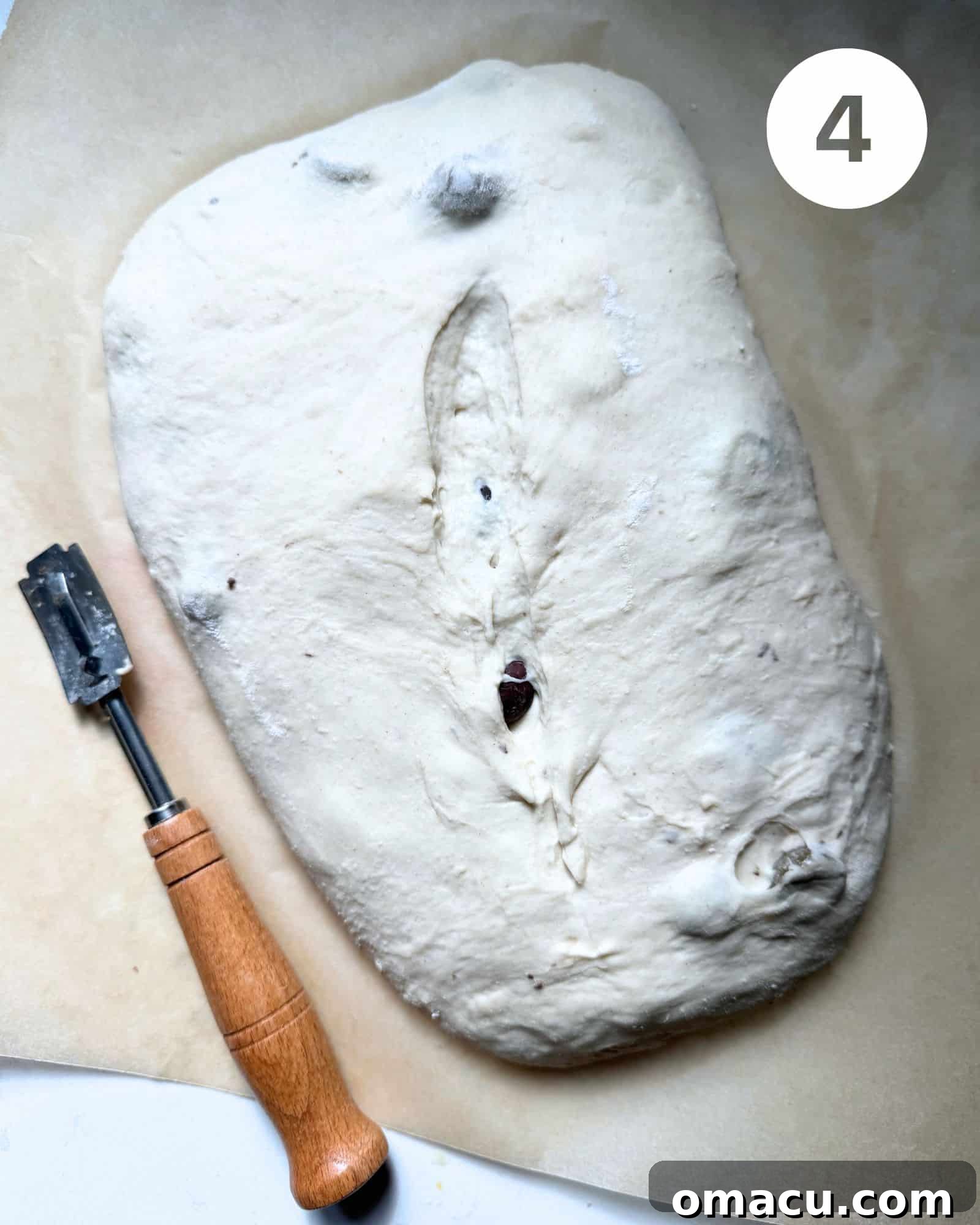
- Score & Initial Bake (Lid On): Carefully remove the scorching hot Dutch oven from the oven (use thick oven mitts!). Using a bread lame or a very sharp knife, make about 3 two-inch slits down the center of your loaf (refer to Image 4 below). These scores allow the bread to expand predictably in the oven. Gently lift the parchment paper with the dough and carefully lower it into the preheated Dutch oven. Cover with the lid. (Refer to Image 5 below).
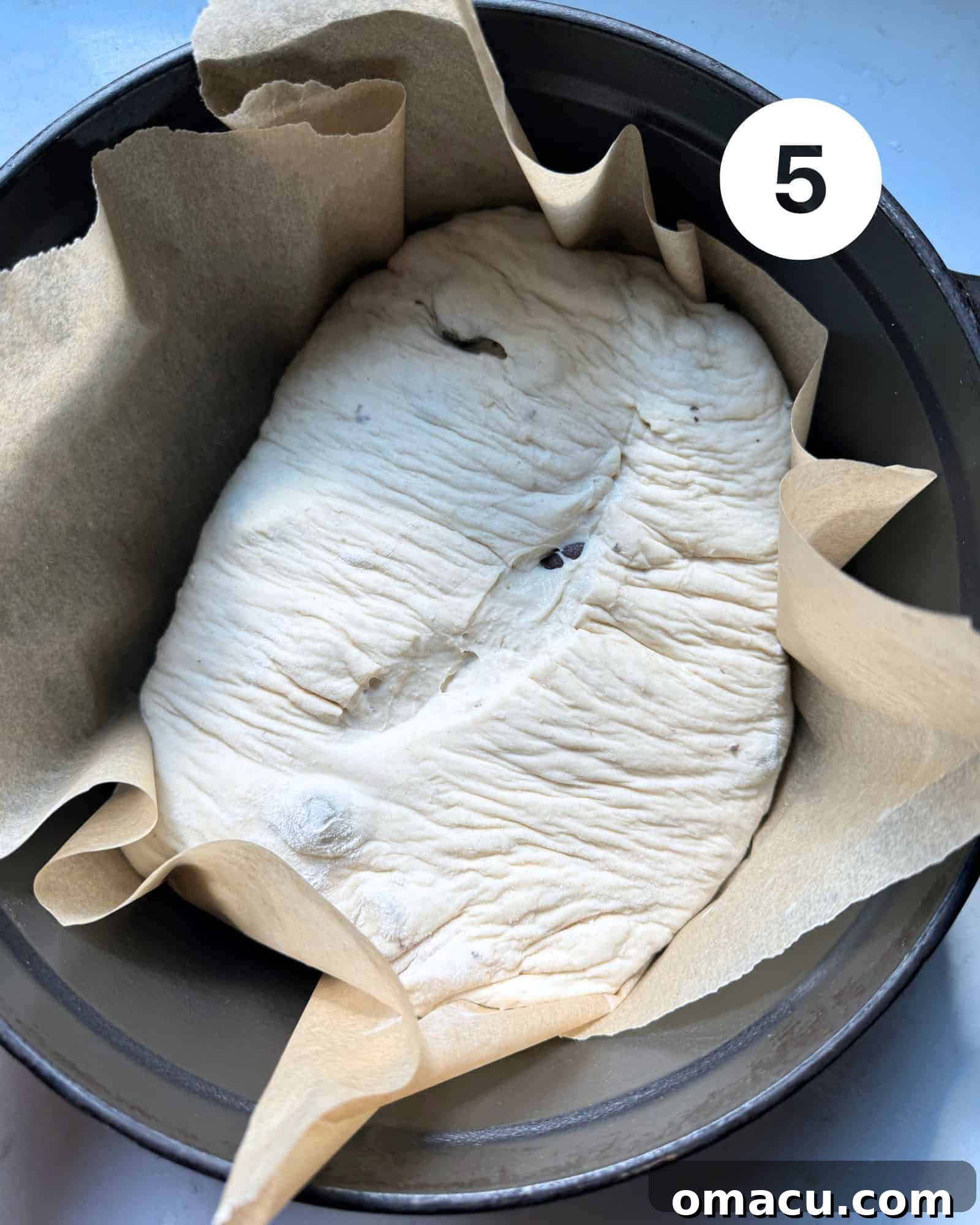
- Final Bake (Lid Off) & Cooling: Bake with the lid on for 30 minutes. The trapped steam will create a soft, pliable crust, allowing for maximum oven spring and a beautiful, airy interior. After 30 minutes, remove the lid and continue to bake for another 20-30 minutes, or until the top is a beautiful golden brown and the internal temperature, checked with an instant-read thermometer, reads between 205-210 degrees F (96-99°C). Once baked, immediately transfer the bread (using the parchment paper to lift) to a wire rack. Let the bread cool completely for at least 1 hour before slicing into it! This vital step allows the internal structure to stabilize, preventing a gummy texture and ensuring the perfect crumb.
What to Serve with Your Delicious Olive Bread
This **rustic olive bread** is incredibly versatile and pairs wonderfully with a variety of dishes, making it a fantastic addition to any meal. Its robust flavors stand up beautifully to many accompaniments.
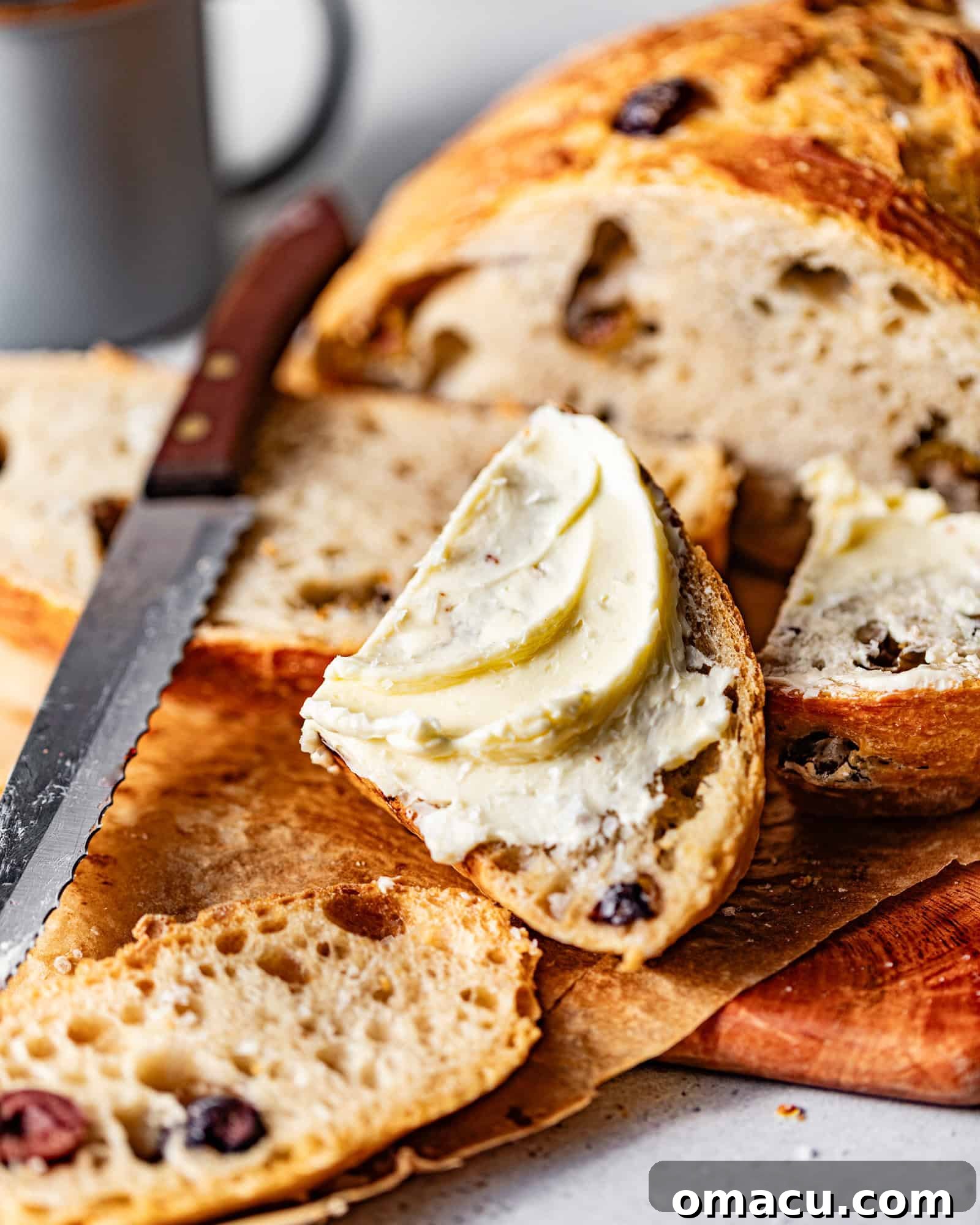
- Classic Bread & Butter: Simple perfection. A thick slice, warm from the oven, slathered with good quality butter (salted or unsalted, as you prefer) is an unmatched delight.
- Mediterranean Dipping Oil: Elevate your experience with an olive oil and balsamic vinegar bread dip, perhaps with some added dried herbs like oregano or a pinch of red pepper flakes. The briny notes of the bread will sing beautifully with a flavorful dip. Check out this olive oil bread dip for inspiration!
- Gourmet Sandwiches: This sturdy and flavorful loaf makes an exceptional base for hearty sandwiches. Imagine a robust California Club Sandwich, or for breakfast, a delicious bacon, egg, and cheese on a slice of this **homemade bread**. Its substantial texture holds up well to rich fillings.
- Flavorful Croutons: Don’t let day-old bread go to waste! Cube it, toss with olive oil, minced garlic, salt, and pepper, then bake until crispy for the most incredible homemade croutons to top your salads and soups.
- Garlic Bread Remix: Slice your olive bread, spread with a generous garlic butter mixture, and bake until golden. For an adventurous twist, even turn it into garlic bread pizza by adding marinara and mozzarella – a fun and quick meal that everyone will love!
- Cheese Board Essential: Serve elegant slices alongside a selection of artisan cheeses, cured meats, and fresh fruit for an impressive appetizer spread that will delight your guests.
- With Soups & Stews: The crusty exterior and tender interior make this bread perfect for soaking up rich broths and sauces from your favorite soups and stews.
The possibilities are truly limitless, making this **no-knead olive bread** a versatile star in your kitchen!
Commonly Asked Questions About No-Knead Bread
Generally, no. No-knead bread recipes are specifically designed for a single, long initial fermentation period, often lasting 10-18 hours. This extended rise allows the gluten to develop sufficiently and builds complex flavors without the need for additional proofing stages. After this primary rise, you can gently shape the dough and proceed directly to baking for a perfectly crusty loaf with an open crumb structure.
After its primary rise and shaping, bread dough typically benefits from a short resting period (sometimes called a “bench rest” or “final proof”) of about 30 minutes to 1 hour before baking. This allows the dough to relax and rise slightly. However, it’s crucial not to let it sit for too long, as over-proofing can lead to a collapsed structure and a dense, gummy texture in the final baked loaf. Monitor its puffiness closely and bake it once it has visibly risen and feels slightly puffy to the touch.
Absolutely! Olive bread freezes beautifully. Once it has cooled completely after baking, wrap the entire loaf or individual slices tightly in plastic wrap, then an additional layer of aluminum foil to prevent freezer burn. It can be stored in the freezer for up to 2-3 months. To enjoy, simply thaw at room temperature or gently reheat in a preheated oven for a “freshly baked” experience.
At room temperature, when stored in an airtight container or tightly wrapped, olive bread will maintain its freshness and best quality for 2-3 days. For slightly longer storage, you can refrigerate it for up to a week. Beyond that, freezing is your best option for preserving its quality.
Not necessarily for short-term storage (2-3 days). Room temperature storage is perfectly fine when kept in an airtight container or bag to prevent it from drying out. However, if you live in a particularly humid climate or wish to extend its shelf life beyond a few days, refrigerating it in an airtight container can help prevent mold and keep it fresh for up to a week. Remember to bring it to room temperature or warm it slightly before serving for the best texture and flavor.
Several factors can contribute to dense bread. The most common issues include inactive yeast (always test your yeast!), insufficient rise time (the dough didn’t fully develop its gluten structure or create enough air pockets), over-proofing (which can cause the gluten structure to collapse after rising too much), or an oven that isn’t hot enough (not providing enough initial heat for good oven spring). Ensure your yeast is fresh, allow the full recommended rise time, and preheat your Dutch oven thoroughly for optimal results.
No-Knead Olive Bread Recipe Card
No-Knead Olive Bread
By Britney
Prep Time: 1 hr
Cook Time: 50 mins
Rising Time: 12 hrs
Servings: 10
This No-Knead Olive Bread Recipe is SO easy to make! It has crispy crust and tender crumb and is loaded with olives and fresh herbs, making it an absolute delight.
Print Recipe
Equipment
- 5 or 7 Quart Dutch Oven
- Large Mixing Bowl
- Danish Dough Whisk (optional, but helpful)
- Bread Lame or Sharp Knife
- Parchment Paper
- Plastic Wrap or Clean Kitchen Towel
Ingredients
- 4 cups (500 g) Bread Flour
- 1 tsp (3 g) Active Dry Yeast
- 1 1/2 cups (360 g) Water (105-110°F / 40-43°C)
- 1 tsp (7 g) Honey
- 2 tsp (12 g) Kosher Salt
- 1 tsp (3 g) Garlic Powder
- 1 tbsp (2 g) Fresh Rosemary, chopped
- 1 cup (135 g) Kalamata Olives, chopped
Instructions
- Combine warm water (105-110 degrees F), honey, and active dry yeast in a large bowl. Gently whisk together and allow the yeast to become foamy and bubbly, about 5-10 minutes.
- Add bread flour and gently mix together with your hands or a danish dough whisk until a shaggy dough forms. Cover with a clean kitchen towel and let the dough rest for 1 hour.
- Sprinkle garlic powder, chopped olives, kosher salt, and chopped rosemary on top of the dough. Press the add-ins into the dough and mix everything together until fully incorporated (you can use your hands or a wooden spoon for this). Cover with plastic wrap and let the dough rise on the counter for about 10-12 hours.
- The next morning, the dough should look very bubbly. Gently remove the dough from the bowl onto a well-floured surface. Begin stretching and folding the dough – simply grab one piece of the dough and stretch it upward until a flap forms – about 6-inches. Place that flap across the other side of the dough to create a bit of an envelope. Grab another side of the dough, stretch it up, and place it on top of the first flap. Repeat this four times. (It should begin to form a tight ball-shaped loaf).
- Place the loaf seam side down onto a piece of parchment paper. Preheat the oven to 450 degrees F (230°C). Place a cast iron dutch oven (with its lid) into the preheated oven for 30 minutes to get it scorching hot.
- Use a bread lame or a sharp knife to make about 3 two-inch slits down the center of the bread. Remove the Dutch oven from the oven and carefully place the bread (and the parchment paper) into the preheated Dutch oven, then cover with the lid.
- Bake for 30 minutes with the lid on. Then, remove the lid and continue to bake for another 20-30 minutes, until the top is golden brown and crusty. You can also use an instant-read thermometer to check for doneness; it should read between 205-210 degrees F (96-99°C). Let the bread cool completely on a wire rack for at least 1 hour before cutting into it! This is crucial for texture.
Nutrition
Calories: 190 kcal, Carbohydrates: 40g, Protein: 3g, Fat: 2g, Saturated Fat: 0.4g, Polyunsaturated Fat: 0.2g, Monounsaturated Fat: 2g, Sodium: 678mg, Potassium: 14mg, Fiber: 1g, Sugar: 1g, Vitamin A: 59IU, Vitamin C: 0.1mg, Calcium: 9mg, Iron: 0.1mg
Nutrition information is automatically calculated, so should only be used as an approximation.
More Irresistible Bread Recipes
Explore More Homemade Bread Delights
Breakfast
Banana Bread with Pecans
Main Course
Brown and Serve Rolls
Appetizers
Raspberry Chocolate Hazelnut Starbread
Appetizers
Cheese Babka
Want more delicious and beautiful recipes? Subscribe to my newsletter to receive the latest seasonal creations as soon as they’re released!
If you make this recipe, please leave a star rating on the recipe card and a comment below to share your experience! You can also tag @BritneyBreaksBread on Instagram and use the hashtag #britneybreaksbread so I can celebrate your beautiful creations and see your amazing results!
Tried this recipe?
Mention @BritneyBreaksBread or tag #BritneyBreaksBread!