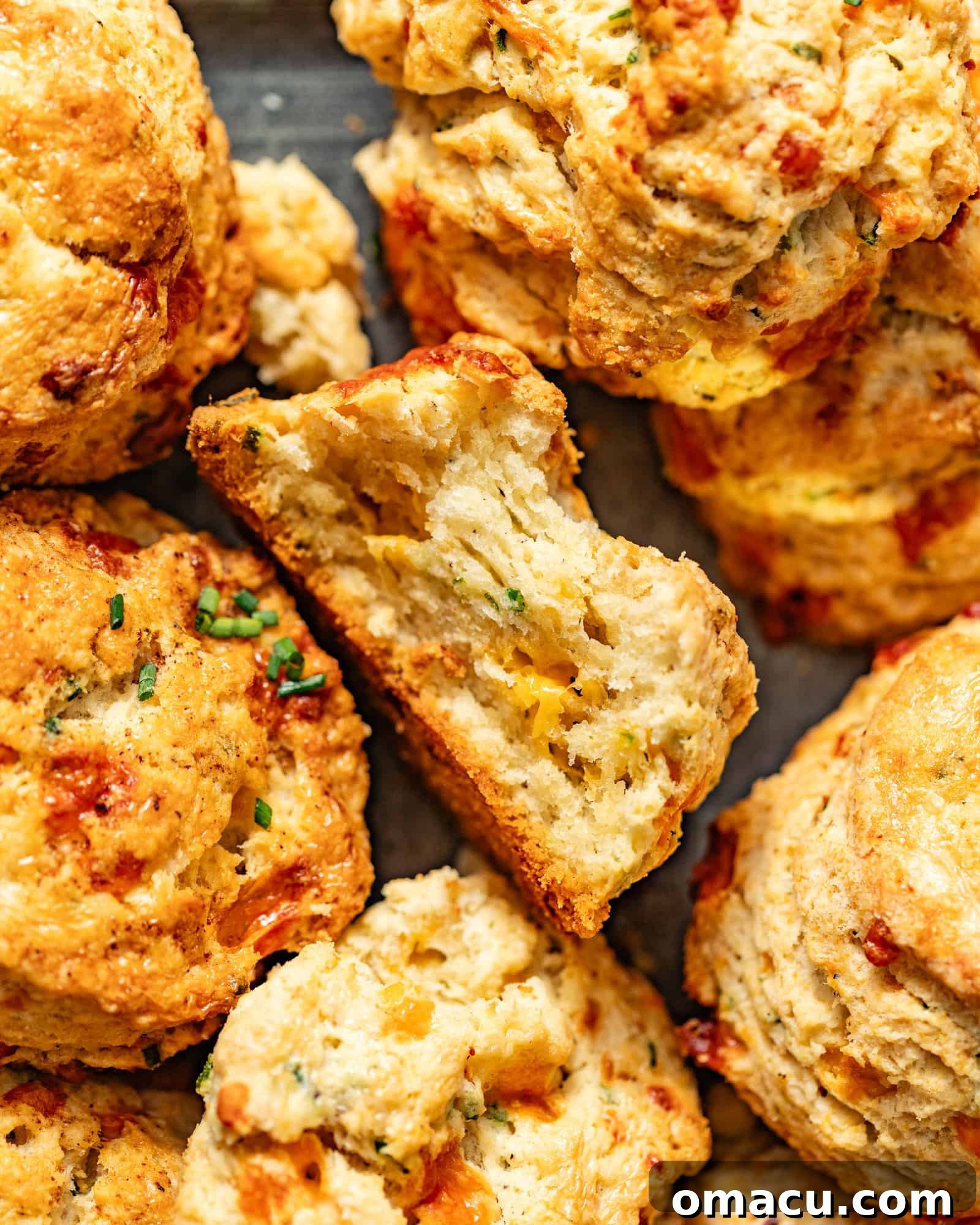
There’s nothing quite like a warm, flaky biscuit straight from the oven, its aroma filling the kitchen and promising a comforting bite. Now, imagine that classic comfort elevated with the savory punch of sharp cheddar cheese and the delicate freshness of vibrant chives. These classic buttermilk biscuits are transformed into a truly unforgettable treat: **Cheddar Cheese Chive Biscuits**.
Known for their tender, melt-in-your-mouth texture and rich, buttery layers, these biscuits take everything you love about homemade biscuits and infuse them with an irresistible savory twist. The sharpness of the cheddar perfectly complements the subtle oniony zest of the chives, creating a flavor profile that’s both bold and balanced. Whether you’re a seasoned baker or new to the world of biscuit making, this recipe guides you to perfectly golden, fluffy results every time.
Beyond this delicious rendition, explore other delightful biscuit creations like sweet potato biscuits for a touch of autumn sweetness or efficient air fryer biscuits for quick baking. These cheddar chive biscuits also make a phenomenal topping for dishes like my cheddar bay biscuit chicken pot pie, adding an extra layer of flavor and texture to a hearty meal.
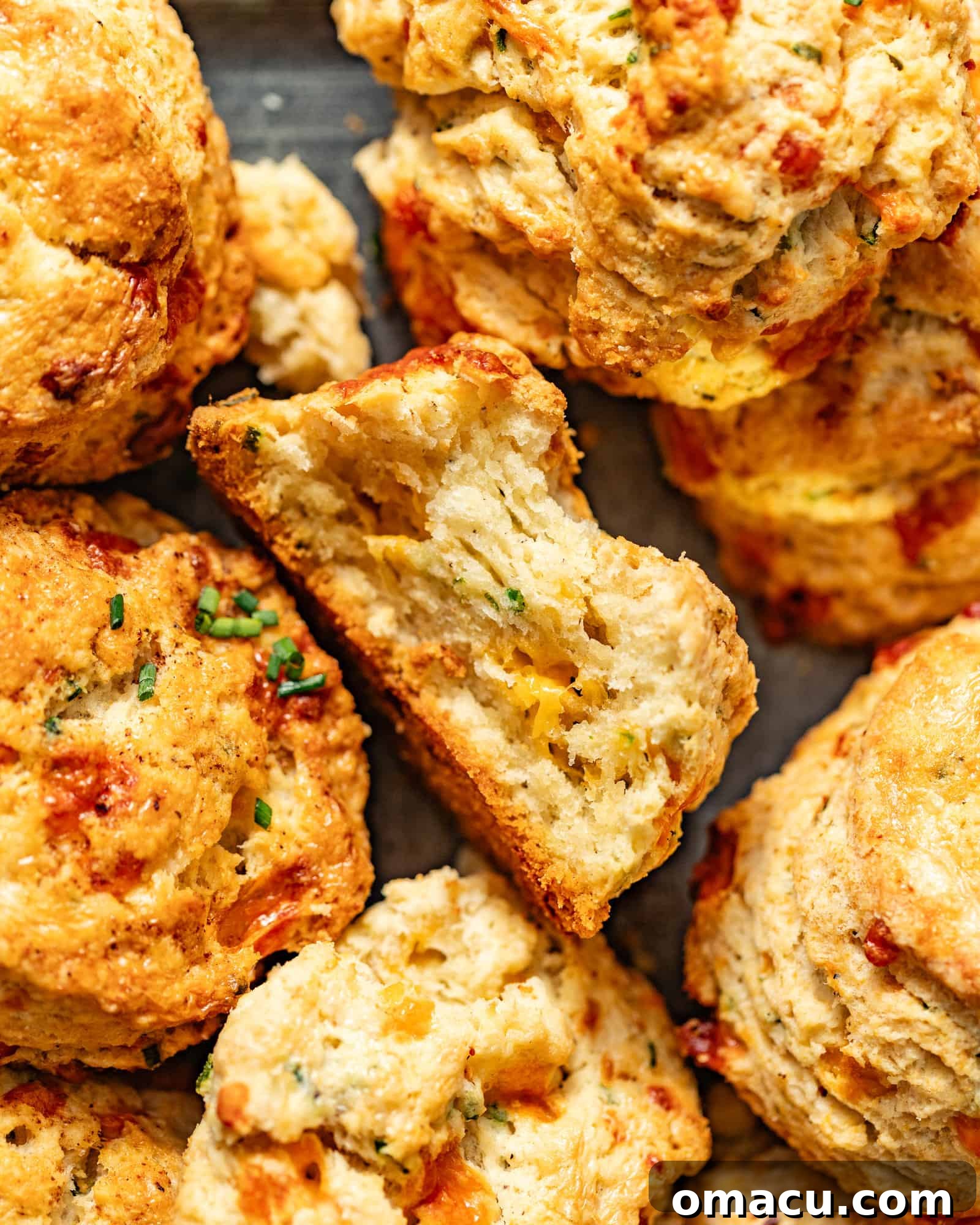
Table of Contents
- The Irresistible Allure of Cheddar Chive Biscuits
- Ingredients for Biscuit Perfection
- Mastering the Art of Biscuit Making: Essential Tips
- Step-by-Step: How to Make Cheddar Biscuits
- Serving Suggestions: What Goes Best with Cheddar Biscuits?
- Make Ahead, Freezing, and Storing Your Biscuits
- Cheddar Biscuit FAQs
- Explore More Bread Recipes
- Cheddar Biscuits with Chives Recipe Card
The Irresistible Allure of Cheddar Chive Biscuits
Remember those iconic cheddar biscuits from Red Lobster? Prepare yourself, because these homemade delights taste remarkably similar, if not even better! The moment you take a bite, you’ll experience the magical blend of melty, gooey cheese, the vibrant kick of fresh chives, and the incredible tenderness of a perfectly fluffy biscuit. It’s truly a flavor explosion that will make your taste buds sing.
This versatile recipe is ideal for any meal or occasion. Serve them warm for a show-stopping brunch, grab one as a quick and savory on-the-go breakfast, or elevate your Sunday dinner into an extraordinary culinary experience. For a true Southern-inspired, down-home breakfast, pair these delicious biscuits with a generous pour of my creamy white gravy. A light brush of melted butter and a sprinkle of flaky sea salt on top after baking will seal the deal, ensuring you’re completely hooked from the very first bite. Get ready to impress yourself and your loved ones with these incredibly flavorful biscuits!
Ingredients for Biscuit Perfection
Crafting the perfect biscuit begins with understanding the role each ingredient plays. While the full recipe with precise quantities is provided in the recipe card below, let’s delve into why these key components are essential for creating exceptionally flaky and flavorful cheddar chive biscuits.
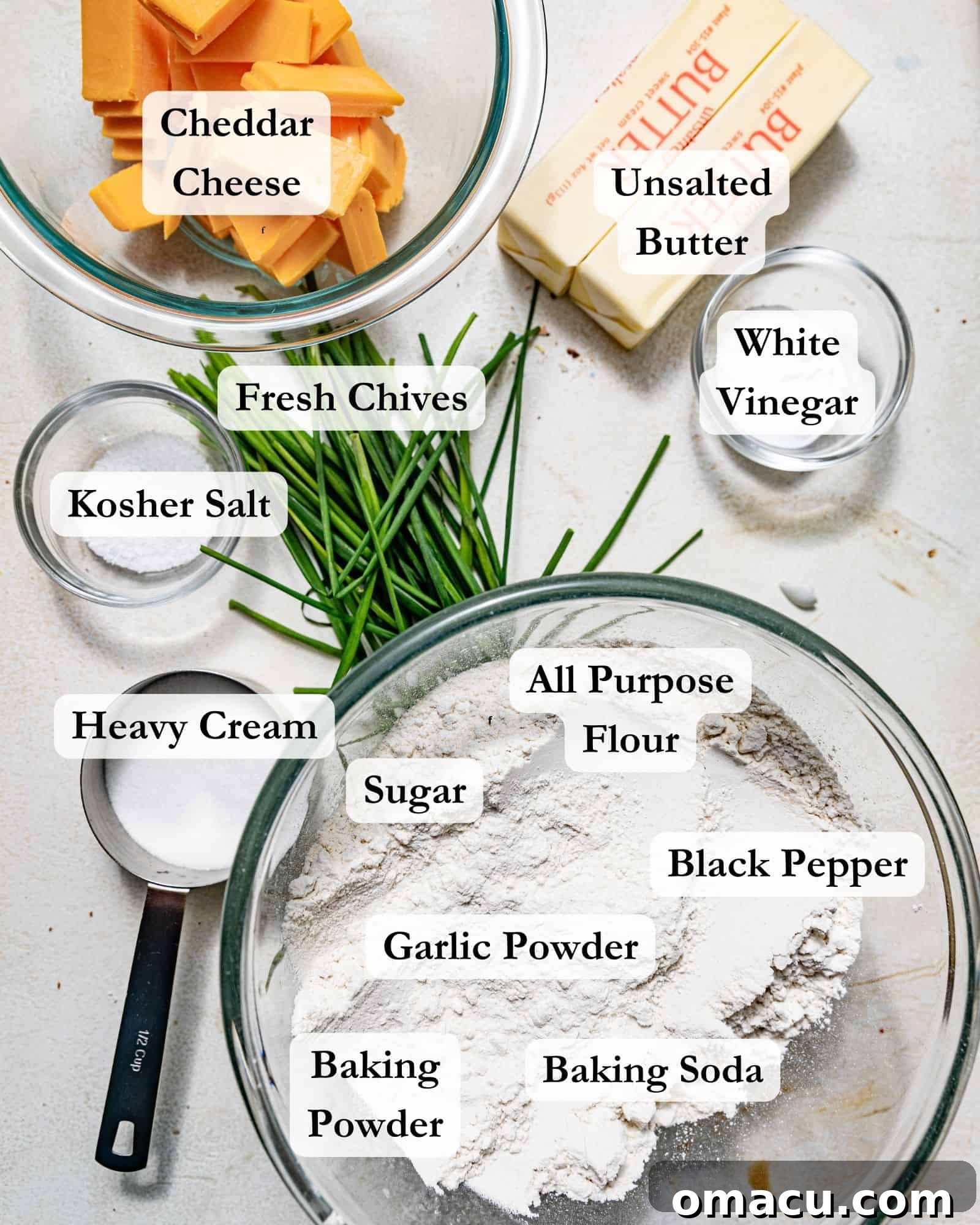
- All-Purpose Flour: The foundation of any great biscuit. The debate rages about the “best” flour (White Lily vs. King Arthur), but truthfully, your favorite high-quality all-purpose flour will yield fantastic results. Pastry flour can also be used for an even more tender crumb, but stick with what you’re comfortable with for delicious homemade biscuits.
- Sharp Cheddar Cheese: This is where a significant part of the flavor comes from! You can use a block of cheese and grate it yourself, or opt for pre-shredded cheese for convenience. While freshly grated cheese often melts more smoothly without anti-caking agents, either option will suffice for this recipe. If sharp cheddar isn’t available, white cheddar makes an excellent substitute, offering a similar tang and richness.
- Heavy Cream and White Vinegar: This dynamic duo allows us to essentially create our own buttermilk! The acid from the vinegar (or lemon juice, a good alternative) reacts with the baking soda, promoting a beautiful rise and adding a distinctive tang that enhances the overall flavor of the biscuits. While whole milk can be used, heavy cream truly contributes to the unparalleled fluffiness and tender texture that makes these biscuits so special.
- Unsalted Butter: The secret to those coveted flaky layers! I recommend unsalted butter because the cheddar cheese already provides a good amount of salt. Using unsalted butter allows for precise control over the overall sodium content, ensuring the savory flavors truly shine without being overwhelmed. If salted butter is all you have, simply reduce the kosher salt in the recipe to 1 teaspoon. Remember, *cold butter* is non-negotiable for flaky results!
- Fresh Chives: These delicate herbs add a wonderful, mild oniony flavor and a pop of green color. Always opt for fresh chives and chop them finely just before adding them to the dough for maximum flavor and aroma.
- Garlic Powder: This unsung hero is crucial for the savory depth of these biscuits. It amplifies the “chive flavor” and creates a harmonious pairing with the sharp cheddar cheese, making each bite incredibly satisfying.
- Baking Powder and Baking Soda: These leavening agents are vital for achieving that desirable lift and airy texture. They work in tandem with the acid in our homemade buttermilk to create carbon dioxide bubbles, which expand during baking and contribute to the biscuits’ light, fluffy crumb.
- Kosher Salt and Sugar: Salt balances the richness of the cheese and butter, while a touch of sugar helps with browning and slightly tenderizes the dough, creating a more well-rounded flavor profile.
Mastering the Art of Biscuit Making: Essential Tips
Making light, flaky biscuits can seem daunting, but with a few key techniques, you’ll be a biscuit master in no time. These tips are crucial for achieving the perfect texture and rise for your cheddar chive biscuits.
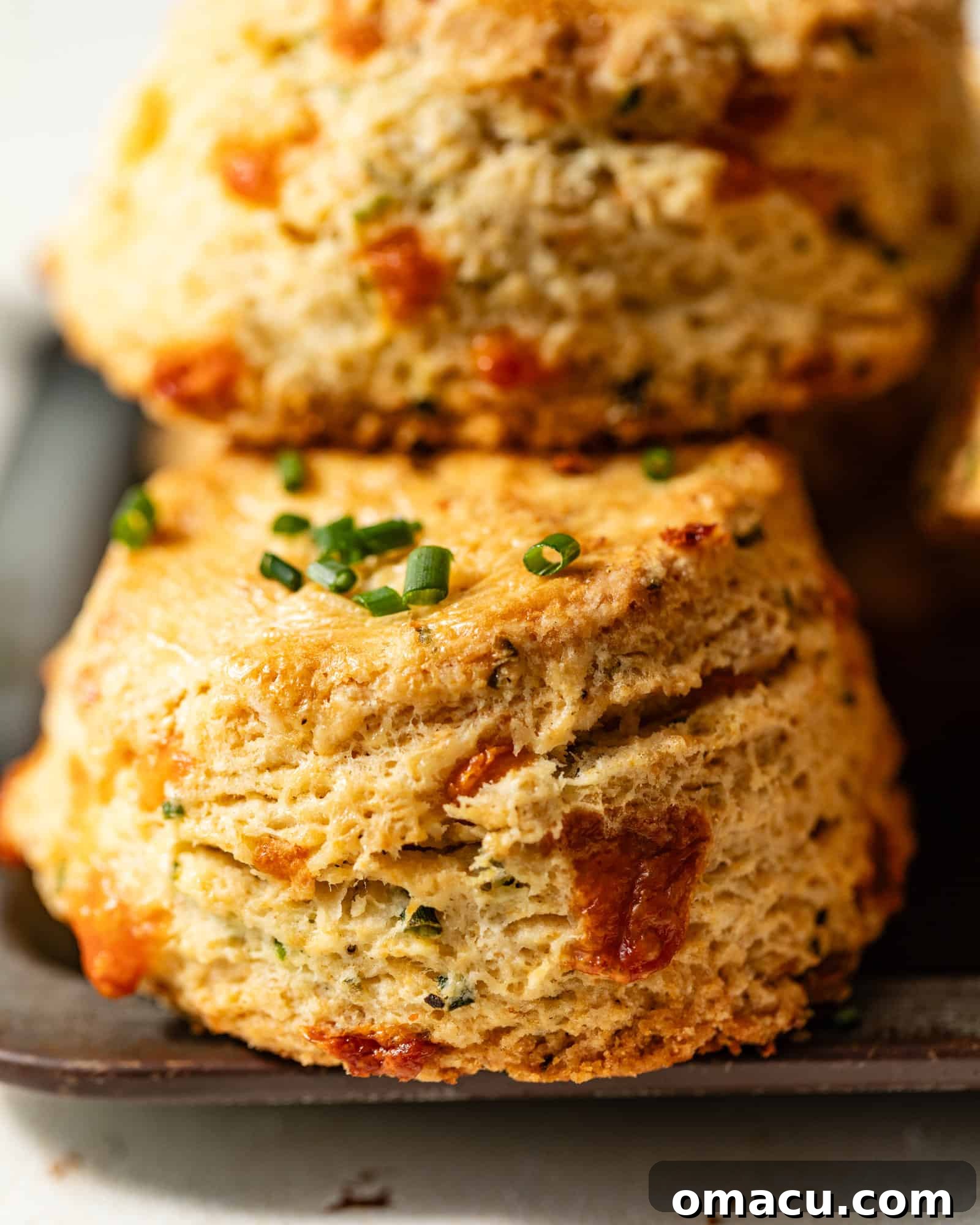
- Cold, Cold, Cold Ingredients are Key! This is perhaps the most critical rule for flaky biscuits. All your ingredients, especially the butter and buttermilk (or heavy cream/vinegar mixture), must be thoroughly chilled. Some seasoned bakers even go so far as to freeze their flour and mixing bowls for 15-20 minutes before starting. Unlike many baking recipes that call for room temperature butter, cold butter is essential here. As the cold butter melts in the hot oven, it releases steam, which creates countless tiny pockets of air, resulting in those beautiful, distinct flaky layers. If your butter is warm, it will simply melt into the flour before baking, leading to dense, heavy biscuits rather than light and airy ones.
- Don’t Be Afraid to Chill the Dough! The warmth from your hands can quickly transfer to the dough, causing the butter to soften or even become greasy. If you notice the dough feeling warm, or the butter starting to seep out, don’t hesitate! Pop the entire biscuit dough (or even the cut biscuits) into the freezer for about 10-20 minutes. This quick chill will firm up the butter again, preventing it from fully melting too early and ensuring your biscuits maintain their structural integrity for optimal flakiness. This step is particularly helpful in warmer climates or during summer months.
- Handle the Dough Gently – Avoid Overworking! Overmixing or overworking biscuit dough is the quickest way to end up with tough, dry biscuits. When you add the buttermilk, mix the dough just until the dry ingredients are barely combined and a shaggy, crumbly texture forms. A few dry spots are perfectly fine – they will hydrate during the folding process. Excessive mixing develops the gluten in the flour too much, making the biscuits chewy rather than tender. The goal is a light touch and minimal handling.
- Grate Your Butter for Better Distribution: Using a box grater to shred your cold butter is a game-changer for biscuits. This method creates tiny, uniform pieces of butter that are easily coated with flour, allowing for quick incorporation without excessive handling. It eliminates the need for a pastry cutter or “pinching” the butter, further reducing the risk of warming the butter and overworking the dough.
- The Folding Technique Creates Layers: The process of pressing, cutting, stacking, and flattening the dough multiple times isn’t just for combining scraps – it’s how you build those incredible flaky layers! Each fold creates new strata of butter and dough, which will separate into distinct layers as the biscuits bake.
- Cut Straight Down, Don’t Twist: When using a biscuit cutter, press straight down firmly and lift straight up. Avoid twisting the cutter. Twisting seals the edges of the biscuits, which can prevent them from rising tall and evenly. A clean cut allows the layers to expand upwards freely.
Step-by-Step: How to Make Cheddar Biscuits
Follow these detailed steps to create perfectly flaky and flavorful cheddar cheese chive biscuits. Remember to keep your ingredients cold and handle the dough gently!
- Step 1: Prepare Your Workspace and Oven. Preheat your oven to 375 degrees F (190 degrees C). Line a large, rimmed baking sheet with parchment paper. This prevents sticking and makes cleanup a breeze.
- Step 2: Prepare the Homemade Buttermilk and Chill Butter. First, grate your cold unsalted butter using the large holes of a box grater. Place the grated butter back into the freezer for at least 20 minutes to ensure it’s thoroughly chilled and firm. In a separate small cup, combine the heavy cream and white vinegar (or lemon juice). Give it a gentle stir and place it in the refrigerator. This mixture will sit and curdle slightly, forming our homemade buttermilk, which is essential for the biscuits’ rise and tang.
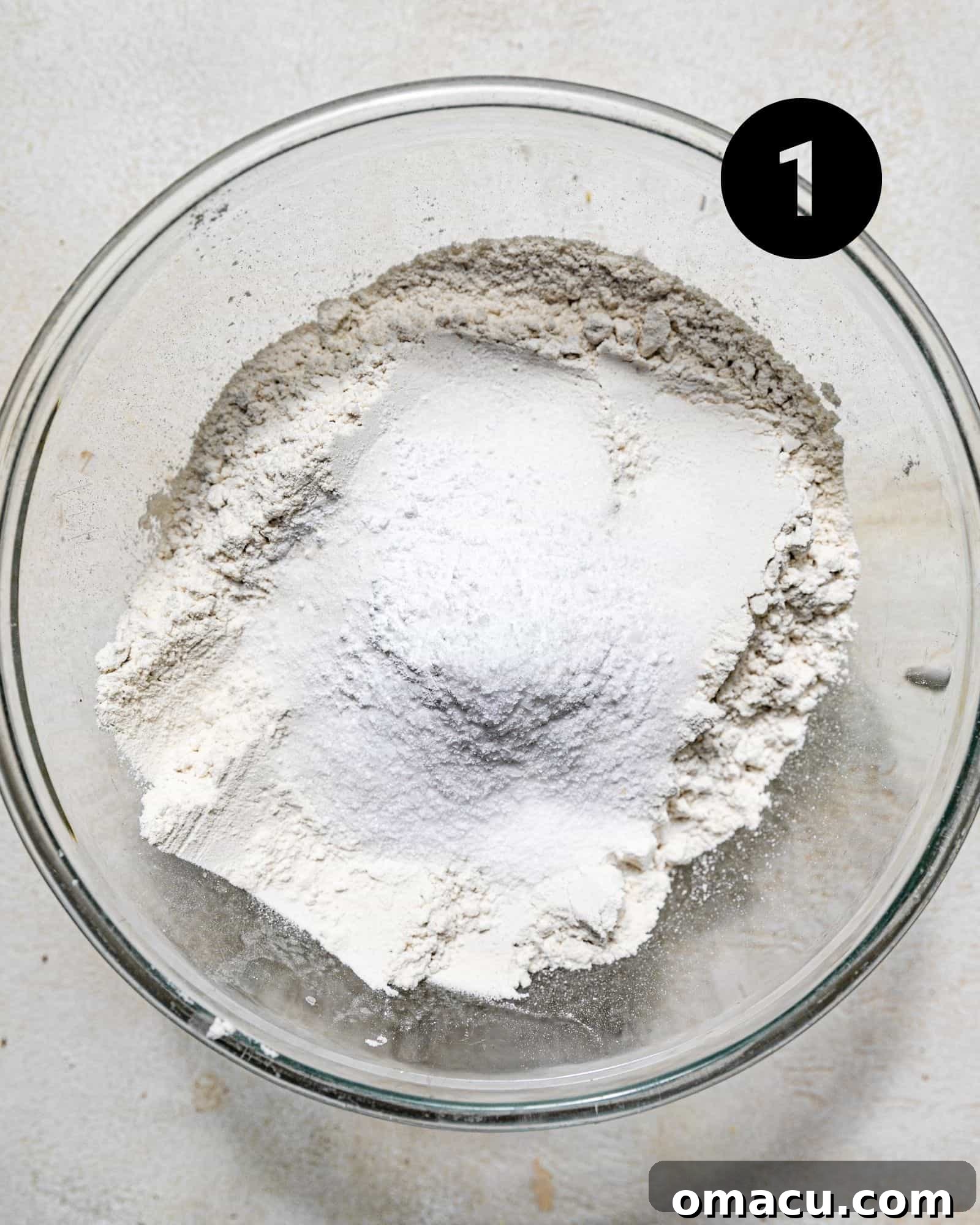
- Step 3: Combine Dry Ingredients. While the butter is chilling, whisk together all your dry ingredients in a large mixing bowl. This includes all-purpose flour, granulated sugar, garlic powder, black pepper, kosher salt, baking powder, and baking soda. Whisking ensures that all leavening agents and seasonings are evenly distributed throughout the flour mixture. (See image 1 for visual)
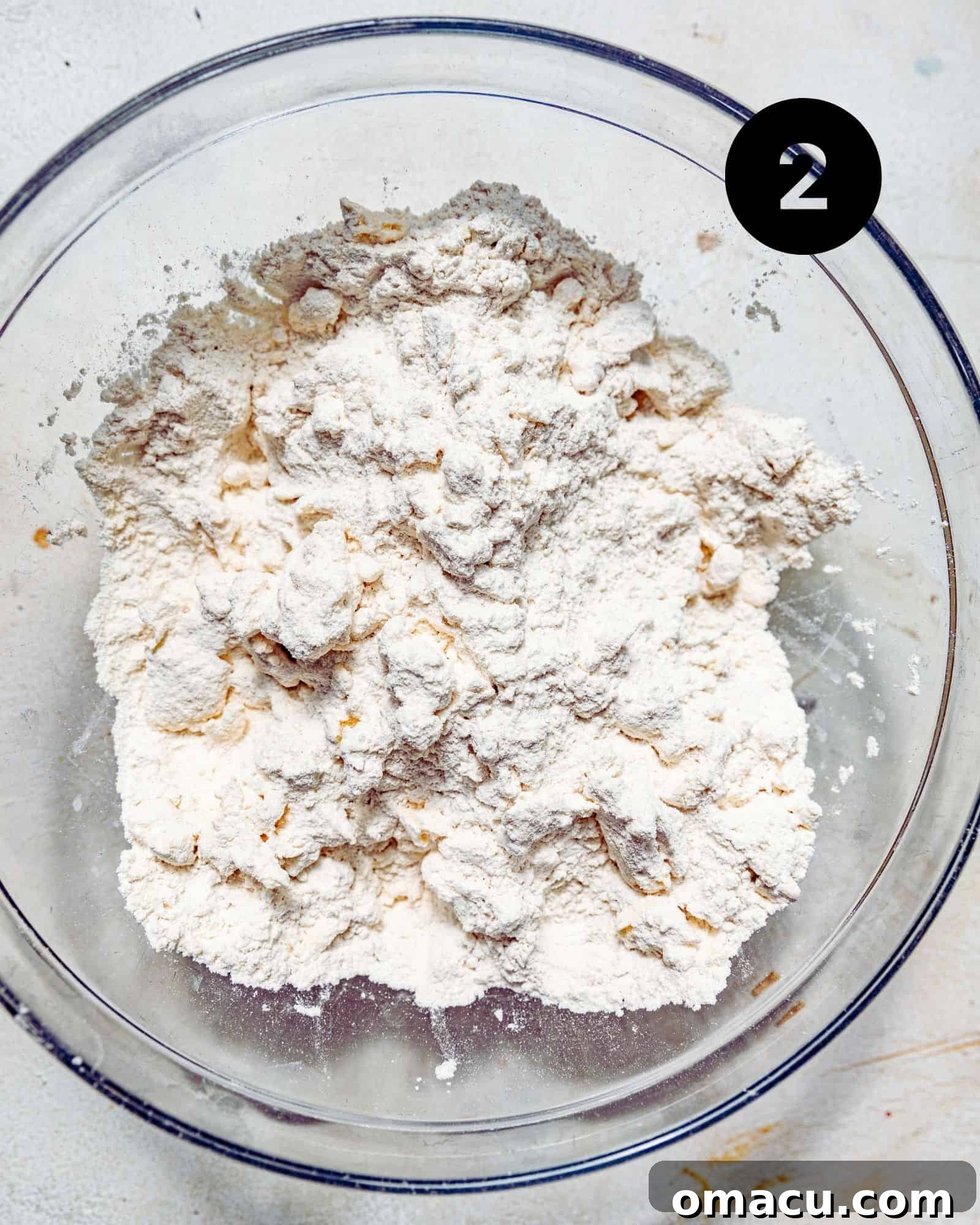
- Step 4: Incorporate the Cold Butter. Retrieve the grated butter from the freezer. Add it to the bowl of dry ingredients and toss gently with your hands or a fork. The goal is to coat each tiny piece of butter in the flour mixture. Because the butter is grated, there’s no need to “cut” it in with a pastry cutter or pinch it with your fingers; simply tossing is enough to distribute it evenly and keep it cold. (See image 2 for visual)
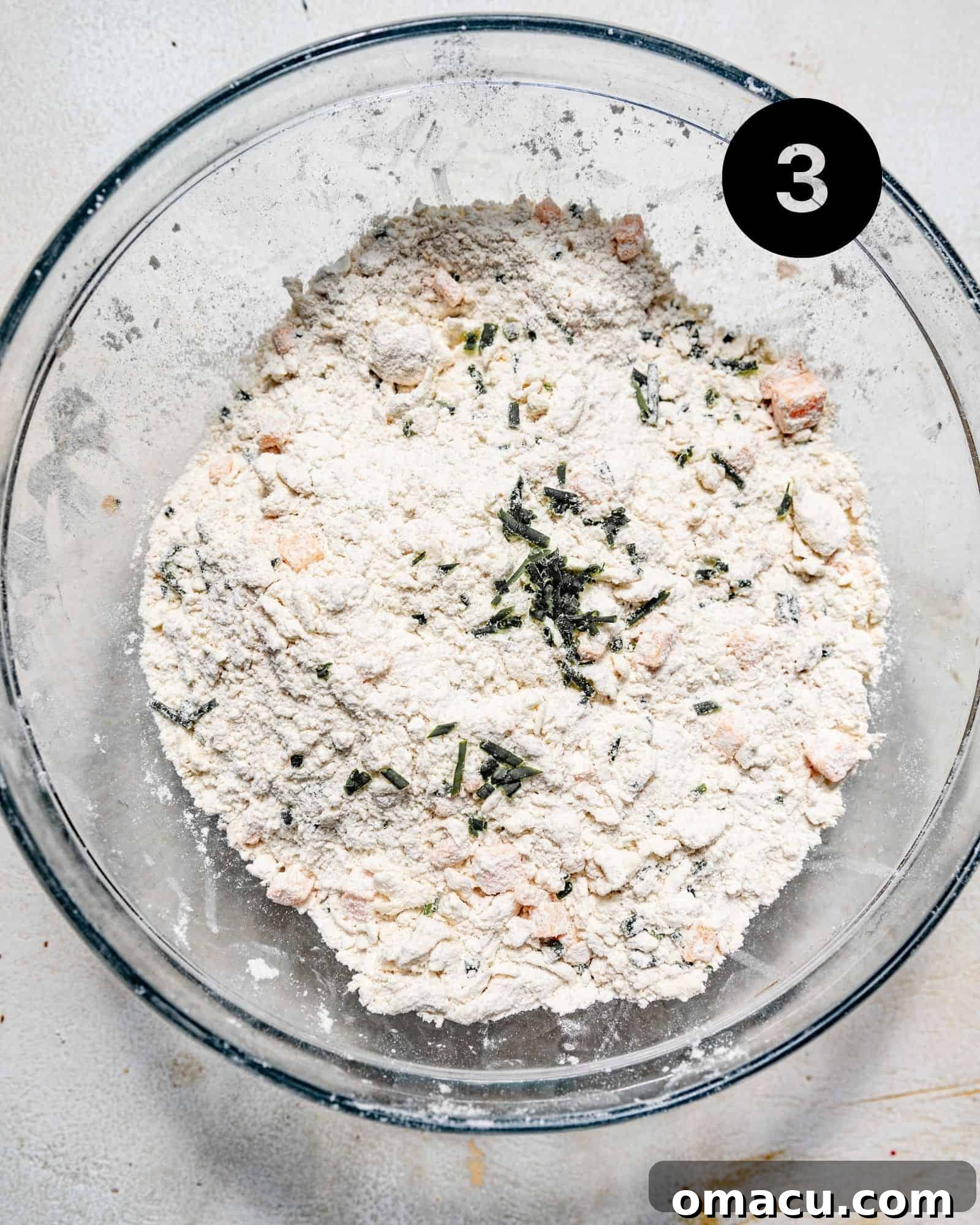
- Step 5: Add Chives, Cheese, and Buttermilk. Once the butter is fully coated in flour, stir in the freshly chopped chives and the shredded sharp cheddar cheese. Toss again to distribute them evenly. Now, retrieve your cold buttermilk from the refrigerator and pour it into the mixture. Using a rubber spatula or a sturdy spoon, gently mix until a shaggy, crumbly dough forms. It’s crucial not to overmix here; the dough may look like it needs more liquid, but resist the urge to add more! Overmixing develops gluten, leading to tough biscuits. (See image 3 for visual)
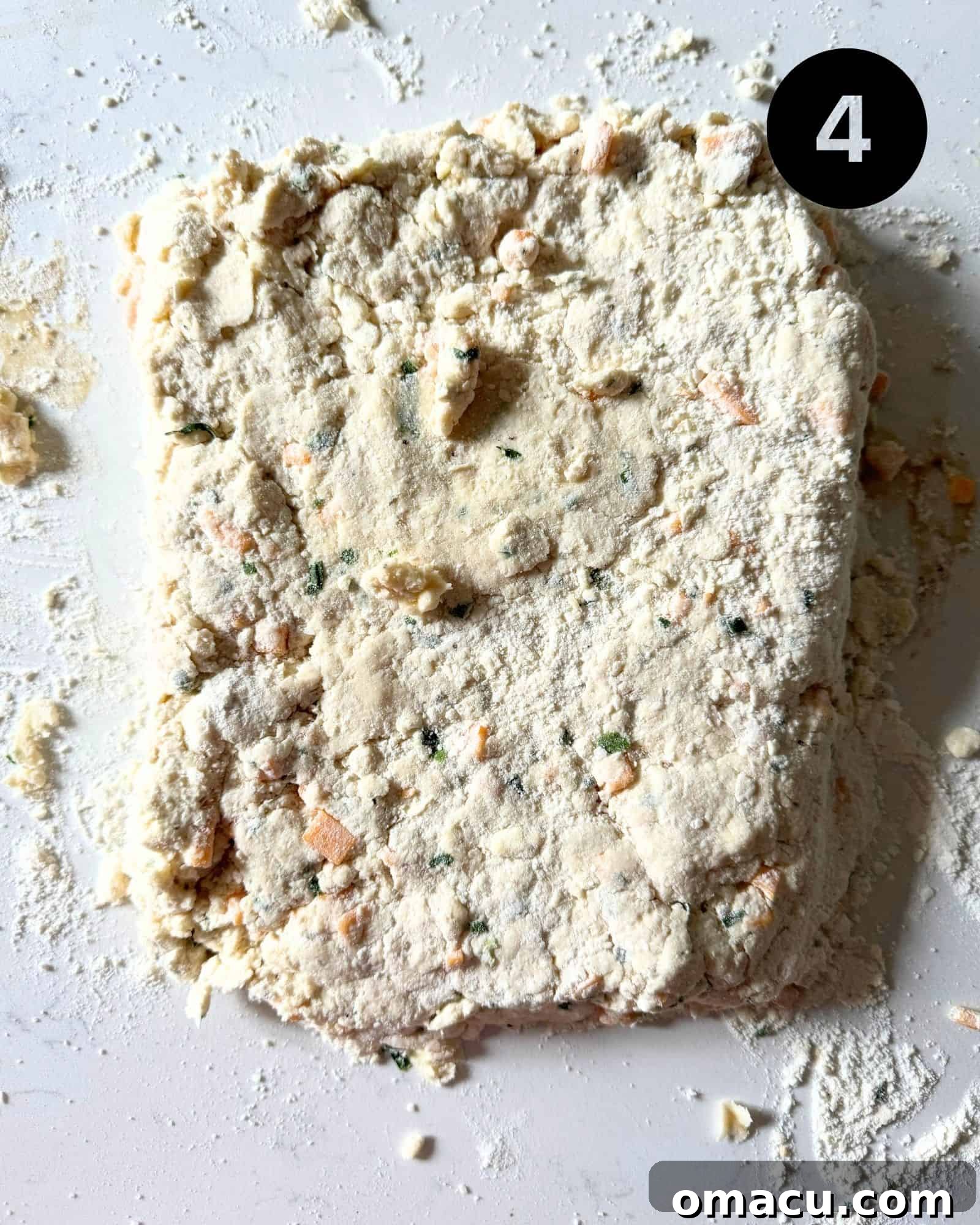
- Step 6: Turn Out and Gather Dough. Lightly flour your work surface. Turn the shaggy dough out onto the floured surface. Gently press any loose crumbs into the main body of the dough to gather it together. (See image 4 for visual)
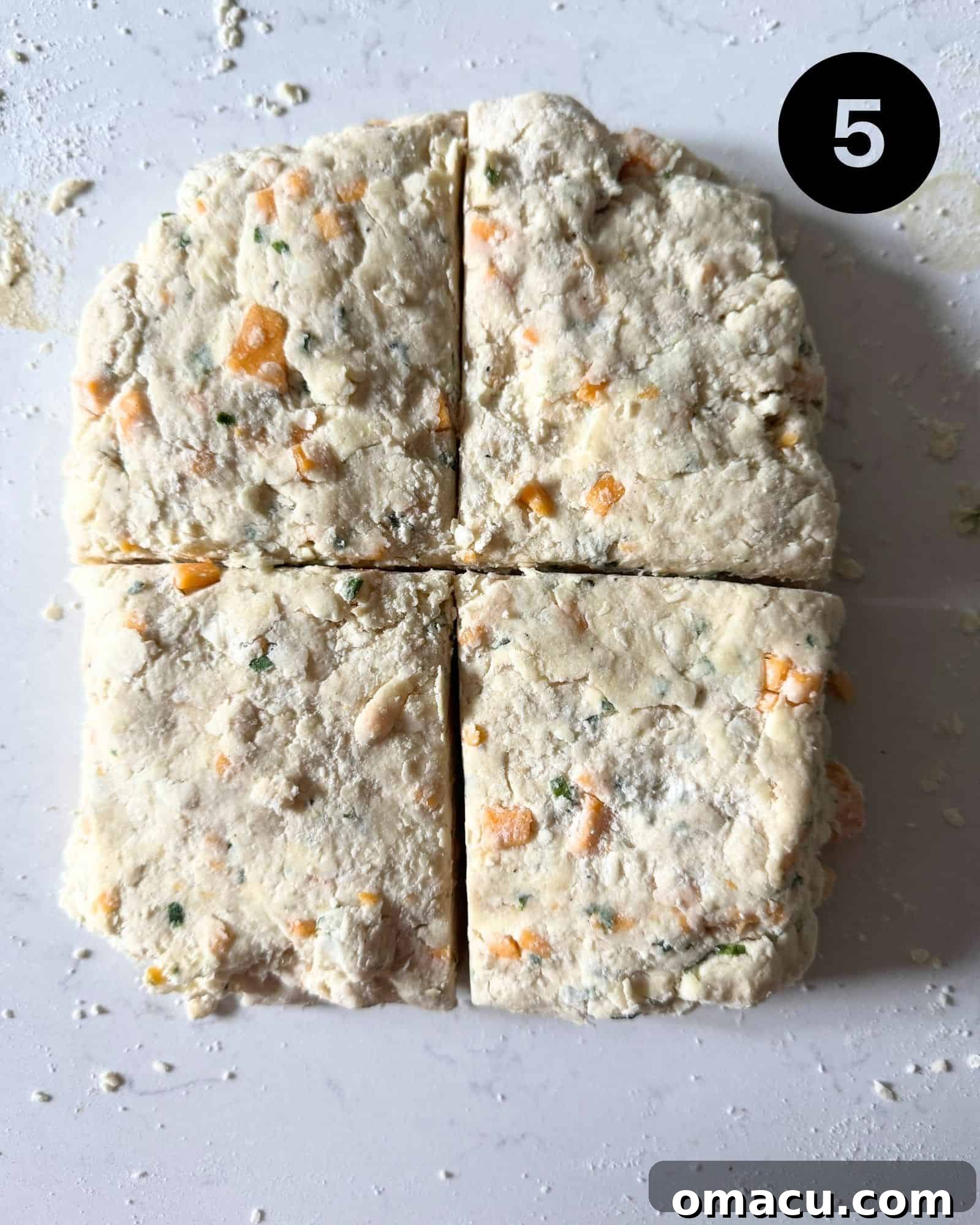
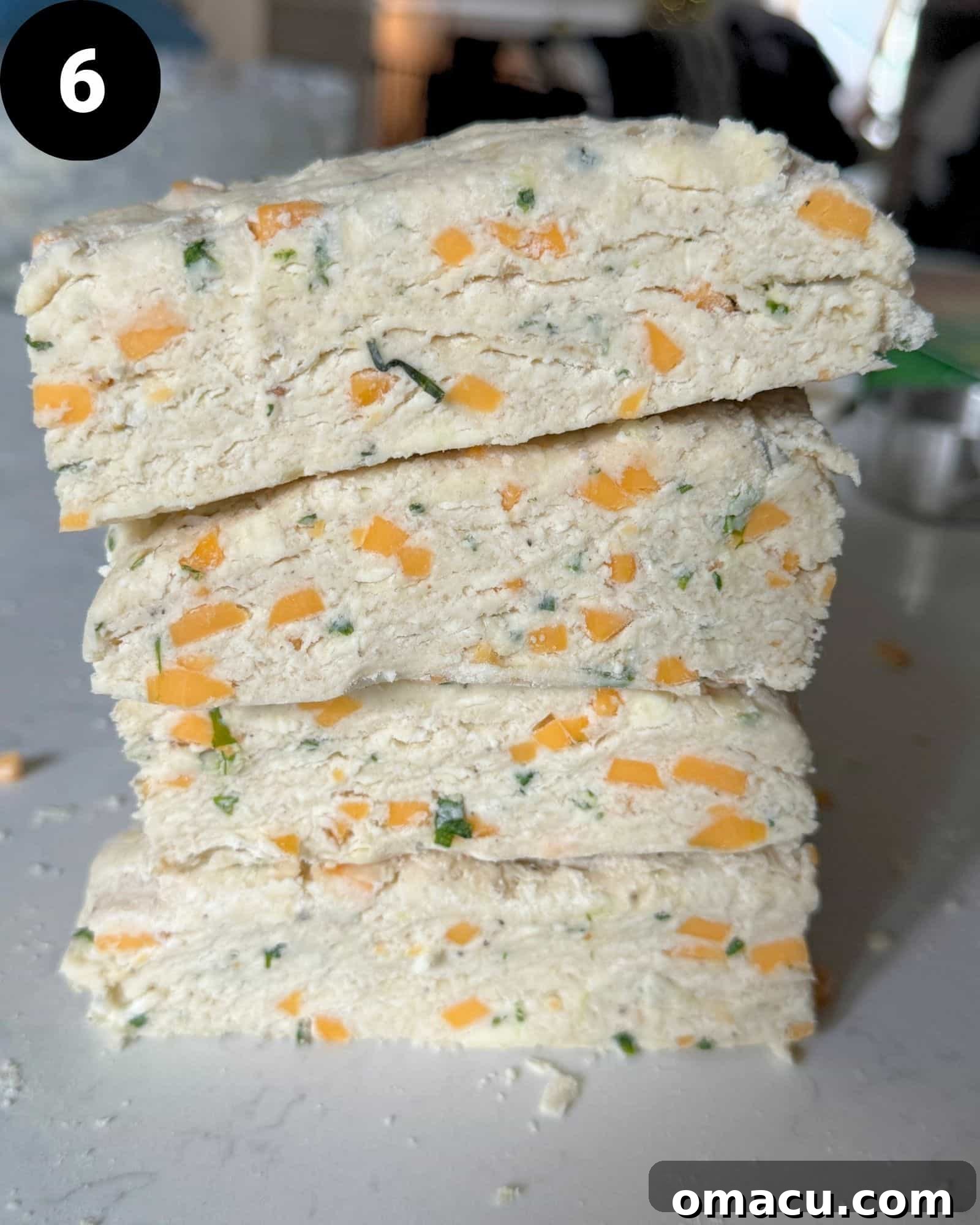
- Step 7: The Folding Process for Layers. This step creates those beautiful flaky layers! Gently press the biscuit dough into a roughly 1-inch thick rectangle. Cut this rectangle into four equal pieces. Stack each piece on top of the other, pressing down gently to flatten the stack back into another 1-inch thick rectangle. Repeat this cut-and-stack process 3-5 times. This action builds layers of butter and dough, ensuring maximum flakiness. Continue until the dough is well combined and no longer has loose scraps falling away. (See images 5 and 6 for visual)
- Step 8: Cut the Biscuits. Using a rolling pin, gently press the dough into a 1-inch thick square, approximately 8×8 inches. Take a 2 3/4-inch biscuit cutter and press straight down into the dough to cut out individual biscuits. **Avoid twisting the cutter**, as this seals the edges and can hinder the biscuits from rising properly. Place the cut biscuits onto your prepared baking sheet. Gather any scraps of dough, gently press them together (without overworking), re-roll into a 1-inch square, and cut out any remaining biscuits until all dough is used.
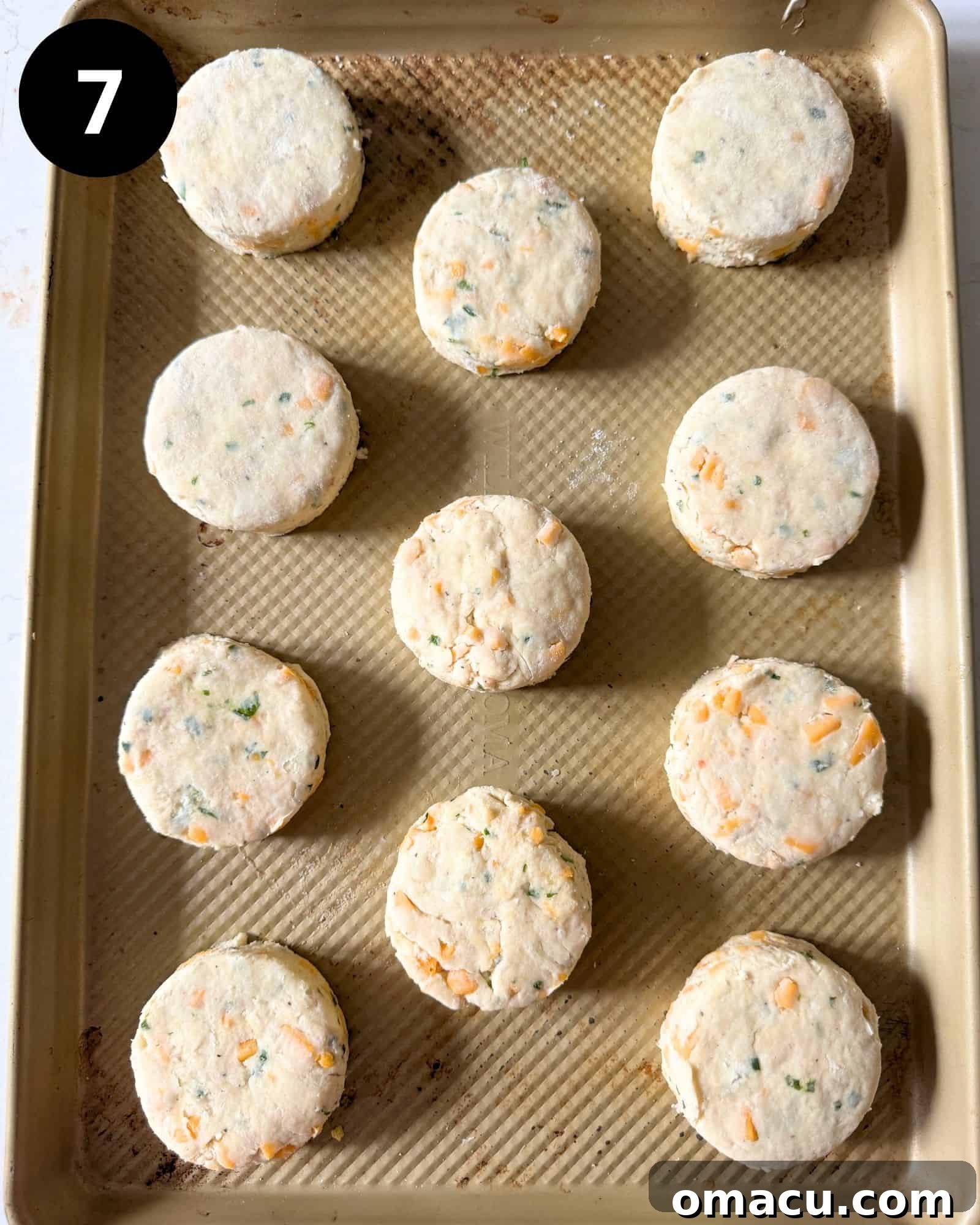
- Step 9: Final Chill and Bake. Arrange the biscuits on the baking sheet, spacing them about 1 inch apart. For optimal flakiness, place the entire baking sheet into the freezer for another 20 minutes. This final chill helps the butter firm up one last time before hitting the oven. Just before baking, gently brush the tops of the chilled biscuits with a little heavy cream for a beautiful golden-brown finish. Bake in the preheated oven for 30-40 minutes, or until the tops are gloriously golden brown and the biscuits have risen high. (See image 7 for visual)
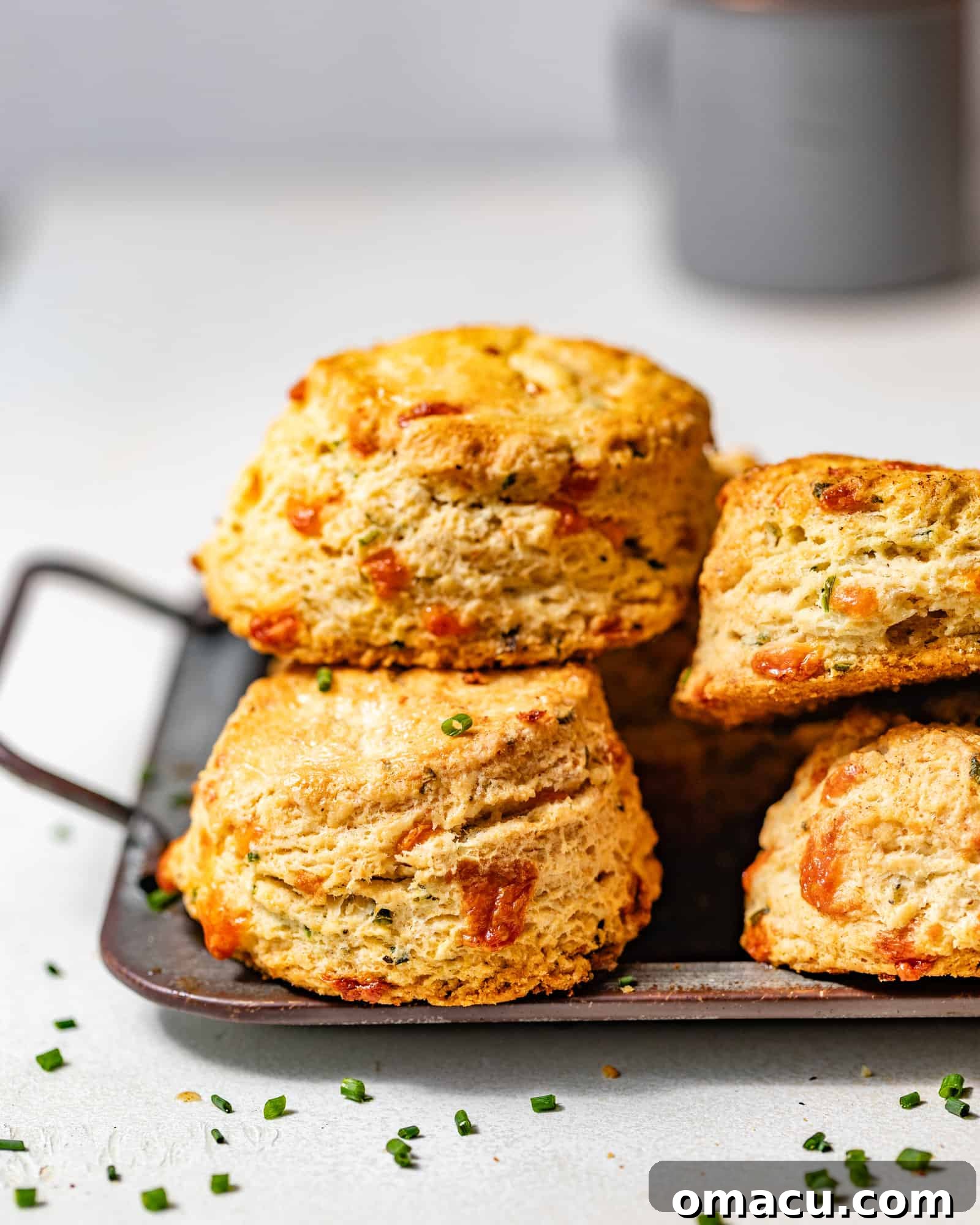
- Step 10: The Finishing Touch. As soon as the biscuits come out of the oven, brush their tops with melted unsalted butter and sprinkle with a touch of flaky sea salt. Serve them immediately, fresh and warm!
Serving Suggestions: What Goes Best with Cheddar Biscuits?
These cheesy, savory biscuits are incredibly versatile and pair beautifully with a wide array of dishes. Here are some ideas to inspire your next meal:
It almost goes without saying that any good biscuit finds its perfect partner in a hearty gravy! My rich and creamy white pepper gravy is absolutely phenomenal with these cheddar chive biscuits, creating an unparalleled comfort food experience. But the possibilities don’t stop there!
- Classic Comfort Food Pairings:
- Hearty Mains: Serve them alongside my savory Salisbury steak recipe for a truly satisfying meal.
- Fried Chicken: The crispiness of Southern fried chicken is wonderfully complemented by the tender, cheesy biscuits. It’s pure, cozy comfort food at its finest!
- Soups and Stews: These biscuits are excellent for soaking up the delicious broth of a hearty beef stew, a creamy chicken noodle soup, or a spicy chili.
- BBQ Meal Enhancements: Biscuits are a fantastic addition to any barbecue spread. Their savory notes cut through the richness of smoked meats, making them a perfect side for:
- Slow cooker baby back ribs
- Slow cooker BBQ pulled pork
- Smoked brisket or grilled chicken.
- Seafood Specialties: Of course, cheddar biscuits are a natural fit for all kinds of seafood.
- Seafood Boil: Prepare my flavorful seafood boil recipe and use these biscuits to sop up every last drop of the incredible homemade garlic butter seafood boil sauce. Your tastebuds will thank you!
- Grilled Fish or Shrimp Scampi: The savory biscuits provide a wonderful counterpoint to light and fresh seafood dishes.
- Breakfast and Brunch Delights:
- Eggs and Bacon: A simple yet satisfying breakfast.
- Breakfast Sandwiches: Split them open and fill with scrambled eggs, bacon or sausage, and an extra slice of cheese.
- Simple Pleasures: Sometimes, the simplest pairings are the best.
- Just enjoy them with a dollop of melted butter.
- Experiment with sweet and savory by adding a spoonful of blueberry jam or even a spicy pepper jelly. The options truly are limitless, allowing you to enjoy these versatile biscuits in countless delicious ways!
Make Ahead, Freezing, and Storing Your Biscuits
These cheddar chive biscuits are wonderful fresh from the oven, but you can also prepare them in advance or store leftovers to enjoy later. Here’s how to ensure their deliciousness lasts:
- Making Ahead (Unbaked Dough): Prepare the biscuit dough as instructed, up to the point of cutting the individual biscuits. Place the cut, unbaked biscuits on a parchment-lined baking sheet and flash freeze them for about 30-60 minutes until firm. Once firm, transfer them to a freezer-safe airtight container or a heavy-duty freezer bag. They can be stored in the freezer for up to 1-2 months. When you’re ready to bake, simply arrange the frozen biscuits on a baking sheet, brush with heavy cream, and bake from frozen. Note that baking time may increase slightly (by about 5-10 minutes) compared to freshly made biscuits.
- Freezing Baked Biscuits: While freezing unbaked dough yields the freshest results, you can certainly freeze leftover baked biscuits. Allow the biscuits to cool completely to room temperature. Place them in a single layer in a freezer-safe airtight container or a heavy-duty freezer bag, separating layers with parchment paper if stacking. Freeze for up to 2 months. To reheat, you can warm them directly from frozen in a preheated oven at 300°F (150°C) for 15-20 minutes, or until warmed through and slightly crispy on the outside. A quick zap in the microwave can also work, but may result in a softer texture.
- Storing Baked Biscuits: Baked cheddar chive biscuits are best enjoyed within 2-3 days of baking. Store them at room temperature in an airtight container or a resealable bag. This helps to maintain their moisture and prevents them from drying out. Avoid refrigerating baked biscuits, as this can often make them dry and stale more quickly. If you need to refresh them, a quick warm-up in a toaster oven or microwave can bring back some of their tenderness.
Cheddar Biscuit FAQs
Here are answers to some common questions about making and storing cheddar biscuits:
Baked cheddar biscuits are best when eaten within 2-3 days if stored at room temperature in an airtight container. Beyond that, they tend to dry out.
Absolutely! The best way to make them ahead is to prepare the biscuit dough, cut the biscuits, and then freeze them unbaked in an airtight container. When you’re ready to bake, simply brush them with cream and bake from frozen. The baking time might increase by about 5-10 minutes compared to fresh dough.
Buttermilk is by far the superior liquid for making quality, flaky biscuits. Its slight acidity tenderizes the flour, which helps achieve a tender crumb, and it reacts with the baking soda to give the biscuits a great rise and a subtle tangy flavor. Our homemade heavy cream and vinegar mixture works perfectly to replicate this.
This often comes down to personal preference, as both have their pros and cons. Shortening can produce a very tender biscuit, but it can sometimes feel a bit “dry” in texture. Butter, on the other hand, contributes incredible flavor and, due to its small water content, creates steam during baking. This steam is what gives biscuits (and pastries like puff pastry) their distinct flaky layers. For that reason, and the superior flavor, butter gets my vote for the ultimate flaky biscuit!
Tough or dry biscuits are typically the result of two main issues: overworking the dough (which develops too much gluten) or not keeping the butter cold enough (which prevents proper flakiness). Ensure you mix just until combined and handle the dough minimally, and always use very cold butter.
Yes, absolutely! While sharp cheddar is fantastic, feel free to experiment with other cheeses like white cheddar, Gruyere, Monterey Jack, or even a spicy pepper jack for a kick. Just ensure the cheese you choose has good melting properties.
Explore More Bread Recipes
If you’ve enjoyed making these cheddar chive biscuits, you’re sure to love these other delightful bread recipes from my kitchen. Each one promises delicious results and is perfect for sharing with family and friends.
More Delicious Bread Creations
Main Course
Brown and Serve Rolls
Appetizers
Honey Butter Cornbread
Desserts
Cinnamon Rolls with Cream Cheese Icing
Breakfast
Apple Pie filled Cinnamon Rolls
Want more delicious and beautiful recipes delivered straight to your inbox? Subscribe to my newsletter to receive the latest seasonal creations and baking inspiration as soon as they’re released!
If you try this incredible recipe for Cheddar Cheese Chive Biscuits, I’d love to hear from you! Please consider leaving a star rating on the recipe card below and sharing your thoughts in the comments. You can also tag @BritneyBreaksBread on Instagram and use the hashtag #britneybreaksbread so I can celebrate your beautiful culinary creations!
Cheddar Biscuits with Chives
Britney
45 mins
30 mins
1 hr 15 mins
10 Biscuits

Print Recipe
Equipment
- Baking Sheet
- Mixing Bowls
- Cheese Grater
- Biscuit Cutter (2 3/4 inch)
- Rolling Pin
Ingredients
- 1 cup (227 g) Unsalted Butter, (cold)
- 1 cup (238 g) Heavy Cream, (cold)
- 1 tbsp (16 g) White Vinegar, (lemon juice is a good substitute)
- 3 1/2 cups (437.5 g) All Purpose Flour
- 1 tbsp (12 g) Granulated Sugar
- 1 tsp (3 g) Garlic Powder
- 1/2 tsp (1 g) Black Pepper
- 2 tsp (12 g) Kosher Salt
- 1 tbsp (12 g) Baking Powder
- 1/2 tsp (2 g) Baking Soda
- 6 tbsps (18 g) Fresh Chives, (chopped)
- 1 1/2 cups (169.5 g) Sharp Cheddar Cheese, (shredded)
Instructions
-
Preheat the oven to 375 degrees F (190 C). Line a rimmed baking sheet with parchment paper.
-
Grate the cold unsalted butter and place it into a mixing bowl. Transfer the grated butter to the freezer for 20 minutes to ensure it is very cold. In a small cup, combine the heavy cream and white vinegar (or lemon juice) and place it into the refrigerator until ready to use. This mixture will become your homemade buttermilk.
-
While the butter is chilling, mix together your dry ingredients. In a large bowl, whisk together the all-purpose flour, granulated sugar, garlic powder, black pepper, kosher salt, baking powder, and baking soda until well combined.
-
Add the thoroughly chilled grated butter to the dry mixture. Gently toss the butter to coat it in the flour. Because the butter is grated, there is no need to use a pastry cutter or pinch it; simply ensure it’s well coated.
-
Once the butter is fully coated, add the chopped fresh chives and shredded sharp cheddar cheese to the bowl. Toss everything together lightly. Pour in the cold homemade buttermilk. Gently mix with a spatula or spoon until a shaggy, crumbly dough forms. Be careful not to overmix; the dough may appear to need more liquid, but do not add any additional milk.
-
Turn the shaggy dough over onto a lightly floured work surface, pressing any loose crumbs into the dough to bring it together.
-
Begin the folding process to create flaky layers. Gently press the biscuit dough into a 1-inch thick rectangle. Cut this rectangle into four equal pieces. Stack each piece on top of the other. Gently press down on the stack to flatten it back into a 1-inch thick rectangle. Repeat this folding and flattening process 3-5 times, until the dough is well combined and feels cohesive, with no more scraps falling away.
-
Use a rolling pin to press the dough into a 1-inch tall square, approximately 8×8 inches. Take a 2 3/4-inch biscuit cutter and cut biscuits out of the dough, pressing straight down without twisting. Place the cut biscuits onto the prepared baking sheet. Re-roll any remaining scraps of dough gently, press into a 1-inch square, and cut out any additional biscuits until all the dough is used.
-
Place the prepared baking sheet with biscuits into the freezer for 20 minutes for a final chill. Brush the tops of the biscuits with a little heavy cream and ensure they are spaced about 1 inch apart on the baking sheet. Bake in the preheated oven for 30-40 minutes, or until they are golden brown on top and beautifully risen.
-
As soon as the biscuits come out of the oven, brush their tops with melted butter and sprinkle with a little flaky sea salt. Serve immediately and enjoy them fresh out of the oven!
Notes
Making Ahead: Prepare the biscuit dough as instructed, up to the cutting stage. Place the unbaked biscuits on a baking sheet and freeze until firm, then transfer to a freezer-safe airtight container. Store in the freezer for up to 2 months. When ready to bake, brush with heavy cream and bake from frozen (baking time may be slightly increased).
Freezing: It’s best to freeze the biscuit dough prior to baking for optimal freshness. However, if you have leftover baked biscuits, allow them to cool completely, then place them into a freezer-safe airtight container and freeze for up to 2 months. Reheat in a low oven from frozen until warmed through.
Storing: Baked biscuits are best eaten within about 2-3 days. Store at room temperature in an airtight container to maintain freshness.
Tips for making Biscuits
- Cold Ingredients are Essential! All of your ingredients, especially the butter and buttermilk, should be very cold. Cold butter creates steam pockets during baking, resulting in those desirable flaky layers. Warm butter leads to dense biscuits.
- Don’t Overwork the Dough. Mix the dough until just combined when adding the buttermilk. Overworking the dough develops too much gluten, leading to tough biscuits.
- Chill the Dough if it Becomes Warm. If the dough feels warm or the butter appears greasy from handling, place the biscuits or dough in the freezer for 10-20 minutes to firm up the butter again. This is especially helpful in warm environments.
- Grate Your Butter for Even Distribution. Using a box grater for cold butter helps distribute it evenly and minimizes handling.
- Cut Straight Down, Don’t Twist. When using a biscuit cutter, press straight down and lift. Twisting the cutter seals the edges and prevents the biscuits from rising tall.
Nutrition
Carbohydrates: 35g,
Protein: 9g,
Fat: 33g,
Saturated Fat: 20g,
Polyunsaturated Fat: 1g,
Monounsaturated Fat: 8g,
Trans Fat: 1g,
Cholesterol: 93mg,
Sodium: 768mg,
Potassium: 99mg,
Fiber: 1g,
Sugar: 1g,
Vitamin A: 1166IU,
Vitamin C: 1mg,
Calcium: 221mg,
Iron: 2mg
Nutrition information is automatically calculated, so should only be used as an approximation.