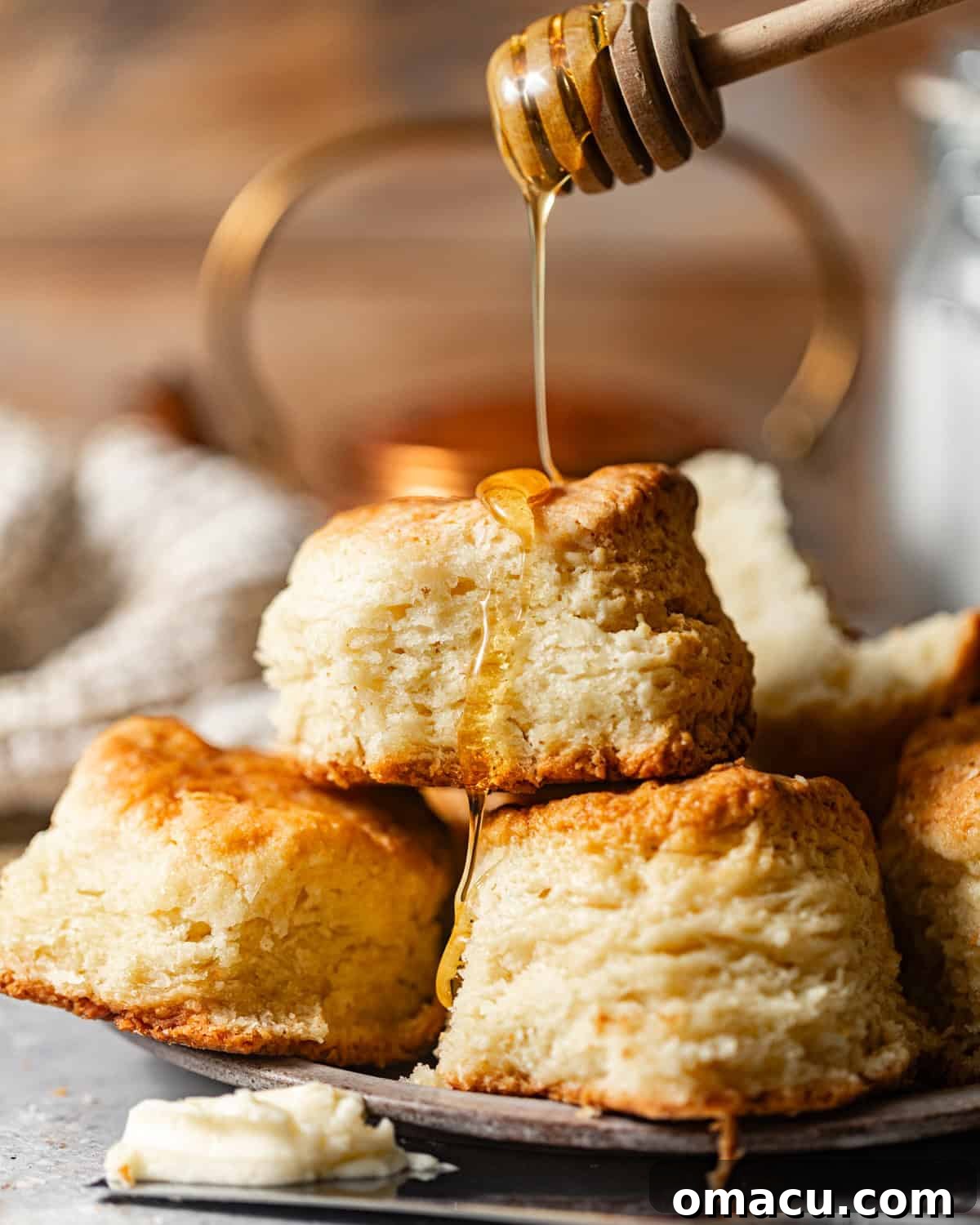
There’s nothing quite like the comforting aroma and taste of freshly baked homemade buttermilk biscuits. This classic recipe delivers biscuits that are consistently tall, exquisitely flaky, and beautifully golden brown, offering the perfect harmony of rich buttery flavor and wonderfully soft, tender layers within. Simple yet profoundly satisfying, these homemade biscuits are a staple you’ll want on your table for any occasion – be it a hearty breakfast, a comforting dinner, or a quick, delightful snack served with your favorite jam or honey.
If you’re a fan of this authentic buttermilk biscuit recipe, be sure to explore our other beloved biscuit variations, including Maple Biscuits, savory Cheddar Cheese Chive Biscuits, and convenient Air Fryer Biscuits.
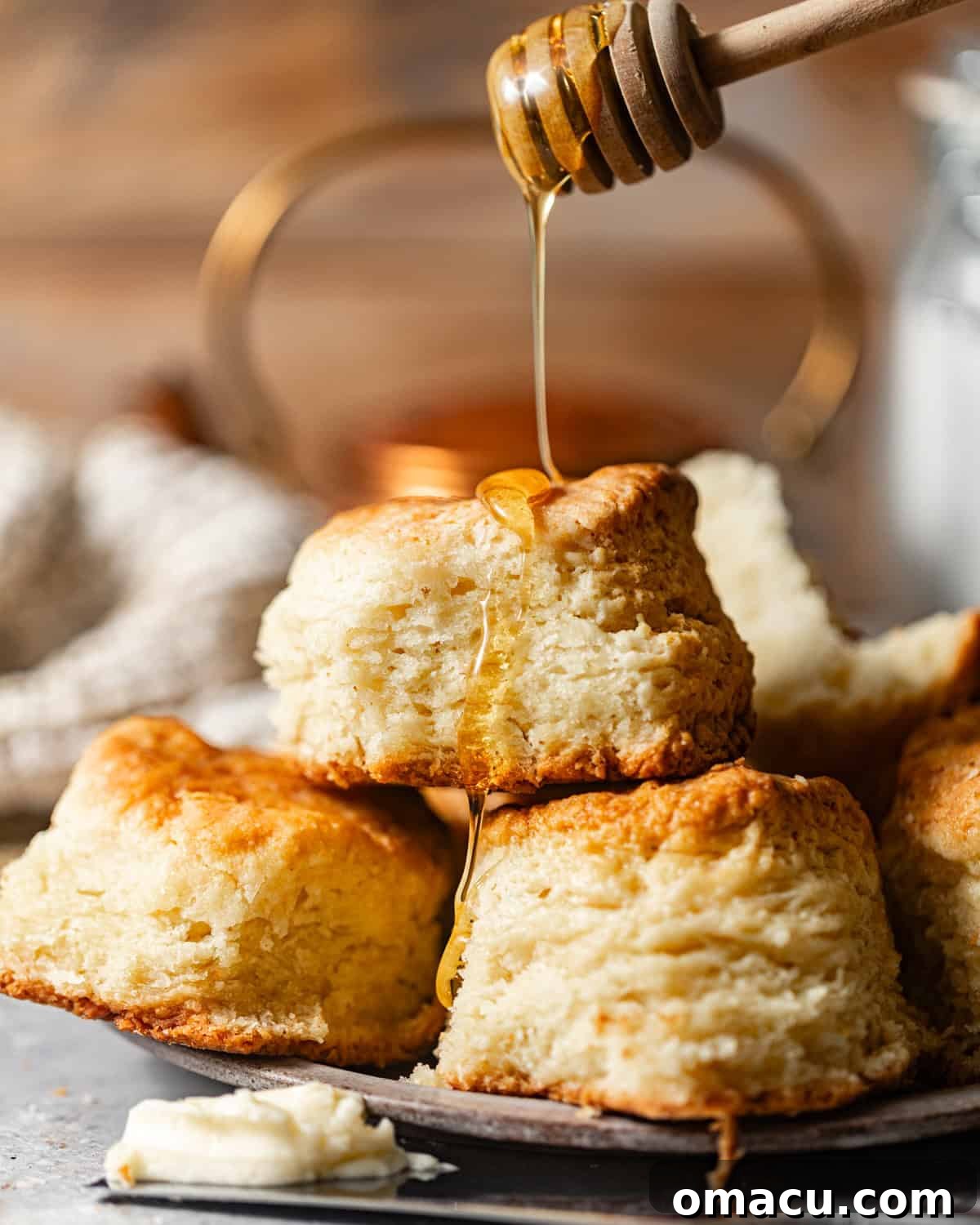
The magic of these old-fashioned buttermilk biscuits lies in their incredible texture and depth of flavor. Each bite reveals a symphony of buttery, soft, and tender interior layers, perfectly complemented by a golden-brown exterior that boasts crisp edges for that satisfying crunch. This isn’t just a recipe; it’s a faithful, tried-and-true method that consistently yields results everyone will adore.
Whether you’re craving a towering stack alongside buttermilk fried chicken, enjoying them with a generous swipe of homemade apple butter, or drizzling them with golden honey on a leisurely Sunday morning, these versatile biscuits are destined to become a cherished part of your culinary repertoire. Their simplicity and comforting nature make them an ideal choice for any meal, any time.
Table of Contents
- Why These Are The Best Homemade Buttermilk Biscuits
- Essential Ingredients for Perfect Biscuits
- Substitutions and Variations to Customize Your Biscuits
- Step-by-Step Guide to Making Classic Buttermilk Biscuits
- Expert Tips for Fluffy and Flaky Biscuits
- Serving Suggestions: What To Eat With Biscuits
- Buttermilk Biscuit Recipe FAQs
- More Comfort Food Recipes to Savor
- Old Fashioned Buttermilk Biscuits Recipe Card
Why These Are The Best Homemade Buttermilk Biscuits
There are countless biscuit recipes out there, but this particular one consistently rises above the rest, earning its title as the ultimate homemade buttermilk biscuit. Here’s why it’s a recipe you’ll reach for again and again:
- Effortless Excellence & A Tried-and-True Method: You don’t need to be a seasoned baker to master these biscuits. The dough comes together quickly using simple, readily available ingredients, and the process is straightforward. This is a truly reliable recipe that yields perfect results every single time, making it ideal for both beginners and experienced cooks alike. Its dependability ensures you’ll always have delicious, homemade biscuits ready to enjoy.
- Unmatched Versatility for Any Meal: These aren’t just breakfast biscuits; they seamlessly transition across all meals. Imagine them topped with sweet jam or savory gravy for brunch, served as an essential side to fried chicken at dinner, or transformed into delightful breakfast sandwiches layered with scrambled eggs, cheese, and crispy bacon. Their neutral yet rich flavor profile makes them the perfect canvas for countless culinary creations.
- Unbelievably Flaky, Tender Texture: The hallmark of a truly great biscuit is its texture, and this recipe absolutely nails it. These buttermilk biscuits are exceptionally soft, pillowy, and possess an ethereal melt-in-your-mouth quality. The secret lies in the careful layering process and the use of cold butter, which creates delicate, distinct flakes that are incredibly satisfying with every bite.
- Rich, Buttery Flavor in Every Morsel: Beyond their inviting appearance, these flaky biscuits boast a profound buttery flavor that permeates every layer. The quality of your butter is key here, contributing to both the tender crumb and the irresistible taste. This isn’t just a hint of butter; it’s a celebration of its rich, creamy essence that makes these biscuits truly unforgettable.
Essential Ingredients for Perfect Biscuits
Crafting the perfect batch of buttermilk biscuits starts with understanding the role each ingredient plays. While the list is simple, their interaction is what creates that desired tall, flaky, and tender result. (A full list of ingredients and precise quantities can be found in the detailed recipe card below.)
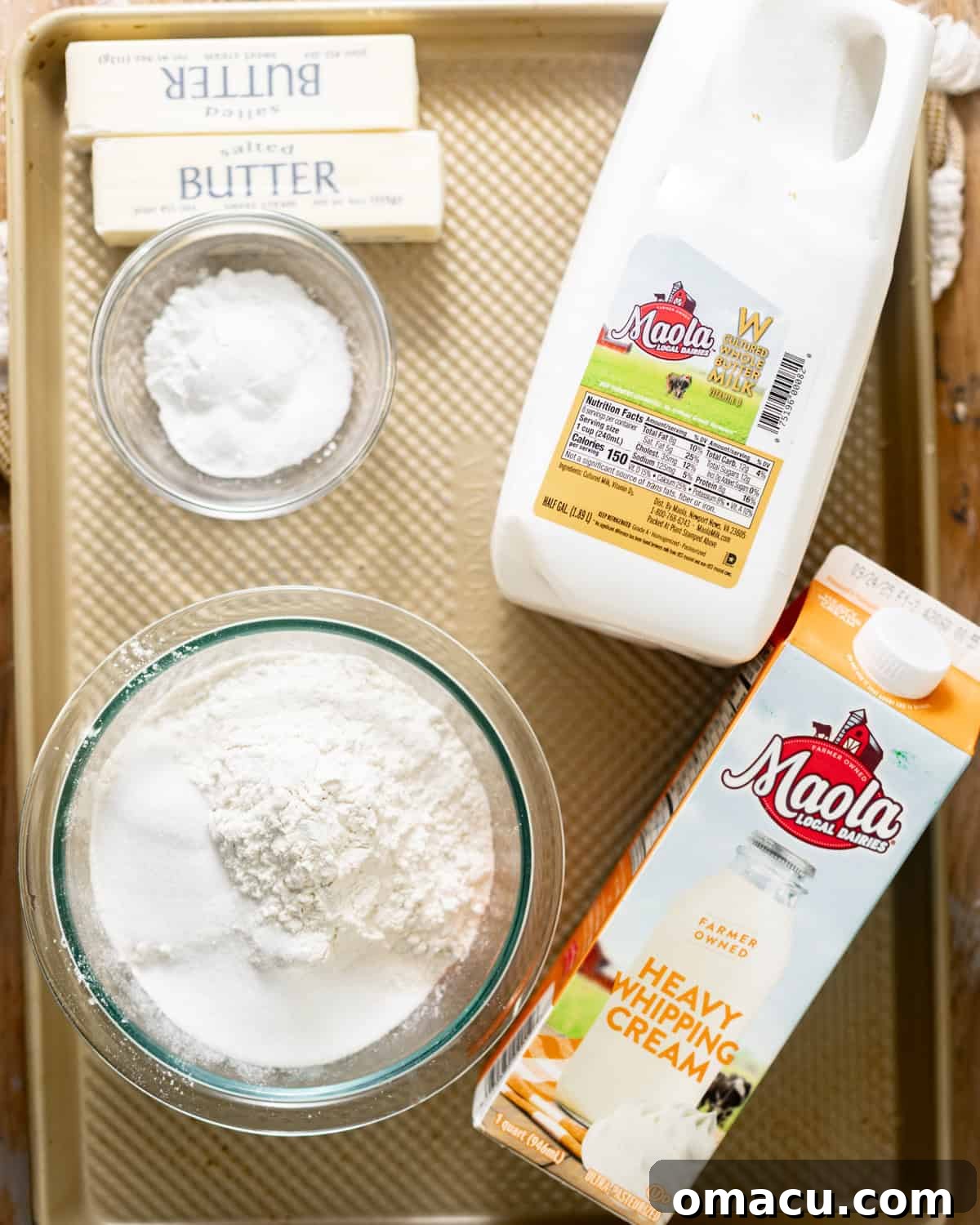
- All-Purpose Flour and Cake Flour Blend: This combination is crucial for achieving the perfect balance of structure and unparalleled softness in your biscuits. All-purpose flour provides the necessary gluten development to hold everything together, while cake flour, with its lower protein content, contributes significantly to a tender, delicate crumb. Avoid using self-rising flour, as it contains leavening agents that will disrupt the recipe’s carefully balanced proportions. If you have access to White Lily Flour, a renowned Southern flour, you can use it exclusively for exceptionally soft results.
- Baking Powder and Baking Soda: These are the dynamic leavening duo responsible for those impressive tall, fluffy biscuits. They react with the acidic buttermilk to create carbon dioxide gas, which expands in the hot oven, lifting the dough and forming those desirable layers. They also play a role in promoting a beautiful golden-brown color during baking.
- Granulated Sugar: Just a hint of sugar is added, not to make the biscuits overtly sweet, but to subtly enhance and balance the rich, salty, and buttery flavors. It also assists in the browning process, contributing to a golden crust, and helps to tenderize the biscuit dough, resulting in a softer texture.
- Kosher Salt: More than just a seasoning, kosher salt is vital for elevating the overall flavor profile, preventing the biscuits from tasting bland or flat. It also contributes to strengthening the gluten structure just enough to help the biscuits maintain their shape as they rise without becoming tough.
- Cold Salted Butter: This is arguably the most critical ingredient for achieving those coveted flaky layers. When tiny pieces of very cold butter melt in the hot oven, they release steam, creating pockets that separate the dough into distinct, airy layers. Using salted butter adds another layer of flavor, but unsalted butter can be used if you prefer to control the salt content more precisely. Ensure your butter is as cold as possible – freezing it beforehand is a pro tip!
- Cold Buttermilk: Beyond imparting a distinct, tangy flavor that is characteristic of classic Southern biscuits, buttermilk is a powerhouse leavening agent when combined with baking soda. Its acidity breaks down gluten, resulting in that wonderfully soft, melt-in-your-mouth texture that defines a perfect biscuit. Always use cold buttermilk for the best results.
- Heavy Cream: A luxurious addition, heavy cream boosts the richness, fat content, and moisture of the dough. This extra fat contributes to an even softer crumb, a velvety texture, and overall more tender biscuits that are truly decadent.
Substitutions and Variations to Customize Your Biscuits
While the classic buttermilk biscuit recipe is perfect as is, it’s also wonderfully adaptable! Don’t be afraid to experiment with these simple substitutions and exciting variations to tailor them to your taste or make use of ingredients you already have on hand.
- Buttermilk Alternatives: No buttermilk in the fridge? No problem! You can easily make your own homemade buttermilk with just two ingredients: whole milk and a touch of lemon juice or white vinegar. Simply add 1 tablespoon of lemon juice or vinegar to a measuring cup, then fill it up to the 1-cup mark with whole milk. Let it sit for 5-10 minutes until it slightly curdles. This trick works beautifully in recipes like our sweet potato biscuits too!
- Baking in a Cast Iron Skillet: For a rustic touch and an incredibly crisp bottom crust, consider baking your biscuits in a preheated cast iron skillet. Just be aware that baking times may need to be extended by 1-2 minutes to achieve the desired doneness and golden color. The cast iron distributes heat wonderfully, giving your biscuits a unique texture.
- Flour Alternatives: If cake flour isn’t available, or if you simply prefer to use one type of flour, you can absolutely use 100% all-purpose flour. While the texture might be slightly less tender, you will still achieve excellent, delicious results. The goal is always a good biscuit!
- No Heavy Cream? If you don’t have heavy cream on hand, you can simply substitute it with an equal amount of cold buttermilk. This will still provide moisture and tenderness, though the richness might be slightly reduced.
- Exciting Mix-Ins: Elevate your biscuits by incorporating various mix-ins into the dough!
- Cheesy Biscuits: Fold in a cup of shredded sharp cheddar cheese or a blend of your favorite cheeses for savory cheese biscuits.
- Herbaceous Delights: Add 1-2 tablespoons of fresh chopped herbs like chives, rosemary, thyme, or sage for aromatic biscuits.
- Garlic Goodness: A teaspoon of garlic powder can infuse a delightful savory note.
- A Touch of Heat: For those who enjoy a little kick, a pinch of cayenne pepper or a dash of black pepper can add a wonderful warmth.
Step-by-Step Guide to Making Classic Buttermilk Biscuits
Follow these detailed steps to create your own batch of perfect, flaky homemade buttermilk biscuits. The key to success lies in keeping your ingredients cold and handling the dough gently.
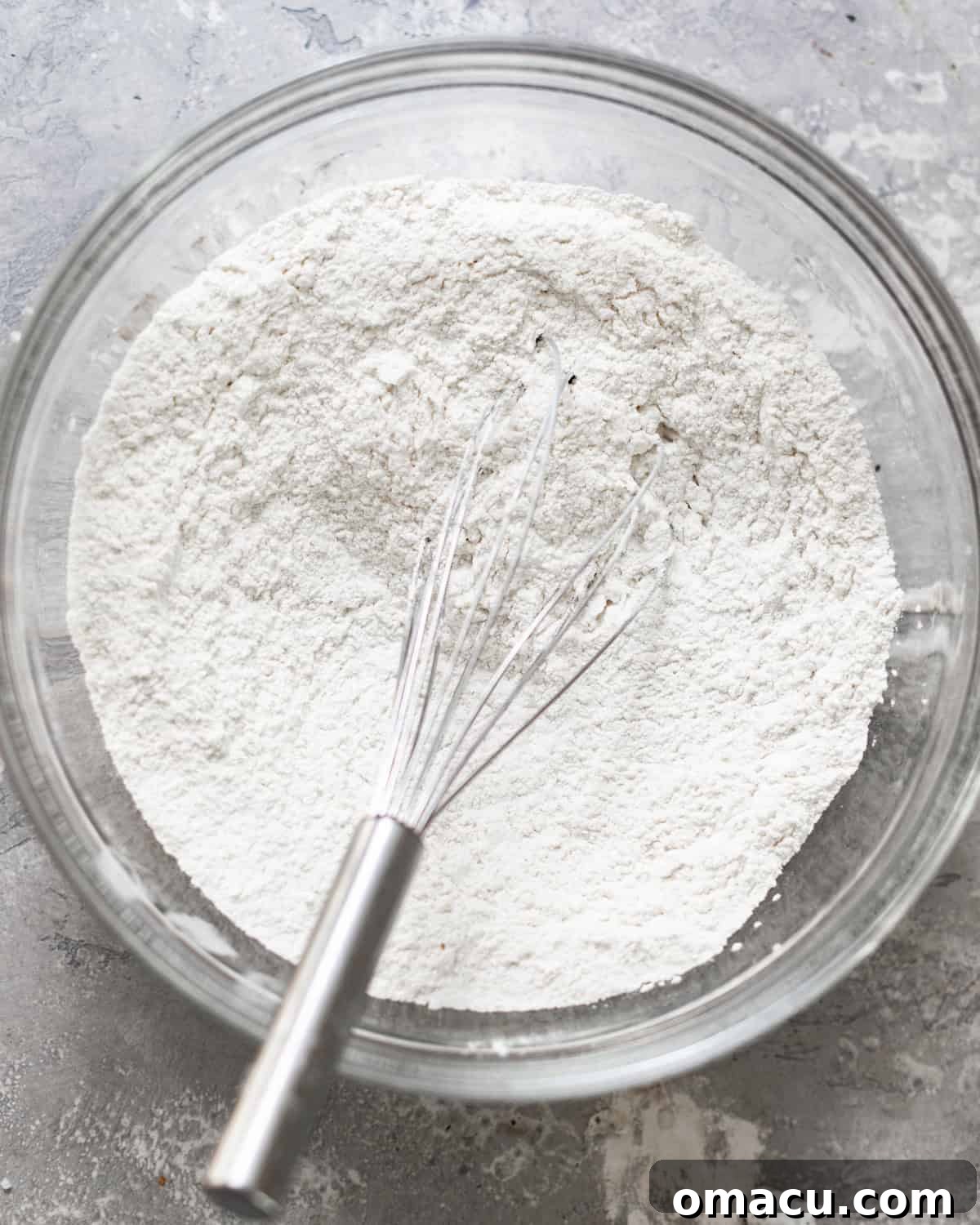
Step 1: Prepare Your Oven and Dry Ingredients. Preheat your oven to a hot 450 degrees F (232 degrees C). In a large mixing bowl, thoroughly whisk together your dry ingredients: the all-purpose flour, cake flour, granulated sugar, baking powder, baking soda, and kosher salt. Ensure they are well combined for even distribution of leavening and flavor.
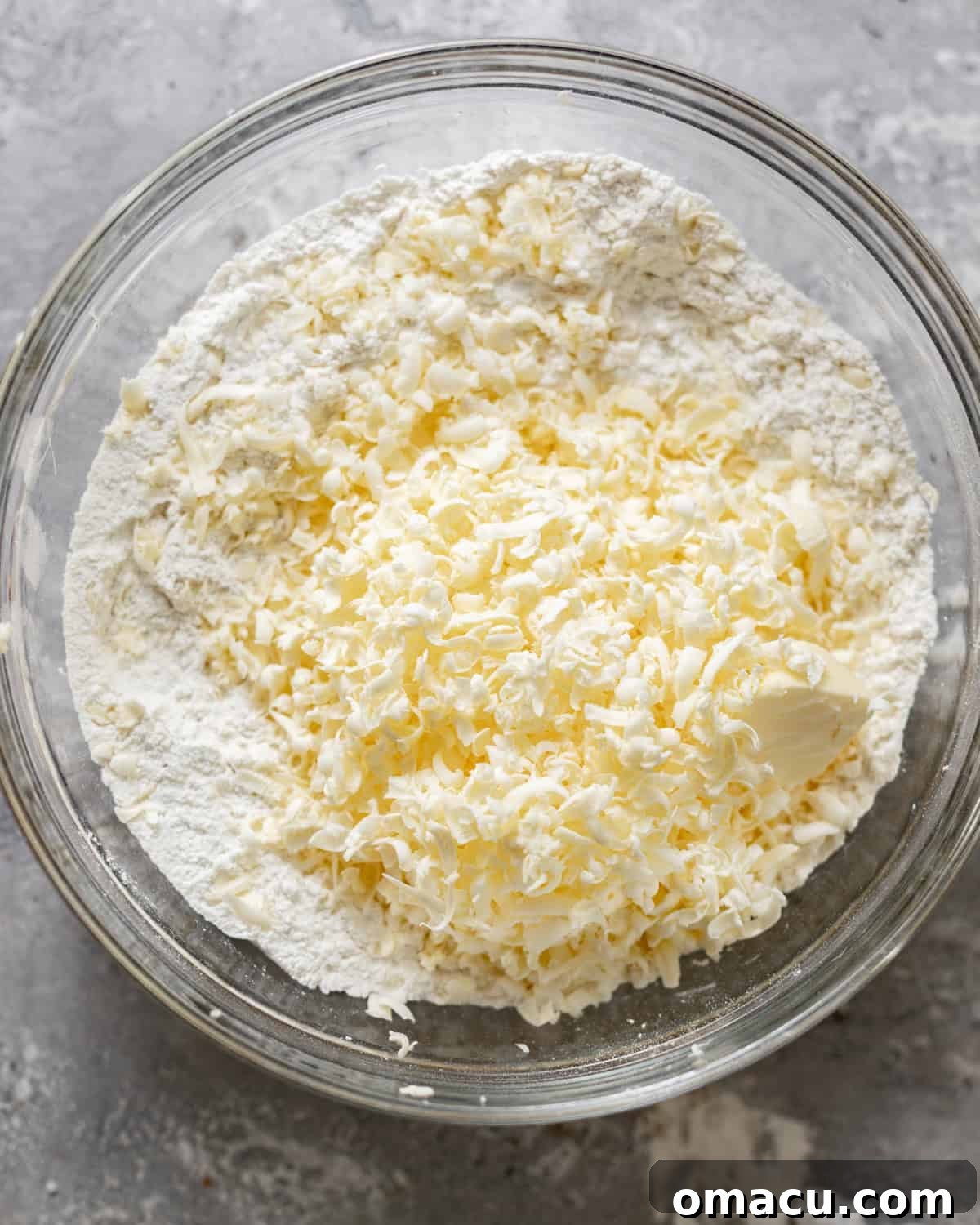
Step 2: Incorporate the Cold Butter. Cut your extremely cold butter into small cubes, or for even easier incorporation, grate it using a box grater directly into the flour mixture. Using your fingertips, gently pinch and turn the butter into the flour until it resembles pea-sized morsels. The mixture should feel somewhat crumbly but hold its shape when squeezed. You can also use a pastry cutter or a food processor for this step, but be careful not to overmix.
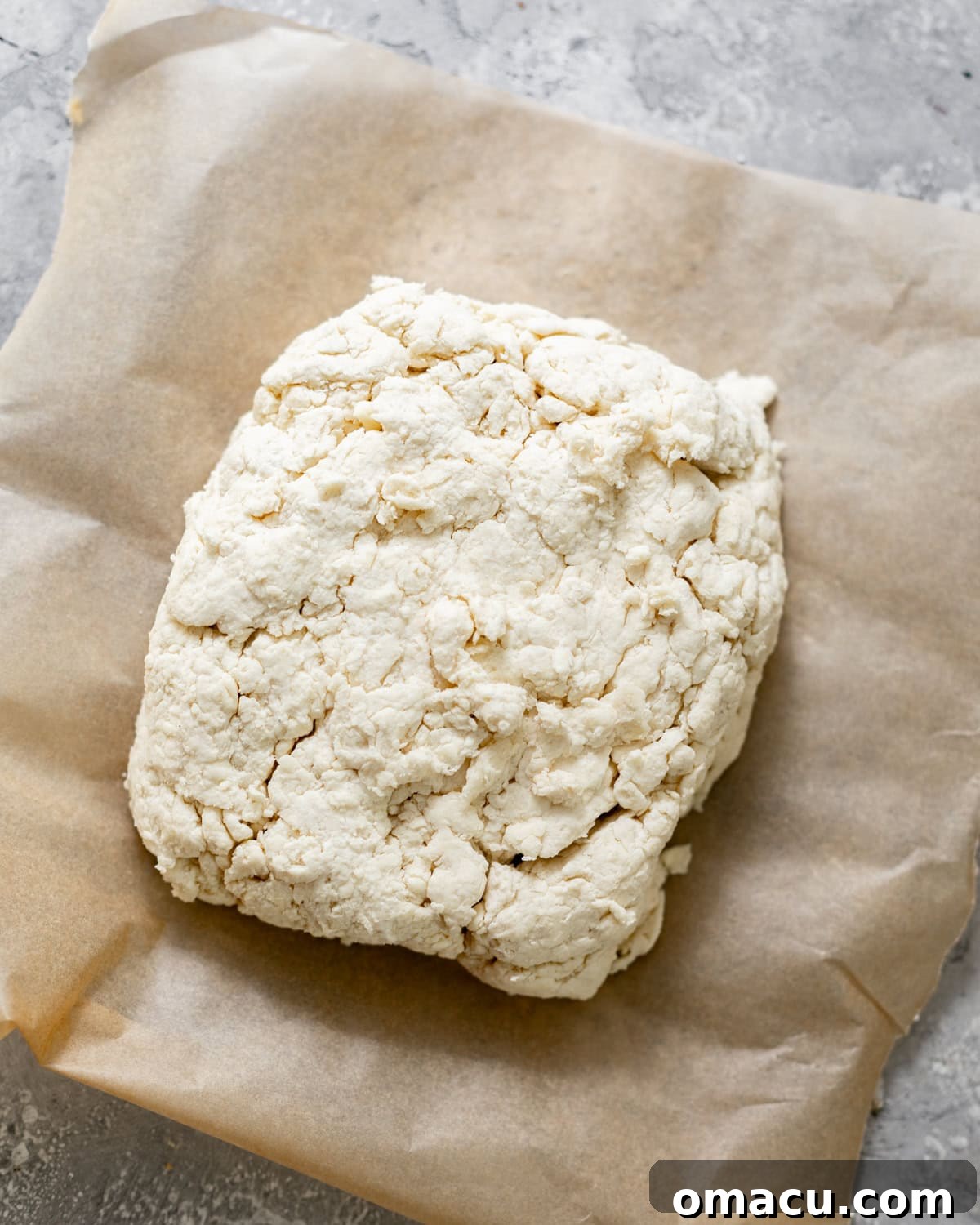
Step 3: Add Wet Ingredients and Form Dough. Create a small well in the center of your dry ingredients and butter mixture. Pour in the cold buttermilk and heavy cream. Using a wooden spoon or a spatula, mix everything together until a shaggy, crumbly dough with coarse crumbs forms. It’s crucial not to overmix here. The dough may appear very crumbly – resist the urge to add more liquid! Turn the dough out onto a lightly floured work surface. Gently work and pat the dough with your hands, pressing the pieces together until it is no longer overly crumbly and just barely cohesive. Then, use a rolling pin to flatten the dough until it’s about 1 inch thick. Shape the dough into a neat square.
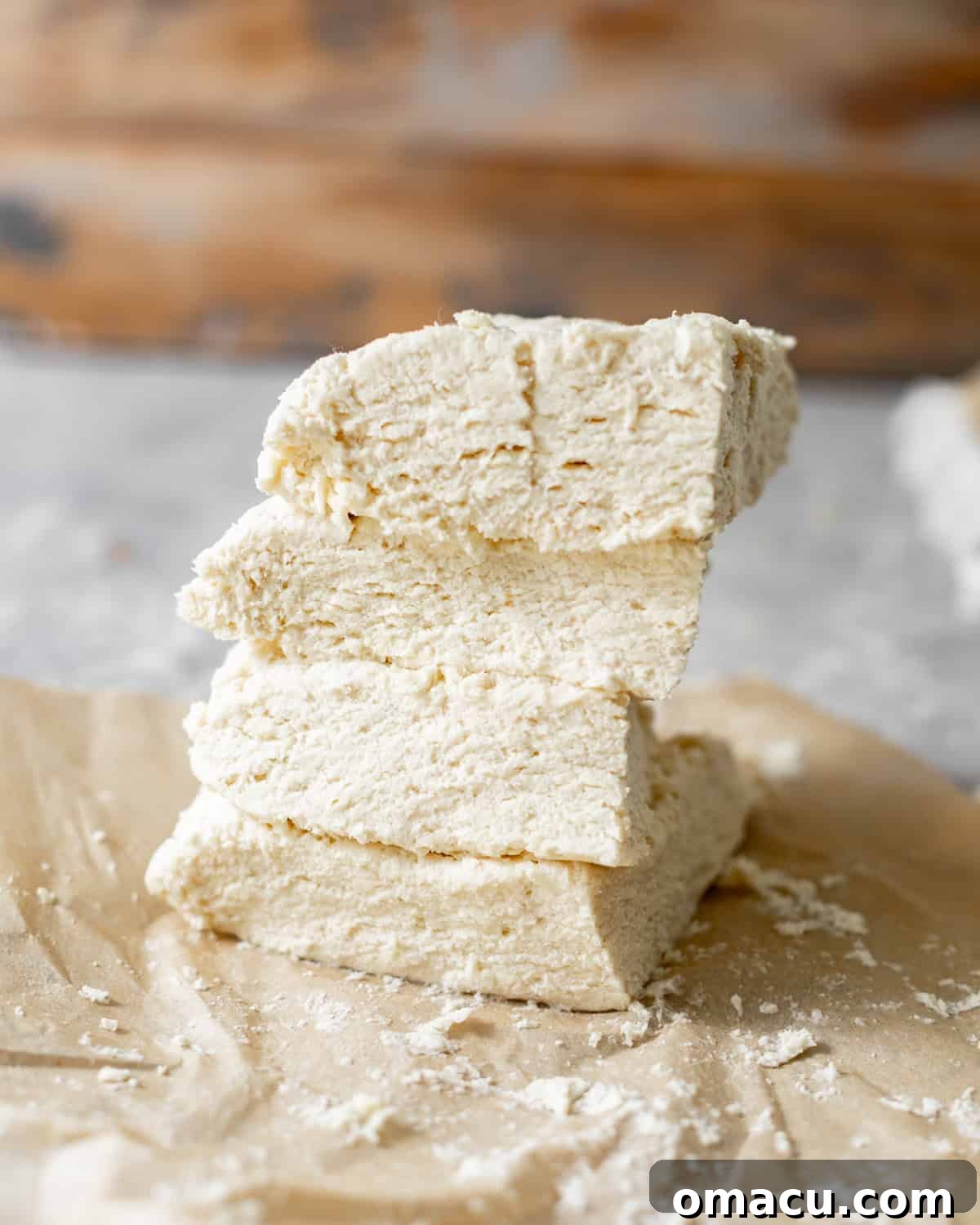
Step 4: Layer the Dough for Flakiness. To achieve those wonderful flaky layers, cut the square dough into four equal pieces. Stack these four pieces directly on top of each other. Gently press the stacked dough down, then carefully flatten it again with your hands or a rolling pin until it’s back to about 1 inch thick. Repeat this cutting, stacking, and flattening process two more times (for a total of three repetitions). This lamination technique is vital for building those tender, separated layers within your biscuits.
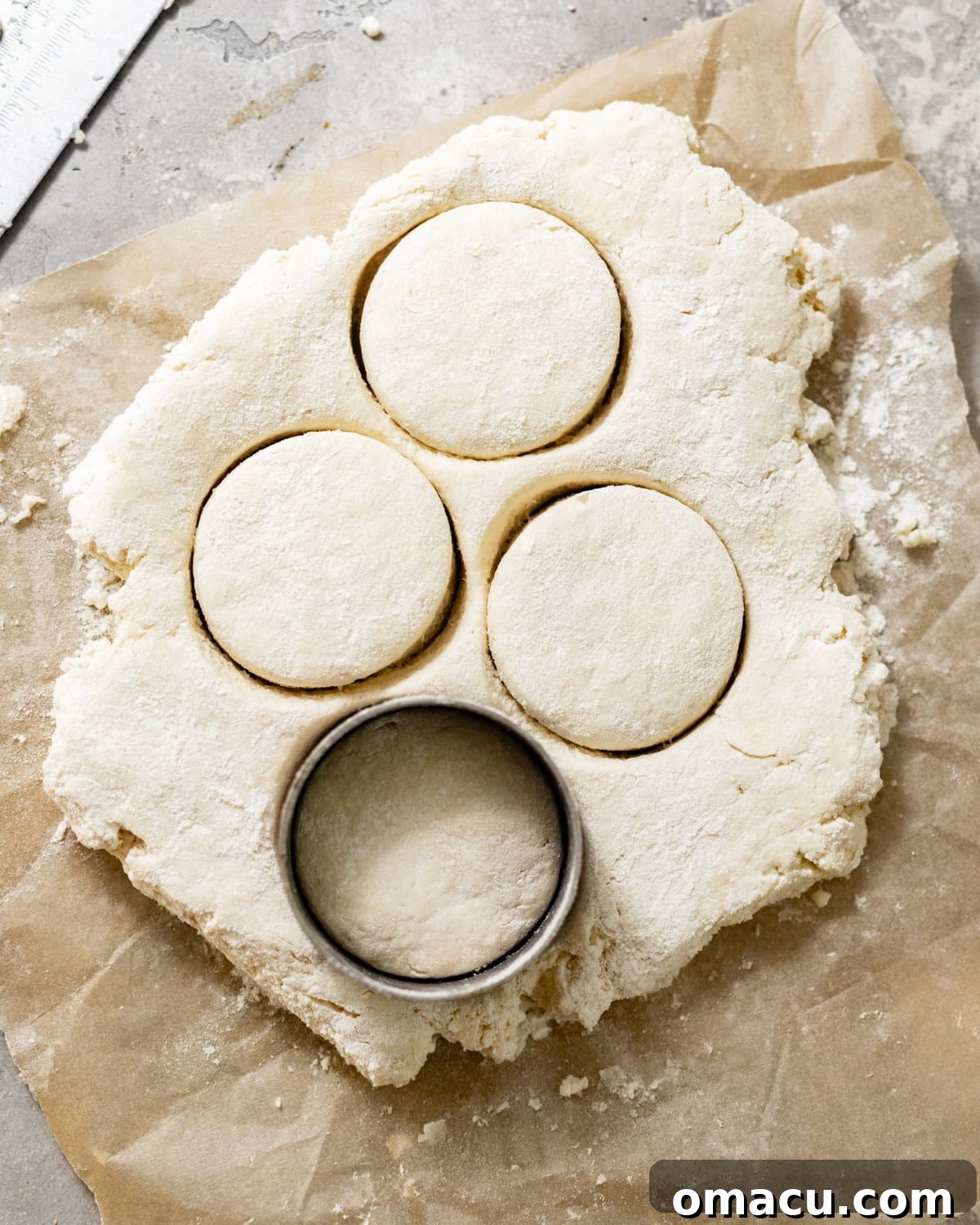
Step 5: Cut and Arrange Biscuits. Using a 2 3/4 inch round biscuit cutter, press straight down into the dough firmly in one swift motion. Crucially, do NOT twist or turn the cutter once it’s in the dough, as this will seal the edges and inhibit the layers from rising properly. Simply press down, then pull straight up. Carefully gather any excess dough, gently press it back together (do not knead!), re-flatten to 1 inch thick, and continue cutting until all the biscuit dough is used, yielding approximately 8-10 biscuits.
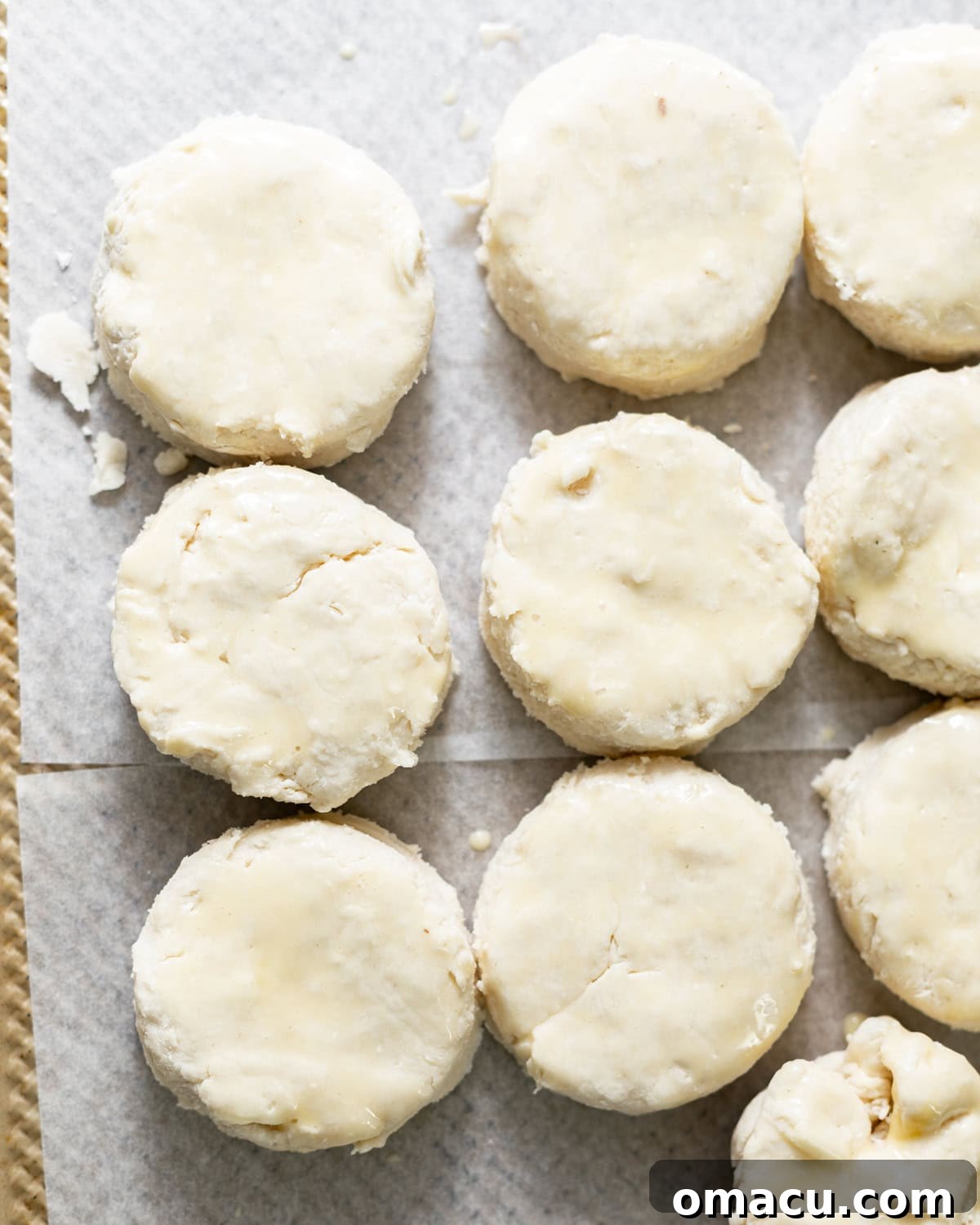
Step 6: Chill, Egg Wash & Bake. Place the cut biscuits onto a parchment paper-lined baking sheet, arranging them so they are nearly touching. This encourages them to rise upwards rather than spread outwards. Transfer the baking sheet to the freezer and chill for 10 minutes – this quick chill helps the butter stay firm and contributes to a better rise. While chilling, whisk together one egg and 1 tablespoon of heavy cream in a small bowl to create an egg wash. After chilling, liberally brush the tops of the biscuits with the egg wash. Bake in the preheated oven for 15-20 minutes, or until the tops are beautifully golden brown and the biscuits have risen significantly. For an extra touch of decadence, immediately after removing from the oven, brush the warm biscuits with a little melted butter before serving.
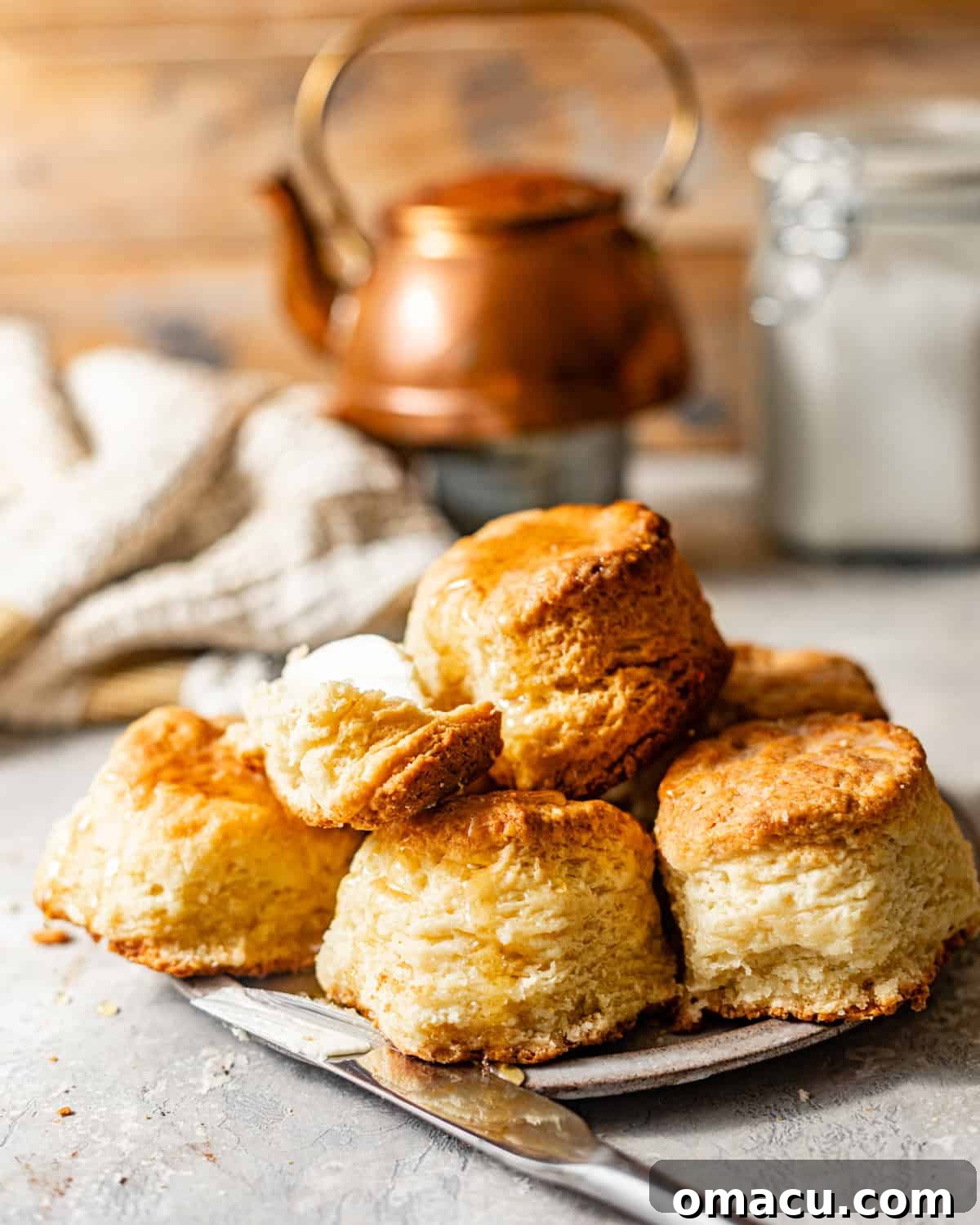
Expert Tips For The Best Biscuits!
Achieving bakery-quality biscuits at home is entirely possible with a few key techniques. These expert tips will ensure your homemade buttermilk biscuits are consistently tall, gloriously flaky, and wonderfully tender every time:
- Embrace the Cold – The Golden Rule: The single most important secret to tall, flaky layers is to keep all your ingredients, especially the butter and buttermilk, as cold as possible. Think of it like making pie crust – warm ingredients mean melted butter before it hits the oven, leading to flat, dense biscuits. Cold butter creates steam pockets as it melts in the hot oven, which pushes the layers apart. If at any point your dough feels warm during preparation, don’t hesitate to pop it into the freezer for 10-15 minutes to chill it down again.
- Freeze Your Butter for Superior Flakiness: For the flakiest biscuits imaginable, take an extra step and freeze your butter for at least 30 minutes before you begin slicing or grating it into the flour. This ensures the butter remains ultra-cold and firm, leading to more distinct and impressive layers once baked.
- Avoid Overworking the Dough at All Costs: This is a critical point! Mix the dough just until it barely comes together and a cohesive mass forms. Overmixing develops the gluten in the flour excessively, which will result in tough, chewy biscuits instead of the desired soft and tender texture. Handle the dough gently and minimally.
- Bake Them Close Together for a Perfect Rise: When arranging your cut biscuits on the baking sheet, place them relatively close to each other, almost touching. This proximity helps them support each other as they rise, encouraging them to grow taller rather than spreading outwards. This technique is often referred to as “shoulder-to-shoulder” baking and is key for that impressive height.
- Use a Wooden Spoon for Mixing: When combining the wet and dry ingredients, opt for a wooden spoon over your hands, especially if your kitchen is warm. Your hands naturally transfer heat, which can quickly warm up the cold butter in the dough, compromising the flaky layers. A wooden spoon helps maintain that crucial cold temperature.
- The Straight Cut – No Twisting: When using your biscuit cutter, press it straight down and lift it straight up. Do not twist the cutter! Twisting seals the edges of the biscuit layers together, preventing them from puffing up and creating those beautiful, separated flakes.
- Verify Oven Temperature: An accurate oven temperature is paramount for biscuits to rise correctly and brown evenly. Ovens can often be uncalibrated, so using an oven thermometer is highly recommended. If your oven isn’t hot enough, your biscuits may not achieve the desired lift and crispy exterior.
Serving Suggestions: What To Eat With Biscuits
This easy biscuit recipe creates one of those truly magical foods that pairs wonderfully with an astonishing array of dishes. Their versatile nature means they can star in breakfast, lunch, or dinner, or simply be enjoyed as a delightful snack.
Breakfast & Brunch Bliss:
Transform these fluffy biscuits into incredible breakfast sandwiches. Pile them high with perfectly scrambled eggs, melty cheese, crispy bacon, or savory sausage. For a sweeter start, a generous drizzle of honey or maple syrup is absolutely divine. They are also quintessential for dunking into creamy sausage gravy – a true Southern classic that’s rich, peppery, and utterly satisfying. Pair them with fresh fruit and whipped cream for a quick and easy strawberry shortcake or our delightful peach shortcakes.
Lunch & Dinner Delights:
Biscuits make fantastic little sandwiches for lunch. Fill them with crispy fried chicken, slices of succulent glazed ham, or even leftover roasted turkey. For dinner, these humble biscuits truly shine alongside hearty, comforting meals. Serve them with a steaming bowl of stove-top beef stew, a robust Dutch oven chili, or a creamy sweet potato chowder. They are also an indispensable accompaniment to family-style feasts such as a big pot of spicy Cajun seafood gumbo or a vibrant seafood boil, perfect for soaking up all those delicious juices.
Simple Snack & Sidekick:
Let’s be real – a warm biscuit, fresh from the oven, with a slab of butter melting into its flaky layers, or a spoonful of your favorite jam or fruit preserve, is a transcendent snack all on its own. They are the ultimate simple pleasure.
Buttermilk Biscuit Recipe FAQs
The secret to truly fluffy biscuits lies in using very cold butter. When cold butter pieces melt in a hot oven, they release steam, which creates air pockets and pushes the biscuit layers apart, resulting in a light and airy texture. For best results, freeze your butter for about 20 minutes before incorporating it into the flour mixture to ensure it’s firm and perfectly chilled.
The primary difference between drop biscuits and classic regular biscuits lies in their dough consistency and preparation method. Drop biscuits typically have a looser, wetter dough, allowing them to be simply “dropped” onto a baking sheet. They are less uniform in shape and have a more rustic, cake-like texture. Regular (or cut) biscuits, like those in this recipe, feature a more structured, laminated dough where cold butter is carefully cut into the flour. This process creates distinct, flaky layers that give them their characteristic height and tender crumb, and they are typically cut into neat rounds or squares.
To maintain their freshness, store any leftover biscuits in an airtight container or a sealed freezer bag at room temperature. They will remain delicious for approximately 3-4 days. If you wish to store them for a longer period, you can freeze them for up to 3 months. To reheat frozen biscuits, simply place them on a baking sheet and bake at 350°F (175°C) for about 10-12 minutes, or until warmed through and slightly crispy on the outside.
If your biscuits aren’t rising well in the oven, it usually points to one of two common issues: either the biscuit dough became too warm before baking, or your oven temperature isn’t accurate. Cold butter is essential for steam creation and lift. If your kitchen is warm, or if you handled the dough extensively, the butter might have softened too much. Try freezing the cut biscuits for 15-20 minutes before baking to ensure they are very cold. Additionally, always use an oven thermometer to verify your oven’s temperature, as an oven that isn’t hot enough will prevent the leavening agents from activating optimally.
To achieve extra-crispy biscuits, focus on two main factors: a very hot oven and precise ingredient measurement to avoid excess moisture. Ensure your oven is preheated to the correct, high temperature (450°F / 232°C is typical for biscuits), as high heat promotes rapid browning and crisping of the exterior. Secondly, accurately measure your liquids and flours; too much liquid can lead to a soggy dough that struggles to crisp up. Baking them in a cast-iron skillet can also help achieve a superior crispy bottom crust.
More Comfort Food Recipes to Savor
If you’ve fallen in love with the comforting taste of these homemade buttermilk biscuits, you’ll be thrilled to discover more heartwarming recipes designed to bring warmth and joy to your kitchen.
Appetizers
Grandma’s Buttermilk Cornbread
Main Course
Chicken Pot Pie with Cheddar Bay Biscuits
Appetizers
Brioche Dinner Rolls
Breakfast
Buttermilk French Toast
Want more delicious and beautiful recipes? Subscribe to our newsletter to receive the latest seasonal creations as soon as they’re released directly to your inbox!
If you create this incredible recipe, please take a moment to leave a star rating on the recipe card below and share your thoughts in the comments! You can also tag @BritneyBreaksBread on Instagram and use the hashtag #britneybreaksbread so we can celebrate your beautiful culinary creations!
Old Fashioned Buttermilk Biscuits
20 minutes
15 minutes
30 minutes
10
Biscuits
Pin
Equipment
-
Baking Sheet
-
Mixing Bowls
-
2 3/4 inch Biscuit Cutter
Ingredients
- 2 1/2 cups All-Purpose Flour
- 1 cup cup Cake Flour , (see notes)
- 1 tbsp Baking Powder
- 1/2 tsp Baking Soda
- 2 tbsps Sugar
- 2 tsp Kosher Salt
- 1 cup Butter, (cold)
- 3/4 cup Buttermilk, (cold)
- 1/2 tbsps Heavy Cream, (cold)
Egg Wash
- 1 Egg
- 1 tbsp Heavy Cream
Instructions
-
Preheat the oven to 450 degrees F (232°C).
-
In a large mixing bowl, whisk together the all-purpose flour, cake flour, 2 tbsps sugar, baking powder, baking soda, and kosher salt.
-
Cut the cold butter into small cubes or grate it with a box grater. Add it to the flour mixture. Using your fingertips or a pastry cutter, pinch and turn the butter into the flour until pea-sized morsels form. The mixture should hold its shape when squeezed.
-
Create a well in the center of the mixture. Pour in the cold buttermilk and heavy cream. Mix until a shaggy, crumbly dough forms with coarse crumbs. Do not overmix; the dough will appear very crumbly.
-
Remove the dough from the bowl and turn it out onto a lightly floured work surface. Gently work and pat the dough with your hands, pressing the pieces together until it’s cohesive. Use a rolling pin to flatten the dough until it’s 1 inch thick.
-
Shape the dough into a square. Cut the dough into 4 pieces and stack them on top of each other. Gently press and flatten the stack back to 1 inch thick. Repeat this layering process 3 times in total to create flaky layers. Then, press a 2 3/4 inch round biscuit cutter straight down into the dough (do not twist). Pull the cutter straight up. Re-roll scraps gently and cut more biscuits until all dough is used, yielding 8-10 biscuits.
-
Place biscuits onto a parchment paper-lined baking sheet, close together. Transfer the baking sheet to the freezer and freeze for 10 minutes.
-
In a small bowl, whisk together one egg and 1 tbsp of heavy cream for the egg wash.
-
Liberally brush the tops of the chilled biscuits with the egg wash. Bake in the preheated oven for 15-20 minutes, or until golden brown. Immediately after baking, brush the warm biscuits with a little melted butter for extra richness and serve.
Notes
- If you don’t have cake flour, you can use all-purpose flour in its place. For an authentic Southern touch, if you can find White Lily Flour, it can be used entirely for exceptional tenderness.
- Crucial Temperature Control: Freeze your butter for at least 20 minutes (or even longer) before slicing or grating it into the flour mixture. Similarly, keep the buttermilk in the refrigerator until the very moment you’re ready to add it. Both butter and buttermilk must be as cold as possible to achieve that desirable flaky, fluffy texture. Do not use room temperature butter.
- Mixing Utensils: Use a wooden spoon to mix the dry and wet ingredients. This helps maintain the cold temperature of the biscuit dough, preventing your hands from warming the butter and ensuring fluffy biscuits.
- Gentle Dough Handling: Avoid overworking your dough. There’s no need for extensive kneading. Simply press the dough together until it’s just cohesive and no longer crumbly, then stop. Overworking will develop too much gluten, resulting in tough biscuits.
- Cutting Technique: When using the biscuit cutter, press it straight down and pull it straight up. Absolutely do not twist the cutter! Twisting seals the edges of the dough, which prevents the layers from expanding properly and results in unevenly cooked biscuits.
- Food Processor Use: If you opt to use a food processor to incorporate the butter into the flour, it can certainly save time. However, always transfer the butter-flour mixture to a large bowl before adding the buttermilk. The dough becomes quite thick once the liquid is added and could potentially strain or damage your food processor.
- Oven Calibration: Oven temperature accuracy is vital. Not all ovens are calibrated the same way, so it’s highly recommended to use an oven thermometer to ensure your oven maintains the precise temperature required for proper rising and browning.
Nutrition
Carbohydrates: 37g,
Protein: 6g,
Fat: 21g,
Saturated Fat: 13g,
Polyunsaturated Fat: 1g,
Monounsaturated Fat: 5g,
Trans Fat: 1g,
Cholesterol: 70mg,
Sodium: 820mg,
Potassium: 84mg,
Fiber: 1g,
Sugar: 3g,
Vitamin A: 654IU,
Vitamin C: 0.01mg,
Calcium: 107mg,
Iron: 2mg
Nutrition information is automatically calculated, so should only be used as an approximation.
Tried this recipe?Mention @BritneyBreaksBread or tag #BritneyBreaksBread!