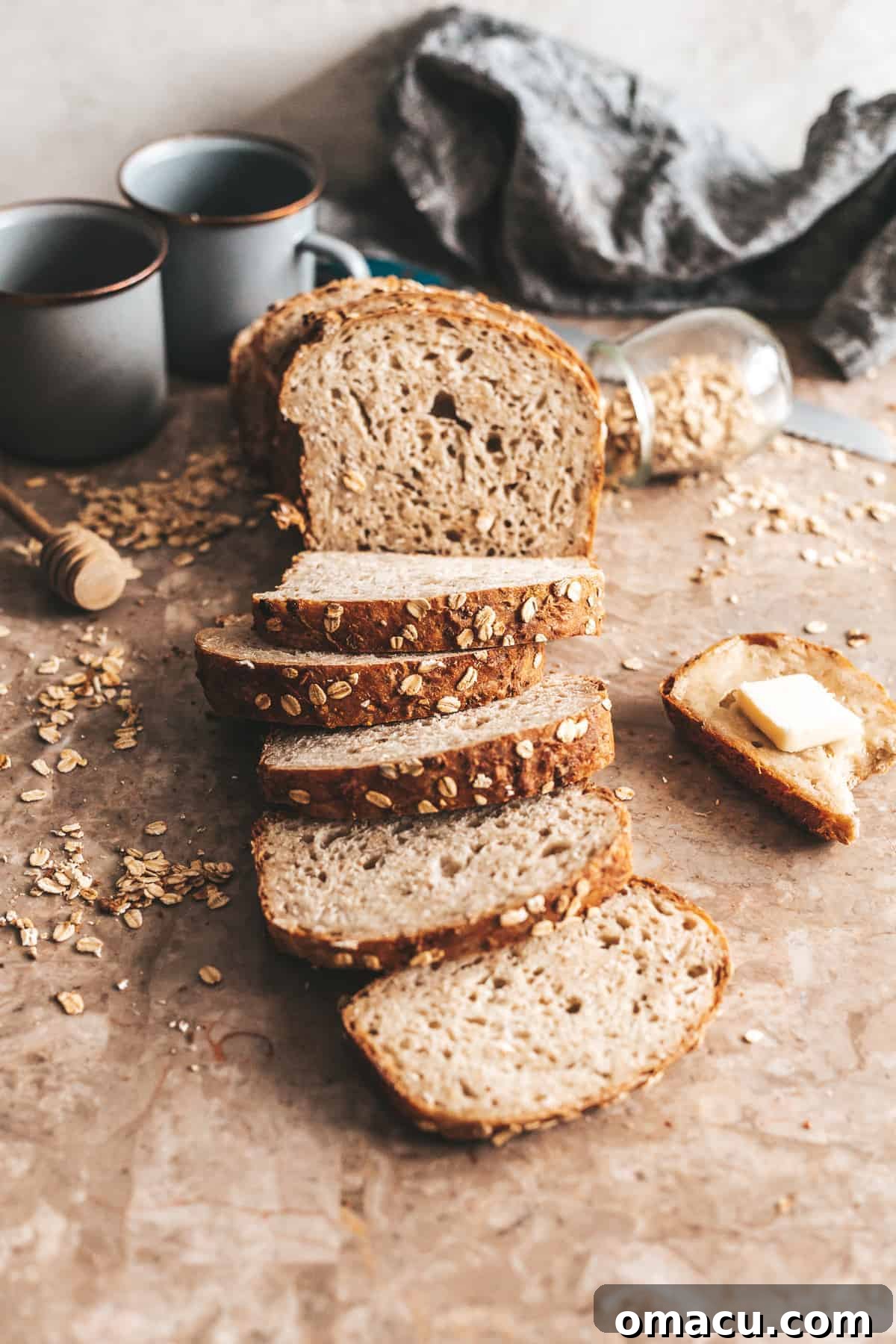
There’s nothing quite like the comforting aroma of freshly baked bread filling your home. Among the myriad of homemade delights, Honey Oat Bread stands out as a true staple. It’s sweet, incredibly soft, and surprisingly easy to master, making it the perfect choice for your morning toast, a wholesome sandwich, or simply enjoyed on its own. Prepare to fall in love with this recipe, as it’s sure to become a beloved regular in your kitchen!
Looking for more delightful baking projects to expand your culinary skills? After you’ve savored this Honey Oat Bread, be sure to explore The Best Banana Bread Recipe Ever and these savory Bacon Cheddar and Thyme Biscuits for a diverse culinary experience that caters to all tastes.
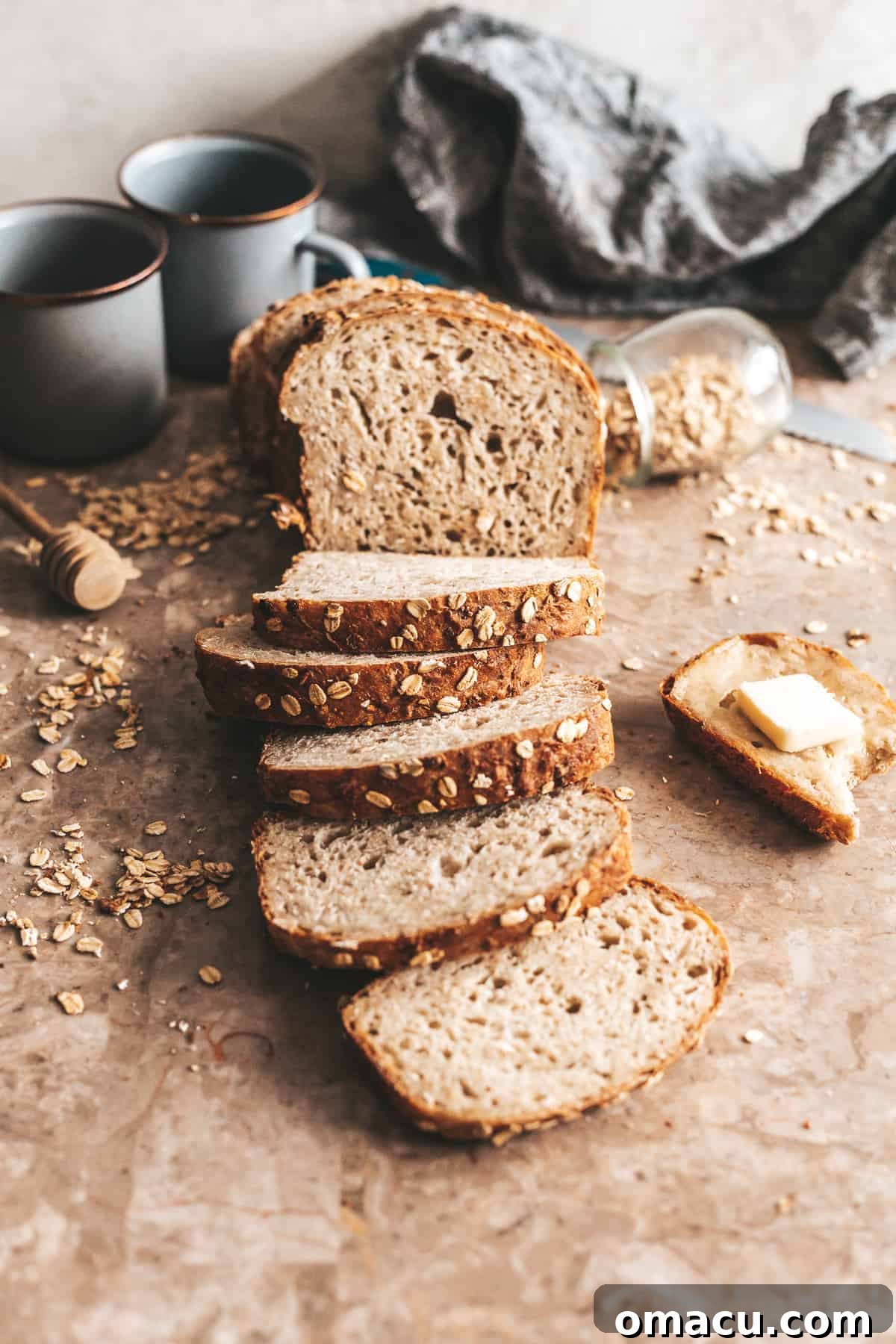
Table of Contents
- The Journey to the Perfect Honey Oat Bread
- What is Honey Oat Bread, and Why You’ll Love It
- Why Homemade Bread is Always the Best Choice
- Serving Suggestions for Your Honey Oat Bread
- How Many Slices Per Loaf?
- Storage Tips to Keep Your Bread Fresh
- Rolled Oats vs. Instant Oats: The Texture Difference
- Essential Baking Tips for Honey Oat Bread
- More Baking Inspiration
- Honey Oat Bread Recipe
Homemade Honey Oat Bread: A Sweet & Simple Loaf for Every Occasion
As the new year begins, many of us set resolutions to embrace healthier habits or try new skills. What better way to fulfill those goals than by diving into the rewarding world of homemade baking? This Honey Oat Bread recipe offers a fantastic starting point for aspiring bakers and seasoned pros alike. It’s subtly sweet, uses only a handful of common ingredients, and doesn’t demand any advanced techniques. The result is consistently a light, airy, and incredibly fluffy crumb that tastes exceptional whether slathered with butter, made into a hearty sandwich, or simply enjoyed plain.
This bread isn’t just a treat; it’s a testament to the simple joys of baking. Its versatility means it can grace your breakfast table, elevate your lunch, or even be a delightful accompaniment to a savory dinner, adding a unique sweet and savory balance. Give it a try, and prepare to impress yourself and your loved ones with a loaf that’s as wholesome as it is delicious.
While you’re here, don’t miss out on exploring other delightful recipes like this Apple Oat Bread and a comforting Cheesy Beer Bread to further expand your baking repertoire and discover new favorites.
The Journey to the Perfect Honey Oat Bread: A Tale of Persistence
Every great recipe often has a story, and this Honey Oat Bread is no exception. My journey to perfecting this loaf began last Fall with an impromptu baking session. The initial taste was absolutely incredible – soft, sweet, and bursting with flavor. I was so excited that I even posted a sneak peek reel on social media, eager to share what I thought would be an instant hit. However, despite its deliciousness, the recipe wasn’t ready for primetime. Each attempt resulted in the dough overflowing the pan, leaving me with misshapen, structurally unsound loaves. The frustration was palpable, as I wrestled with a recipe that tantalized the taste buds but refused to cooperate in form.
My core philosophy for Britney Breaks Bread recipes is to keep them straightforward and accessible. I believe that anyone, regardless of their baking experience, should be able to achieve fantastic results without unnecessary complications. Posting a recipe that tasted amazing but consistently failed in presentation simply didn’t align with that goal. So, after several attempts and a good deal of dough-related drama, I decided to put the Honey Oat Bread project on hold, giving myself a much-needed break from the overflowing pans.
Fast forward four months, the idea of that delicious, albeit problematic, bread still lingered in my mind. I decided it was time for a fresh approach, armed with new insights and a renewed determination. This time, I went back to basics, meticulously re-evaluating each ingredient ratio, the proofing process, and even the type of baking vessel. The breakthrough finally came! The loaf baked beautifully, achieving that perfect golden-brown crust and an irresistibly soft interior. I sliced into it immediately, savoring a plain piece, then transforming another into a delightful peanut butter and jelly sandwich. Even my husband, a discerning taste-tester, gave it his enthusiastic seal of approval, confirming that the journey was well worth it!
This experience truly highlighted the importance of patience and precision in baking. Sometimes, a recipe just needs a little more love, attention to detail, and a willingness to learn from past attempts to truly shine. And now, I’m thrilled to share this perfected version with you, so you can skip the trial-and-error and go straight to baking success and the joy of a perfect homemade loaf!
For more rustic and comforting bread ideas, also check out this Same Day Country Loaf and this inviting Maple Oat Breakfast Bread to further diversify your homemade bread repertoire.
What is Honey Oat Bread, and Why You’ll Love It
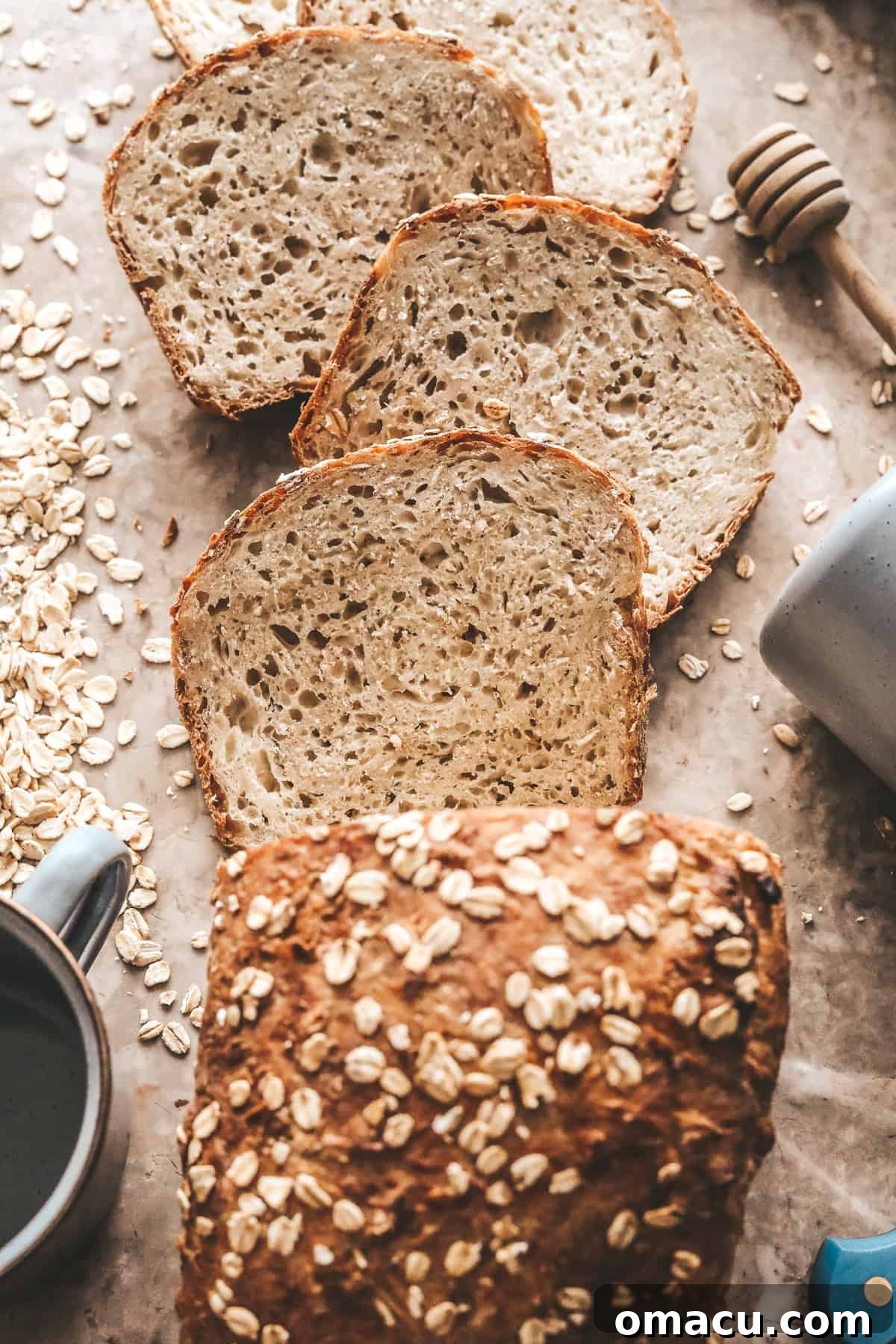
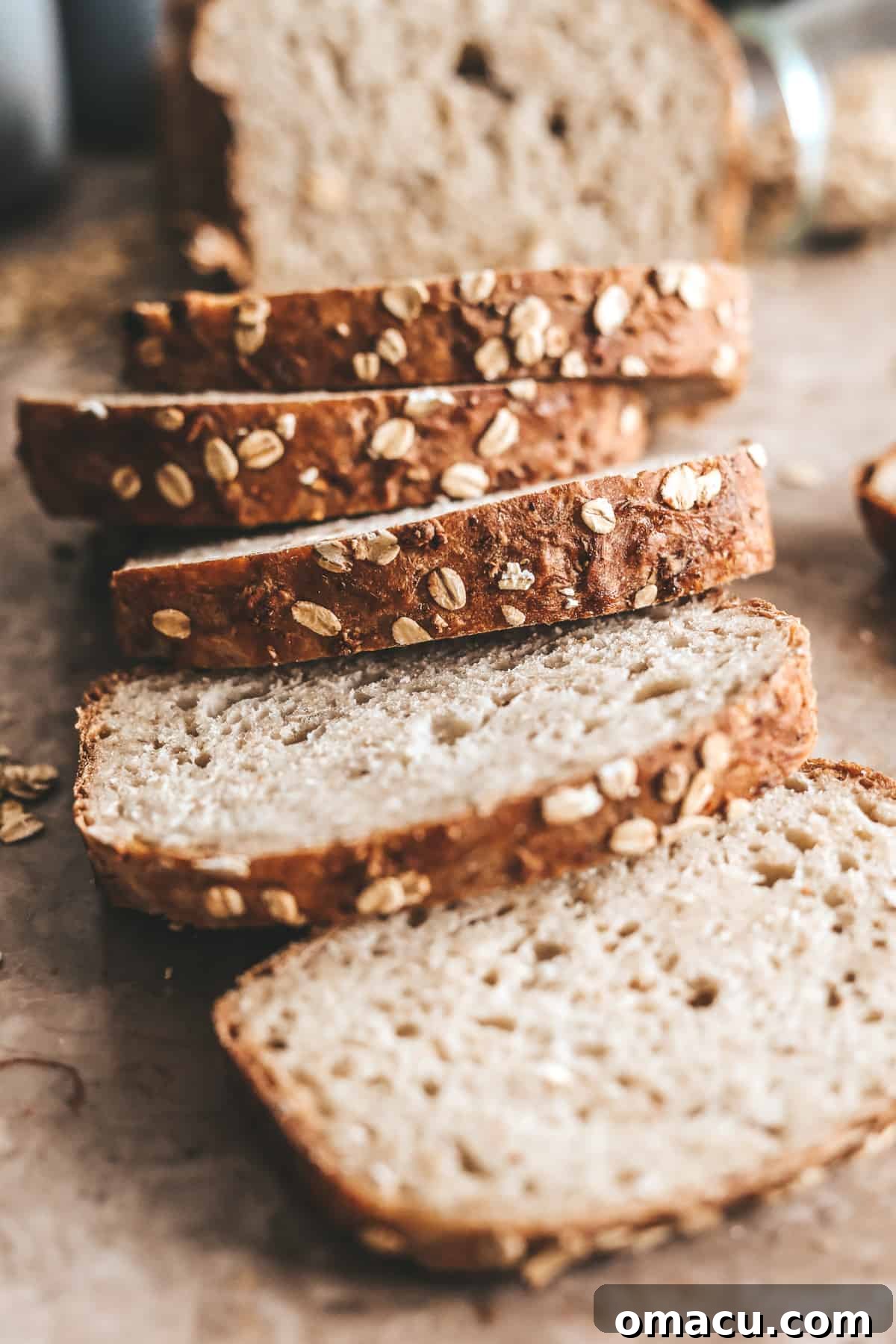
Honey Oat Bread is a wonderfully comforting and wholesome loaf made from a simple yet powerful blend of everyday ingredients. It typically comprises bread flour, lukewarm water, active dry yeast, a touch of salt, and, of course, the stars of the show: golden honey and hearty rolled oats. These humble ingredients combine harmoniously to create a bread that is subtly sweet, incredibly moist, and boasts an irresistible fluffy texture. Imagine an airy, soft crumb encased in a tender, pillowy crust – that’s the magic of this bread.
The honey not only imparts a delightful, natural sweetness but also plays a crucial role in keeping the bread soft and moist, naturally extending its shelf life. Rolled oats add a fantastic chewiness, a wholesome, slightly nutty flavor, and beneficial fiber that complements the honey beautifully. To achieve that signature rustic look and added textural interest, a quick brush of melted honey (or even just water) on top of the dough before baking, followed by a sprinkle of additional rolled oats, creates a visually appealing and utterly delicious crust. This bread isn’t just a treat for your taste buds; it’s a sensory experience, from the moment the delightful aroma begins to fill your kitchen to the last satisfying bite.
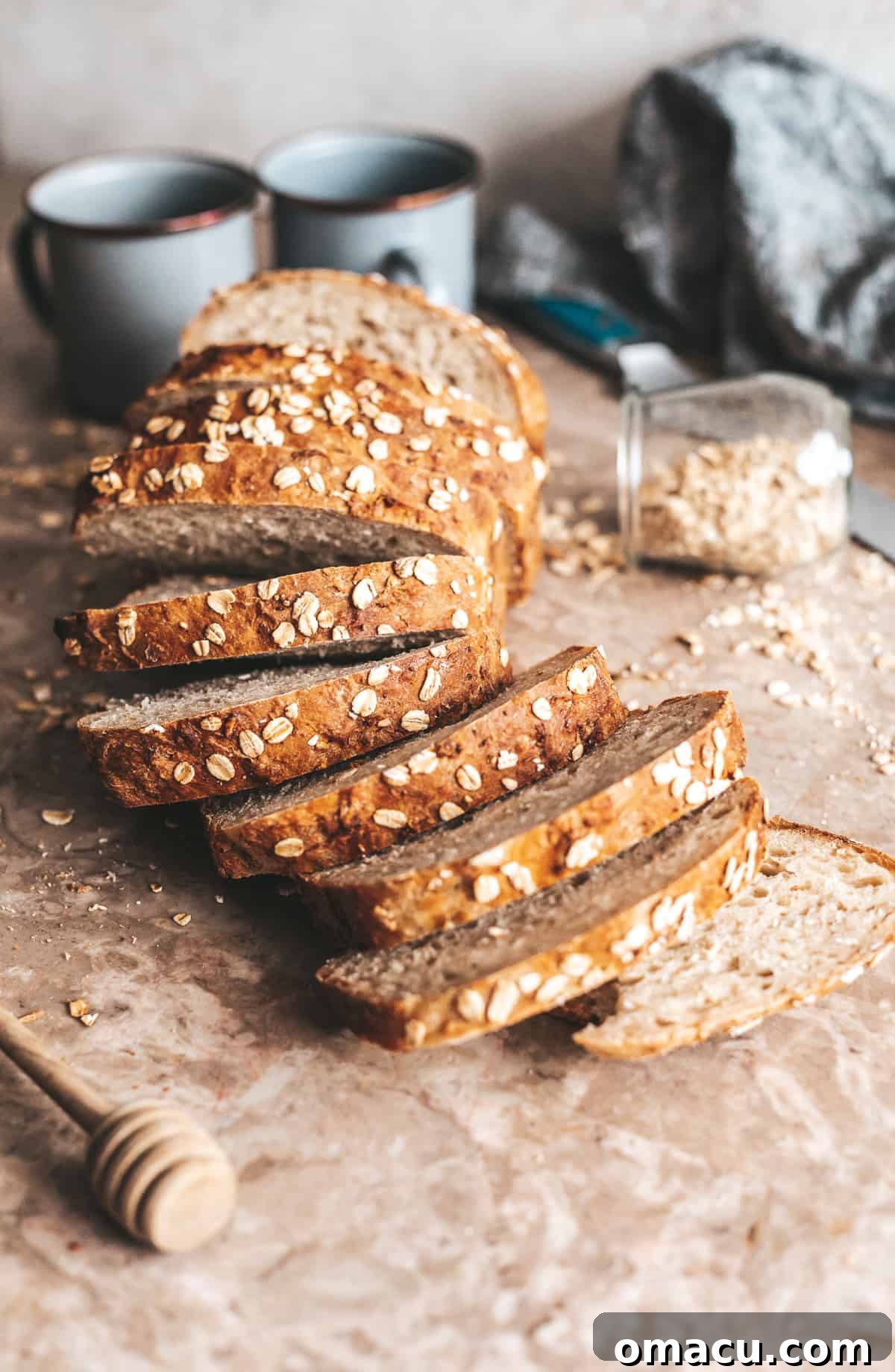
Why Homemade Bread is Always the Best Choice
When it comes to bread, opting for homemade over store-bought offers a multitude of benefits that extend far beyond just superior taste. Here’s a comprehensive look at why baking your own Honey Oat Bread is a truly rewarding and healthier choice:
- Uncompromised Ingredient Control: This is arguably the most significant advantage. Commercial breads often contain a long list of preservatives, artificial flavors, dough conditioners, and unhealthy additives like high-fructose corn syrup, bleached flour, and calcium propionate. When you bake at home, you have complete control, using only simple, wholesome ingredients you can easily pronounce and trust.
- Superior Flavor and Texture: There’s simply no comparison to the rich, nuanced flavor and the tender, chewy texture of fresh, homemade bread. The subtle sweetness of pure honey, the hearty chew of rolled oats, and the earthy notes of active yeast develop beautifully in your own kitchen, creating a product that is infinitely more complex and satisfying than anything found on a supermarket shelf.
- A Healthier Alternative: By eliminating preservatives, unnecessary fillers, and unhealthy fats, your homemade bread is inherently a healthier option. You can also consciously choose organic flours, whole grains, and adjust sugar and salt levels to perfectly suit your dietary preferences and health goals, making it a truly nutritious staple for your family.
- Economical in the Long Run: While the initial investment in baking essentials might seem like a small hurdle, baking bread at home is often more economical over time, especially if you integrate it into your regular routine. Basic ingredients like flour, yeast, and oats are relatively inexpensive staples, offering substantial savings compared to frequently purchasing artisanal loaves.
- Incredible Aroma and Therapeutic Experience: The act of baking bread is deeply satisfying and almost meditative. The rhythmic process of kneading the dough, the anticipation of watching it rise, and the utterly captivating aroma as it bakes create a wonderfully cozy and inviting atmosphere in your home. It’s a therapeutic and rewarding experience that nourishes the soul as much as it does the body.
- Unparalleled Freshness: Store-bought bread can often be days old by the time it reaches your pantry. Homemade bread, on the other hand, is at its absolute peak of freshness right out of the oven, offering an unparalleled taste and texture experience that can’t be replicated by mass-produced alternatives.
- Customization Options: Once you master the basic recipe, you can experiment with additions like seeds, dried fruits, or different types of flour to create your signature loaf, tailoring it precisely to your family’s preferences.
Once you experience the immense joy, the health benefits, and the sheer deliciousness of baking your own bread, you might find yourself saying goodbye to store-bought varieties for good. This Honey Oat Bread recipe is the perfect, straightforward introduction to this deeply rewarding culinary journey.
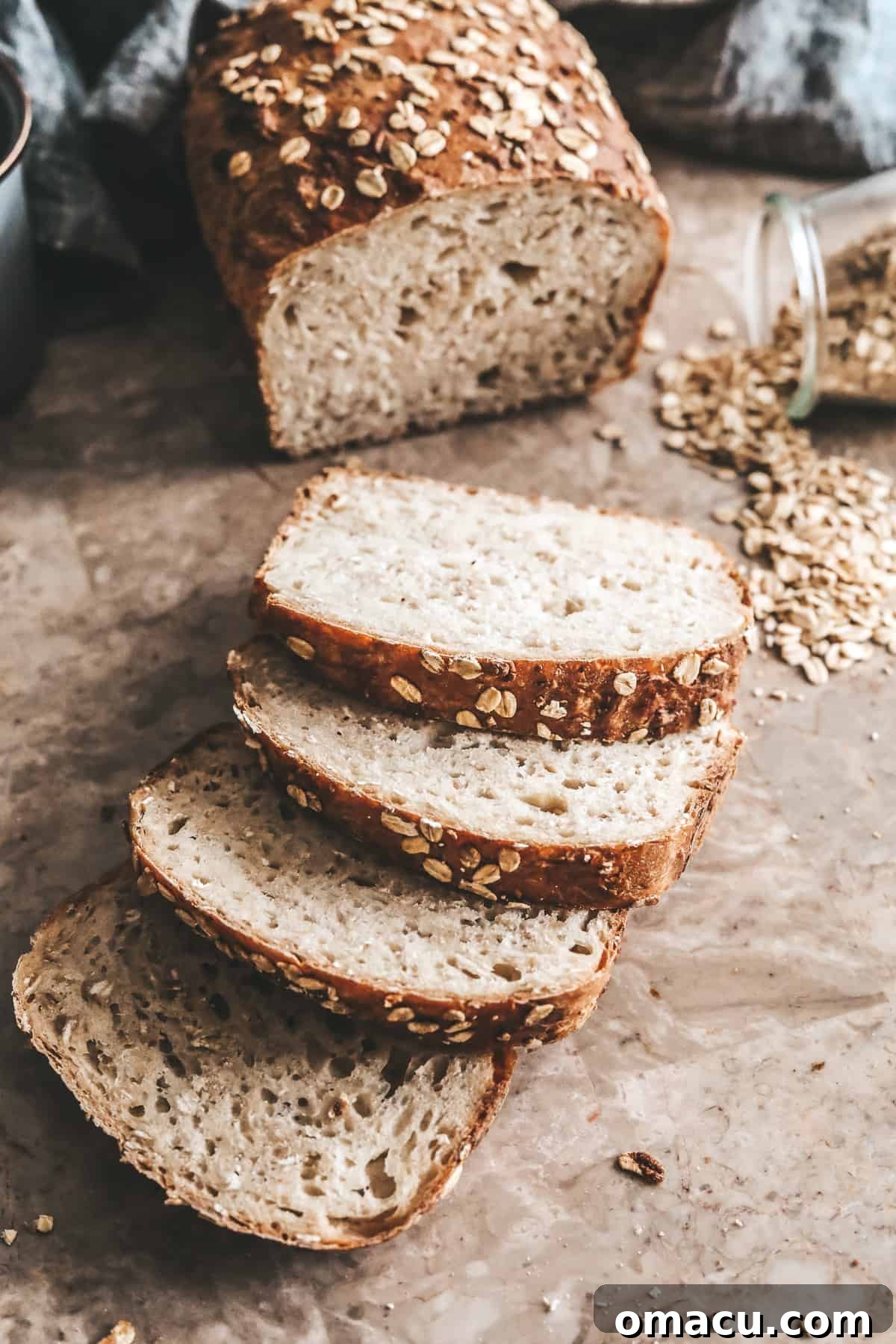
Serving Suggestions for Your Honey Oat Bread
The beauty of Honey Oat Bread lies in its incredible versatility. While it’s absolutely phenomenal as a simple breakfast toast, its balanced flavor profile and hearty texture allow it to shine in a wide variety of culinary applications. Here are some delicious ways to enjoy your freshly baked loaf:
- The Quintessential Breakfast Toast: The classic choice! Slice it thick, toast it to a golden crisp, and generously slather it with butter, a dollop of homemade jam, an extra drizzle of honey, or your favorite creamy nut butter. Pair it with your morning coffee or a soothing cup of tea for a truly wholesome and satisfying start to the day.
- Sweet and Savory Sandwiches: Don’t limit this delightful bread to just breakfast! Its subtle sweetness provides a delightful and unexpected contrast to savory fillings. Try it with thinly sliced smoked ham and a sharp cheddar cheese, or elevate your everyday turkey and avocado sandwich. The inherent honey notes beautifully complement salty meats, robust cheeses, and fresh vegetables.
- A Timeless Peanut Butter and Jelly: This beloved classic gets a gourmet upgrade when made with homemade Honey Oat Bread. The soft texture and sweet undertones provide an ideal canvas for your favorite fruity preserves and creamy peanut butter, making for an irresistible lunchbox favorite or a comforting snack.
- Creative Open-Faced Delights: Get creative with your toppings! Spread a slice with whipped cream cheese and top with fresh berries or sliced bananas for a delightful sweet treat. Alternatively, mash some avocado with a squeeze of lime and a sprinkle of chili flakes for a quick, healthy, and flavorful snack or light meal.
- Alongside Hearty Soups and Stews: While often associated with sweeter applications, this bread’s hearty texture and balanced flavor make it an excellent accompaniment to savory main courses. Serve it with a robust lentil soup, a creamy chicken stew, or a rich beef chili. It’s perfect for tearing and soaking up every last delicious drop of broth.
- Elevated French Toast or Bread Pudding: If by some miracle you have any slightly stale bread left over (though we highly doubt you will!), it makes for an incredible base for a luxurious French toast or a rich, comforting bread pudding. The existing honey and oat flavors will infuse beautifully into these decadent dishes, adding another layer of depth.
No matter how you choose to enjoy it, this Honey Oat Bread is guaranteed to bring warmth, comfort, and deliciousness to any meal or snacktime. Its versatility makes it a true kitchen hero!
How Many Slices Per Loaf?
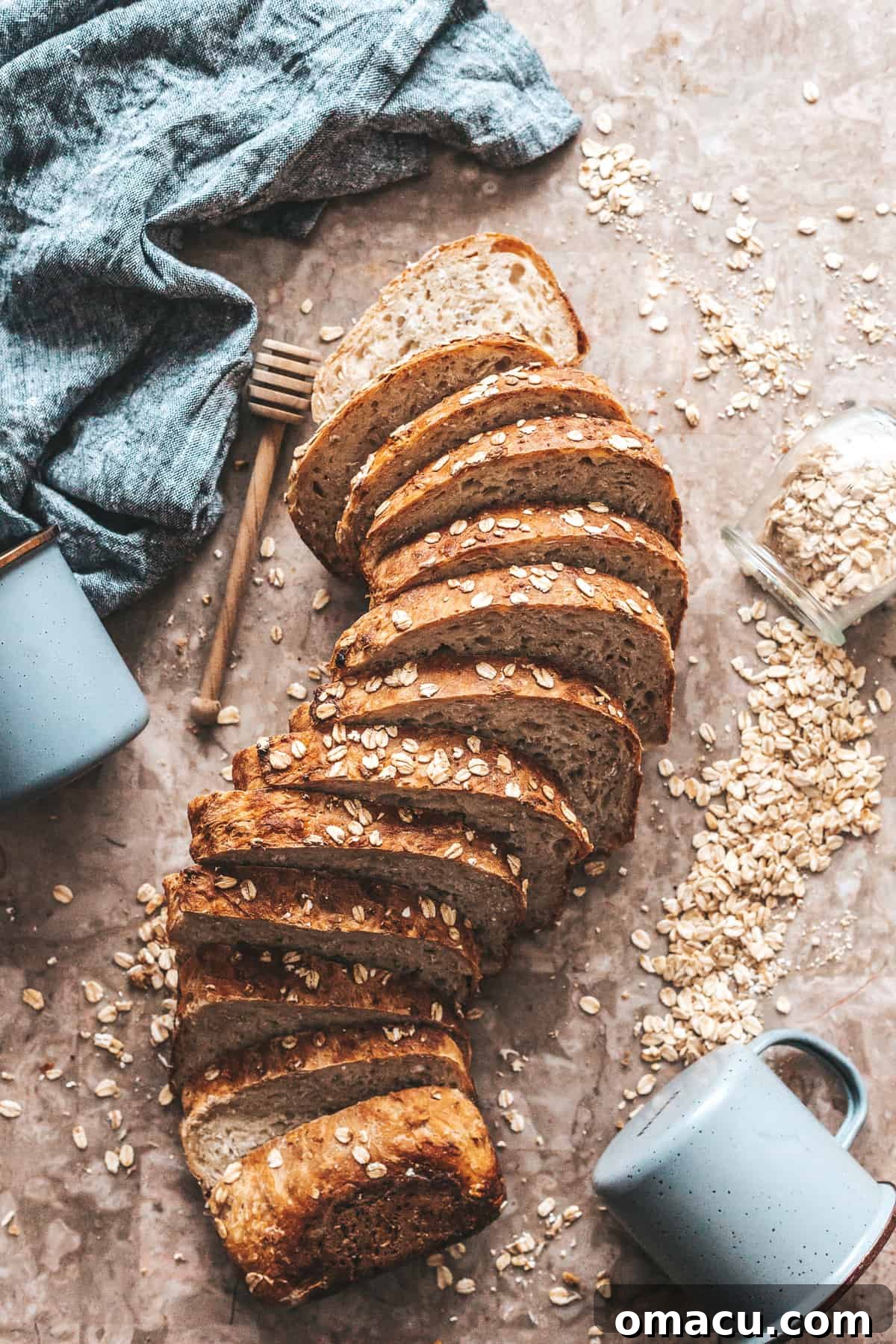
A single, perfectly baked loaf of this Honey Oat Bread recipe typically yields approximately 12 generous slices. However, the exact number can certainly vary depending on your personal preference for slice thickness. I, for one, favor robust, thicker slices – ideal for a substantial piece of breakfast toast or a hearty sandwich – and adjust my cuts accordingly. If you prefer thinner slices, perhaps for lighter fare or more servings, you might find yourself with a few more slices from each loaf. Regardless of how you choose to slice it, each piece promises a delightful texture and rich flavor, making it a truly versatile base for both sweet and savory culinary creations. It pairs beautifully with everything from a simple dollop of butter alongside your morning coffee to a more elaborate sweet and savory ham and cheese sandwich.
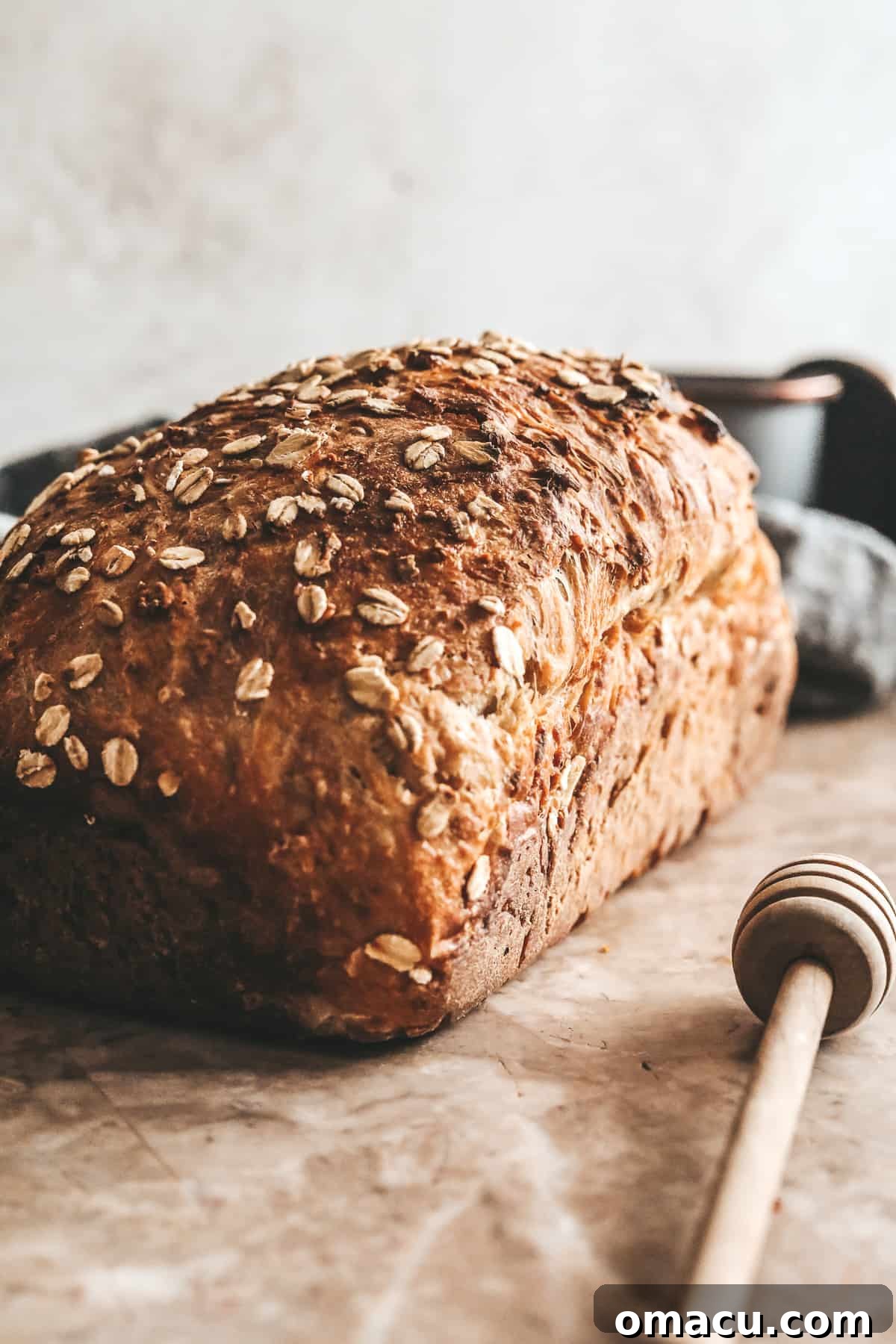
Storage Tips to Keep Your Homemade Honey Oat Bread Fresh
To maximize the enjoyment and extend the shelf life of your delicious homemade Honey Oat Bread, proper storage is absolutely essential. Here’s a comprehensive guide on how to keep your loaf fresh and flavorful for as long as possible:
- Room Temperature Storage (5-7 days): For immediate consumption within a few days, storing the bread at room temperature is ideal.
- Method: Ensure the bread is completely cooled before storing, as any residual warmth can create condensation, leading to a soggy texture and faster spoilage. Place the cooled loaf in a bread box, a clean paper bag, or wrap it loosely in a clean linen or cotton kitchen towel. This allows for some air circulation while preventing it from drying out too quickly. For maximum freshness, you can also place it in an airtight container, though this might slightly soften the crust over time.
- Avoid Refrigeration: While it might seem intuitive, refrigerating bread can actually make it go stale faster. The cold temperatures cause the starches to re-crystallize more rapidly, resulting in a dry, hard texture.
- Freezing for Long-Term Storage (Up to 3 months): If you anticipate not finishing the entire loaf within a few days, freezing is an excellent option to preserve its freshness and texture for much longer periods.
- To Freeze a Whole Loaf: Once the loaf has completely cooled, wrap it tightly first in plastic wrap, ensuring no air gaps, and then again in a layer of heavy-duty aluminum foil. Place the double-wrapped loaf into a large freezer-safe bag, removing as much air as possible before sealing. This double-wrapping prevents freezer burn.
- To Freeze Sliced Bread: For ultimate convenience, it’s often best to slice the cooled bread before freezing. This allows you to take out individual slices as needed, without having to thaw the entire loaf. Stack the slices with small pieces of parchment paper in between to prevent them from sticking together. Then, wrap the stack tightly in plastic wrap and aluminum foil, and finally place it in a freezer-safe bag.
- Thawing and Reheating Instructions:
- From Frozen for Toast: The absolute best way to enjoy frozen bread for toast is to place individual slices directly into a toaster or toaster oven straight from the freezer. Do NOT defrost them beforehand, as thawing at room temperature can cause the bread to become soggy. Toast until golden brown and warmed through to your liking.
- From Frozen for a Whole Loaf: For a whole loaf, remove it from the freezer and let it thaw at room temperature for several hours. For a “freshly baked” experience, you can then warm the thawed loaf in a preheated oven (around 350°F or 175°C) for 10-15 minutes, or until it’s warmed through and the crust has crisped up beautifully again.
By following these simple yet effective storage methods, you can confidently enjoy the delightful taste and perfect texture of your homemade Honey Oat Bread for days, or even months, to come!
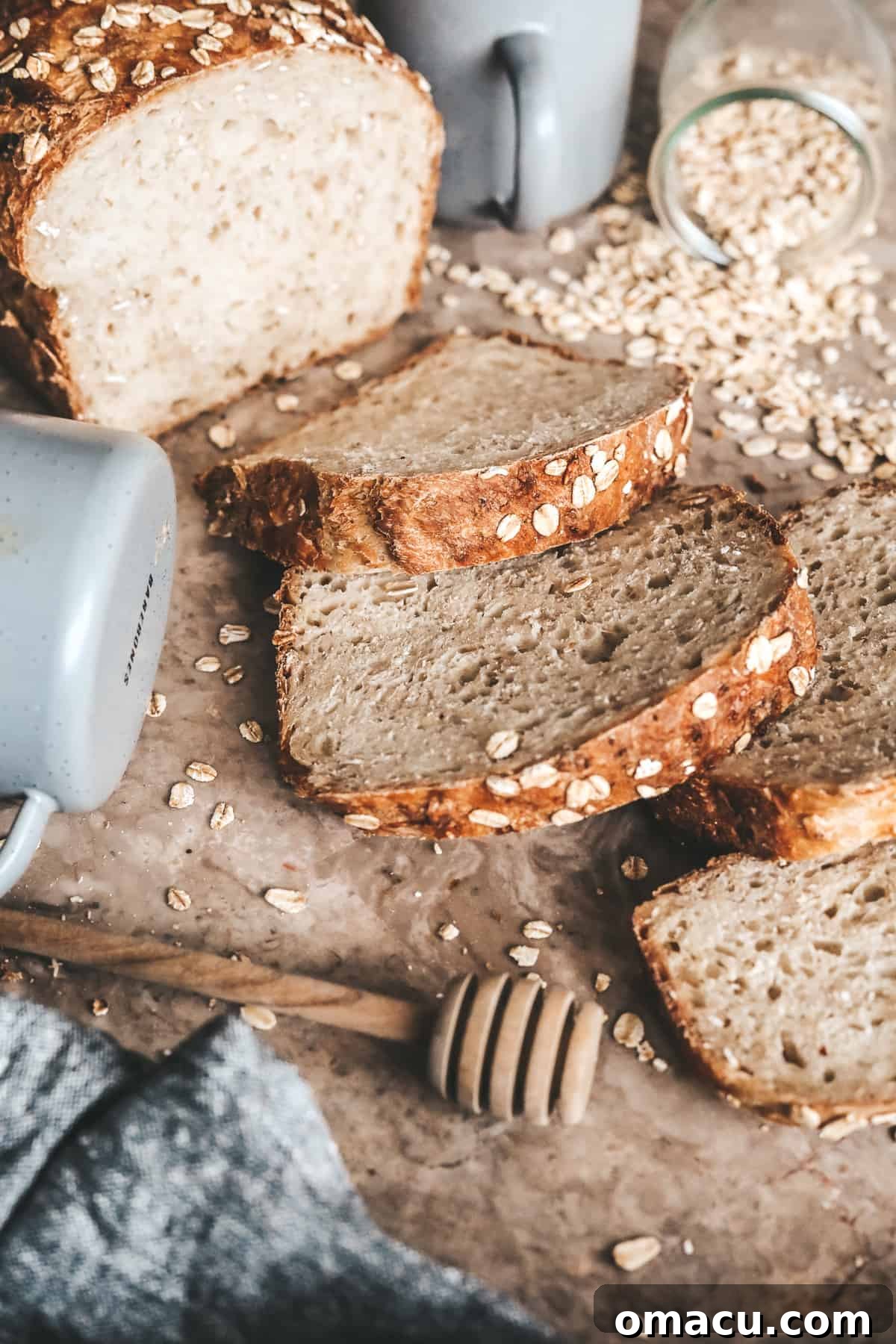
Rolled Oats vs. Instant Oats: The Crucial Texture Difference in Baking
When baking Honey Oat Bread, the type of oats you choose is far more significant than you might initially imagine, as it profoundly impacts the final texture, structure, and overall appeal of your loaf. For this recipe, and indeed for most bread-making endeavors that call for oats, I unequivocally recommend using rolled oats (often labeled as old-fashioned oats) over instant oats. Here’s a detailed explanation of why this distinction is so crucial:
- Superior Texture Contribution: Rolled oats are created by steaming and then flattening oat groats, which means they retain a substantial portion of their original shape and integrity. When incorporated into bread dough, they provide a distinct, satisfyingly chewy texture that is highly desirable in a rustic oat bread. This creates pockets of chewiness and a delightful mouthfeel. Instant oats, in contrast, are much more heavily processed – they are pre-cooked, dried, and then rolled into thinner flakes to ensure rapid cooking. In bread, they tend to absorb liquids too quickly and blend almost seamlessly into the flour, resulting in a much less discernible texture and a somewhat mushy consistency.
- Enhanced Structural Integrity: The larger, firmer flakes of rolled oats add a beneficial bulk and structural element to the dough. They help to create an open crumb structure and prevent the bread from becoming overly dense or gummy. Instant oats, due to their fine texture and rapid liquid absorption, can sometimes make the dough overly sticky and may not provide the same necessary structural support during the crucial rising and baking stages, potentially leading to a flatter loaf.
- Richer Nutritional Value: While both types of oats are healthy, rolled oats are generally less processed, meaning they retain a greater proportion of their natural fiber, vitamins, and minerals. They also have a lower glycemic index compared to instant oats, providing a slower, more sustained release of energy, which contributes to a feeling of fullness and better blood sugar regulation.
- Fuller Flavor Profile: Rolled oats impart a subtle, wholesome, and slightly nutty flavor that beautifully complements the natural sweetness of the honey in this recipe. This adds a depth of flavor that is characteristic of traditional oat bread. Instant oats, owing to their extensive processing, often have a milder, less pronounced flavor profile that can easily get lost or overshadowed by other ingredients in the bread.
In essence, choosing rolled oats for your Honey Oat Bread ensures that your loaf will boast that wonderful, chewy mouthfeel, robust structural integrity, and wholesome character that makes it so beloved. It’s a small but significant detail that truly elevates the final product. Don’t compromise on this key ingredient for the best possible results – your taste buds and the texture of your bread will thank you!
Essential Baking Tips for Honey Oat Bread: Ensuring Your Success
Achieving a perfect, consistently delicious loaf of Honey Oat Bread is incredibly rewarding, and a few key tips can make all the difference, especially if you’re new to the world of bread baking or simply aiming for consistently flawless results:
- Accurate Ingredient Measurement is Paramount: Baking is often described as a science, and for good reason. Precision in measuring ingredients, particularly flour, is crucial. Whenever possible, use a kitchen scale to measure flour by weight (grams are most accurate) rather than volume. If using measuring cups, gently spoon the flour into the cup and level it off with a straight edge; avoid scooping directly from the bag, which can compact the flour and lead to using too much, resulting in a dry, dense loaf.
- Maintain the Ideal Water Temperature for Yeast: The temperature of your water is critical for activating the yeast properly. It should be lukewarm, ideally between 105-115°F (40-46°C). Water that’s too hot will kill the yeast, rendering it inactive and preventing your bread from rising. Conversely, water that’s too cold will not activate the yeast sufficiently, leading to a slow or incomplete rise. A quick check with a thermometer can save your loaf.
- Embrace Patience – Don’t Rush the Rise (Proofing): Patience truly is a virtue in bread making. Allow your dough ample time to rise in a warm, draft-free environment. A slow, proper rise (or proofing) is essential not only for developing the rich flavors of the bread but also for ensuring a light, airy, and tender texture. Resist the urge to speed up this process.
- Master the Kneading Process: Kneading plays a vital role in developing the gluten strands in the flour, which are responsible for giving the bread its structure, elasticity, and satisfying chewiness. Follow the kneading times specified in the recipe. Don’t under-knead, as this will result in a dense, heavy loaf. If you find the dough too sticky to handle, a very light dusting of flour on your hands or workspace can help, but be cautious not to incorporate too much extra flour into the dough itself, which can alter the hydration balance.
- Utilize the Correct Pan Size: As learned from personal experience, using the right baking vessel is vital for a successful outcome. For this particular recipe, a 9×5 inch loaf pan is specified. Using a pan that is too small can lead to the dough overflowing during baking, while a pan that is too large can result in a flatter, misshapen loaf.
- Confirm Doneness with an Internal Thermometer: The most reliable way to know if your bread is fully baked through is by checking its internal temperature with an instant-read thermometer. For a tender, moist crumb, the internal temperature of your Honey Oat Bread should register between 190-200°F (88-93°C).
- Allow for Complete Cooling Before Slicing: This step is arguably one of the hardest to resist but is absolutely crucial. Slicing into warm bread can compress the delicate internal crumb structure, leading to a gummy or doughy texture. Allowing the bread to cool completely on a wire rack allows the starches to set and redistribute moisture, resulting in a perfectly textured slice that holds its shape beautifully.
By keeping these detailed tips in mind, you’ll be well on your way to baking a consistently delicious, beautifully textured, and truly satisfying Honey Oat Bread every single time!
More Baking Inspiration
If you’re eager to continue your baking adventures and explore more delightful recipes, here are some other fantastic creations to try. From comforting breakfast options to wholesome snacks, there’s something here to inspire every home baker:
- Cookie Dough Overnight Oats
- Oatmeal Baked Apples with Maple Brown Butter
- Chocolate Chip Pecan Oatmeal Bars
- The Best Banana Bread Recipe Ever
- Peach Cobbler Overnight Oats
- Oatmeal Chocolate Chip Cookies
- Cast Iron Skillet Buttermilk Cornbread
- Maple Cinnamon Banana Bread
Want more delicious and beautiful recipes delivered straight to your inbox? Subscribe to my newsletter to receive the latest seasonal creations as soon as they’re released! Don’t miss out on fresh baking inspiration!
If you make this Honey Oat Bread recipe, please consider leaving a star rating on the recipe card below and sharing your thoughts in the comments section! You can also tag @BritneyBreaksBread on Instagram and use the hashtag #britneybreaksbread so I can celebrate your beautiful creations and see your amazing loaves!
Honey Oat Bread
Britney
2 hours
1 hour
3 hours
12 servings
Pin Recipe
Print Recipe
Equipment
-
9×5 inch Loaf Pan
-
Large Mixing Bowl
Ingredients
- 6 cups Bread Flour
- 3 cups Water, Lukewarm
- 1 1/2 cup Rolled Oats
- 3 tbsps Honey
- 2 tsps Salt
- 3 tsps Active Dry Yeast
Instructions
-
In a large mixing bowl, combine the bread flour, lukewarm water, 1.5 cups of rolled oats, and 3 tablespoons of honey. Mix thoroughly with your hands until all ingredients come together to form a shaggy, sticky dough. This initial mixing is important for hydration. Cover the bowl with a clean kitchen towel and let the dough rest at room temperature for 30 minutes. This resting period, often called autolyse, allows the flour to fully absorb the water and helps begin gluten development naturally.
-
After the initial 30-minute rest, sprinkle the active dry yeast and salt evenly over the dough. Begin to knead the dough gently within the bowl for about 5 minutes. The dough will still be soft and pliable. Re-cover the bowl with the towel and allow the dough to rest again for another 30 minutes. This second rest allows the yeast to begin its work and further develops the gluten.
-
Now, perform a series of “stretch and folds” to build strength in the dough. With damp hands, gently grab one side of the dough, stretch it upwards, and fold it over towards the middle of the dough. Rotate the bowl a quarter turn and repeat this stretching and folding process approximately 4-5 times around the entire dough ball. This technique builds gluten structure without aggressive kneading. Once completed, cover the bowl again and let the dough rise for a final 1 hour. During this time, it should visibly increase in volume and become slightly bubbly on the surface.
-
While the dough is completing its final rise, preheat your oven to 375 degrees F (190 degrees C). Prepare a 9×5 inch loaf pan by lightly greasing or spraying it with a non-stick cooking oil. This step is essential to prevent sticking and ensure easy removal of your baked bread.
-
Carefully transfer the risen dough into the prepared loaf pan, gently shaping it to fit. To give your bread a beautiful rustic finish, lightly brush the top surface of the dough with about 1 teaspoon of melted honey (or a little water) and then sprinkle a small amount of additional rolled oats over the surface. Place the loaf pan into the preheated oven and bake for 50 minutes to 1 hour, or until the crust is a deep golden brown and the internal temperature, when measured with an instant-read thermometer, registers between 190-200°F (88-93°C).
-
Once baked, promptly remove the bread from the oven and carefully turn it out of the loaf pan onto a wire rack. This allows air to circulate around all sides, preventing a soggy bottom. It is crucial to allow the bread to cool completely before attempting to slice it. Slicing warm bread can compress the internal crumb and make it gummy. Patience here will be rewarded with the best possible texture!
Nutrition
Carbohydrates: 60g,
Protein: 5g,
Fat: 1g,
Saturated Fat: 0.3g,
Polyunsaturated Fat: 0.2g,
Monounsaturated Fat: 0.3g,
Sodium: 390mg,
Potassium: 68mg,
Fiber: 2g,
Sugar: 4g,
Vitamin C: 0.03mg,
Calcium: 7mg,
Iron: 1mg
Nutrition information is automatically calculated and should be used as an approximation. It’s provided for informational purposes only and is not a substitute for professional dietary advice.
Tried this recipe?
Mention @BritneyBreaksBread or tag #BritneyBreaksBread!