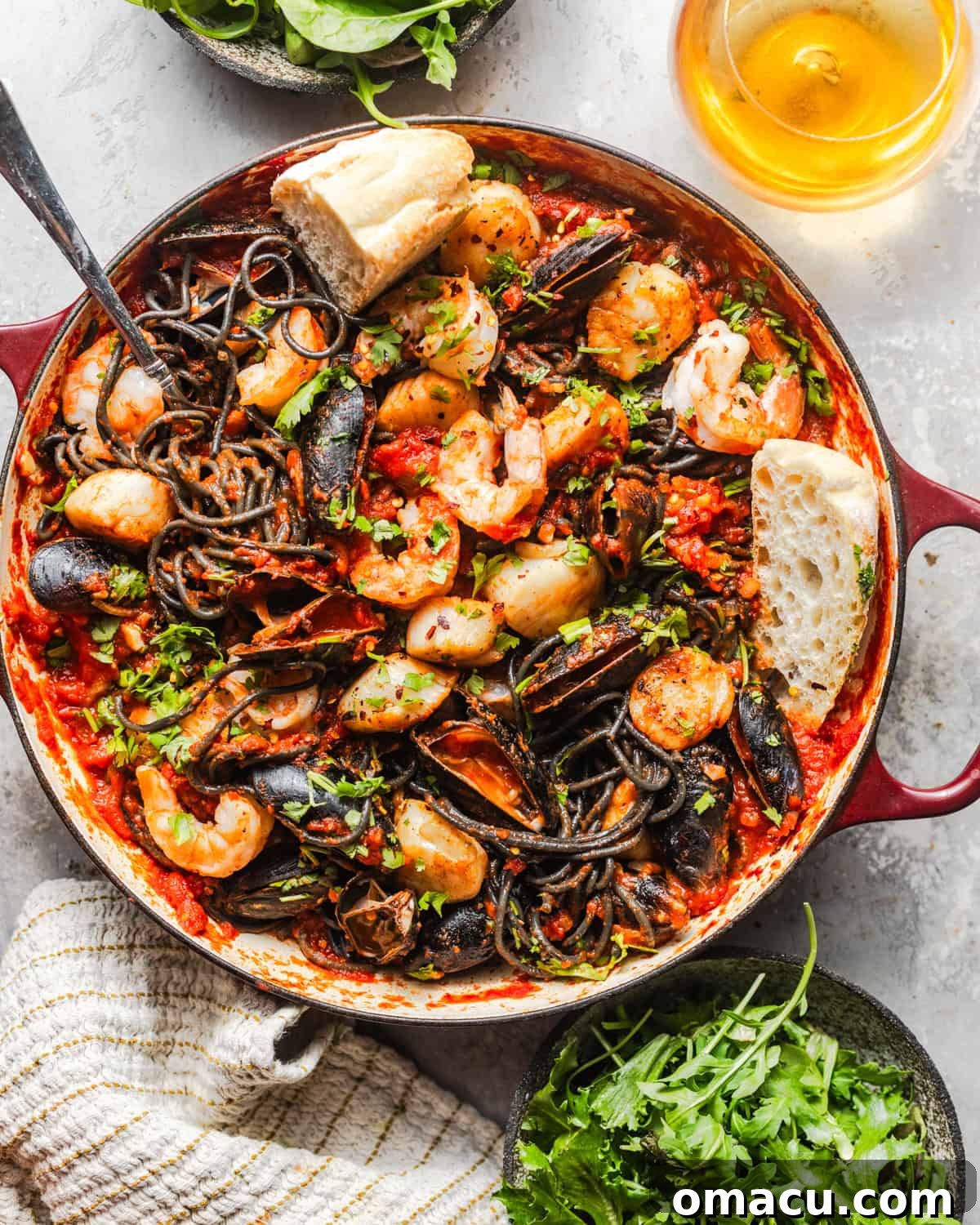
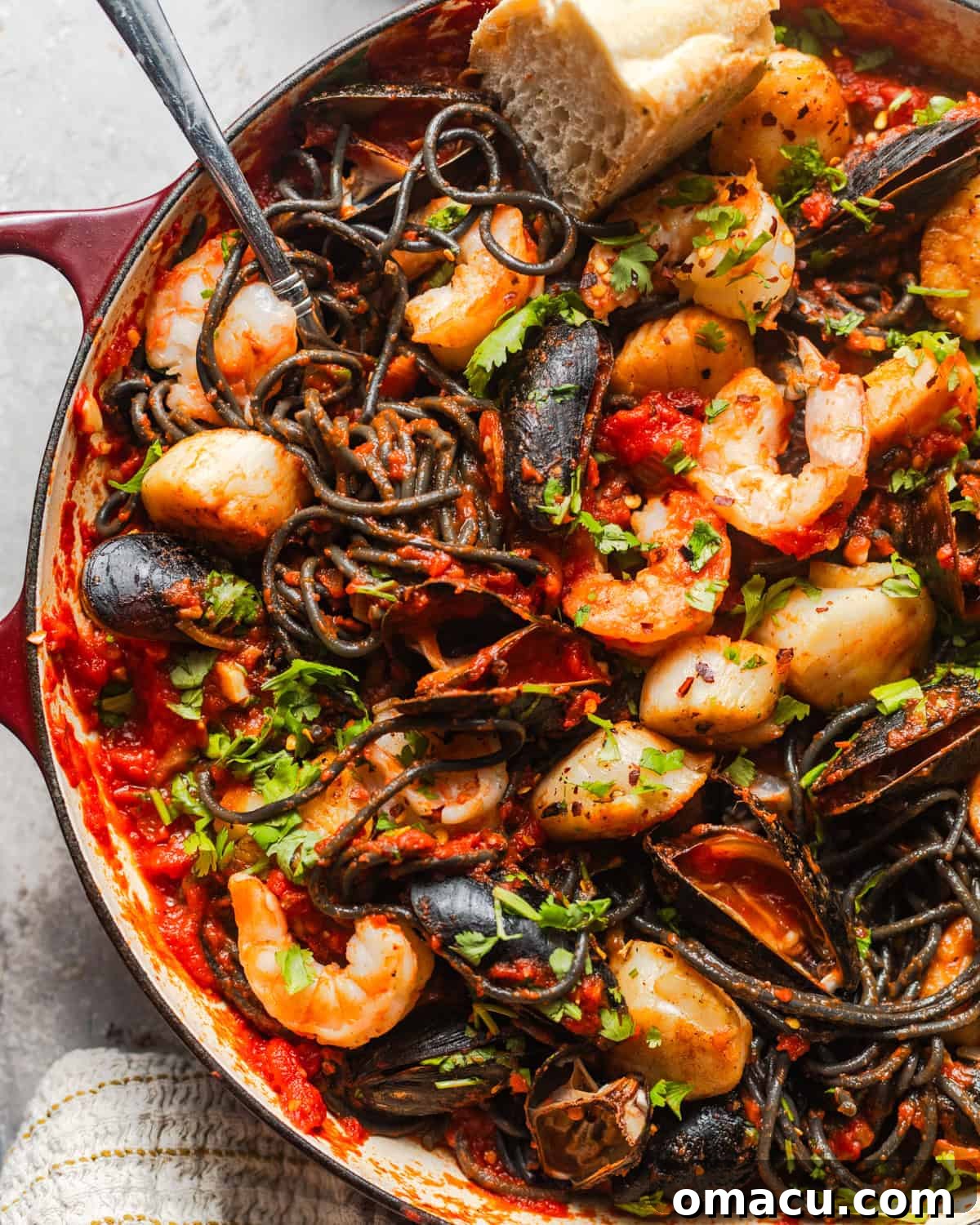
Prepare to be captivated by this stunning squid ink pasta with seafood – a dish that’s as visually striking as it is delicious. With its dramatic black pasta, rich tomato and white wine sauce, and an abundance of fresh shrimp, sweet scallops, and briny mussels, it’s a truly unforgettable culinary experience. This recipe is designed to make any dinner feel special, offering a luxurious yet surprisingly comforting meal that will impress guests and delight your palate.
If you’re a fan of incredible pasta dishes, you might also enjoy our Garlic Parmesan Pasta with Chicken and our classic Shrimp Scampi with Angel Hair Pasta. Each offers a unique flavor profile perfect for any pasta lover.
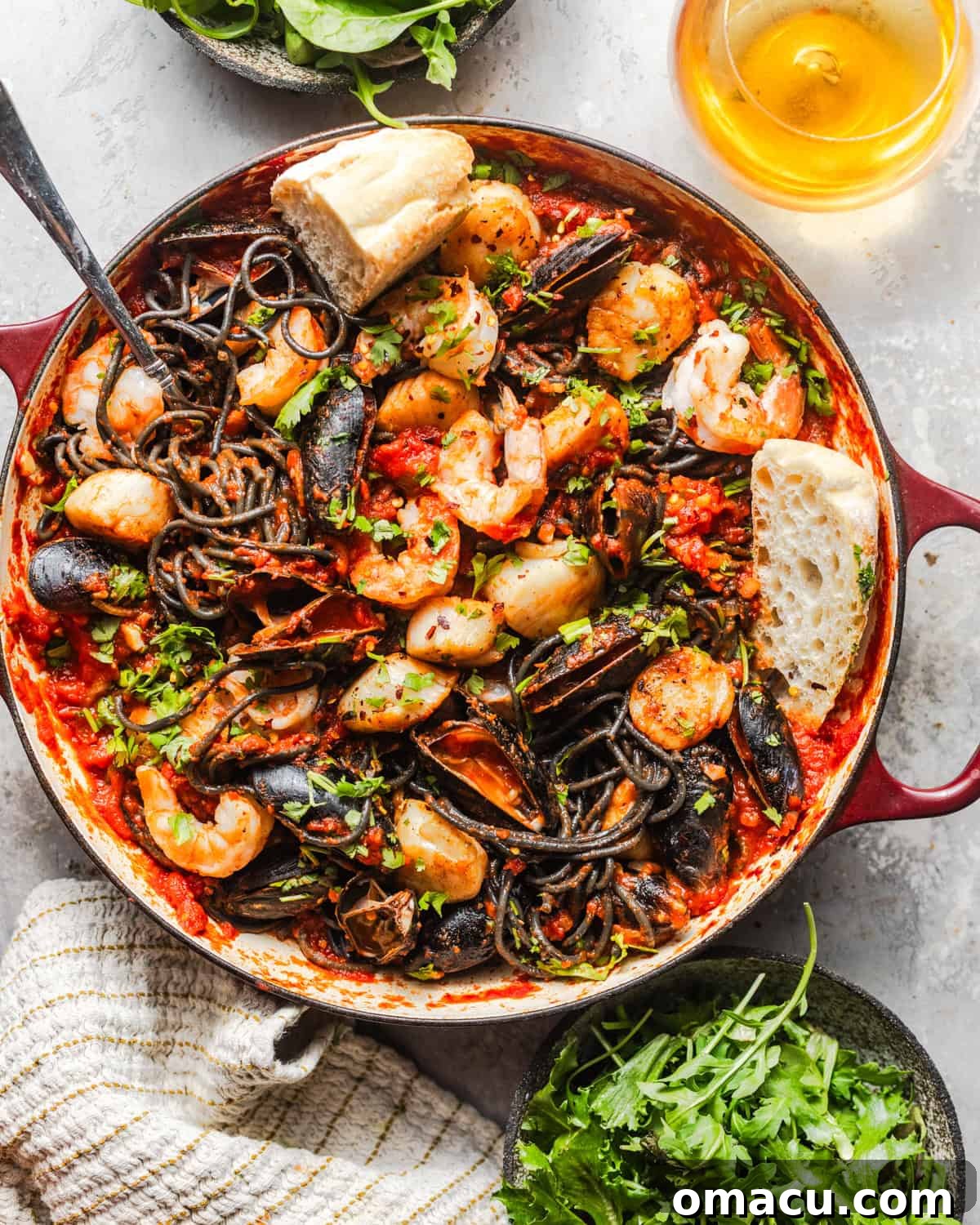
This squid ink pasta recipe isn’t just food; it’s an experience. It’s bold, briny, and unapologetically luxurious, earning its affectionate nickname as “bougie pasta.” The striking black strands of squid ink pasta provide a dramatic canvas, beautifully coated in a deeply savory tomato and white wine sauce.
Every forkful is a symphony of flavors and textures, featuring plump, tender shrimp, delicately sweet scallops seared to perfection, and succulent mussels that open to release their rich ocean essence directly into the sauce. While it presents a dramatic appearance, this seafood pasta is pure comfort food, promising a dinner that feels instantly special and exquisitely refined.
The secret lies in the slow-simmered sauce—a foundation of concentrated umami, balanced with just the right amount of acidity to highlight the delicate sweetness of the seafood without overpowering it. Finishing touches of fresh herbs add a bright, herbaceous note, ensuring every bite is vibrant and refreshing. This dish truly transforms a simple meal into an elegant celebration, making it an absolute must-try for any seafood or pasta enthusiast.
Table of Contents
- The Allure of Squid Ink Pasta
- Key Ingredients for Our Seafood Masterpiece
- Substitutions and Variations
- Step-by-Step: How To Make Squid Ink Pasta with Seafood
- Pro Chef Tips for Perfect Seafood Pasta
- How to Serve This Elegant Dish
- Recipe FAQs
- More Irresistible Seafood Recipes
The Allure of Squid Ink Pasta
Squid ink pasta, also known as black pasta or pasta al nero di seppia, is a culinary marvel that captivates with its striking appearance and unique flavor profile. Infused with edible squid ink, the pasta transforms into an intense, glossy black hue, creating a visually dramatic presentation that instantly elevates any dish. Beyond its striking color, squid ink pasta offers a subtle yet distinct taste. It carries a mild briny, almost oceanic flavor – think of a gentle kiss from the sea rather than an overpowering “fishy” taste. This inherent savoriness and depth make it an ideal canvas for robust sauces and fresh seafood, as it enhances their natural flavors without competing with them. Its slightly firmer texture, even when cooked al dente, also provides a delightful mouthfeel that pairs wonderfully with tender seafood. Choosing squid ink pasta isn’t just about aesthetics; it’s about embracing a gourmet ingredient that promises a truly sophisticated dining experience.
Key Ingredients for Our Seafood Masterpiece
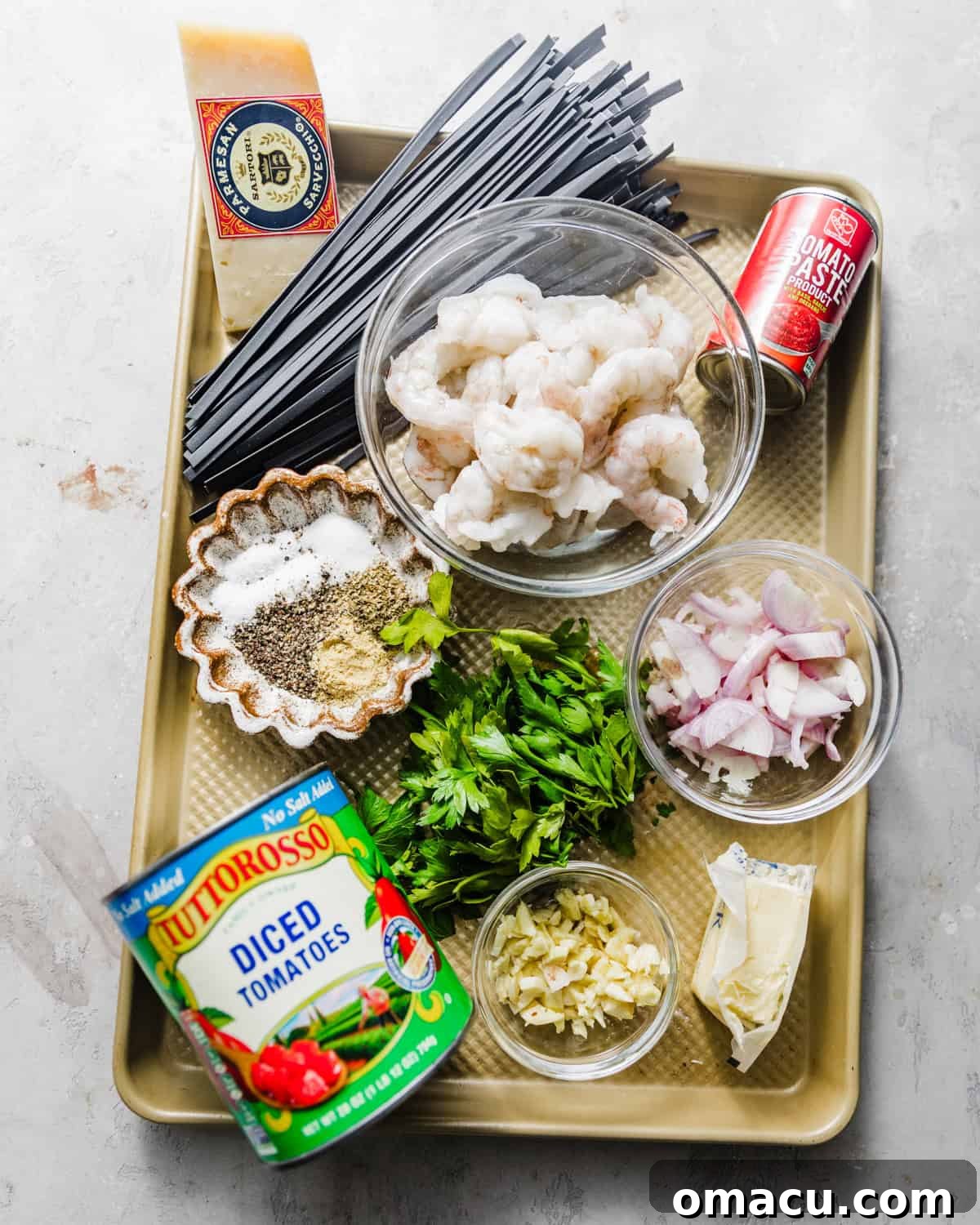
(A full list of ingredients with precise measurements can be found in the detailed recipe card below.)
- Shrimp: These succulent crustaceans are an absolute must. Their naturally sweet and juicy texture provides a beautiful contrast to the bold, briny flavor of the squid ink pasta. Shrimp cook remarkably quickly and readily absorb the rich nuances of the tomato-wine sauce, ensuring a burst of flavor in every bite.
- Mussels: For an authentic taste of the ocean, mussels are indispensable. As they gently steam and open in the simmering sauce, they release their concentrated juices, infusing the entire dish with a deep, natural salinity and an incredible depth of flavor. Their tender flesh and delicate brininess are truly captivating.
- Scallops: Providing a subtle sweetness and a wonderfully buttery texture, scallops are a highlight of this dish. When properly seared, they develop a delicate golden crust that adds a textural contrast to the saucy pasta, while their centers remain meltingly tender. They are, without a doubt, a personal favorite for their elegant flavor and exquisite mouthfeel.
- Shallots & Garlic: These aromatic powerhouses form the foundational flavor base of our sauce. Shallots offer a milder, sweeter onion flavor, while garlic provides a robust pungency. Together, they create a beautifully balanced and fragrant backdrop that enhances the seafood without ever overshadowing its delicate qualities.
- Tomato Paste: This concentrated ingredient is key to building a sauce with incredible depth. Cooking down the tomato paste intensifies its umami and sweetness, creating a bold, savory foundation that harmonizes perfectly with the distinctive notes of squid ink pasta. It adds a crucial layer of richness.
- California Sauvignon Blanc: The choice of wine is crucial. A crisp California Sauvignon Blanc introduces bright acidity and subtle citrus notes, which are essential for balancing the richness of the tomato sauce. Its clean, vibrant character elegantly plays up the natural sweetness of the shrimp and scallops, ensuring the dish remains light, fresh, and perfectly balanced.
- Crushed Tomatoes: The heart of our sauce, crushed tomatoes provide body and a vibrant tomato flavor. They soften the intensity of the tomato paste, creating a luscious sauce that allows the diverse flavors of the seafood to shine through, contributing to the dish’s comforting appeal.
- Fresh Parsley: A final flourish of fresh parsley adds a burst of herbaceous freshness and a lovely pop of color. Its earthy notes prevent the rich dish from feeling too heavy, contributing to a bright and vibrant finish.
- Lemon Juice: A squeeze of fresh lemon juice at the end is like a magic touch. It brightens and lifts the entire dish, cutting through the richness of the sauce and the brininess of the seafood with a crucial final touch of acidity, making all the flavors sing.
Substitutions and Variations to Customize Your Dish
Flexibility is key in the kitchen, and this squid ink pasta recipe is wonderfully adaptable. Feel free to experiment with these substitutions and variations to suit your preferences or what you have on hand:
- No Squid Ink Pasta? No Problem! While the dramatic color of squid ink pasta is a showstopper, you can easily substitute it with other long pasta shapes like linguine, spaghetti, or fettuccine. You’ll still enjoy all the incredible flavors of the sauce and seafood.
- Gluten-Free Option: To make this dish gluten-free, simply use a high-quality gluten-free spaghetti or linguine. Ensure it holds up well to a rich sauce and maintain the al dente cooking time.
- Avoiding Alcohol? If you prefer to omit the white wine, you can use an equal amount of seafood stock or a good-quality chicken broth. Seafood stock will maintain a subtle briny undertone, while chicken broth will add more savory depth to the sauce.
- For a Creamier Finish: For those who love a richer, silkier sauce, stir in 2 to 3 tablespoons of heavy cream or a splash of half-and-half just before adding the pasta. This adds an extra layer of indulgence.
- Amp Up the Heat: If you enjoy a spicy kick, feel free to increase the amount of red pepper flakes added to the sauce. For an even bolder finish, drizzle with a bit of chili oil just before serving.
- Different Seafood Combinations: Don’t limit yourself to shrimp, scallops, and mussels. This recipe is versatile enough to accommodate other seafood. Consider adding calamari, crab meat, or even chunks of firm white fish. See the FAQ section for more ideas!
Step-by-Step: How To Make Squid Ink Pasta with Seafood
Crafting this exquisite seafood pasta is a journey in layers of flavor, starting with perfectly cooked seafood and building to a rich, aromatic sauce. Follow these detailed steps to create a truly memorable meal:
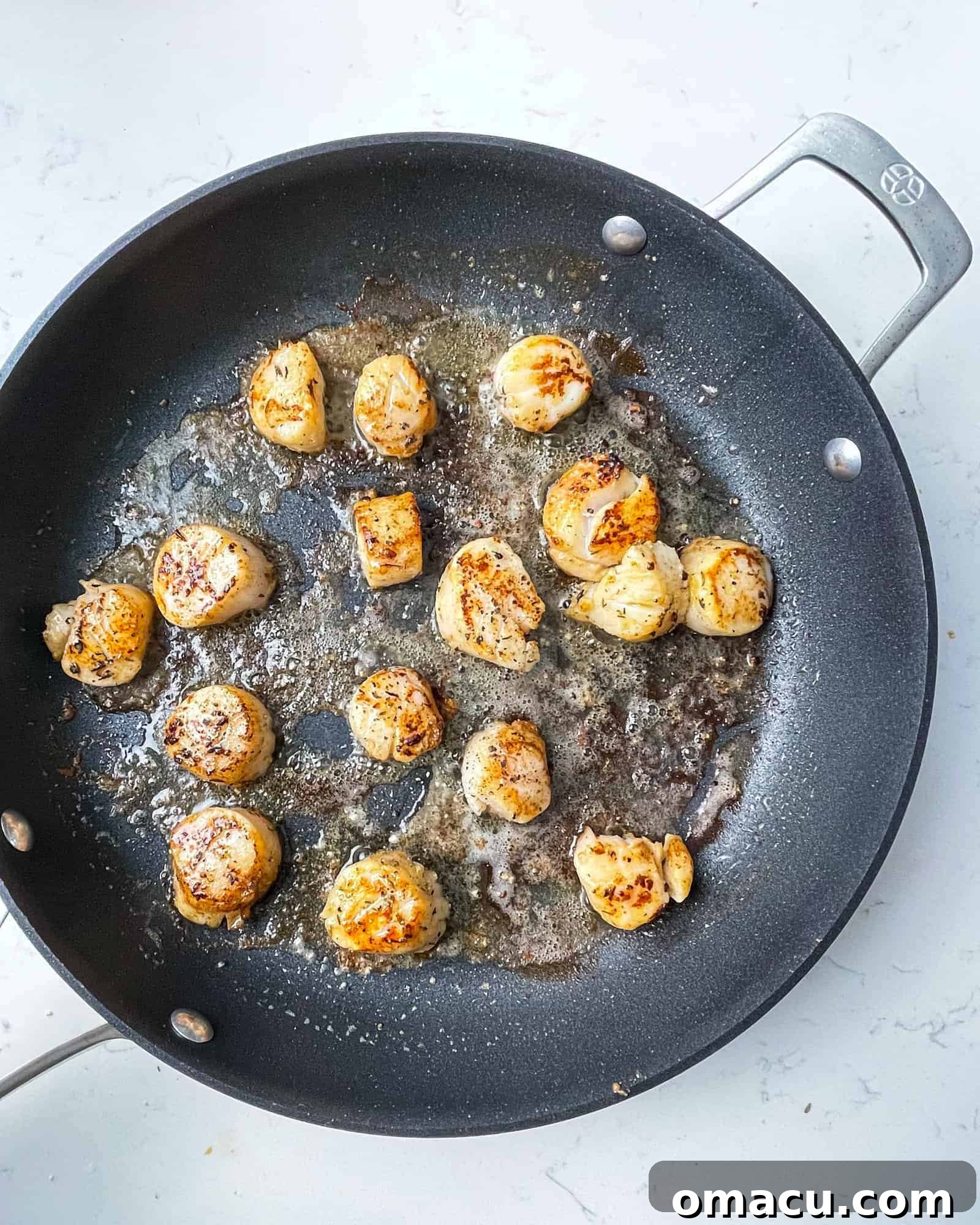
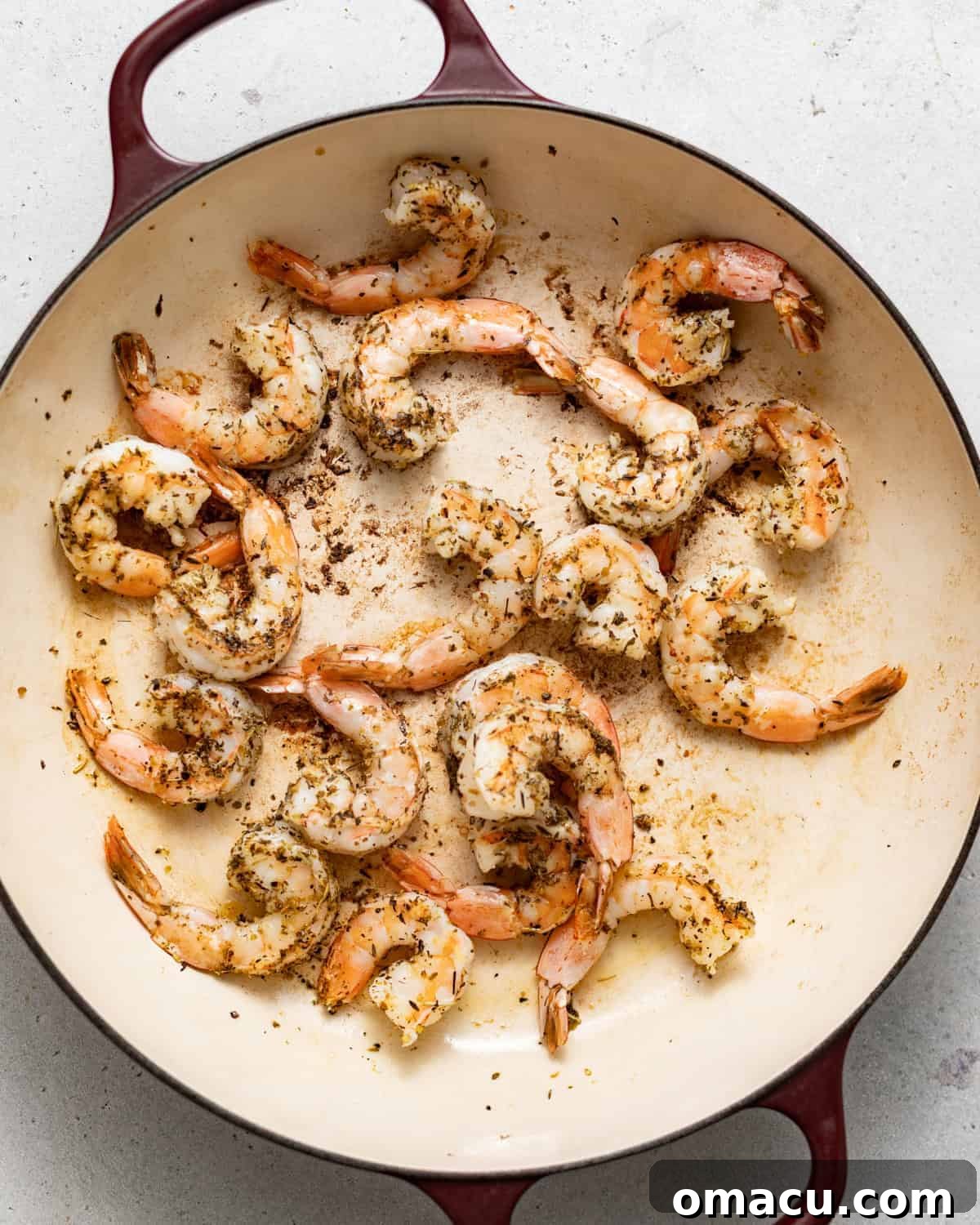
Heat a large skillet over medium-high heat with a drizzle of olive oil for about 3 minutes until shimmering. Add the scallops in a single layer, ensuring not to overcrowd the pan, and sear for 1½ to 2 minutes per side until they develop a beautiful golden-brown crust and are cooked through but still tender. Remove the seared scallops and set them aside on a plate.
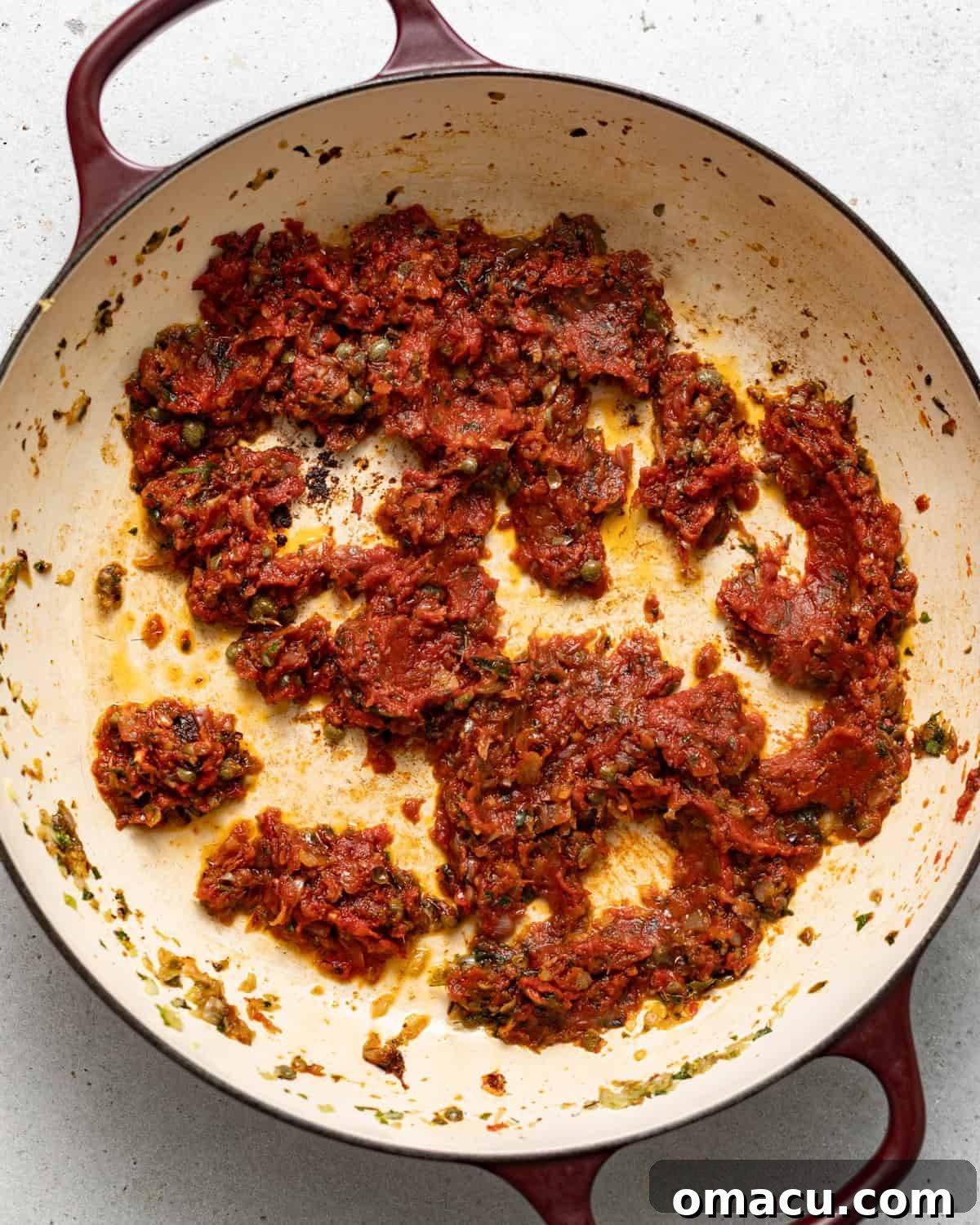
Pour in the dry white wine and immediately deglaze the pan by scraping up all the delicious browned bits from the bottom with a wooden spoon. Bring the mixture to a gentle simmer and cook for 5 minutes, allowing the wine to reduce slightly and its alcohol to cook off, leaving behind its vibrant essence.
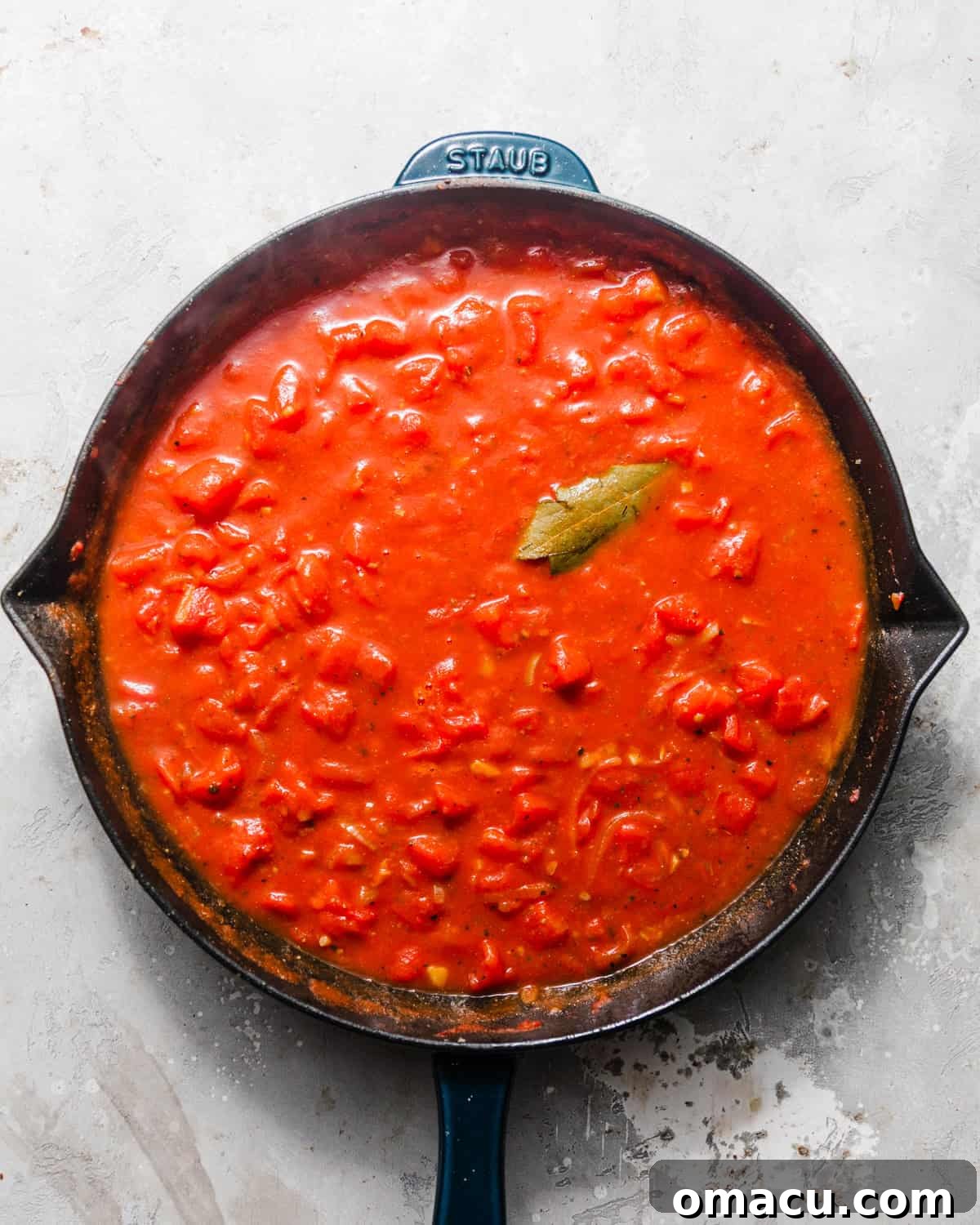
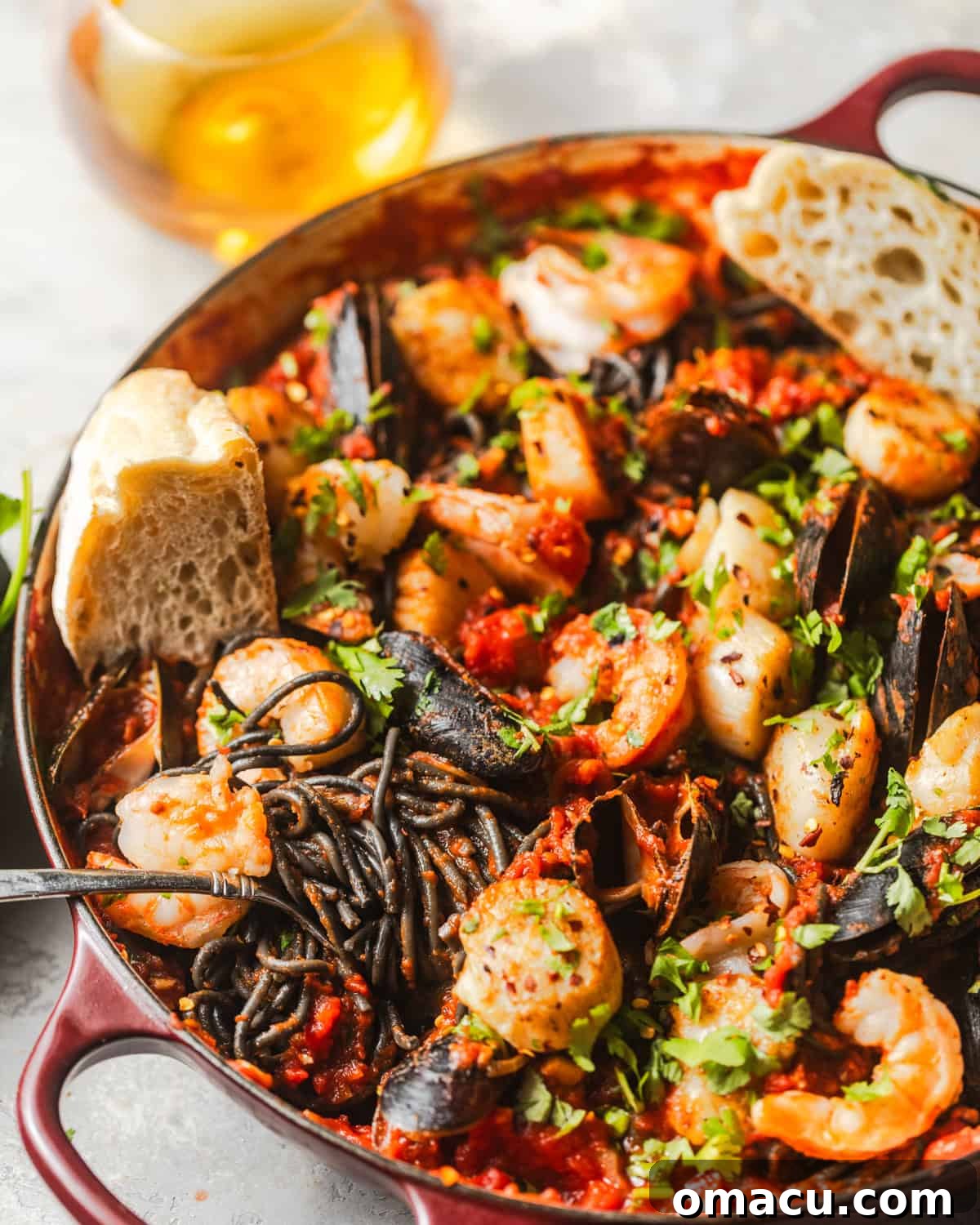
Finally, gently fold in the seared shrimp and scallops, allowing them to warm through in the sauce for just 1 to 2 minutes. Remove the skillet from the heat immediately to prevent overcooking the seafood. Serve this magnificent dish immediately, garnished generously with freshly grated Parmesan cheese, a sprinkle of fresh parsley (or fresh basil for an alternative aromatic note), and a final squeeze of fresh lemon juice to brighten all the flavors. This squid ink pasta with seafood pairs wonderfully with a simple side salad and some crusty bread for soaking up every last drop of the exquisite sauce.
Pro Chef Tips for Perfect Seafood Pasta
Achieving restaurant-quality results at home is easier than you think with these expert tips:
- Salt Your Pasta Water Generously: This is fundamental for flavorful pasta. The water should “taste like the sea,” typically about 1 tablespoon of salt per gallon of water. While squid ink pasta has a natural brininess, properly seasoned water ensures the pasta itself is never bland.
- Dry Your Seafood for the Best Sear: Before searing shrimp and scallops, pat them thoroughly dry with paper towels. Excess moisture creates steam, which prevents a beautiful golden-brown crust from forming. A dry surface allows for a perfect caramelization, locking in all those delicious flavors.
- Do Not Overcook the Seafood: Seafood, especially shrimp and scallops, cooks incredibly quickly. Sear them for only 1 to 2 minutes per side until just opaque. Overcooking will result in rubbery, tough seafood, which can quickly diminish the quality of your dish. Cook them just to the point of doneness, then gently warm them in the finished sauce.
- Add Mussels at the Right Moment: Mussels also cook very fast. Introduce them to the simmering sauce toward the end, and cook just until they pop open. Once they’ve opened, they are done. Remove any unopened mussels, then immediately proceed to add the pasta to the sauce to avoid overcooking the delicate mussels.
- Mind Fresh Pasta Cooking Times: If you opt for fresh squid ink pasta, be aware that it cooks significantly faster than dried pasta. Keep a close eye on the pot, as fresh pasta often requires only a few minutes to reach al dente perfection.
- Taste and Adjust Seasoning: Always taste your sauce before adding the pasta, and again once the pasta is incorporated. Adjust salt, pepper, and lemon juice as needed. A final squeeze of lemon juice truly brightens and balances the rich flavors of the dish.
How to Serve This Elegant Dish
Given the rich flavors and luxurious nature of this squid ink pasta with seafood, I recommend keeping the accompaniments light and fresh to complement rather than compete. The goal is to enhance the main event!
A simple, vibrant side salad dressed with a homemade creamy balsamic dressing is a perfect choice. The crisp greens and tangy dressing provide a refreshing contrast to the hearty pasta. For soaking up every last drop of that delectable sauce, serve with warm, crusty bread like brioche dinner rolls or classic cheesy garlic bread.
Roasted vegetables are another excellent light option. Consider Parmesan roasted broccoli or simply prepared roasted green beans for a healthy and flavorful side that won’t overwhelm the palate. The key is fresh, simple ingredients that allow the seafood pasta to shine.
If you’re entertaining and wish to offer an appetizer, keep it sophisticated yet light. An olive tapenade served with creamy burrata cheese or elegant spinach and artichoke stuffed mushrooms would set the perfect tone without making your guests too full before the main course.
Wine Pairings
Beyond incorporating white wine into the red sauce, choosing the right wine to accompany this flavorful dish is essential. I highly recommend pairing it with a crisp California white wine such as Sauvignon Blanc, Vermentino, or an unoaked Chardonnay. The bright acidity of these wines beautifully cuts through the richness of the tomato sauce, creating a harmonious balance of flavors on the palate.
Furthermore, these specific wine varietals complement the delicate brininess and sweetness of the seafood exceptionally well. They allow the natural flavors of the shrimp, scallops, and mussels to truly shine, enhancing the overall taste experience. It’s a match made in culinary heaven, transforming an already exquisite meal into an extraordinary dining event.
Recipe FAQs
Absolutely! While squid ink pasta offers a unique aesthetic and subtle briny notes, this recipe is incredibly versatile. Any long pasta shape like fettuccine, spaghetti, or linguine will pair wonderfully with the rich seafood sauce. You’ll still enjoy all the incredible flavors.
Squid ink pasta has a distinct yet mild flavor. It’s characterized by a subtle briny, almost oceanic salinity, rather than an intense “fishy” taste. Its primary contribution is a deep savory depth that beautifully complements seafood and rich sauces, along with its dramatic black color.
The key is high heat and short cooking times. Sear shrimp and scallops in a very hot pan for only 1 to 2 minutes per side until they are just opaque. Overcooking is the main culprit for rubbery seafood. Remove them from the pan as soon as they’re cooked, and gently warm them in the finished sauce for only a minute or two before serving.
For the sauce, use a dry white wine that you would genuinely enjoy drinking. Excellent choices include Sauvignon Blanc, Chardonnay (preferably unoaked), Pinot Grigio, or Vermentino. A crisp California white is ideal as its balanced acidity and body enhance the sauce without overpowering the delicate seafood flavors.
Definitely! Feel free to get creative with your seafood selection. You can easily swap out or add ingredients like lump crab meat, tender lobster tails, delicate calamari rings, or even firm white fish like cod or halibut. You can also opt to use just shrimp and mussels, or only scallops, if those are your preferred ingredients. Just ensure to prep and cook any substitute seafood properly according to its specific needs.
Store any leftover squid ink pasta with seafood in an airtight container in the refrigerator for up to 2 days. When reheating, do so gently on the stovetop over low heat. Add a splash of water, seafood stock, or broth to help loosen the sauce and prevent the pasta from drying out.
This recipe and blog post was created in partnership with California Wines. I received compensation and product in exchange for this work. My opinions on their wines are genuine. Thank you for your continued support!
More Irresistible Seafood Recipes
Seafood Recipes
Baked Lobster Tails with Garlic Butter Sauce
Main Course
Cajun Seafood Boil Recipe with Garlic Butter Sauce
Main Course
Pesto Shrimp Pasta
Main Course
Cajun Seafood Gumbo
Want more delicious and beautiful recipes? Subscribe to my newsletter to receive the latest seasonal creations as soon as they’re released!
If you make this recipe, please leave a star rating on the recipe card and comment below! You can also tag @BritneyBreaksBread on Instagram and hashtag #britneybreaksbread so I can celebrate your beautiful creations!
Squid Ink Pasta with Seafood
Britney
15 minutes
45 minutes
1 hour
6
Equipment
-
Mixing Bowls
-
Large Skillet with a Lid
Ingredients
Seafood
- 1 lb Shrimp (deveined, peeled, tails on or off as preferred)
- 1 lb Scallops (preferably large sea scallops, patted dry)
- 1 lb Mussels (cleaned and debearded)
- Salt and Pepper, to taste
- 2 tbsp Olive Oil (plus more if needed)
White Wine Tomato Sauce
- 2 tbsp Salted Butter
- 2 whole Shallots (finely diced)
- 6 cloves Garlic (minced)
- 1 tsp Kosher Salt
- 1/2 tsp Black Pepper
- 1 tsp Dried Oregano
- 1 tsp Mustard Powder
- 1/2 tsp Granulated Sugar
- 1 tsp Red Pepper Flakes (adjust to heat preference)
- 6 oz Tomato Paste
- 1 cup Dry White Wine (e.g., Sauvignon Blanc, Pinot Grigio)
- 28 oz Canned Crushed Tomatoes
- 1 Bay Leaf
- 12 oz Squid Ink Pasta (or regular long pasta)
- Freshly Grated Parmesan Cheese (for garnish)
- 5 tbsp Fresh Parsley (chopped, for garnish)
- Squeeze Fresh Lemon Juice (for finishing)
Instructions
-
Prep the Seafood: Pat shrimp and scallops dry with paper towels. Peel shrimp if desired (leaving tails on is optional). Season both shrimp and scallops generously with salt and pepper. Clean mussels by scrubbing off any debris and removing beards (stringy fibers). Set aside.
-
Sear Scallops and Shrimp: Heat 1 tbsp olive oil in a large skillet over medium-high heat until shimmering (about 3 minutes). Add scallops in a single layer and sear for 1½-2 minutes per side until golden brown. Remove to a plate and set aside. Add remaining 1 tbsp olive oil (or more if pan is dry), then sear shrimp for 1-2 minutes per side until opaque and pink. Transfer shrimp to the plate with scallops and cover loosely with foil to keep warm.
-
Build the Sauce Base: Reduce heat to medium. Add butter to the same skillet. Once melted, add diced shallots and cook for 5 minutes, stirring frequently, until softened. Add minced garlic, salt, black pepper, oregano, mustard powder, sugar, and red pepper flakes. Stir in tomato paste and cook for 3-4 minutes, pressing it against the pan, until slightly caramelized and a thick paste forms.
-
Deglaze and Simmer: Pour in white wine and deglaze the pan, scraping up any browned bits from the bottom. Bring to a simmer and cook for 5 minutes until slightly reduced. Add crushed tomatoes and bay leaf. Reduce heat to low, cover, and simmer for 15 minutes, allowing flavors to meld and sauce to thicken.
-
Cook Mussels: After 15 minutes of simmering, add the cleaned mussels to the sauce, cover the skillet, and cook for another 4-5 minutes until all mussels have popped open. Discard any unopened mussels.
-
Cook the Pasta: While the sauce is simmering, bring a large pot of heavily salted water to a rolling boil. Cook squid ink pasta according to package directions until al dente. Reserve 1 cup of pasta water, then drain the pasta.
-
Combine and Serve: Remove the bay leaf from the sauce. Add the cooked pasta directly to the sauce. Add ½ cup of reserved pasta water (or more, up to 1 cup, if a thinner sauce is desired) and toss until the pasta is silky and well-coated. Gently fold in the seared shrimp and scallops. Simmer for just 1-2 minutes until the seafood is warmed through. Remove from heat. Sprinkle generously with freshly grated Parmesan cheese, garnish with fresh parsley (or basil), and finish with a squeeze of fresh lemon juice. Serve immediately with a side salad and crusty bread.
Video
Notes
- Don’t forget to salt the water! Squid ink pasta is briny by nature, but it still needs seasoned water to keep it from tasting flat. Per recommendation, it should “taste of the sea.” About 1 tbsp per gallon of water is a good guideline.
- If using fresh squid ink pasta, keep in mind that fresh pasta cooks way faster than dried pastas. You only need a few minutes, so keep a close eye on the pot to avoid overcooking.
- Dry the shrimp and scallops before searing. This allows them to develop a nice golden crust and locks in all of their flavor! Also, don’t overcook the seafood. It’s easy to do, but shrimp and scallops cook VERY quickly. Only 1-2 minutes per side is usually sufficient!
- Add the mussels at the end. Mussels cook quickly; once they pop open, they’re done. Remove them from the heat and add the pasta to the sauce, then gently fold in all the seafood to enjoy.
Nutrition
Nutrition information is automatically calculated, so should only be used as an approximation.