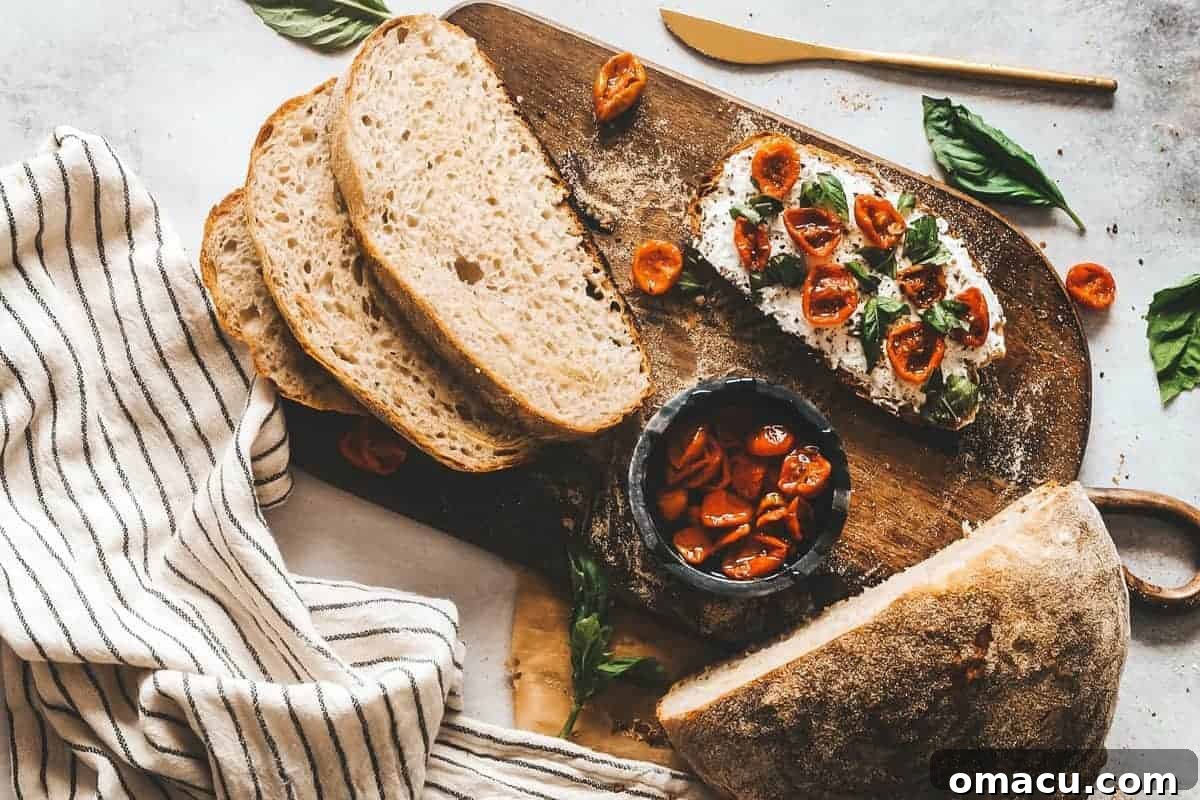
Prepare to fall in love with Pane Rustico, a truly exceptional bread that will undoubtedly earn a permanent spot in your baking repertoire! This delightful Italian loaf boasts a remarkably soft, pillowy crumb encased within a beautifully crisp, golden crust. Its unique texture makes it not just a fantastic accompaniment to meals, but also an absolutely divine choice for toast, elevating your breakfast or brunch experience.
If you’re eager to explore more rustic bread recipes, don’t miss our guide to this simple yet flavorful no-knead olive bread!
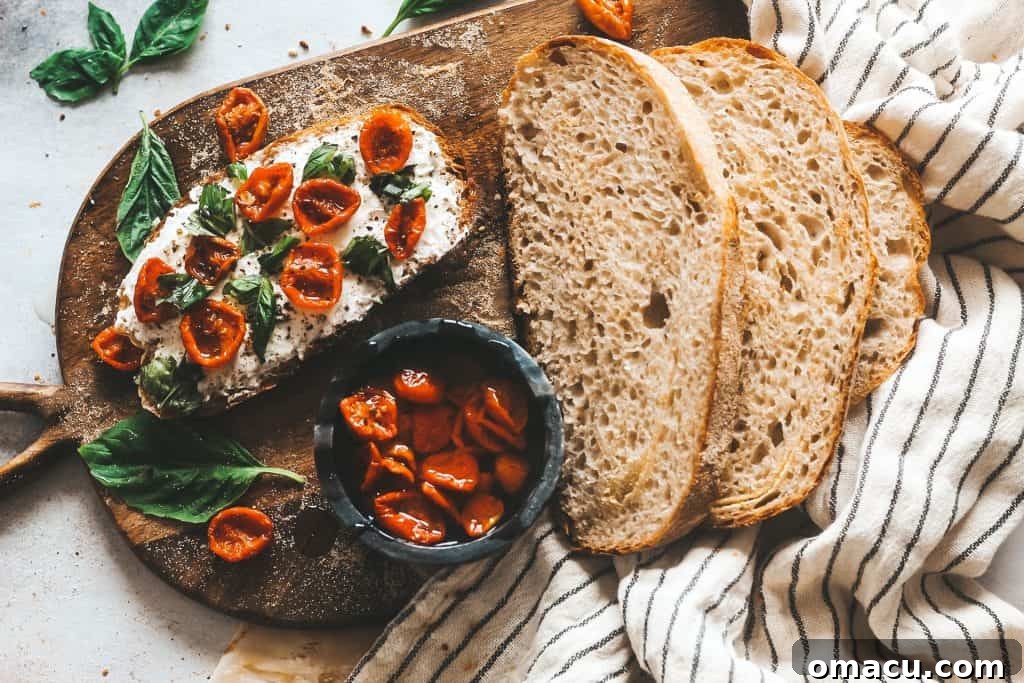
Pane Rustico, translating literally to “rustic bread,” is a cornerstone of traditional Sicilian cuisine. Historically baked in roaring wood-fired ovens, this hearty bread was a daily staple, designed to complement rich, slow-cooked stews, an array of local cheeses, and robust, satisfying sandwiches. Its robust character and comforting flavor tell a story of ancient traditions and simple, wholesome ingredients.
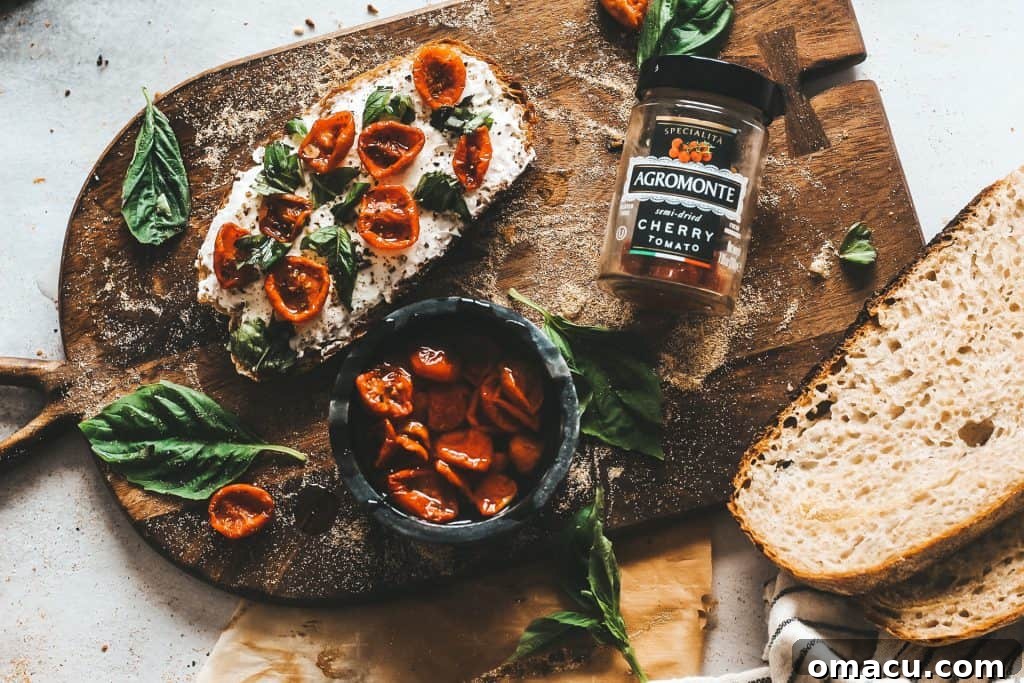
My personal experience with this bread has been nothing short of extraordinary. The moment this loaf emerged from the oven, its intoxicating aroma filled my home, a scent that is, without question, one of life’s purest pleasures. I couldn’t resist slicing into it right away, the steam gently wafting out as the knife met the tender crumb. The first taste was pure bliss, especially when I paired it with creamy cream cheese and succulent sun-dried cherry tomatoes from Cost Plus World Market, finished with a sprinkle of flaky sea salt and fresh basil. To say this combination was merely “good” would be an immense understatement – it was an absolute culinary revelation.
This recipe is designed to bring the authentic essence of Sicilian Pane Rustico directly to your kitchen, allowing you to recreate that incredible aroma and taste. Even without a traditional wood-fired oven, with a few expert tips and a trusty Dutch oven, you can achieve a loaf with a magnificent crust and an airy, open crumb that rivals any artisan bakery.
Table of Contents
- The Essence of Pane Rustico
- Key Ingredients
- Mastering the Pane Rustico Method
- Expert Bread Baking Tips
- Pane Rustico Recipe
- More Bread Recipes
The Essence of Pane Rustico: A Journey into Sicilian Breadmaking
Pane Rustico isn’t just a loaf of bread; it’s a piece of culinary history. Rooted deeply in the rich agricultural traditions of Sicily, this bread embodies the island’s spirit of using simple, high-quality ingredients to create something truly remarkable. Unlike more refined Italian breads, Pane Rustico celebrates its “rustic” nature, often characterized by an irregular shape, a robust, thick crust, and an open, airy internal structure. Its origins point to a time when baking was a communal and essential daily activity, with families bringing their dough to shared village ovens, often fueled by wood, to achieve that signature smoky flavor and incredible crust. This bread was designed to be substantial, capable of soaking up the delicious sauces of hearty Mediterranean dishes and providing sustaining nourishment.
Modern home bakers can still capture this traditional essence. The key lies in understanding the interplay of simple ingredients and mastering foundational bread-making techniques. While a wood-fired oven might be a luxury, the intense heat and enclosed environment of a Dutch oven can beautifully replicate the conditions needed to develop that coveted crust and airy crumb. It’s a testament to timeless baking principles that even today, with modern equipment, the soul of Pane Rustico remains accessible, inviting you to connect with centuries of culinary heritage.
Key Ingredients for Authentic Pane Rustico
Crafting the perfect Pane Rustico begins with understanding the role each ingredient plays. While the list is short, the quality and proper handling of these staples are paramount to achieving that classic texture and flavor.
Active Dry Yeast: The Engine of Your Loaf
Active dry yeast is a miraculous microorganism that breathes life into your dough. By feeding on the sugars present in the flour, it produces carbon dioxide gas, which gets trapped within the gluten structure. This process creates countless tiny air pockets, causing the dough to rise and ultimately giving the bread its light, fluffy, and open crumb. Beyond its leavening power, yeast also contributes significantly to the bread’s flavor profile during fermentation, imparting that unmistakable, comforting “yeasty” aroma and complex, slightly tangy taste synonymous with homemade bread. Ensuring your yeast is fresh and active is the first crucial step to a successful bake; old or inactive yeast will lead to a dense, flat loaf.
A Thoughtful Flour Blend: Structure, Flavor, and Texture
For this Pane Rustico recipe, we employ a strategic blend of three distinct flours: bread flour, whole wheat flour, and all-purpose flour. This combination isn’t arbitrary; it’s carefully chosen to strike a perfect balance in the bread’s final structure, flavor, and texture.
- Bread Flour: High in protein, bread flour is essential for developing strong gluten networks. This gluten strength provides the elasticity needed for the dough to trap gas effectively, resulting in a robust structure and a satisfying chewiness in the finished loaf.
- Whole Wheat Flour: Incorporating whole wheat flour adds a delightful depth of flavor, introducing subtle nutty and earthy notes that enrich the bread’s complexity. It also brings fiber and nutrients, contributing to a more wholesome loaf. However, because its bran content can interfere with gluten development, it’s used in moderation to maintain the desired crumb structure.
- All-Purpose Flour: This versatile flour helps to soften the crumb, ensuring the bread isn’t overly dense or chewy from the bread flour alone. It contributes to a tender interior and a well-rounded mouthfeel, making the loaf approachable and enjoyable for everyone.
Together, these flours create a harmonious blend that delivers the characteristic rustic chew, subtle flavor complexities, and tender crumb that defines true Pane Rustico.
Water: The Hydrator and Gluten Activator
Water is far more than just a liquid in bread making; it’s an indispensable component. Its primary role is to hydrate the flour, which is crucial for activating the proteins that form gluten. Without sufficient water, gluten development is hindered, leading to a stiff and difficult-to-work dough and a dense, dry bread. The water temperature also plays a role: lukewarm water can help activate yeast more quickly, while very cold water can slow down fermentation, which might be desired in longer, slower proofs for flavor development.
Kosher Salt: Flavor Enhancer and Structural Support
Salt is a foundational ingredient that often gets overlooked, but its importance cannot be overstated. Beyond simply enhancing the bread’s flavor and preventing it from tasting bland, kosher salt plays a critical role in strengthening the gluten structure. It tightens the gluten network, making the dough more elastic and easier to handle, and contributing to a finer, more consistent crumb. Furthermore, salt helps to regulate yeast activity, slowing down fermentation just enough to allow for better flavor development without over-proofing the dough too quickly.
Mastering the Pane Rustico Method: From Dough to Golden Loaf
My journey to perfecting this Pane Rustico recipe involved extensive research into traditional Sicilian baking techniques. While I don’t possess the luxury of a rustic wood-fired oven, which imparts a unique char and depth of flavor, I’ve adapted the process to achieve incredibly similar results using a conventional home oven and a trusty Dutch oven. The key is to replicate the intense, consistent heat and trapped steam that a traditional oven provides.
The Dutch oven method is truly transformative for home bread baking. It works by creating a miniature, super-heated oven environment within your regular oven. By preheating your Dutch oven to a scorching 450 degrees F for a full 30 minutes, you ensure that when the dough is added, it experiences an immediate burst of intense heat. This rapid heat causes an incredible “oven spring,” where the dough expands dramatically before the crust has a chance to set. The lid of the Dutch oven also traps steam released from the dough, keeping the crust soft and pliable for longer, allowing for maximum expansion and preventing premature hardening. After 30 minutes with the lid on, removing it and increasing the heat to 500 degrees F allows the crust to crisp up beautifully and develop that signature deep, golden-brown color and satisfying crunch.
For this particular Pane Rustico, the choice to use active dry yeast instead of a “biga” (a traditional Italian pre-ferment) was a practical one. While a biga certainly contributes a deeper, more complex flavor and a chewier texture, active dry yeast allows for a faster and more accessible baking process without significantly compromising on quality. Many traditional recipes use these interchangeably depending on desired timing and flavor complexity. My goal was to create a recipe that delivers authentic results with home baker-friendly steps, proving that you don’t need days of preparation to enjoy a truly remarkable artisan bread.
Expert Bread Baking Tips for Your Best Loaf Ever
Baking bread is both a science and an art, and a few key techniques can dramatically improve your results. Follow these expert tips to ensure your Pane Rustico turns out perfectly every time:
- Embrace the Autolyse: After initially mixing just the flour and water, allow the dough to rest for 20-30 minutes before adding salt or yeast. This process, known as autolyse, allows the flour to fully hydrate and enzymes to begin breaking down starches, which jumpstarts gluten development. The result is a more extensible dough that’s easier to work with, requires less kneading, and yields a superior texture. (Refer to the recipe card instructions for precise timing).
- Verify Your Yeast’s Vitality: This tip is absolutely critical! Expired or inactive yeast is a common culprit behind flat, dense bread. Always double-check the expiration date on your yeast package. If you’re unsure, you can easily test its activity: mix a teaspoon of yeast with a pinch of sugar in about 1/4 cup of warm water (around 105-115°F). If it foams and bubbles vigorously within 5-10 minutes, your yeast is good to go! Learn from common mistakes – active yeast is paramount.
- Resist the Urge: Cool Completely Before Slicing: As tempting as it is to cut into a warm, fragrant loaf straight from the oven, patience is a virtue here. Slicing bread too early, especially rustic loaves like Pane Rustico, can ruin its delicate texture. The internal structure of the bread is still setting and much of the moisture is still evaporating during the cooling phase. Cutting too soon causes steam to escape rapidly, leading to a gummy or doughy interior. Allow your bread to cool for at least one hour, or even longer, so the crumb can fully set and achieve its intended airy, chewy consistency.
- Master the Stretch and Fold Technique: Instead of vigorous kneading, rustic breads often benefit from gentle stretch and folds during bulk fermentation. This method develops gluten without overworking the dough, preserving the gas bubbles that create an open crumb. Aim for gentle handling to avoid degassing your precious dough.
- Invest in a Kitchen Scale: For consistent and accurate bread baking, measuring ingredients by weight (grams) rather than volume (cups) is highly recommended. Flour, especially, can vary significantly in density depending on how it’s scooped. A kitchen scale ensures precise ratios, leading to predictable and successful results every time.
- Control Your Proofing Environment: Yeast thrives in warm, consistent environments. If your kitchen is cool, find a warm spot (like an oven with just the light on) to help your dough rise steadily. Avoid drafts, which can shock the yeast and hinder fermentation.
Explore More Delicious Bread Recipes
If Pane Rustico ignites your passion for baking, you’ll love these other fantastic bread recipes, perfect for expanding your repertoire and bringing more homemade goodness to your table.
Breakfast
No-Knead Cinnamon Raisin Sourdough Bread
Experience the delightful combination of warm cinnamon and sweet raisins in this easy no-knead sourdough loaf, perfect for a cozy breakfast or a delightful snack.
Breakfast
Wholesome Honey Oat Bread
A hearty and subtly sweet bread, perfect for sandwiches or a light breakfast. The oats add a wonderful texture and a wholesome flavor that’s hard to resist.
Breakfast
Soft and Buttery Prune Starbread
An impressive and delicious braided bread, filled with a sweet prune filling. This beautiful star-shaped loaf is perfect for special occasions or a comforting treat.
Desserts
Maple Cinnamon Banana Bread
A classic comfort food elevated with the warm flavors of maple and cinnamon. This moist and flavorful banana bread is perfect with a cup of coffee.
Want to receive more delicious and beautiful recipes directly in your inbox? Subscribe to our newsletter to get the latest seasonal creations as soon as they’re released!
If you’ve tried your hand at this exquisite Pane Rustico recipe, we’d absolutely love to hear from you! Please consider leaving a star rating and a comment below to share your experience. You can also tag us @BritneyBreaksBread on Instagram and use the hashtag #britneybreaksbread so we can celebrate your beautiful creations with our community!
Authentic Pane Rustico Recipe
Pane Rustico
By Britney
Prep Time: 30 mins
Cook Time: 40 mins
Total Time: 1 hr 10 mins
Servings: 12 servings
Print Recipe
Pane Rustico is a delicious and easy bread recipe that has become a staple in my household! It’s truly a classic, offering a perfect blend of a crisp crust and a soft, airy interior, ideal for any occasion.
Ingredients
- 430 g Bread Flour
- 80 g Whole Wheat Flour
- 230 g All-Purpose Flour
- 600 g Water
- 6 g Active Dry Yeast
- 17 g Kosher Salt
Instructions
- Combine bread flour, whole wheat flour, all-purpose flour, and water in a large mixing bowl. Mix thoroughly until no dry flour remains. Cover the bowl with a towel or plastic wrap and allow the dough to rest for 1 hour. This initial rest is the autolyse phase, which helps with hydration and gluten development.
- After the autolyse, add the kosher salt and active dry yeast to the dough. Gently knead the dough in the bowl for about 5 minutes, ensuring the salt and yeast are fully incorporated. Then, perform 3-4 rounds of “stretch and fold” within the bowl. Allow the dough to rest again for 30 minutes, covered.
- Repeat the stretch and fold technique for another 3 minutes. At this stage, the dough should feel more elastic and might show some small bubbles, indicating active yeast. Handle the dough gently to avoid deflating these precious gas pockets. Cover the dough and place it in a slightly warm environment, such as an oven with only the light on, and let it rise for 2.5 hours for bulk fermentation.
- Once bulk fermentation is complete, gently transfer the dough onto a lightly floured work surface. Perform one final set of stretch and folds to gently shape the dough. Carefully fold the dough onto itself to form a rustic shoelace pattern or a round boule, being careful not to degas it. Place the shaped dough, seam-side up, into a proofing basket (banneton) generously dusted with flour. Cover the dough and refrigerate for 3 hours. This cold proof slows fermentation and develops deeper flavors.
- Preheat your oven to 450 degrees F (230°C). Place your empty Dutch oven with its lid into the preheating oven for 30 minutes. This ensures the Dutch oven is thoroughly heated, which is crucial for a great crust and oven spring.
- Carefully remove the hot Dutch oven from the oven. Remove the dough from the refrigerator and gently invert it into the preheated Dutch oven (it should fall out easily if your proofing basket was well-floured). Place the lid back on the Dutch oven and bake for 30 minutes.
- After 30 minutes, remove the lid from the Dutch oven. Increase the oven temperature to 500 degrees F (260°C) and allow the bread to bake for an additional 15-20 minutes, or until the crust is deeply golden brown and crisp. This final phase develops the characteristic rustic crust.
- Once baked, carefully remove the bread from the Dutch oven and place it on a wire rack. It is absolutely essential to allow the bread to cool completely for at least 1 hour before slicing. This allows the internal structure to set and prevents a gummy crumb.
- Enjoy your homemade Pane Rustico!
Nutrition (Approximate per Serving)
Calories: 218 kcal, Carbohydrates: 48g, Protein: 5g, Fat: 1g, Saturated Fat: 0.1g, Polyunsaturated Fat: 0.2g, Monounsaturated Fat: 0.1g, Sodium: 552mg, Potassium: 50mg, Fiber: 2g, Sugar: 0.1g, Vitamin A: 1IU, Vitamin C: 0.002mg, Calcium: 7mg, Iron: 1mg
Nutrition information is automatically calculated and should only be used as an approximation. Individual results may vary based on exact ingredients and preparation methods.