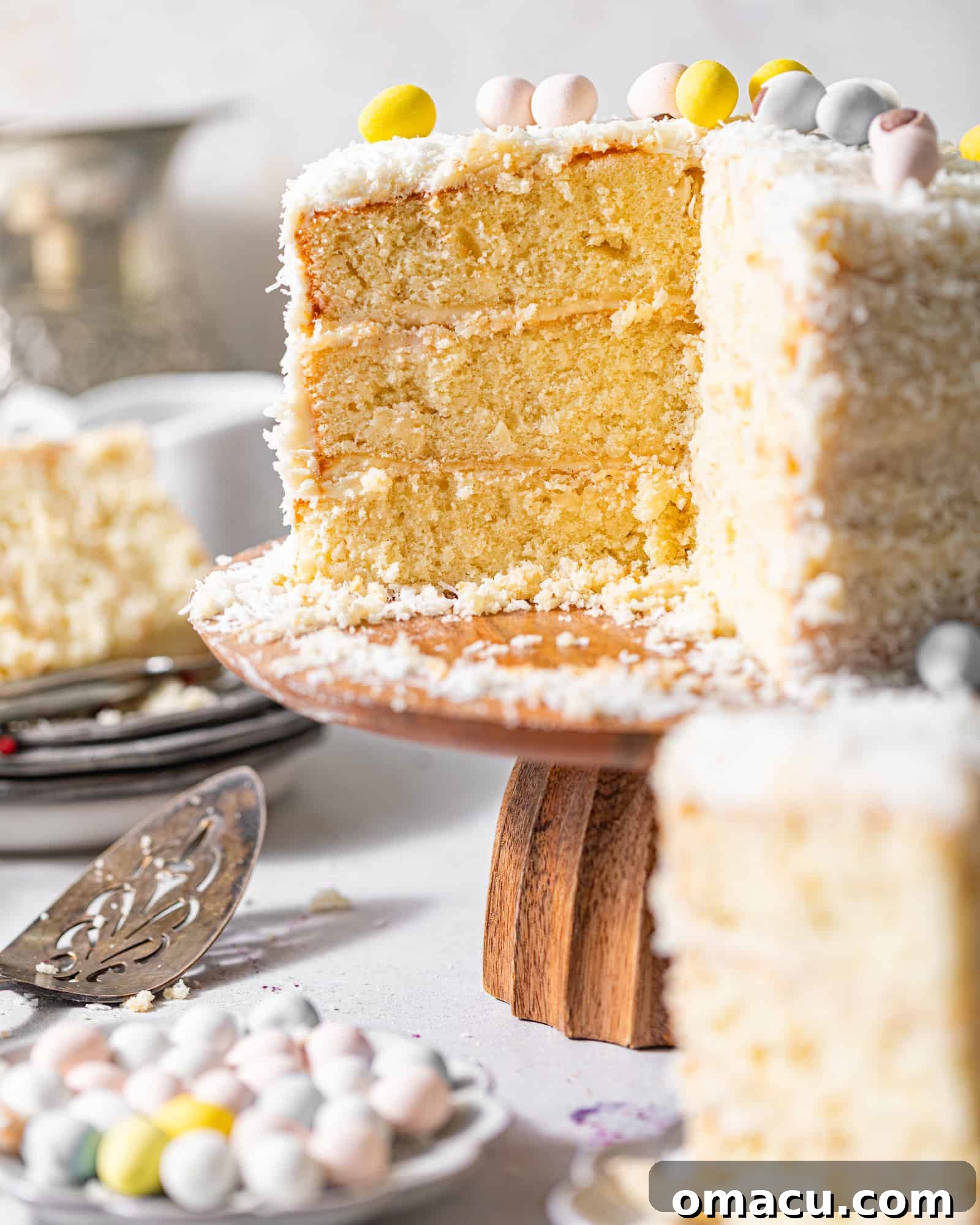
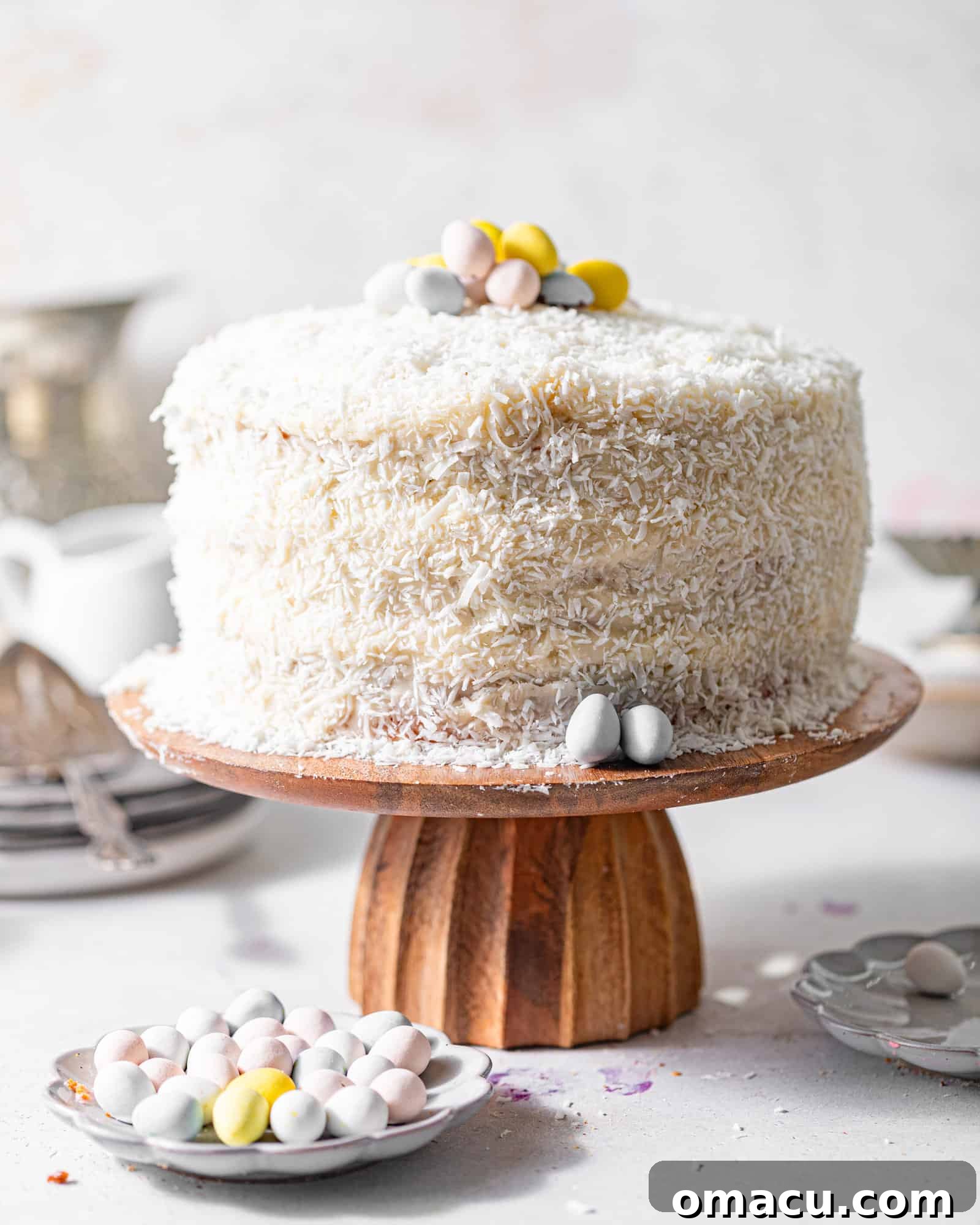
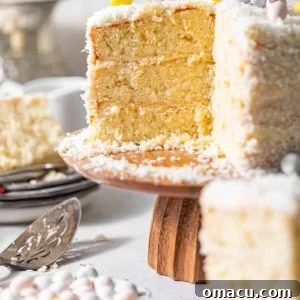
Prepare to bake the ultimate Coconut Cake Recipe that promises to be the best you’ll ever create! Imagine sinking your teeth into incredibly fluffy layers of delicate coconut cake, generously coated with a rich, luscious coconut cream cheese frosting, and adorned with a blanket of toasted coconut flakes for an absolutely irresistible curb appeal. This isn’t just a cake; it’s an experience that will leave you craving more than just one slice. Its elegant presence and divine taste make it a true showstopper for any gathering.
If you’re looking to expand your baking repertoire, be sure to explore some of our other beloved cake creations: the classic Hummingbird Cake, a decadent Carrot Cake with White Chocolate Cream Cheese Frosting, and the delightfully tart Lemon Cream Cheese Pound Cake.
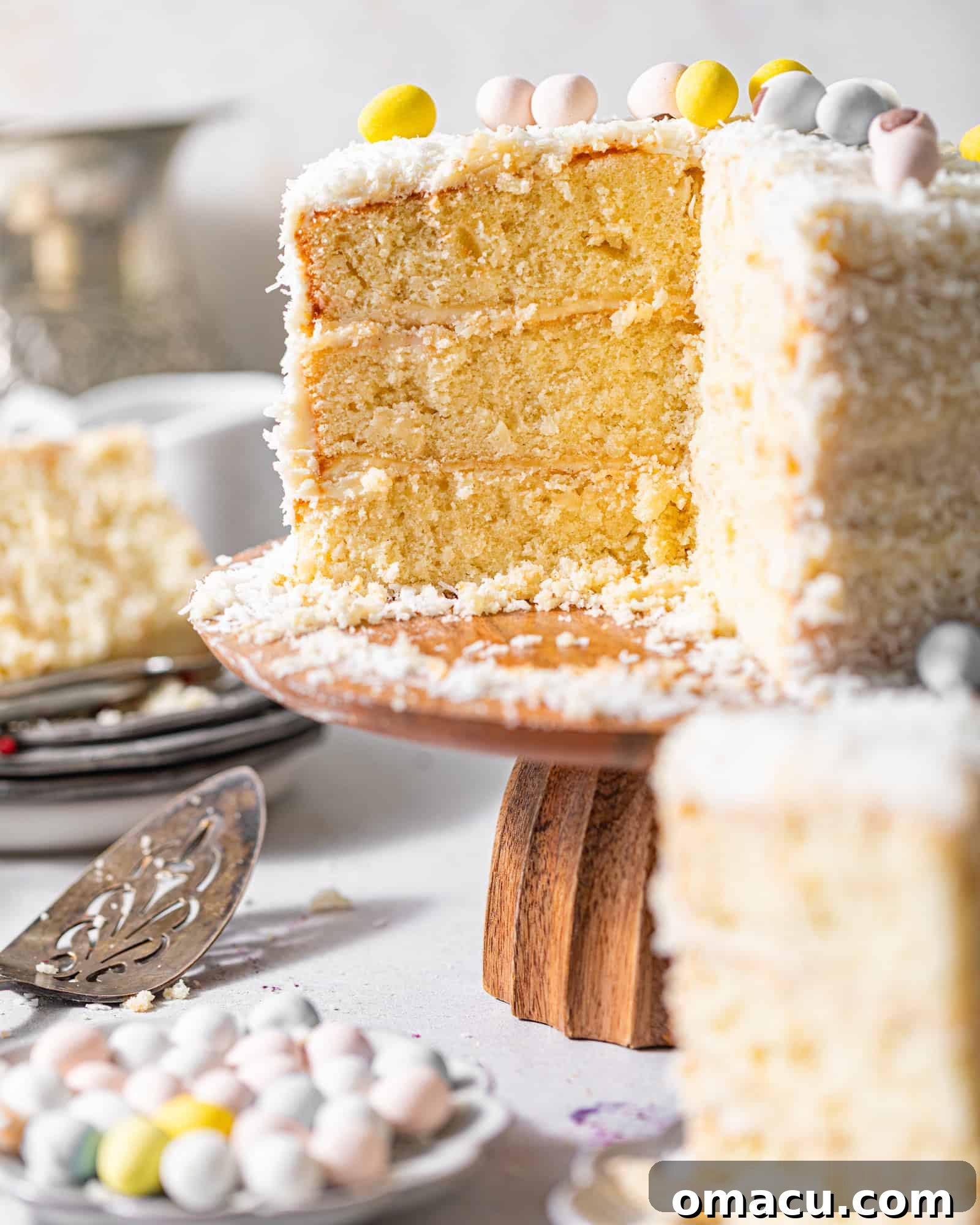
This remarkable coconut cake recipe has a magical way of converting even the most staunch coconut skeptics into enthusiastic lovers of this tropical flavor. If I had to pick just one word to describe this cake, it would undeniably be “elegant.” The vibrant coconut essence shines through in every single bite, yet it’s perfectly balanced and never overpowering. Each forkful reveals a cake with an unbelievably soft and fluffy texture, while the rich, creamy coconut frosting envelops the layers like a warm, comforting embrace. It’s a recipe I truly adore, delivering pure baking joy with every creation.
My journey to becoming a coconut cake enthusiast wasn’t a straight path. Growing up, coconut wasn’t high on my list of favorite flavors. However, a turning point arrived with a particular coconut cake my mom would buy for my aunt’s birthday from the local Amish Market downtown. I vividly remember how incredibly delicious it was, sparking a newfound appreciation for this unique ingredient. As my baking skills developed and my palate matured, a whole new world of culinary possibilities opened up. I decided to try my hand at creating my own coconut cake, and to my delight, I was absolutely blown away by the results – I daresay it even surpassed the cherished market version!
Table of Contents
- Why You’ll Love This Coconut Cake Recipe
- Essential Ingredients for Coconut Cake
- Crafting the Perfect Coconut Cream Cheese Frosting
- Step-by-Step: How to Make Coconut Cake
- Step-by-Step: How to Make Coconut Cream Cheese Buttercream
- Assembling and Frosting Your Layer Cake
- Expert Tips for a Flawless Coconut Cake
- Serving and Storage Suggestions
- Delicious Variations to Try
- Coconut Cake Recipe FAQs
- More Irresistible Cake Recipes
- Printable Coconut Cake Recipe Card
Why You’ll Absolutely LOVE This Coconut Cake Recipe!
This isn’t just another cake recipe; it’s a meticulously crafted formula designed to deliver an unparalleled baking experience and a truly unforgettable dessert. Here’s why this coconut cake will become your new favorite:
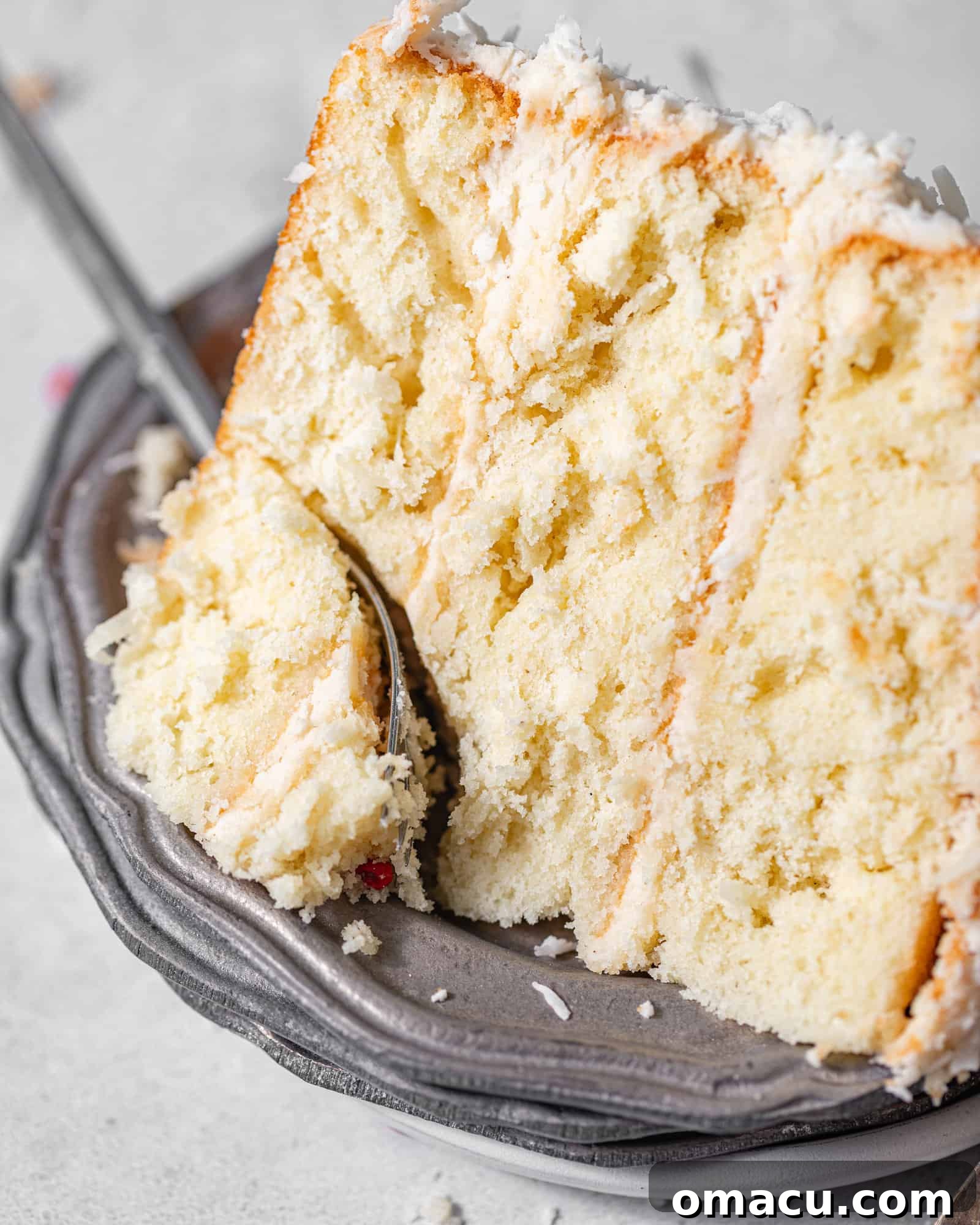
- Unrivaled Fluffy and Moist Texture: Our secret weapon for achieving an incredibly tender and moist crumb is the reverse creaming method. This technique involves coating the dry ingredients with butter before incorporating the wet ones. This unique approach minimizes gluten development, resulting in a cake that’s unbelievably soft, velvety, and exceptionally fluffy. Plus, it’s surprisingly easy to master, making it perfect for bakers of all skill levels!
- Captivating Sweet Coconut Flavor: We’ve gone the extra mile to infuse every layer with an authentic, delicate yet bold coconut flavor that is truly irresistible. By combining both full-fat canned coconut milk and coconut emulsion, this recipe ensures a deep, natural coconut taste that isn’t artificial or overpowering. It’s the perfect balance that will leave your taste buds delighted.
- Perfect for Any Special Occasion: This coconut cake is a guaranteed showstopper that elevates any celebration. Whether you’re baking a birthday cake for a coconut enthusiast, preparing a festive dessert for Easter Sunday dinner, Thanksgiving, Christmas, or any other holiday gathering, this elegant layer cake is sure to impress. Its stunning appearance and delightful flavor make it the centerpiece of any dessert table.
- Incredibly Versatile for Your Baking Needs: While designed as a show-stopping three-layer cake, this recipe is wonderfully adaptable. You can easily transform the batter into delicious coconut cupcakes, a convenient coconut sheet cake baked in a 9×13 pan, or even a charming two-layer cake if you prefer. Its versatility means you can enjoy this amazing coconut flavor in various formats to suit any event or craving.
- Dreamy Coconut Cream Cheese Buttercream: No coconut cake is complete without the perfect frosting, and ours is simply divine. This buttercream is rich, incredibly smooth, and perfectly sweet, offering a delightful tang from the cream cheese that beautifully complements the coconut cake layers. It’s the ideal accompaniment, bringing all the elements together for a truly harmonious dessert experience.
Essential Ingredients for Your Perfect Coconut Cake
Crafting the best coconut cake starts with selecting the right ingredients. Each component plays a crucial role in achieving the desired flavor, moisture, and texture. Here’s a detailed look at the key players you’ll need to create this magnificent dessert:
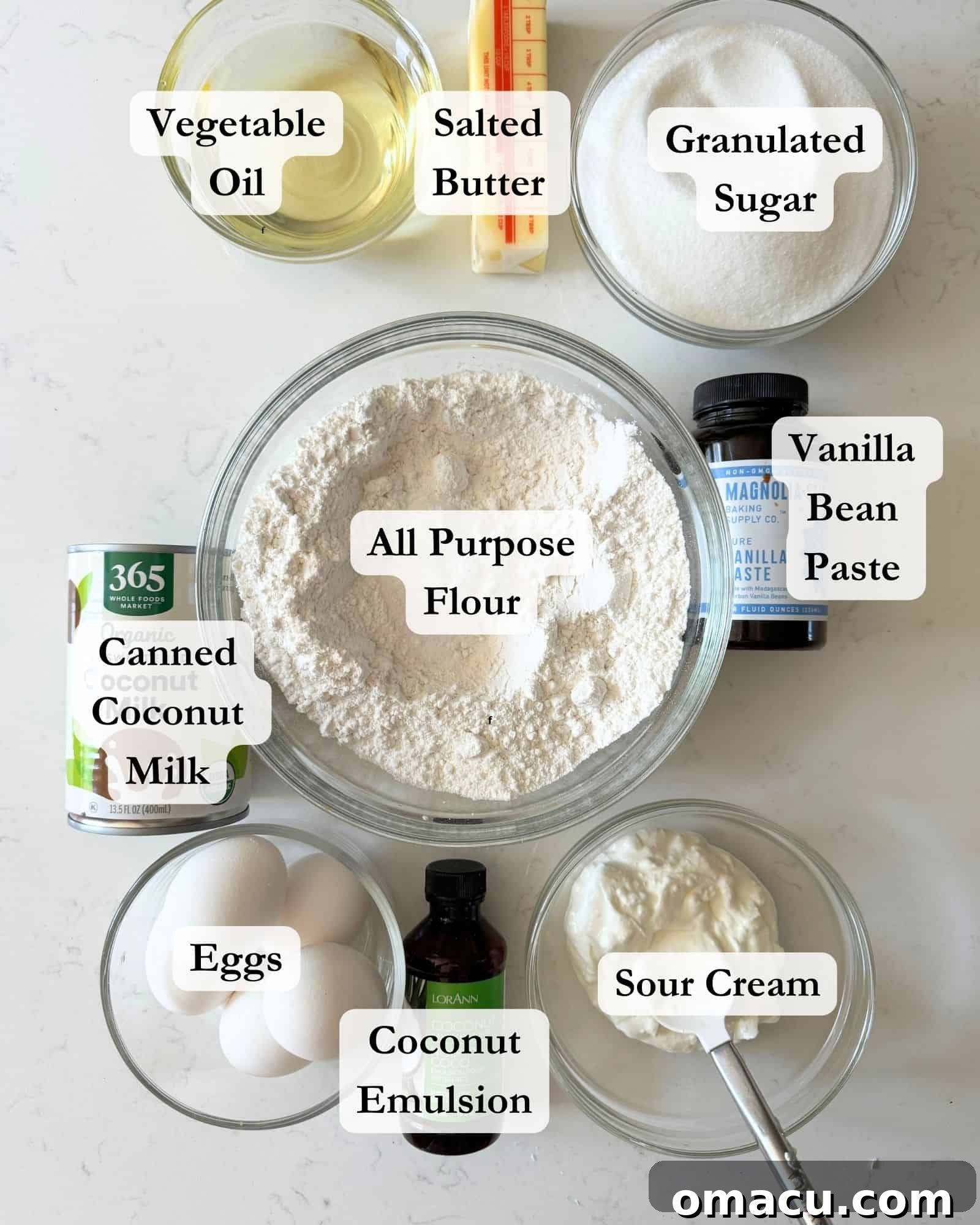
(A comprehensive list of ingredients with precise quantities can be found in the recipe card below.)
- Cake Flour: While all-purpose flour can work in a pinch, I highly recommend using cake flour for superior results. Cake flour has a lower protein content compared to all-purpose, which is essential for creating an exceptionally soft, tender, and velvety cake crumb. It truly makes a noticeable difference in the final texture.
- Sweetened Shredded Coconut Flakes: These flakes are integral to both the cake batter and as the beautiful outer coating. I prefer using sweetened coconut flakes for an extra touch of sweetness that enhances the tropical flavor profile. However, if you prefer a less sweet dessert, unsweetened shredded coconut can be used successfully. Any leftover coconut flakes can be used to make my delightful coconut loaf cake!
- Coconut Emulsion: This is a game-changer for intensifying natural coconut flavor! It’s important not to confuse it with coconut extract. Emulsions are typically oil-based and provide a more robust, long-lasting flavor, especially when baking at high temperatures. You might not find emulsions in your standard grocery store baking aisle; specialty baking stores or online retailers (like the coconut emulsion I used) are your best bet. Trust me, the depth of flavor it brings is absolutely worth the effort!
- Vanilla Bean Paste: For a sophisticated, smooth, and subtly floral vanilla note, vanilla bean paste is my top choice. Its concentrated flavor and visible specks add an elegant touch. If you don’t have paste, ensure you use a high-quality pure vanilla extract to achieve a similar depth of flavor.
- Sour Cream: This ingredient is one of my secret weapons in baking! Sour cream is key to ensuring an incredibly moist cake. Its acidity tenderizes the cake crumb, while its fat content adds richness and prevents dryness. It also imparts a subtle tangy flavor that beautifully balances the sweetness of the cake.
- Eggs and Egg Whites: Eggs serve a dual purpose in this recipe. The whole eggs contribute to the cake’s essential structure and richness, while the addition of extra egg whites is crucial for achieving that wonderfully light, airy, and fluffy texture we’re aiming for. Make sure they are at room temperature for optimal mixing.
- Salted Butter: Always use room-temperature butter for best results, as it creams more easily and incorporates better into the batter. I opt for salted butter because the hint of salt brilliantly enhances and brings out the natural sweetness and flavor of the coconut. If you only have unsalted butter, simply add an extra pinch of salt to the dry ingredients.
- Full-Fat Canned Coconut Milk: This is non-negotiable for true coconut richness and moisture! Use the full-fat variety found in the canned goods aisle, not the refrigerated beverage coconut milk (which is much thinner and won’t yield the same results). Its creamy consistency and high fat content contribute significantly to the cake’s luxurious texture and authentic coconut taste.
Crafting the Perfect Coconut Cream Cheese Frosting
No coconut cake is complete without an exceptional frosting, and our coconut cream cheese frosting is truly a dream. It’s the ideal balance of creamy, tangy, and sweet, perfectly complementing the moist cake layers. Here’s what you’ll need to create this delectable topping:
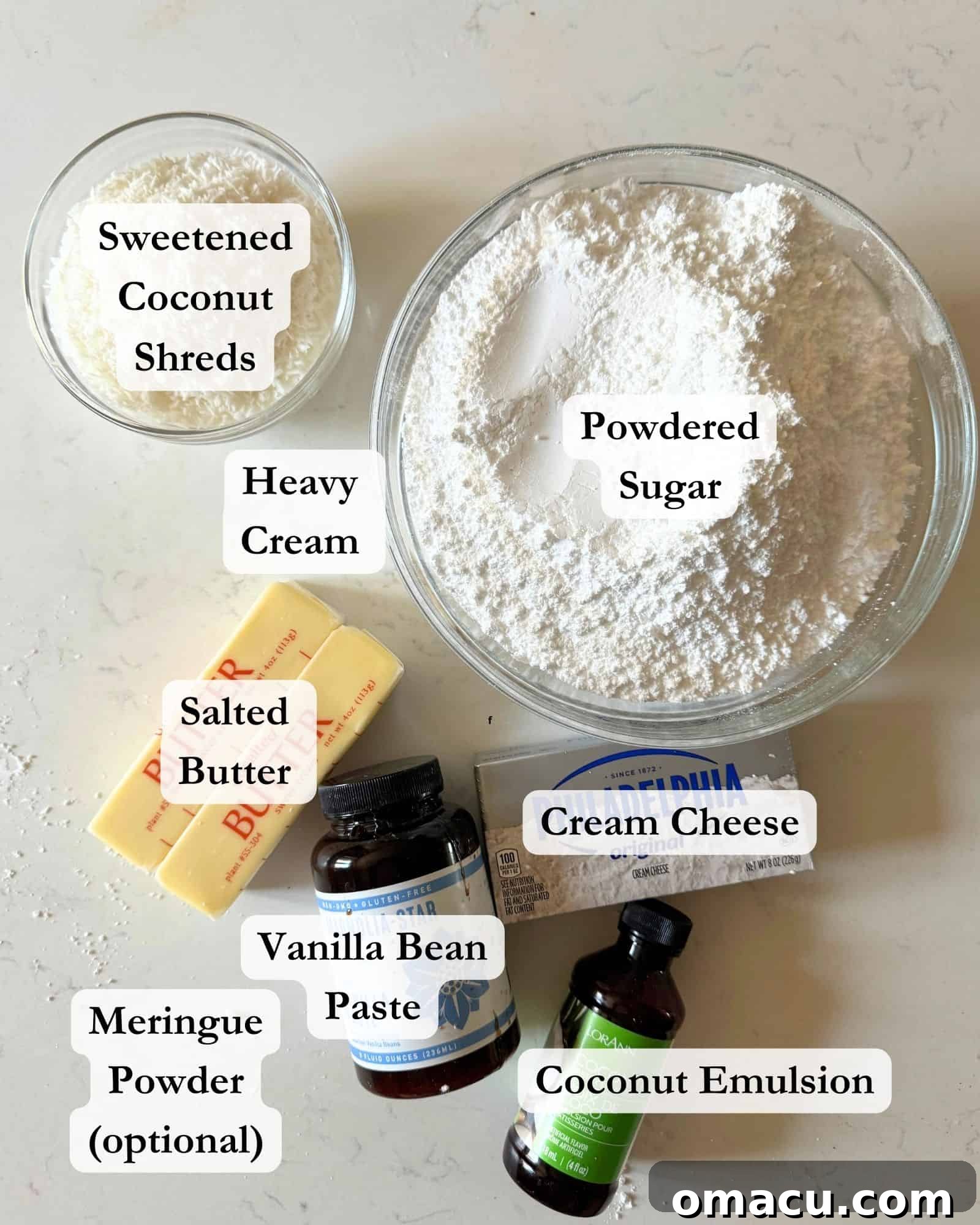
- Meringue Powder (Optional but Recommended): This ingredient is a fantastic addition to cream cheese frosting! While optional, meringue powder significantly helps stabilize the frosting, making it sturdier and much easier to spread and pipe, especially in warmer conditions. It gives your frosting a beautiful structure without altering the taste.
- Full-Fat Cream Cheese: For the creamiest, most luxurious frosting, full-fat cream cheese at room temperature is essential. Avoid reduced-fat varieties, as they can result in a thinner, less rich frosting. My personal favorite for its consistent quality and flavor is Philadelphia Cream Cheese.
- Sweetened Coconut Shreds: It’s important to note that these coconut shreds aren’t actually mixed into the frosting itself. Instead, they are reserved for the grand finale – pressing them onto the exterior of the frosted cake for a beautiful texture, enhanced coconut flavor, and an undeniably impressive visual appeal.
Step-by-Step: How to Make Coconut Cake
Baking this glorious coconut cake is a straightforward and rewarding process. Follow these simple steps to create perfectly moist and flavorful cake layers:
- **Prepare Your Pans:** Begin by preheating your oven to 350 degrees F (175°C). Take three 8-inch round cake pans and generously spray them with nonstick baking spray, or grease and flour them if you prefer. Set these prepared pans aside.
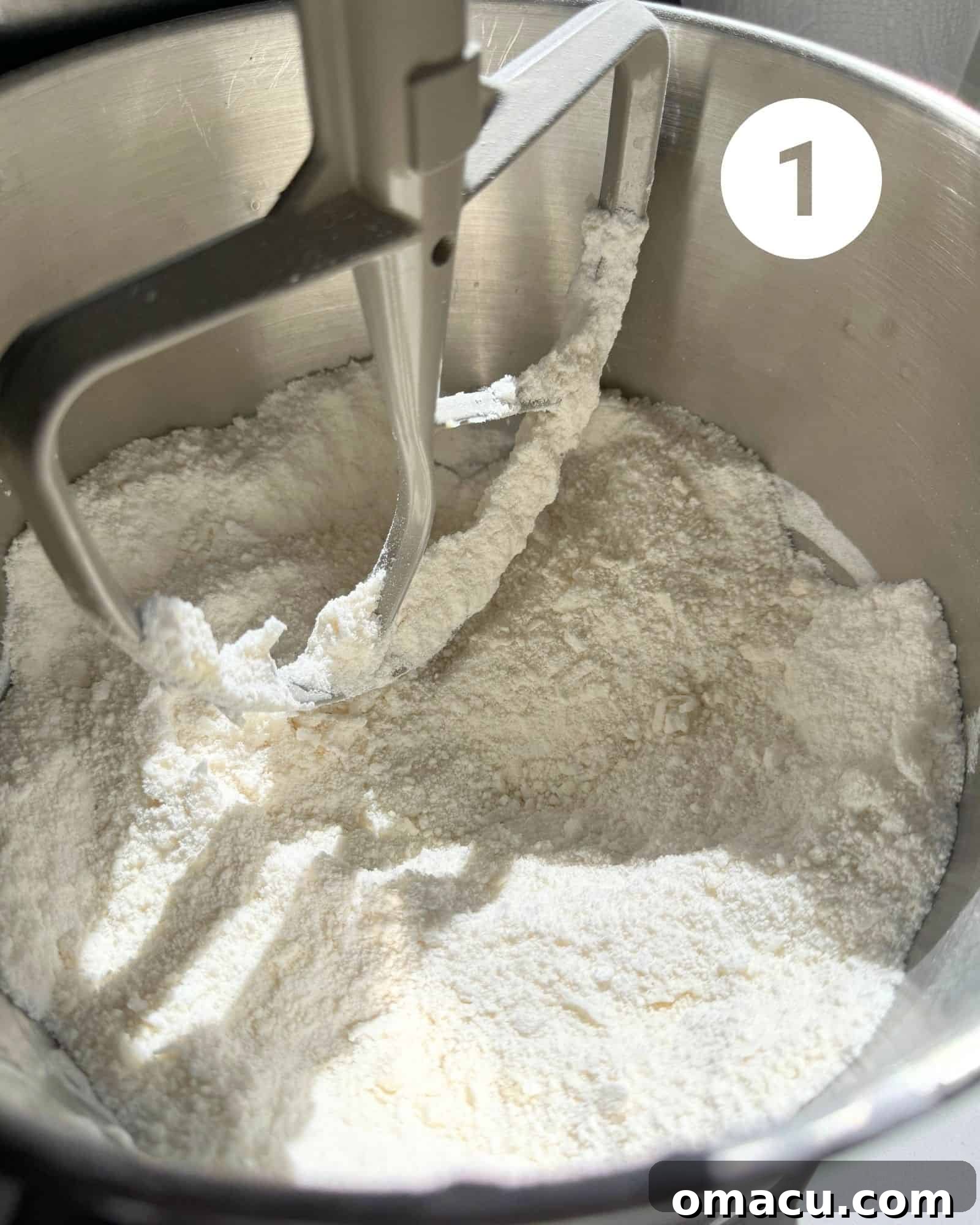
- **Combine Dry Ingredients & Butter:** In the bowl of a stand mixer fitted with the paddle attachment, combine your cake flour, baking powder, kosher salt, sweetened coconut flakes, room-temperature salted butter, and granulated sugar. Mix on medium speed for 1-2 minutes. Continue mixing until the butter is fully incorporated and the mixture resembles a coarse, sandy texture. This “reverse creaming” method helps create an incredibly tender cake.
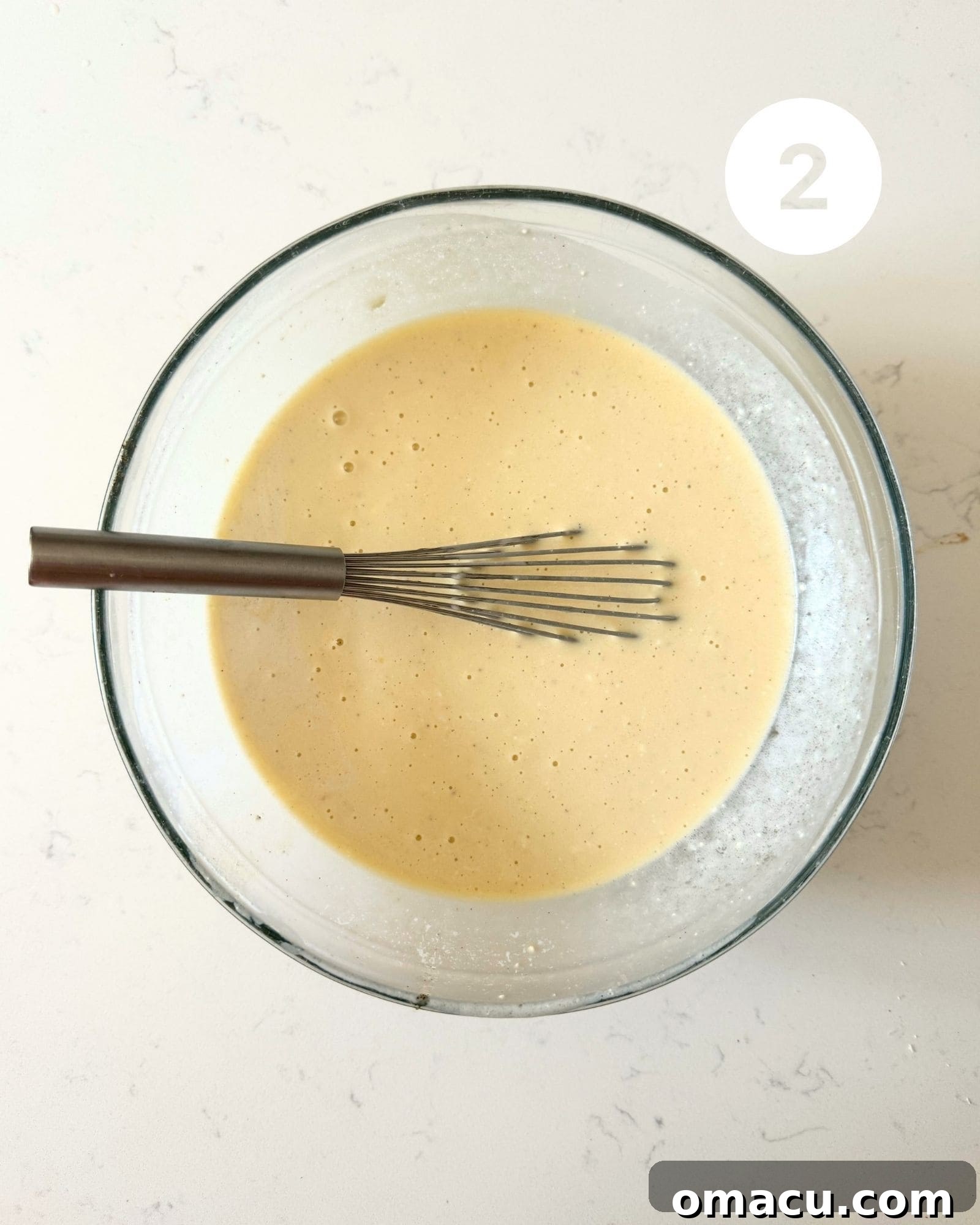
- **Whisk Wet Ingredients:** In a separate medium-sized bowl, whisk together the vegetable oil, large eggs, egg whites, coconut emulsion, vanilla bean paste (or extract), full-fat canned coconut milk, and sour cream. Whisk vigorously until the mixture is completely smooth and well combined.
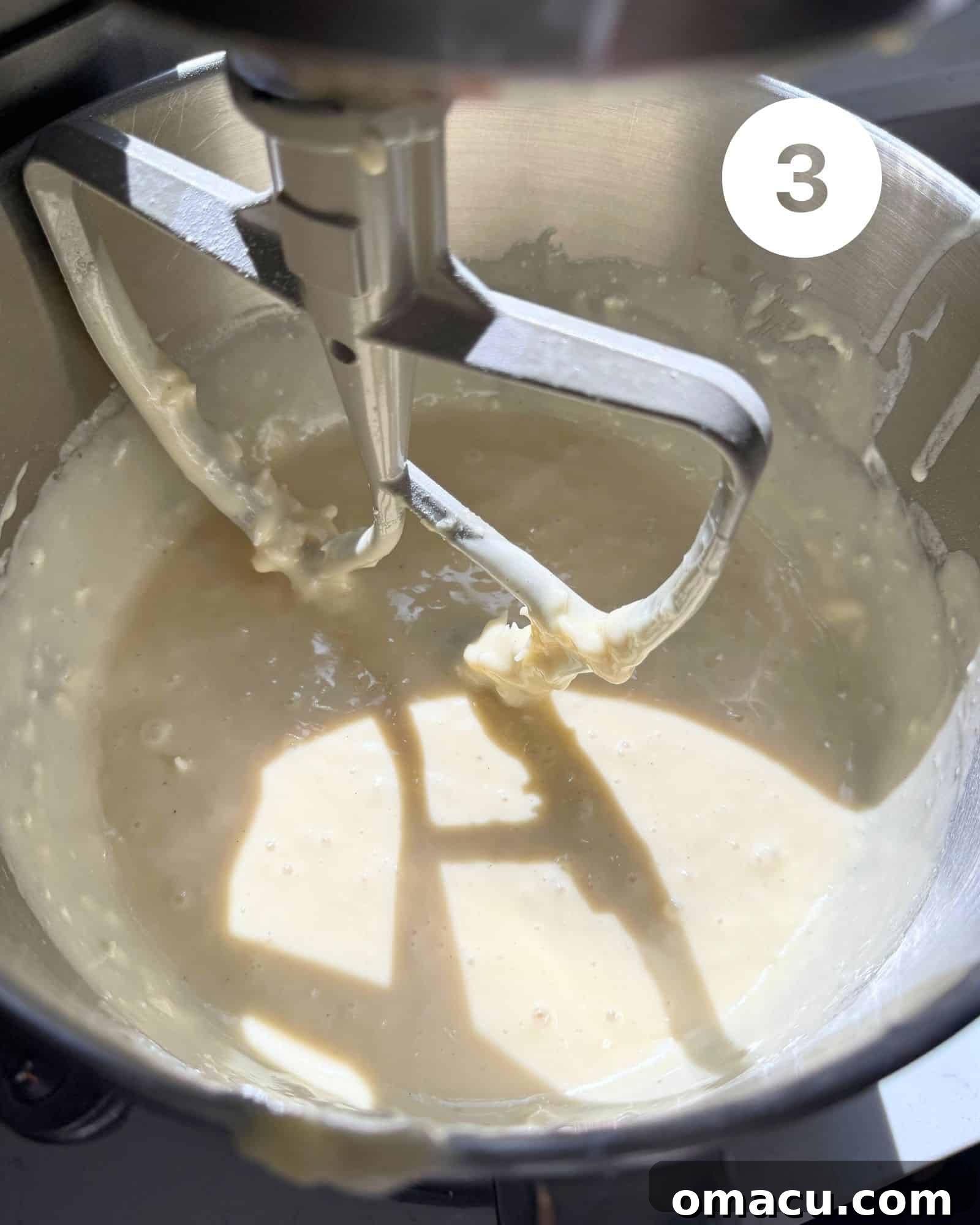
- **Combine Wet and Dry:** Gradually pour the wet ingredient mixture into the stand mixer bowl containing the dry mixture. Mix on medium speed for 2 minutes. Halfway through, stop the mixer and use a rubber spatula to scrape down the sides of the bowl, ensuring all ingredients are thoroughly combined and no pockets of dry flour remain. Continue mixing until the batter is smooth and homogeneous.
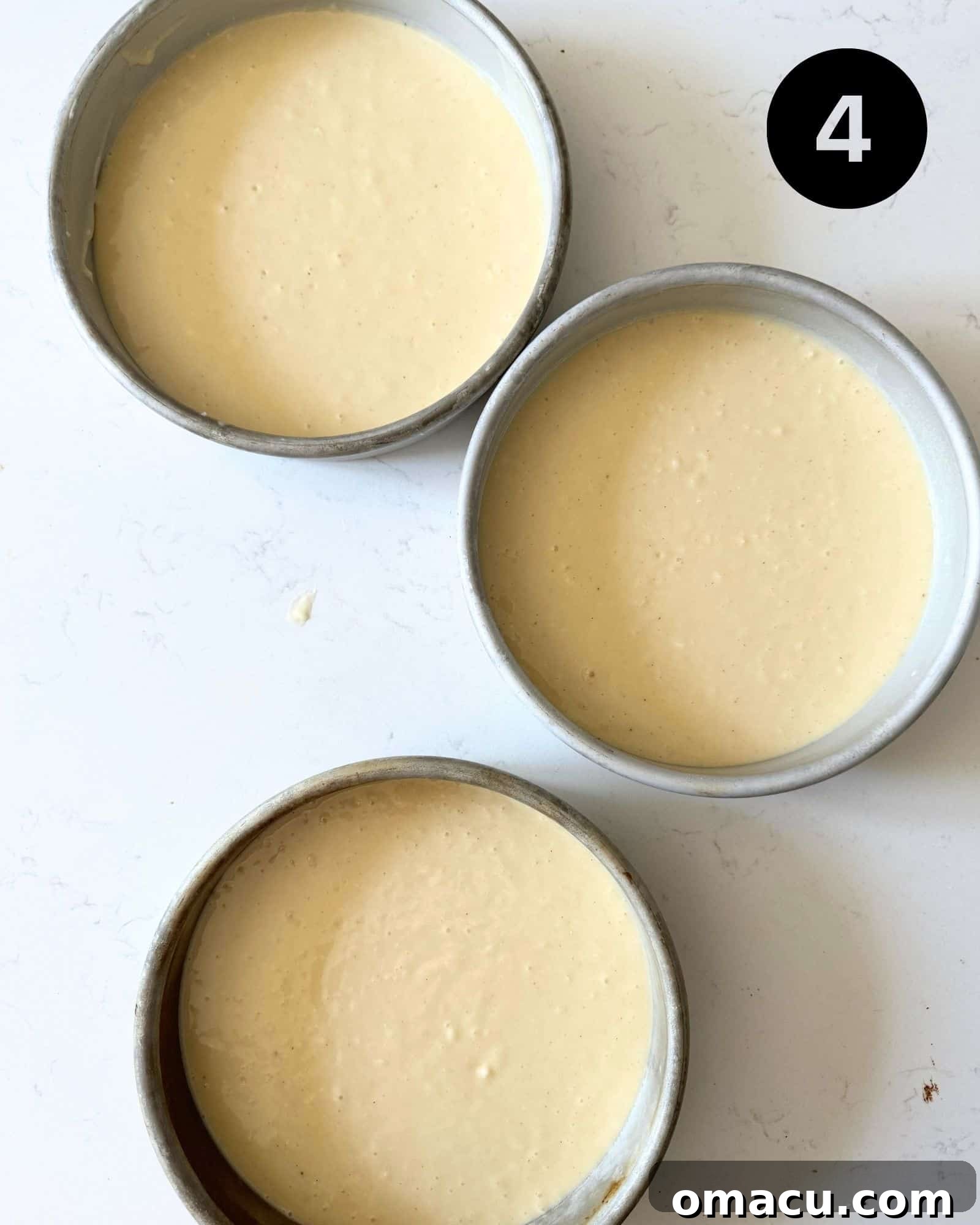
- **Bake the Cake Layers:** Divide the cake batter equally among your three prepared 8-inch pans. Bake for 25-30 minutes, or until a wooden toothpick inserted into the center of a cake comes out clean or with only a few moist crumbs attached. Allow the cakes to cool in their pans for 15 minutes before carefully inverting them onto a wire rack. Let them cool completely to room temperature before frosting. This is crucial for a stable cake and preventing melted frosting.
Step-by-Step: How to Make Coconut Cream Cheese Buttercream
This luscious frosting is a key element of our ultimate coconut cake. Its creamy texture and delicate coconut flavor perfectly complement the moist cake layers. Here’s how to whip it up:
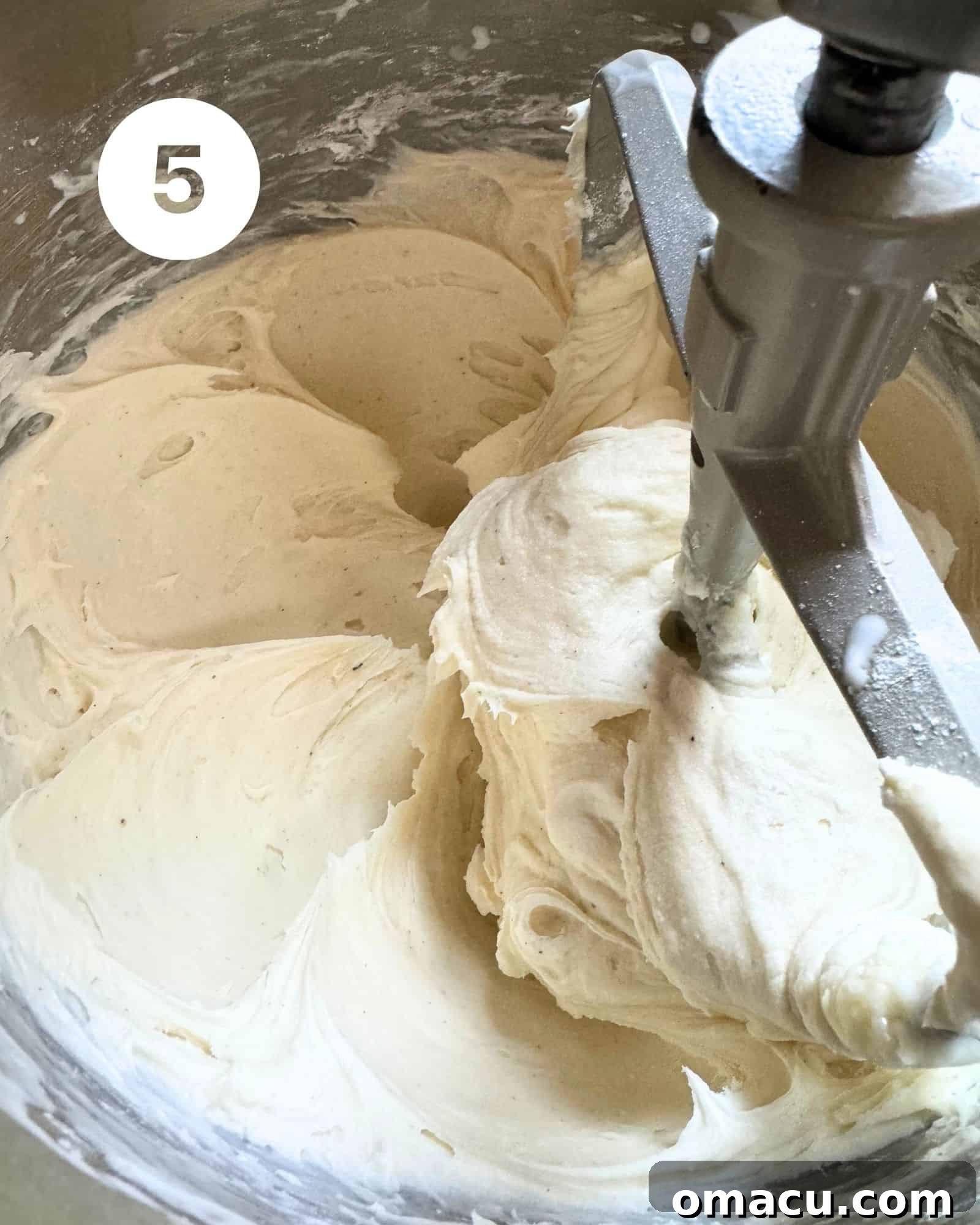
- **Cream Butter and Cream Cheese:** In the bowl of a stand mixer fitted with the paddle attachment, beat the room-temperature salted butter on medium speed for 2 minutes until it’s light and fluffy. Then, add the room-temperature full-fat cream cheese and continue to mix for another 2 minutes, ensuring the mixture is smooth and lump-free.
- **Add Remaining Ingredients:** Gradually add the powdered sugar (sifting it can help prevent lumps), coconut emulsion, heavy cream, meringue powder (if using for stabilization), and vanilla bean paste (or extract). Begin mixing on low speed until the powdered sugar is mostly incorporated, then increase to medium speed. Continue mixing for about 2 minutes, or until the frosting is silky smooth and beautifully combined. Scrape down the sides of the bowl as needed to ensure everything is fully incorporated. The result should be a perfectly pipeable and spreadable frosting.
Assembling and Frosting Your Masterpiece: The Layer Cake
Once your cake layers are completely cooled and your frosting is ready, it’s time to assemble your stunning coconut cake. This process might seem daunting, but with a few tips, you’ll achieve a professional-looking finish:
- **Prepare Your Base:** Once the cake layers have cooled entirely, carefully place one cake layer on a cake stand or your chosen serving plate.
Tip: If any of your cake layers have a slight dome in the center, use a serrated knife or a dedicated cake leveler to carefully trim the top, creating a flat, even surface. This ensures your cake layers stack neatly and evenly. - **First Layer of Frosting:** Scoop a generous amount of coconut cream cheese frosting onto the first cake layer – approximately one cup. Use a flat spatula or an offset spatula to spread the icing evenly across the top, extending just to the edges.
- **Second Layer and Frosting:** Carefully place the second cake layer directly on top of the first, aligning it as best as possible. Add another cup of frosting on this layer and smooth it out evenly with your spatula.
- **Third Layer and Crumb Coat:** Position the third and final cake layer on top, ensuring all layers are perfectly lined up. Now, begin applying a thin layer of frosting all over the entire cake – the top and sides. This is known as the “crumb coat.” (Pro tip: For easier and more even application, you can transfer some frosting to a piping bag with a large round tip and pipe it all over the cake before smoothing.) The crumb coat traps any loose crumbs, creating a smooth surface for your final layer of frosting.
- **Chill the Crumb Coat:** Once the crumb coat is applied, place the cake in the refrigerator for at least 20-30 minutes. This allows the crumb coat to set, effectively sealing in the cake’s moisture and providing a firm base for the final frosting layer.
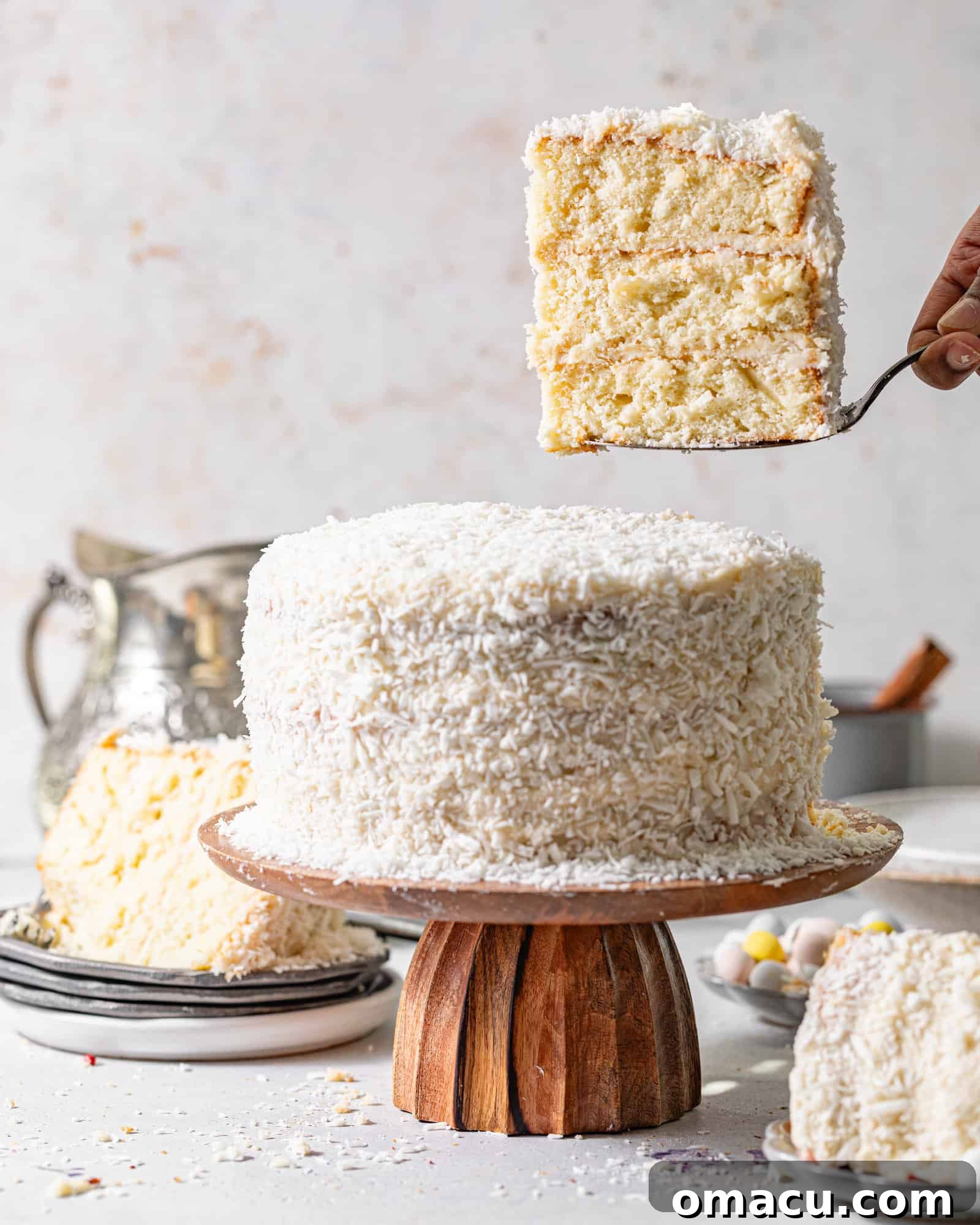
- **Final Frosting and Coconut Coating:** Remove the chilled cake from the refrigerator. Apply the second, thicker, and final layer of coconut cream cheese frosting, ensuring complete and even coverage of the entire cake. Once frosted, gently grab your sweetened coconut shreds and press them onto the sides and top of the cake. Continue until the cake is completely coated, creating a beautiful, textural finish that enhances both appearance and flavor.
Expert Tips for a Flawless Coconut Cake
Achieving a bakery-worthy coconut cake is easier than you think with these helpful tips:
- Room Temperature Ingredients: This is a golden rule in baking, especially for cakes and frostings. Ensure your butter, cream cheese, and eggs are at room temperature. This allows them to emulsify properly, creating a smoother batter and a more consistent, airy texture in your cake and frosting.
- Don’t Overmix: After adding the wet ingredients to the dry, mix just until combined and smooth. Overmixing develops too much gluten, which can lead to a tough, dry cake.
- Measure Flour Correctly: For accurate results, spoon your cake flour into a measuring cup and then level it off with a straight edge. Scooping directly from the bag can compact the flour, leading to too much flour and a dry cake.
- Quality Coconut Emulsion: As mentioned, investing in a good coconut emulsion truly elevates the flavor beyond what extract can offer. It’s worth seeking out!
- Cool Cakes Completely: Resist the urge to frost warm cakes! Even slightly warm layers will melt your beautiful cream cheese frosting, leading to a messy and unstable cake. Patience is key here.
- Crumb Coat is Your Friend: Don’t skip the crumb coat step. It locks in any stray crumbs, ensuring your final layer of frosting is perfectly smooth and professional-looking.
- Even Layers: If your cake layers bake with domes, don’t hesitate to level them with a serrated knife. Flat layers make for a much more stable and aesthetically pleasing stacked cake.
Serving and Storage Suggestions
To ensure your coconut cake remains as delicious as the day you baked it, proper serving and storage are essential:
- Serving Temperature: For the best flavor and texture, allow the frosted cake to sit at room temperature for about 30 minutes before serving. This softens the frosting slightly and enhances the cake’s moistness.
- How to Slice: Use a sharp, thin knife to slice the cake. For clean cuts, wipe the knife clean with a damp cloth after each slice.
- Refrigeration is Key: Due to the cream cheese in the frosting, this coconut cake *must* be stored in the refrigerator. Place the cake in an airtight cake carrier or cover it tightly with plastic wrap to prevent it from drying out or absorbing refrigerator odors. It will stay fresh for up to 3-4 days in the fridge.
- Freezing Instructions: If you want to enjoy your coconut cake later, it freezes beautifully! For best results, freeze individual slices or the entire cake (unfrosted or frosted, but without the outer coconut shreds if frosted) by wrapping it tightly in plastic wrap, then a layer of aluminum foil. It can be frozen for up to 2-3 months. Thaw overnight in the refrigerator before bringing to room temperature to serve. If freezing frosted, add fresh coconut shreds after thawing.
Delicious Variations to Try
This “Best Coconut Cake Recipe” is wonderfully adaptable, allowing you to customize it to your liking or for different occasions:
- Transform into a Sheet Cake: For a simpler, more casual dessert perfect for potlucks or larger gatherings, bake the entire cake batter in a 9×13 inch baking dish. Increase the baking time to approximately 40-50 minutes (at 350 degrees F/175°C), or until a toothpick inserted into the center comes out clean. Remember to halve the frosting recipe, as you’ll need less for a single-layer sheet cake.
- Add a Fruity Filling: Elevate the tropical notes by adding a vibrant fruit filling between the cake layers. Consider a bright and zesty lemon curd, a sweet-tart raspberry jam, or even a layer of crushed pineapples (well-drained to prevent sogginess). These additions create a delightful burst of flavor with every bite.
- Make Adorable Cupcakes: This versatile cake batter is perfect for cupcakes! Line a muffin pan with cupcake liners and fill each about two-thirds full. Bake for approximately 20-25 minutes at 350 degrees F (175°C). This recipe yields about 2 dozen cupcakes, so feel free to halve the recipe if you only need a smaller batch. Adjust the frosting quantity accordingly.
- Gluten-Free Option: For a gluten-friendly version, simply substitute the cake flour with your favorite 1-to-1 gluten-free baking flour blend. Most blends are designed to perform similarly to wheat flour in recipes like this, allowing everyone to enjoy this delicious coconut cake.
- Toasted Coconut Flakes: For an extra layer of flavor and texture, lightly toast some of the shredded coconut flakes in a dry pan over medium-low heat until golden brown. Sprinkle these over the frosted cake just before serving for a delightful nutty crunch.
Coconut Cake Recipe FAQs
Coconut cake typically features incredibly moist, coconut-infused cake layers crafted from a blend of cake flour, sugar, eggs, rich full-fat coconut milk, and finely shredded coconut. These tender layers are then generously filled and frosted with a luxurious coconut cream cheese frosting, which combines creamy butter, powdered sugar, cream cheese, and a boost of coconut emulsion for an intensified flavor. Many recipes also incorporate additional coconut elements, such as toasted coconut flakes, sprinkled on top to add a delightful crunch and extra burst of tropical flavor and texture.
Yes, absolutely! Coconut cake, especially when frosted with a cream cheese-based icing, needs to be refrigerated. The perishable ingredients like cream cheese and coconut milk are best preserved in cool temperatures to maintain freshness and prevent spoilage. To ensure your cake stays moist and delicious, store it in an airtight container or cover it tightly with plastic wrap before placing it in the refrigerator. This helps protect its delicate texture and flavor.
For a coconut cake, the most popular and highly recommended choice for icing is a luscious coconut cream cheese frosting. This exquisite frosting beautifully balances the tanginess of cream cheese with the richness of butter and the sweetness of powdered sugar, all infused with a delightful coconut flavor from coconut emulsion. Its rich, creamy texture and complementary flavor profile make it the perfect pairing for the moist coconut cake layers, adding an extra layer of decadence and creating a truly harmonious dessert experience.
Yes, coconut cake is an excellent candidate for freezing, allowing you to enjoy it at a later date. To prevent freezer burn and preserve its quality, wrap the cake (either whole or in individual slices) tightly in plastic wrap, followed by a layer of aluminum foil. It can be stored in the freezer for up to 3 months. For optimal texture and flavor, thaw the cake gradually in the refrigerator overnight before bringing it to room temperature for serving. If frosted and frozen, you might want to add fresh coconut shreds after thawing.
Absolutely! Sour cream is a star ingredient for making cakes exceptionally moist and tender. Its high fat content adds richness, while its natural acidity plays a crucial role in tenderizing the gluten in the flour. This acidity also reacts with baking soda (if present in the recipe) to produce carbon dioxide gas, which contributes to the cake’s leavening and helps create a soft, fine crumb. Incorporating sour cream into your cake batter consistently results in a more tender cake with a delightfully moist texture that lasts longer.
More Irresistible Cake Recipes from Our Kitchen
If you loved this coconut cake, you’re in for a treat! Explore more delightful cake recipes that are perfect for any occasion:
- Aromatic Cardamom Cake
- Decadent Black Velvet Cake
- Classic Old Fashioned Hummingbird Cake
- Joyful Yellow Cake with Chocolate Buttercream
- Rich Red Velvet Layer Cake
- Comforting Soft Pumpkin Layer Cake
Want more delicious and beautiful recipes delivered straight to your inbox? Subscribe to my newsletter to receive the latest seasonal creations as soon as they’re released!
If you create this incredible coconut cake, please consider leaving a star rating on the recipe card below and sharing your thoughts in the comments! You can also tag @BritneyBreaksBread on Instagram and use the hashtag #britneybreaksbread so I can celebrate your beautiful creations!
The Best Coconut Cake
By Britney
Prep Time: 20 mins | Cook Time: 30 mins | Cooling Time: 45 mins | Total Time: 1 hr 35 mins
Yields: 12 servings | Rating: 5 from 2 votes
Pin Recipe | Print Recipe
This is truly the Best Coconut Cake Recipe you will ever make! With fluffy, tender layers, a rich coconut cream cheese frosting, and a delightful coating of coconut flakes, this cake is an irresistible treat. Perfect for any celebration, it’s so delicious you won’t be able to stop at just one slice.
Equipment
- 3 (8-inch) cake pans
- Stand Mixer
- Rubber Spatula
- Wire Rack
Ingredients
For the Coconut Cake Layers:
- 3 cups (375 g) Cake Flour
- 1 tsp (6 g) Kosher Salt
- 1 tbsp (12 g) Baking Powder
- ¾ cup (64 g) Sweetened Coconut Shreds
- ½ cup (113 g) Salted Butter, (room temperature)
- 2 ¼ cups (450 g) Granulated Sugar
- ½ cup (109 g) Vegetable Oil
- 3 Large (150 g) Eggs, (room temperature)
- 2 (60 g) Egg Whites, (from large eggs, room temperature)
- 2 ½ tsp (2.5 g) Coconut Emulsion
- 1 tsp (5 g) Vanilla Bean Paste, (or high-quality extract)
- 1 cup (240 g) Canned Coconut Milk, (full-fat)
- ½ cup (120 g) Sour Cream
For the Coconut Cream Cheese Frosting:
- 1 cup (227 g) Salted Butter, (room temperature)
- 8 oz (226.8 g) Cream Cheese, (full-fat, room temperature)
- 6 cups (720 g) Powdered Sugar, (sifted)
- 2 tsp (2 g) Coconut Emulsion
- 2 tbsps (30 g) Heavy Cream
- 1 tbsp (15 g) Meringue Powder, (optional, for stability)
- 2 tsp (10 g) Vanilla Bean Paste, (or high-quality extract)
Instructions
Making the Coconut Cake Layers:
- Preheat your oven to 350°F (175°C). Prepare three 8-inch cake pans by spraying them generously with nonstick baking spray or greasing and flouring them. Set aside.
- In the bowl of a stand mixer fitted with the paddle attachment, combine the cake flour, baking powder, kosher salt, sweetened coconut flakes, room-temperature salted butter, and granulated sugar. Mix on medium speed for 1-2 minutes until the butter is fully incorporated and the mixture has a sandy texture.
- In a separate medium bowl, whisk together the vegetable oil, large eggs, egg whites, coconut emulsion, vanilla bean paste (or extract), full-fat canned coconut milk, and sour cream until smooth and well combined.
- Pour the wet mixture into the stand mixer bowl with the dry ingredients. Mix on medium speed for 2 minutes. Halfway through, stop the mixer and scrape down the sides of the bowl with a rubber spatula to ensure all ingredients are fully incorporated. Continue mixing until the batter is smooth.
- Divide the cake batter evenly among the three prepared pans. Bake for 25-30 minutes, or until a wooden toothpick inserted into the center comes out clean. Allow the cakes to cool in the pans for 15 minutes, then invert them onto a wire rack to cool completely to room temperature.
Making the Coconut Cream Cheese Frosting:
- Add the room-temperature salted butter to the bowl of a stand mixer fitted with the paddle attachment. Beat on medium speed for 2 minutes until light and fluffy. Add the room-temperature full-fat cream cheese and continue to mix for another 2 minutes until smooth and combined.
- Gradually add the sifted powdered sugar, coconut emulsion, heavy cream, meringue powder (if using), and vanilla bean paste (or extract). Start mixing on low speed until the sugar is mostly incorporated, then increase to medium speed. Mix for about 2 minutes, scraping down the sides of the bowl as needed, until the frosting is silky smooth, light, and fluffy.
Assembling and Frosting the Cake:
- Once the cake layers are completely cooled, place one layer on a cake stand or serving plate. If any layers have a dome, gently level them with a serrated knife.
- Spread a generous amount (about 1 cup) of coconut cream cheese frosting evenly over the top of the first cake layer using an offset spatula.
- Carefully place the second cake layer on top, align it, and spread another cup of frosting evenly.
- Place the third and final cake layer on top, ensuring it’s aligned. Apply a thin layer of frosting all over the entire cake (top and sides) to create a “crumb coat.” This traps any loose crumbs.
- Refrigerate the cake for 20-30 minutes to allow the crumb coat to set firm. This creates a stable surface for the final frosting.
- Remove the chilled cake from the refrigerator. Apply the remaining frosting in a thicker, even layer all over the top and sides of the cake. Gently press the sweetened coconut shreds onto the sides and top of the cake until it is completely coated.
- Chill the cake for at least 30 minutes before serving for best results.
Notes
Variations to explore:
- Sheet Cake Conversion: To make this a sheet cake, bake the entire batter in a 9×13 inch baking dish. Increase the baking time to 40-50 minutes at 350°F (175°C), checking for doneness with a toothpick. Halve the frosting recipe as less will be needed.
- Fruity Fillings: Introduce a delightful tartness or sweetness by adding a layer of homemade lemon curd, raspberry jam, or well-drained crushed pineapples between your cake layers.
- Cupcake Delight: Transform this recipe into two dozen scrumptious cupcakes! Line muffin pans with paper liners, fill two-thirds full, and bake for 20-25 minutes at 350°F (175°C). Adjust frosting as needed.
- Gluten-Free Friendly: Easily adapt this recipe by using your preferred 1-to-1 gluten-free baking flour blend for a delicious gluten-friendly version.
- Toasted Coconut: For an enhanced nutty flavor and crispy texture, lightly toast the shredded coconut flakes in a dry pan until golden before coating the cake.
Nutrition Information (per serving)
Calories: 727 kcal, Carbohydrates: 95g, Protein: 6g, Fat: 37g, Saturated Fat: 21g, Polyunsaturated Fat: 5g, Monounsaturated Fat: 8g, Trans Fat: 1g, Cholesterol: 101mg, Sodium: 444mg, Potassium: 135mg, Fiber: 1g, Sugar: 76g, Vitamin A: 846 IU, Vitamin C: 0.5mg, Calcium: 84mg, Iron: 1mg
Nutrition information is automatically calculated and should be used as an approximation.