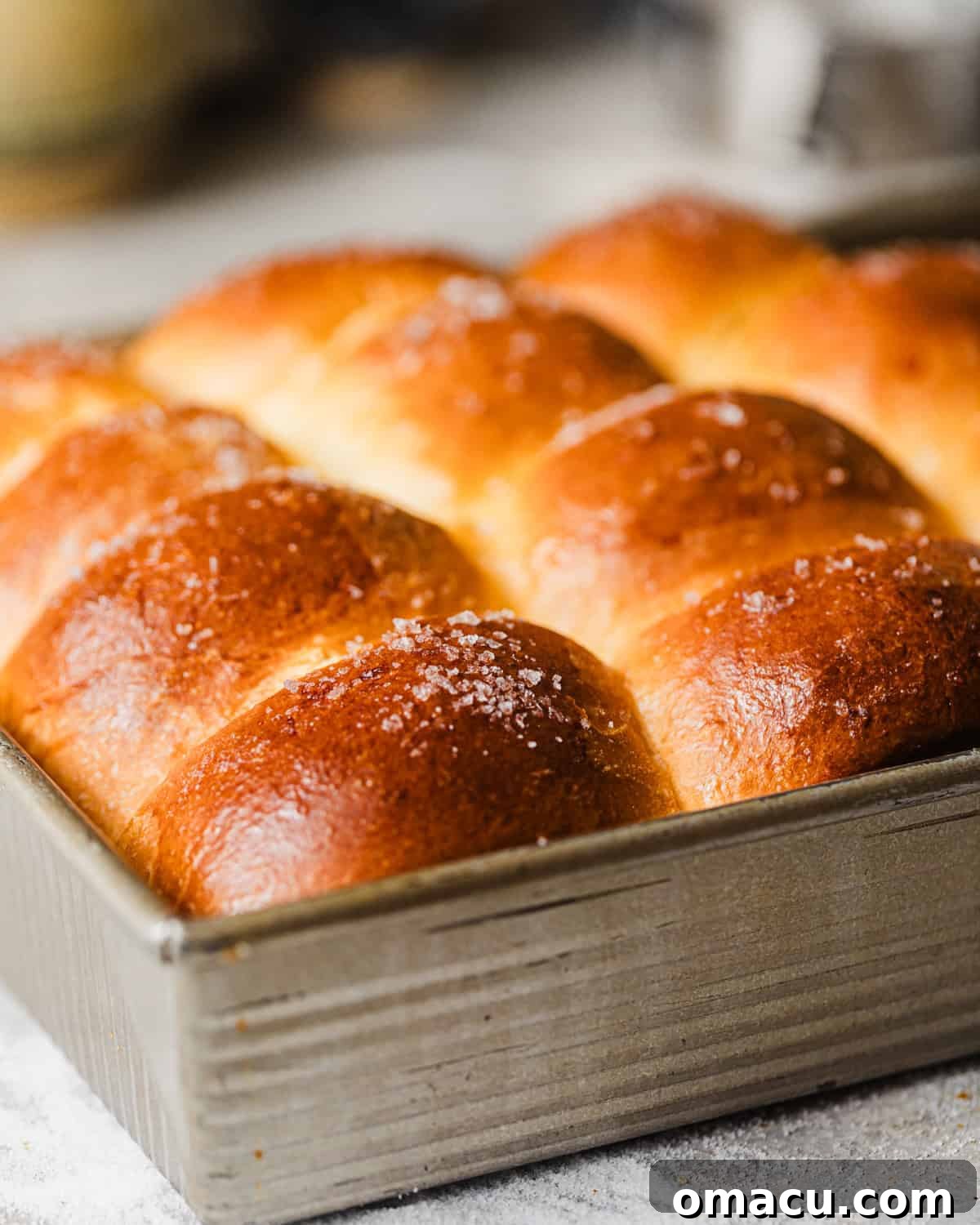
Prepare to fall in love with these Brioche Dinner Rolls! These soft, pillowy clouds of rich, slightly sweet bread are an absolute dream. Perfectly golden brown on the outside and incredibly tender within, they are the ideal accompaniment to any meal. Whether served as an elegant appetizer, a comforting side dish, or a satisfying snack, these homemade brioche rolls are so addictive, you’ll want to keep them all to yourself!
If you find yourself craving more brioche delights, be sure to explore my other irresistible recipes. My Brioche French Toast Casserole offers a luxurious start to your day, and my Bakery Style Cinnamon Rolls prove just how versatile and incredible brioche dough can be. This enriched dough truly is a baker’s best friend, transforming into countless delicious creations!
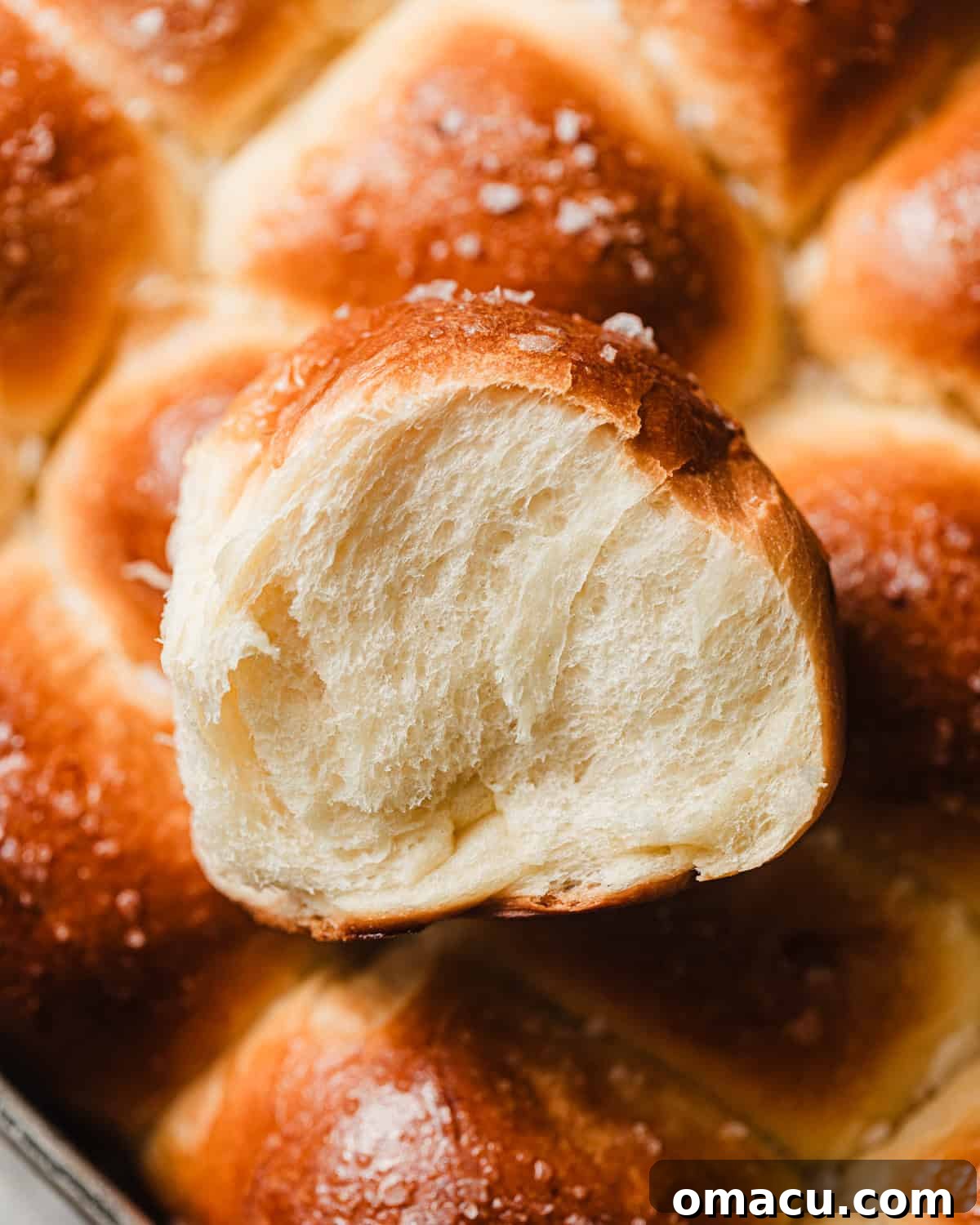
From festive holiday feasts to relaxed weeknight dinners, brioche dinner rolls elevate every dining experience. Their exquisite fluffy texture and unparalleled rich, buttery flavor make them my go-to choice, whether I’m enjoying a hearty soup, a savory stew, or simply indulging in a classic bread and butter snack. Once you taste the difference, you’ll understand why these stand head and shoulders above any other dinner roll.
Crafting these extraordinary rolls requires a bit of time and a dash of patience – from the initial mixing to the crucial proofing stages. However, the reward for your efforts is truly magnificent: a batch of perfectly baked, incredibly soft, and fragrant brioche rolls that will fill your home with the comforting aroma of a French bakery. Don’t be intimidated; this recipe is simpler than you might imagine. By following these clear, step-by-step instructions, you’re guaranteed foolproof results and the best brioche dinner rolls you’ve ever tasted!
The process of making this brioche dinner rolls recipe is indeed a labor of love, but it’s a love that yields immense satisfaction. The end result is a pastry that’s buttery, incredibly fluffy, and so addictingly good that you’ll need to exercise serious self-control to save room for your main course!
Table of Contents: Your Guide to Perfect Brioche Rolls
- What Makes Brioche Special?
- Essential Ingredients for Perfect Brioche Dinner Rolls
- Step-by-Step: How to Make Brioche Dinner Rolls
- Expert Tips for Baking the Best Brioche Dinner Rolls
- Serving Suggestions: What to Pair with Brioche Dinner Rolls
- Brioche Dinner Rolls FAQs
- Explore More Delicious Bread Recipes
- Brioche Dinner Rolls Recipe Card
What Makes Brioche Special? The Secret Behind Its Luxurious Texture
Brioche isn’t just any bread; it’s a true culinary masterpiece, celebrated for its uniquely rich texture and delicate flavor. Originating from France, brioche is characterized by its exceptionally high butter and egg content, which sets it apart from conventional breads. While most breads rely solely on flour, water, yeast, and salt, brioche enriches its dough with generous amounts of butter and eggs. This luxurious combination results in a remarkably tender, light, and fluffy crumb that feels almost like eating a cloud.
Often classified as a “Viennoiserie” – a category of baked goods that fall between bread and pastry – brioche offers a subtle sweetness that makes it incredibly versatile. This slightly sweet profile allows it to beautifully complement a wide array of dishes, from savory meats to sweet jams. The added fat from the butter and richness from the eggs not only contribute to its melt-in-your-mouth texture but also to its beautiful golden crust and distinct flavor profile.
The beauty of brioche dough lies in its adaptability. This foundational recipe can be effortlessly transformed into a grand loaf, serve as the base for decadent cinnamon rolls with cream cheese icing, or even create gourmet savory delights like brioche pretzels with smoked gouda beer cheese dip! Today, we’re focusing on shaping this incredible dough into the most delightful and irresistible dinner rolls, perfect for any occasion.
Essential Ingredients for Perfect Brioche Dinner Rolls
Creating homemade brioche dinner rolls requires just a few basic ingredients, but the quality and preparation of each one are key to achieving that signature brioche texture and flavor. Here’s a closer look at what you’ll need:
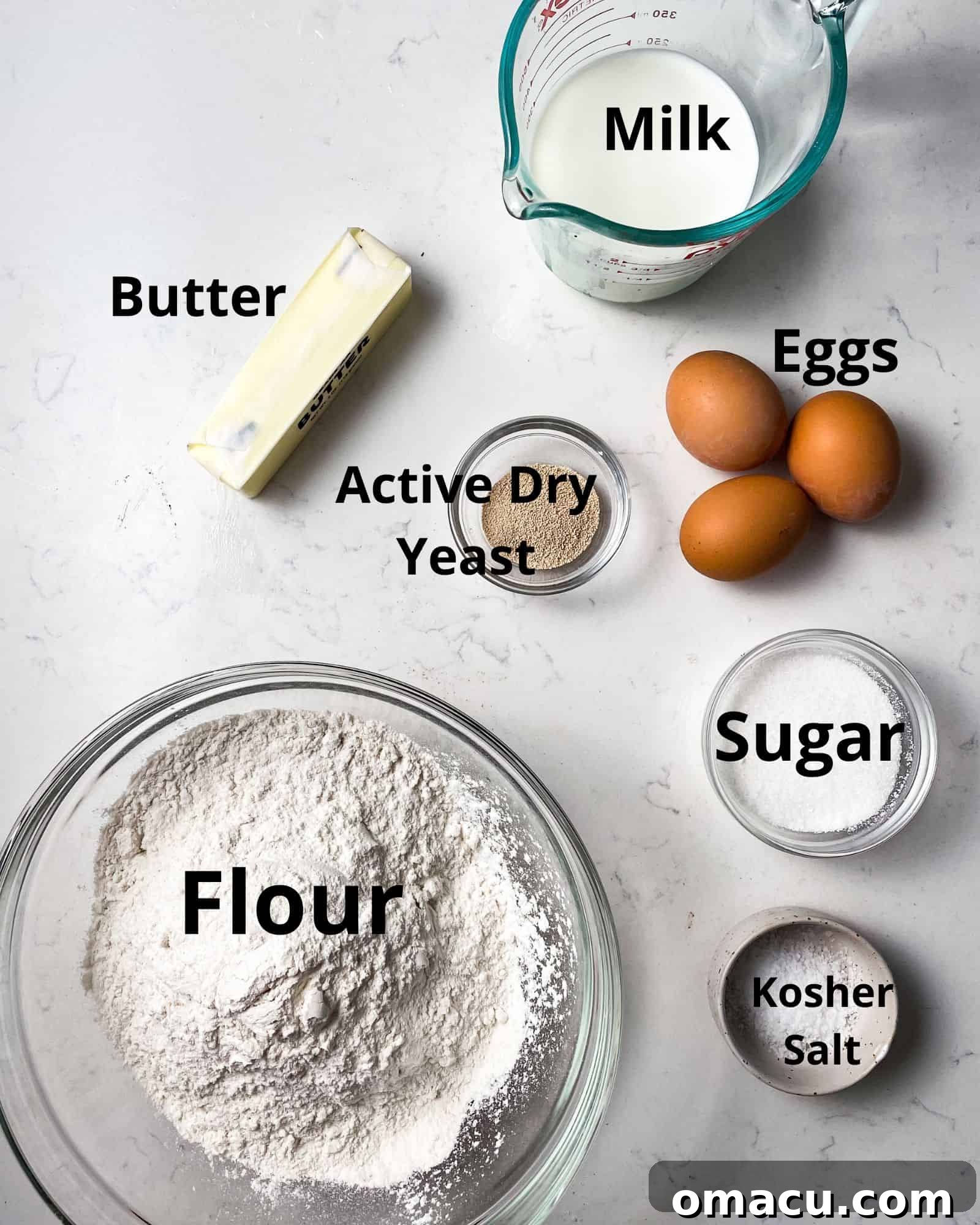
- Whole Milk: More than just a liquid, whole milk plays a crucial role in enriching the dough. Its fat content contributes to a more tender crumb, while natural enzymes help break down starches, resulting in a wonderfully soft and moist texture.
- Active Dry Yeast: This is the leavening agent responsible for brioche’s signature soft and airy texture. When activated with warm milk and a touch of sugar, it produces carbon dioxide, causing the dough to rise beautifully and develop its fluffy internal structure.
- Milk Powder (Optional but Recommended): While not strictly essential, a small addition of milk powder works wonders. It deepens the rich, buttery flavor of the brioche and provides additional protein, which helps the dough achieve an even higher, more impressive rise in the oven. It’s a secret ingredient many professional bakers swear by!
- Granulated Sugar: Beyond simply sweetening the dough, sugar provides essential food for the yeast, helping it to activate and multiply effectively, which in turn aids in a robust rise. It also contributes to the beautiful golden-brown color of the crust during baking.
- All-Purpose Flour and Bread Flour: This combination is the magic behind brioche’s ideal structure. Bread flour, with its higher protein content, develops strong gluten strands that give the rolls their chewy resilience and ability to hold shape. All-purpose flour, on the other hand, ensures the rolls remain incredibly soft and tender. The blend creates the perfect balance: a soft, fluffy roll with that desirable, subtle chew.
- Kosher Salt: A fundamental flavor enhancer in any bread, kosher salt balances the sweetness of the dough. It also plays a vital role in controlling yeast activity and strengthening the gluten network, leading to a better rise and improved crust color.
- Eggs and Egg Yolk: The generous use of eggs is central to brioche. Egg yolks, rich in fatty acids, significantly tenderize the bread and impart a deep, luxurious flavor and a beautiful golden hue. Whole eggs contribute to the overall structure of the dough, helping it maintain its shape while staying incredibly moist.
- Salted Butter (Room Temperature): Butter is the star of brioche, providing its characteristic rich flavor and tender crumb. It’s absolutely crucial that your butter is at room temperature. This ensures it creams smoothly and incorporates seamlessly into the dough, creating a homogenous, pliable mixture. Cold butter will lump and prevent proper gluten development.
- Vegetable Oil: A touch of vegetable oil helps keep the brioche rolls wonderfully soft and fresh, even when stored at room temperature. It contributes to the dough’s elasticity and moisture retention, ensuring your rolls stay fluffy for longer.
Step-by-Step: Crafting Your Own Irresistible Brioche Dinner Rolls
Baking brioche is a rewarding journey, and by following these detailed steps, you’ll achieve perfect results every time. Remember, patience is a key ingredient!
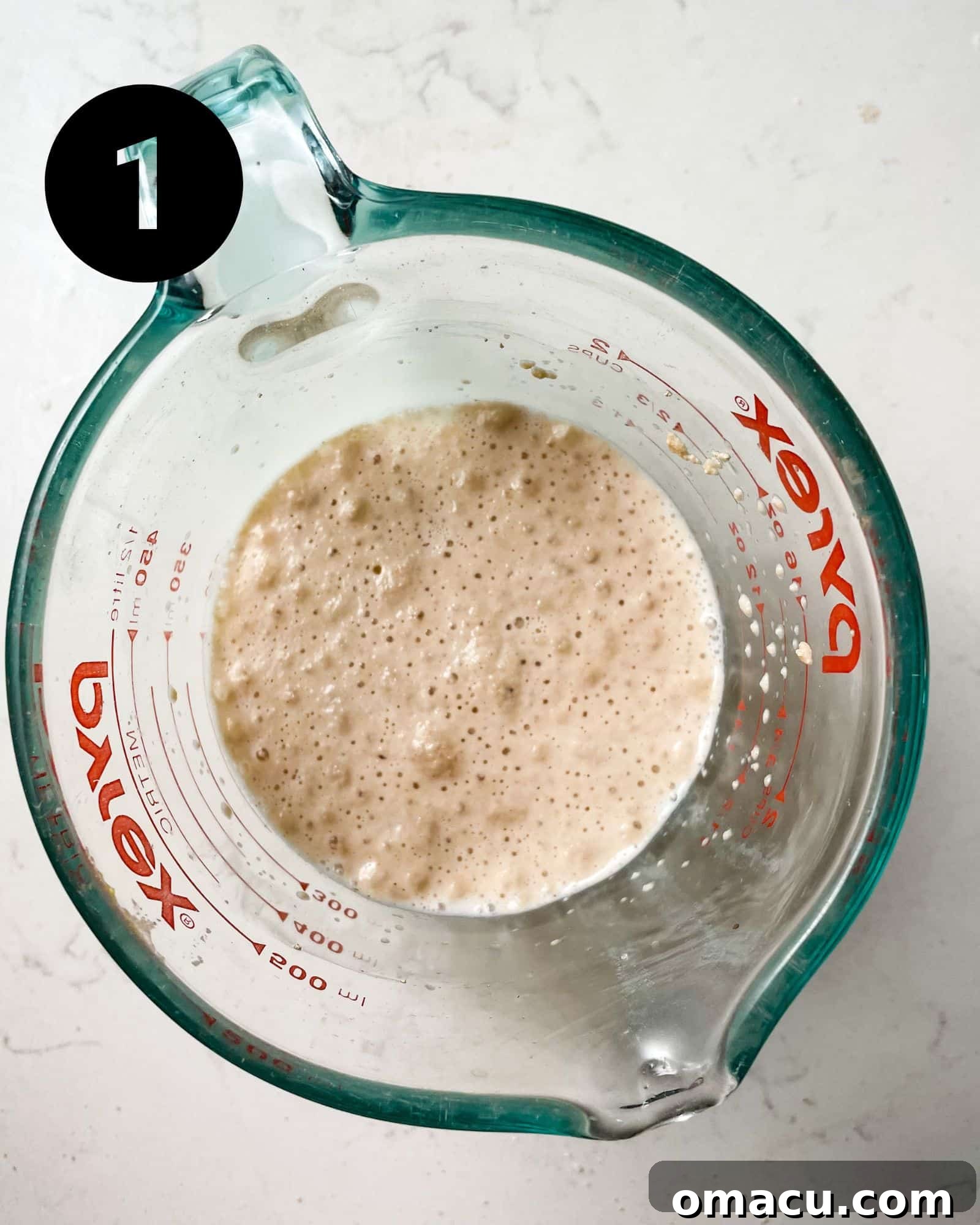
Step 1: Activate the Yeast. Begin by warming one cup of whole milk in the microwave for approximately 30 seconds. The milk should be lukewarm to the touch, ideally around 105°F (40°C) – too hot will kill the yeast, too cold won’t activate it. Pour the warm milk into a small bowl or measuring cup, then stir in the active dry yeast and 1 tablespoon of sugar. Give it a gentle whisk to combine, then set it aside for 10 minutes. During this time, the mixture should become visibly foamy, indicating that your yeast is alive and active.
Step 2: Combine Wet and Dry Ingredients. In the bowl of a stand mixer fitted with the dough hook attachment, combine your dry ingredients: bread flour, all-purpose flour, the remaining 3 tablespoons of sugar, milk powder (if using), and kosher salt. Once thoroughly mixed, pour in your foamy milk/yeast mixture, followed by the eggs and vegetable oil. Mix these ingredients together on medium speed for about 4-5 minutes, or until the dough starts to come together and pull away from the sides of the bowl. At this stage, the dough will still be quite sticky and shaggy.
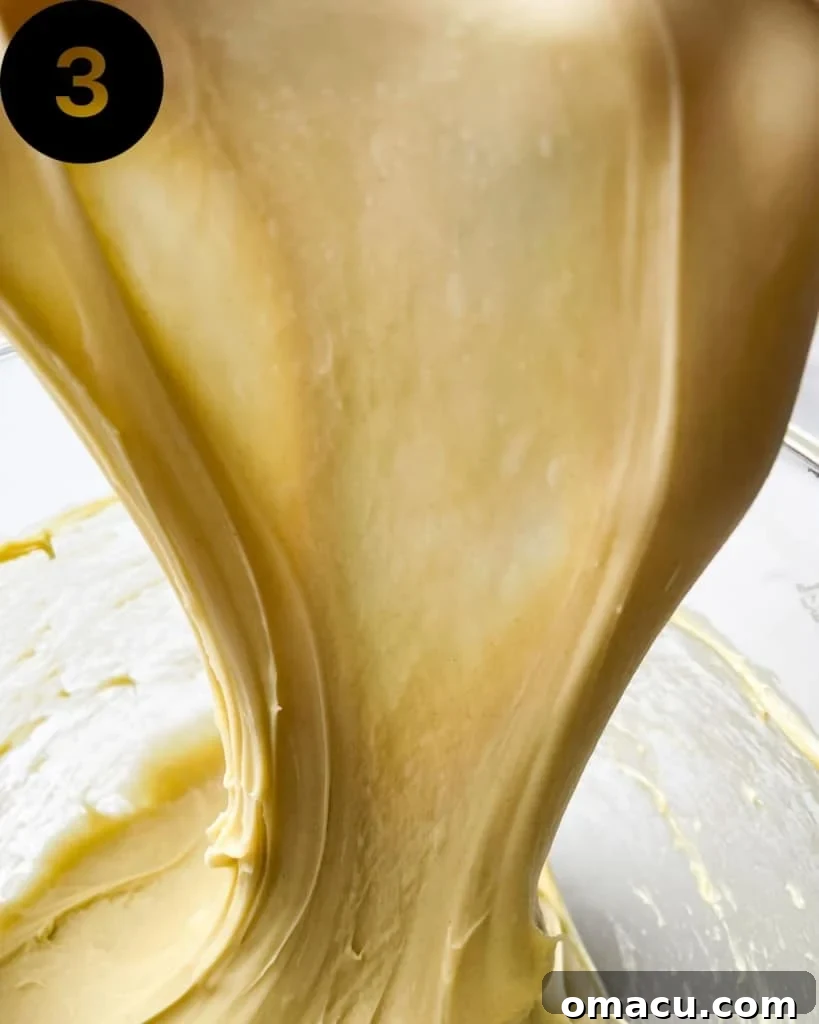
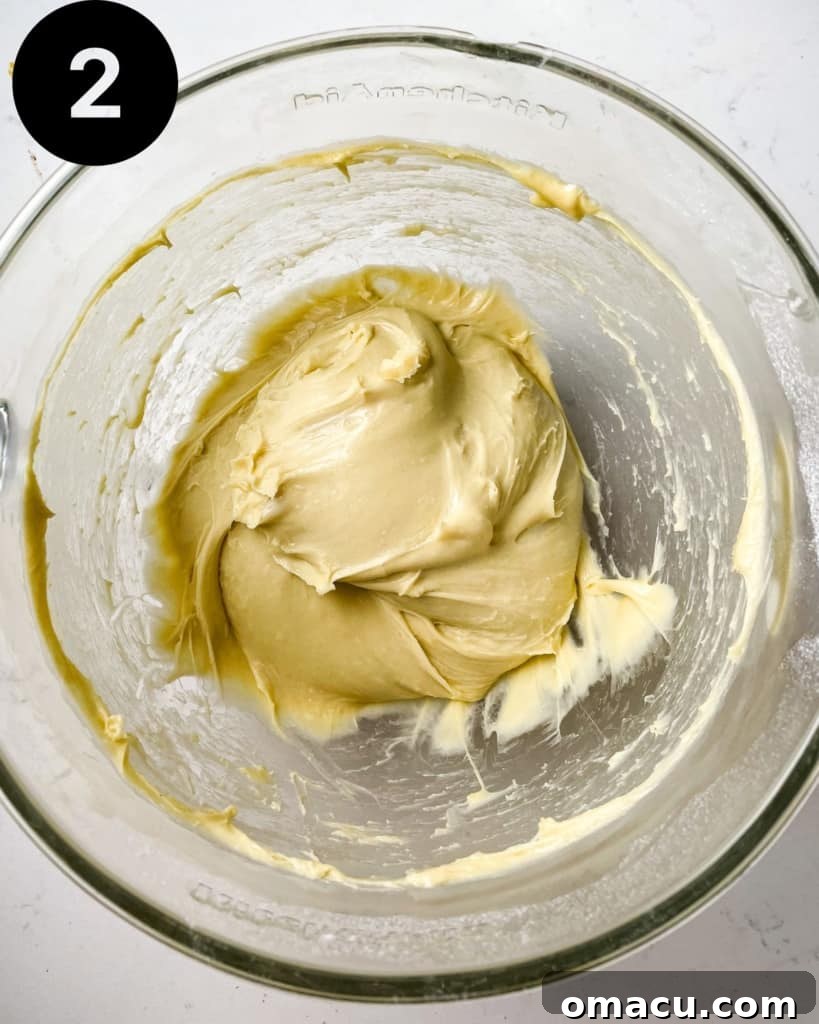
Step 3: Incorporate Butter and Knead. Increase the mixer speed to medium-high. Begin adding the softened, room-temperature butter, one tablespoon at a time. This process requires patience. The dough may appear to break apart or pool at the bottom of the bowl initially, but it will come back together as the butter is fully incorporated. Once all the butter has been added, continue to mix on medium-high speed for an additional 8-10 minutes. The goal is a dough that is soft, very stretchy, and pulls cleanly away from the sides of the bowl. To ensure the gluten has fully developed, perform the “windowpane test”: gently pull a small piece of dough. If you can stretch it thin enough to see light through it without tearing, your dough is perfectly kneaded.
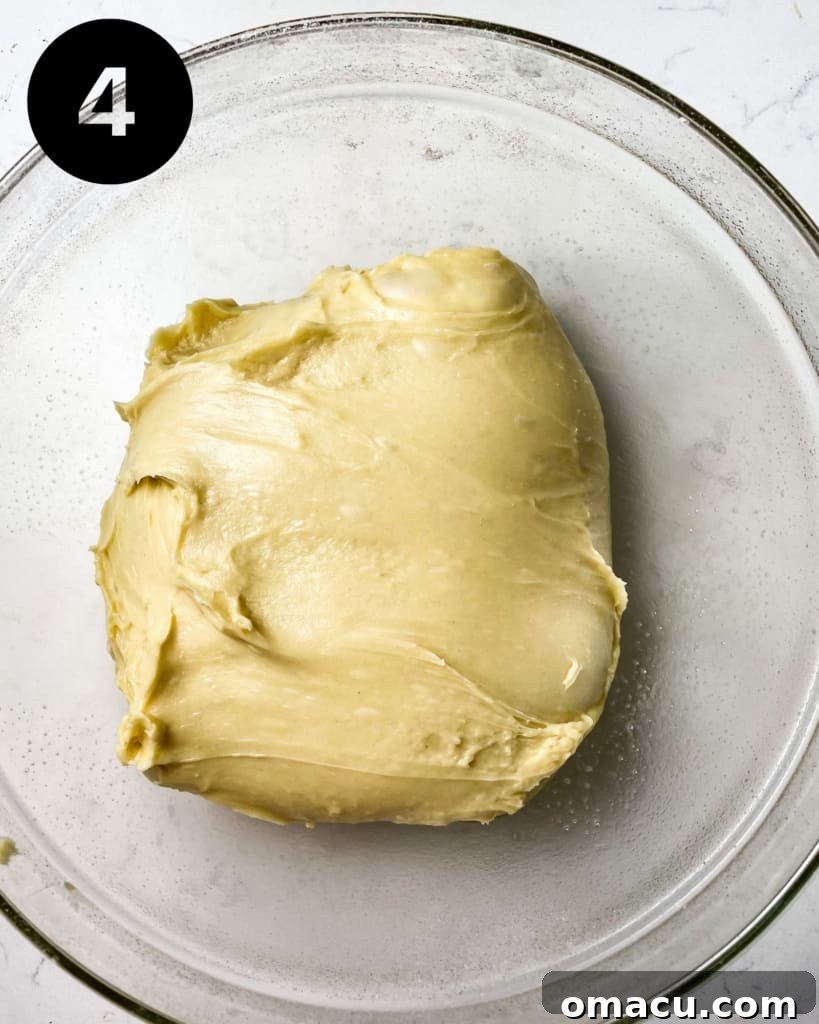
Step 4: First Rise (Bulk Fermentation). Lightly spray a large bowl with nonstick spray. Transfer the kneaded brioche dough into the prepared bowl. Cover the bowl tightly with plastic wrap or a clean kitchen towel. Place the dough in a warm spot to rise until it has doubled in size. This typically takes about 1-2 hours, depending on the ambient temperature of your kitchen. For best results, a common “pro tip” is to place the covered bowl in a slightly warmed oven (turned off, with only the oven light on). The gentle warmth from the light creates the perfect environment for yeast activity.
Form the Dough Balls and Second Rise
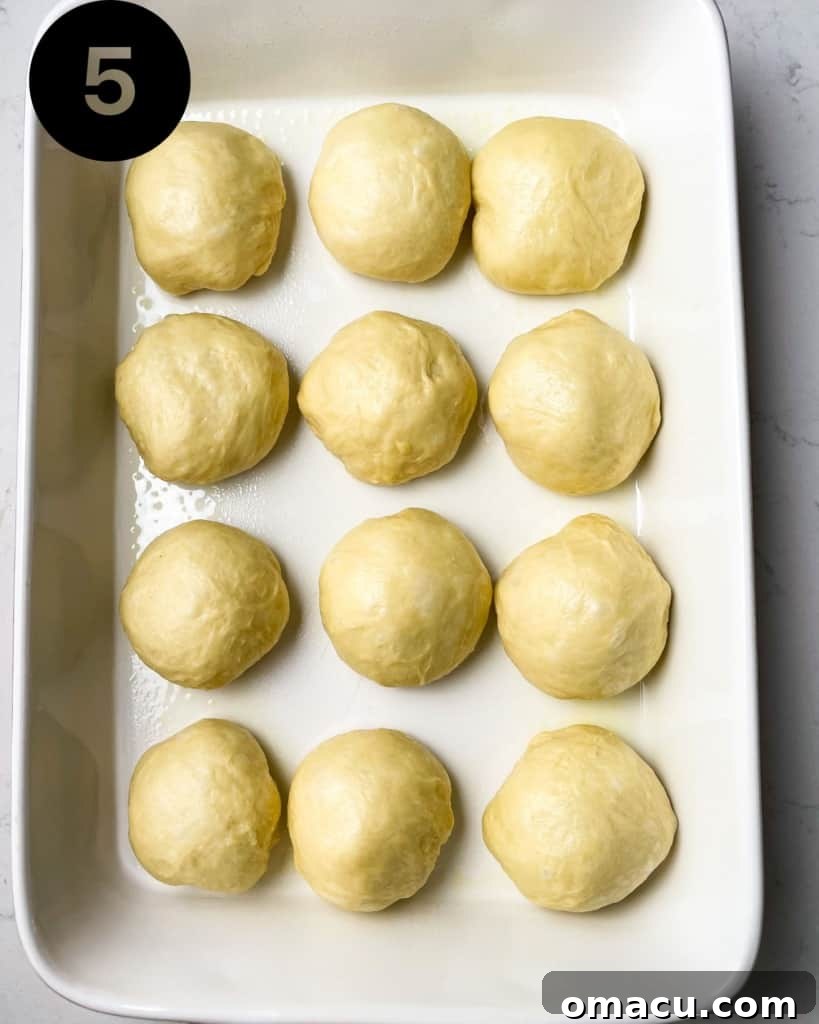
Step 5: Shape the Rolls and Second Rise. Once the dough has doubled, gently punch it down to release the air. Turn the dough out onto a lightly floured surface and divide it into 16 equal pieces. For truly uniform rolls, I highly recommend using a digital kitchen scale to weigh each piece (see tips below for guidance). Shape each piece into a smooth, tight ball. Lightly spray a 9×13 inch baking dish with nonstick spray. Arrange the shaped dough balls evenly in the baking dish. Cover the dish with a clean kitchen towel and allow the rolls to undergo their second rise for about 20-30 minutes, or until they look visibly puffy and have increased in size.
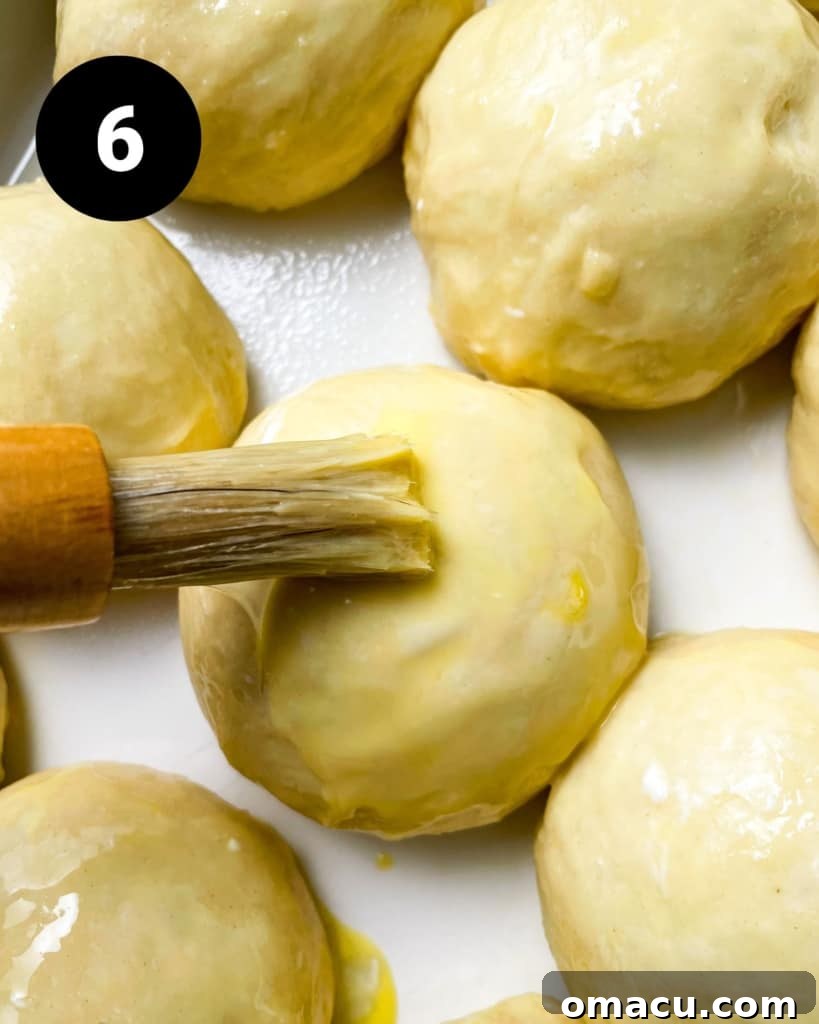
Step 6: Preheat, Egg Wash, and Bake. While the rolls are completing their second rise, preheat your oven to 350°F (175°C). In a small bowl, prepare the egg wash by whisking together one egg and two tablespoons of milk (or water). Once the rolls are puffy, gently brush the tops of each roll with the egg wash. This will give them a beautiful golden-brown color and a lovely sheen. Transfer the baking dish to the preheated oven and bake for 25-30 minutes, or until the rolls are deeply golden on top and cooked through. Let them cool slightly before serving.
Expert Tips for Baking the Best Brioche Dinner Rolls
Achieving bakery-quality brioche at home is absolutely possible with these insider tips:
- Achieve Uniform Rolls with Precision Weighing: For perfectly sized, evenly baked dinner rolls that look as good as they taste, consistency is key. After the first rise, weigh the entire dough. Divide that total weight by 16 (for this recipe’s yield) to find the target weight for each individual roll. Use a digital kitchen scale to measure each piece accurately. For example, if your total dough weight is 1232 grams, each of your 16 pieces should be 77 grams. This ensures even cooking and a professional appearance.
- Measure Flour Accurately for Ideal Consistency: The ratio of flour to other ingredients is critical for brioche dough. Measuring flour by volume (cups) can be notoriously inaccurate due to variations in scooping and packing. For the most precise and consistent results, I cannot stress enough the importance of using a digital kitchen scale to measure your flour by weight. This guarantees the proper consistency, preventing overly dense or excessively sticky dough.
- Embrace the Stickiness: Do Not Add Extra Flour! Brioche dough is inherently very soft, rich, and quite sticky or tacky to the touch – this is perfectly normal and desirable! It indicates a high hydration level, which is essential for that signature light and fluffy crumb. Resist the temptation to add more flour during mixing or kneading. Adding excess flour will alter the dough’s balance, making your rolls heavy, dense, and less tender. Trust the process; the dough will become more manageable as the gluten develops.
- Room Temperature Butter is Non-Negotiable: This is a critical step for successful brioche. Ensure your butter is at true room temperature – soft enough to easily indent with your finger but not melted or greasy. Cold butter will not incorporate smoothly into the dough, leading to lumps and inhibiting proper gluten development, resulting in a less uniform and tender crumb.
- Create the Perfect Warm Environment for Rising: Yeast thrives in warmth. For an optimal and consistent rise, find a warm, draft-free spot. A brilliant “pro tip” is to place your covered dough bowl inside an oven that is turned OFF, with only the oven light on. The minimal heat generated by the oven light creates an ideal, gently warm microclimate that encourages rapid and even proofing. Avoid overly hot environments, which can kill the yeast or cause the dough to rise too quickly and collapse.
- Master the Windowpane Test: As described in Step 3, the windowpane test is your best indicator of fully developed gluten. Being able to stretch the dough thinly without tearing means the gluten network is strong enough to trap the gases produced by the yeast, leading to maximum fluffiness and an airy texture. Don’t skip this test!
Serving Suggestions: What to Pair with Your Irresistible Brioche Dinner Rolls
These homemade brioche dinner rolls are incredibly versatile and can enhance almost any meal or snack. Their rich flavor and tender texture make them a delightful addition to both sweet and savory dishes. While I believe they are best enjoyed fresh out of the oven with a generous smear of butter, here are even more creative ideas to savor them:
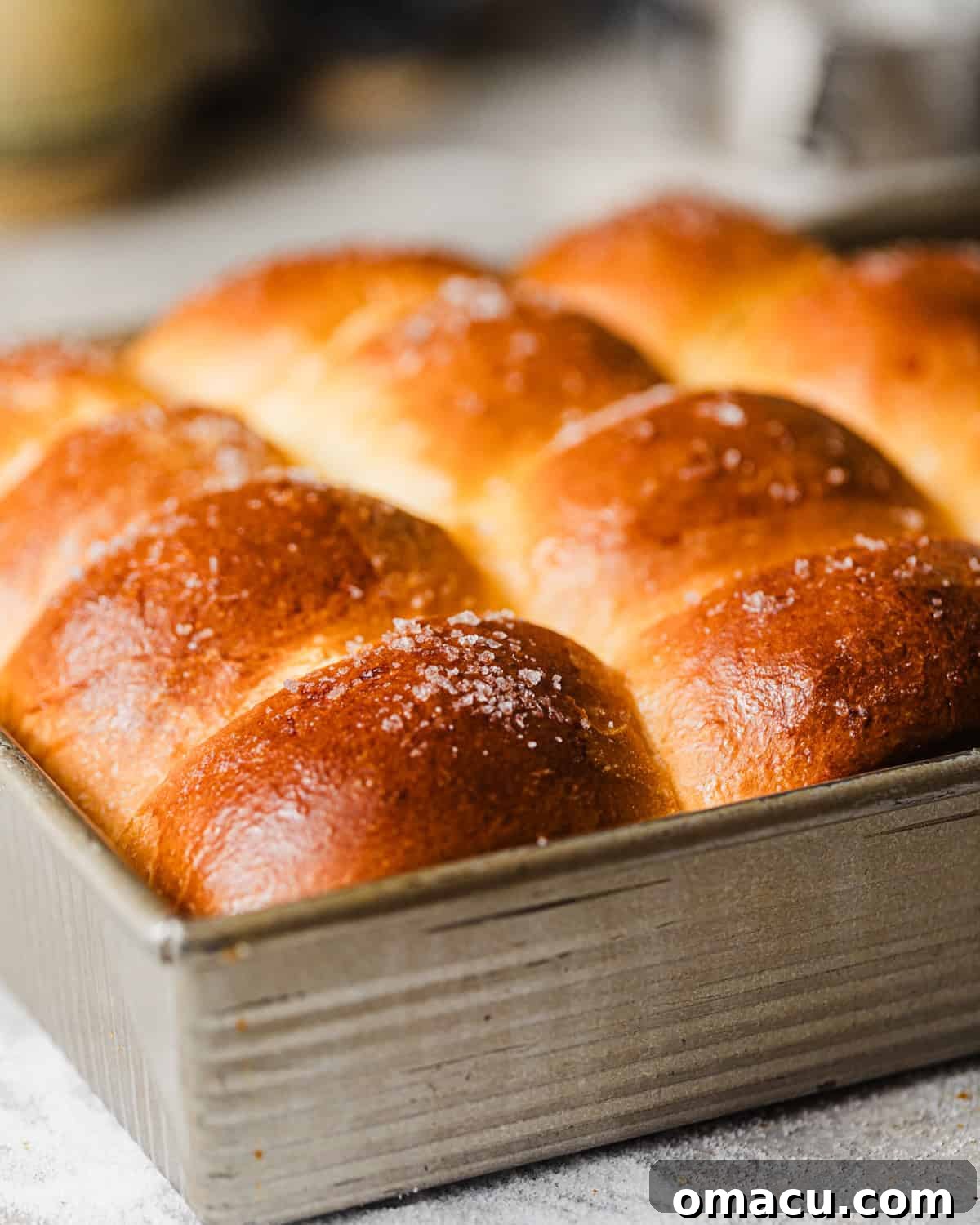
- As a Decadent Snack or Breakfast Treat: For a simple yet indulgent snack, serve these rolls warm with your favorite spread. A dollop of local honey, a spoonful of sweet jam, a rich chocolate hazelnut spread like Nutella, or simply extra melted butter can transform them into a quick, satisfying treat any time of day.
- Versatile Appetizer Base: Transform these dinner rolls into delightful appetizers! Slice them horizontally and use them to make miniature sandwiches or sliders. Fill them with deli meats, cheese, or even slow-cooked pulled pork for a crowd-pleasing bite at a Super Bowl party, a potluck, or even a fun twist on a kid’s lunch.
- The Ultimate Side Dish: The rich flavor and tender crumb of brioche rolls make them an excellent companion to hearty, savory meals. They are perfect for soaking up delicious sauces from dishes like a comforting Dutch Oven Beef Stew, a succulent Oven Baked Chuck Roast, a luxurious Beef Osso Buco, or a creamy chicken dish like Creamy Mushroom Chicken. They add a touch of elegance and comfort to any main course.
- Enhanced with Compound Butter: Take your rolls to the next level by melting a little garlic compound butter or herb butter on top. The infused butter adds an extra layer of savory flavor that beautifully complements the brioche’s inherent richness.
Brioche Dinner Rolls: Frequently Asked Questions
Here are some common questions about baking and enjoying brioche dinner rolls:
Brioche is distinct from most conventional breads due to its significantly higher butter and egg content. This enrichment gives it a much softer, more tender, and luxurious texture, often described as ‘cloud-like.’ It also has a subtle sweetness, making it a versatile choice for both sweet and savory applications, unlike leaner breads.
While it is technically possible to mix brioche dough by hand, it requires considerable effort and a lot of patience. To achieve the same level of gluten development and desired soft, stretchy texture that a stand mixer provides in about 15-20 minutes, you would need to hand-knead for a minimum of 30-40 minutes. The dough is very sticky due to its high butter content, which makes hand-kneading particularly challenging. For best results and ease, a stand mixer is highly recommended.
Once your brioche rolls have completely cooled, transfer them to an airtight container or a Ziploc bag. They will stay wonderfully fresh at room temperature for 2-3 days. For extended freshness, store them in the refrigerator for up to one week. If you’re looking to enjoy them even longer, brioche rolls freeze exceptionally well. Place them in a freezer-safe bag or container, and they will keep for up to 2 months. To reheat, simply thaw at room temperature and warm gently in the oven or microwave for that fresh-baked taste.
Yes, brioche dough is naturally very soft, rich, and quite sticky to the touch. This high hydration and butter content are what give brioche its characteristic tender and fluffy texture. Resist the urge to add more flour than specified in the recipe, as this will make the rolls dense and dry. As you knead, especially with a stand mixer, the dough will become more elastic and slightly less sticky, but it will always remain a softer dough compared to a lean bread.
Explore More Delicious Bread Recipes
Main Course
Rosemary Garlic Butter Rolls
Appetizers
Homemade Buttermilk Biscuits
Appetizers
Sourdough Garlic Bread
Appetizers
Grandma’s Buttermilk Cornbread
Want more delicious and beautiful recipes delivered straight to your inbox? Subscribe to my newsletter! You’ll be the first to hear about new recipes, receive tantalizing exclusive perks, and discover baking tips that will elevate your skills!
Let’s stay connected on social media and continue to cook together! If you decide to make this incredible brioche dinner rolls recipe, please do me a favor: leave a star rating on the recipe card below and share your thoughts in the comments. I absolutely love seeing your creations! Tag @BritneyBreaksBread on Instagram and use the hashtag #britneybreaksbread so I can admire your beautiful rolls! I truly hope you love this recipe as much as my family and I do!
Brioche Dinner Rolls Recipe
Britney
3 hours
30 minutes
3 hours 30 minutes
16 Rolls

Print Recipe
Equipment
-
Stand Mixer (with dough hook attachment)
-
9×13 inch baking dish
-
Digital Kitchen Scale (highly recommended)
-
Pastry Brush
Ingredients
- 1 cup (240 g) Whole milk, lukewarm
- 2¼ tsp (7 g) Active Dry Yeast
- 4 tbsp (50 g) Granulated Sugar, divided (1 tbsp for yeast, 3 tbsp for dough)
- 3 1/2 cups (445 g) Bread Flour
- 1 cup + 2 tbsp (145 g) All-Purpose Flour
- 2 tbsp Milk Powder, optional
- 2 ½ tsp Kosher Salt
- 3 Large Eggs (150 g)
- 1 Egg Yolk (18 g)
- 2 tbsp (28 g) Vegetable Oil
- 6 tbsp (84 g) Salted Butter, at room temperature, cut into 1-tablespoon pieces
Egg Wash
- 1 Large Egg
- 2 tbsp (30 g) Milk or Water
Instructions
- 1. Activate Yeast: Warm 1 cup of whole milk in the microwave until lukewarm (approx. 105°F / 40°C). In a small bowl, whisk in the active dry yeast and 1 tablespoon of granulated sugar. Let it sit for 10 minutes until foamy, indicating yeast activation.
- 2. Combine Ingredients: In the bowl of a stand mixer fitted with a dough hook, combine bread flour, all-purpose flour, the remaining 3 tablespoons of sugar, milk powder (if using), and kosher salt. Pour in the foamy milk/yeast mixture, then add the 3 large eggs, 1 egg yolk, and vegetable oil. Mix on medium-low speed for about 3 minutes until all ingredients are just combined and a shaggy dough forms.
- 3. Incorporate Butter and Knead: Increase the mixer speed to medium. Begin adding the room temperature salted butter, one tablespoon at a time, allowing each piece to mostly incorporate before adding the next. The dough may appear to separate and become very wet; this is normal. Continue mixing on medium-high speed for an additional 8-10 minutes after all butter is added. The dough should become soft, stretchy, and pull away from the sides of the bowl. Perform the windowpane test to ensure proper gluten development.
- 4. First Rise (Bulk Fermentation): Lightly spray a large bowl with nonstick spray. Transfer the dough to the bowl, cover with plastic wrap or a clean kitchen towel, and let it rise in a warm, draft-free place until doubled in size (1-2 hours). For best results, place it in an unheated oven with just the light on.
- 5. Prepare for Baking: Preheat your oven to 350°F (175°C).
- 6. Shape and Second Rise: Gently punch down the risen dough to deflate it. Turn the dough onto a lightly floured surface and divide it into 16 equally sized pieces (use a kitchen scale for precision, approx. 77g each). Shape each piece into a smooth, tight ball. Lightly spray a 9×13 inch baking dish and arrange the dough balls inside. Cover the dish with a kitchen towel and let rise again for 30-45 minutes, or until visibly puffy.
- 7. Egg Wash and Bake: In a small bowl, whisk together the remaining 1 egg and 2 tablespoons of milk (or water) for the egg wash. Gently brush the tops of the puffy rolls with the egg wash. Bake for 25-30 minutes, or until the rolls are golden brown on top and cooked through.
- 8. Cool and Serve: Let the brioche dinner rolls cool slightly in the pan before serving warm with your favorite accompaniments. Enjoy!
Notes
- Accurate Flour Measurement: For the most precise and consistent results, always measure your flour by weight using a digital kitchen scale rather than volume (cups). This ensures the rolls are the proper consistency – light and fluffy, never dense.
- Embrace Sticky Dough: Brioche dough is inherently very soft and sticky/tacky. Do not be tempted to add more flour than specified, even if it feels difficult to handle. Excess flour will weigh down the rolls and prevent them from achieving their characteristic fluffy texture.
- Room Temperature Butter is Key: Ensure your butter is at true room temperature. This is absolutely critical for the butter to incorporate smoothly and fully into the dough, leading to a homogenous texture and proper gluten development.
- Ideal Proofing Environment: For a reliable rise, let the dough proof in a warm, draft-free area. A great trick is to place the covered bowl in your oven with only the oven light on; the gentle warmth creates the perfect environment for yeast activity.
- Evenly Sized Rolls: For professional-looking and evenly baked rolls, use a digital scale to weigh your dough after the first rise. Divide the total dough weight by 16 to find the ideal weight for each individual roll (approximately 77 grams per roll for this recipe).
Nutrition Information (Approximate Per Roll)
Nutrition information is automatically calculated and is an approximation. It can vary based on specific ingredients and preparation methods.
Tried this recipe?
Mention @BritneyBreaksBread or tag #BritneyBreaksBread!