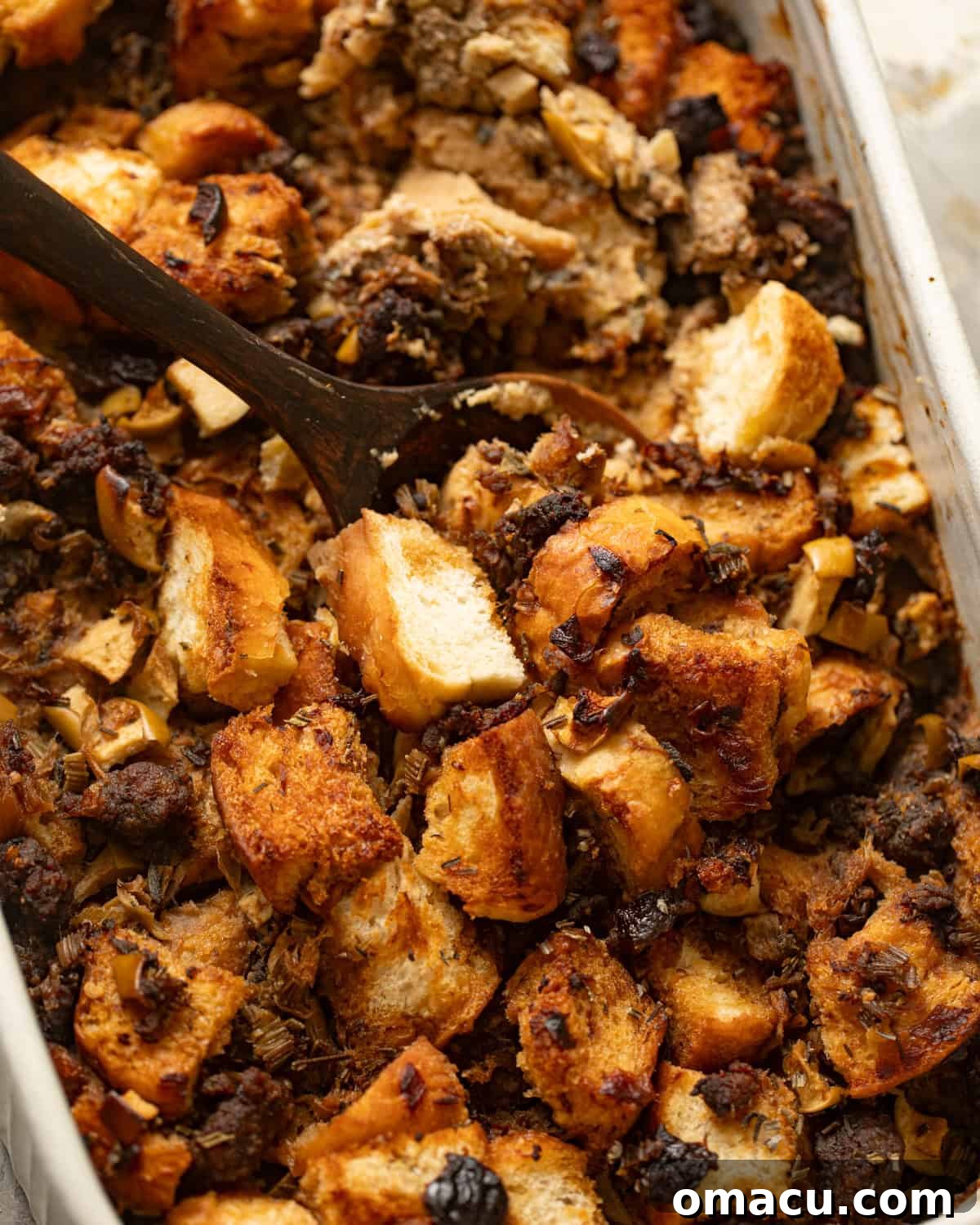
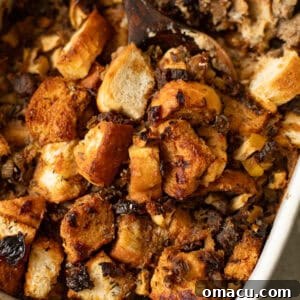
Unlock the secret to a truly unforgettable holiday feast with this exquisite Sage and Sausage Stuffing. Crafted with the rich tang of sourdough bread, a vibrant medley of fresh herbs, succulent California prunes, and savory breakfast sausage, this stuffing isn’t just a side dish—it’s the star of the show. Prepare to delight your guests with a side that’s bursting with deep, comforting flavors and a surprisingly gourmet twist.
Looking for more show-stopping stuffing recipes? Be sure to try our delightful croissant stuffing and classic sourdough stuffing for your next gathering!
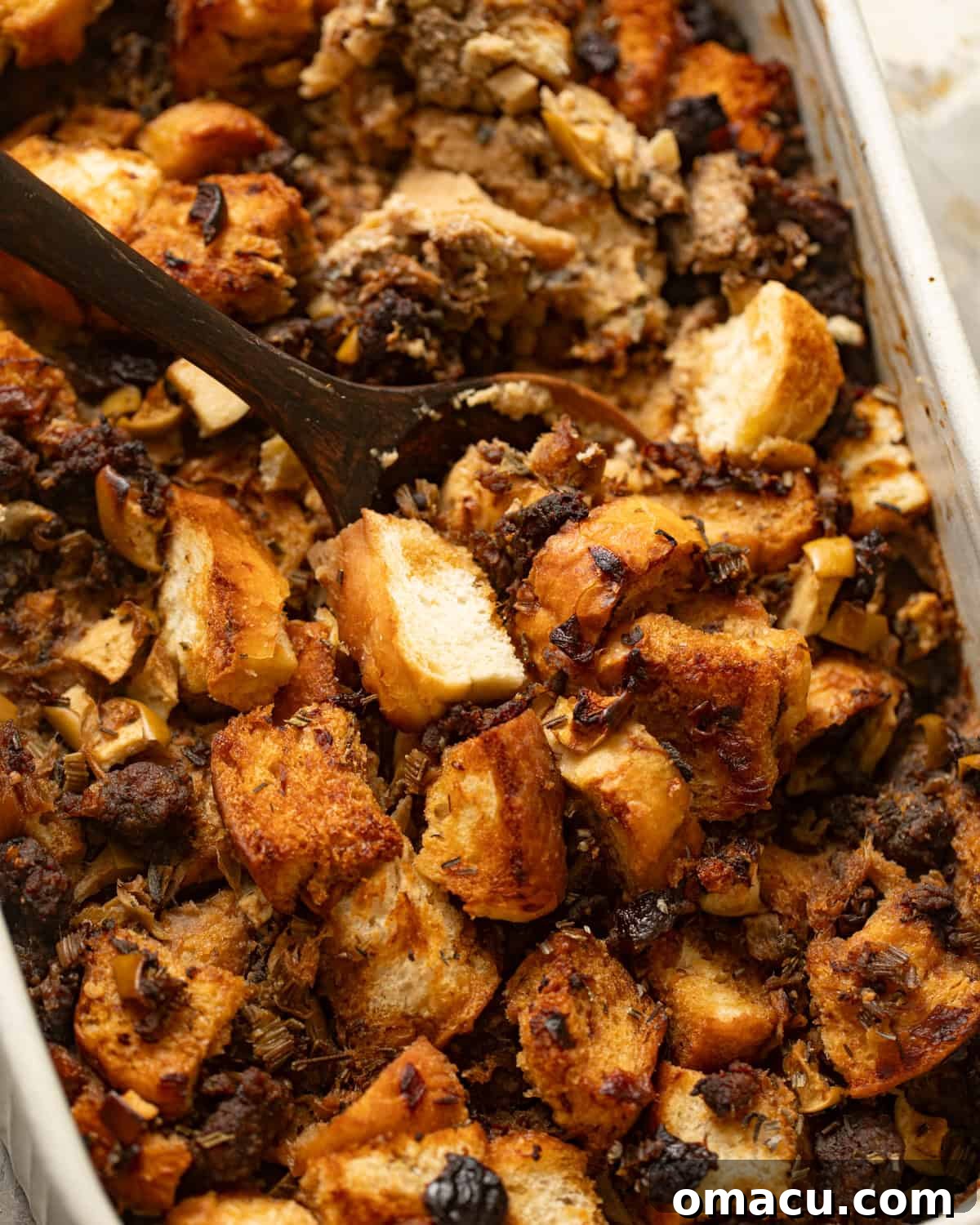
This Sage and Sausage Stuffing recipe isn’t just a dish; it’s an experience, a symphony of flavors that will elevate your holiday table. We’ve partnered with the wonderful California Prunes to introduce a magical, unexpected ingredient that transforms this classic side into something truly extraordinary. Trust us, once you taste the subtle, jammy sweetness that prunes bring, you’ll wonder how you ever made stuffing without them! They melt seamlessly into the savory sausage, fragrant herbs, and rustic sourdough, imparting a deep, complex sweetness that makes every bite sing.
You’ll discover all the beloved, cozy notes you expect from traditional stuffing—the earthy sage, aromatic thyme, and the comforting richness of buttery caramelized onions. But with the addition of prunes, this stuffing gains an unparalleled layer of richness and moisture, making it feel wonderfully gourmet yet incredibly approachable. It’s the kind of dish that respects tradition while daring to enhance it, striking a perfect balance between nostalgic comfort and elevated sophistication. Each forkful is tender, savory, and impeccably balanced, promising a taste sensation that lingers beautifully.
This recipe is guaranteed to prompt delighted murmurs around the table, with guests pausing mid-bite, curiosity piqued. “What *is* that incredible flavor?” they’ll ask. That’s your cue to smile, perhaps with a knowing wink, and reveal the secret ingredient: the California Prunes, working their delicious magic. It’s a culinary surprise that everyone will absolutely adore, turning your holiday meal into a memorable event. Happy Thanksgiving, and prepare for rave reviews!
Table of Contents
- Why You’ll Adore This Sage & Sausage Stuffing
- The Star Ingredients
- Creative Substitutions and Delicious Variations
- How To Master Sage & Sausage Stuffing
- Expert Tips for Perfect Stuffing
- Serving Suggestions for Your Holiday Table
- Common Questions About Sage & Sausage Stuffing
- More Essential Holiday Side Dishes
- Sage and Sausage Stuffing Recipe Card
Why You’ll Adore This Sage & Sausage Stuffing
- Effortlessly Delicious: Don’t let the gourmet taste fool you! This recipe is surprisingly straightforward. All the key components come together in one skillet, the bread toasts easily, and then it’s just a matter of combining and baking. Perfect for busy holiday preparations!
- A True Homemade Masterpiece: While stovetop stuffing mixes have their place, Thanksgiving deserves something truly special. This recipe guides you through creating delicious, toasted bread cubes from scratch, infusing your home with incredible aromas and delivering a flavor profile that store-bought simply can’t match. It’s time to go all out and impress everyone with authentic, homemade goodness!
- Consistently Perfect Results: We’ve meticulously crafted these step-by-step instructions to ensure your stuffing turns out moist on the inside, beautifully crisp on top, and bursting with flavor every single time. Say goodbye to guesswork and hello to reliable, rave-worthy stuffing!
- A Unique Flavor Profile: The addition of California Prunes adds an unexpected depth of flavor and moisture that elevates this classic dish beyond expectation. Their subtle sweetness perfectly complements the savory sausage and fragrant herbs, creating a truly memorable holiday side.
- Crowd-Pleasing & Customizable: This stuffing is designed to be a universal favorite, but its versatility allows for easy customization. Add your favorite nuts, fruits, or even a touch of spice to make it uniquely yours.
The Star Ingredients
(A comprehensive list of ingredients with precise measurements can be found in the recipe card at the bottom of this post.)
- Hearty Sourdough Bread: The foundation of our stuffing! Sourdough offers a delightful tangy note and a robust structure that holds up beautifully during baking, preventing sogginess. Its porous texture perfectly absorbs all the rich, savory liquids, resulting in a custardy interior and a wonderfully crisp, golden crust.
- Savory Breakfast Sausage: This ingredient is a flavor powerhouse. Ground breakfast sausage brings a rich, umami-packed savoriness and just the right amount of fat to coat the bread cubes, making the stuffing incredibly flavorful and moist. Browning the sausage creates those irresistible caramelized bits that deepen the overall taste and contribute to that quintessential holiday warmth.
- California Prunes: The Secret Weapon: Don’t skip these! Prunes are the unexpected star that provides a chewy, jammy sweetness, perfectly balancing the saltiness of the sausage and the earthiness of the herbs. They introduce a deep, complex richness that elevates the stuffing from simple to gourmet. Beyond flavor, prunes add crucial moisture, ensuring every bite is tender and succulent.
- Aromatic Fresh Herbs (Sage, Thyme, Rosemary): These are the very soul of any great stuffing! Fresh sage contributes a warm, earthy, slightly peppery flavor, while thyme offers delicate floral notes, and rosemary adds its distinctive piney, woodsy aroma. Together, they create a fragrant bouquet that defines holiday comfort.
- Molasses and Soy Sauce: Unexpected Depth: These two ingredients work in harmony to amplify the natural sweetness of the prunes and introduce a layer of umami. Molasses provides a deep, caramel-like sweetness, while soy sauce adds a savory, salty kick. They don’t just balance the flavors; they enhance every ingredient in the pan, creating a multi-dimensional taste profile.
- Aromatic Vegetables (Onions, Celery, Garlic): These form the classic savory backbone of our stuffing. When sautéed in a blend of butter and savory sausage drippings, they soften beautifully, sweeten slightly, and infuse the entire dish with that nostalgic, comforting Thanksgiving flavor everyone craves.
- Eggs: The Binding Agent: Eggs are crucial for binding the stuffing mixture together, helping it set into that desirable plush, scoopable texture. They ensure the center remains wonderfully soft and custardy while contributing to a perfectly crisp and golden-brown top.
- Rich Chicken Broth: The Moisture Provider: Chicken broth is essential for hydrating the toasted bread cubes and evenly distributing all the incredible seasonings throughout the stuffing. It guarantees that the stuffing remains deliciously moist and flavorful without becoming overly wet or soggy.
- Crunchy Pecans and Sweet Apples: (Not explicitly in the initial key ingredients list, but mentioned in step 4 – I will add them here for consistency and completeness) These additions provide delightful textural contrast and complementary flavors. Pecans offer a buttery crunch, while apples introduce a subtle tartness and freshness that brightens the entire dish, cutting through the richness beautifully.
Creative Substitutions and Delicious Variations
- Herb Alternatives: While fresh herbs deliver the most vibrant flavor, you can certainly use dried herbs if fresh ones aren’t available. As a general guideline, for every tablespoon of fresh herbs, substitute with about 1 teaspoon of dried herbs. For this recipe, you’ll need approximately 1.5 teaspoons each of dried parsley, thyme, and sage, and about 0.5 teaspoon of dried rosemary to achieve a similar aromatic profile.
- Explore Different Breads: Sourdough is fantastic for its tang and structure, but feel free to experiment with other breads! Classic white sandwich bread is a popular and readily available choice that creates a softer stuffing. French bread offers a more neutral base, brioche adds incredible richness and a slightly sweet note, Italian bread provides sturdy texture, and cornbread lends a unique, crumbly texture with a Southern flair. Just ensure your chosen bread is thoroughly dried or toasted.
- Molasses and Soy Sauce Swaps: If you don’t have molasses on hand, you can increase the quantity of prunes by about ¼ cup for extra sweetness and depth. For soy sauce, balsamic vinegar can offer a similar acidic and umami boost, or a dash of Worcestershire sauce provides a savory alternative.
- A Splash of White Wine: For an extra layer of sophisticated flavor, consider incorporating dry white wine. You can replace up to 1 cup of the chicken broth with a good quality dry white wine, like a Sauvignon Blanc or Pinot Grigio, to deglaze the pan and add a bright, acidic counterpoint to the rich ingredients.
- Boost with More Goodies: This sage and sausage stuffing is already robust, but you can always take it up a notch! Try folding in a cup of toasted walnuts or pecans for extra crunch, sautéed mushrooms for an earthy depth, or crispy pancetta or bacon bits for even more savory goodness. For those who enjoy a little heat, swapping out breakfast sausage for spicy Italian sausage will add a fantastic kick. The possibilities are endless!
- Vegetarian Option: To make this recipe vegetarian, omit the sausage and replace it with sautéed mushrooms (cremini or shiitake work well), plant-based sausage crumbles, or a mix of roasted root vegetables. Adjust seasonings to taste, focusing on vegetable broth for moisture.
How To Master Sage & Sausage Stuffing
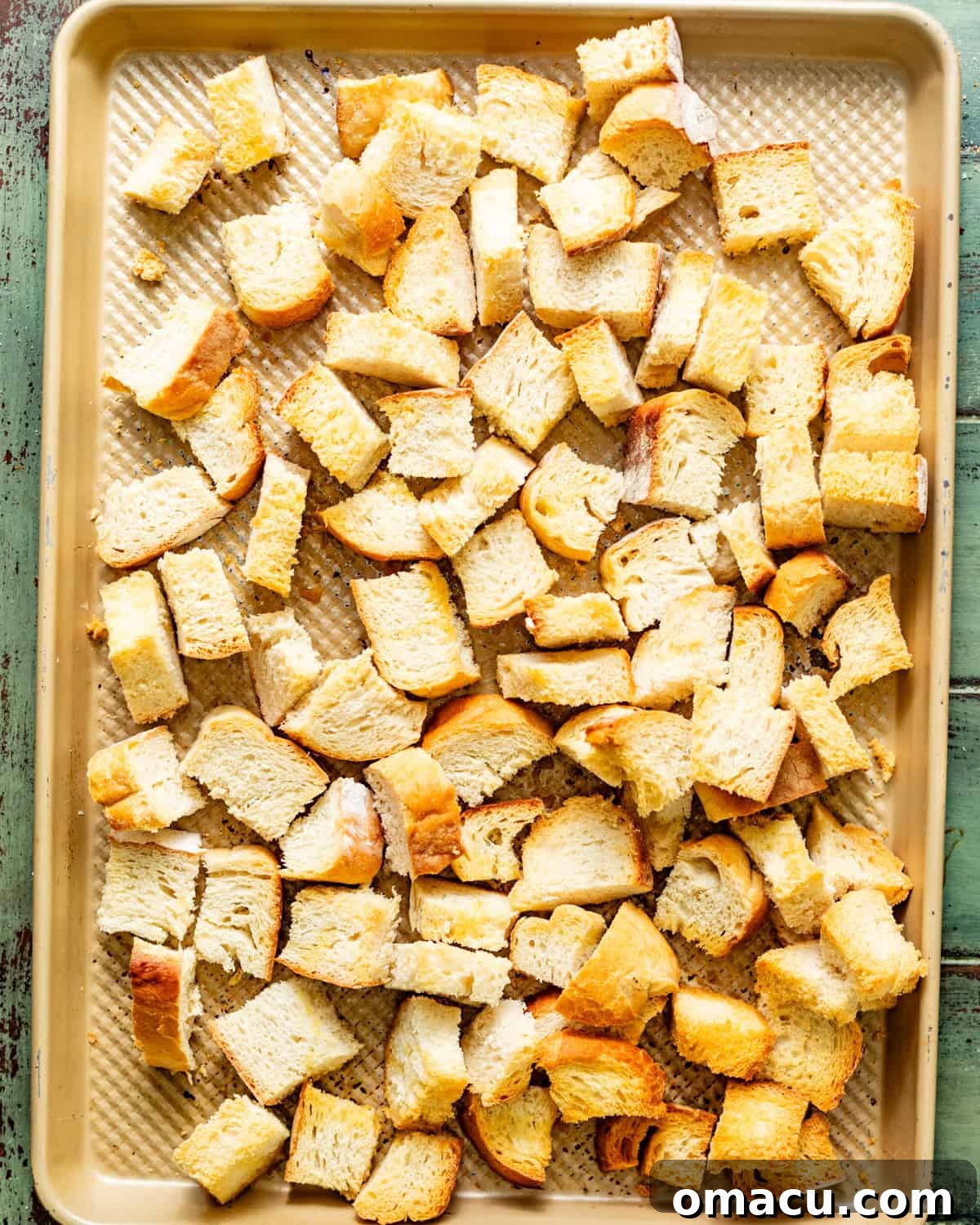
Step 1: Prepare and Toast the Bread. Begin by preheating your oven to a moderate 350°F (175°C). Take your chosen bread (sourdough is recommended for its texture and flavor) and cut it into roughly 1-inch uniform chunks. This ensures even toasting. Drizzle the bread cubes lightly with a touch of olive oil, toss gently to coat, and spread them in a single layer onto a large baking sheet. Toast in the preheated oven for approximately 10-15 minutes, or until the cubes are lightly golden brown and firm to the touch. This crucial step dries out the bread, allowing it to absorb the flavorful liquids without becoming soggy.
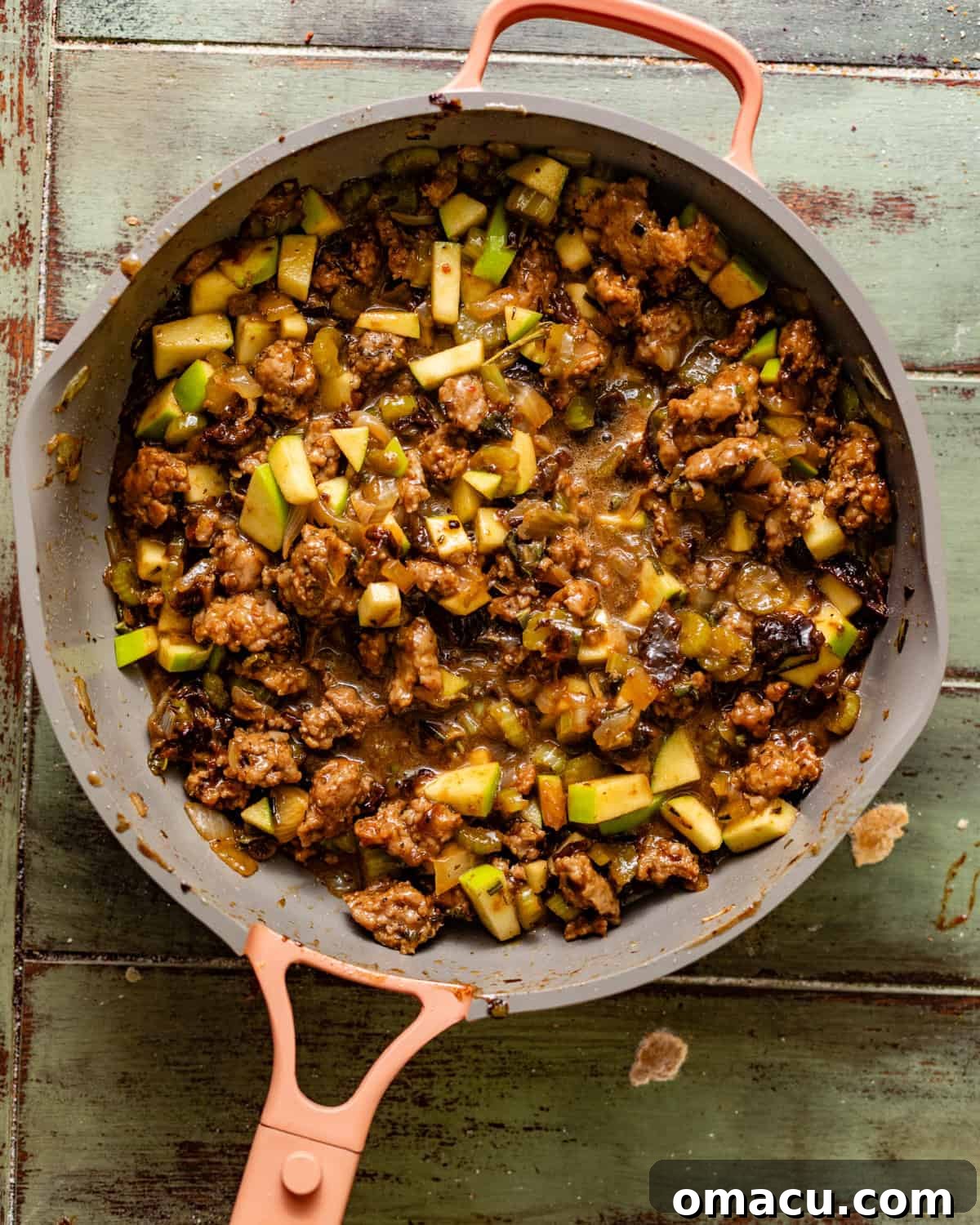
Step 2: Cook the Flavorful Sausage Base. In a large, heavy-bottomed skillet or Dutch oven, cook the ground breakfast sausage over medium heat, breaking it up with a spoon as it browns. Once the sausage is no longer pink, drain off any excess fat, leaving just a tablespoon or two for flavor. Add the chopped onion and celery to the skillet, cooking until softened, about 5-7 minutes. Stir in the salted butter until fully melted. Next, incorporate the chopped prunes, diced garlic, and your fresh herbs—sage, rosemary, and thyme. Continue to cook for another 5 minutes, stirring frequently, allowing the flavors to meld and the herbs to become fragrant. Season generously with kosher salt and freshly ground black pepper. Finally, pour in the molasses and soy sauce, stirring well to combine everything. Remove the skillet from the heat and allow the mixture to cool for about 10 minutes; this prevents the eggs from scrambling in the next step.
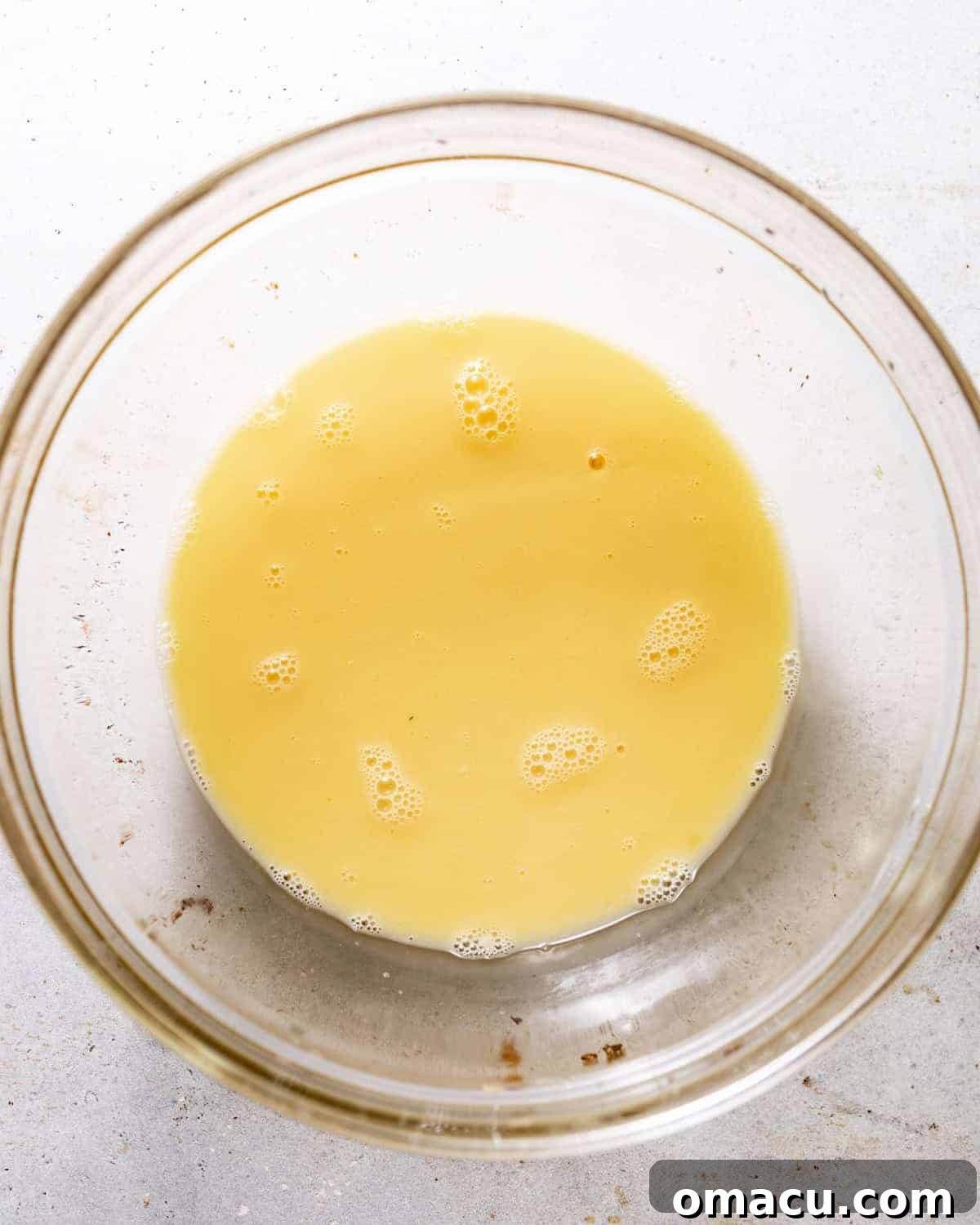
Step 3: Prepare the Liquid Binding. While the sausage mixture cools, prepare your liquid binder. In a separate medium bowl, whisk together the large eggs and chicken broth until well combined. This egg and broth mixture will provide essential moisture and help bind the stuffing into a cohesive, yet tender, consistency during baking. Once the sausage mixture has cooled slightly, gradually pour this egg mixture into the skillet, stirring gently to incorporate it evenly. This careful addition ensures a smooth, custardy texture without any scrambled egg bits.
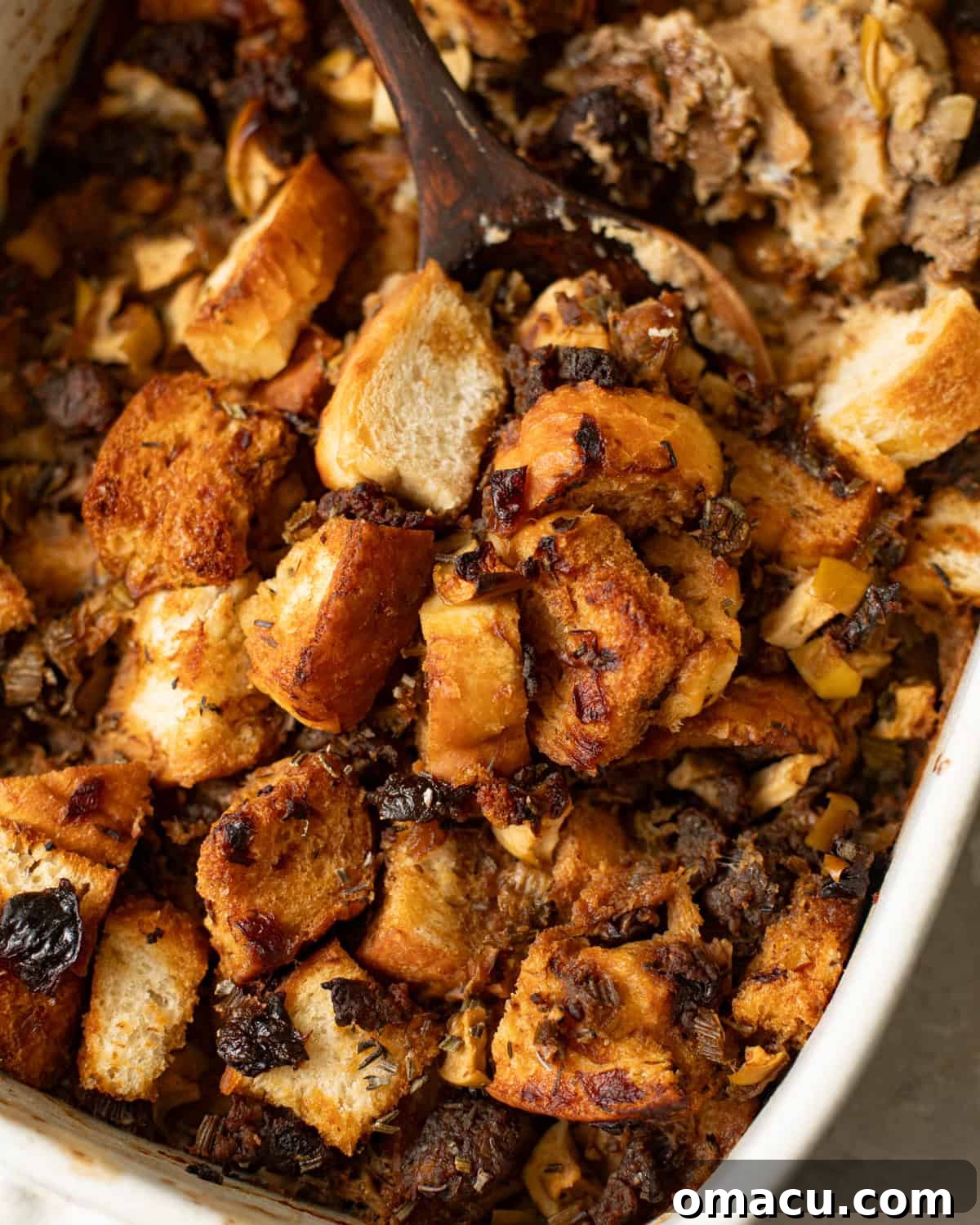
Step 4: Combine, Rest, and Bake. Transfer your toasted bread cubes to a very large mixing bowl. Slowly pour the warm sausage and broth mixture over the bread, adding about 1 cup at a time and gently tossing after each addition. Allow the bread to absorb the liquid thoroughly before adding more, ensuring even saturation. Once all the liquid is incorporated, gently fold in the chopped pecans and diced apples. Let the stuffing mixture sit at room temperature for a full 20 minutes; this crucial resting period allows the bread to fully absorb all the flavorful liquids, preventing a dry or mushy result. Transfer the prepared stuffing into a 9×13-inch baking dish or casserole dish and cover it tightly with aluminum foil. Bake for 40 minutes, then remove the foil and continue baking for another 15-20 minutes, or until the top is beautifully golden brown and crispy. Garnish with fresh chopped parsley before serving for a touch of vibrant color and freshness.
Expert Tips for Perfect Stuffing
- Achieve Truly Dry Bread: This is arguably the most critical step. You want your bread cubes to be lightly golden and crisp all the way through, not just on the edges. If the centers are still soft or chewy, they won’t absorb the liquids effectively, and your stuffing could turn mushy after baking. If needed, give them an extra few minutes in the oven, stirring occasionally to promote even drying.
- Moisten, Don’t Drown, the Bread: The goal is moist, not soggy, stuffing. Remember that the bread will continue to hydrate as it bakes. When adding the broth mixture, do so gradually—about 1 cup at a time—allowing the bread to fully absorb each addition before adding more. The bread should feel soft and plump, but still retain its shape and not be dripping wet.
- Cool the Mixture Before Eggs: Always allow your hot sausage and vegetable mixture to cool slightly (around 10 minutes) before incorporating the eggs and broth. If the mixture is too hot, the eggs can scramble, leading to an undesirable texture in your stuffing. A quick cool-down ensures a smooth, plush, and custardy finished product.
- Gradual Liquid Absorption: Avoid dumping all the liquid onto the bread at once. Introduce the sausage and broth mixture in stages. This controlled absorption prevents the bread from collapsing and ensures each cube is evenly hydrated, contributing to a consistently tender stuffing that still holds its structure.
- Two-Phase Baking for Texture: Baking covered first for approximately 40 minutes traps moisture, ensuring the stuffing remains tender and custardy throughout. Removing the foil for the final 15-20 minutes is key to developing that highly coveted, golden, and crunchy top layer that everyone loves to fight over!
- Don’t Overmix: Once the liquid is added, mix just enough to combine. Overmixing can compact the bread and lead to a dense, rather than light and airy, stuffing.
- Taste and Adjust: Always taste your sausage and vegetable mixture before adding the bread. Adjust salt, pepper, or herbs as needed. It’s much easier to correct seasoning at this stage!
Serving Suggestions for Your Holiday Table
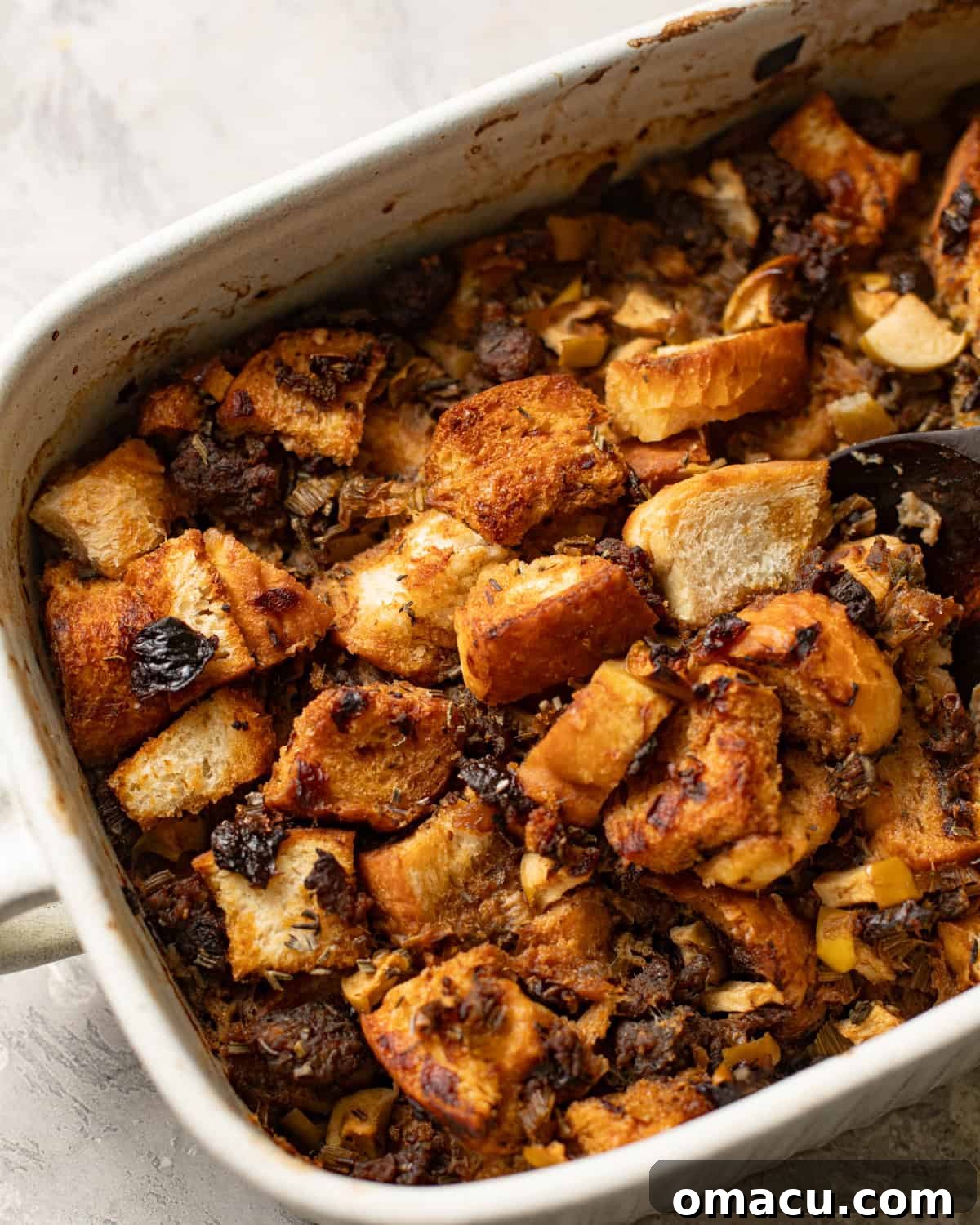
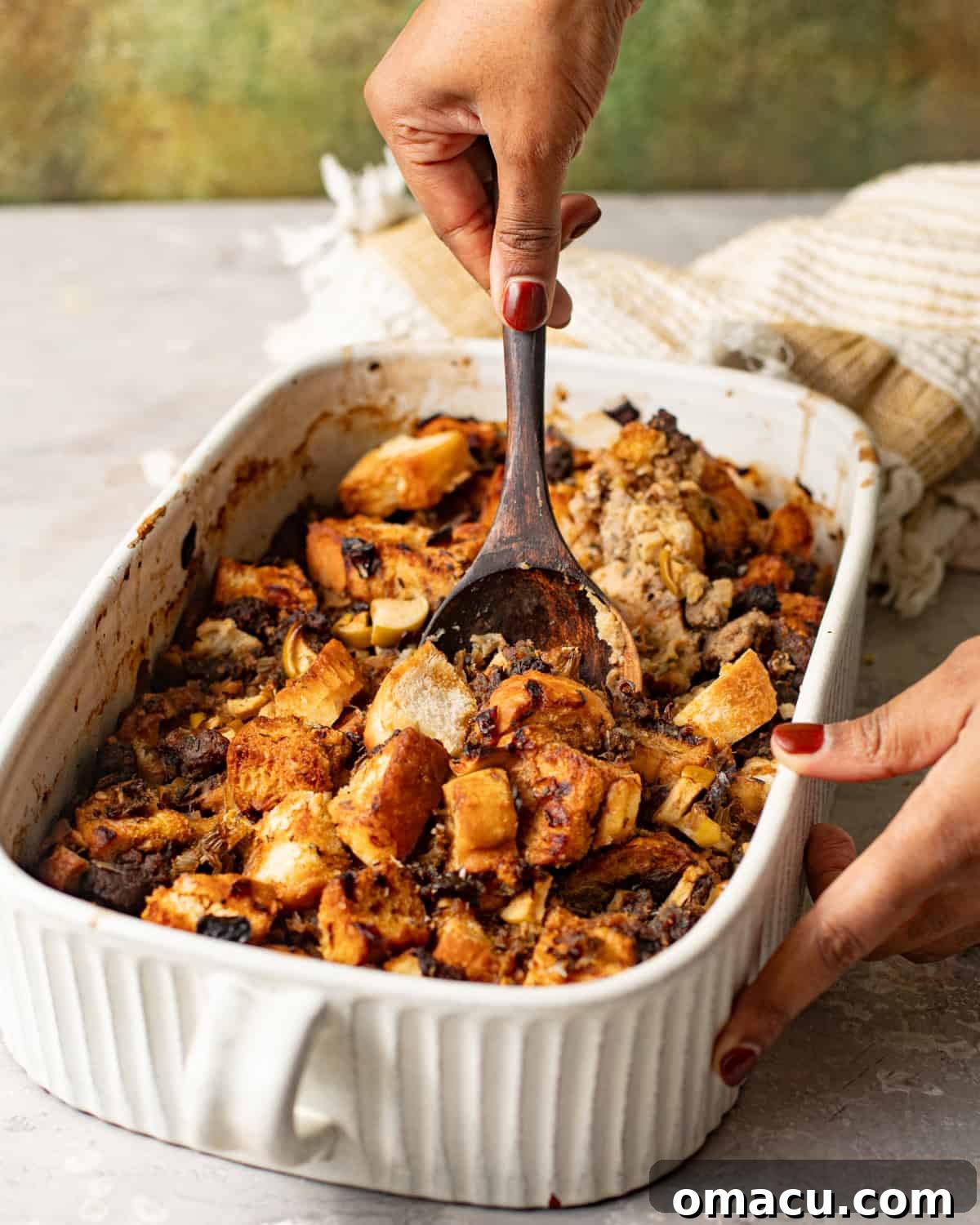
Stuffing holds a special place in my heart as one of the ultimate holiday side dishes, second only to my beloved 3 cheese mac and cheese. It’s a truly magical component of any Thanksgiving spread, acting as the delicious glue that brings all the other flavors together—much like a savory bread pudding, but infinitely better and more comforting.
This exquisite sage and sausage stuffing, with its irresistible blend of savory and sweet notes, pairs beautifully with a traditional holiday spread. I love to serve it alongside a perfectly cooked herb roasted turkey with citrus gravy. To complement its richness, I often include a vibrant raspberry cranberry sauce and a platter of slow cooker green beans with smoked turkey. For a touch of freshness, a crisp shaved Brussels sprouts salad provides a lovely contrast. No holiday plate is complete without the comforting sweetness of candied yams and a hearty serving of slow cooker collard greens. And for an unexpected but utterly delightful addition, I sometimes include some crispy buttermilk fried chicken to round out a truly decadent and satisfying meal. This stuffing is versatile enough to shine alongside any of your favorite holiday traditions!
Common Questions About Sage & Sausage Stuffing
Absolutely! While sourdough offers a wonderful tang and robust texture, this recipe is quite versatile. You can successfully use brioche for added richness, classic French bread for a neutral base, sturdy Italian bread, or even cornbread for a softer, more Southern-style stuffing. The most important tip is to ensure your chosen bread is thoroughly dried out and toasted before mixing; this allows it to soak up all the delicious sausage and herb-infused liquids without becoming mushy.
Not at all! While breakfast sausage provides a fantastic sweet-savory holiday flavor that beautifully complements the sage, you have several excellent alternatives. Feel free to swap it out for mild or spicy Italian sausage for a different flavor profile, lean ground turkey or chicken sausage for a lighter option, or even a high-quality plant-based sausage for a vegetarian-friendly version. Adjust seasonings as needed to suit your chosen protein.
Yes, this stuffing is perfect for holiday make-ahead planning! You can assemble the entire dish, including combining all ingredients in the baking dish, cover it tightly with plastic wrap or aluminum foil, and refrigerate it for up to 24 hours before baking. When you’re ready to bake, simply add an extra 5 to 10 minutes to the covered baking time to account for the chilled mixture. Alternatively, you can bake the stuffing fully, let it cool, and then reheat it at 300°F (150°C) until warmed through, covered with foil to prevent drying out.
Preventing soggy stuffing comes down to a few key techniques. First, ensure your bread cubes are *fully* dried out and toasted before adding any liquid. This creates a sponge-like texture that absorbs moisture efficiently. Second, add the chicken broth and egg mixture gradually; the bread should be thoroughly moistened but never dripping wet. It should feel soft and plump but still hold its individual shape. Finally, allowing the mixed stuffing to rest at room temperature for 20 minutes before baking allows the bread to fully and evenly absorb all the liquids, leading to a perfectly tender result.
Yes, you can certainly omit the eggs if preferred or due to dietary restrictions. The eggs primarily serve to bind the stuffing and help it set into that appealing plush, sliceable texture. If you leave them out, simply reduce the amount of chicken broth by about ¼ to ½ cup. This adjustment ensures the stuffing doesn’t become too wet, maintaining a good consistency. The final texture might be a bit more crumbly but still incredibly delicious.
For optimal food safety reasons, it is generally recommended to bake stuffing in a separate casserole dish rather than inside the turkey. Stuffing cooked inside the turkey often doesn’t reach a high enough internal temperature to kill all bacteria before the turkey itself is fully cooked, posing a potential health risk. Baking it separately ensures proper cooking temperatures and guarantees a safe, delicious side dish for your holiday meal.
More Essential Holiday Side Dishes
Thanksgiving
Decadent Green Bean Casserole with Crispy Bacon
Thanksgiving
Stove Top Candied Yams: A Sweet Holiday Classic
Main Course
Grandma’s Old Fashioned Baked Macaroni and Cheese: The Ultimate Comfort
Thanksgiving
Irresistible Cornbread Pudding
Eager for more delightful and visually stunning recipes? Make sure to subscribe to my newsletter! You’ll receive the freshest seasonal creations straight to your inbox as soon as they’re released, ensuring you never miss out on culinary inspiration.
If you try this incredible Sage and Sausage Stuffing recipe, please take a moment to leave a star rating on the recipe card below and share your thoughts in the comments! Your feedback is invaluable. You can also proudly tag @BritneyBreaksBread on Instagram and use the hashtag #britneybreaksbread so I can celebrate your beautiful culinary creations with you!
This delicious recipe and accompanying blog post were created in proud partnership with California Prunes. I received compensation and product for this work, and my enthusiastic opinions on their wonderful prunes are entirely my own and genuine. Thank you for your continued support of the brands that help make Britney Breaks Bread possible!
Sage and Sausage Stuffing
Equipment
-
Large Mixing Bowls
-
Large Skillet or Dutch Oven
-
9×13-inch Baking Dish / Casserole Dish
-
Baking Sheet
Ingredients
- 1 loaf Sourdough Bread, cut into 1-inch cubes (about 12 cups)
- 1 lb Ground Breakfast Sausage (e.g., Jimmy Dean)
- 1 large Yellow Onion, chopped
- 4 Celery Stalks, chopped
- 1/2 cup Salted Butter
- 3/4 cup California Prunes, chopped
- 3 cloves Garlic, diced
- 6 Fresh Sage Leaves, chopped
- 1 tbsp Fresh Rosemary, chopped
- 4 sprigs Fresh Thyme, stems removed
- 1 tbsp Molasses
- 2 tbsp Soy Sauce
- 4 cups Chicken Broth
- 3 large Eggs
- 1/2 cup Chopped Pecans
- 1 large Apple, e.g., Gala or Honeycrisp, diced
- Fresh Parsley, optional, for garnish
Instructions
-
Preheat the oven to 350 degrees F (175°C). Cut your chosen bread into about 1-inch chunks. Drizzle with a little olive oil, spread onto a baking sheet, and toast in the oven for 10-15 minutes, until slightly golden brown and hard. 1 loaf Sourdough Bread
-
In a large skillet over medium heat, add the ground breakfast sausage, onion, and celery. Cook until the sausage is no longer pink, then drain excess fat. Add the butter. Once melted, stir in the chopped prunes, diced garlic, and fresh herbs (sage, rosemary, thyme). Cook for 5 minutes, stirring frequently. Season with kosher salt and black pepper, then pour in molasses and soy sauce. Stir to combine, remove from heat, and cool for about 10 minutes. 1 lb Ground Breakfast Sausage 1 large Yellow Onion 4 Celery Stalks 1/2 cup Salted Butter 3/4 cup Prunes 3 cloves Garlic 6 Fresh Sage Leaves 1 tbsp Fresh Rosemary 4 sprigs Fresh Thyme 1 tbsp Molasses 2 tbsp Soy Sauce
-
In a separate bowl, whisk together the eggs and chicken broth, then pour the egg mixture into the cooled sausage pan, stirring to combine. 4 cups Chicken Broth 3 large Eggs
-
Place toasted bread cubes into a large mixing bowl. Slowly pour in the sausage/broth mixture, adding about 1 cup at a time and gently tossing, allowing the bread to absorb the liquid before adding more. Once all liquid is added, gently fold in the chopped pecans and diced apples. 1 large Apple 1/2 cup Chopped Pecans
-
Let the stuffing sit at room temperature for 20 minutes to allow the bread to fully absorb all the liquid. Transfer to a 9×13 baking dish or casserole dish and cover tightly with aluminum foil.
-
Bake for 40 minutes. Remove the aluminum foil and continue to bake for an additional 15-20 minutes, or until the tops of the stuffing are gloriously golden brown and crisp. Garnish with fresh parsley before serving. Fresh Parsley
Notes
- Ensure Bread is Truly Dry: Your bread cubes need to be lightly golden and crisp all the way through, not just on the surface. Soft centers can lead to a mushy stuffing later. Add a few extra minutes to the toasting time if necessary.
- Moisten, Don’t Soak: The bread should be well moistened, but not soggy. Keep in mind it will continue to hydrate during baking. Add the broth about 1 cup at a time, allowing the bread to absorb each addition.
- Cool Before Adding Eggs: Allowing the sausage mixture to cool for about 10 minutes before adding the eggs and broth is crucial. If the mixture is too hot, it can cause the eggs to scramble, affecting the stuffing’s texture.
- Add Liquid Gradually: Pour the liquid mixture over the bread slowly, allowing it to be absorbed in stages. This ensures the bread hydrates evenly without collapsing, resulting in a soft yet structured stuffing, much like a perfectly seasoned sponge.
- Bake Covered, Then Uncovered: Baking the stuffing covered keeps it wonderfully moist and tender throughout. Removing the foil for the final 10-15 minutes allows the top to crisp up beautifully and turn that irresistible golden brown that everyone loves.
Nutrition
Nutrition information is automatically calculated, so should only be used as an approximation.