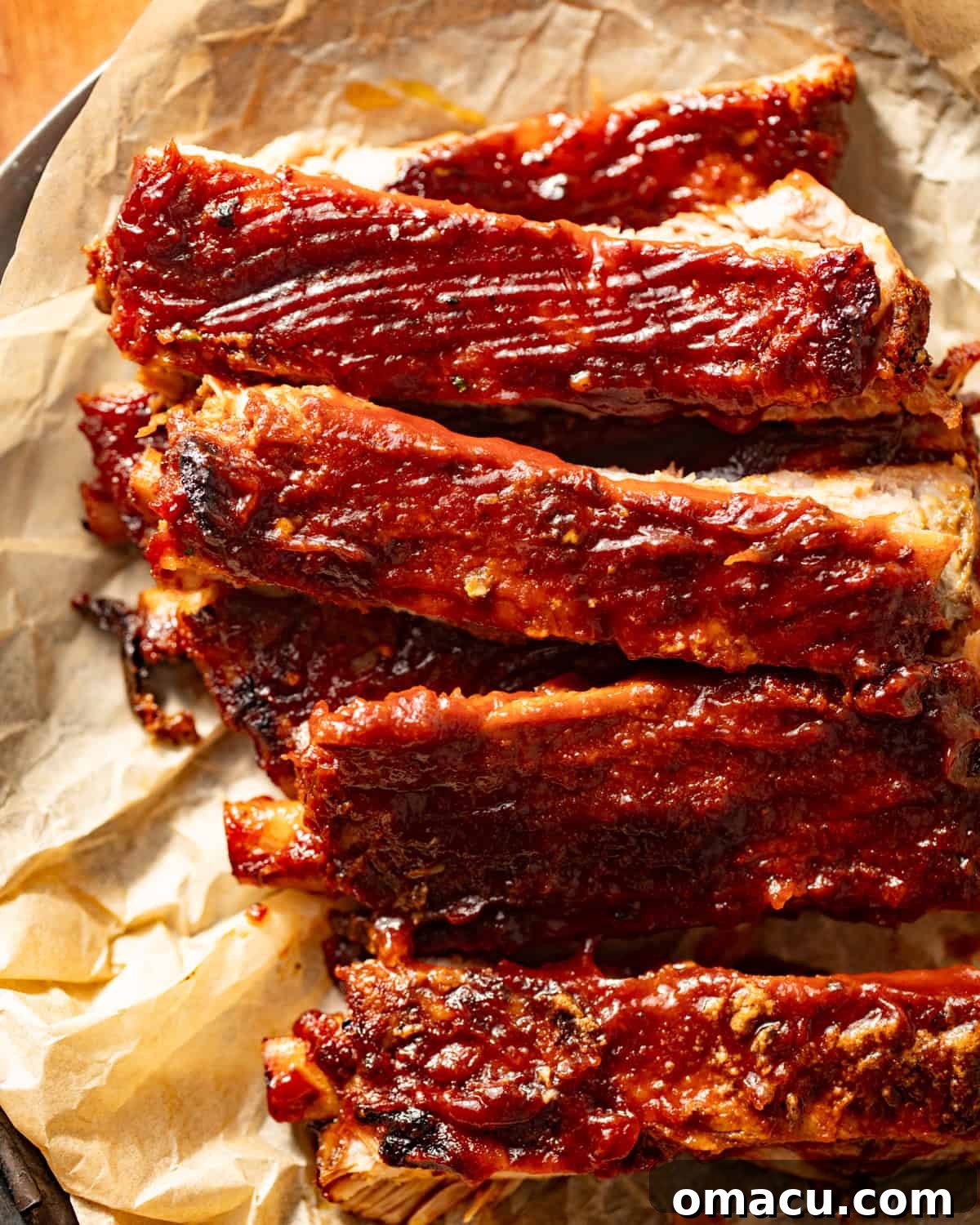
Fall Off The Bone Ribs: The Ultimate Oven-Baked Recipe
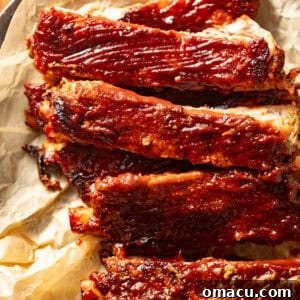
Prepare for an unforgettable culinary experience with these **Fall Off The Bone Ribs**. Each bite promises succulent, tender meat bursting with savory flavor, achieved through a simple yet effective low and slow oven-baking method. Finished with a delectable barbecue sauce and a quick broil, these ribs deliver perfection every time, making them an instant family favorite.
If you’re eager for more amazing rib recipes, don’t miss our Slow Cooker Baby Back BBQ Ribs for hands-off cooking, or explore a unique twist with our Peanut Curry Braised Ribs!
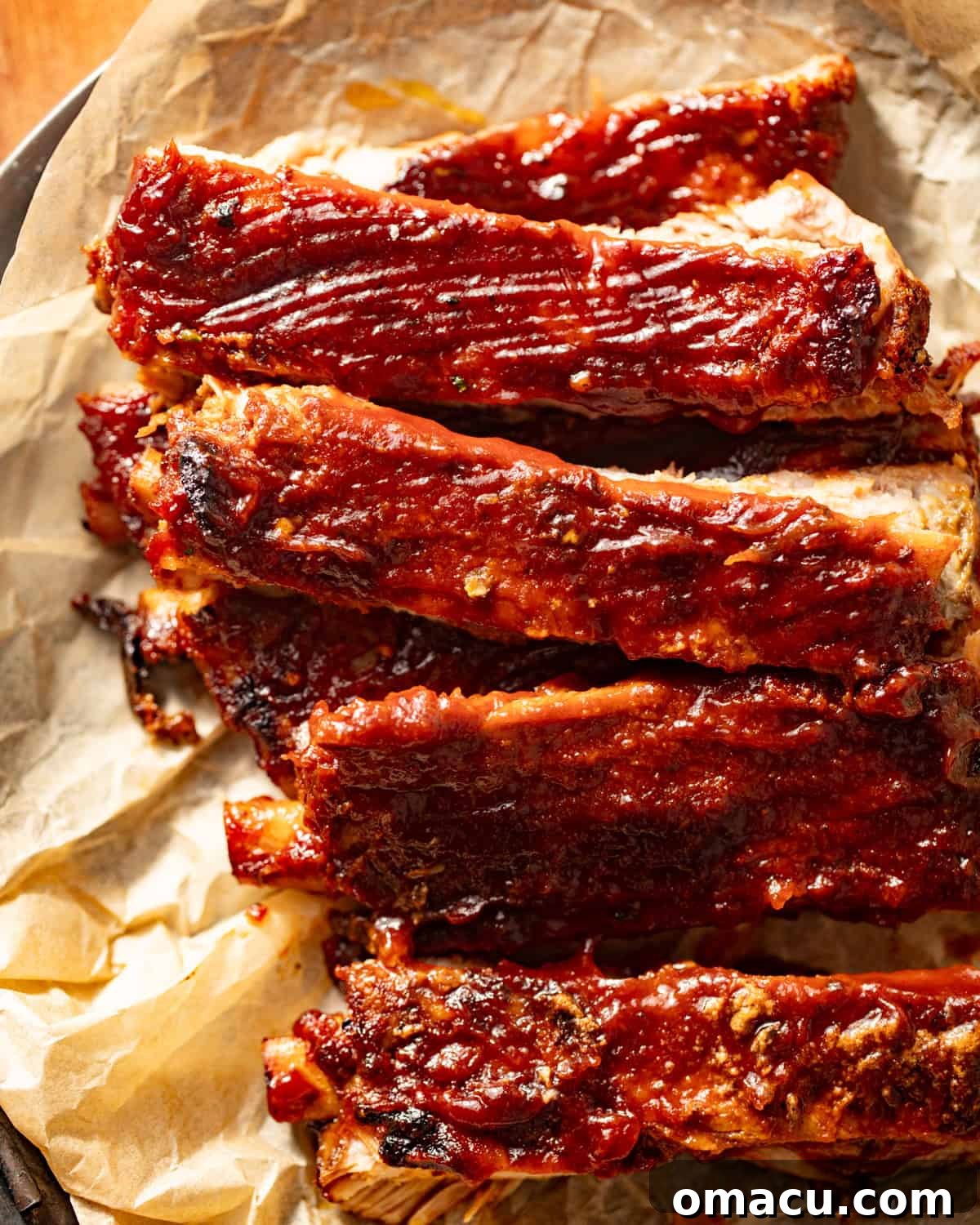
Many home cooks believe that achieving truly tender, melt-in-your-mouth ribs requires hours of meticulous grilling, constant attention, and specialized equipment. You might envision yourself endlessly spraying with vinegar, checking temperatures every few minutes, and battling the elements. However, I’m here to unveil a simpler, foolproof secret: the most incredibly tender ribs are actually made in your oven!
This oven-baked ribs recipe consistently delivers fall-off-the-bone perfection. The meat becomes so juicy it practically melts in your mouth, infused with a rich, smoky-sweet flavor that will have everyone asking for your secret. Best of all, it calls for just a handful of straightforward ingredients, proving that extraordinary results don’t demand complex techniques or a scorching hot grill.
After experiencing this recipe, you’ll undoubtedly agree that the best, easiest, and most reliable way to cook perfect ribs is not under the blazing sun, but comfortably in your own kitchen. Simply season your ribs generously, wrap them snugly in foil, and let your oven do the magic. The outcome? Unquestionably the most delicious ribs you’ll ever create at home, ready to impress family and friends alike. Let’s dive into the details!
Table of Contents
- Why You’ll Love This Ribs Recipe
- Ingredients to Make Oven-Baked Ribs
- Recipe Variations & Customization
- How to Make Fall Off The Bone Ribs
- Pro Tips for the Best Ribs
- What to Serve with Ribs
- Recipe FAQs
- More Classic Recipes
Why You’ll Love This Ribs Recipe
- Effortlessly Simple! Forget complicated grilling techniques or endless monitoring. This recipe is designed for maximum flavor with minimal effort. You simply clean the ribs, apply a fantastic seasoning, and let them slow-cook in the oven. It’s truly a “set it and forget it” experience, perfect for busy weeknights or relaxed weekend gatherings.
- Unbelievably Fall-Off-The-Bone Tender! The magic of low and slow oven baking transforms tough pork ribs into succulent, melt-in-your-mouth masterpieces. The meat becomes so tender, it practically detaches from the bone with the slightest tug – no knife required! This method ensures every rib is permeated with moisture and flavor, creating that coveted tender texture.
- A Symphony of Sweet, Smoky, and Perfectly Seasoned Flavors. Our carefully crafted dry rub, combined with your favorite BBQ sauce, creates a complex flavor profile that hits all the right notes. You’ll experience a delightful balance of savory spices, a touch of sweetness, and that unmistakable smoky depth, rounded out with just enough warmth to make each bite incredibly satisfying.
- No Grill? No Problem! For those who don’t own a grill, live in an apartment, or simply prefer to avoid grill duty, this recipe is a game-changer. These incredible ribs are made entirely in the oven, eliminating the need for any fancy outdoor equipment or dealing with smoke. Enjoy perfectly cooked barbecue ribs any time, right from the comfort of your kitchen.
Ingredients to Make Oven-Baked Ribs
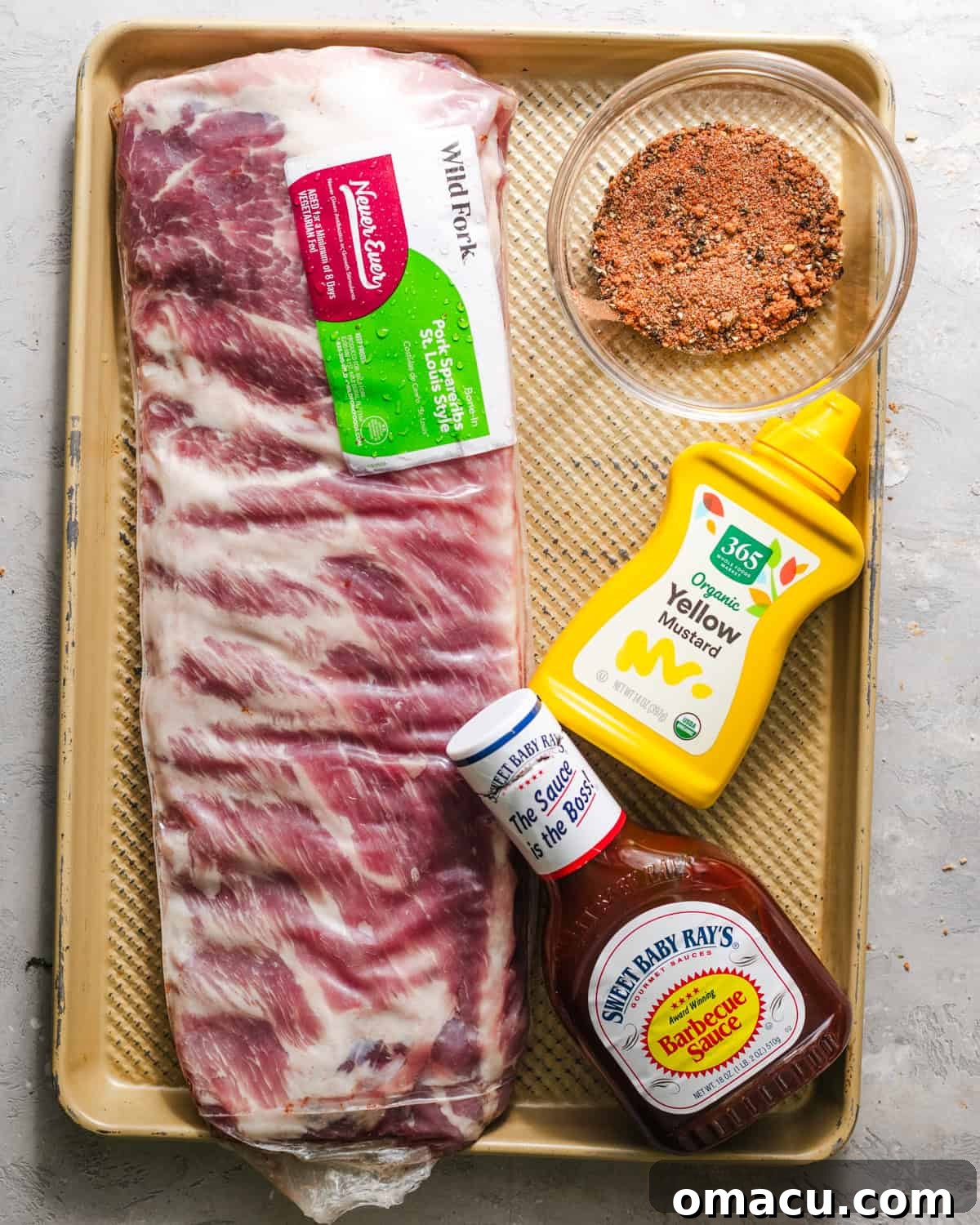
- St. Louis-Style Pork Ribs: For this recipe, I highly recommend St. Louis-style ribs. They are known for their generous meatiness and a balanced fat content, which renders beautifully during slow cooking, contributing to their incredible flavor and tenderness. While baby back ribs can certainly be used, they are generally smaller and leaner, requiring a slight adjustment to the cooking time – typically less time is needed.
- Homemade BBQ Seasoning Blend: The secret to truly flavorful ribs lies in a robust dry rub. Our blend combines the perfect ratio of **brown sugar** for sweetness and caramelization, **garlic powder** and **onion powder** for aromatic depth, **smoked paprika** for that essential smoky character, a hint of **chili powder** for subtle warmth, and balanced with **kosher salt** and freshly cracked **black pepper**. This rub penetrates the meat, creating a delicious crust.
- Your Favorite BBQ Sauce: The finishing touch! I often use a classic like Sweet Baby Ray’s for its consistent flavor, but this is where you can truly personalize your ribs. Feel free to use any brand you love, whether it’s tangy, spicy, or extra sweet. For an extra special touch, consider making your own homemade BBQ sauce – my Honey BBQ Sauce recipe is an excellent place to start!
- Yellow Mustard: Don’t worry, your ribs won’t taste like mustard! Yellow mustard acts as a fantastic binder for the dry rub. After patting your ribs dry, a thin layer of mustard ensures that all those delicious spices adhere perfectly to the meat, creating an even coating and maximizing flavor absorption. It essentially creates a moist surface for the rub to stick to.
- Apple Juice: A splash of apple juice in the baking pan helps to create a moist, steamy environment within the foil packet. This internal steaming is crucial for breaking down connective tissues, making the ribs incredibly juicy and tender. It also adds a subtle hint of sweetness and fruitiness that complements the pork beautifully.
Recipe Variations & Customization
This recipe is incredibly versatile, allowing you to tailor the flavors to your personal preferences. Feel free to experiment with these delicious variations:
- Turn Up the Heat: If you love a little kick, a dash or two of cayenne pepper can be added to your BBQ seasoning blend. Adjust the amount to your desired spice level. For a bolder heat, you could also incorporate a pinch of red pepper flakes or even a tablespoon of your favorite hot sauce into the BBQ sauce before broiling.
- Alternative Liquids for Steaming: While apple juice adds a lovely subtle sweetness and moisture, you have several options for the liquid in the bottom of the pan. Try using beer (lager or ale works wonderfully for depth of flavor), apple cider vinegar for a tangy note, chicken or beef broth for a savory boost, or even pineapple juice for a more tropical sweetness and enzyme-rich tenderizing effect. Each option will impart its unique subtle flavor to the ribs.
- Customize Your Seasoning: The beauty of a dry rub is its adaptability. Feel free to adjust the ratios of the suggested spices, or introduce new ones. Smoked paprika can be swapped for sweet paprika, or try adding a pinch of cumin, coriander, or even a touch of espresso powder for a deeper, richer flavor profile. You can also buy a pre-made rub if you have a favorite.
- Different BBQ Sauce Styles: Don’t limit yourself to one type of barbecue sauce. Explore regional variations – a Carolina-style mustard-based sauce, a Kansas City sweet and tangy sauce, or a vinegar-based sauce from Texas. Each will give your ribs a distinct character. You can even layer flavors by brushing with a thin vinegar sauce during the initial bake and finishing with a thicker, sweeter sauce.
- Herbal Infusion: For an earthy aroma, place a few sprigs of fresh rosemary or thyme directly onto the ribs before wrapping them in foil. The herbs will infuse their fragrance into the meat during the slow cooking process.
How to Make Fall Off The Bone Ribs
Follow these simple steps to create perfectly tender and flavorful oven-baked ribs:
- Prepare Your Oven and Pan: Preheat your oven to a steady 300°F (150°C). Line a large, sturdy baking sheet with heavy-duty aluminum foil, ensuring enough overhang to fully wrap the ribs later. This helps contain juices and makes cleanup a breeze. In a small bowl, thoroughly combine all the spices for your homemade BBQ seasoning blend.
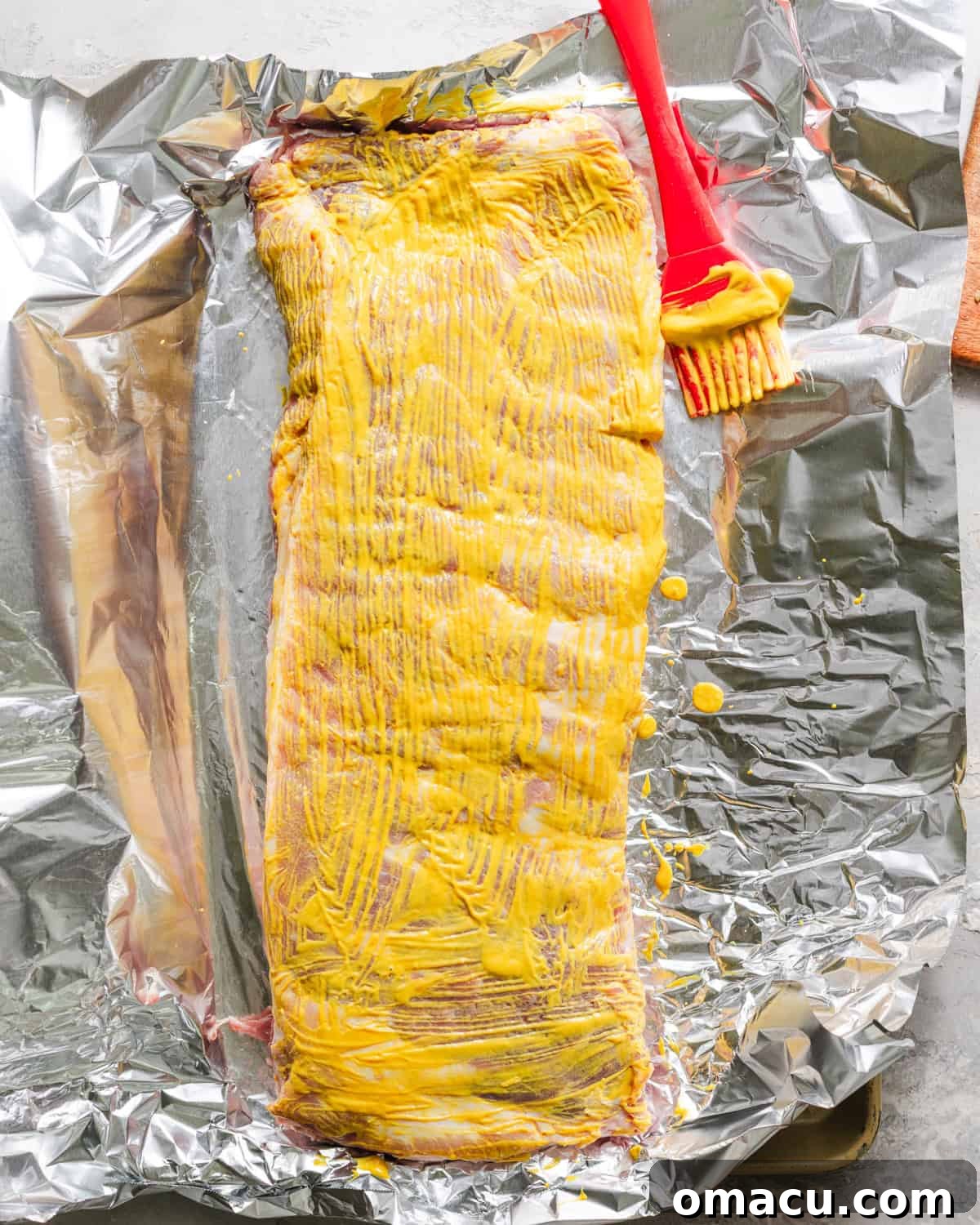
- Prep the Ribs: Begin by removing the thin, silver membrane (or silverskin) from the back of the ribs. This crucial step prevents the ribs from becoming tough and allows your seasoning to penetrate fully. Flip the rack over, slide a butter knife under one corner of the membrane, then grip it with a paper towel and peel it off in one piece. Next, pat the ribs thoroughly dry with paper towels. While you can trim excess fat, I often leave a bit, as fat equals flavor! Using a pastry brush or the back of a spoon, evenly coat both sides of the ribs with yellow mustard.
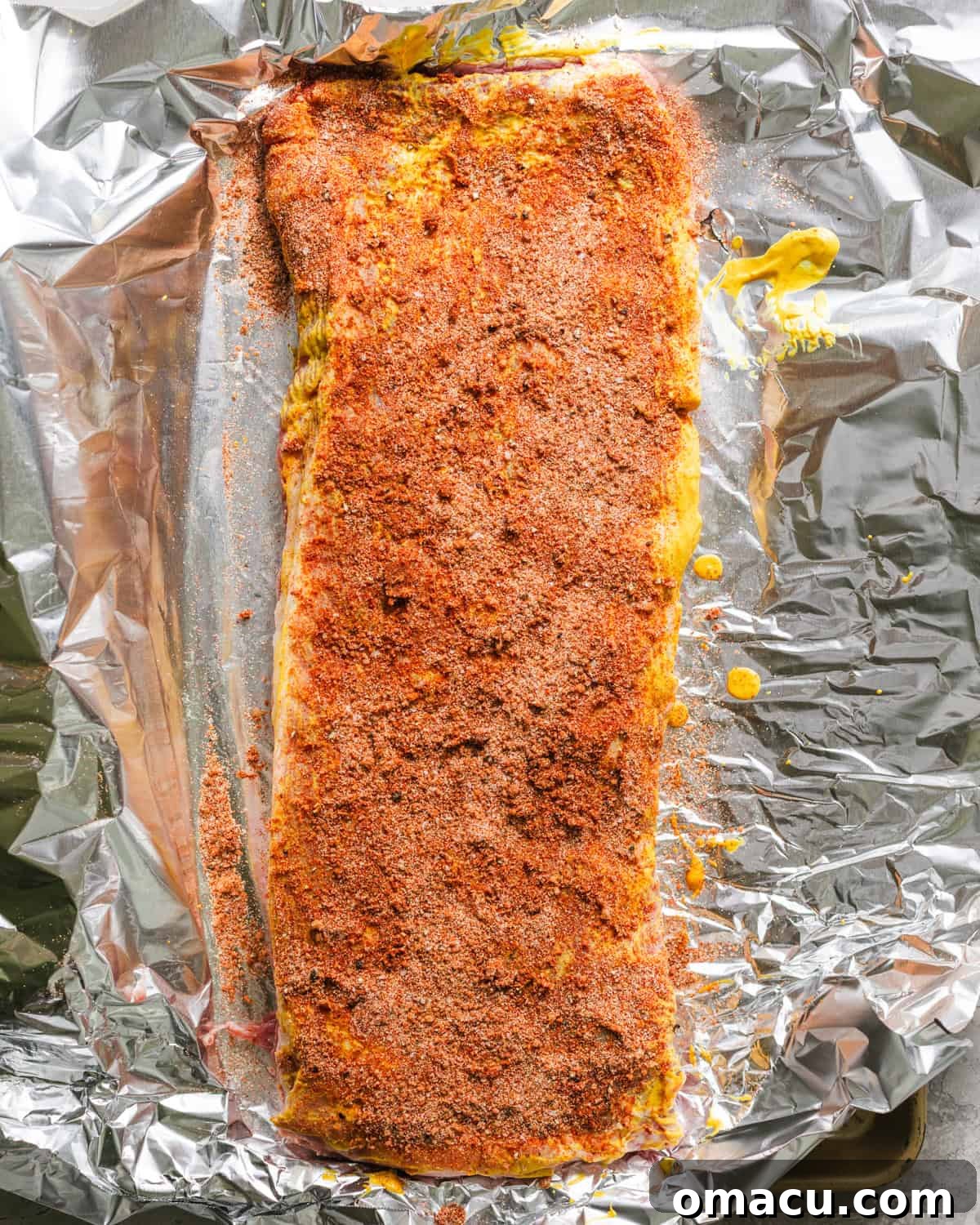
- Season and Moisten: Generously sprinkle your prepared BBQ seasoning blend all over both sides of the mustard-coated ribs, ensuring an even layer. Place the seasoned ribs on the foil-lined baking sheet. Pour 1/4 cup of apple juice onto the bottom of the pan, directly on the foil, around the ribs. This liquid will create steam for tenderness.
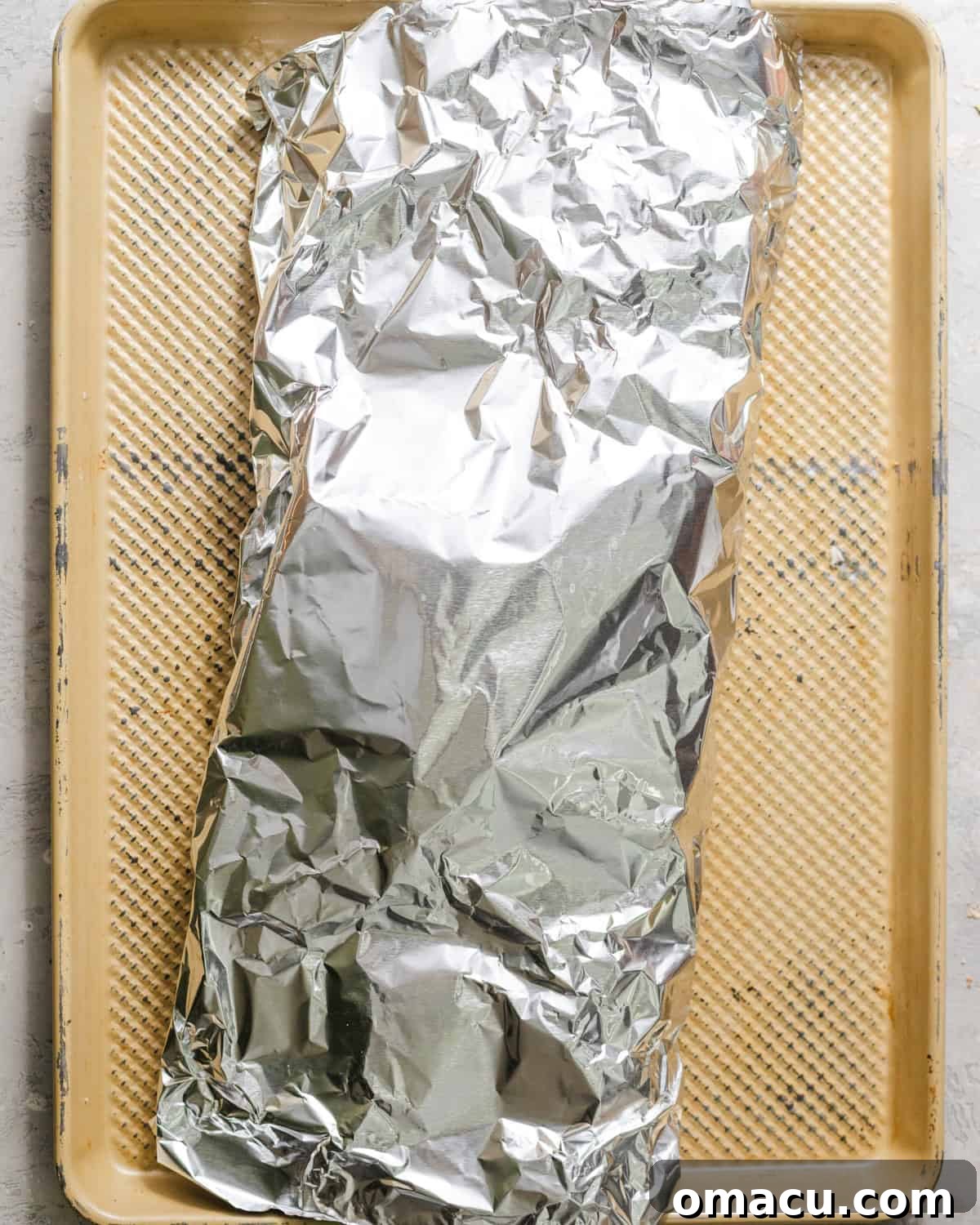
- Slow Bake to Perfection: Carefully fold the aluminum foil over the ribs, creating a tight seal. Ensure there are no gaps where steam can escape – you want to trap all that precious moisture! If your foil isn’t wide enough, add a second piece on top to fully encase the ribs. Bake in the preheated oven for 2 hours and 30 minutes. This low and slow cooking time is key to achieving that incredible tenderness.
- Sauce and Finish Baking: After the initial baking period, carefully remove the ribs from the oven. Uncover the foil and generously coat the ribs with your chosen barbecue sauce using a clean pastry brush. Loosely cover them back with the foil – you don’t need a tight seal this time, just a covering to prevent too much drying. Return the ribs to the oven and bake for an additional 30 minutes.
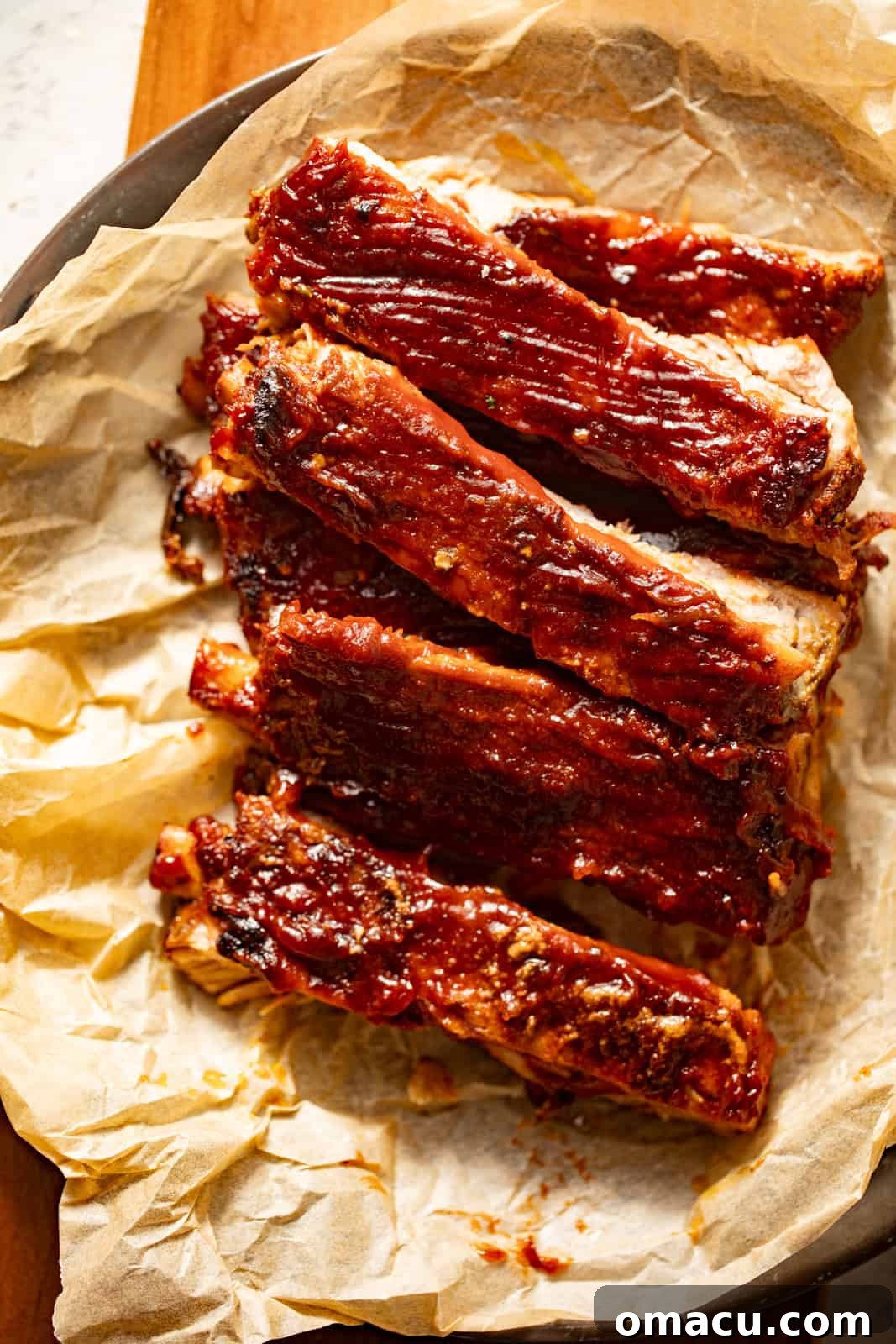
- Broil for Caramelization: For that perfect sticky, caramelized crust, remove the foil completely from the ribs. Increase the oven temperature to the broil setting (usually high). Place the baking sheet on the middle rack of the oven and broil for 5-8 minutes, keeping a very close eye on them. BBQ sauce can burn quickly under the broiler, so watch constantly until they achieve a beautiful, slightly charred glaze.
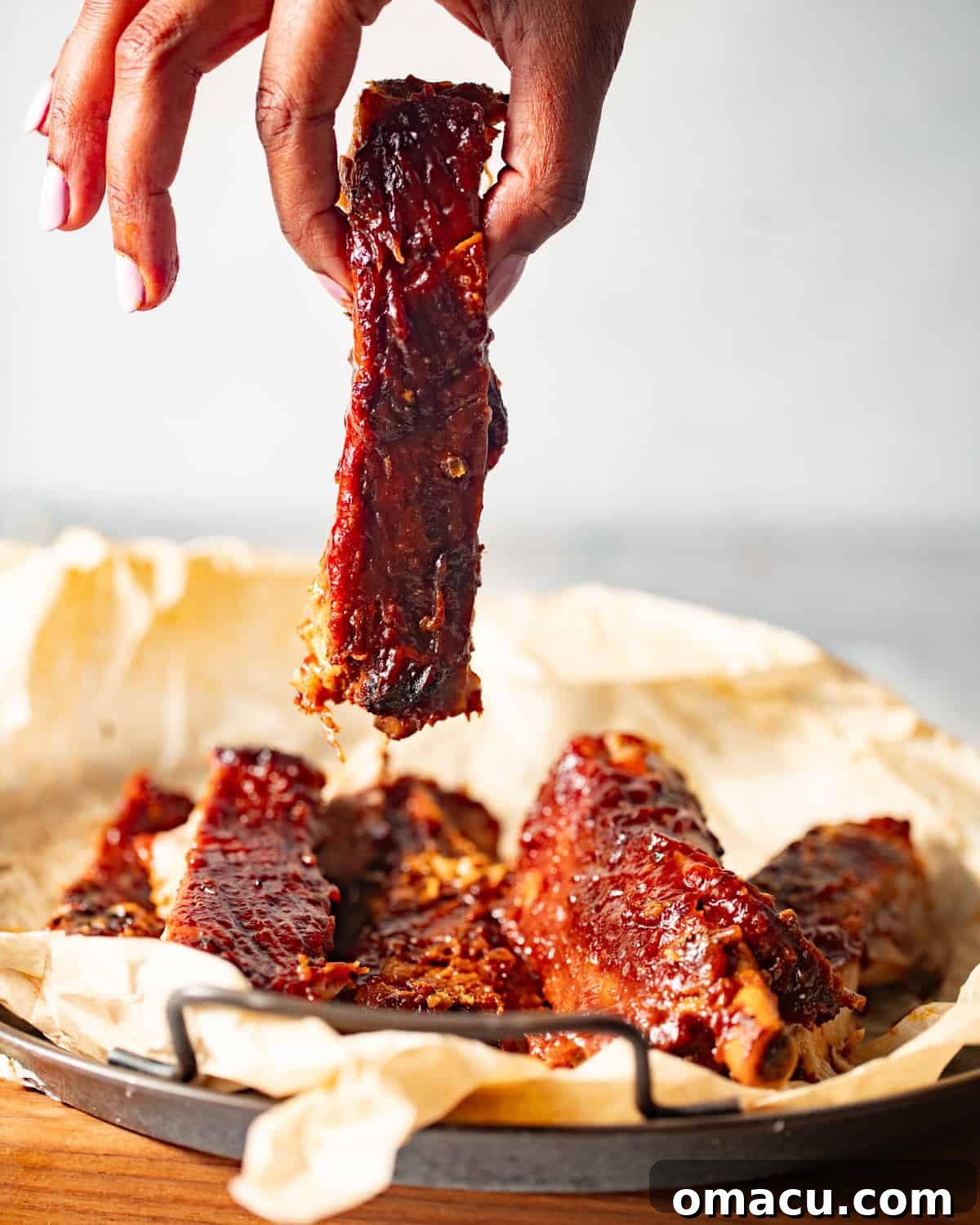
- Rest and Serve: Once broiled, remove the ribs from the oven. Drizzle with any remaining barbecue sauce, if desired. Critically, allow the ribs to rest for 10-15 minutes before slicing and serving. This resting period allows the juices to redistribute throughout the meat, ensuring every bite is as moist and flavorful as possible. Slice between the bones and enjoy!
Pro Tips for the Best Ribs
- Always Remove the Membrane: This is arguably the most crucial step for tender ribs. The membrane, a thin silver skin on the underside of the rib rack, becomes tough and chewy when cooked. More importantly, it acts as a barrier, preventing your delicious spice rub and sauce from truly penetrating the meat. Take the time to flip the ribs over, slide a butter knife under one end of the membrane, grip it with a paper towel (for better traction), and peel it off. It should come off in one satisfying piece.
- The Importance of Resting: Just like with any cooked meat, resting your ribs after they come out of the oven is vital. After the intense heat of cooking, the meat’s juices are concentrated in the center. Giving the ribs 10 to 15 minutes to rest, loosely covered, allows these juices to redistribute back through the entire rack. The result? Incredibly moist, flavorful ribs that aren’t dry. Resist the urge to slice immediately!
- Choose the Right Ribs for You: The type of ribs you select can impact cooking time and flavor. **Baby back ribs** are leaner, shorter, and cook a bit faster due to their smaller size. They typically have a milder flavor. **Spare ribs** (often cut down into St. Louis-style ribs) come from the belly area, offering more fat, which translates to richer flavor and often more tender results when cooked low and slow. They are larger and take longer to cook. Both work wonderfully with this oven method; just be mindful of adjusting your cooking time accordingly.
- Confirm Doneness with the Toothpick Test: While specific cooking times are provided, doneness can vary slightly. A reliable indicator that your ribs are truly “fall-off-the-bone” ready is the toothpick test. When a toothpick can be easily inserted between the bones with minimal resistance, and the meat appears to be pulling back from the ends of the bones, your ribs are perfectly tender. This ensures they live up to their “fall off the bone” name!
- Double Wrap for Moisture: While the recipe mentions covering with foil, for extra juicy results, especially if your foil isn’t heavy-duty, consider double-wrapping the ribs. Use two layers of aluminum foil, sealing them completely to create a super-steamy, insulated environment. This minimizes any moisture loss and maximizes tenderness.
What to Serve with Ribs
These magnificent oven-baked ribs demand to be paired with classic, comforting cookout staples! We’re talking about a grand feast, the kind that gathers everyone around the table for an unforgettable meal. Here are some of my top recommendations for a truly spectacular spread:
- Soul Food Potato Salad: Creamy, savory, and utterly satisfying, a good potato salad is non-negotiable.
- Grandma’s Old Fashioned Mac and Cheese: The ultimate comfort food side, rich and cheesy perfection.
- Classic Coleslaw: A crisp, tangy coleslaw provides a refreshing contrast to the richness of the ribs.
- Spicy Deviled Eggs: A perennial crowd-pleaser, adding a lovely creamy, zesty bite.
- Hearty Baked Beans: Sweet, smoky, and deeply flavorful, a perfect companion to barbecue.
- Cast Iron Skillet Buttermilk Cornbread: Ideal for soaking up all that delicious rib sauce.
Yes, imagine a big, generous plate overflowing with these soul food classics – because that’s exactly how we celebrate at cookouts; it’s a serious affair! And to wash it all down, don’t forget some ice-cold refreshment like homemade Peach Sweet Tea or a vibrant Frozen Strawberry Lemonade.
While I love keeping it traditional, if you’re feeling adventurous and want to elevate your spread, consider pairing these ribs with a lavish Seafood Boil with Garlic Butter Sauce, complemented by a refreshing Seafood Pasta Salad, classic Green Beans and Potatoes, and tender Slow Cooker Collard Greens. The possibilities are endless for creating a memorable meal!
Recipe FAQs
To successfully remove the membrane, begin by placing the rib rack bone-side up on a clean surface. Locate the thin, silvery skin (the membrane) at one end of the rack. Gently slide a butter knife or a small spoon underneath it to loosen a small section. Once lifted, grip the loosened membrane firmly with a paper towel – this provides much better traction than bare fingers. Slowly and steadily peel the membrane off the entire rack. It should come off in one continuous piece. This step is crucial for achieving tender ribs and allowing the dry rub to fully flavor the meat.
While you don’t necessarily need a special baking rack for this oven-baked method, using aluminum foil is absolutely essential. The foil traps steam, creating a moist cooking environment that is key to achieving truly juicy and tender ribs. Without the foil, the ribs would dry out significantly during the long baking process, resulting in tough, unappetizing meat. Ensure they are tightly sealed to maximize the steaming effect.
The primary difference between baby back ribs and spare ribs lies in their location on the hog, their size, fat content, and resulting cooking characteristics. Baby back ribs come from the upper rib cage, near the loin. They are shorter, curved, leaner, and generally more tender from the start, thus cooking faster. Spare ribs, on the other hand, originate from the belly area. They are larger, flatter, and possess more connective tissue and fat, which translates to a richer flavor and incredible tenderness when cooked low and slow. St. Louis-style ribs are spare ribs that have been trimmed to a more uniform, rectangular shape, removing the sternum and cartilage. I often opt for St. Louis style spare ribs when feeding a crowd due to their meatiness and flavor.
Yes, this oven-baking method can absolutely be adapted for beef ribs. However, beef ribs are generally larger, tougher, and denser than pork ribs, so they will require a longer cooking time. Expect to add at least another 1-2 hours to the initial low and slow baking phase. You’ll know they’re ready when the meat is extremely tender and visibly pulls away from the bones with ease.
Absolutely! Ribs are an excellent dish to prepare in advance. You can cook them fully, allow them to cool, and then store them. When it’s time to serve, reheating them carefully ensures they remain juicy and delicious. See the detailed reheating instructions in the next FAQ for best results.
To store leftover ribs, allow them to cool completely, then wrap them tightly in aluminum foil or place them in an airtight container. They can be refrigerated for up to 3-4 days. To reheat without drying them out, the key is moisture and gentle heat. Wrap the ribs tightly in foil again, adding a splash of chicken broth or extra BBQ sauce inside the foil packet. Reheat in a preheated 300°F (150°C) oven for 20-25 minutes, or until thoroughly heated through. This gentle, steamy reheating method helps preserve their tenderness and juiciness.
More Classic Recipes You’ll Love
Main Course
Slow Cooker BBQ Pulled Pork
Main Course
Beef Tips and Gravy
Main Course
Old Fashioned Salisbury Steak Recipe
Main Course
Mississippi Chicken Recipe
Want more delicious and beautiful recipes delivered straight to your inbox? Subscribe to my newsletter to receive the latest seasonal creations as soon as they’re released!
If you make this incredible Fall Off The Bone Ribs recipe, please leave a star rating on the recipe card below and share your thoughts in the comments! You can also tag @BritneyBreaksBread on Instagram and use the hashtag #britneybreaksbread so I can celebrate your beautiful creations!
Fall Off The Bone Ribs
Equipment
- Baking Sheet
- Aluminum Foil
- BBQ Brush
Ingredients
BBQ Seasoning Blend
- 1 1/2 tbsp Smoked Paprika
- 1 tbsp Onion Powder
- 2 tsp Garlic Powder
- 2 tsp Brown Sugar
- 1 tsp Chili Powder
- 1 tsp Ground Mustard
- 1 tbsp Kosher Salt (more or less as desired)
- 1 tsp Black Pepper
Ribs
- 1 rack St. Louis Style Ribs
- 1/4 cup Yellow Mustard
- 1/4 cup Apple Juice
- 1 cup Barbecue Sauce
Instructions
- Preheat the oven to 300 degrees F. Line a large baking sheet with aluminum foil.
- Combine the spices for the BBQ seasoning blend in a small bowl.
- Remove the silver skin (membrane) from the back of the ribs. Flip the ribs over and peel off the thin, silver skin. (This prevents them from getting tough and allows the spice rub to soak in.) Then pat the ribs dry with a paper towel. (You can remove excess fat or leave it as you prefer. I like to leave it because fat = flavor!)
- Use a BBQ brush (or the back of a spoon) to brush the ribs with yellow mustard on both sides. Then sprinkle the seasoning blend all over the ribs. Add a splash of apple juice onto the bottom of the baking sheet (on top of the aluminum foil).
- Wrap the ribs tightly in aluminum foil, making sure the juice doesn’t seep out. Then add an additional piece of foil on top to wrap them completely (this seals in the juices and moisture as it cooks). Bake in the oven for 2 1/2 hours.
- Uncover the ribs and coat them generously in barbecue sauce. Cover loosely with the foil and continue to bake for an additional 30 minutes.
- Remove the foil completely and broil in the oven for 5-8 minutes. (Be sure to place the ribs on the middle rack and keep a watchful eye so that they don’t burn).
- Drizzle the cooked ribs with any remaining sauce and allow them to rest for 10-15 minutes before cutting and serving.
Notes
- Remove the membrane from the bottom of the ribs. Flip the ribs over and peel off the thin, silver skin (membrane) on the back. It can get tough when cooked and blocks the spice rub from soaking in.
- After they’re finished baking, Let them rest. Give the ribs 10-15 minutes to rest after cooking so the juices can redistribute throughout the meat. Then slice and devour.
- Choose the right ribs! Baby back ribs are leaner and cook a bit faster. Spare ribs have more fat and flavor, but take longer. Either works—just adjust your cook time accordingly.
- Check doneness by doing the toothpick test. When a toothpick slides between the bones with little resistance, the ribs are done.
Nutrition
Nutrition information is automatically calculated, so should only be used as an approximation.
Tried this recipe?
Mention @BritneyBreaksBread or tag #BritneyBreaksBread!