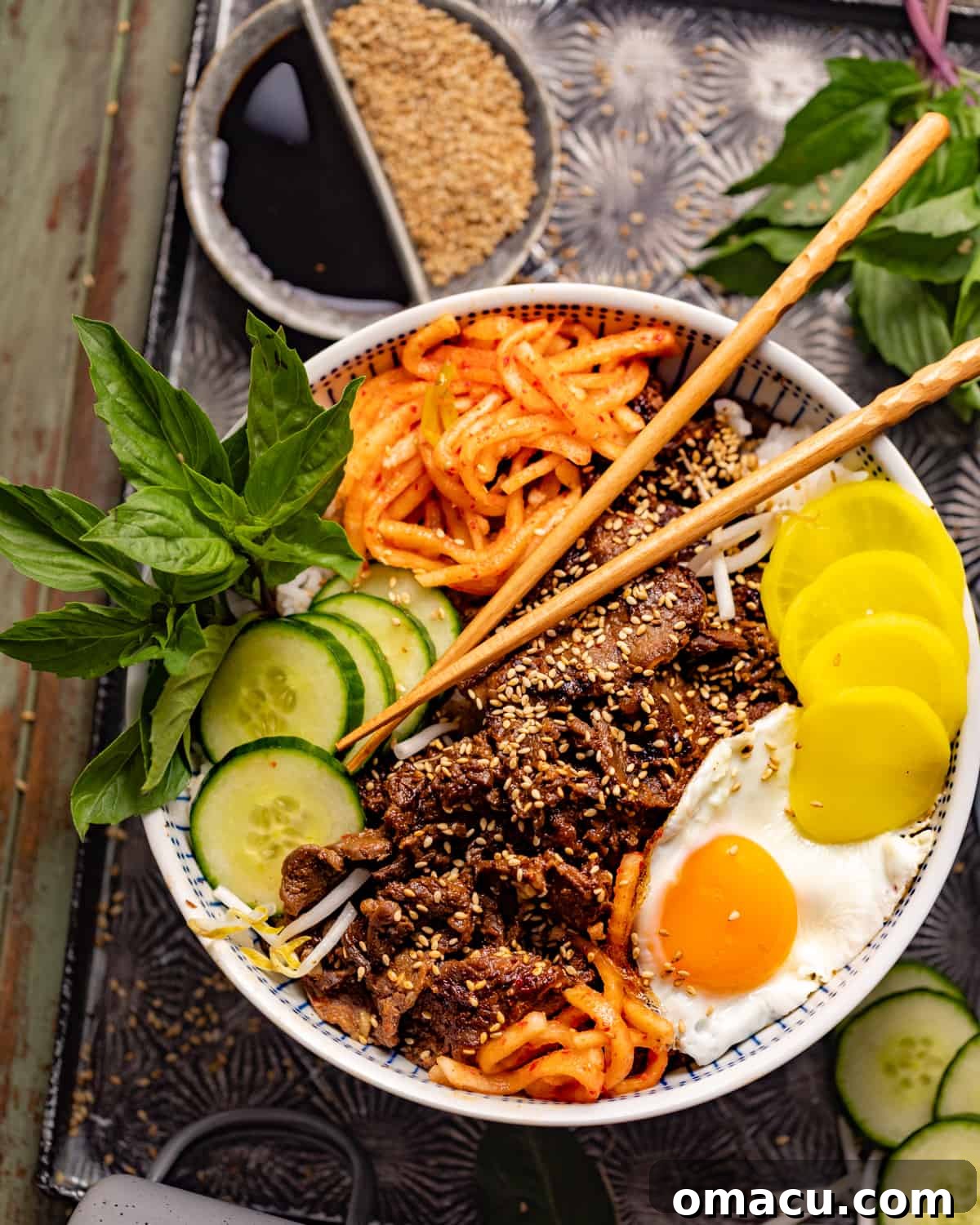
Prepare to delight your taste buds with these incredibly flavorful and tender Bulgogi Bowls! This beloved Korean dish features thinly sliced beef bathed in a perfectly balanced sweet and savory soy sauce marinade. Served over a bed of fluffy white rice and complemented by spicy kimchi, a perfectly fried egg, and crisp fresh cucumber, it’s a meal that promises a symphony of flavors and textures in every bite.
Elevate your dinner experience by garnishing with a generous sprinkle of green onions and sesame seeds. This Korean-inspired dinner is not just delicious; it’s an easy-to-make culinary journey right in your own kitchen!
If you find yourself craving more quick, easy, and delicious meals, be sure to explore my Teriyaki Chicken Bowl, Mediterranean Chicken Bowl, and Pepper Steak Recipe. They are perfect for satisfying those weeknight cravings!
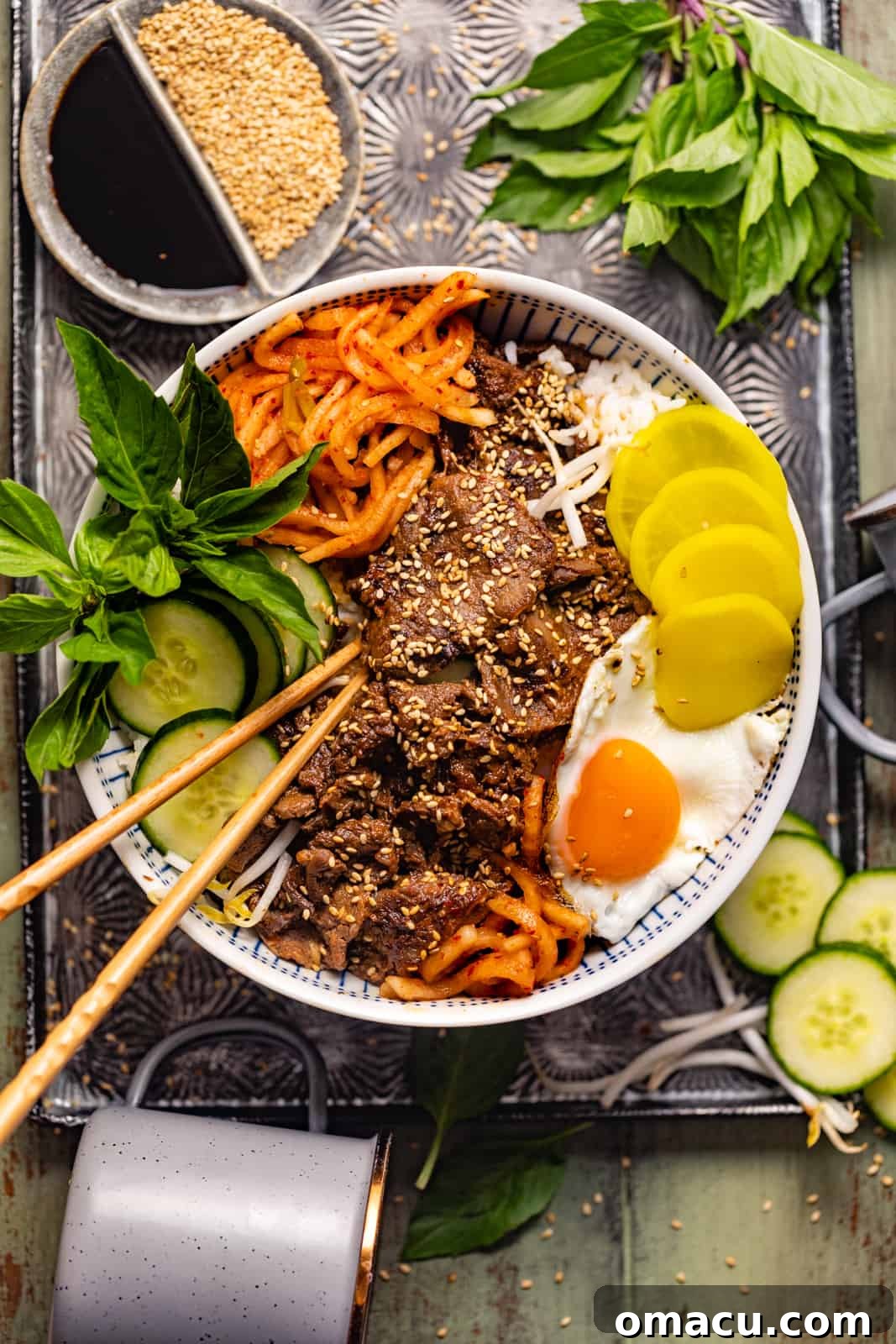
Table of Contents
- What is Bulgogi? The Heart of Korean Fire Meat
- Choosing the Perfect Meat for Bulgogi
- Bulgogi Marinade: The Secret to Unforgettable Flavor
- Smart Ingredient Substitutions
- Expert Tips for the Best Bulgogi Bowls
- Step-by-Step Guide: How to Make Bulgogi
- Bulgogi Bowl Toppings and Serving Suggestions
- Recipe FAQs
- More Delicious Recipes!
- Bulgogi Bowl Recipe Card
My husband has an enduring love for Korean cuisine, and for weeks, he’d been yearning for a visit to our favorite local Korean Barbecue spot. With our schedules as hectic as ever, finding the time proved challenging. So, I took matters into my own hands!
A trip to our local Asian grocery store yielded perfectly sliced beef, and before long, I was crafting these incredibly delicious and easy beef bulgogi bowls. This dish was so good, we enjoyed it for dinner twice this week, and I can honestly say the leftovers tasted even better! The beef itself is wonderfully tender, bursting with flavor – a delightful interplay of savory notes, subtle sweetness, and a satisfying punch of garlic in every single bite. Spoon it over a bed of steaming white rice, and you’ve got a meal that’s hard to beat. All you need is a reliable large skillet!
The next time you’re craving the authentic flavors of Korean banchan but prefer the comfort of your home, give this Korean bulgogi recipe a try. While I won’t claim it’s better than a restaurant, it certainly delivers an incredibly satisfying and authentic taste experience! This Korean-inspired meal is so profoundly good, you’ll find yourself adding it to your regular dinner rotation.
What is Bulgogi? The Heart of Korean Fire Meat
Bulgogi, a cornerstone of Korean culinary tradition, literally translates to “fire meat” – a nod to its traditional preparation over an open flame or in a hot pan. At its core, bulgogi consists of thinly sliced beef, typically premium cuts like sirloin or ribeye, though it can also be prepared with chicken or pork. The magic of bulgogi lies in its rich, complex marinade, which tenderizes the meat while infusing it with layers of sweet, savory, and sometimes spicy flavor. This marinated meat is then quickly pan-fried or grilled to perfection, resulting in juicy, caramelized strips that are irresistible. It’s a dish celebrated for its depth of flavor and tender texture, making it a beloved staple in Korean households and restaurants worldwide.
Choosing the Perfect Meat for Bulgogi
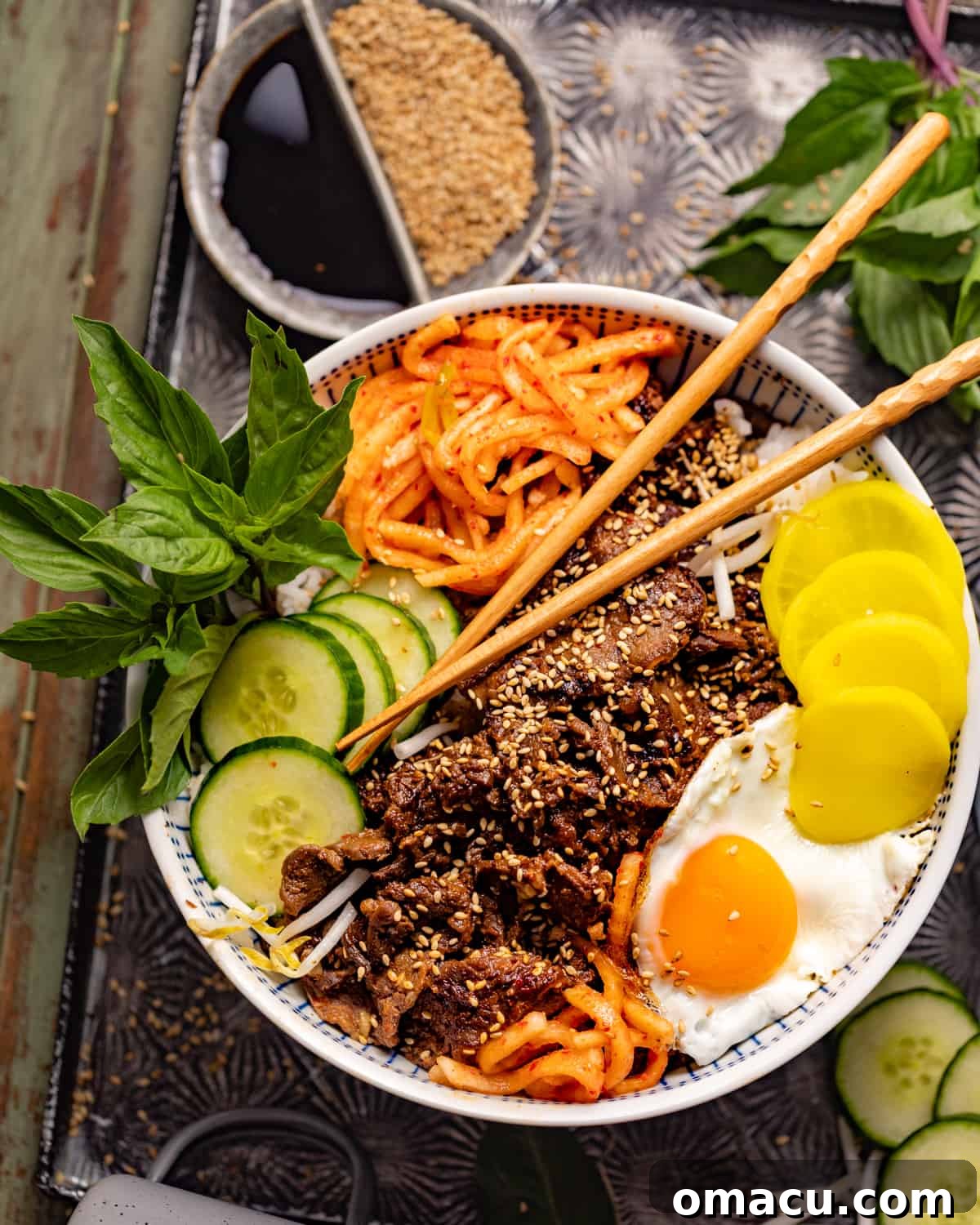
The success of a truly great bulgogi bowl starts with the right cut of meat. I often find pre-cut bulgogi meat at our local Asian market, which is incredibly convenient. These thin slices of beef, usually ribeye or sirloin, are ideal because their delicate thickness allows them to absorb the marinade deeply and cook quickly.
If pre-sliced bulgogi isn’t available, don’t fret! You can easily prepare your own using 1 ½ pounds of ribeye or sirloin steak. The key to achieving those signature thin slices is to partially freeze the meat. Simply wrap the steak tightly in plastic wrap and place it in the freezer for about an hour. This semi-frozen state makes the meat firm enough to slice thinly and evenly with a sharp knife, without it becoming too hard to cut. Once sliced, allow the meat to come to room temperature for about 30 minutes before cooking. This ensures even searing and tender results in the pan.
Bulgogi Marinade: The Secret to Unforgettable Flavor
The bulgogi marinade is truly the star of this dish, transforming simple beef into an explosion of Korean flavors. It’s a harmonious blend of sweet, savory, and aromatic ingredients, each playing a crucial role:
- Liquids: A foundation of rich soy sauce for umami depth, sweet mirin for a subtle tang, refreshing apple juice to enhance sweetness and aid tenderization, and nutty sesame oil for an authentic Korean aroma.
- Aromatics: Freshly minced garlic and grated ginger provide a pungent, warming backbone that is essential to Korean cuisine.
- Natural Tenderizers: The unique inclusion of grated Asian pear and finely chopped onion isn’t just for flavor. The natural enzymes and acids in these ingredients work wonders, gently breaking down the meat fibers to create that famously tender bulgogi texture, while also imparting a delicate sweetness.
- Sweetness & Spice: A touch of rich brown sugar deepens the sweet notes, perfectly balancing the savory elements. For that signature Korean kick, gochujang – a vibrant Korean red pepper paste – adds a fantastic blend of spice, savory depth, and a hint of sweetness. I typically opt for a mild version, but feel free to adjust to your preferred spice level!
Smart Ingredient Substitutions
This bulgogi recipe is wonderfully versatile, allowing for several smart substitutions without sacrificing flavor or enjoyment. Whether you have dietary preferences or are working with what’s on hand, here are some great alternatives:
- Meat Alternatives: If traditional bulgogi beef isn’t available, or you prefer a different protein, you have options! Lean ground beef, ground turkey, or even ground chicken can be excellent substitutes. For a delicious vegan alternative, plant-based ground meat works surprisingly well, absorbing the marinade’s flavors beautifully. Other fantastic beef cuts to consider are thinly sliced flank steak or sirloin steak, which mimic the texture of traditional bulgogi meat.
- Carb-Conscious Options: Watching your carbohydrate intake? Swap out white rice for cauliflower rice. I’ve tried this several times, and with the rich flavors of the bulgogi, you’ll barely notice the difference. It’s a fantastic way to enjoy this meal guilt-free.
- Gochujang Alternatives: If gochujang is hard to find, you can try a blend of chili paste (like sriracha or sambal oelek) mixed with a touch of brown sugar and soy sauce for a similar sweet-spicy profile, though the authentic flavor of gochujang is unique.
- Mirin Substitutions: A dry sherry or a white wine with a pinch of sugar can stand in for mirin in a pinch, though mirin offers a distinct subtle sweetness and umami that is hard to fully replicate.
Expert Tips for the Best Bulgogi Bowls
Achieving restaurant-quality bulgogi at home is easier than you think with these expert tips:
- Marination is Key: While 30 minutes of marinating will yield a tasty dish, for truly exceptional flavor and tender meat, aim to marinate the beef overnight in the refrigerator. This extended time allows the flavors to deeply penetrate the meat and the tenderizing agents to work their magic.
- Perfect for Meal Prep: This recipe is a dream for meal prep! Cook a larger batch of bulgogi at the beginning of the week, and you’ll have flavorful beef ready to assemble into quick and easy rice bowls throughout busy weeknights. Simply reheat the beef and serve with fresh toppings.
- Adjust the Spice Level: I typically use mild gochujang to keep the heat approachable for everyone. However, if you’re a fan of spicy food, opt for the hot version of gochujang. To truly dial up the heat, don’t hesitate to add a sprinkle of additional red pepper flakes during cooking or as a garnish.
- Don’t Overcrowd the Pan: When searing the beef, always cook it in small batches. Overcrowding the pan will lower the temperature, causing the meat to steam instead of sear, resulting in less browning and a tougher texture. Give each piece space to develop that beautiful caramelized crust.
- Invest in Good Cookware: A high-quality skillet with a reliable nonstick coating, like Calphalon’s Premier Nonstick Cookware, makes a significant difference. Durable pans with excellent heat conductivity ensure your bulgogi meat gets the perfect, even sear every time.
- Rest the Meat: After cooking, let the bulgogi rest for a few minutes before serving. This allows the juices to redistribute, ensuring the meat remains as tender and succulent as possible.
Step-by-Step Guide: How to Make Bulgogi
Creating these delicious bulgogi bowls is a straightforward process, even for beginner cooks. Follow these steps for a perfect Korean feast:
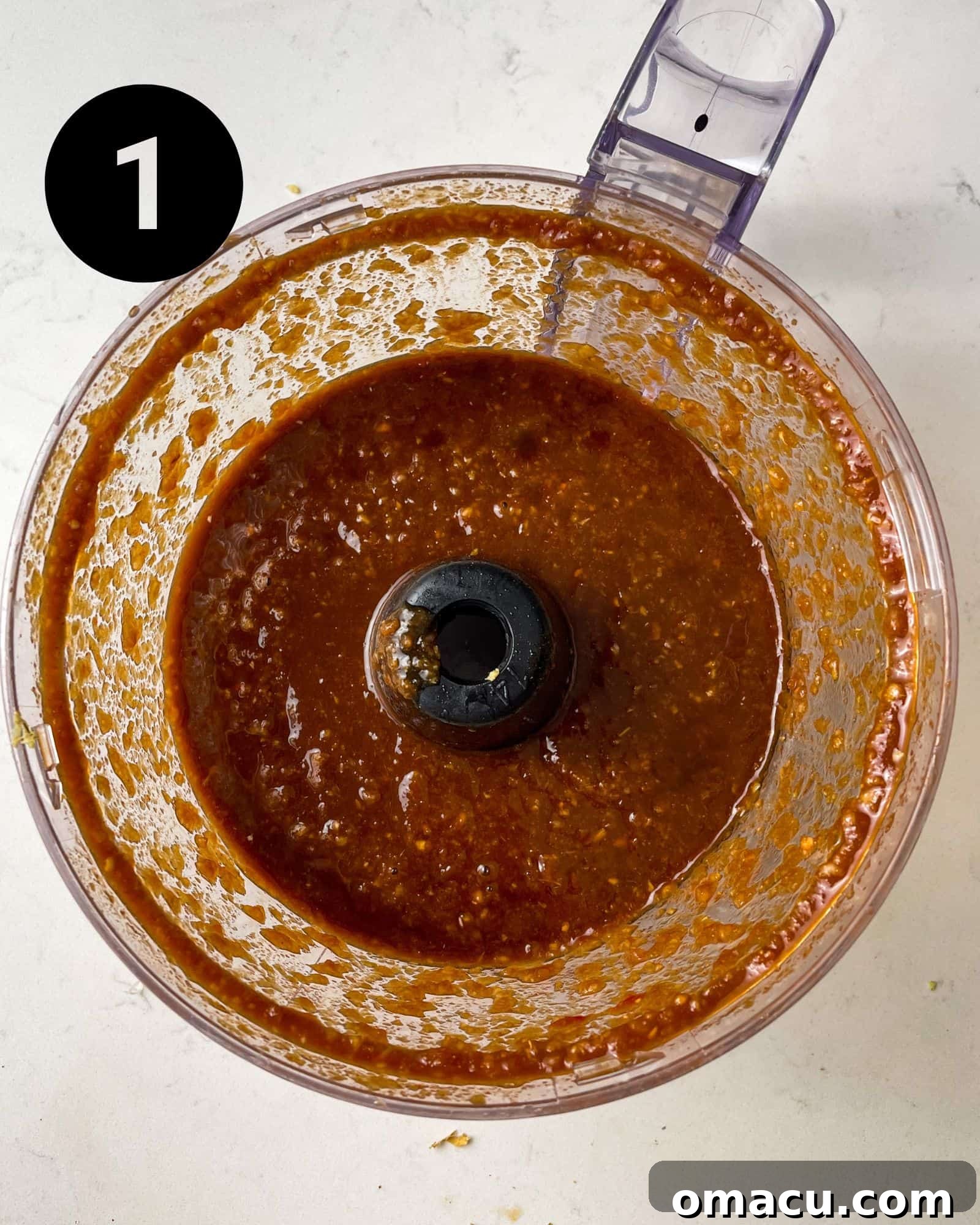
- Prepare the Marinade: Begin by combining all your marinade ingredients in a food processor or blender. This includes soy sauce, brown sugar, mirin, sweet onion, fresh ginger, an Asian pear (peeled and cored), garlic cloves, gochujang, and apple juice. Blend until the mixture is completely smooth and well-combined.
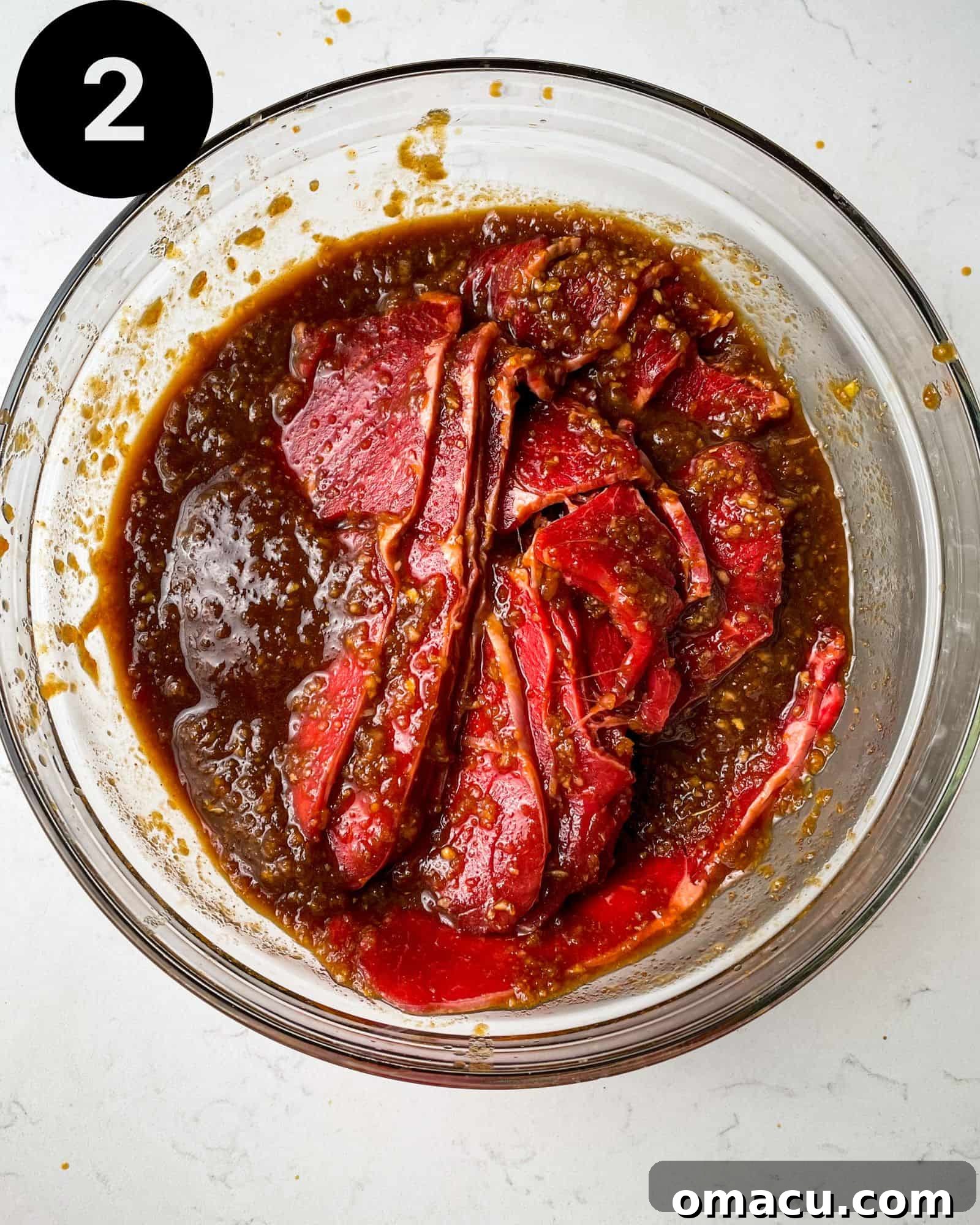
- Marinate the Beef: Place the thinly sliced bulgogi beef in a medium-sized bowl. Pour the prepared marinade over the beef, then add two tablespoons of sesame oil. Use your hands (or tongs) to gently mix everything together, ensuring every single piece of beef is thoroughly coated in the rich marinade. Cover the bowl tightly with plastic wrap and refrigerate. While a minimum of 30 minutes is sufficient, for the most tender and flavorful results, marinating overnight is highly recommended.
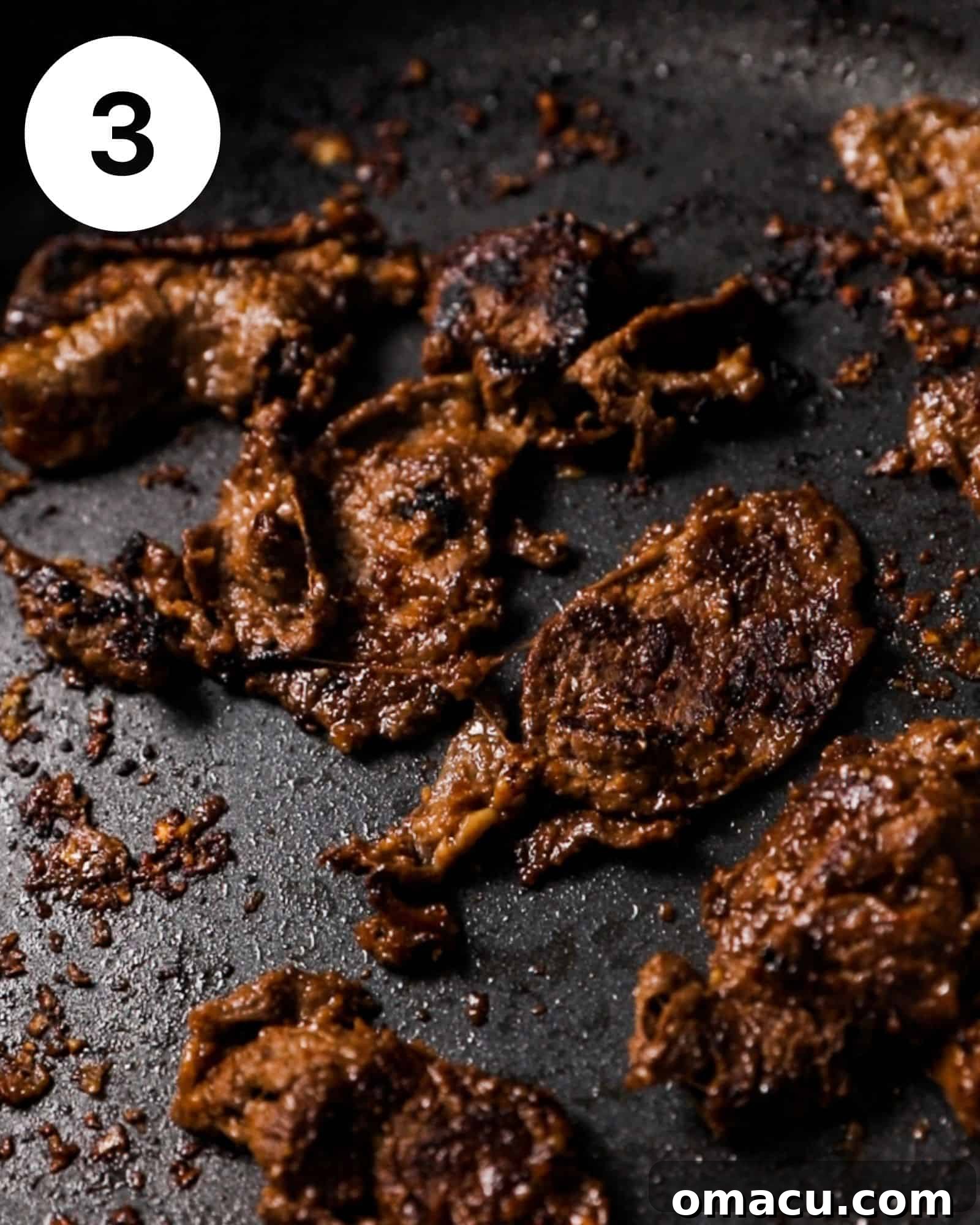
- Cook the Beef: Heat a large pan or skillet over medium-high heat. Once hot, carefully place a single layer of marinated beef pieces into the pan. It’s crucial not to overcrowd the pan, as this will prevent proper searing. Cook the beef for approximately 2-3 minutes per side, until you observe a beautiful browning and slight caramelization (totaling about 5-7 minutes). Since the strips are thin, they cook very quickly. Remove cooked beef and set aside, continuing in batches until all meat is cooked.
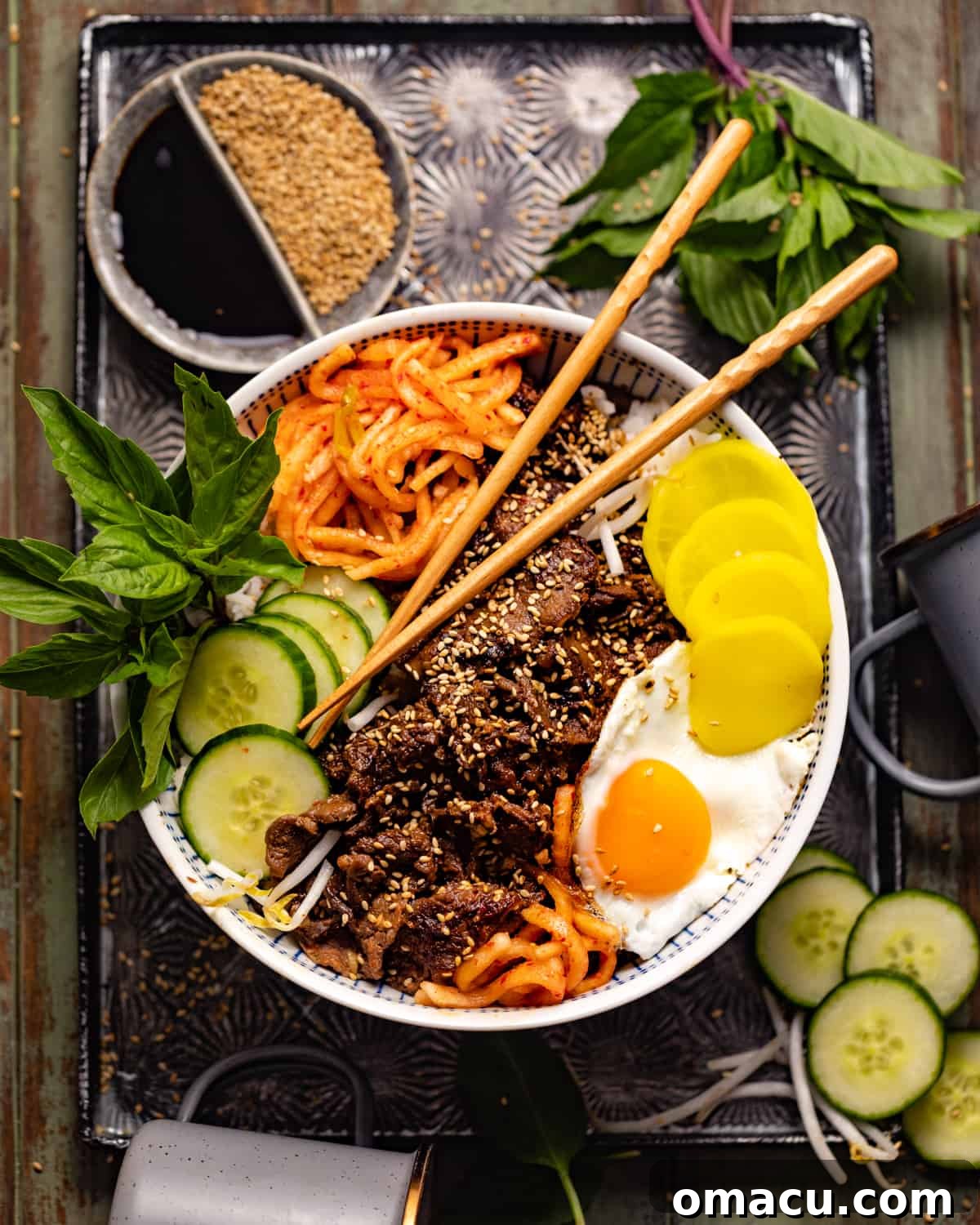
- Assemble Your Bowls: Once the beef is cooked, it’s time to assemble your delicious bulgogi bowls! Place the tender beef on top of a generous bed of fluffy white rice. Then, get creative with your favorite fresh ingredients and garnishes. We love adding crisp fresh cucumbers, tangy kimchi, vibrant sliced carrots, and a perfectly fried egg for a truly complete and satisfying meal!
Note: If you opt for the ground beef version or any ground meat of choice, you can skip the marinating step entirely. Simply pan-fry the meat until it’s cooked all the way through, breaking it up as it cooks. One pound of ground meat is typically sufficient for this variation.
Bulgogi Bowl Toppings and Serving Suggestions
The beauty of bulgogi bowls lies in their versatility when it comes to toppings! While traditional Beef Bulgogi is often served simply with rice and kimchi, you can customize your bowl with an array of fresh, vibrant ingredients to suit your taste. The options are truly limitless, allowing you to create a complete, balanced, and visually appealing meal. Here are some yummy ideas to elevate your Korean Beef Bulgogi Bowls:
- Leafy Greens: Add a healthy crunch with fresh leafy greens like crisp lettuce leaves, tender bok choy, or spinach.
- Shredded or Pickled Cabbage: Colorful shredded purple cabbage, either fresh or lightly pickled, adds a tangy contrast and beautiful color.
- Protein Boost: A perfectly fried egg with a runny yolk adds richness and an extra layer of protein. You can also opt for a soft-boiled egg.
- Fresh Vegetables: Thinly sliced carrots and crisp cucumbers are classic choices, offering a refreshing counterpoint to the rich beef. Consider adding bean sprouts or radish for extra crunch.
- Fermented Goodness: Spicy kimchi is non-negotiable for an authentic Korean experience, providing a fermented tang and heat that cuts through the richness of the beef.
- Quick Pickles: Pickled radishes or daikon add a delightful acidity and snap.
- Aromatics & Garnish: A sprinkle of fresh green onions and toasted sesame seeds enhances both flavor and presentation.
- Spicy Drizzle: For an extra kick, a drizzle of sriracha or a light sesame-chili oil can be added.
Recipe FAQs
Bulgogi is traditionally made with thinly sliced ribeye or sirloin steak, known for their tenderness and ability to absorb marinade. However, you can also use other cuts like flank steak, or even ground beef, chicken, or pork as delicious alternatives.
Bulgogi offers a rich and complex flavor profile that is primarily savory with a delightful sweetness. Depending on the marinade ingredients, it can also have a noticeable garlic and ginger zing, and a mild to medium spiciness from gochujang or red pepper flakes. The overall experience is deeply umami and incredibly satisfying.
“Bulgogi style” refers to the specific preparation method where meat is thinly sliced, marinated in a sweet and savory sauce, and then typically pan-seared or grilled until cooked through and slightly caramelized. This method ensures tender meat infused with a distinctive Korean flavor.
Absolutely! Bulgogi is fantastic for meal prep. You can marinate the beef for up to 24 hours in advance for optimal flavor. The cooked bulgogi also stores well in the refrigerator for 3-4 days, making it perfect for quick lunches or dinners throughout the week.
More Delicious Recipes!
Discover More Culinary Delights
Vegetarian
Sweet Potato Curry with Chickpeas
Main Course
Honey Soy Garlic Pork Chops
Main Course
Spicy Peanut Noodles with Sesame Meatballs
Breakfast
Blueberry Coffee Cake
Want more delicious and beautiful recipes delivered straight to your inbox? Subscribe to my newsletter to receive the latest seasonal creations as soon as they’re released!
If you try this incredible Bulgogi Bowl recipe, please consider leaving a star rating on the recipe card below and sharing your thoughts in the comments! You can also tag @BritneyBreaksBread on Instagram and use the hashtag #britneybreaksbread so I can celebrate your beautiful culinary creations!
Bulgogi Bowl Recipe
Britney
Print Recipe
Equipment
- Large Skillet
- Food Processor
- Mixing Bowls
Ingredients
- 1.5 lbs Bulgogi (thinly sliced Rib-Eye or Sirloin Steak)
- 1/3 cup Soy Sauce
- 2 tbsps Brown Sugar
- 3 tbsps Mirin
- 1/2 Sweet Onion (chopped)
- 2 tsp Ginger (grated)
- 1 Asian Pear (peeled, cored, and chopped)
- 4 cloves Garlic (minced)
- 2 tbsps Gochujang (mild, or to taste)
- 2 tbsps Apple Juice
- 2 tbsps Sesame Oil
For the Bowls
- Rice (cooked white rice or cauliflower rice)
- Kimchi
- Sliced Cucumbers
- Fried Egg
- Pickled Radishes
- Sliced Carrots
- Green Onions (for garnish)
- Sesame Seeds (for garnish)
Instructions
- 1. Make the Marinade: Combine soy sauce, brown sugar, mirin, chopped onion, grated ginger, chopped Asian pear, minced garlic, gochujang, and apple juice in a food processor or blender. Process until the mixture is completely smooth.
- 2. Marinate the Beef: Place the thinly sliced bulgogi beef in a large mixing bowl. Pour the blended marinade over the beef, then add the sesame oil. Mix thoroughly, ensuring every piece of beef is well-coated. Cover the bowl with plastic wrap and refrigerate for at least 30 minutes, or ideally, overnight for optimal flavor and tenderness.
- 3. Cook the Beef: Heat a large pan or skillet over medium-high heat. Add a single layer of marinated beef to the hot pan, being careful not to overcrowd it (cook in batches if necessary). Cook for 2-3 minutes per side, until the beef is browned and caramelized. Remove cooked beef and set aside; repeat with remaining beef.
- 4. Assemble Bowls: Serve the hot bulgogi beef over a bed of fluffy rice. Garnish generously with your favorite fresh toppings such as sliced cucumbers, kimchi, sliced carrots, and a fried egg. Sprinkle with chopped green onions and sesame seeds for extra flavor and presentation.
Notes
- Meat Preparation: If you’re slicing your own steak (ribeye or sirloin), wrap it in plastic wrap and freeze for about an hour. This makes it much easier to slice thinly. Allow the sliced meat to come to room temperature for 30 minutes before cooking.
- Ground Meat Variation: If using ground beef, ground turkey, or plant-based ground meat, you do not need to marinate. Simply pan-fry the meat until cooked through and then mix in the sauce ingredients.
- Spice Adjustment: Adjust the amount of gochujang to your preferred spice level. For extra heat, add a pinch of red pepper flakes.
- Meal Prep Friendly: This recipe is excellent for meal prepping. Cook the bulgogi ahead of time and store it in an airtight container in the refrigerator for up to 3-4 days. Reheat gently and assemble fresh bowls as needed.
Nutrition
Nutrition information is automatically calculated and should only be used as an approximation.
Mention @BritneyBreaksBread or tag #BritneyBreaksBread!