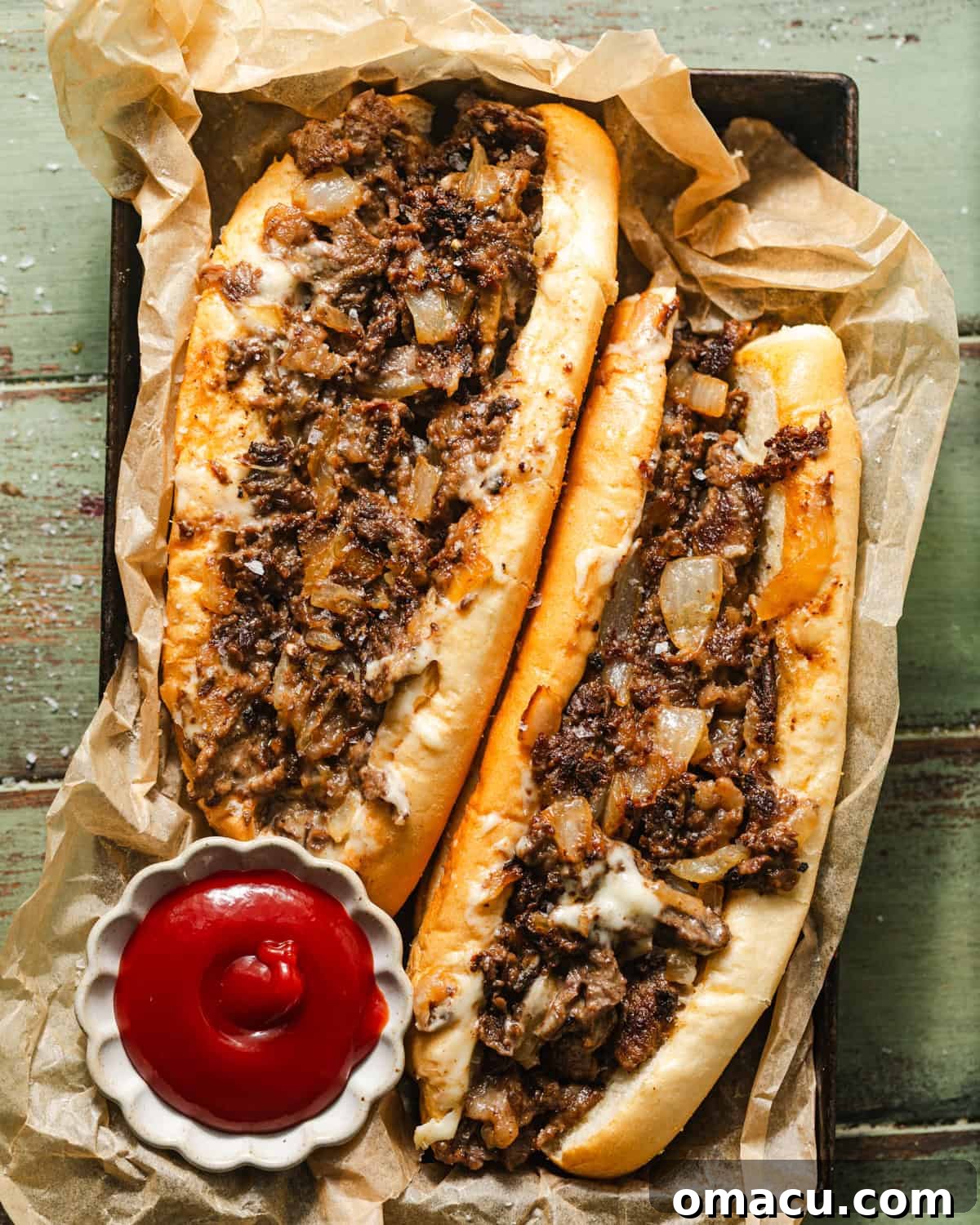
Welcome to the ultimate guide for creating a truly authentic Philly cheesesteak right in your own kitchen! Forget everything you thought you knew about this iconic sandwich, because this recipe delivers the real-deal Philadelphia experience. We’re talking about succulent, thinly sliced ribeye steak, expertly seared and mingled with sweet caramelized onions, then smothered in gloriously gooey, melted cheese. All of this perfection is piled generously onto a soft yet sturdy Amoroso hoagie roll, creating a symphony of flavors and textures that is simple, incredibly delicious, and precisely how it’s crafted in Philly.
If you’re a fan of incredible steak sandwiches, be sure to also check out my Chicken Philly Cheesesteak and these crowd-pleasing Philly Cheesesteak Sliders!
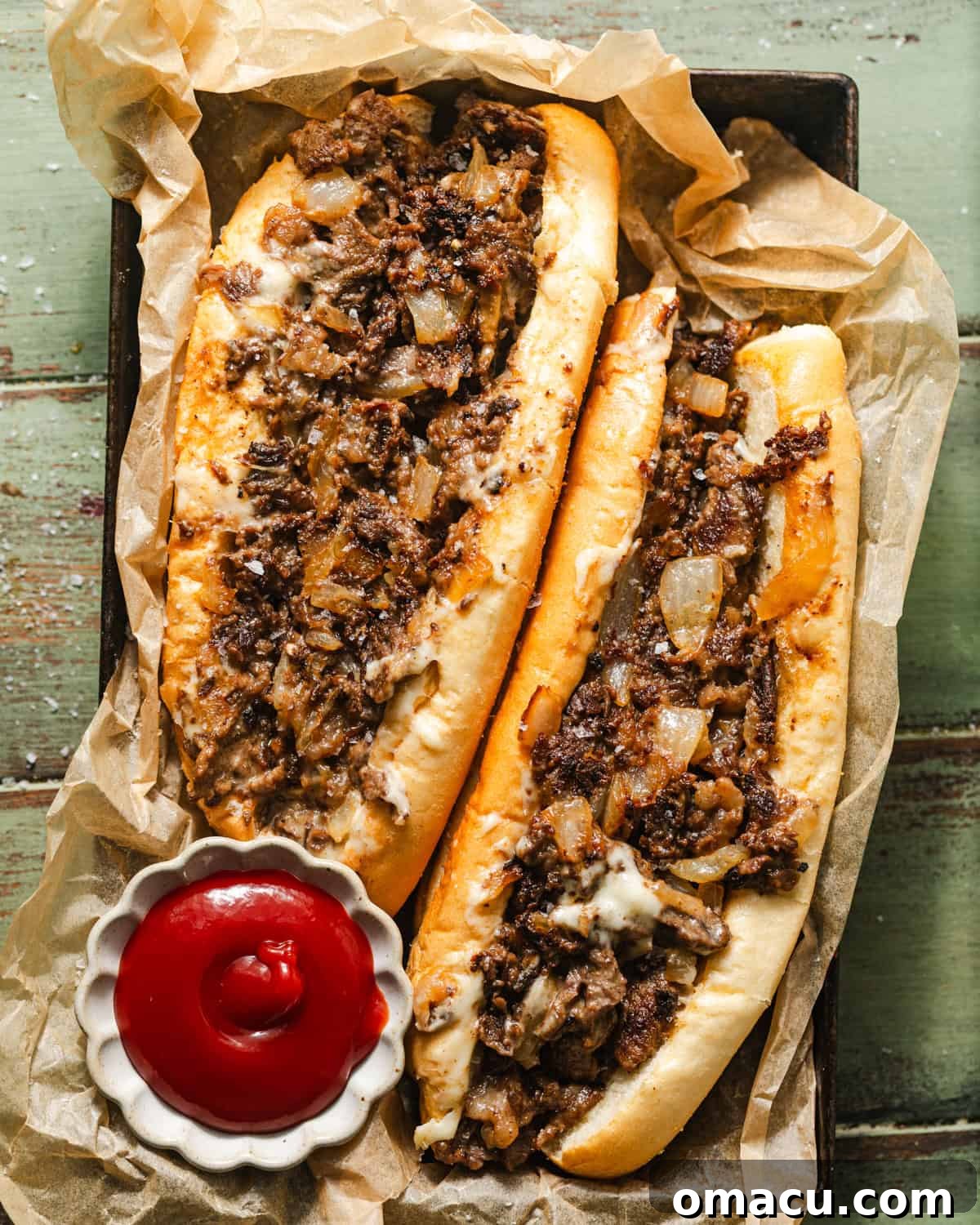
The Unrivaled Authentic Philly Cheesesteak: A Taste of My Hometown
As a proud native of Philadelphia, I’ve had the distinct pleasure of growing up surrounded by the very best cheesesteak establishments. For years, I’ve honed this recipe, dedicating countless hours to perfecting every nuance to bring you what I confidently consider the best Philly cheesesteak recipe you will ever make at home. After five years of sharing recipes, I am finally unveiling the secrets to truly capture the essence of this beloved sandwich.
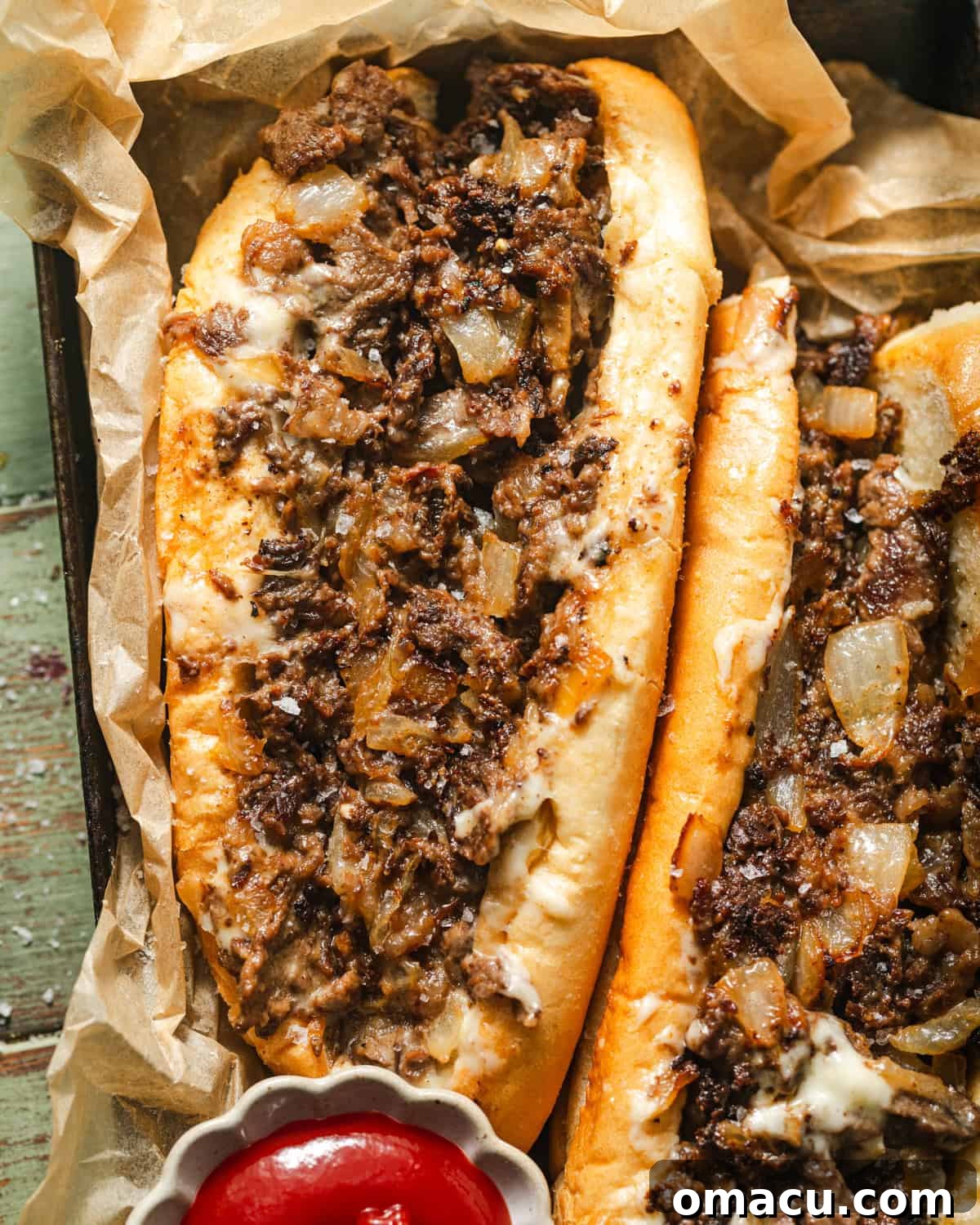
When I declare this cheesesteak recipe the real deal, I say it with the conviction of someone who knows the true taste of Philly. This isn’t just a sandwich; it’s a culinary experience. Imagine ultra-thin slices of premium ribeye, hitting a sizzling-hot flat-top griddle until each piece is perfectly seared, tender, and bursting with beefy juices. Then, envision that steak being generously enveloped in a blanket of lusciously melted cheese, creating a rich, savory embrace that permeates every single bite.
This isn’t merely an imitation; this is the genuine article, crafted with the respect and expertise demanded by Philadelphia’s culinary heritage. I wouldn’t stake my reputation on anything less than a truly legit cheesesteak. The result is a sandwich with the perfect balance of flavor and texture, so authentic it will transport your kitchen directly to the bustling streets of South Philly, straight into one of the city’s most revered steak shops. Trust me, with just one bite, you’ll instantly understand why this homemade Philly cheesesteak recipe earns such enthusiastic praise and why everyone raves about this culinary masterpiece!
Table of Contents
- Why This Philly Cheesesteak Recipe Stands Out
- Essential Ingredients for a Classic Philly Cheesesteak
- Substitutions and Flavor Variations
- Step-by-Step Guide: How To Make an Authentic Philly Cheesesteak
- Expert Chef Tips for Philly Cheesesteak Perfection
- Serving Suggestions and Storage Tips
- Philly Cheesesteak Recipe FAQs
- More Mouthwatering Sandwich Recipes
Why This Philly Cheesesteak Recipe Stands Out
There are countless cheesesteak recipes out there, but mine is built on a foundation of authenticity, simplicity, and foolproof execution. Here’s why this recipe will become your go-to for the ultimate homemade Philly cheesesteak:
- Authenticity Guaranteed: A True Taste of Philly! As someone who grew up in Philadelphia, I’ve had countless cheesesteaks, from legendary shops to hidden gems. This recipe isn’t just inspired by Philly; it IS Philly. You’ll experience the perfect trifecta of thinly sliced, perfectly cooked steak, exquisitely caramelized onions, and intensely melty cheese that forms that signature, irresistible texture. From your first bite, you’ll be convinced you’ve been transported to a bustling steak shop in the heart of the city.
- Effortless Excellence with Simple Ingredients: You might be surprised to learn that a genuinely spectacular cheesesteak doesn’t require a long list of exotic ingredients. In fact, its brilliance lies in the quality of a few core components and, more importantly, the technique. This recipe uses fewer than ten ingredients, proving that simple doesn’t mean less flavorful. With my easy-to-follow, foolproof instructions, you’ll achieve perfect results every time, regardless of your cooking experience. It’s far easier than you might imagine and bursting with flavor!
- Step-by-Step Instructions for Culinary Success: My detailed, clear instructions guide you through each stage of the cooking process, ensuring that your homemade Philly cheesesteak turns out absolutely PERFECTLY every single time. From preparing the ribeye to expertly melding the cheese and assembling the sandwich, no step is left to chance. You’ll gain the confidence to create this iconic dish with ease and consistency.
Essential Ingredients for a Classic Philly Cheesesteak Recipe
Creating an iconic Philly cheesesteak hinges on selecting the right ingredients. While the list is short, each component plays a crucial role in achieving that legendary flavor and texture. Here’s what you’ll need to assemble this culinary masterpiece:
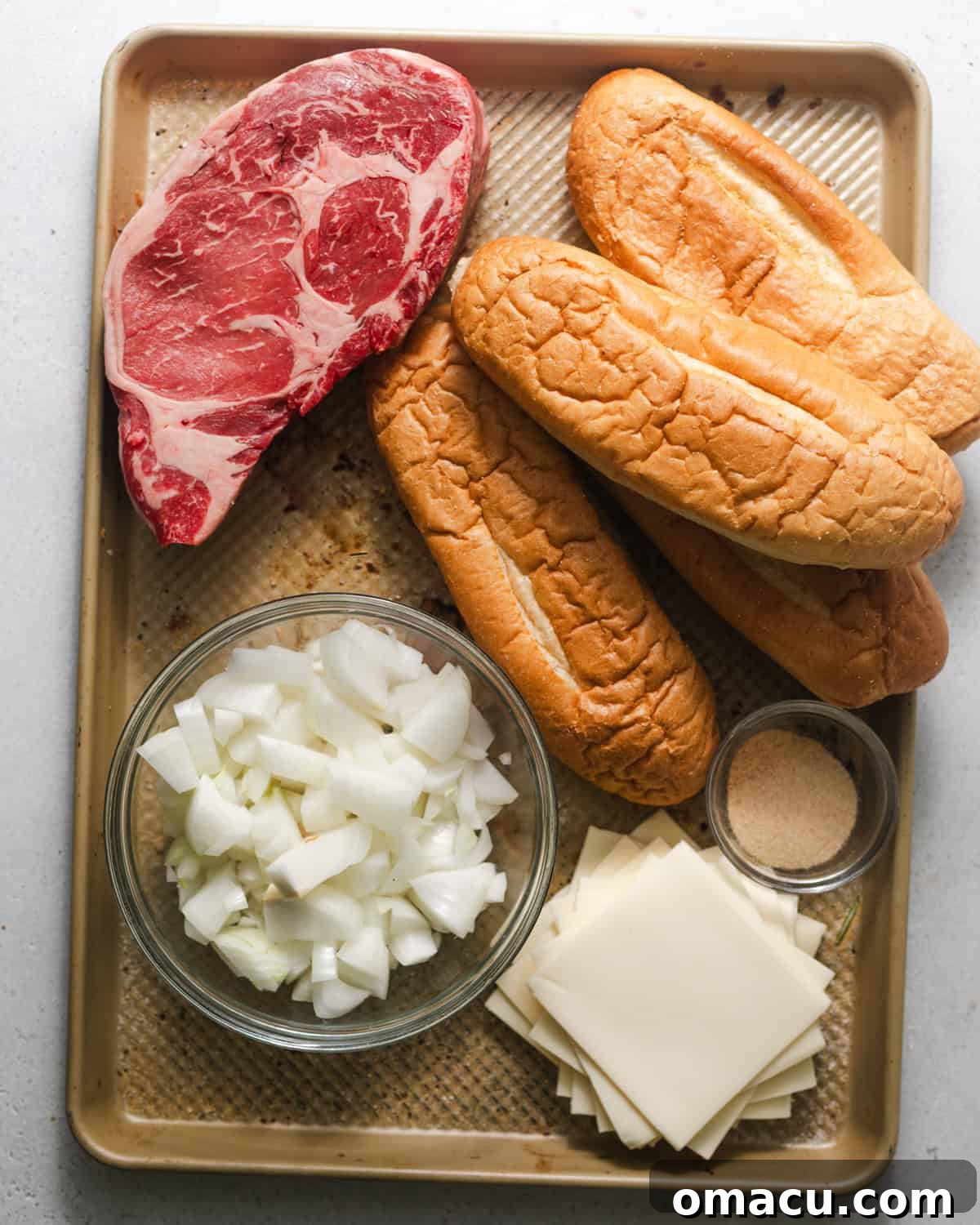
(A full, printable list of ingredients and detailed instructions can be found in the recipe card at the bottom of this post.)
- Ribeye Steak: The Undisputed King of Cheesesteak Meat. For the best and most authentic cheesesteak experience, ribeye is the gold standard. Look for a well-marbled cut, preferably prime rib eye steak, as the fat content contributes immensely to the steak’s tenderness and rich flavor. Philly cheesesteaks are known for their minimal seasoning, allowing the high-quality beefy flavors to truly shine. Opting for a superior piece of ribeye ensures that robust, savory foundation.
- Simple Seasonings, Maximum Impact: We keep the seasoning light and straightforward to prevent overpowering the natural taste of the steak and onions. A classic blend of kosher salt, freshly ground black pepper, a touch of onion powder, and garlic powder is all you need. These foundational spices enhance the meat’s savory profile without complicating the flavor.
- Yellow Onions: The Sweet Counterpoint. Finely chopped yellow onions are essential. As they cook, they caramelize beautifully, releasing a subtle sweetness that perfectly balances the richness of the steak and cheese. I personally love a generous amount of onions in my cheesesteaks; they add a wonderful textural contrast and an indispensable layer of flavor.
- The Cheese Debate: American or Provolone. For a REAL Philly cheesesteak sandwich, the classic choices are undeniably white American cheese or mild provolone cheese. Both melt into a creamy, gooey embrace that perfectly integrates with the steak, binding all the elements together. While some might opt for mozzarella, it’s not traditional for me, though it would still yield a tasty sandwich. But one thing is for certain: No Cheez Whiz. Ever. (Unless you’re going to Pats or Geno’s for a tourist experience, which no true Philadelphian would do for a quality cheesesteak!).
- The Sacred Roll: Amoroso. The Amoroso roll is non-negotiable for an authentic Philly cheesesteak. These specific hoagie rolls boast a wonderfully soft interior with a slight, satisfying chew, making them sturdy enough to cradle all that juicy, cheesy filling without falling apart. Don’t underestimate the importance of the bread; it’s the vessel that carries the entire experience.
- Neutral Oil with a High Smoke Point: To achieve that perfect sear on the steak and onions, you’ll need a neutral-flavored oil that can withstand high temperatures. Options like *vegetable oil or canola oil* are ideal as they allow us to turn up the heat without worrying about burning the oil and imparting off-flavors. While you could use a standard olive oil in a pinch, steer clear of extra virgin olive oil, which has a lower smoke point and a more pronounced flavor that would interfere with the cheesesteak’s profile.
Substitutions and Flavor Variations
While sticking to the classic ingredients ensures an authentic Philly cheesesteak, sometimes you need to adapt or personalize your sandwich. Here are some suggestions for substitutions and delicious variations to suit your taste:
- Meat Alternatives: If ribeye isn’t available or preferred, you have a few options. Picanha, top sirloin steak, or flank steak can be used as alternatives. However, exercise caution with flank steak, as it can become chewy if not sliced incredibly thin and cooked quickly. For convenience, you might consider pre-sliced steak products like Steak-umm, but I strongly recommend against them if you’re aiming for true quality and flavor. Nothing truly compares to fresh, thinly sliced ribeye.
- Personalized Topping Suggestions: A true Philly cheesesteak is often served “wit” (with onions) or “wit-out” (without onions), but many enjoy adding extra toppings. While my husband finds my love for ketchup on my steak sandwiches eccentric, you can certainly customize yours. Popular additions include thinly sliced green bell pepper (often cooked with the onions), a dash of hot sauce for a kick, tangy banana peppers, or a splash of Worcestershire sauce for added umami. Feel free to experiment and make it exactly how you like them!
- The Cheez Whiz Conundrum: I’ve stated my stance: no Cheez Whiz for an authentic cheesesteak. However, if you *must* have it, you *can* use Cheez Whiz. It’s worth noting that you’ll primarily find this option at tourist hotspots like Pat’s and Geno’s, not in the beloved neighborhood hoagie shops where real Philadelphians go. No shade to the tourists! But for a truly authentic, local experience, stick to American or Provolone. Since these are homemade, you have the freedom to customize your Philly cheesesteak to your heart’s content, so enjoy it however you prefer!
Step-by-Step Guide: How To Make an Authentic Philly Cheesesteak
Follow these detailed steps to create a show-stopping, authentic Philly cheesesteak that will impress everyone fortunate enough to try it:
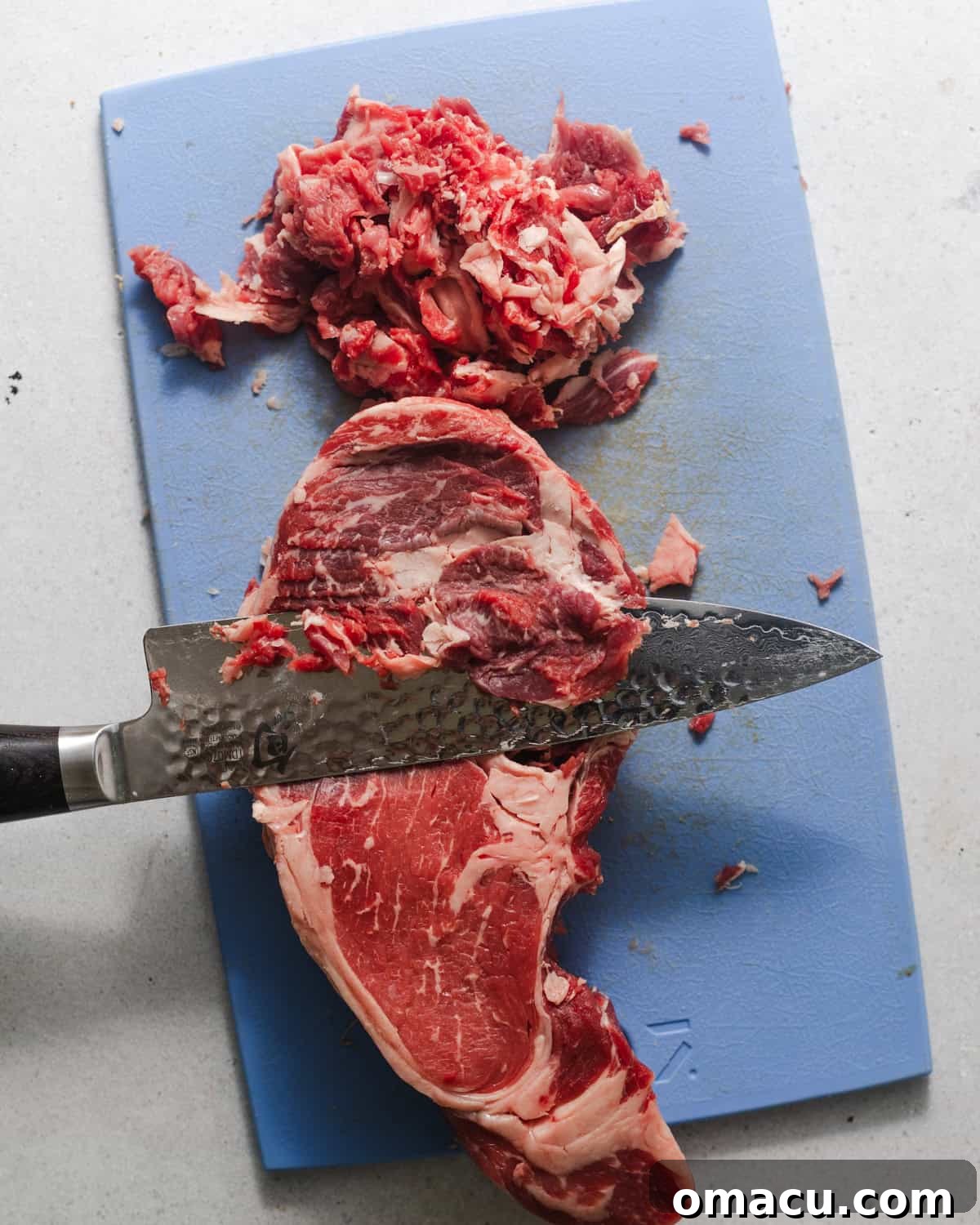
Preparation Is Key: If you’re starting with a whole ribeye steak, place it into the freezer for approximately 40 minutes to an hour. This crucial step firms up the meat, making it significantly easier to slice paper-thin. (If you’re using pre-sliced steak, you can skip this initial freezing and move directly to step 2 for chopping).
Expert Chef Tips for Philly Cheesesteak Perfection
Achieving the perfect Philly cheesesteak isn’t just about ingredients; it’s about technique. Here are my top chef tips to ensure your homemade cheesesteak is nothing short of spectacular:
- Enlist Your Butcher’s Expertise: If you have access to a local butcher, this is your secret weapon. Pick out your favorite cut of ribeye and politely ask them to shave it “nice and thin” for you. They have specialized equipment that can achieve paper-thin slices effortlessly, saving you considerable time and effort in the kitchen. This is a game-changer for authentic texture.
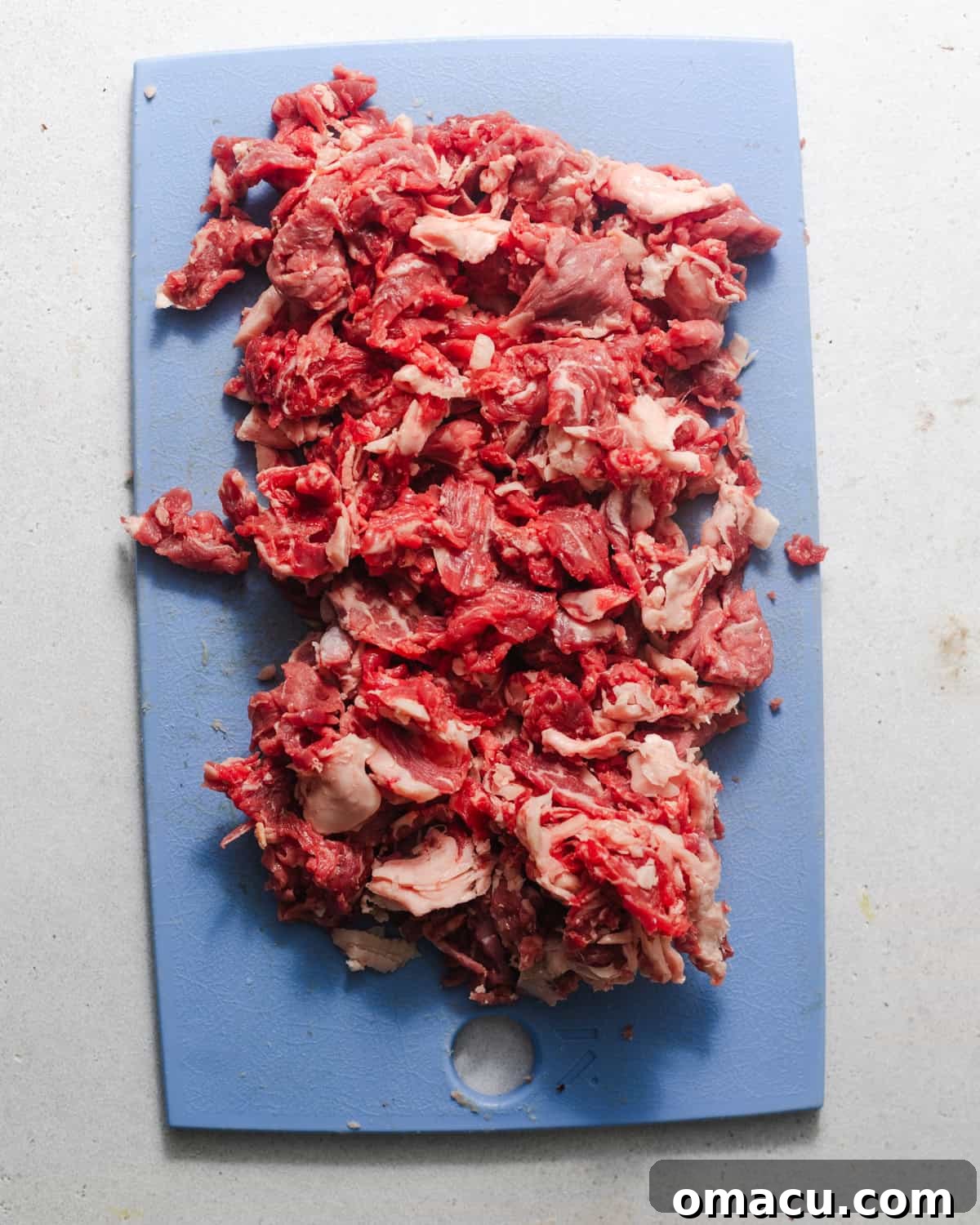
- Slice Your Ribeye Paper-Thin: Regardless of whether you slice it yourself or have a butcher do it, the key is to get that ribeye *paper thin*. Ribeye is naturally juicy and incredibly flavorful, and slicing it ultra-thin ensures it cooks rapidly and remains wonderfully tender, melting in your mouth with every bite. To make home slicing easier and safer, partially freeze the steak for about 30-45 minutes until it’s firm but not rock-hard. This allows for cleaner, more precise cuts.
- Choose the Right Roll: Embrace the Amoroso! The roll is just as crucial as the filling. You absolutely must use an authentic Amoroso roll or a comparable Italian hoagie roll. What you’re looking for is a roll that is soft on the inside with a slight chew, yet sturdy enough to hold all that juicy meat and gooey cheese without becoming soggy or falling apart. Avoid crusty baguettes or flimsy sandwich bread; they simply won’t do justice to your masterpiece.
- Pre-freeze for Precision Slicing: As mentioned, freezing the ribeye steak prior to slicing is non-negotiable for achieving those coveted thin cuts. You want the steak to be firm and cold, but not completely frozen solid. This chill makes the meat easier to handle and allows your knife to glide through it for consistent, wafer-thin pieces.
- Master the Griddle or Cast Iron Pan: For that signature sear and the perfect melding of flavors, cooking your cheesesteak on a flat-top griddle or a large cast iron pan is essential. A flat, hot surface allows the meat, onions, and cheese to cook evenly and blend together harmoniously. Avoid using deep sauté pans; a flat surface is paramount for developing that desirable crust on the meat and achieving the traditional cheesesteak experience.
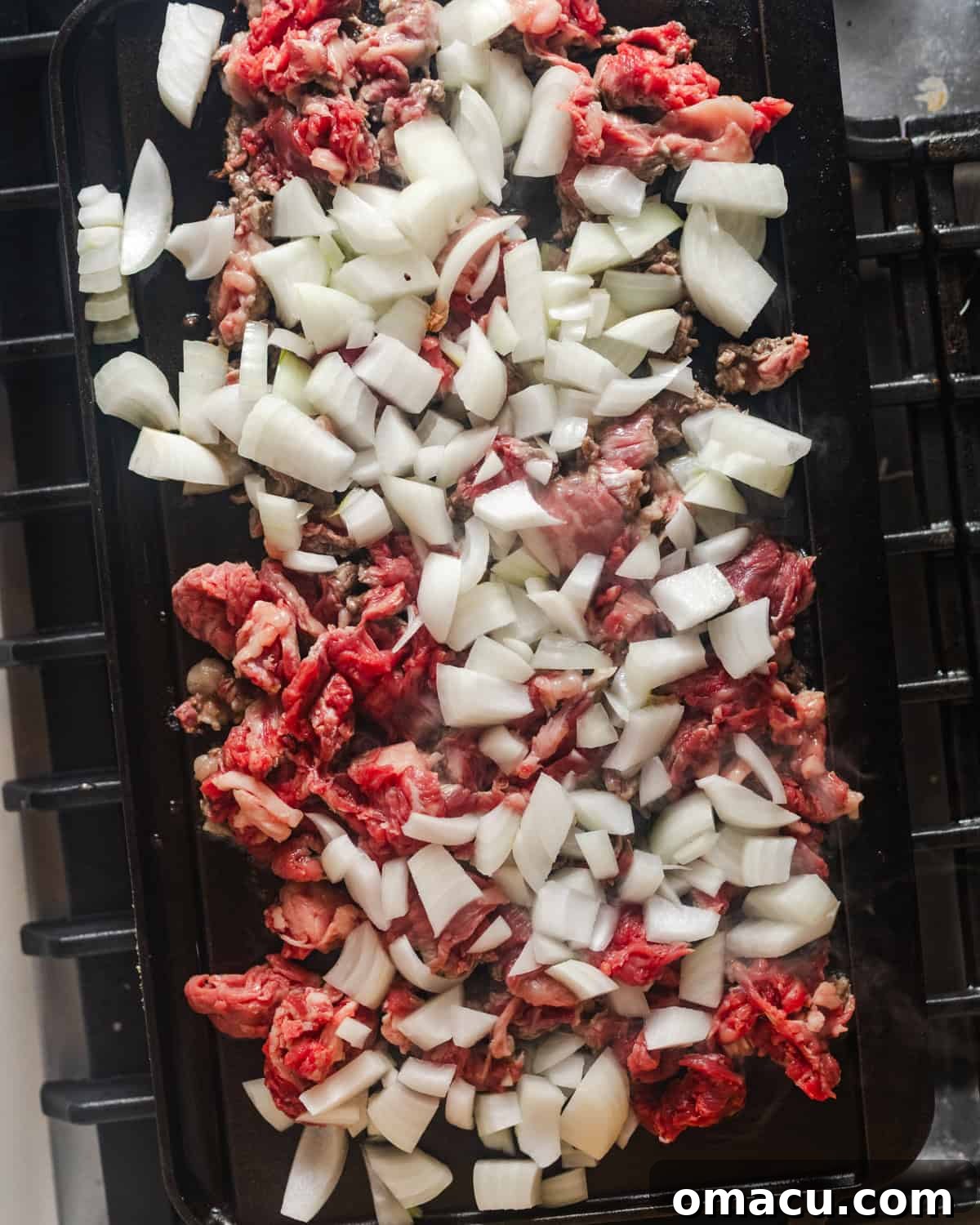
- Don’t Overcrowd the Pan: When cooking the steak and onions, work in batches if necessary. Overcrowding the pan will lower the temperature, steaming the meat instead of searing it, which results in a less flavorful and tougher texture. Give your ingredients room to breathe and brown properly.
Serving Suggestions and Storage Tips
A perfectly crafted Philly cheesesteak is a meal in itself, but the right accompaniments can elevate the experience. Here are some ideas for serving and handling leftovers:
I love to enjoy my Philly cheesesteak with a classic side of crispy french fries or a bag of crunchy potato chips. If you’re serving a larger crowd, I highly recommend pairing your cheesesteaks with comforting homemade potato salad or a refreshing batch of cajun coleslaw. For an extra special treat, consider serving them alongside garlic parmesan french fries and a tall, ice-cold glass of homemade peach sweet tea for a truly satisfying meal.
For any precious leftovers, wrap your assembled cheesesteaks tightly in aluminum foil and place them in the refrigerator. They will maintain their deliciousness for up to 1-2 days. To reheat, you can warm them gently in a toaster oven or a preheated conventional oven until the cheese is gooey again and the meat is hot. Avoid the microwave if possible, as it can make the roll soggy.
Philly Cheesesteak Recipe FAQs
Ribeye is unequivocally the gold standard for an authentic Philly cheesesteak. Its exceptional tenderness, rich marbling, and robust beefy flavor make it the ideal choice, ensuring a juicy and satisfying sandwich that melts in your mouth.
Yes, while ribeye is preferred, you can certainly substitute with other cuts like top round, sirloin, or flank steak. When using these leaner cuts, it’s crucial to slice them very thin and against the grain to maximize tenderness. Though they may not have the same rich fat content as ribeye, they can still deliver a flavorful cheesesteak when seasoned and cooked correctly.
The thinner, the better! Aim for slices that are about 1/4 to an 1/8 inch thick, or even thinner if possible. This ultra-thin cut is essential for achieving that classic cheesesteak texture that cooks quickly and truly melts in your mouth. To make slicing super thin easier, partially freeze the meat for 30–45 minutes beforehand, which firms it up without making it too hard to cut.
A flat-top griddle is ideal for even cooking and achieving that signature sear and integration of ingredients. However, a large cast iron skillet works perfectly fine for home cooking and is often what I use. The key is to make sure your pan is hot enough to get a good, flavorful crust on the meat and onions before adding the cheese.
While you *can* prepare some components in advance, cheesesteaks truly taste best when enjoyed fresh, straight off the griddle. If you need to save time, you can cook the meat and onions ahead of time and gently reheat them. However, always hold off on adding the cheese and assembling the sandwich until just before serving to ensure the bread stays fresh and the cheese is perfectly melted and gooey.
For a genuinely traditional Philly cheesesteak, sliced American cheese (especially white American) or mild provolone cheese are the gold standard. They melt beautifully and provide the creamy, savory profile expected. Some people opt for Cheez Whiz, but it’s generally considered a non-traditional choice by true Philadelphians and is mainly found at tourist-centric spots.
You can certainly make a delicious steak sandwich with ground beef, but it won’t be considered authentic to a “real deal” Philly cheesesteak, which traditionally uses thinly sliced steak. If you choose to use ground beef, make sure to drain off any excess grease after cooking to prevent your hoagie roll from becoming soggy.
More Mouthwatering Sandwich Recipes
Main Course
Ribeye Steak Sandwich with Chimichurri
Main Course
Hot Honey Chicken Sandwich
Main Course
Chicken Parmesan Sandwich Recipe
Main Course
Cajun Steak Sandwich with Peppers and Onions
Want more delicious and beautiful recipes delivered straight to your inbox? Subscribe to my newsletter to receive the latest seasonal creations as soon as they’re released!
If you try this incredible Philly cheesesteak recipe, please consider leaving a star rating on the recipe card below and a comment sharing your experience! You can also tag @BritneyBreaksBread on Instagram and use the hashtag #britneybreaksbread so I can celebrate your beautiful culinary creations!
Philly Cheesesteaks
This homemade Philly cheesesteak recipe is the real-deal! Tender ribeye sliced nice and thin with caramelized onions, and gooey cheese piled onto a soft Amoroso hoagie roll. It’s simple, delicious, and exactly how it’s done in Philly!
Equipment
- Large Cast Iron Skillet or Griddle
- Cutting board
- Sharp Knife
Ingredients
- 1 lb Ribeye
- 2 tsp Onion powder
- 1/2 tsp Garlic Powder
- 1 tsp Kosher Salt
- 1/4 tsp Black Pepper
- 1 large Yellow Onion, (chopped)
- 2 tbsp Vegetable Oil
- 10 slices American Cheese, (or Provolone Cheese)
- 2 tbsp Mayo
- 2 Hoagie Rolls
Instructions
- If using a whole steak, place the steak into the freezer for about 40 minutes to an hour, to firm up. This makes it easier to cut. (If using pre-sliced steak, skip to step 3)
- Use a sharp knife, place the meat on a cutting board and begin to shave the meat on a bias – as thinly as possible.
- After shaved, coarsely chop into bits. If using pre-sliced meat, chop the meat into bits.
- Cut the rolls in half and spread mayo on the inside of the hoagie rolls.
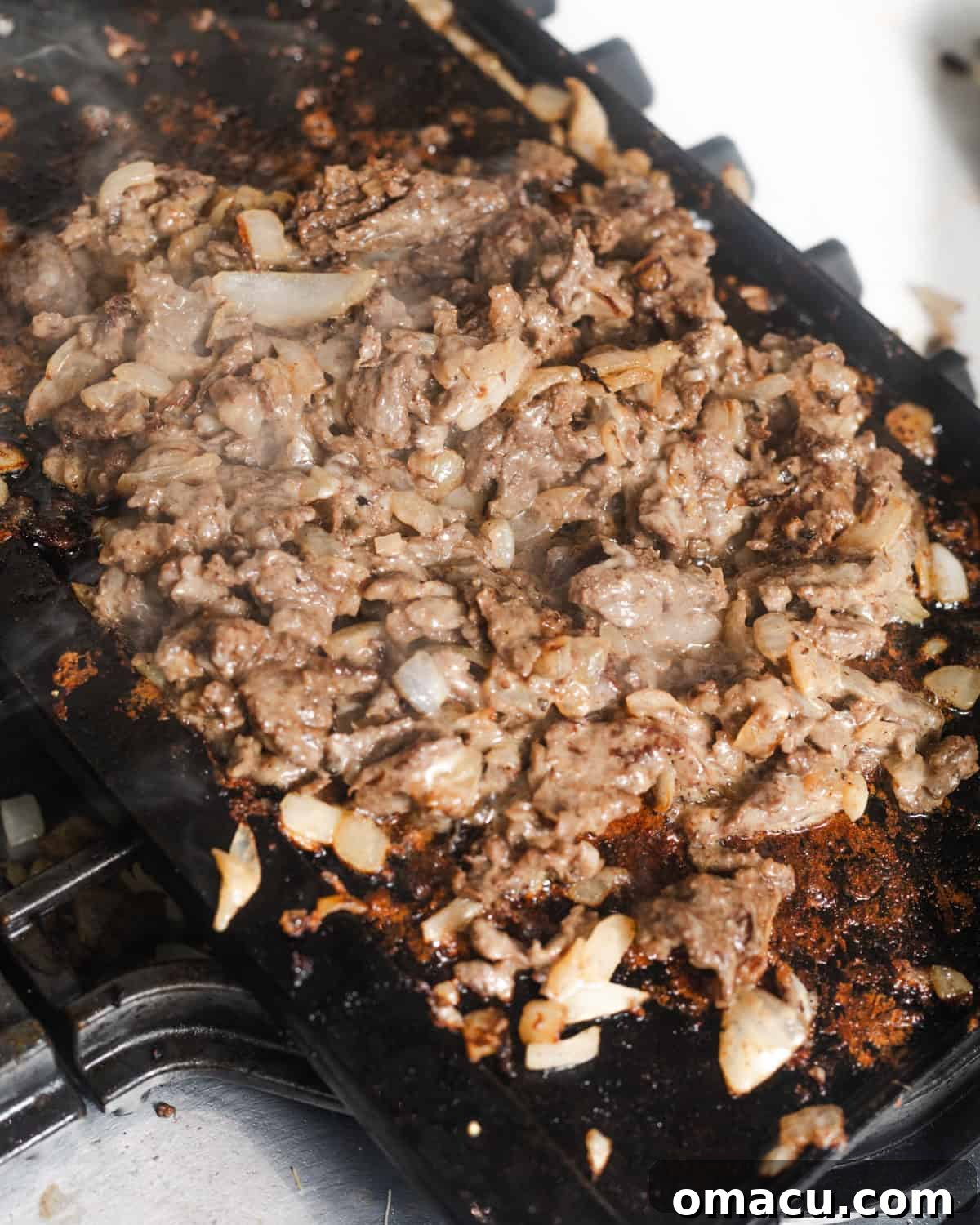
- Add vegetable oil into a skillet over medium-high heat. Get the pan nice and hot, about 5 minutes. Add the meat and onions into the skillet in an even layer and cook undisturbed for 5-7 minutes, until browned. Use the bottom of a spatula to break up the meat and cook until no longer pink.
- Season with onion powder, garlic powder, kosher salt, and black pepper. Stir until seasonings are evenly dispersed, then tear up 4 slices of American cheese and cook until the cheese is melted, stirring constantly so that it doesn’t burn on the bottom of the pan/griddle.
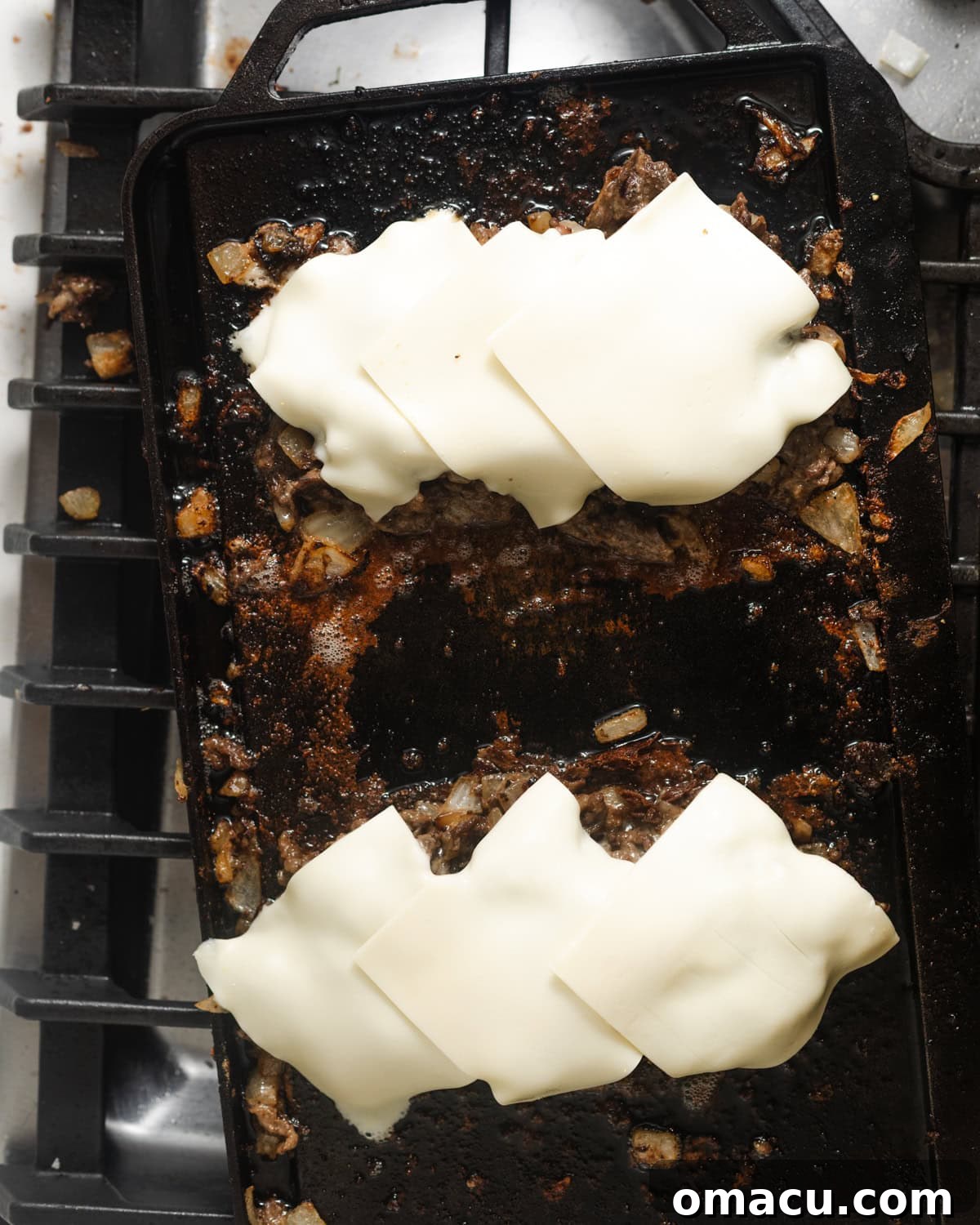
- Divide the meat mixture into two piles. Place 3 slices of American cheese on top of each portion. Reduce stove to medium heat and cover with a lid until the cheese is fully melted, about 1-2 minutes.
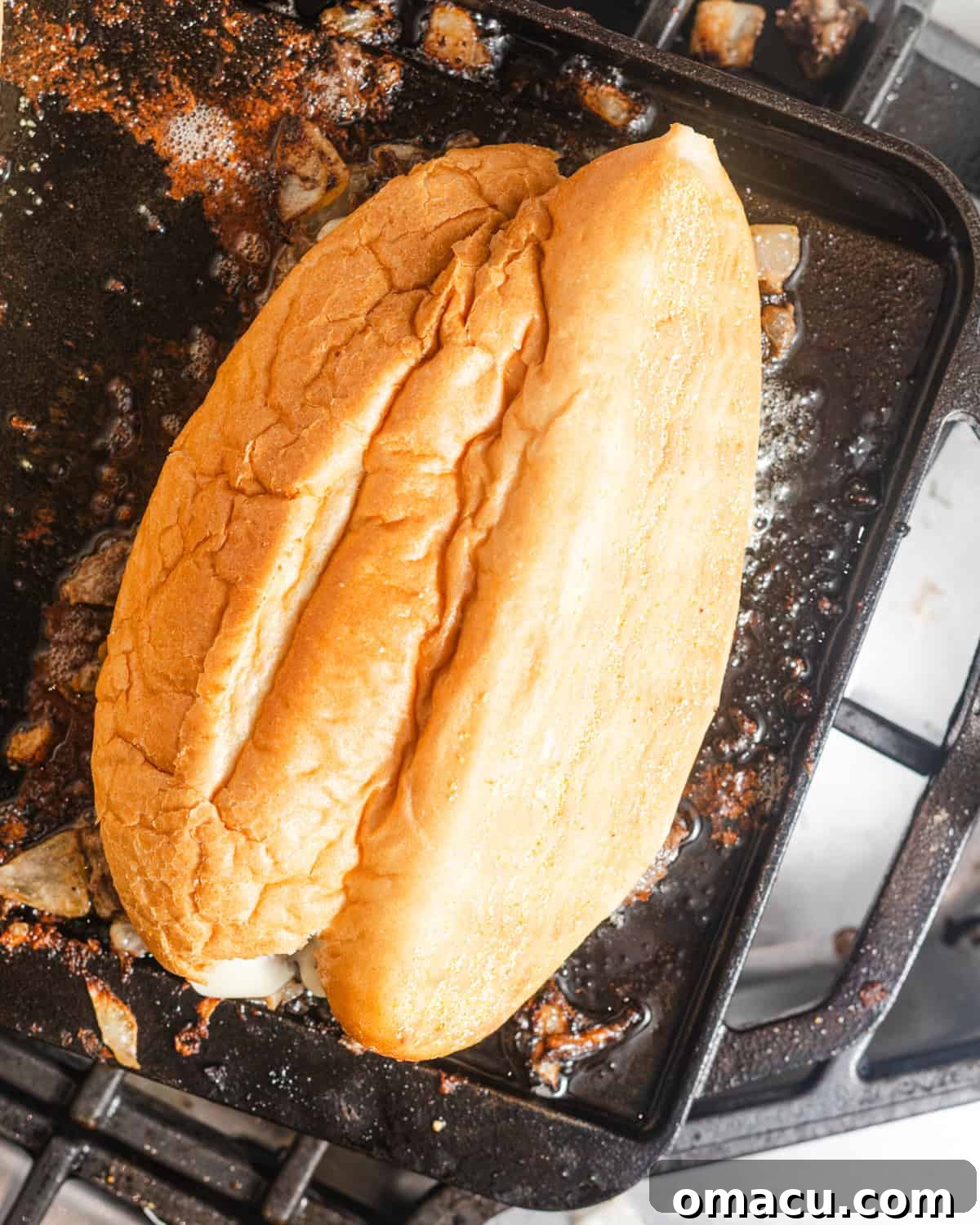
- Place the hoagie roll cut side down on top of the meat and use the spatula to scoop the meat into the rolls.
Notes
- If you have a local butcher, ask them to shave your chosen meat nice and thin to save time and effort.
- Use ribeye and slice it *paper thin*. This ensures juicy, flavorful, and tender meat that cooks quickly. Partially freeze the steak first for easier, cleaner slices.
- Use the right roll: Amoroso or Italian hoagie rolls. A soft-but-sturdy roll with a slight chew is crucial to hold all the delicious filling.
- Freeze the ribeye prior to slicing: This makes it much easier to achieve those perfect thin cuts. Aim for cold and firm, not fully frozen.
- Cook on a flat-top griddle or cast iron pan. A flat surface provides the best sear and allows the ingredients to meld together perfectly.
Nutrition
Carbohydrates: 19g
Protein: 66g
Fat: 90g
Saturated Fat: 37g
Polyunsaturated Fat: 17g
Monounsaturated Fat: 29g
Trans Fat: 1g
Cholesterol: 249mg
Sodium: 3139mg
Potassium: 978mg
Fiber: 2g
Sugar: 11g
Vitamin A: 1038IU
Vitamin C: 8mg
Calcium: 1157mg
Iron: 5mg
Nutrition information is automatically calculated, so should only be used as an approximation.
Tried this recipe?
Mention @BritneyBreaksBread or tag #BritneyBreaksBread!