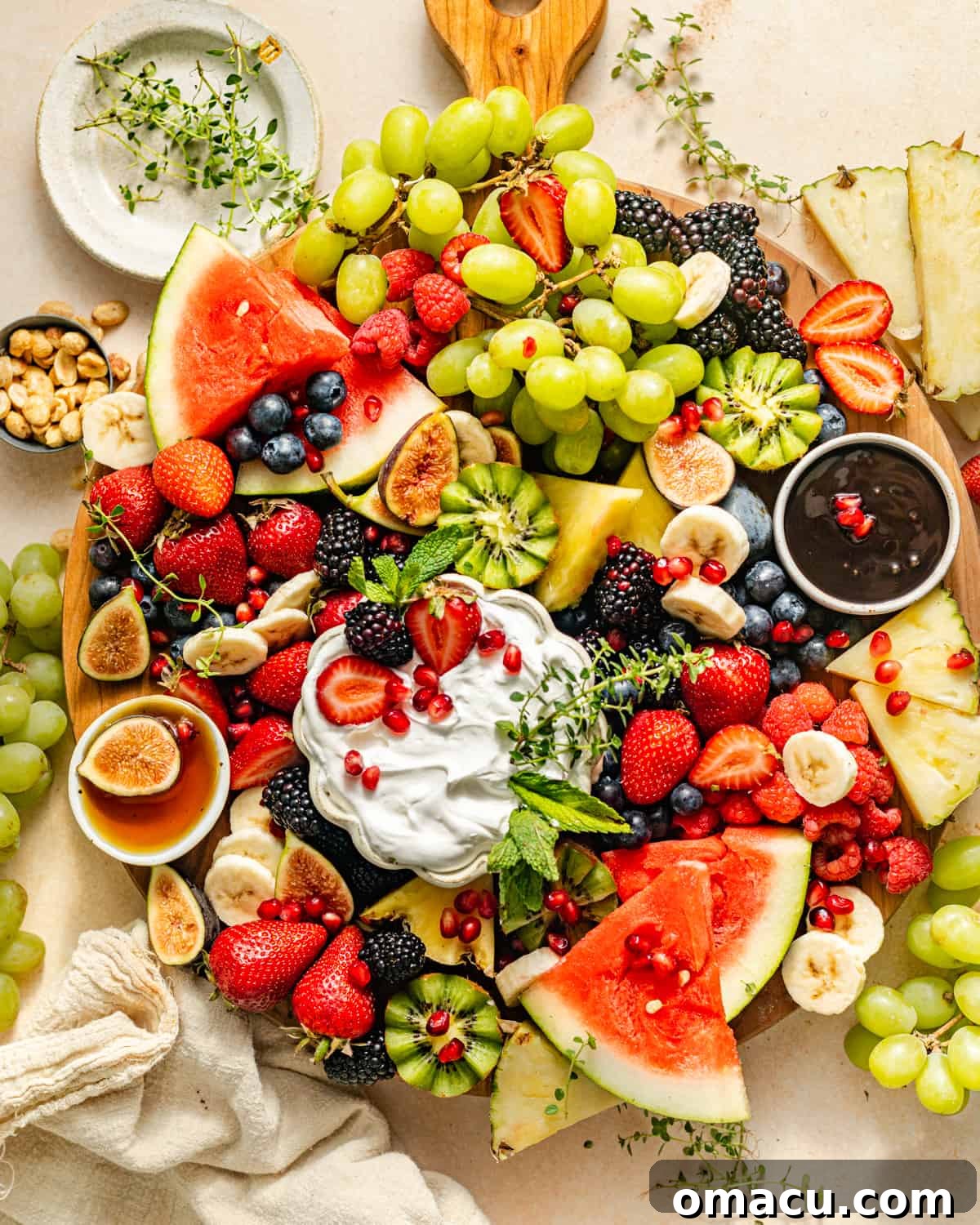
Elevate your next gathering with a truly spectacular fresh fruit charcuterie board! This guide will teach you how to craft a visually stunning and incredibly delicious display of nature’s candy, perfect for any occasion. Whether you’re hosting a grand celebration or an intimate dinner party, a colorful fruit board offers a refreshing and healthy alternative that everyone will adore. Pair your vibrant fruit selection with a homemade cream cheese fruit dip or a dollop of whipped cream for an unforgettable culinary experience.
Looking for more innovative charcuterie board concepts? Explore our delightful Brunch Board, creative Charcuterie Skewers, or a refreshing Summer Cheese Board!
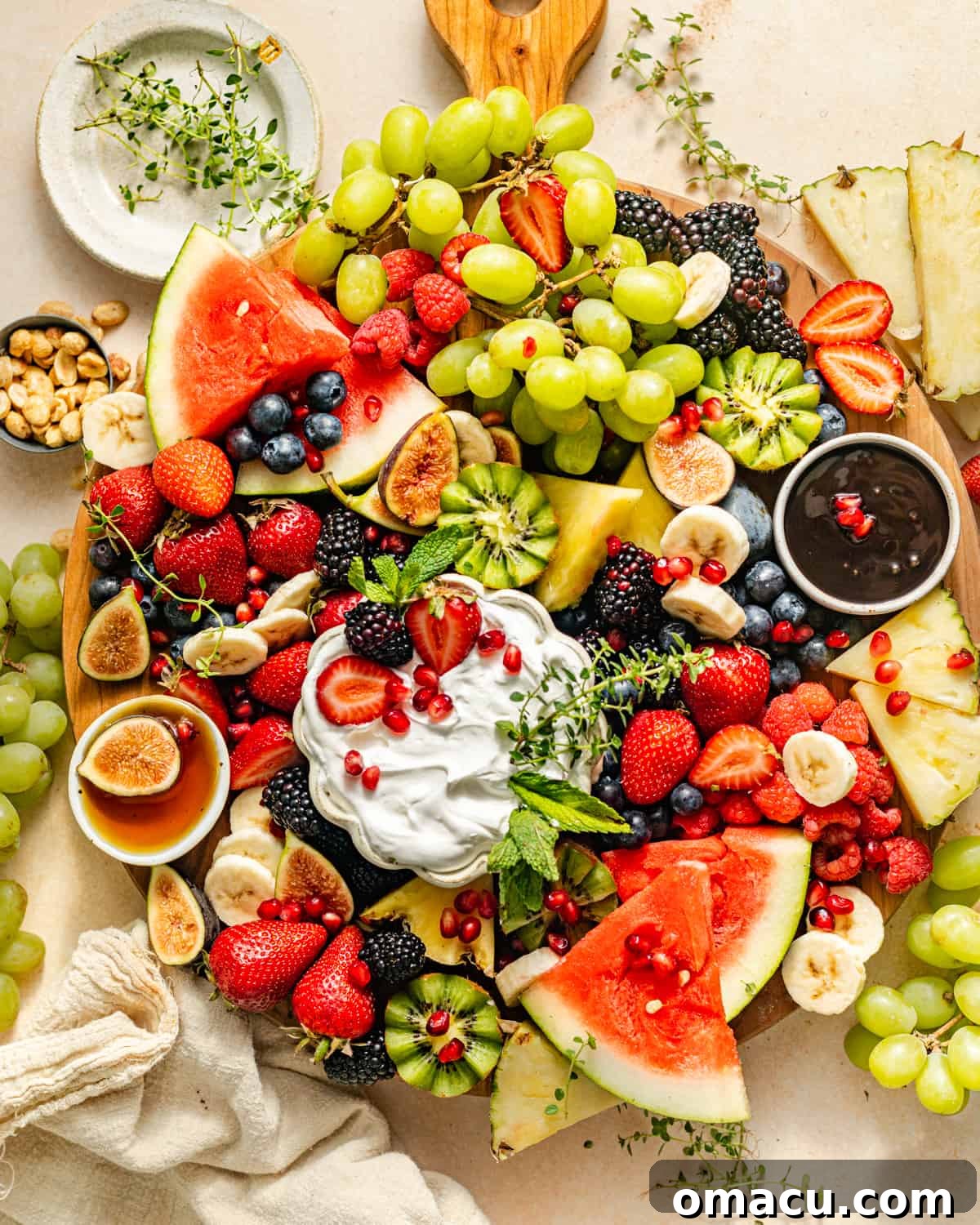
Table of Contents
- What to Put on a Fruit Charcuterie Board
- Expert Tips for Building Your Fruit Board
- How to Cut Fruit for a Charcuterie Board
- Step-by-Step Guide: How to Make a Fruit Tray
- Keeping Fruit Fresh: Preventing Browning on Your Board
- Preparation Ahead & Storing Leftovers
- Frequently Asked Questions About Fruit Boards
- More Inspiring Charcuterie Board Ideas
- Fresh Fruit Charcuterie Board Recipe
As warmer months approach, finding fresh and exciting ways to entertain guests becomes a priority. For me, charcuterie boards are always a favorite, typically featuring an assortment of cured meats, gourmet cheeses, crunchy nuts, and a selection of fruits. However, this time, we’re taking a delightful detour to celebrate the abundance of nature with a dedicated fruit board!
This isn’t your traditional meat-and-cheese charcuterie experience. Instead, it’s a creative and healthy interpretation, replacing savory components with an impressive array of fresh fruits, dried fruits, crunchy nuts, and other delightful complements. It’s a versatile option that appeals to a wide range of tastes and dietary preferences, making it an excellent choice for any event.
A classic fruit charcuterie board typically showcases a diverse selection of fresh fruits, such as succulent strawberries, crisp grapes, juicy melons, vibrant pineapples, and tangy citrus slices. Complementing these fresh delights are dried fruits like tender apricots, rich figs, and sweet dates, which add a wonderful chewiness and concentrated flavor. For an added textural dimension and nutty goodness, include a variety of nuts such as almonds, pistachios, and cashews.
Beyond the core fruit selection, you can enhance your board with other complementary items. Consider adding an assortment of crisp crackers or pretzels for a salty crunch, rich dark chocolate pieces for a touch of indulgence, or a small pot of golden honey for a natural sweetness that beautifully enhances many fruits.
Whether you’re planning a baby shower, hosting a sophisticated dinner party, or simply enjoying a cozy date night, a thoughtfully prepared fruit tray serves as a superb option. It’s not only a feast for the eyes but also a healthy and undeniably delicious snack or dessert choice that’s sure to impress your guests and bring a burst of freshness to your table.
What to Put on a Fruit Charcuterie Board
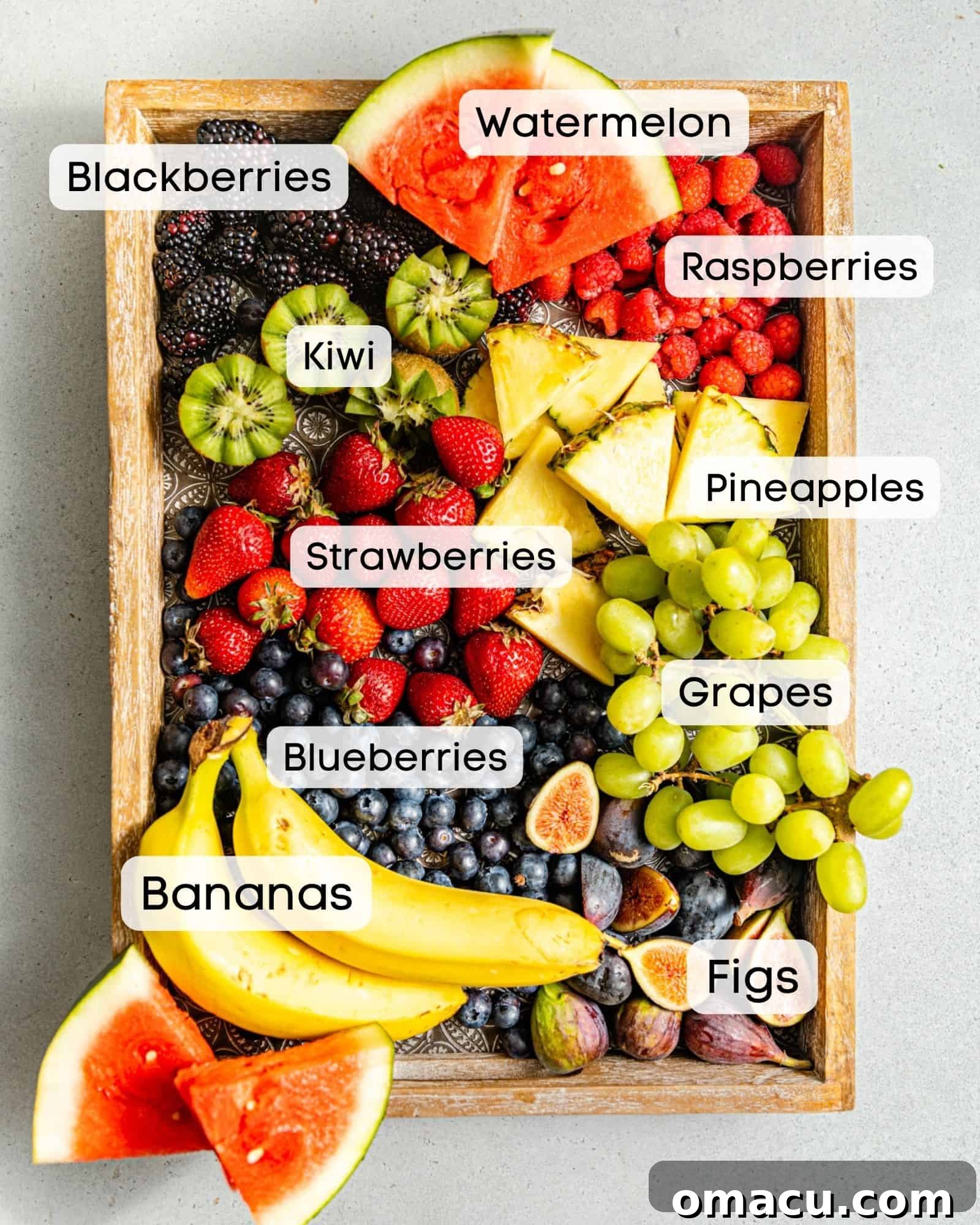
The foundation of any outstanding fruit board is a diverse selection of fresh, ripe fruits, ideally cut into convenient bite-sized pieces or artfully arranged in clusters. The secret to a truly stunning presentation lies in arranging your chosen items with an emphasis on contrasting colors, varied textures, and overall abundance. Always opt for ripe and seasonal fruits for the best flavor and visual appeal. Don’t hesitate to combine your personal favorite fruits with delightful fruit dips to create a truly personalized experience. Here are some fantastic fruit and accompaniment options to consider for your next board:
- Berries: A colorful assortment like plump strawberries, juicy raspberries, sweet blueberries, and rich blackberries.
- Melons: Refreshing chunks of watermelon, honeydew, and cantaloupe.
- Grapes: Bunches of red, green, or black grapes, adding elegance and ease of snacking.
- Citrus Fruits: Bright orange slices, easy-to-peel mandarins, or tangy grapefruit segments for a zesty kick.
- Figs: Fresh figs, when in season, add a unique, sophisticated touch.
- Pineapple: Sweet and tangy pineapple chunks or wedges.
- Kiwi: Sliced kiwi, with its vibrant green color and tiny black seeds, offers a beautiful contrast.
- Mango: Tropical mango cubes bring a taste of paradise.
- Papaya: Exotic papaya adds a soft texture and subtle sweetness.
- Pears: Sliced pears, especially those with a slight crunch.
- Apple Slices: Crisp apple slices, a classic favorite.
- Nuts: A selection of almonds, pistachios, cashews, and walnuts for crunch and healthy fats.
- Dried Fruits: Chewy apricots, rich figs, sweet dates, or raisins, providing concentrated flavor and a different texture.
- Soft Cheese: Small cubes or thin slices of mild, soft cheese like brie or goat cheese can complement fruits beautifully.
To infuse your fresh fruit board with an extra touch of charm and elegance, consider incorporating subtle decorative elements. Fresh mint leaves, with their vibrant green hue and aromatic scent, can be tucked between fruit clusters. Edible flowers offer a sophisticated and artistic flair. You might even add a few small, artisanal crackers to provide another textural contrast. When arranging, remember to create inviting piles or clusters, consciously alternating colors and textures to achieve a dynamic and visually captivating display that invites guests to indulge.
Delightful Dips for Your Charcuterie Board
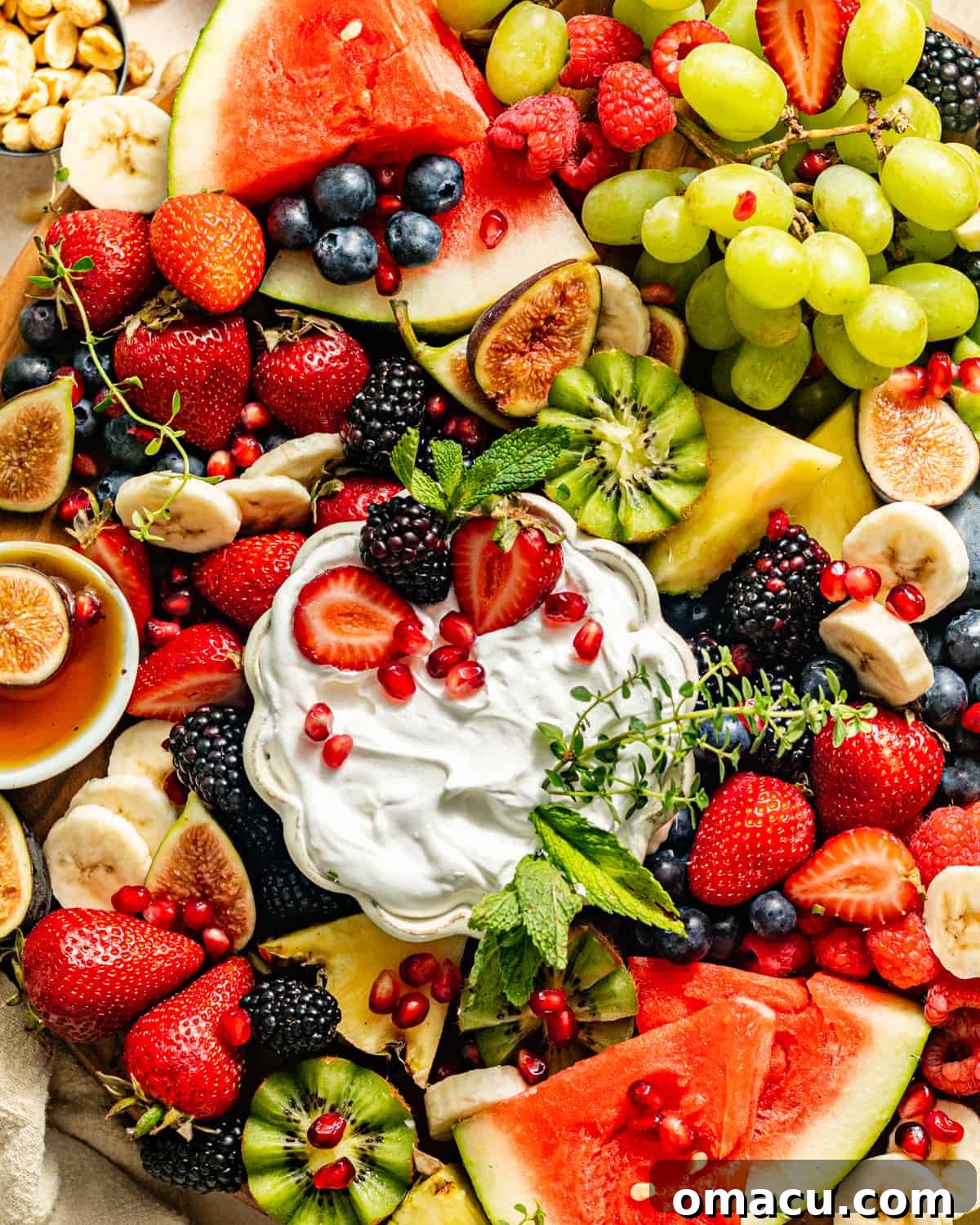
No fruit board is complete without a selection of delicious dips to complement and enhance the natural flavors of the fruit. Offering a variety ensures there’s something for every palate:
- Homemade Cream Cheese Fruit Dip: Always a crowd-pleaser, its rich and tangy sweetness pairs wonderfully with almost any fruit.
- Yogurt Dip: A light and refreshing option, perhaps sweetened with a touch of honey or vanilla.
- Chocolate Sauce: A drizzle of decadent chocolate or a homemade salted caramel sauce for those who crave a sweet indulgence.
- Peanut Butter: A protein-rich and satisfying dip, especially popular with apple slices and bananas.
Beyond these, consider incorporating cool whip for a fluffy, sweet cloud, Nutella for a hazelnut chocolate experience, or classic whipped cream for a light and airy accompaniment. The variety of dips truly makes the fruit board experience customizable and exciting.
Expert Tips for Building Your Fruit Board
Crafting an attractive and delicious fruit tray is simpler than you might think. These expert tips will provide you with the essential tools and insights to create a memorable centerpiece that will delight your guests and offer a healthy, refreshing snack option:
- Embrace Variety: The key to a visually appealing board is a wide selection of colorful and ripe fruits. Prioritize seasonal options, as they offer the freshest and most intense flavors. Think about a spectrum of colors, shapes, and sizes to create visual interest.
- Timely Preparation: For optimal freshness and appearance, always cut your fruit just before serving. If some pre-cutting is necessary, ensure you cover the prepared fruit tightly until it’s ready to be arranged and served, ideally chilling it to maintain crispness.
- Artful Arrangement: Think of your tray as a canvas. Arrange the fruit attractively, using different colors and textures to create a harmonious and inviting display. You can form appealing piles, elegant clusters, or even geometric patterns. Don’t be afraid to mix and match.
- Select a Sturdy Foundation: Choose a robust tray or platter that can comfortably support the combined weight of all your fruits and accompaniments. A solid board prevents warping or bending, ensuring your beautiful creation remains stable and presentable throughout your event.
- Maintain Chill: Keep your assembled fruit board thoroughly chilled in the refrigerator until the moment it’s ready to be served. This crucial step helps maintain the fruit’s freshness, prevents premature spoilage, and ensures a refreshing bite every time.
- Offer Dipping Bowls: Provide an assortment of small, individual bowls for your dipping sauces. This not only enhances presentation but also offers convenience and promotes hygiene. A selection of sauces, such as a creamy yogurt dip, a rich chocolate sauce, or a tangy fruit curd, can elevate the entire fruit board experience.
How to Cut Fruit for a Charcuterie Board
When preparing fruit for a charcuterie board, the aim is to create inviting, bite-sized pieces that are easy for guests to pick up and enjoy. Thoughtful cutting not only makes the fruit more accessible but also significantly contributes to the overall aesthetic of your board. Here are some essential tips for cutting fruit beautifully and efficiently:
1. Achieve Uniformity: Strive to cut your fruits into consistent shapes and sizes, whether they are cubes, wedges, or slices. Uniformity creates a neat and professional appearance on the board, making arrangement easier and the display more visually appealing. This also ensures a consistent bite for your guests.
2. Remove Seeds and Pits: For fruits like various melons (watermelon, cantaloupe, honeydew) or stone fruits (peaches, plums), always remove any seeds or pits thoroughly before cutting them into smaller, snackable pieces. This saves your guests the hassle and ensures a pleasant eating experience.
3. Strategic Peeling: Some fruits benefit greatly from peeling before being added to the board. For example, kiwi, pineapple, and mango typically require peeling to make them more palatable and easier to eat. Consider also peeling citrus fruits if you want to avoid bitterness from the pith.
4. Creative Arrangement Post-Cut: Once all your fruit is meticulously cut into bite-sized portions, begin arranging them on your charcuterie board. Create inviting piles or elegant clusters. Remember to alternate colors and textures thoughtfully to build a dynamic and captivating visual display. For instance, place vibrant red strawberries next to pale green kiwi slices, or dark blueberries against bright yellow pineapple.
Always exercise caution when using sharp knives for fruit preparation, and take your time. Precision in cutting ensures each piece looks neat and contributes to the overall elegance of your fruit charcuterie board.
Step-by-Step Guide: How to Make a Fruit Tray
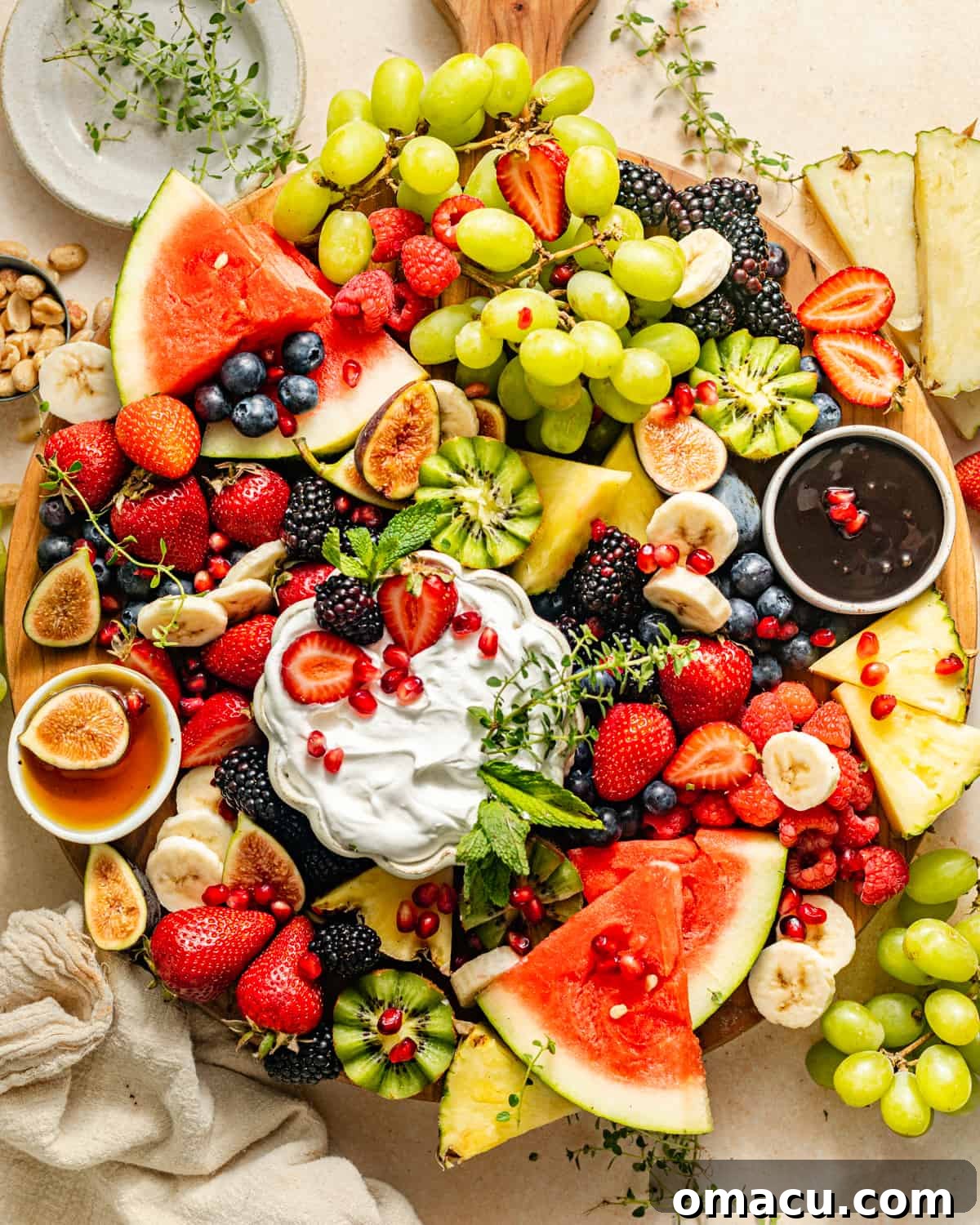
Creating an impressive fruit charcuterie board is a delightful process that combines simple preparation with artistic arrangement. Follow these steps to assemble a beautiful and delicious fruit tray that will be the highlight of your gathering:
- Choose Your Canvas: Select a sturdy board or platter that is generously sized to accommodate all the fresh fruits and accompanying delights you plan to feature. A rustic wooden board or an elegant slate platter can provide a charming base for your display, enhancing the visual appeal.
- Curate Your Fruits: Begin by choosing a diverse and colorful array of fruits. Think about including various berries, juicy melons, crisp grapes, zesty citrus, vibrant kiwi, sweet pineapple, and other tropical favorites. Don’t forget to incorporate dried fruits like apricots, figs, or dates for textural contrast and concentrated flavor. For an unexpected twist, you could even add some fresh, thinly sliced vegetables like cucumber or vibrant carrot sticks.
- Prepare with Precision: Thoroughly wash and dry all your chosen fruits. Then, carefully slice, dice, or cut them into uniform, bite-sized pieces. Once prepped, begin arranging them on your board. Start by placing larger items or creating central anchors, then build around them. Arrange fruits in appealing piles or elegant clusters, always alternating colors and textures to craft a visually dynamic and engaging display.
- Introduce Accompaniments: To further enrich the flavor profile and visual interest of your board, strategically add a selection of complementary items. This could include crunchy nuts, wholesome seeds, a sprinkle of granola, an assortment of creamy yogurt dips, a swirl of golden honey, or decadent pieces of chocolate. These additions provide both flavor and textural contrasts.
- Apply the Finishing Touches: Elevate your fruit board with thoughtful decorative accents. Tuck in fresh mint leaves for a pop of green and aromatic freshness, or scatter a few edible flowers for a touch of refined beauty. For an extra savory element, consider adding some small, artisanal cheese cubes or a selection of crackers. These final details truly bring the board to life.
- Serve and Savor: Present your vibrant fruit charcuterie board immediately to your eagerly awaiting guests. Encourage them to explore the diverse selection, mixing and matching flavors and textures to create their own perfect bites. Enjoy the delightful reactions as they appreciate your stunning and delicious creation!
Keeping Fruit Fresh: Preventing Browning on Your Board
The natural browning of certain fruits, often seen in apples, bananas, and pears, occurs when they are exposed to air. This exposure causes enzymes within the fruit to react with oxygen, leading to discoloration. While this browning is harmless, it can detract from the fresh and vibrant appearance of your charcuterie board. Fortunately, there are several effective strategies to minimize or prevent this:
1. Cut Just Before Serving: The most straightforward and effective method is to prepare and cut your fruits as close to serving time as possible. This significantly reduces the window during which the fruit is exposed to air, thus slowing down the enzymatic browning process. If you have guests arriving in an hour, aim to do your final cuts within 30-45 minutes of their arrival.
2. Utilize Acidic Liquids: Acid is a natural inhibitor of the browning enzymes. Lemon juice is a popular and highly effective choice due to its strong acidity. Simply sprinkle a small amount of fresh lemon juice over sliced apples, bananas, or pears, or gently toss the cut fruit in a bowl containing a diluted lemon juice solution before arranging them on your board. Other acidic alternatives include orange juice, pineapple juice, or a mixture of water and a small amount of vinegar, which can also provide a similar protective barrier. Be mindful not to oversaturate, as it can alter the fruit’s flavor.
3. Implement Strategic Covering: If you must cut fruits in advance, it’s crucial to protect them from air exposure. Place the cut fruit in an airtight container or cover it tightly with plastic wrap, ensuring the wrap directly touches the surface of the fruit to minimize trapped air. Storing these covered fruits in the refrigerator will further slow down any potential browning. Assemble them onto your charcuterie board only when you are ready to present it.
By incorporating these simple yet effective techniques, you can confidently prepare a stunning fruit charcuterie board that remains fresh, colorful, and appealing for an extended period, ensuring your guests enjoy its beauty and taste to the fullest.
Preparation Ahead & Storing Leftovers
Making Ahead: While it’s always recommended to assemble your fruit board just before serving for the freshest appearance and taste, a significant portion of the preparation can be done up to 24 hours in advance. For pre-cut fruits, store them in separate airtight containers in the refrigerator. Fruits susceptible to browning, like apples and bananas, should be lightly tossed in lemon juice before storage. Once the board is fully assembled, cover it tightly with plastic wrap to maintain freshness until serving time. This allows for a stress-free experience when your guests arrive.
Storing Leftovers: Should you find yourself with any delightful leftovers, transfer the remaining fruit to an airtight container and store it promptly in the refrigerator. While some fruits may continue to brown slightly, they will generally remain delicious for another 1-2 days. Consider repurposing leftover fruit into smoothies, fruit salads, or as a topping for yogurt or oatmeal for a healthy treat.
Frequently Asked Questions About Fruit Boards
Popular fruits for charcuterie boards typically include a wide variety that offers a balance of sweetness, tartness, and texture. Grapes (in bunches), various berries (strawberries, blueberries, raspberries), melon slices (cantaloupe, honeydew, watermelon), pineapple chunks, fresh figs, and citrus segments (oranges, mandarins) are frequently used. Sliced apples and pears also make excellent additions, especially when treated to prevent browning. These fruits are chosen for their visual appeal, complementary flavors with other charcuterie items, and ease of eating.
The ideal charcuterie board depends on several factors: your personal aesthetic preference, the number of guests you’re serving, and the specific types of food you intend to display. For a rustic feel, a large wooden board is often preferred. Slate platters offer a modern and elegant look, while ceramic trays can provide a classic touch. Ensure the board is sufficiently large to accommodate all your chosen elements without overcrowding, and that it has a sturdy, flat surface. Ultimately, choose a board that is both functional and aesthetically pleasing, serving as the perfect backdrop for your delicious spread.
Generally, assembling your own fruit tray is more cost-effective than purchasing a pre-made one. The price difference can vary based on factors such as the types of fruit chosen (seasonal fruits are usually cheaper), the quantity required, and your geographical location. Pre-made trays include a premium for convenience, labor, and packaging. By shopping for fruits on sale and in season, and taking a little time for preparation, you can create a much larger and often higher-quality fruit display for a fraction of the cost.
More Inspiring Charcuterie Board Ideas
Explore more beautiful and creative boards perfect for various special occasions and themed gatherings!
Desserts
Dessert Charcuterie Board
Appetizers
Halloween Charcuterie Board
Breakfast
Breakfast Charcuterie Board
Appetizers
Fall Charcuterie Board
Craving more delightful and beautifully crafted recipes? Make sure to subscribe to our newsletter to get the freshest seasonal creations delivered straight to your inbox the moment they’re released!
If you prepare this amazing recipe, we would absolutely love to see it! Please consider leaving a star rating on the recipe card below and sharing your thoughts in the comments. You can also tag @BritneyBreaksBread on Instagram and use the hashtag #britneybreaksbread so we can celebrate your stunning culinary artistry!
★
★
★
★
Fresh Fruit Charcuterie Board
Saved
Pin
Equipment
-
Wooden Board
-
Cutting board
-
Small bowls for dips (optional)
Ingredients
- 1 lb Green Grapes
- 1 Pineapple
- 1 Watermelon
- 1 pint Strawberries
- 1 pint Blueberries
- 1 pint Blackberries
- 1 pint Raspberries
- 2 Bananas, (sliced)
- 1 Apples, (sliced)
- 3 Kiwis
- 1 pint Figs, (optional)
- 3 tbsps Honey, (optional)
Instructions
-
Prepare your fruits: Wash and thoroughly dry all your selected fruits. Then, carefully slice, dice, or cut them into uniform, bite-sized pieces for easy enjoyment.
-
Begin arranging them on your chosen board, starting with larger items such as grapes, pineapple, and watermelon slices. Create appealing piles or elegant clusters, ensuring you alternate colors and textures to build a visually captivating display.
-
If you are including dips, carefully spoon them into small bowls and strategically place these bowls onto the board as foundational elements.
-
Fill in any remaining spaces and gaps on the board with smaller fruits like blueberries, blackberries, raspberries, delicate sliced bananas, crisp apple slices, fresh figs (if using), and vibrant kiwi slices, ensuring a full and abundant look.
-
Optional Enhancements: Consider adding extra accompaniments to complement the fruits and dips. This could include crunchy nuts, wholesome seeds, a sprinkle of granola, an extra variety of yogurt dips, a drizzle of honey, or indulgent pieces of chocolate. You can also add some final decorative touches such as fresh mint leaves, beautiful edible flowers, or even small cubes of cheese or crackers for added variety.
Video
Notes
These guidelines are designed to help you create a stunning and delicious fruit tray that will not only impress your guests but also provide a healthy and wonderfully refreshing snack or dessert option for any occasion!
- Diverse Fruit Selection: Always choose a wide variety of colorful and ripe fruits. Prioritizing seasonal fruits ensures the freshest and most flavorful options for your board.
- Strategic Cutting: Cut all fruits just before you plan to serve the board, or ensure they are thoroughly covered and chilled until ready for display to maintain their peak freshness.
- Attractive Layout: Arrange your fruits artfully on the tray, making use of contrasting colors and varying textures to create a visually captivating display. You can arrange them in neat piles, charming clusters, or even engaging patterns.
- Stable Foundation: Utilize a sturdy tray or platter that can comfortably support the total weight of all the fruits and accompaniments without bending or warping.
- Optimal Chilling: Keep the entire fruit board well-chilled in the refrigerator until the very moment of serving to help preserve its freshness and prevent any premature spoilage.
- Convenient Dipping Bowls: Offer small, individual bowls for any dipping sauces. A delicious dipping sauce, such as a creamy yogurt or rich chocolate dip, is a fantastic addition that elevates the fruit board experience.
Preparing in Advance and Storing Leftovers
Preparation in Advance: For the best quality, we recommend assembling your fruit tray just before it is to be served. However, most fruits can be prepped (washed and cut) up to 24 hours beforehand. To keep the cut fruit fresh, store it in airtight containers in the refrigerator. For fruits that brown easily (like apples or bananas), a light toss in lemon juice before storage is highly beneficial. Assemble the board only when you are ready to present it.
Storing Leftovers: Any remaining fruit should be immediately transferred to an airtight container and stored in the refrigerator. This will help maintain its freshness for another day or two. Consider using leftover fruit in smoothies or a quick fruit salad!
Nutrition
Nutrition information is automatically calculated, so should only be used as an approximation.