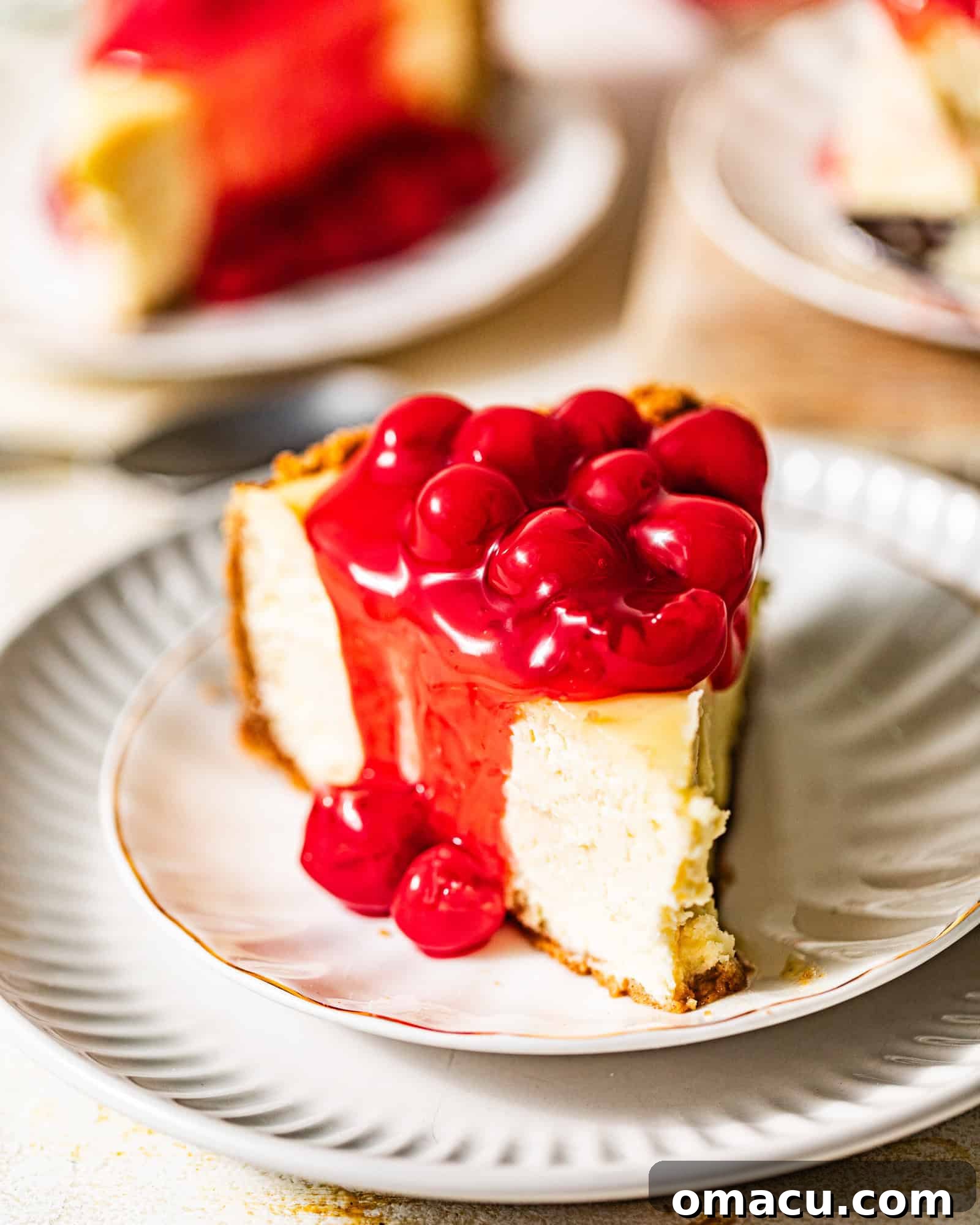
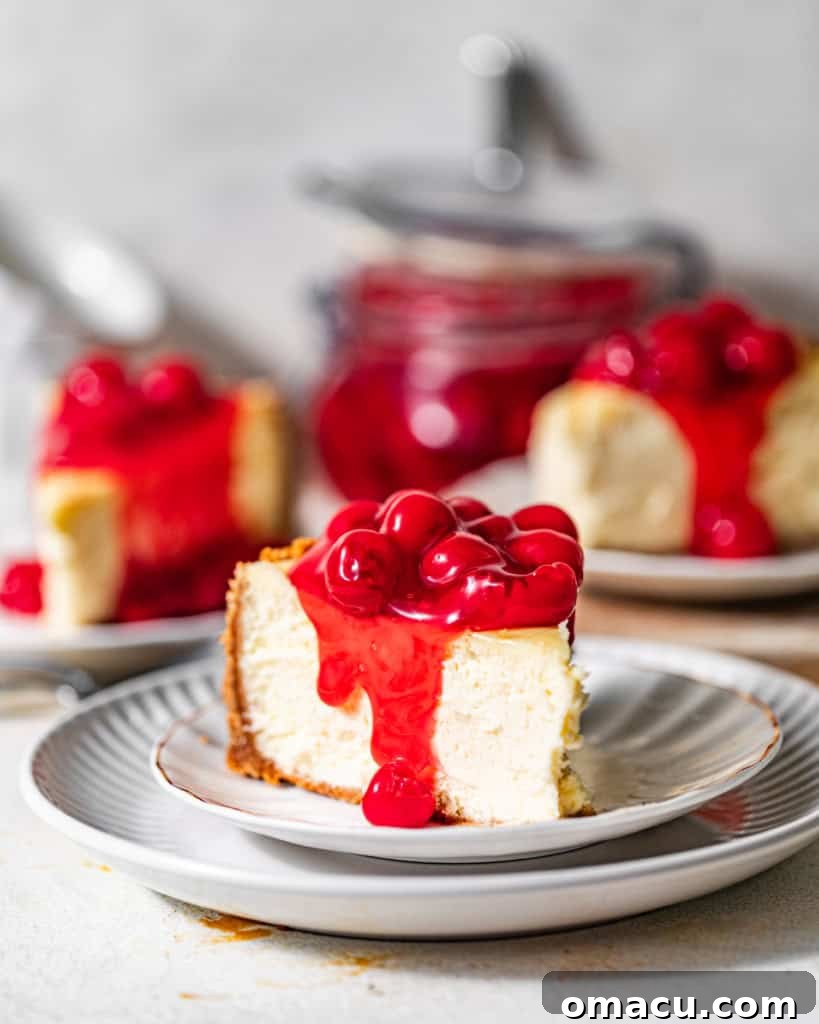
Indulge in the ultimate dessert experience with this incredibly creamy cherry cheesecake. A truly timeless classic, this recipe features a luxurious, silky-smooth cream cheese filling nestled within a perfectly buttery graham cracker crust. Crowned with a vibrant, sweet cherry pie topping, this dessert offers an exquisite balance of rich flavors and delightful textures. The sweet tang of the cherries beautifully complements the decadent filling and the crisp, fragrant crust, making every bite an unforgettable treat.
If you’re a cheesecake enthusiast, you’ll love exploring more of our unique recipes. Be sure to try our Creme Brulee Cheesecake for an elegant twist, the comforting Apple Pie Stuffed Cheesecake, or the nostalgic Banana Pudding Cheesecake Recipe.
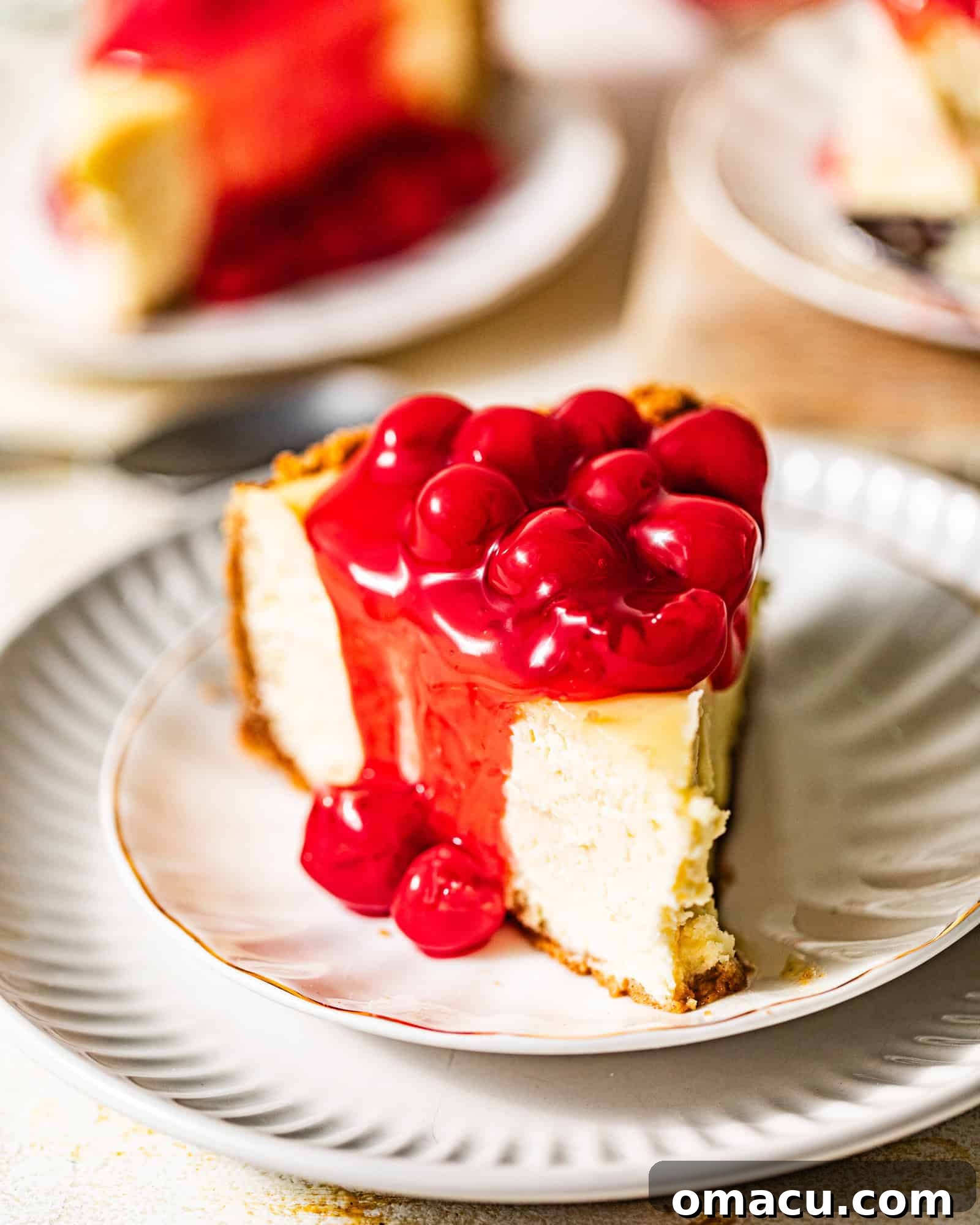
Cherry cheesecake is more than just a dessert; it’s a culinary icon that consistently wins hearts. This particular homemade cherry cheesecake recipe stands out with its subtle yet impactful enhancements, transforming a classic into something truly extraordinary and undeniably delicious.
The cheesecake filling is engineered for pure bliss, achieving an unbelievably smooth and creamy texture that literally melts in your mouth. We elevate its flavor profile with a delicate touch of almond extract, which brilliantly enhances the natural sweetness and tartness of the cherries, creating a harmonious blend that’s simply irresistible. And let’s not forget the foundation: a graham cracker crust that is wonderfully buttery, delicately crisp, and infused with a hint of warming cinnamon. These thoughtful additions create a perfect canvas for the sweet cherry sauce, ensuring a balanced and deeply satisfying dessert experience.
Crafting this easy cheesecake recipe is straightforward, provided you follow our expert tips and tricks to ensure a flawless outcome. For those who prefer a quicker route or a lighter touch, we also offer clear instructions for a no-bake cheesecake option, ensuring everyone can enjoy this delightful treat. If you’re a fan of fruit-forward cheesecakes, our Pineapple Cheesecake is another must-try!
Table of Contents
- Why You’ll Love This Cherry Cheesecake
- Essential Cheesecake Ingredients
- How to Make a Cherry Cheesecake From Scratch
- Expert Tips for the Perfect Cheesecake
- How to Know When Your Cheesecake is Done
- No-Bake Cherry Cheesecake Option!
- Storing, Freezing, and Making Ahead
- Recipe FAQs
- More Irresistible Cheesecake Recipes
- Cherry Cheesecake Recipe Card
Why You’ll Love This Cherry Cheesecake Recipe
This cherry cheesecake isn’t just another dessert; it’s a testament to classic flavors elevated to perfection. Here’s why this recipe will become your new go-to:
- A Classic, Reimagined for Superior Taste: While staying true to the beloved traditional cheesecake, this recipe introduces subtle enhancements that make it truly exceptional. The harmonious blend of a velvety cream cheese filling and the bursting sweetness of plump red cherries creates a dessert that’s both familiar and exciting. The best part? Once the cheesecake is baked and cooled, simply pour on the vibrant cherry sauce, and you’re ready to serve a show-stopping dessert!
- The Perfect Dessert for Any Occasion: Its universal appeal makes this cherry cheesecake a fantastic choice for any gathering. Whether you’re celebrating Thanksgiving, Easter, a Fourth of July cookout, a cozy Sunday dinner, or a festive family get-together, this elegant yet comforting treat is always a hit. Its vibrant color and rich flavor make it a centerpiece that’s sure to impress.
- Crafted with Simple, Accessible Ingredients: You won’t need to hunt for obscure components for this recipe. It relies on minimal, easy-to-find ingredients that are readily available at any local grocery store. This ensures that you can whip up this exquisite dessert without any hassle or a special trip to a gourmet food shop.
- Impressive Yet Effortless Presentation: Despite its sophisticated appearance, this cheesecake is surprisingly simple to assemble. The contrast of the creamy white filling against the ruby-red cherries makes for a visually stunning dessert that looks far more complicated than it is, making you look like a seasoned pastry chef!
- A Symphony of Textures and Flavors: From the crisp, buttery graham cracker crust to the smooth, rich cream cheese layer and the juicy, sweet-tart cherry topping, every element contributes to a complex and utterly satisfying textural experience. The subtle hint of almond extract and cinnamon further deepens the flavor profile, creating a truly gourmet experience.
Essential Cheesecake Ingredients
Achieving the perfect creamy, crack-free cheesecake starts with the right ingredients and preparation. Here’s a closer look at what you’ll need and why each component is crucial:
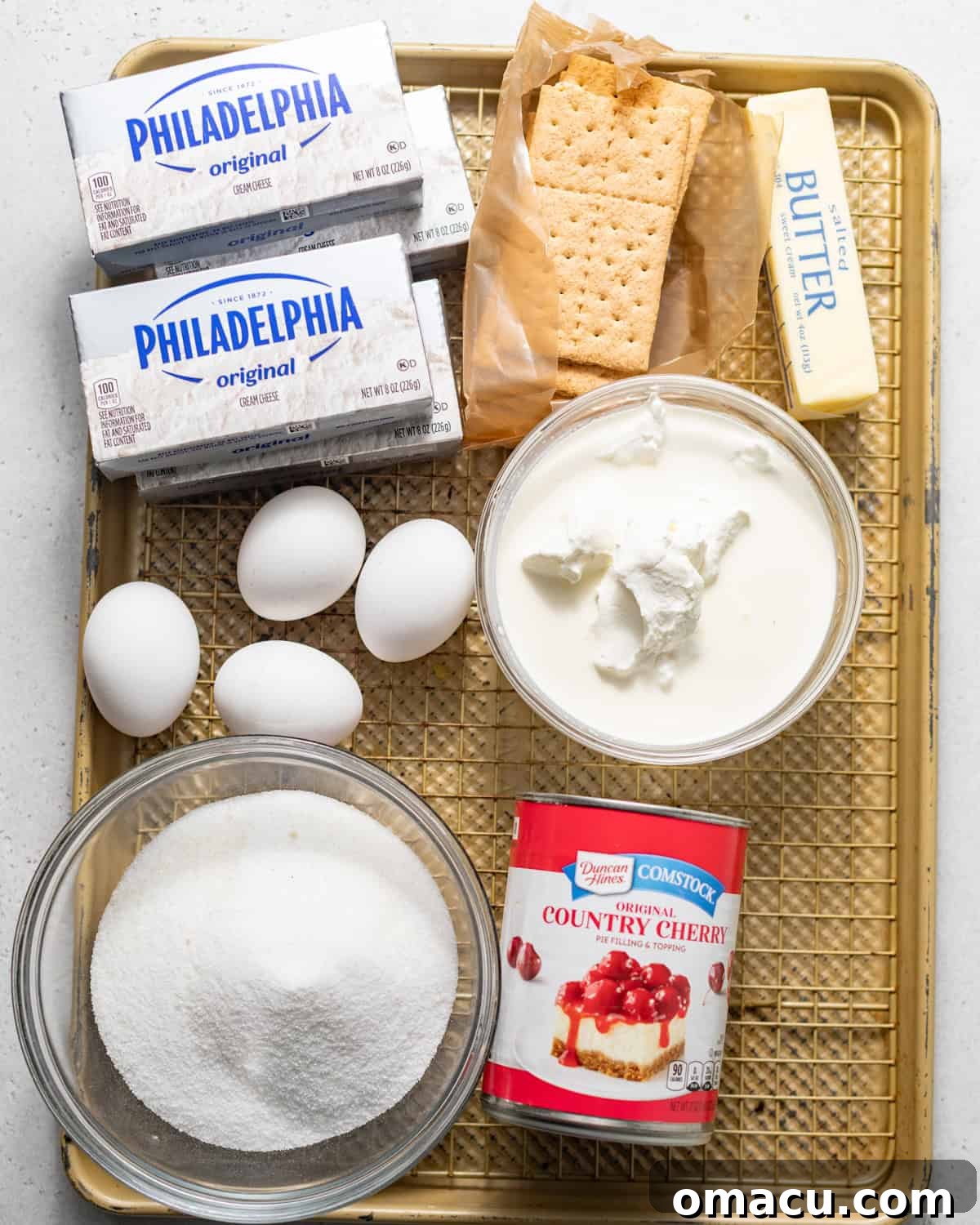
- Full-Fat Cream Cheese: This is the cornerstone of a truly decadent cheesecake. Opt for full-fat cream cheese (like Philadelphia cream cheese, a personal favorite) for that signature ultra-creamy, rich texture. It’s vital to use softened, room temperature cream cheese, so remember to take it out of the fridge at least 30 minutes to an hour before you start mixing. This ensures it blends smoothly without lumps. Please avoid using fat-free cream cheese, as it will drastically alter the texture and flavor of your cheesecake.
- Granulated Sugar: Provides the essential sweetness that balances the tang of the cream cheese and sour cream.
- Cornstarch: A secret ingredient for a perfectly stable cheesecake! Cornstarch acts as a thickening agent, helping to bind the filling ingredients together, preventing cracks during baking, and contributing to that silky-smooth consistency.
- Large Eggs: Eggs provide structure and richness to the cheesecake filling. Just like the cream cheese, room temperature eggs are crucial for smooth incorporation into the batter, preventing curdling and ensuring a consistent texture. Our recipe also calls for an additional large egg yolk, which adds extra richness and a vibrant color to the filling.
- Heavy Cream: This ingredient is key for achieving an incredibly luxurious and creamy texture that melts in your mouth. Similar to other dairy products, ensure your heavy cream is at room temperature. Cold heavy cream can cause the batter to become clumpy and prevent a smooth emulsion.
- Sour Cream: Sour cream plays a dual role: it introduces a delightful tang that beautifully balances the sweetness of the cheesecake, and it adds an incredible richness, contributing to an exquisitely creamy filling. Again, use room temperature sour cream for best results.
- Vanilla Extract: A classic flavor enhancer that adds warmth and depth to nearly any dessert, and cheesecake is no exception.
- Almond Extract: Just a touch of almond extract works wonders! It deepens the flavor profile and wonderfully complements the cherry topping, creating a sophisticated taste that really stands out.
- Lemon Juice: A small amount of fresh lemon juice is essential for balancing the sweet and creamy flavors, preventing the cheesecake from being overly heavy. It adds a subtle brightness that elevates the entire dessert. You only need about 1 tablespoon!
- Graham Crackers: The base for our perfectly buttery crust. You can use whole graham cracker sheets and pulse them into fine crumbs in a food processor, or for convenience, use about 2 cups of store-bought graham cracker crumbs.
- Melted Butter: Binds the graham cracker crumbs together, forming a sturdy and delicious crust. Using salted butter adds a nice counterpoint to the sweet crust and filling.
- Brown Sugar & Cinnamon (for the crust): Brown sugar adds a deeper, molasses-like sweetness and helps create a more tender crust. Cinnamon provides a warm, inviting aroma and flavor that perfectly complements the graham crackers and cherry topping.
- Cherry Pie Filling: For ultimate convenience and consistent flavor, we recommend using canned cherry pie filling. Fresh cherries have a short season, making canned filling a reliable choice year-round. You’ll need one 21 oz can. If you prefer to go the extra mile, you can certainly make your own homemade cherry pie filling.
How to Make a Cherry Cheesecake From Scratch
Creating a perfect homemade cherry cheesecake is a rewarding experience. Follow these detailed steps for a flawless result:
Prepare the Graham Cracker Crust
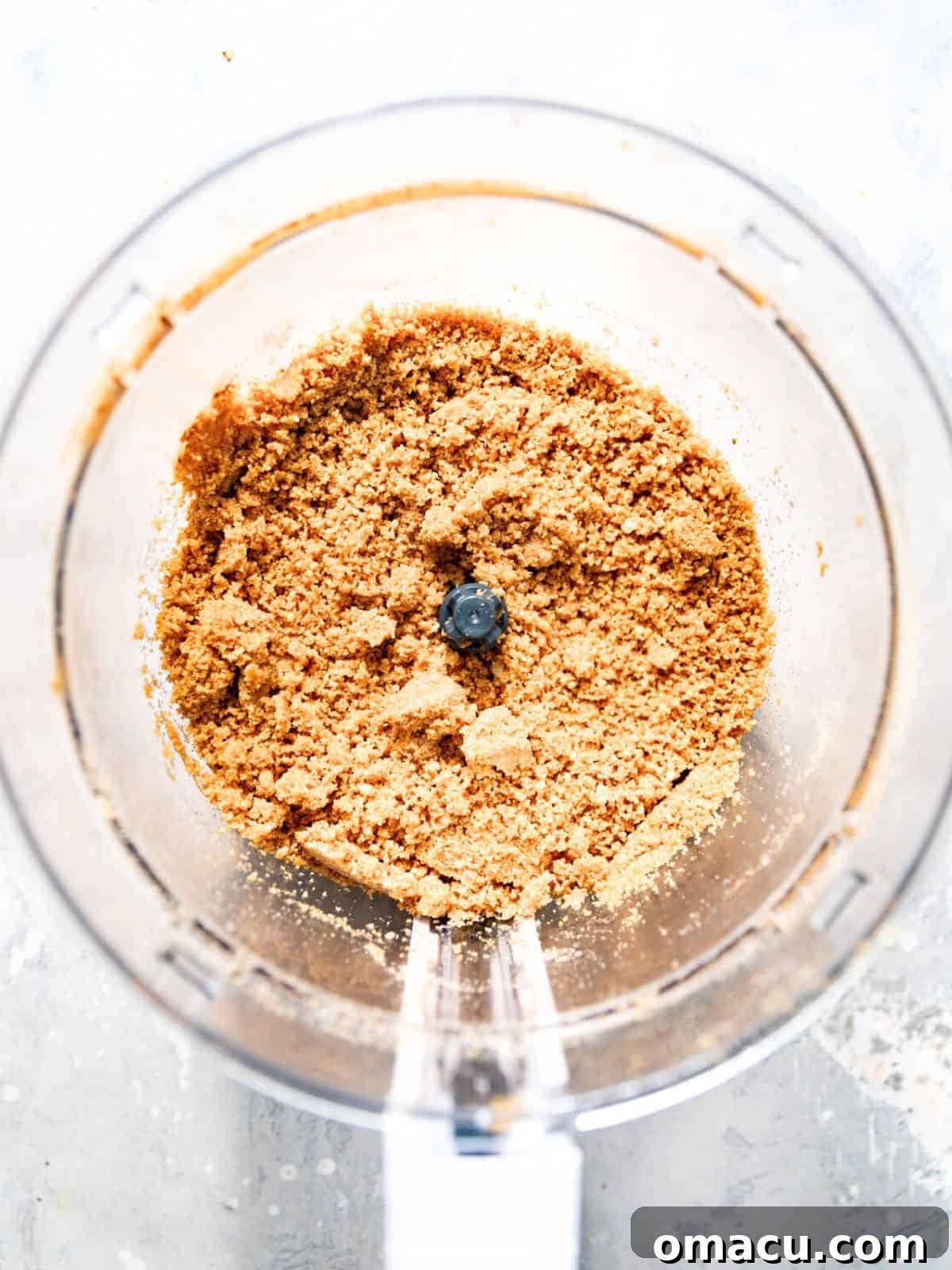
Step 1: Preheat Oven & Prepare Crust Mixture. Preheat your oven to 350°F (175°C). In a food processor, combine the graham cracker sheets (or 2 cups of crumbs), brown sugar, cinnamon, and a pinch of kosher salt. Pulse until very fine crumbs form, resembling sand. Pour in the melted salted butter and pulse again until the mixture is thoroughly combined and has the texture of wet sand. (Tip: To test the consistency, grab a handful of the crumbs and squeeze them. If they hold together and form a clumpy ball, they are perfect!)
While the crust bakes, heat 8 cups of water in a pot on the stovetop and bring it to a boil. This boiling water will be used for the crucial water bath later on.
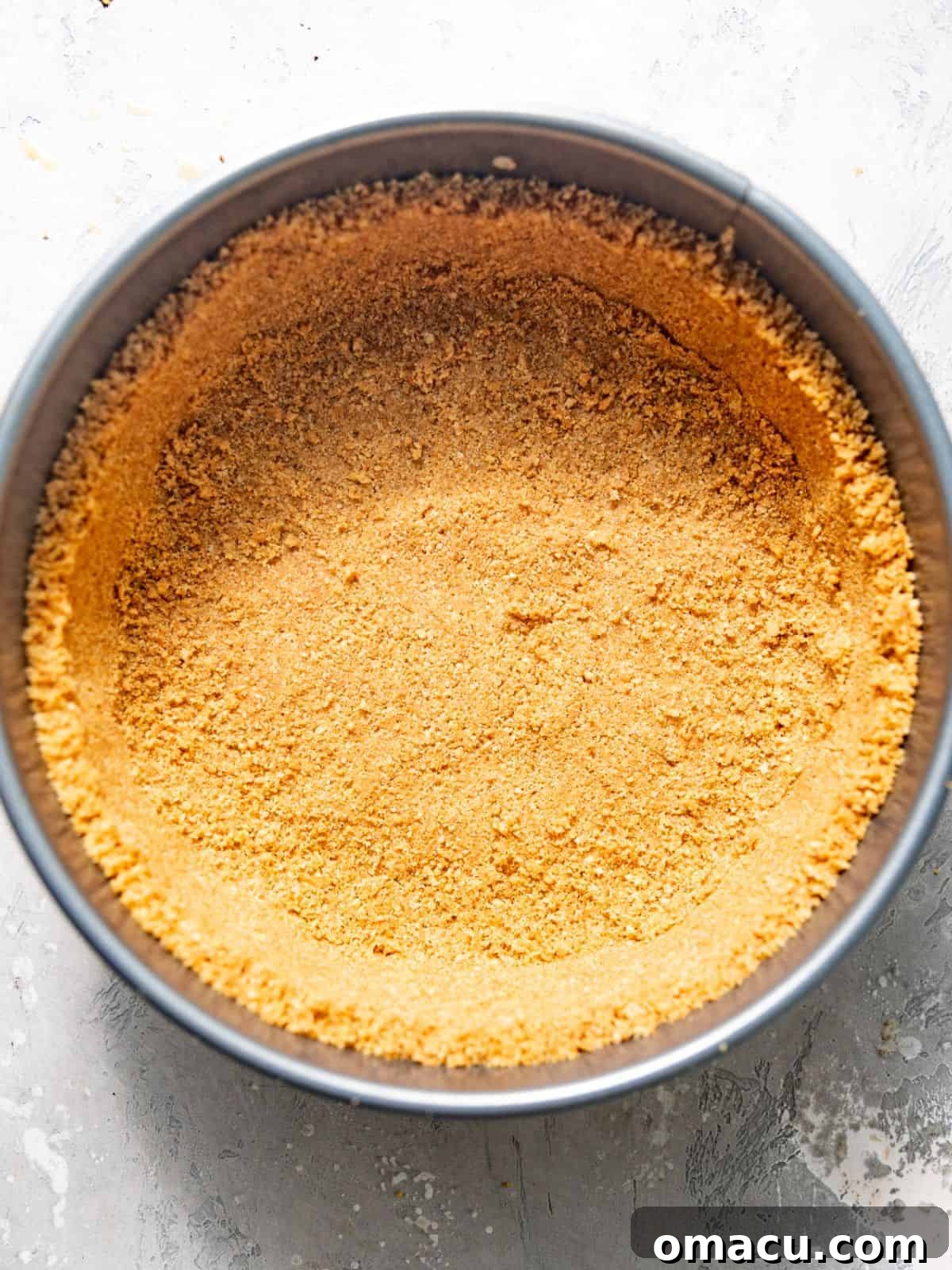
Step 2: Form & Bake the Crust. Lightly grease a 9-inch springform pan and line the bottom with a round of parchment paper for easy release. Transfer the graham cracker mixture into the prepared pan. Using the bottom of a flat glass or your fingers, firmly press the crumbs evenly into the bottom of the pan and about 1 to 1.5 inches up the sides, creating a sturdy crust. Bake the crust in the preheated oven for 10 minutes, or until it’s lightly golden brown and set. Remove from the oven and set aside to cool completely while you prepare the filling. Cooling the crust prevents the filling from becoming greasy.
Make the Cheesecake Filling
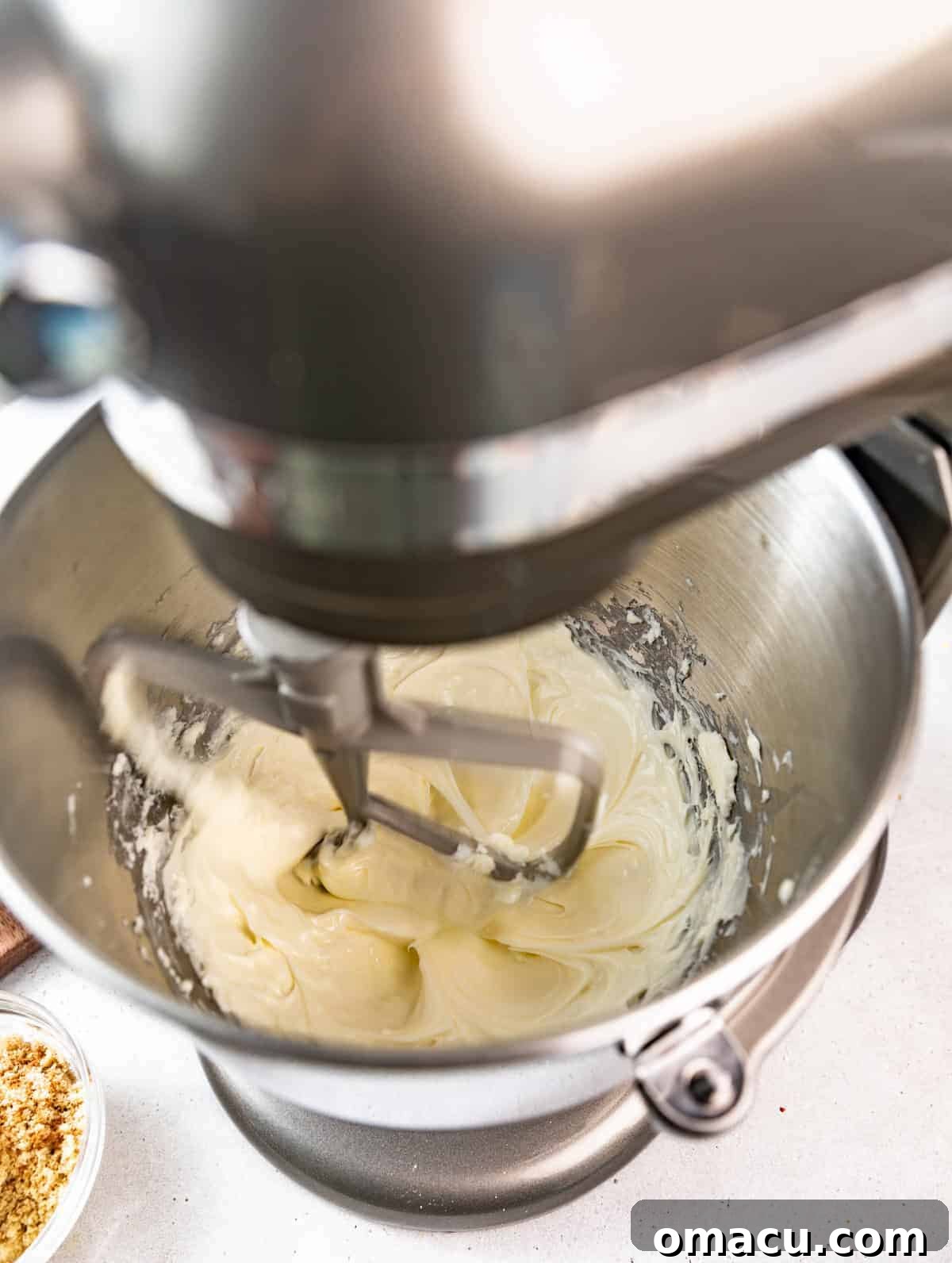
Step 3: Cream Cheese Base. In the bowl of a stand mixer fitted with the paddle attachment (or using a hand mixer), add the softened room temperature cream cheese, granulated sugar, and cornstarch. Beat on low speed for 3-4 minutes until the mixture is completely smooth and creamy, with no lumps visible. Ensure you scrape down the sides and bottom of the bowl frequently with a rubber spatula to incorporate all ingredients evenly. Overmixing at this stage can incorporate too much air, which can lead to cracks.
Next, add the vanilla extract, almond extract, and lemon juice. Mix for another 20-30 seconds until just combined. Scrape down the bowl again. Begin adding the large eggs one at a time, along with the single egg yolk, mixing on low speed after each addition only until just incorporated. Avoid overmixing once the eggs are added.
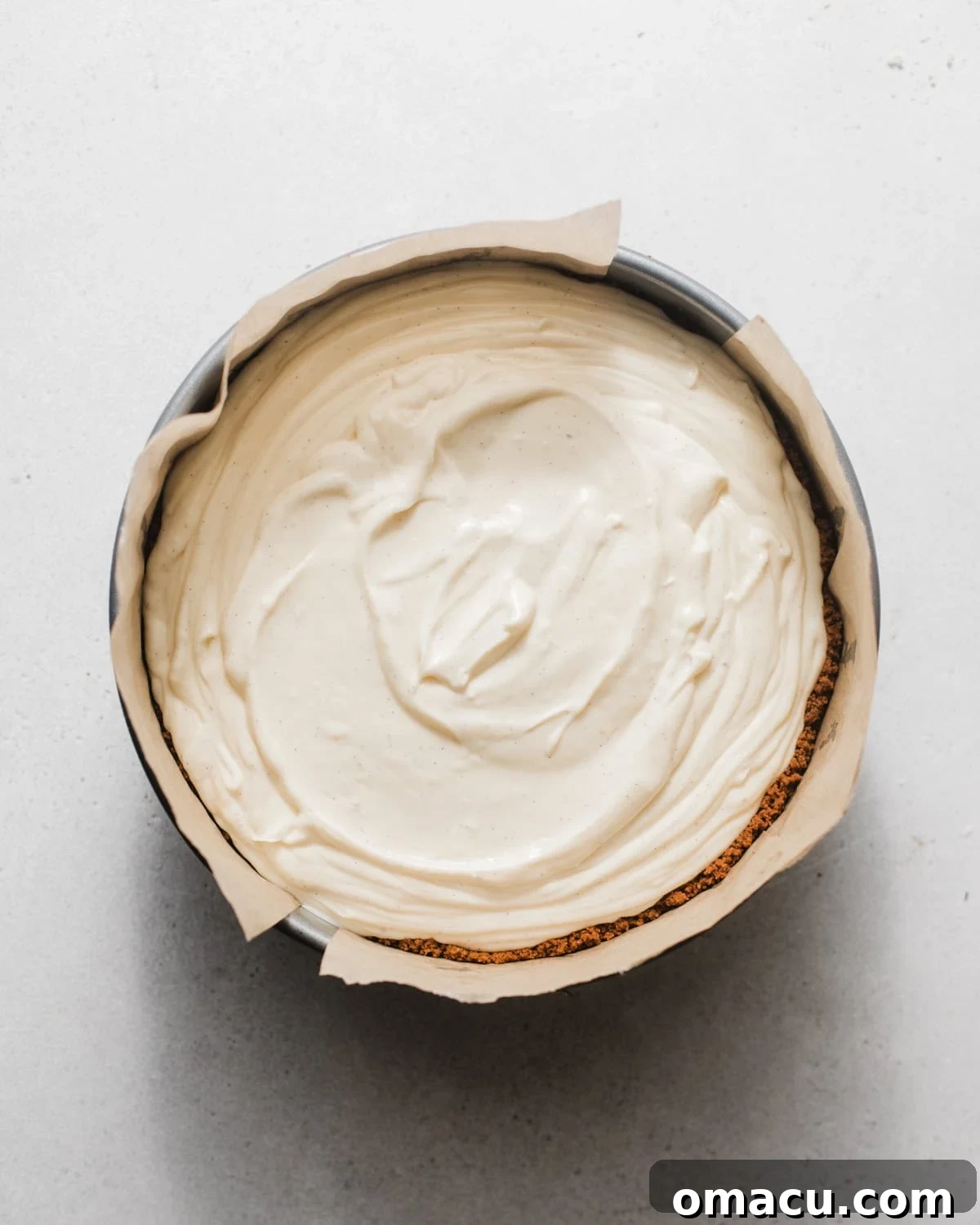
Step 4: Finish the Filling. After the eggs are incorporated, scrape down the sides and bottom of the bowl one last time to ensure everything is perfectly blended. Add the room temperature sour cream and heavy cream. Mix on low speed until the filling is uniformly smooth and creamy. Mix for another 10-15 seconds if needed, but be careful not to overmix and incorporate too much air. The goal is a dense, silky batter.
Pour the finished cheesecake batter into the cooled graham cracker crust in the springform pan. Gently tap the pan on the counter a few times to release any large air bubbles. Use an offset spatula or the back of a spoon to smooth the top into an even layer.
Bake the Cheesecake
- Prepare the Water Bath: Carefully place a larger 9×13 inch baking pan on the bottom rack of your oven. Pour the hot boiling water (prepared in Step 1) into this baking pan. The water should be hot enough to create steam immediately.
- Bake the Cheesecake: Gently place the springform pan with the cheesecake batter onto the middle rack of the oven, above the water bath. Quickly close the oven door to trap in the steam created by the hot water. This steam is crucial for preventing cracks and ensuring a creamy texture. Bake for 1 hour and 15 to 20 minutes. The cheesecake is done when the edges are slightly puffed and set, but the center still has a slight jiggle, much like a firm jello.
- Slow Cooling is Key: Once the baking time is complete, turn off the oven but leave the cheesecake inside with the oven door propped open slightly (using a wooden spoon or oven mitt). Let it cool slowly in the gradually cooling oven for one full hour. This gradual temperature change is essential to prevent cracking.
- Final Chill: After an hour in the oven, remove the cheesecake and let it sit at room temperature for another 30 minutes. Once it has cooled down sufficiently, carefully transfer it to the refrigerator. Chill for a minimum of 4 hours, though for the absolute best results and firmest texture, chilling it overnight is highly recommended.
- Serve with Cherry Topping: Just before you are ready to serve this magnificent dessert, retrieve it from the refrigerator. Evenly spread the canned cherry pie filling over the top of the chilled cheesecake. Slice and enjoy your perfectly creamy, homemade cherry cheesecake!
Expert Tips for the Perfect Cherry Cheesecake
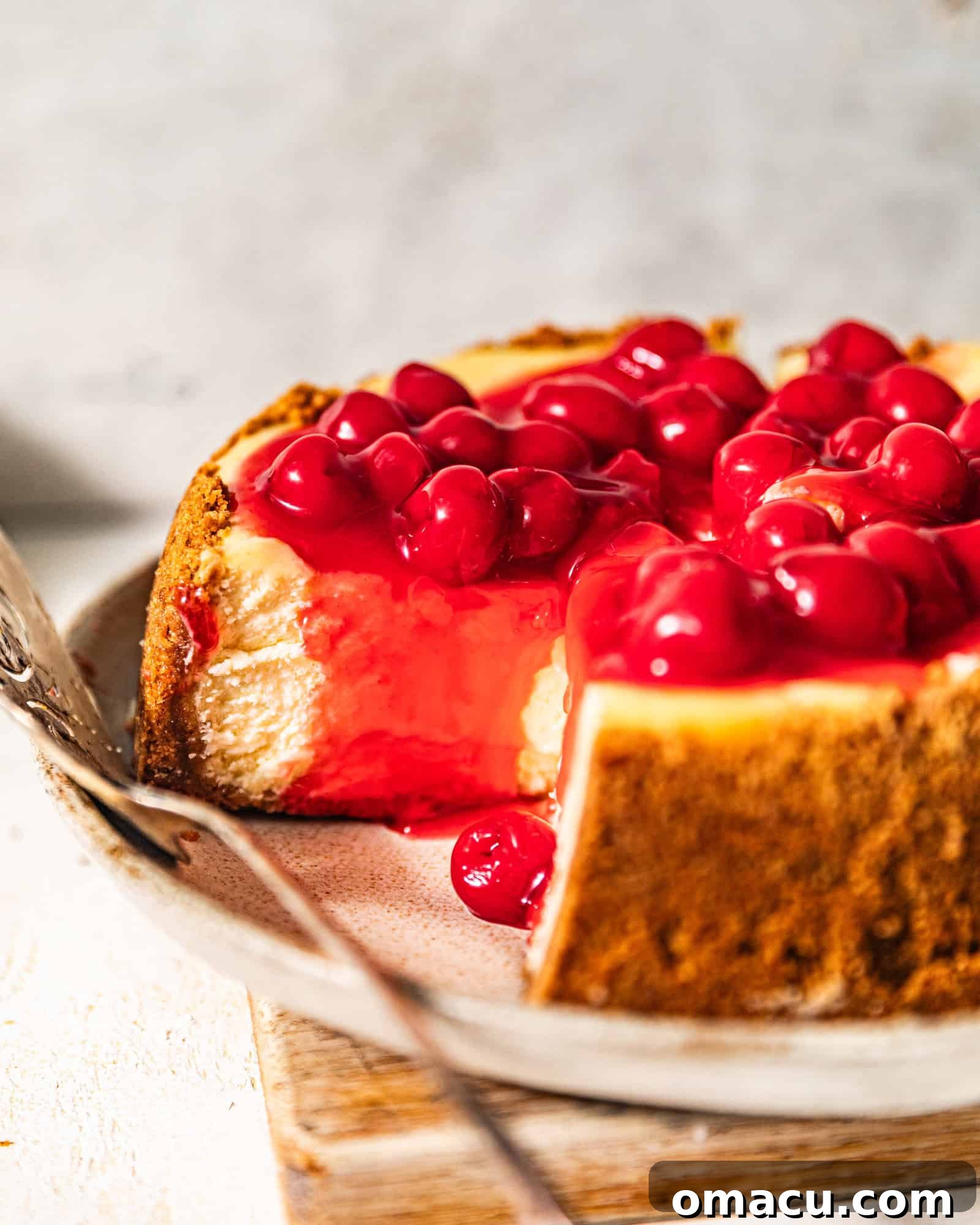
Crafting a flawless cheesecake can seem daunting, but with these pro tips, you’ll achieve a bakery-worthy dessert every time:
- Embrace Room Temperature Ingredients: This is arguably the most critical tip for a smooth cheesecake batter. Ensure your cream cheese, eggs, heavy cream, and sour cream are all at room temperature. Cold ingredients will resist blending, leading to a lumpy batter and potential curdling. For best results, take these ingredients out of the refrigerator 30 minutes to an hour before you begin mixing. As an alternative for a quicker soften, you can place sealed packages of cream cheese and containers of sour cream/heavy cream in warm water for about 20-30 minutes.
- The Power of the Water Bath: Don’t skip the water bath – it’s your best friend for a crack-free, silky cheesecake! A water bath (or bain-marie) creates a steamy, humid environment in your oven, which prevents the cheesecake from drying out, baking too quickly, and ultimately, cracking. It’s quite simple: place a larger roasting pan on the bottom rack of your oven, pour boiling water into it, then place your cheesecake on the middle rack. Close the oven door quickly to trap the steam. This gentle, even heat is key to that signature creamy texture.
- Patience with Cooling Time: The cooling process is just as important as the baking itself. Allowing the cheesecake to cool very slowly prevents drastic temperature changes that can lead to cracks. After baking, turn off the oven and prop the door open slightly, letting the cheesecake sit inside for one hour. This gentle cooling continues the setting process. Afterward, let it cool at room temperature for another 30 minutes before refrigerating for at least 4 hours, or ideally, overnight.
- Resist the Urge to Peek: Once your cheesecake is baking, do not open the oven door! Each time the door is opened, the oven temperature drops, which can cause the cheesecake to cool too rapidly and lead to cracking. Trust the baking time and rely on visual cues through the oven door, if possible, or wait until the recommended baking time has passed before checking.
- Utilize an Electric Mixer: Cheesecake batter is dense, and a hand mixer or stand mixer is indispensable for achieving a truly smooth, lump-free filling. While hand mixing is possible, an electric mixer ensures all ingredients are thoroughly combined without overworking them, which can incorporate too much air. Use the paddle attachment on a stand mixer and beat on low speed.
- Prevent Overmixing: While a mixer is essential, overmixing, especially after adding eggs, can incorporate too much air into the batter. These air bubbles expand during baking and then collapse upon cooling, leading to cracks. Mix on low speed and only until ingredients are just combined.
- Proper Springform Pan Prep: Ensure your springform pan is well-sealed. You can wrap the outside bottom and sides of the pan with heavy-duty aluminum foil (multiple layers are best) to prevent any water from the water bath from seeping in, which could lead to a soggy crust.
How to Know When Your Cheesecake is Done
Determining the perfect doneness for a cheesecake is key to its creamy texture. Look for these indicators:
- The “Jiggle Test”: The edges of the cheesecake should appear slightly puffed and set. The center, however, should still have a slight, gentle jiggle when the pan is lightly tapped or gently shaken. It should not be liquidy, but rather resemble a firm custard or jello.
- Internal Temperature: For a more precise measurement, you can use an instant-read thermometer. Insert it into the center of the cheesecake (avoiding the crust). The ideal internal temperature for a perfectly baked cheesecake is between 150-155°F (65-68°C).
It’s important to remember that cheesecakes continue to cook and set as they cool. Overbaking can lead to a dry texture and cracks. Always allow your cheesecake to cool completely at room temperature before refrigerating it for the final set.
No-Bake Cherry Cheesecake Option!
Short on time or simply looking for a refreshingly light no-bake alternative? Our no-bake cherry cheesecake option is perfect! Simply follow the instructions for our classic Philadelphia No-Bake Cheesecake recipe, then generously pour the delicious cherry pie filling over the top just before serving. It delivers all the delightful cherry flavor and creamy texture without turning on the oven, making it an ideal summer dessert or a quick weeknight treat.
Storing, Freezing, and Making Ahead
Proper storage is essential to maintain the freshness and quality of your homemade cherry cheesecake. Here’s how to ensure it stays delicious:
- Storing: To store your baked cherry cheesecake, first, make absolutely sure it has cooled completely and been thoroughly chilled in the refrigerator. Cheesecake should always be stored in the refrigerator. To prevent air exposure, which can dry out the cheesecake and absorb odors, cover it tightly with plastic wrap or aluminum foil. Alternatively, transfer slices or the whole cheesecake (if it fits) to an airtight container. Stored correctly in the refrigerator, your cherry cheesecake will remain fresh and delicious for up to 5-7 days.
- Freezing: For longer-term storage, freezing is an excellent option. It’s generally best to freeze the cheesecake without the cherry topping, as the texture of fruit filling can sometimes become watery or mushy upon thawing. Wrap the cooled and chilled cheesecake tightly in several layers of plastic wrap, then an additional layer of heavy-duty aluminum foil to prevent freezer burn. You can then place it in a large airtight freezer-safe container or bag. Frozen cheesecake can last for up to 1-2 months. When ready to serve, thaw the cheesecake overnight in the refrigerator. Add the cherry topping just before serving for the best texture and appearance.
- Making Ahead: Cherry cheesecake is an ideal make-ahead dessert, perfect for busy hosts! Prepare and bake the cheesecake according to the recipe instructions, allowing it to cool and chill thoroughly. However, hold off on adding the cherry topping until you are just about ready to serve. Once the cheesecake has fully cooled and set in the refrigerator, cover it tightly and store it in the fridge for up to 24-48 hours. This allows the flavors to meld beautifully and ensures the cheesecake is perfectly set. Adding the topping last minute keeps it fresh and vibrant.
Recipe FAQs
Cheesecake cracks are a common frustration, but usually preventable! There are two main culprits. Firstly, rapid temperature changes are a significant factor. If a cheesecake cools too quickly (e.g., being removed from a hot oven directly to a cool counter), the sudden contraction can cause cracks. Allowing it to cool slowly in a turned-off oven with the door propped open is crucial. Secondly, overmixing the batter, particularly after adding the eggs, can incorporate too much air. These air bubbles expand during baking, and as the cheesecake cools and contracts, they burst, leading to cracks on the surface.
Yes, cherry cheesecake freezes wonderfully, making it perfect for meal prep or enjoying later. For best results, it’s highly recommended to freeze the cheesecake without the cherry topping. Fruit toppings can sometimes change texture (becoming watery or mushy) once thawed. To freeze, ensure the cheesecake is completely cooled and chilled. Wrap it tightly in several layers of plastic wrap, then an additional layer of heavy-duty aluminum foil to prevent freezer burn. You can store it in the freezer for up to 1-2 months. Thaw the cheesecake overnight in the refrigerator before adding the cherry topping and serving.
Sour cream is a fantastic addition to cheesecake for several reasons. It contributes a distinctive tangy flavor that beautifully balances the richness and sweetness of the cream cheese, preventing the dessert from being cloyingly sweet. Beyond flavor, its high fat content and creamy consistency significantly enhance the overall texture of the cheesecake, making the filling even smoother and more luxurious. It also adds a subtle richness that truly elevates the dessert.
Yes, Greek yogurt can be a suitable substitute for sour cream in cheesecake, offering a similar tangy flavor and creamy texture. When substituting, be aware that Greek yogurt is often thicker than sour cream, so you might need to adjust the consistency of your cheesecake batter slightly. Opt for full-fat, plain Greek yogurt for the best results, as fat-free or flavored varieties may alter the final taste and texture too much.
Cornstarch is a secret ingredient for a perfect cheesecake! It’s added to help stabilize the filling, acting as a gentle thickening agent. This helps prevent cracks during baking by providing additional structure to the custard-like filling. It also absorbs excess moisture, contributing to an even smoother, creamier, and more stable texture in the finished cheesecake. It’s a small addition with a big impact on the cheesecake’s integrity.
Absolutely! While cherry is a classic, this versatile cheesecake base pairs wonderfully with a variety of fruit toppings. Consider fresh berries like strawberries, blueberries, or raspberries, either as is or lightly macerated. You could also try a mixed berry compote, a vibrant lemon curd, or even a decadent chocolate ganache for a different flavor profile. The creamy filling is a perfect canvas for your favorite flavors!
More Irresistible Cheesecake Recipes
If you’ve fallen in love with this cherry cheesecake, you’ll definitely want to try these other delicious cheesecake creations:
- Brown Butter Pecan Pie Cheesecake
- Matcha Cheesecake
- Strawberry Cheesecake Recipe
- Chocolate Chip Cheesecake
- Tiramisu Cheesecake
- Cherry Cheesecake Bars
- Snickerdoodle Cheesecake
Want more delicious and beautiful recipes delivered straight to your inbox? Subscribe to my newsletter to receive the latest seasonal creations as soon as they’re released!
If you try this incredible cherry cheesecake recipe, please take a moment to leave a star rating on the recipe card below and share your thoughts in the comments! You can also tag @BritneyBreaksBread on Instagram and use the hashtag #britneybreaksbread so I can see and celebrate your beautiful creations!
Classic Cherry Cheesecake
By Britney
Summary: Indulge in this perfectly creamy cherry cheesecake, a classic dessert featuring a silky smooth cream cheese filling, a buttery graham cracker crust, and a vibrant cherry pie topping. A delicious complement of sweet cherries, rich creaminess, and a crisp base.
Prep Time: 45 mins
Cook Time: 1 hr 15 mins
Resting Time: 5 hrs 30 mins
Total Time: 7 hrs 30 mins
Servings: 10 servings
Equipment
- 9 inch springform pan
- Stand Mixer
- 9×13 baking dish (for the water bath)
- Food Processor (optional, for graham cracker crumbs)
Ingredients
Graham Cracker Crust
- 18 Graham Cracker Sheets (or 2 cups of graham cracker crumbs)
- 1/4 cup (55 g) Brown Sugar
- 1/2 tsp (1 g) Cinnamon
- 1/4 tsp (1.5 g) Kosher Salt
- 10 tbsps (140 g) Salted Butter, melted
Cherry Cheesecake Filling & Topping
- 32 oz (908 g) Full-Fat Cream Cheese, room temperature
- 1 1/2 cups (300 g) Granulated Sugar
- 2 tbsp (16 g) Cornstarch
- 3 Large Eggs, room temperature
- 1 Large Egg Yolk, room temperature
- 2 tsp (4 g) Vanilla Extract
- 1/2 tsp (2 g) Almond Extract
- 1 tbsp (15 g) Lemon Juice
- 1 cup (230 g) Sour Cream, room temperature
- 1/2 cup (119 g) Heavy Cream, room temperature
- 21 oz (595 g) Cherry Pie Filling (canned)
Instructions
Prepare the Graham Cracker Crust
- Preheat the oven to 350°F (175°C). Begin preparing the graham cracker crust: In a food processor, combine graham cracker sheets, brown sugar, cinnamon, and kosher salt. Pulse until fine crumbs form. Pour in the melted butter and pulse until the mixture is smooth and resembles wet sand. (Tip: Squeeze some crumbs; if they stick together, they’re ready!)
- Lightly grease a 9-inch springform pan and line the bottom with parchment paper. Add the graham cracker crumbs to the pan. Press the crumbs evenly into the bottom and up the sides of the pan to form a crust. Bake in the preheated oven for 10 minutes, until golden brown and set. Remove and set aside to cool completely. While the crust bakes, bring 8 cups of water to a boil in a pot for the water bath.
Make the Cheesecake Filling
- In the bowl of a stand mixer fitted with the paddle attachment (or using a hand mixer), combine the room temperature cream cheese, granulated sugar, and cornstarch. Beat on low speed for 3-4 minutes until the mixture is smooth and creamy, scraping down the sides of the bowl often.
- Add the vanilla extract, almond extract, and lemon juice. Mix for 20-30 seconds until just combined. Scrape down the bowl. Add the large eggs and the egg yolk, one at a time, mixing on low speed only until each egg is fully incorporated before adding the next. Avoid overmixing once eggs are added.
- Scrape down the sides of the bowl again. Add the room temperature sour cream and heavy cream. Mix on low speed until the filling is smooth and uniform. Scrape down the bowl one last time and mix for another 10-15 seconds to ensure everything is well combined.
Bake the Cheesecake
- Pour the cheesecake batter into the cooled graham cracker crust in the springform pan. Smooth the top into an even layer with an offset spatula or butter knife.
- Carefully place a 9×13 inch baking dish filled with hot boiling water onto the bottom rack of your oven. Place the springform pan with the cheesecake onto the middle rack, above the water bath. Quickly close the oven door to trap in the steam. Bake for 1 hour and 15-20 minutes, or until the edges are set and slightly puffed, but the center still has a slight jiggle (like jello).
- Turn off the oven and prop the oven door open slightly. Let the cheesecake sit in the oven for one hour to cool slowly. Then remove it from the oven and let it sit at room temperature for 30 minutes. Transfer to the refrigerator and chill for at least 4 hours, or ideally, overnight, for the best results.
- Just before serving, evenly pour the cherry pie filling on top of the chilled cheesecake. Slice and enjoy!
Notes
- How to Know When Cheesecake is Done: The edges of the cheesecake should be slightly puffed and set, while the center still has a gentle jiggle. Alternatively, the internal temperature should be around 150-155°F (65-68°C) when measured with an instant-read thermometer. Remember, cheesecake continues to set as it cools, so avoid overbaking.
- Tips for the Perfect Cheesecake:
- Room Temperature Ingredients: Always use room temperature cream cheese, eggs, sour cream, and heavy cream for a smooth, lump-free batter.
- Water Bath: Crucial for preventing cracks and ensuring a creamy texture. The steam provides even, gentle heat.
- Slow Cooling: Allow the cheesecake to cool gradually in the oven with the door cracked, then at room temperature, before chilling. This prevents cracking.
- Don’t Open the Oven: Avoid opening the oven door during baking to maintain a consistent temperature and prevent cracks.
- Use an Electric Mixer: An electric mixer ensures a silky-smooth batter without lumps, but be careful not to overmix, especially after adding eggs.
- Prevent Overmixing: Overmixing incorporates too much air, which can lead to cracks. Mix on low speed and only until ingredients are just combined.
- Storing, Freezing, and Making Ahead:
- Storing: Once completely cooled and chilled, cover the cheesecake tightly with plastic wrap or aluminum foil and store in the refrigerator for up to 5-7 days.
- Freezing: Freeze the cheesecake (without the cherry topping) wrapped tightly in plastic wrap and foil for up to 1-2 months. Thaw overnight in the refrigerator before adding topping.
- Making Ahead: Prepare and bake the cheesecake up to 24-48 hours in advance. Store it chilled and covered, adding the cherry topping just before serving.
Nutrition
Nutrition information is automatically calculated, so should only be used as an approximation:
- Calories: 844kcal
- Carbohydrates: 81g
- Protein: 11g
- Fat: 55g
- Saturated Fat: 31g
- Polyunsaturated Fat: 3g
- Monounsaturated Fat: 14g
- Trans Fat: 0.5g
- Cholesterol: 223mg
- Sodium: 581mg
- Potassium: 264mg
- Fiber: 0.4g
- Sugar: 47g
- Vitamin A: 2117IU
- Vitamin C: 3mg
- Calcium: 146mg
- Iron: 1mg
Tried this recipe?Mention @BritneyBreaksBread or tag #BritneyBreaksBread!