
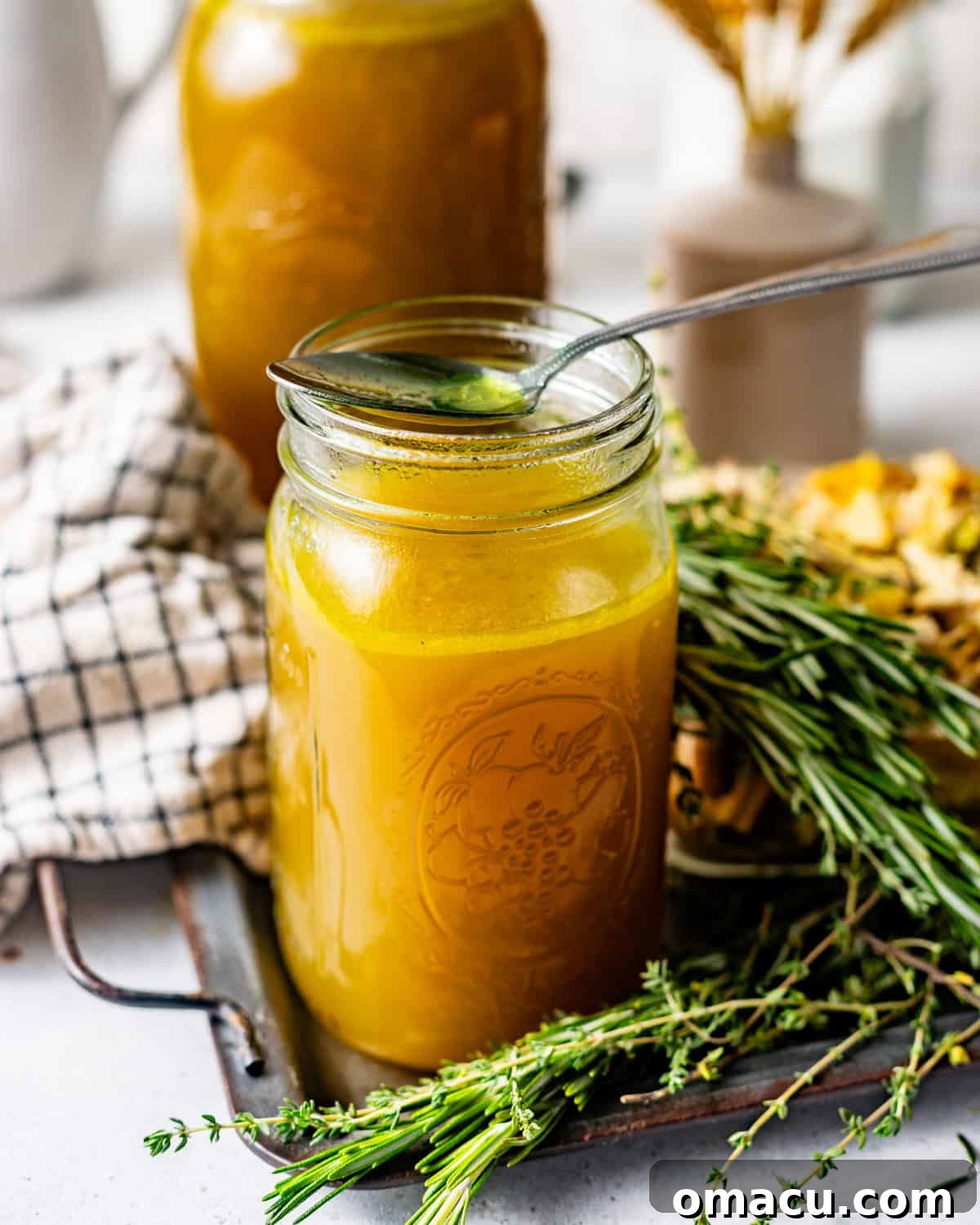
This Homemade Chicken Broth is liquid gold in a pot. A whole chicken simmers low and slow with fresh vegetables, herbs, turmeric and a couple of flavor-boosting tricks to create a rich, deeply savory broth that far surpasses anything in a carton. Once you make it from scratch, there’s no going back.
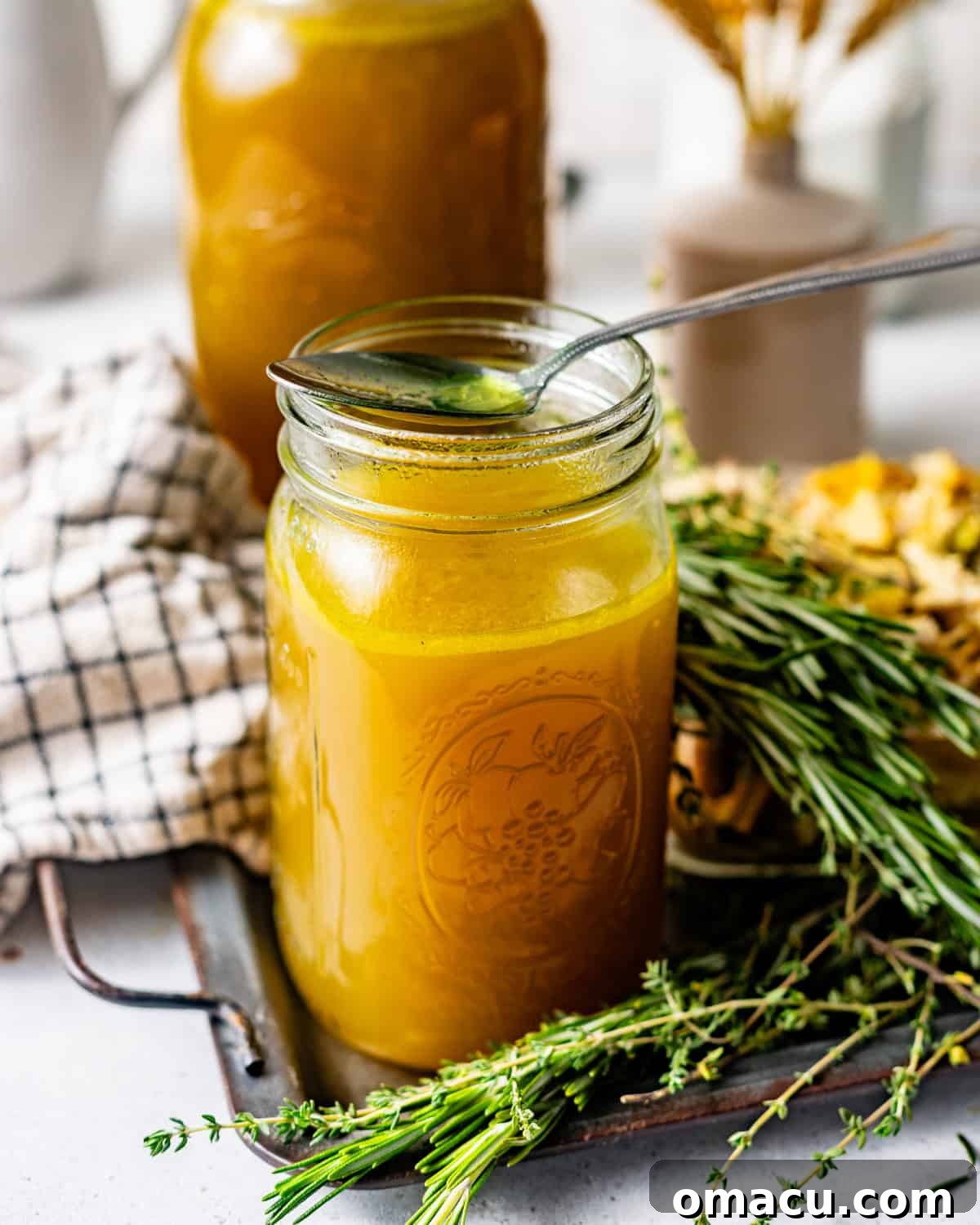
I love making homemade chicken broth. It fills the house with a cozy aroma and always turns out flavorful — not watery or bland like many store-bought broths. The secret is patience: a gentle, extended simmer extracts maximum flavor and collagen from the bones and aromatics.
This broth is a kitchen staple for soups, sauces, grains and pan sauces. Make a big batch, strain it well, and freeze portions so you always have great tasting liquid on hand.
Table of contents
- Why You’ll Love This Homemade Chicken Broth
- Ingredients
- Variations & Substitutions
- How to Make It
- Pro Tips
- Storage
- FAQs
- Nutrition
Why You’ll Love This Homemade Chicken Broth
- Whole chicken for depth: Using a whole bird delivers richer, fuller flavor and body than boneless cuts alone.
- Fresh herbs and aromatics: Rosemary, thyme and parsley add bright, layered aromatics you don’t get from dried seasonings.
- Golden color and gentle warmth: Turmeric gives a beautiful hue and a subtle earthy note.
- Flavor boost: A small amount of chicken bouillon paste (optional) adds concentrated savory depth when you want it.
- Clear, restaurant-quality finish: Double-straining (first through a colander, then through paper towels or a fine cloth) removes tiny particles and produces a clear broth.
Homemade Chicken Broth Ingredients
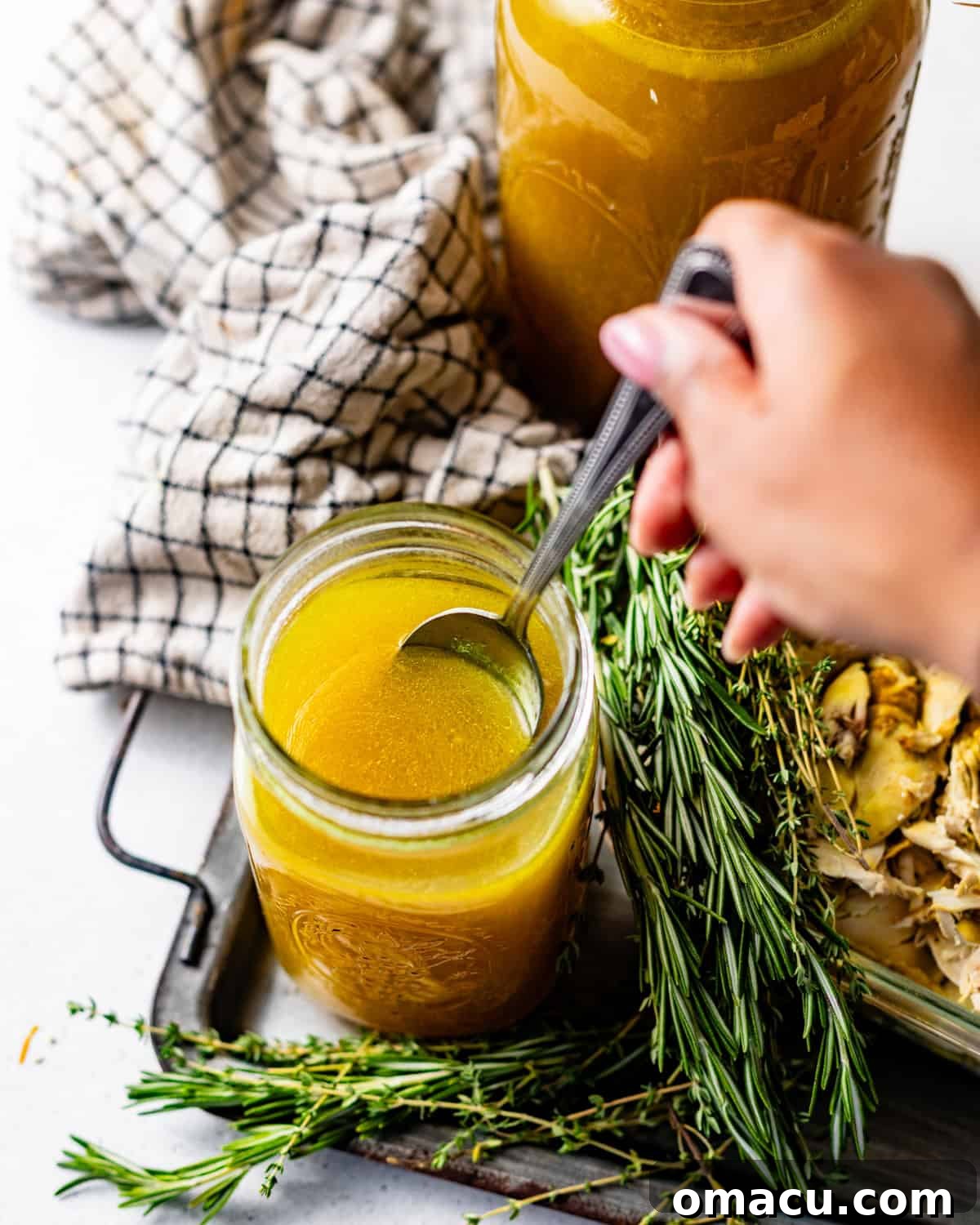
The quantities below reflect the stovetop recipe for roughly 10 cups of broth. Adjust as needed.
- 1 whole chicken (4–5 lbs), cavity emptied
- 4 carrots, cut into large chunks
- 4 celery stalks, cut into large chunks
- 2 onions, quartered (leave a clean layer of skin if you want deeper color)
- 8 cloves garlic, smashed
- 3 bay leaves
- 1 tbsp whole peppercorns
- 1 tbsp garlic powder and 1 tbsp onion powder (optional)
- 2 tsp turmeric
- Fresh parsley, rosemary and thyme (several sprigs of each)
- 10–12 cups filtered water, enough to cover the chicken
- 1 tbsp chicken bouillon paste (optional)
- 2 tbsp vinegar (helps extract collagen)
Variations & Substitutions
- No whole chicken? Use a mix of bone-in pieces: thighs, drumsticks, wings, backs or necks. Bones like backs and necks add excellent body.
- Add a parmesan rind while simmering for extra savory complexity.
- Use leeks instead of one onion for a sweeter, more delicate base.
- No fresh herbs? Use 1 tsp each dried rosemary and thyme as a substitute; the flavor will be less bright but still good.
How to Make Homemade Chicken Broth
Step 1 — Prep the chicken: Remove any innards from the cavity and place the chicken into a large stockpot cavity-side down.
Step 2 — Add aromatics and water: Add carrots, celery, onion, smashed garlic, bay leaves, peppercorns, garlic powder, onion powder, turmeric, parsley, rosemary and thyme. Pour in 10–12 cups of filtered water, then stir in the bouillon paste (if using) and the vinegar.
Step 3 — Simmer low and slow: Bring to a brief boil over medium-high heat, then immediately reduce to low and keep at a gentle simmer. Partially cover with a lid. After about 1 hour skim any foam that rises to the top. Continue to simmer for at least 2 more hours; simmering 4–10 hours will deepen the flavor even further. Keep the liquid level topped up so the chicken and vegetables remain submerged.
Step 4 — Remove the chicken: Carefully lift the chicken from the pot and set it aside to cool. Shred the meat off the bones for use in soups or other recipes.
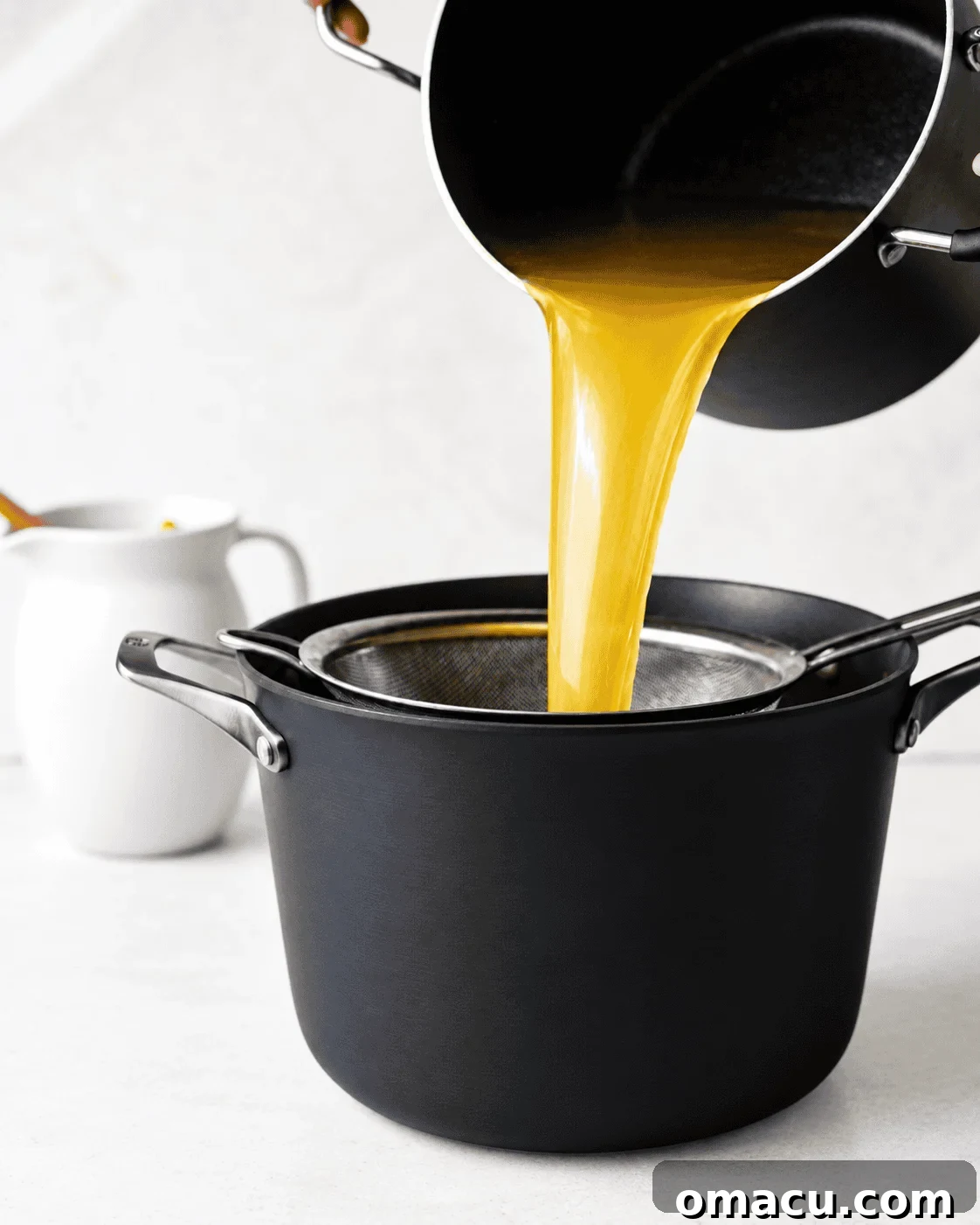
Step 5 — Strain the broth: Pour the broth through a large colander positioned over a bowl to remove solids. For a clear finish, strain a second time by placing 2–3 layers of paper towel or a fine cloth over the strainer and slowly pouring the broth through.
Step 6 — Cool and store: Allow the broth to cool to room temperature, then transfer to airtight containers and refrigerate within two hours.
Pro Tips
- Low and slow: Maintain a gentle simmer rather than a vigorous boil to keep the broth clear and the flavor clean.
- Double-strain: The second strain through paper towels or a fine cloth removes tiny particles and yields a crystal-clear broth.
- Cavity-side down: Placing the chicken cavity-side down prevents it from filling with broth and makes it much easier to lift from the pot without splashing.
- Watch reduction: On long simmers check the liquid level and add a splash of water if it drops too low. Some reduction is fine and concentrates flavor.
- Vinegar matters: A small amount helps extract collagen from bones, producing a silkier mouthfeel. You won’t taste vinegar in the finished broth.
Storage Suggestions
Refrigerate strained broth in airtight containers within two hours and use within 4–5 days. A layer of fat may solidify on top as it chills; remove it for a lighter broth or leave it for extra richness. For longer storage, freeze in freezer-safe containers or zip-top bags (laid flat for stacking) for up to 3 months. Freezing in 1–2 cup portions makes it easy to thaw exactly what you need.
FAQs
Broth is typically made with meat and seasoned for sipping or serving, while stock relies more on bones and is often cooked longer to extract more collagen. This recipe uses a whole bone-in chicken, giving you the savory depth of broth with some of the body of stock.
Taste it. After a minimum 3-hour simmer the broth should be savory, balanced and richly flavoured. If it tastes thin, simmer longer until it reaches the intensity you prefer.
Cloudiness usually results from boiling too vigorously or not straining well. Keep to a gentle simmer, skim foam during the first hour, and double-strain for a clearer result.
Peeling isn’t required for carrots if they’re scrubbed, and keeping a clean layer of onion skin can deepen the broth’s color. Rough chopping is fine because the vegetables are strained out.
Nutrition
Nutrition values will vary depending on the exact ingredients and amounts used. An approximate per-cup serving for the finished broth: Calories: 188 kcal; Carbohydrates: 5 g; Protein: 15 g; Fat: 12 g; Sodium: varies. Use nutrition info as an estimate.
More Ways to Use This Broth
This broth is an excellent base for soups, stews, risottos and grain cooking. Use it to make chicken noodle soup, chicken and dumplings, creamy wild rice soup, or to deglaze pans for pan sauces. Keep batches frozen so you always have a flavorful base ready.
If you try this recipe, save a little feedback or a rating where you keep the recipe. Homemade broth is rewarding and versatile — once you taste it, you’ll understand why it’s worth the time.