
Welcome to the ultimate guide for crafting the **best meringue cookies recipe** you’ll ever encounter! These delightful, airy treats are renowned for their delicate crunch and wonderfully chewy centers, making them an irresistible addition to any occasion. Whether you’re planning a festive holiday cookie exchange, seeking an elegant dessert for a baby shower, or simply craving a sweet, light indulgence, these classic meringue cookies fit the bill perfectly. With just 5 simple ingredients and a clear, guided technique, even novice bakers can achieve impressive, bakery-quality results. Let’s embark on this sweet journey together and discover the secrets to perfectly glossy, stable, and utterly delicious meringues.
Looking to expand your holiday baking repertoire? Don’t miss these charming snowflake cookies and sophisticated gingerbread macarons!
This post may contain affiliate links, which means I may earn a small commission if you make a purchase through them, at no extra cost to you.

Table of Contents
- Essential Meringue Ingredients
- Recommended Equipment for Meringues
- Top Tips for Perfect Meringue Cookies
- Creative Meringue Cookie Variations
- How to Make Meringue Cookies: A Step-by-Step Guide
- Storing Meringue Cookies for Lasting Freshness
- Meringue Cookie Recipe FAQs
- More Delightful Cookie Recipes
- Printable Meringue Cookies Recipe Card
Meringue cookies hold a special place in my heart, especially when curating my annual holiday cookie box. Their exquisite appearance, often resembling tiny edible clouds or elegant kisses, makes them incredibly appealing. Beyond their charming looks, it’s their truly unique and utterly delightful texture that sets them apart. Imagine a cookie that offers a perfectly crisp, almost brittle exterior, yielding to a wonderfully soft and chewy interior—much like a gourmet marshmallow. This enchanting contrast between the crunchy shell and the tender, melt-in-your-mouth center creates an unexpected yet consistently welcomed treat in any dessert spread.
Despite their sophisticated appearance, these classic vanilla meringue cookies are surprisingly straightforward to prepare. The process involves creating a stable, glossy meringue, carefully transferring it to a pastry bag, and then artfully piping individual meringues onto a baking sheet. With a bit of patience and attention to detail, you’ll be amazed at how easily you can produce these show-stopping confections. Their delicate nature and elegant presentation ensure they are a hit not just for holiday cookie plates, but also for celebrations like baby showers, festive birthdays, and even as charming wedding favors. Truly, these little delicate cookies are guaranteed to impress, no matter the time of year or the nature of the gathering.
Essential Meringue Ingredients
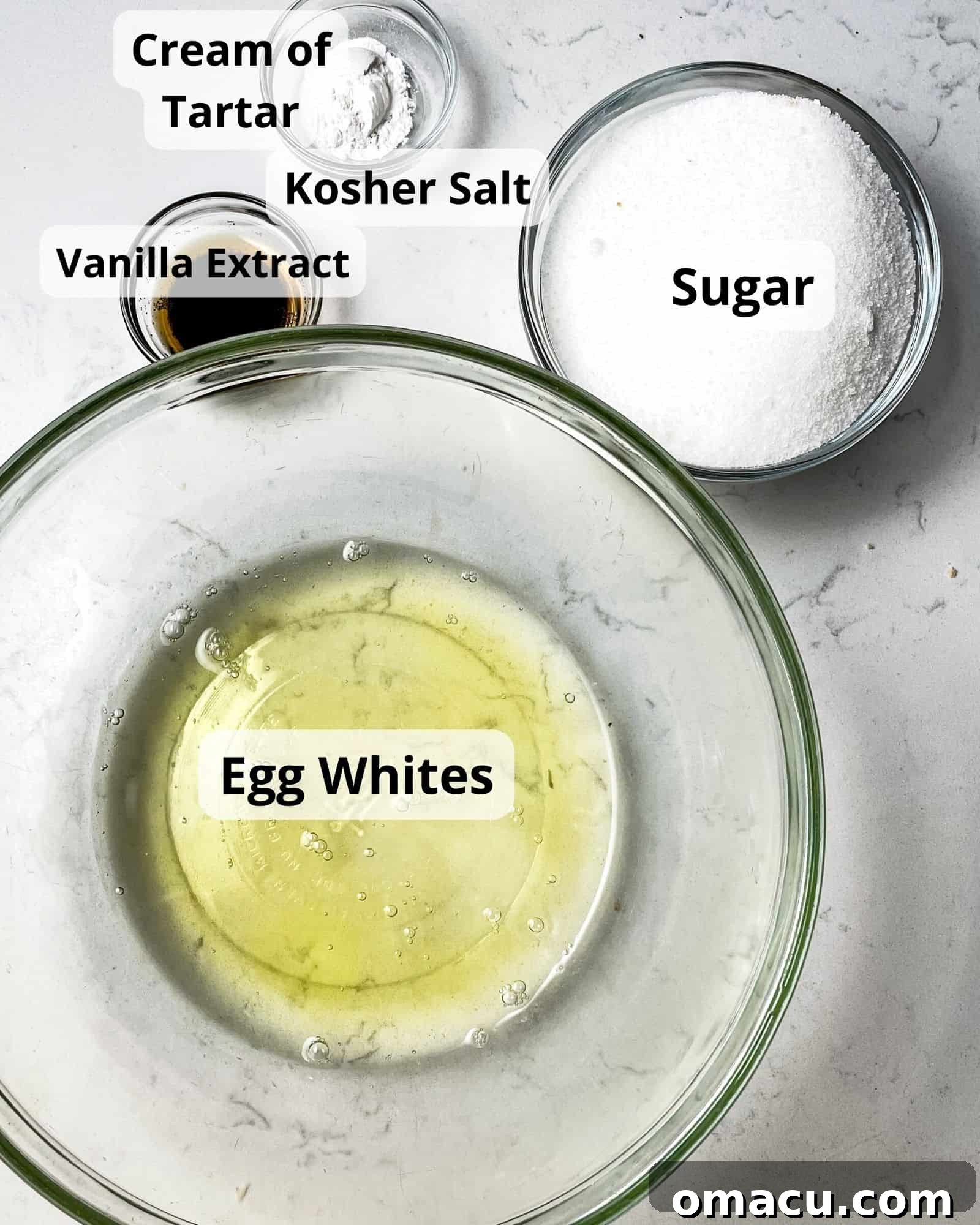
Crafting perfect meringue cookies relies on a handful of simple, high-quality ingredients. Each plays a crucial role in achieving that signature airy texture and delicate sweetness.
- Large Egg Whites: These are the foundation of your meringue. It’s absolutely crucial to use room temperature egg whites. Why? Eggs at room temperature have a lower surface tension, allowing them to whip up much faster, incorporate more air, and form a more stable, voluminous meringue. Cold egg whites are denser and will take significantly longer to reach stiff peaks, potentially leading to a less stable result. Don’t let those leftover egg yolks go to waste! They’re perfect for enriching other desserts, like a rich gingerbread creme brulee.
- Sugar: While standard granulated sugar can be used, for the absolute best results, I highly recommend using superfine sugar or caster sugar. These finer sugars dissolve more readily into the egg whites, preventing a gritty texture in the finished meringue and contributing to a smoother, glossier appearance. If you spot superfine sugar at your grocery store, definitely opt for it! If not, you can pulse regular granulated sugar in a food processor for a few seconds to achieve a finer consistency.
- Vanilla Extract: This ingredient is essential for imparting that classic, comforting sweet flavor to your meringue cookies. Use a good quality pure vanilla extract for the best aromatic depth. You’ll be surprised how much flavor this small addition provides to the overall profile of these delicate cookies.
- Cream of Tartar: This often-overlooked ingredient is a true game-changer in meringue making. Cream of tartar is an acidic salt that acts as a stabilizer for the egg whites. It helps to strengthen the protein structure in the whipped egg whites, preventing them from collapsing and ensuring your meringue holds its shape beautifully. It also aids in achieving those distinct, stiff peaks and can help eliminate tiny air bubbles, resulting in a perfectly sturdy, glossy meringue. Without it, your meringues might be more prone to weeping or deflating.
- Pinch of Salt: A tiny pinch of kosher salt might seem insignificant, but it plays a vital role in balancing and enhancing all the other flavors. Just as salt brings out the best in savory dishes, it does wonders in sweet recipes too, brightening the vanilla and sugar notes without making the meringue taste salty. It truly helps to bring everything together harmoniously.
Recommended Equipment for Meringues
Having the right tools can make all the difference in achieving perfect meringue cookies. While the ingredient list is short, precision in preparation is key, and the following equipment will ensure your success.
- Stand Mixer or Electric Hand Mixer: A stand mixer fitted with a whisk attachment is ideal for meringue, as it allows for continuous, consistent whipping, freeing your hands to slowly add sugar. An electric hand mixer can also work well, though it requires more manual effort. Attempting to whisk meringue by hand is incredibly strenuous and rarely yields the same stable results.
- Two Large Baking Sheets: You’ll need enough surface area to pipe all your meringues without overcrowding them. Using two sheets allows for proper air circulation, which is crucial for even baking and drying.
- Parchment Paper: Absolutely essential for preventing meringues from sticking to the baking sheets. It also provides a non-stick surface that allows for easy removal once the cookies are baked and cooled.
- Piping Bag: A sturdy piping bag is necessary for shaping your meringue cookies. Disposable bags are convenient for easy cleanup.
- Large Star Piping Tip: (I used Ateco tip 829) This tip creates beautiful, classic meringue “kisses” with distinct ridges, giving your cookies an attractive professional finish. You can experiment with other tips for different shapes, but a large star tip is a fantastic starting point.
- Oven Thermometer: While not strictly a piece of mixing equipment, an oven thermometer is invaluable. Ovens can often be inaccurate, and a precise, low temperature is critical for baking meringues without browning them. This small tool ensures your oven is calibrated correctly, preventing under or over-baking.
Top Tips for Perfect Meringue Cookies
Meringue cookies are surprisingly easy to make, but they thrive on precision and a few key techniques. Follow these expert tips to ensure your delicate, chewy cookies turn out perfectly flawless every single time, without any of the common meringue mishaps.
- Start with a Spotlessly Clean Bowl: This is perhaps the most critical step. Even a tiny speck of grease or residual moisture in your mixing bowl can prevent egg whites from whipping up properly. Before adding your egg whites, thoroughly clean the bowl of your stand mixer (or large mixing bowl) and the whisk attachment. My secret? Add a little lemon juice to a paper towel and wipe the bowl and whisk clean. The acidity of the lemon juice helps to cut through any invisible oils. Ensure everything is completely dry before proceeding. If there’s any impurity, your meringue simply won’t form those beautiful, glossy, stiff peaks.
- Gradually Add the Sugar: Patience is paramount here. When you start beating the egg whites, allow them to become foamy and bubbly first. Then, begin adding your sugar very slowly, about one tablespoon at a time, while the mixer is running on medium-high speed. This gradual addition allows the sugar granules to fully dissolve into the egg whites, creating a smooth and stable meringue. You’ll know the sugar is completely dissolved when you rub a tiny bit of the meringue between your fingers and it no longer feels gritty. The meringue should be silky smooth and glossy.
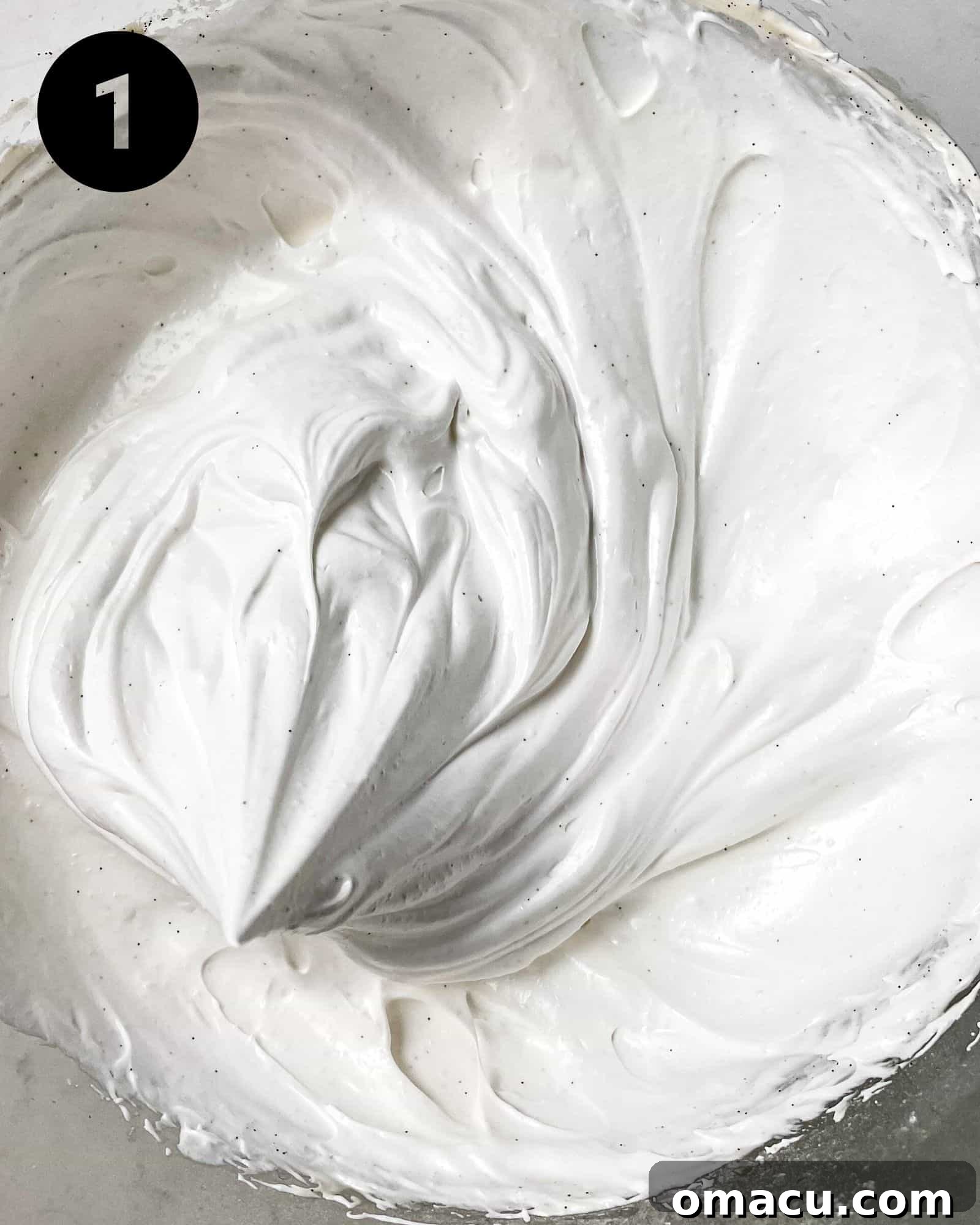
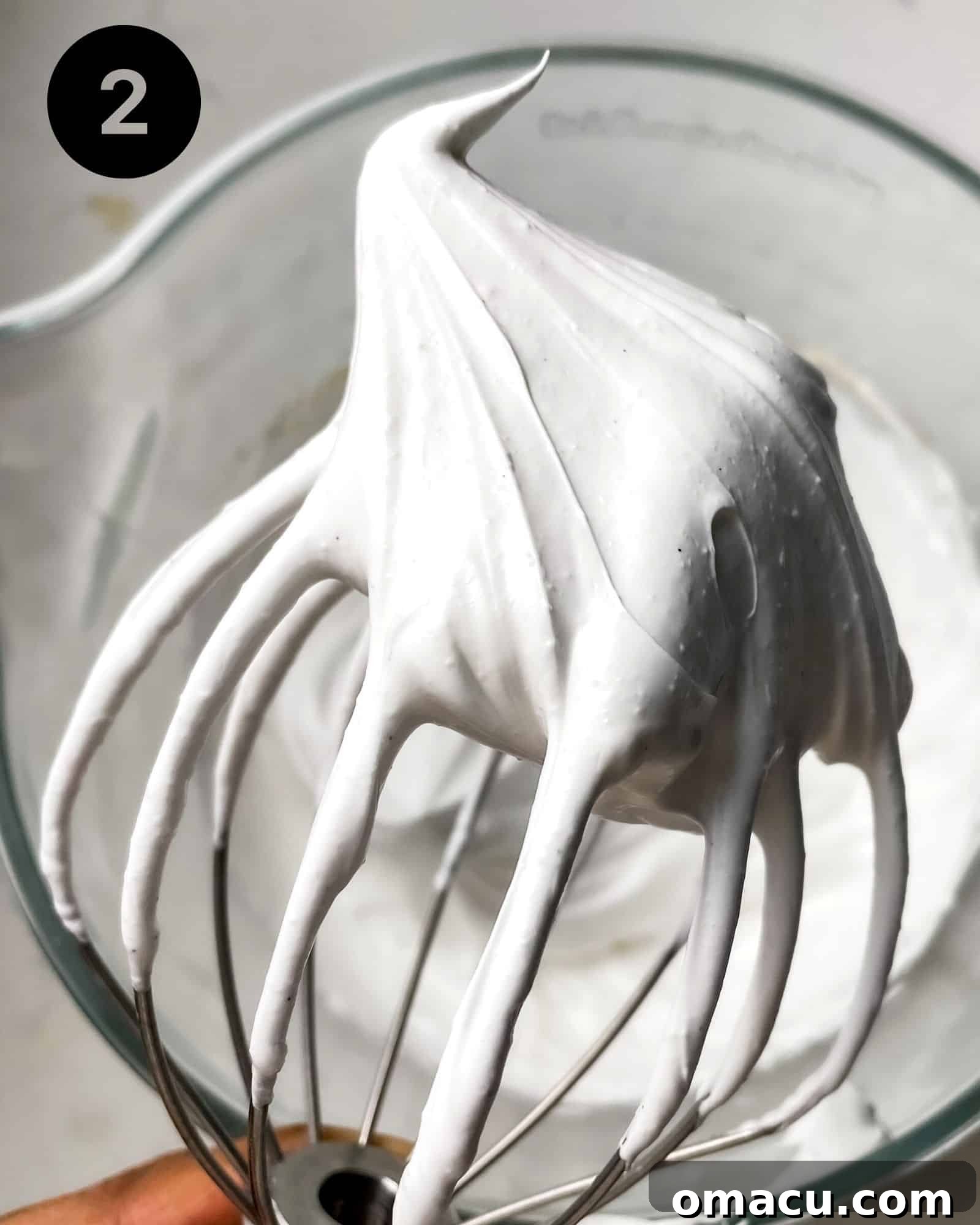
- Beat to Stiff Peaks – But Don’t Overbeat: Meringue can indeed be fickle, so understanding what “stiff peaks” looks like is key. Continue beating the egg whites on medium-high speed until they are bright white, incredibly glossy, and form firm peaks that stand up straight when you lift the whisk. If you invert the bowl, the meringue should not budge. This can take some time, so be patient! However, as soon as you’ve reached these stiff peaks, stop beating immediately. Overbeating meringue can cause it to become dry, granular, and prone to cracking during baking.
- Room Temperature Eggs are a Must: As mentioned in the ingredients section, using room temperature egg whites is non-negotiable for the best meringue. They whip up significantly faster and more efficiently, incorporating maximum air volume and resulting in a much more stable meringue that holds its shape beautifully. Plan ahead and take your eggs out of the refrigerator at least 30 minutes to an hour before you plan to bake.
- Work Swiftly Once Meringue is Made: Once your perfect, glossy meringue is formed, time is of the essence. Do not let the meringue sit out for too long. The delicate air bubbles can begin to deflate, causing the meringue to reduce in volume and become syrupy or less stable. For the best results, aim to pipe your meringues onto the baking sheet and get them into the preheated oven within 15 minutes of finishing the whipping process.
- Ensure Accurate Oven Temperature with a Thermometer: Many home ovens run hotter or colder than their display indicates. Meringues require a very precise, low temperature to bake slowly and dry out, rather than browning or burning. Invest in an inexpensive oven thermometer and place it inside your oven to verify the true temperature. This small step makes a world of difference in preventing cracked, discolored, or undercooked meringues.
- Resist the Urge to Open the Oven Door: This is perhaps the hardest rule to follow, but it’s crucial! While your meringues are baking and drying, DO NOT OPEN THE OVEN DOOR. As tempting as it may be to peek, opening the door causes a sudden and significant drop in temperature (often 30-50 degrees Fahrenheit). This abrupt change in temperature can shock the delicate meringues, leading to cracking, collapsing, or a longer cooking time. Keep that door sealed until the specified baking time is complete and the cooling process begins.
- Monitor Humidity Levels: Meringues are notoriously sensitive to humidity. On very humid days, the extra moisture in the air can prevent meringues from drying out properly, leading to a sticky, chewy, or even weeping texture. If possible, choose a dry day to bake meringues. If you must bake on a humid day, consider increasing the baking time slightly and ensuring your oven’s lowest setting is consistently maintained.
Creative Meringue Cookie Variations
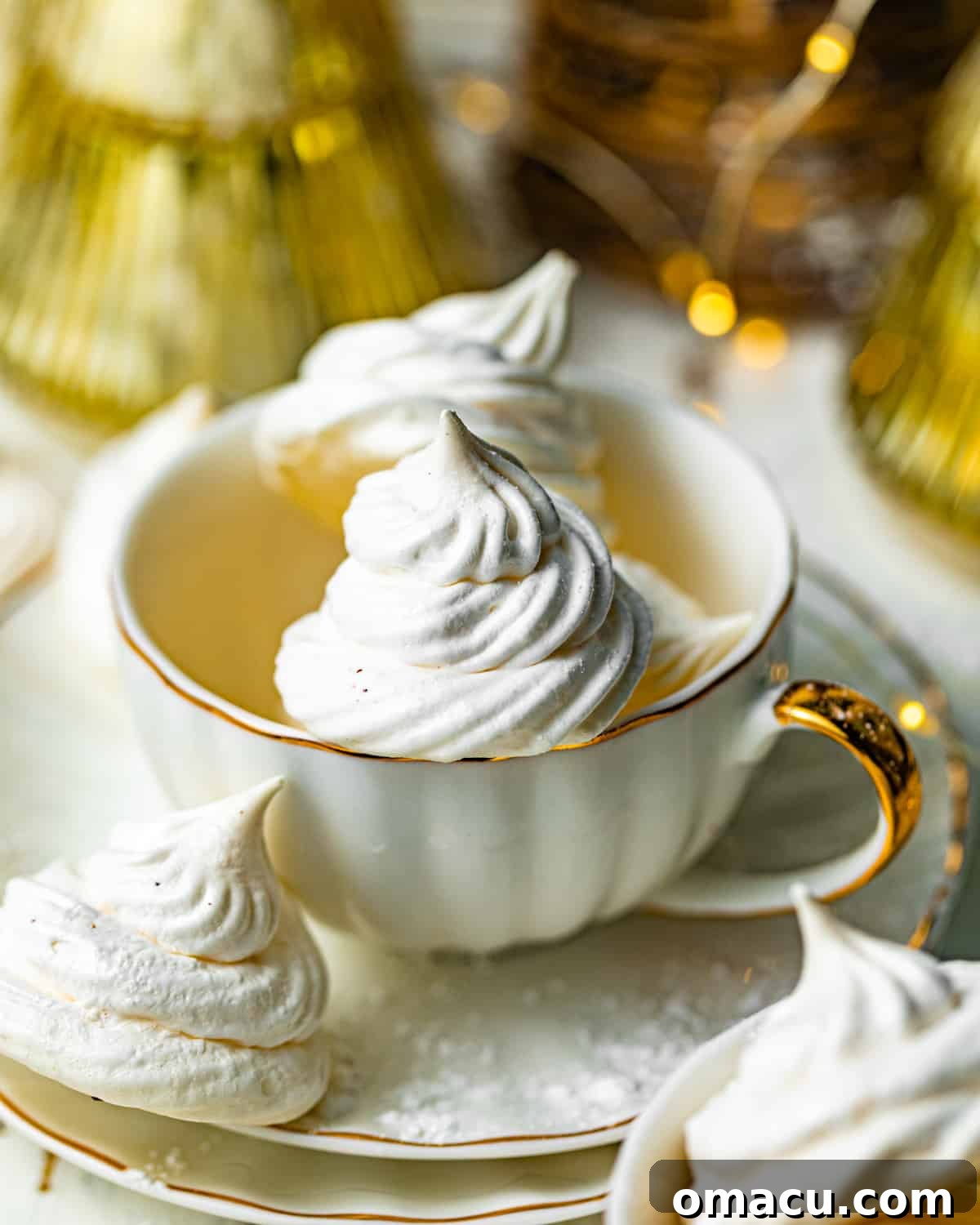
While classic vanilla meringue cookies are undeniably delicious, their simple base makes them incredibly versatile for flavor experimentation. Don’t be afraid to get creative and customize these delicate treats to suit any palate or occasion.
- Flavor Infusions: Elevate the classic vanilla by adding different extracts. A hint of almond extract can provide a sophisticated nutty note, while lemon zest folded in at the end brightens the flavor profile beautifully. For a chocolatey twist, sift a tablespoon or two of unsweetened cocoa powder into the sugar before adding it to the egg whites. Other exciting options include peppermint extract for holiday meringues or even a touch of coffee extract for an elegant after-dinner treat.
- Chocolate Dipped Elegance: For an extra layer of decadence, once your meringue cookies are completely cooled, dip the bottoms or drizzle them with melted dark, milk, or white chocolate. The crisp meringue paired with smooth, rich chocolate creates a truly irresistible combination. You can then sprinkle them with sea salt or chopped nuts before the chocolate sets.
- Lemon Meringue Cookies: Transform these chewy meringues into a miniature version of a classic dessert. Use those leftover egg yolks (from making the meringues!) to whip up a luscious batch of homemade lemon curd. Once the meringues are baked and cooled, pipe or spoon a small dollop of tangy lemon curd onto the flat side of one meringue, then top with another, creating delightful lemon meringue “sandwiches.”
- Vibrant Food Coloring: Add a pop of color to your meringues for special events or themed parties. Gel food coloring works best, as it’s concentrated and won’t add excess moisture. Add a few drops to your meringue mixture after the stiff peaks have formed and gently fold it in until the desired hue is achieved. You can even swirl multiple colors for a marbled effect!
- Eton Mess: Don’t limit meringues to just standalone cookies! I always save at least one baking tray’s worth of meringues to make Eton Mess. This quintessentially English dessert is a delightful medley of crushed vanilla meringue cookies, fresh berries (strawberries are traditional), and softly whipped cream. It’s an incredibly simple yet impressively delicious dessert that highlights the crunchy texture of the meringues perfectly.
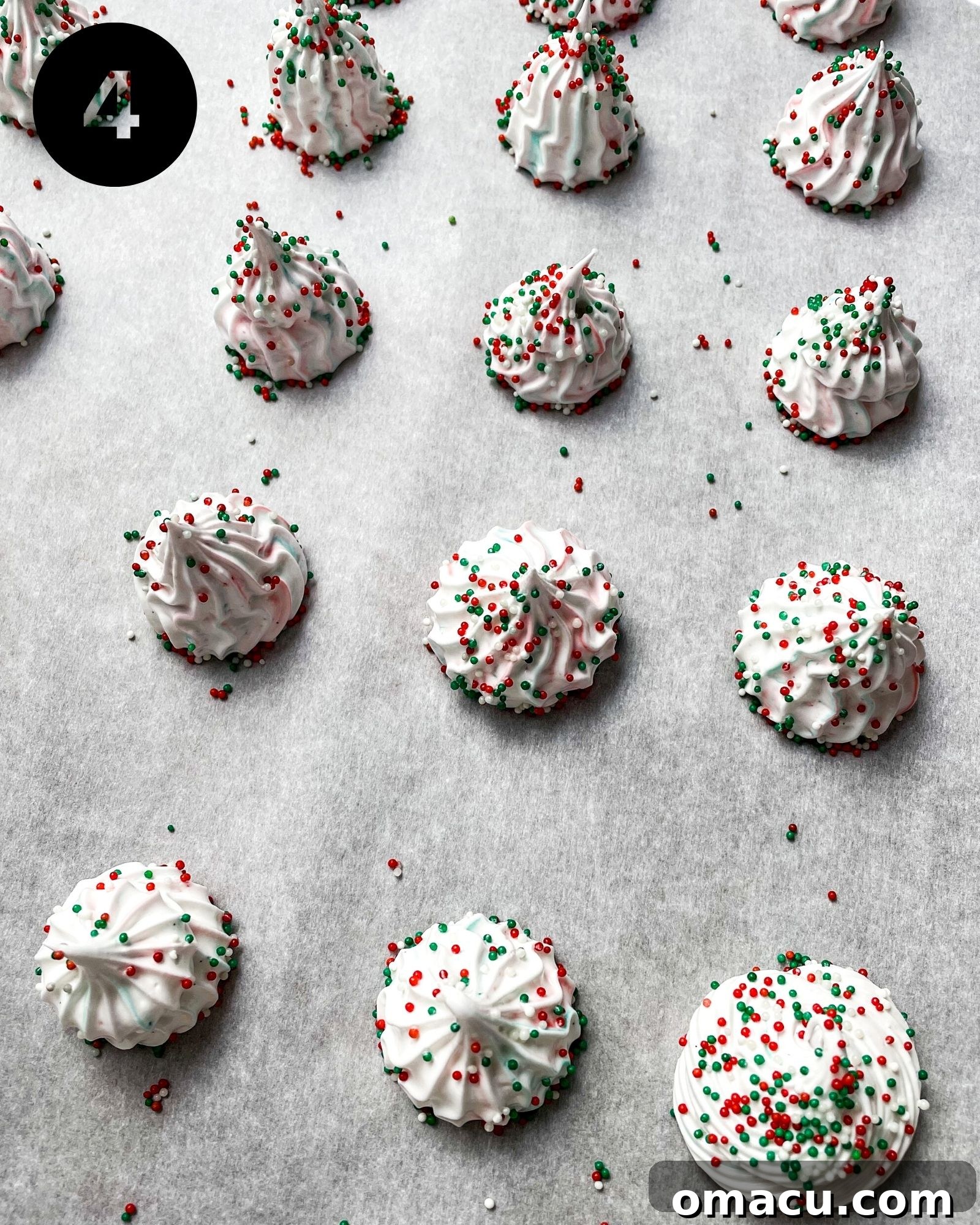
- Sprinkle Fun: For a festive or playful touch, gently fold in some colorful sprinkles at the very end of the meringue mixing process, just before piping. Choose sprinkles that won’t bleed color during baking for the best visual appeal.
How to Make Meringue Cookies: A Step-by-Step Guide
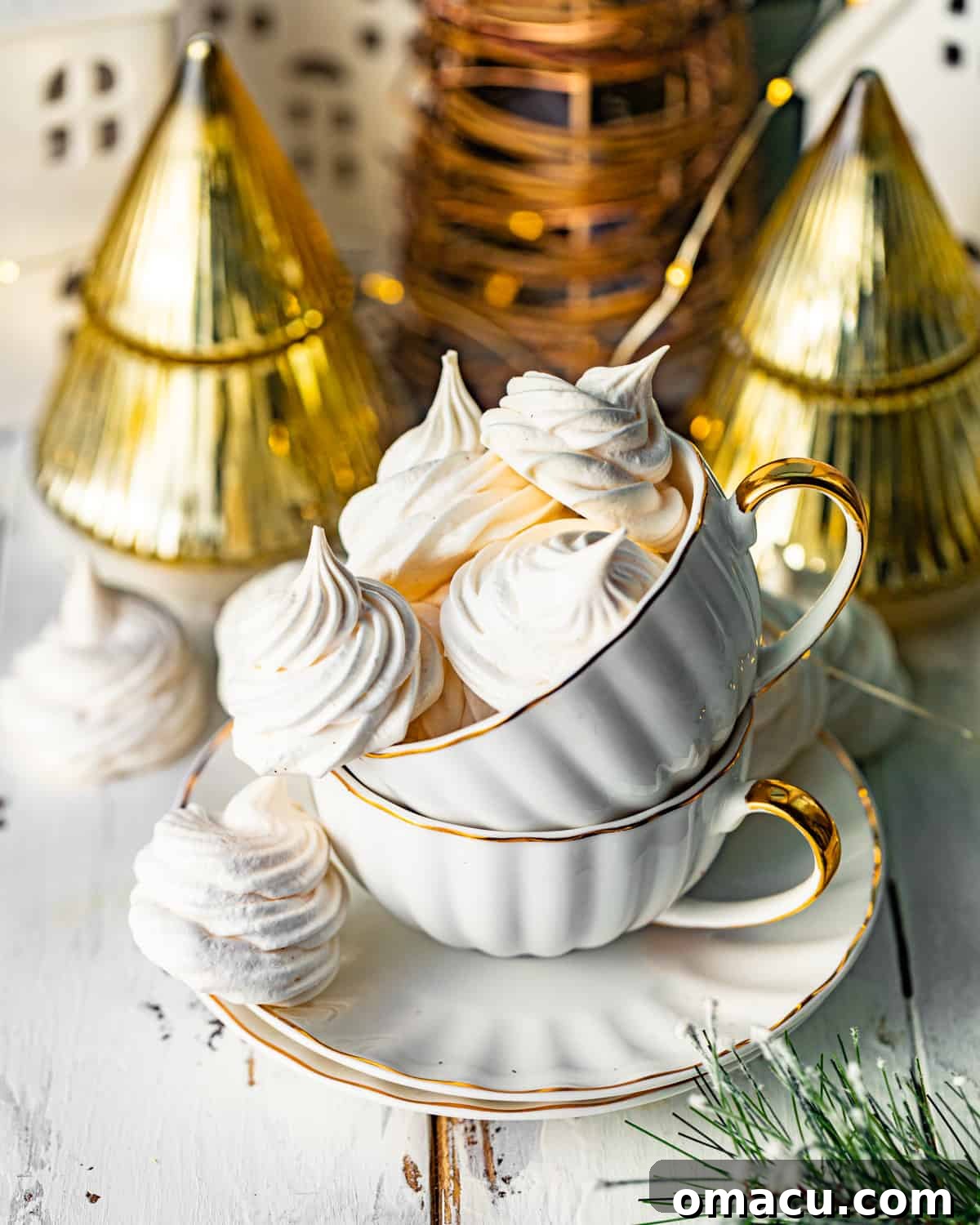
Creating these exquisite meringue cookies is a rewarding process that yields beautiful, delicate treats. Follow these detailed steps carefully, and you’ll soon be enjoying your own homemade batch.
- Step 1: Prepare Your Oven and Baking Sheets
Preheat your oven to a low and slow 225 degrees F (107 degrees C). This gentle heat is crucial for drying out the meringues rather than baking them quickly, which would lead to browning or cracking. Line two large baking sheets with parchment paper. To keep the parchment paper from sliding around, dab a tiny bit of meringue in each corner of the baking sheet before placing the paper on top. This acts as an adhesive, securing the paper during piping. - Step 2: Prepare the Meringue Batter – Clean Bowl First!
Before you even think about egg whites, wipe down the bowl of your stand mixer (or large mixing bowl) and the whisk attachment with a paper towel dampened with lemon juice or white vinegar. This ensures there are absolutely no residual oils or moisture that could interfere with the egg whites whipping properly. Ensure the bowl and whisk are completely dry before proceeding. - Step 3: Whip the Egg Whites
Add your room temperature large egg whites to the spotlessly clean bowl of a stand mixer fitted with the whisk attachment. Begin beating on low speed. Once the egg whites become bubbly and foamy, gradually increase the speed to medium. At this point, add the cream of tartar. Continue to mix until the egg whites begin to turn white and hold a soft, foamy consistency. - Step 4: Gradually Add Sugar and Achieve Stiff Peaks
With the mixer still running on medium speed, begin adding the granulated sugar (or superfine sugar, if using) very slowly, about one tablespoon at a time. This slow addition is vital for the sugar to dissolve completely. Once all the sugar is added, increase the mixer speed to medium-high and continue to beat the egg whites until stiff, glossy peaks form. You’ll know the sugar is fully dissolved when you can rub a small amount of meringue between your fingers and it feels perfectly smooth, not gritty. The meringue should be bright white, incredibly shiny, and firm enough to stand upright when you lift the whisk. (Refer to **Image #1 and #2** for visual guidance on foaminess and stiff peaks).
- Step 5: Incorporate Flavor and Optional Add-ins
Gently add in the vanilla extract and a pinch of kosher salt. Mix on low speed just until combined – do not overmix at this stage. If you’re incorporating sprinkles or food coloring for variations, this is the perfect time to do so. Gently fold them in with a spatula to maintain the meringue’s volume. - Step 6: Prepare for Piping
Transfer the finished meringue mixture to a piping bag fitted with a large star tip (like the Ateco tip 829 for classic meringue kisses). (Refer to **Image #3** for securing parchment paper with meringue dabs).

- Step 7: Pipe the Meringue Kisses
Pipe small, uniform meringues onto the lined baking sheets, aiming for about 1-inch kisses. Leave a little space between each meringue as they will expand slightly. It’s important to use the entire batch of meringue within 15 minutes of making it, as meringue cannot be stored for later use; it will begin to reduce, deflate, and become syrupy. (Refer to **Image #4** for piped meringues on a baking sheet).
- Step 8: Bake and Cool (Patience is Key!)
Bake the meringues for one hour. After one hour, gently check the meringues for doneness. They should feel very light, have a crisp exterior, and look “dry” (not glossy or sticky). They should also easily lift off the parchment paper without feeling mushy or sticky on the bottom. If they still feel soft or stick, continue baking for another 5-10 minutes, checking frequently. Be vigilant: if they start to turn golden brown, they are overbaked. Once done, turn off the oven but DO NOT open the oven door. Allow the meringues to cool completely inside the oven with the door propped open slightly (a wooden spoon works well) for at least 2 hours, or even overnight. This slow cooling process prevents cracking and ensures they dry out thoroughly.
Storing Meringue Cookies for Lasting Freshness
Proper storage is crucial for maintaining the delicate crispness of meringue cookies. Because they are essentially dried egg whites and sugar, they are very susceptible to moisture. Once your meringue cookies have completely cooled and dried out in the oven, transfer them to an airtight container. Store them in a cool, dark place, away from direct sunlight and any sources of humidity. A pantry or cupboard is ideal. Avoid storing them in the refrigerator, as the moisture and condensation can make them soft and sticky. When stored correctly, these delicate treats will retain their crisp texture and delicious flavor for up to two weeks. If they ever become slightly soft due to humidity, you can often refresh them by placing them back in a very low oven (around 200°F or 90°C) for 15-20 minutes, then cooling them completely.
Meringue Cookie Recipe FAQs
While you can technically freeze meringue cookies, they don’t always hold their ideal texture upon thawing. When thawed, they typically absorb moisture and can become a bit mushy or sticky. For the best experience, if you choose to freeze them, I recommend enjoying them directly from the freezer; they make a surprisingly delightful, melt-in-your-mouth frozen treat!
Classic meringue cookies boast a sweet, pure vanilla flavor that is light and ethereal. Texturally, they offer a captivating contrast: a thin, crisp, almost brittle exterior that shatters gently, giving way to a wonderfully soft, chewy, and slightly marshmallow-like interior. They are a delightful balance of sugary sweetness and delicate airiness.
Yes, these meringue cookies are naturally gluten-free! They are made primarily from egg whites, sugar, and flavorings, with no flour or other gluten-containing ingredients. This makes them an excellent dessert option for individuals with gluten sensitivities or those following a gluten-free diet.
Meringues can crack for several reasons, primarily due to sudden temperature changes or an oven that’s too hot. Opening the oven door during baking allows cold air to rush in, causing the meringues to shrink and crack. Also, if your oven temperature is too high, the outside of the meringue bakes too quickly while the inside is still moist, leading to expansion and cracking. Ensure your oven temperature is accurate with an oven thermometer and resist opening the door during baking.
Sticky or chewy meringues usually indicate they haven’t been dried out enough or that there was too much moisture in the environment. High humidity on baking day can prevent them from crisping up. It’s also possible they weren’t baked long enough at the low temperature, or they were removed from the oven too soon before fully cooling and drying. Ensure proper baking time and ample cooling time in the oven.
More Delightful Cookie Recipes
If you’ve enjoyed baking these beautiful meringue cookies, you’ll love exploring these other fantastic cookie recipes from my kitchen. Each one offers a unique flavor and texture profile, perfect for any occasion!
- Small Batch Chocolate Chip Cookies
- Chewy Peanut Butter Cookies
- Sprinkle Sugar Cookies
- Matcha Cookies
- Snickerdoodle Whoopie Pies
Want more delicious and beautiful recipes delivered straight to your inbox? Subscribe to my newsletter to receive the latest seasonal creations and baking tips as soon as they’re released!
If you make this irresistible meringue cookie recipe, please share your success! Leave a star rating on the recipe card below and drop a comment to let me know how they turned out. You can also tag @BritneyBreaksBread on Instagram and use the hashtag #britneybreaksbread so I can celebrate your beautiful culinary creations!
Perfect Meringue Cookies
Britney
20 minutes
1 hour
1 hour
20 minutes
60
Cookies

Equipment
-
Stand Mixer or Electric Mixer
-
2 Cookie Sheets
-
Piping Bag
-
Large Star Piping Tip (e.g., Ateco 829)
-
Parchment Paper
-
Oven Thermometer (recommended)
Ingredients
-
4
Large
Egg Whites (room temperature) -
1/2
tsp
Cream of Tartar -
1
cup
Granulated Sugar , (or superfine/caster sugar for best results) -
1 1/2
tsp
Vanilla Extract -
Pinch
Kosher Salt
Prevent your screen from going dark
Instructions
-
1. Preheat Oven and Prep Baking Sheets: Preheat your oven to a gentle 225 degrees F (107 degrees C). Line two large baking sheets with parchment paper. To keep the parchment paper from shifting while you pipe, dab a tiny bit of meringue in each corner of the baking sheet before laying the paper over it.
-
2. Clean Mixing Bowl: Wipe down the bowl of your stand mixer and the whisk attachment with a paper towel dampened with lemon juice or white vinegar. This critical step removes any trace of grease or moisture, ensuring the egg whites will whip correctly. Ensure everything is thoroughly dry.
-
3. Whip Egg Whites and Add Cream of Tartar: Add the room temperature egg whites to the clean mixer bowl fitted with the whisk attachment. Begin beating on low speed, then gradually increase to medium speed as the mixture becomes bubbly. Add the cream of tartar and continue mixing until the egg whites transform into a white and foamy consistency.
-
4. Gradually Add Sugar and Achieve Stiff Peaks: With the mixer running, start adding the granulated sugar very slowly, about one tablespoon at a time. Increase the mixer speed to medium-high and continue beating until stiff, glossy peaks form. To check for dissolved sugar, rub a small amount of meringue between your fingers – it should feel completely smooth, not gritty. The meringue should be brilliant white and incredibly glossy.
-
5. Incorporate Vanilla and Salt: Add the vanilla extract and a pinch of salt to the meringue. Mix on low speed just until they are fully combined. If you wish to fold in sprinkles or food coloring, do so gently at this stage to avoid deflating the meringue.
-
6. Fill Piping Bag: Transfer the meringue mixture immediately to a piping bag fitted with your chosen large star tip (such as Ateco tip 829 for classic kisses).
-
7. Pipe Meringues: Pipe uniform, approximately 1-inch meringue kisses onto the prepared, parchment-lined baking sheets, leaving a little space between each. It’s essential to pipe and bake the entire batch of meringue promptly, as it will start to deflate and become syrupy if left to sit for too long.
-
8. Bake and Dry: Bake for one hour. After this time, gently check the meringues for doneness. They should feel very light, have a crisp exterior, and look “dry” (not glossy). They should also lift off the parchment paper easily without being sticky or mushy. If they still feel soft, continue to bake for another 5-10 minutes, keeping a close eye on them to prevent browning. Once they are done, turn off the oven but DO NOT open the oven door. Allow the meringues to cool completely inside the oven with the door propped open for 2 hours, or even overnight. This crucial step prevents cracking and ensures they dry out perfectly.
Notes
For detailed explanations and additional troubleshooting, please refer to the “Top Tips for Perfect Meringue Cookies” section above in the main article. Key points include:
- Always use a perfectly clean, grease-free mixing bowl and whisk.
- Add sugar slowly, ensuring it fully dissolves for a smooth meringue.
- Beat egg whites to stiff peaks, but avoid overbeating.
- Use room temperature egg whites for optimal volume and stability.
- Work quickly once the meringue is prepared to prevent deflation.
- Verify your oven’s temperature with an oven thermometer for precise baking.
- Do not open the oven door during baking or active cooling to prevent cracking.
Nutrition
Calories:
14
kcal
,
Carbohydrates:
3
g
,
Protein:
0.2
g
,
Fat:
0.01
g
,
Sodium:
4
mg
,
Potassium:
8
mg
,
Sugar:
3
g
,
Calcium:
0.2
mg
,
Iron:
0.005
mg
Nutrition information is automatically calculated, so should only be used as an approximation.
Tried this recipe?
Mention @BritneyBreaksBread or tag #BritneyBreaksBread!