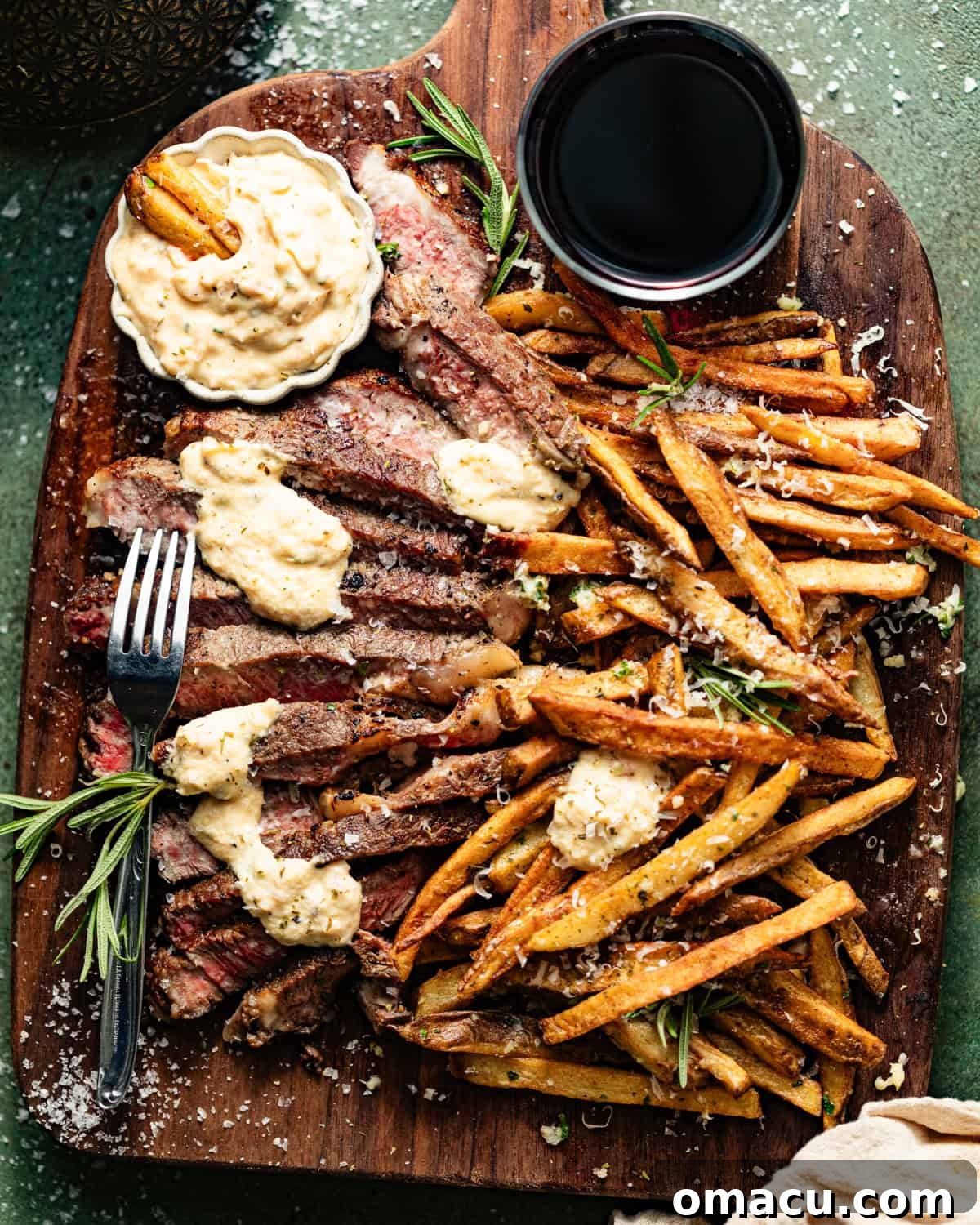
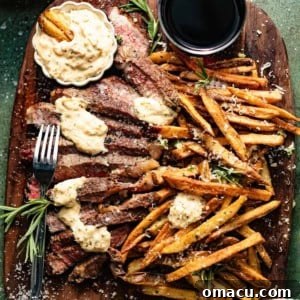
Steak Frites is a culinary masterpiece, a quintessential French bistro classic that effortlessly combines a succulent, perfectly seared steak with golden, irresistibly crispy French fries, all elevated by a luxurious, tangy béarnaise sauce. This indulgent dish promises a restaurant-quality dining experience right in your own kitchen, offering timeless, bold flavors that are surprisingly achievable for home cooks.
For those who love a hearty steak dinner, you might also enjoy exploring my Bavette Steaks with Pan Sauce, Garlic Butter Steak Bites and Potatoes, or a flavorful Ribeye Steak Sandwich with Chimichurri.
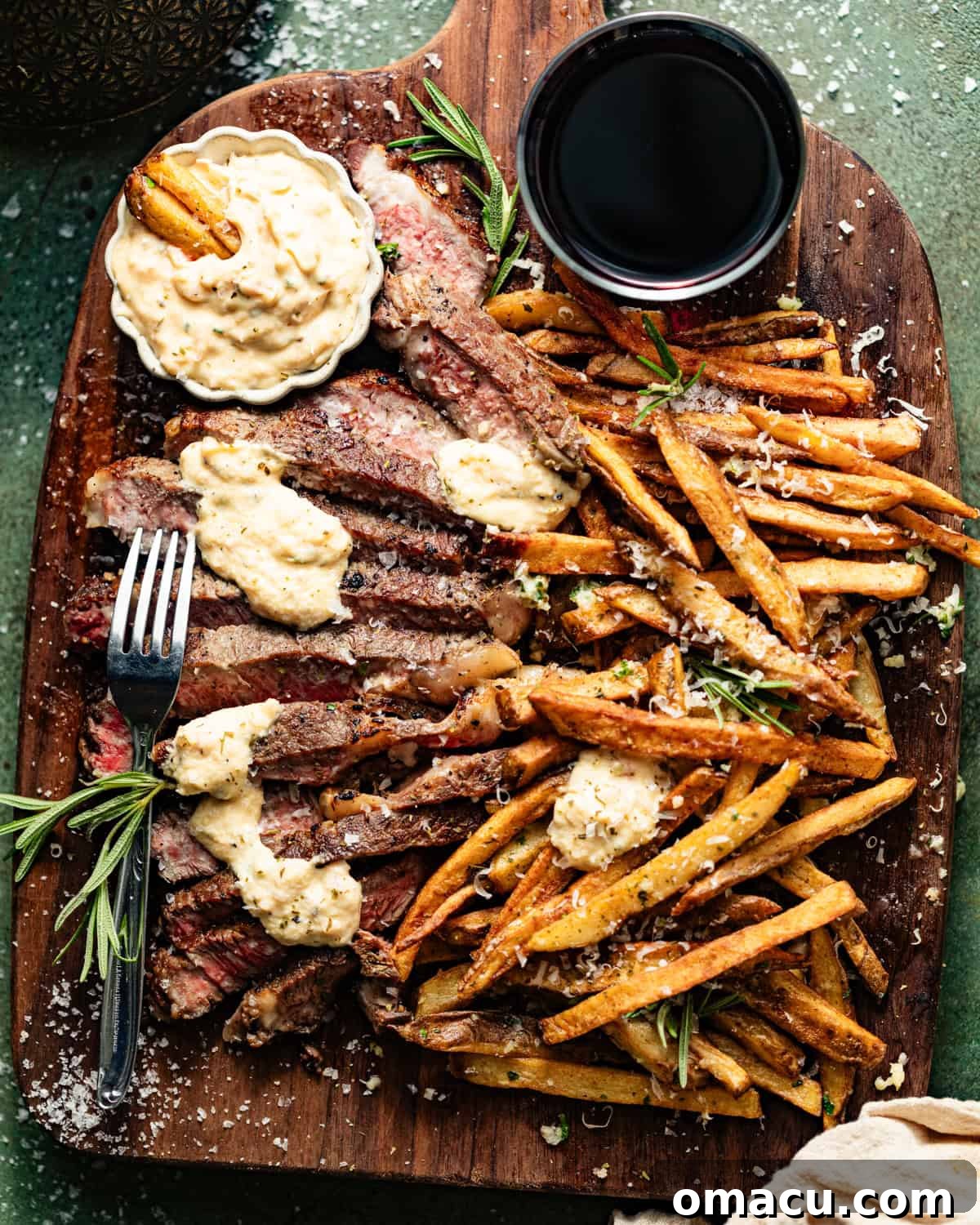
This recipe isn’t just *a* steak frites recipe; it’s truly the best homemade steak frites recipe ever. Having savored countless versions during my trips to Paris, I can confidently say this rendition rivals the finest I’ve encountered. The star of the show is the buttery, succulent steak, cooked to exquisite perfection, accompanied by crispy homemade French fries and one of the most deliciously creamy béarnaise sauces you’ll ever taste.
There’s a special joy in preparing steak frites at home; it’s like transporting a little piece of Parisian culinary magic into your kitchen. The aroma of searing beef, sizzling potatoes, and the rich, herbal notes of béarnaise sauce fills the air, creating an atmosphere of gourmet dining.
For this dish, ribeye steak is my preferred cut due to its exceptional marbling and rich flavor, which guarantees a juicy and tender result with a beautiful, quick sear. However, the beauty of steak frites lies in its versatility. You can absolutely use other cuts to suit your preference and budget, and I’ll provide a comprehensive guide on selecting the best meat below. And those fries? They’re not just any fries. They are meticulously double-fried for an unparalleled crunch and an incredibly fluffy interior, a technique that truly makes all the difference.
But let’s not forget the soul of the dish: the béarnaise sauce! This velvety, tangy, and herb-infused emulsified sauce is the quintessential companion, perfectly complementing both the rich steak and the salty fries. My secret touch? A hint of fresh garlic to enhance its depth and make it even more irresistible. It’s SO delicious!
Cooking a tender, juicy steak with that coveted perfect crust is deceptively easy once you know the right techniques, and I’ll guide you through every step. If you happen to have any of my homemade steak herb butter (a delicious garlic and herb compound butter) on hand, now is the perfect time to pull it out and incorporate it for an extra layer of flavor!
Bon Appétit!
Table of Contents
- Why You’ll Love This Steak Frites Recipe
- What is Steak Frites?
- Choosing the Best Steak for Steak Frites
- Essential Steak Frites Ingredients
- Smart Substitutions
- How to Make Perfect Steak Frites
- How to Serve Your Steak Frites
- Expert Pro Tips for Success
- Storing Leftovers
- Frequently Asked Questions (FAQ)
- More Delicious Steak Recipes
- Steak Frites Recipe Card
Why You’ll Love This Homemade Steak Frites Recipe
Preparing this classic dish at home offers a multitude of rewards. Here’s why this particular steak frites recipe is set to become your new favorite:
- Achieve Restaurant-Quality Results at Home: Forget expensive reservations. This recipe guides you through techniques to create a meal that rivals any high-end bistro. Whether it’s a special occasion or you simply want to elevate a weeknight dinner, this dish delivers an impressive culinary experience directly to your kitchen. The combination of perfectly cooked steak, golden fries, and a rich sauce transforms an ordinary meal into an extraordinary one.
- Incredibly Flavorful and Satisfying: Every component of this dish is designed to maximize flavor. The deeply seared, juicy ribeye steak, the crispy fries seasoned with aromatic garlic butter, and the vibrant, tangy béarnaise sauce create a harmonious symphony of tastes and textures. It’s a classic for a reason – the rich, buttery notes and savory depth are truly beyond delicious and incredibly satisfying.
- Perfect for Date Night or Entertaining: Looking to impress? This recipe is a fantastic choice for a romantic date night, Valentine’s Day, or when entertaining guests. It looks elegant, tastes gourmet, and shows off your culinary skills without requiring overly complicated techniques. It’s a meal that feels special and creates lasting memories.
- The Best Crispy French Fries, Guaranteed: The secret to truly exceptional steak frites lies in the fries. This recipe employs a crucial double-frying method, ensuring your fries are consistently extra crispy on the outside with a wonderfully fluffy interior. This textural perfection is complemented by the creamy béarnaise sauce, which serves as an unparalleled dipping accompaniment. Once you try these homemade, double-fried fries, you’ll never go back to store-bought.
What is Steak Frites? Exploring a Beloved Classic
Steak frites, pronounced “stayk freet,” is simply French for “steak and fries.” This iconic dish holds deep culinary roots in both France and Belgium, where it’s celebrated as a national favorite. While it might seem like a straightforward combination, the magic lies in the quality of ingredients and the meticulous preparation. Traditionally, any preferred cut of beef can be used, but it’s always—and necessarily—paired with a generous portion of freshly prepared fries. The dish is often served with a rich, emulsified sauce like hollandaise or, as in this recipe, the more complex and herbaceous béarnaise, though you can certainly opt for your favorite steak sauce if you prefer.
Historically, steak frites emerged from humble beginnings, likely gaining popularity in the 19th century as a hearty and accessible meal. Its enduring appeal stems from the perfect balance it strikes: the savory depth of beef, the comforting crispness of potatoes, and the luxurious touch of a classic French sauce. It embodies the essence of French bistro dining – simple, elegant, and utterly delicious.
Choosing the Best Steak for Steak Frites
The choice of steak is paramount for exceptional steak frites, as it significantly impacts the tenderness, flavor, and overall dining experience. While many cuts can work, some are inherently better suited for this classic dish, offering a superb balance of tenderness and robust beefy flavor. Here are the top contenders:
- Ribeye Steak: This is often considered the gold standard for steak frites, and my personal favorite for this recipe. Ribeye is celebrated for its rich marbling – the intramuscular fat that melts during cooking, infusing the meat with incredible juiciness and a profound depth of flavor. Its tender texture and ability to develop a fantastic crust make it ideal for a quick, high-heat sear.
- New York Strip Steak (or Sirloin): A leaner option than ribeye, the New York strip still offers excellent flavor and a satisfying chew. It has a tighter grain and a distinctive fat cap on one side, which can be rendered for extra richness. For those who prefer less marbling but still want a robust steak, the New York strip is an excellent choice.
- Hanger Steak (Onglet): A lesser-known but highly prized cut, hanger steak is incredibly flavorful with a deep, beefy taste. It’s known for its tenderness when cooked to medium-rare and sliced against the grain. Often more affordable than ribeye or strip, it’s a favorite among chefs for its unique character.
- Skirt Steak (Bavette): Similar to hanger steak in its robust flavor and affordability, skirt steak is a long, flat cut with a coarse grain. It cooks very quickly and benefits from marinades. While slightly chewier than ribeye or New York strip, it offers a wonderfully rich taste, making it another excellent choice for steak frites, especially when sliced thinly against the grain.
When selecting your steak, look for cuts that are at least 1 to 1.5 inches thick to ensure they can achieve a good sear without overcooking. Choose steaks with bright red flesh and, for marbled cuts like ribeye, a good distribution of white fat throughout.
Essential Steak Frites Ingredients
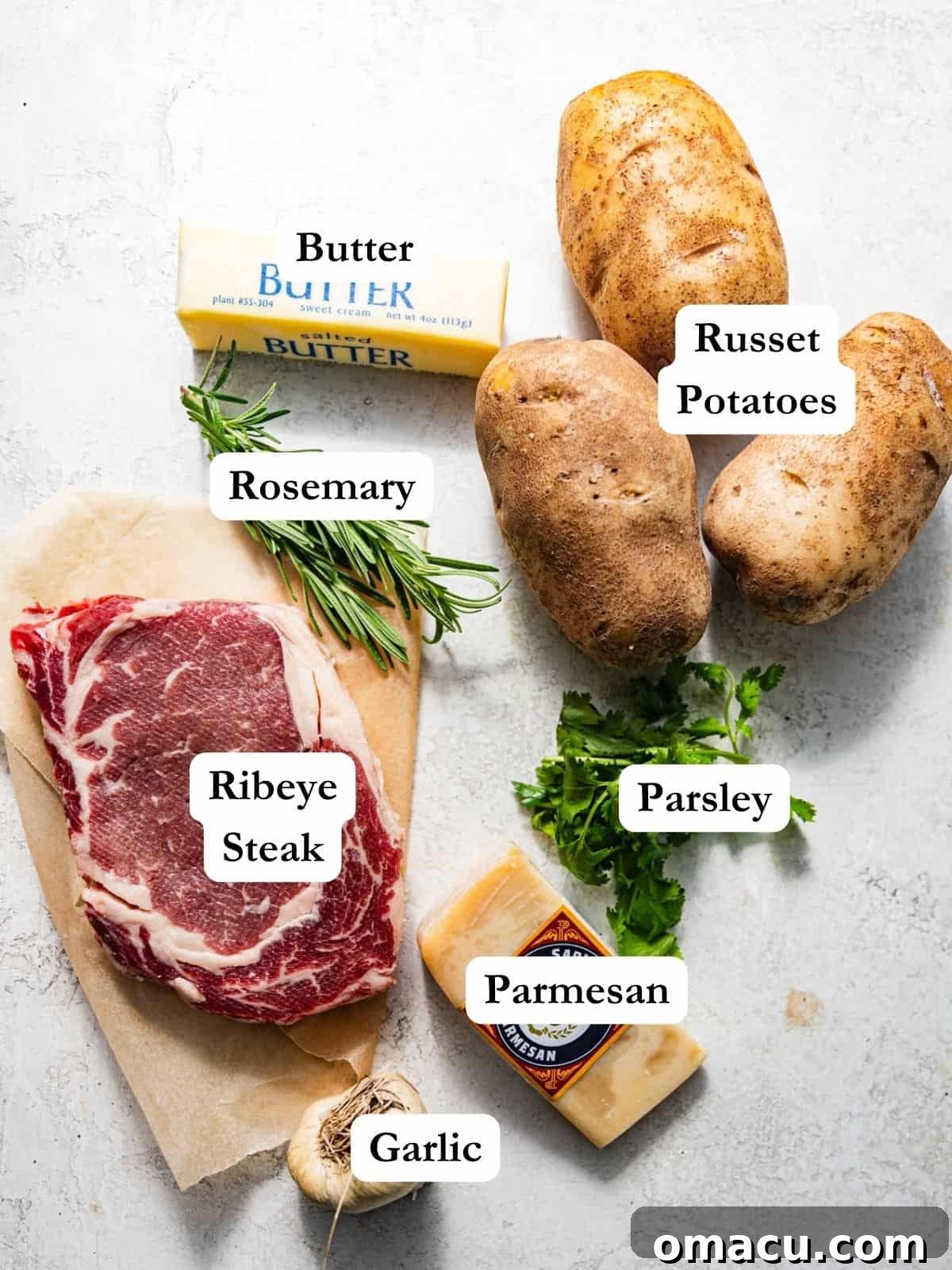
For precise measurements and detailed instructions, please refer to the comprehensive recipe card below.
- Russet Potatoes: These are non-negotiable for achieving the perfect French fry texture. Their high starch content and low moisture result in a wonderfully crispy exterior and a fluffy, airy interior.
- Fresh Parsley: Finely chopped, fresh parsley adds a vibrant burst of color and a subtle, refreshing herbaceous note to the garlic butter fries, brightening the overall flavor.
- Garlic Cloves: Freshly minced garlic is essential for infusing the fries with an irresistible aromatic buttery flavor, and a touch is also added to the béarnaise sauce for depth.
- Parmesan Cheese: Grated Parmesan adds a salty, savory, and umami-rich kick to the fries, complementing the garlic butter beautifully.
- Unsalted Butter: A cornerstone ingredient, butter is used generously in both the garlic butter for the fries and as the rich foundation for the béarnaise sauce, imparting luxurious flavor and texture.
- Vegetable Oil: A neutral, high smoke point oil is crucial for frying the potatoes to golden perfection without imparting unwanted flavors. Canola, sunflower, or peanut oil are also suitable alternatives.
- Ribeye Steak: As discussed, a well-marbled ribeye is preferred for its exceptional juiciness and ability to develop a mouthwatering, caramelized crust.
- Steak Seasoning: A simple yet effective blend of kosher salt, freshly ground black pepper, and garlic powder is used to enhance the steak’s natural flavor, creating a delicious crust.
- Additional Garlic Cloves (for basting): Whole or lightly smashed garlic cloves added to the pan during the final stages of cooking release potent aromatics that infuse the basting butter and steak.
- Fresh Rosemary Sprigs: The earthy, piney fragrance of fresh rosemary complements beef wonderfully. Added to the pan during basting, it imparts a beautiful aroma and subtle flavor to the steak.
For the Rich Béarnaise Sauce:
- Red Wine Vinegar: This forms the tangy, acidic base of the béarnaise reduction, providing a crucial counterpoint to the richness of the butter and egg yolks. White wine vinegar or even a dry white wine can be substituted.
- Shallot: Minced shallot offers a delicate, sweet onion flavor, more subtle and refined than regular onion, which is perfect for the béarnaise’s nuanced profile.
- Fresh Tarragon: The star herb of béarnaise, fresh tarragon contributes its distinctive anise-like, slightly sweet flavor. Chopped fresh is key for its vibrant taste. If fresh tarragon is unavailable, a smaller amount of dried tarragon or even fresh rosemary can be used in a pinch, though the flavor will differ.
- Egg Yolks: These are the essential emulsifying agents that create the incredibly creamy, stable texture of the béarnaise sauce.
- Salted Butter: Melted and clarified butter forms the bulk of the béarnaise, providing its signature richness and velvety consistency. Using salted butter means less additional salt is needed.
- Fresh Lemon Juice: A squeeze of fresh lemon juice at the end brightens and balances the sauce, cutting through its richness with a touch of fresh acidity.
- Kosher Salt: Used sparingly and to taste. Remember to be very conservative initially, as butter and other ingredients already contribute saltiness. A little goes a long way to enhance flavors without overpowering them.
Smart Substitutions for Steak Frites
While this recipe champions specific ingredients for optimal results, sometimes flexibility is necessary. Here are some smart substitutions that maintain the spirit and deliciousness of steak frites:
- Frozen Fries for Time-Saving: If you’re pressed for time or prefer convenience, high-quality frozen French fries are a perfectly acceptable substitute. Just be sure to follow the package instructions for cooking and, crucially, toss them generously in the garlic butter mixture after frying for that essential flavor boost. Air-frying or baking frozen fries can also be an option for less mess.
- Alternative Steak Cuts: Ribeye is fantastic, but you can certainly substitute it with other cuts based on your preference or what’s available.
- Beef Tenderloin (Filet Mignon): For an incredibly tender, melt-in-your-mouth experience, though it’s leaner and has a milder beef flavor.
- NY Strip (Sirloin): A great choice for a balance of flavor and tenderness, with a firmer texture than ribeye.
- Flank Steak: A more economical option that’s very flavorful. Marinate it for extra tenderness and be sure to slice very thinly against the grain.
- Sirloin Tip or Tri-Tip: Good for a slightly leaner, beefy flavor.
- Sauce Alternatives: If béarnaise isn’t your preference or you’re looking for something different, several creamy and flavorful sauces pair wonderfully:
- Garlic Aioli: A creamy, garlicky mayonnaise-based sauce that adds a delicious twist, perfect for dipping both steak and fries.
- Compound Butter: A simple pat of herb and garlic compound butter (like my ultimate steak butter) melted over the hot steak can provide instant richness and flavor.
- Au Poivre Sauce: A classic French peppercorn cream sauce, offering a bold, peppery kick.
- Chimichurri: A fresh, vibrant Argentine herb sauce, offering a bright, acidic contrast to the rich steak.
How to Make Perfect Steak Frites: Step-by-Step Guide
Part 1: Crafting the Luxurious Béarnaise Sauce
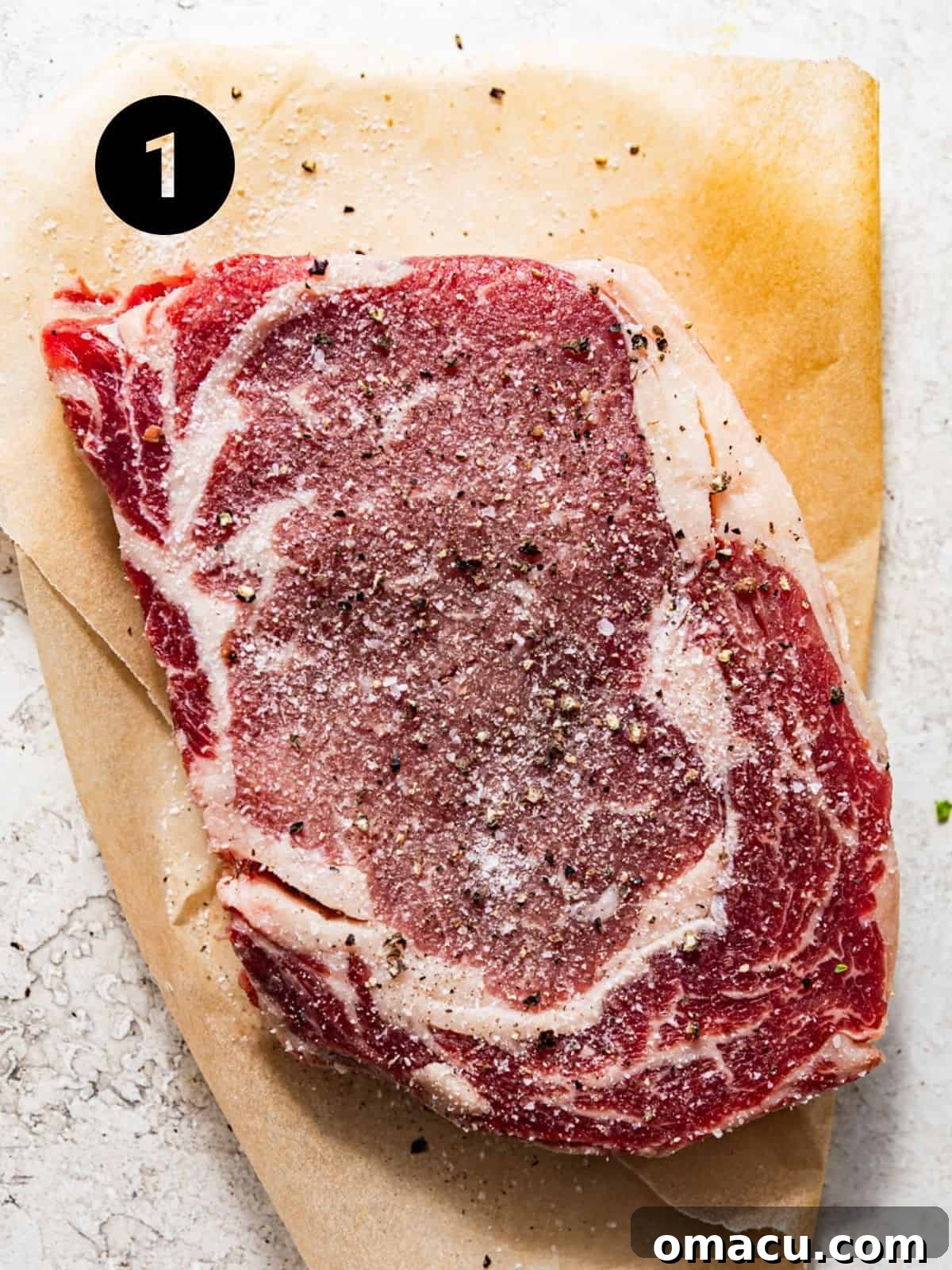
Step 1: Prepare the Steak. Begin by seasoning your ribeye generously on all sides with salt, freshly ground black pepper, and garlic powder. Ensure an even coating. Set the seasoned steak aside at room temperature for at least 30 minutes, or up to an hour, before cooking. This helps the steak cook more evenly and develop a better crust.
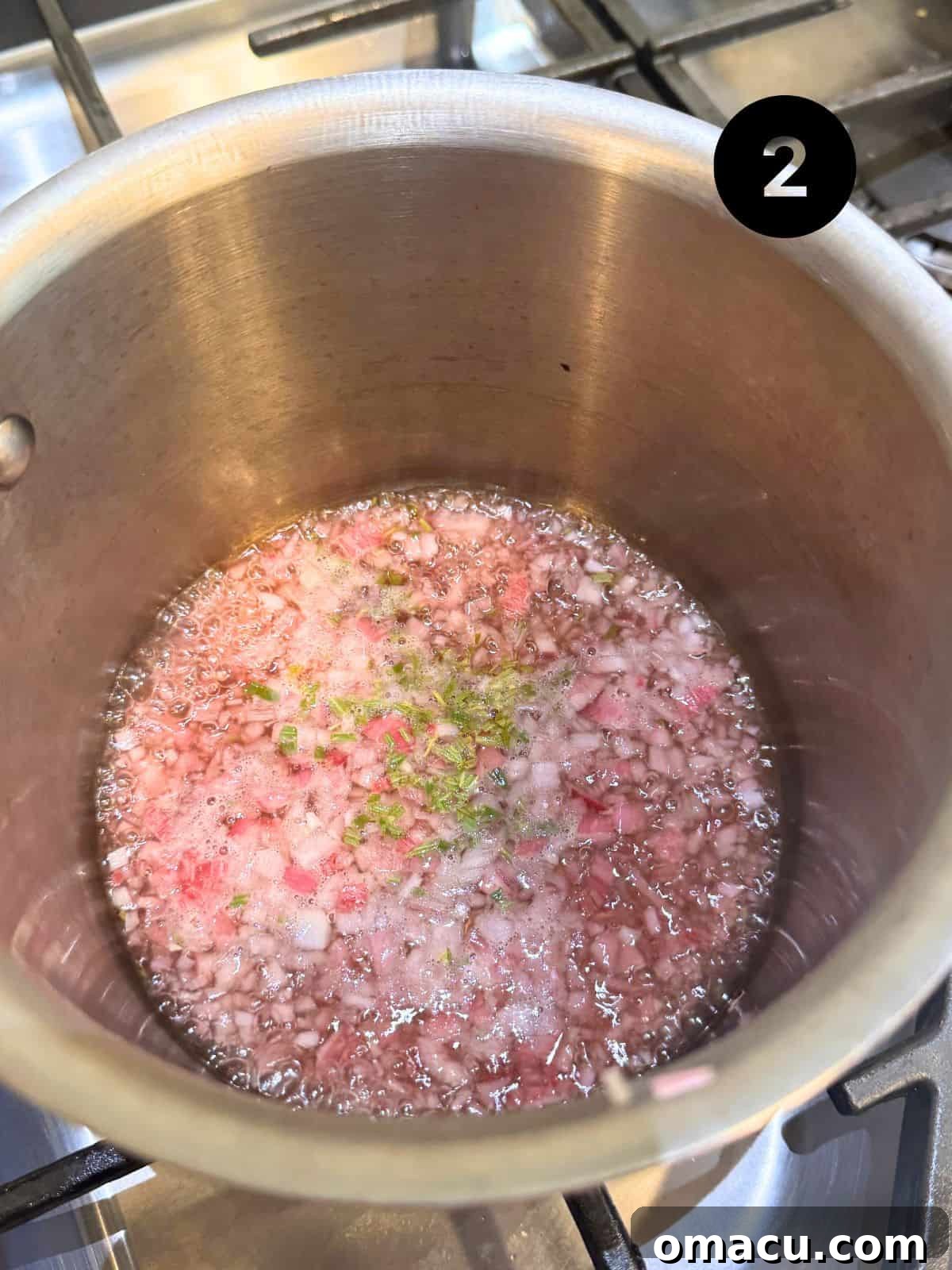
Step 2: Reduce the Vinegar Base. In a small saucepan, combine the red wine vinegar, minced shallots, a pinch of black pepper, and 1 tablespoon of chopped fresh tarragon. Bring this mixture to a boil over medium heat, then reduce the heat to a simmer and let it cook for 5-7 minutes. The goal is to reduce the liquid significantly until only about 2 tablespoons remain, concentrating the flavors. Once reduced, pour the mixture into a heat-safe glass or metal bowl and allow it to cool completely. Once cool, add 1 tablespoon of water and the egg yolks, then whisk vigorously until thoroughly combined.
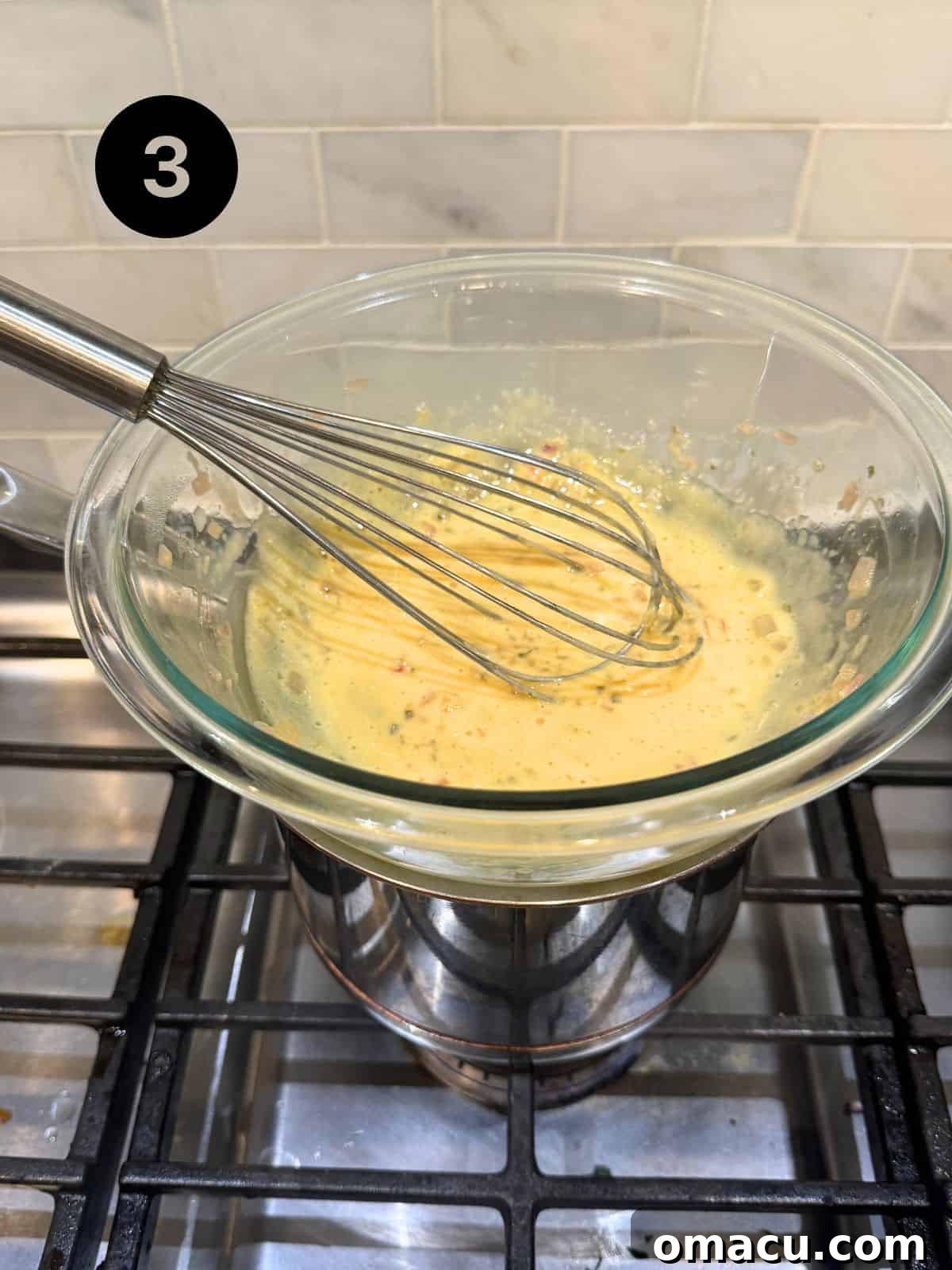
Step 3: Begin Emulsification. Fill a small saucepan with about 1 inch of water and bring it to a gentle simmer. Place the heat-safe bowl containing the egg yolk mixture over the simmering water, ensuring the bottom of the bowl does not touch the water (this creates a double boiler). Reduce the heat to low. Whisk the mixture continuously and gently over the low heat for about 7-10 minutes. The egg yolks will gradually thicken and become frothy and bubbly. This gentle heat is crucial to prevent the eggs from scrambling.
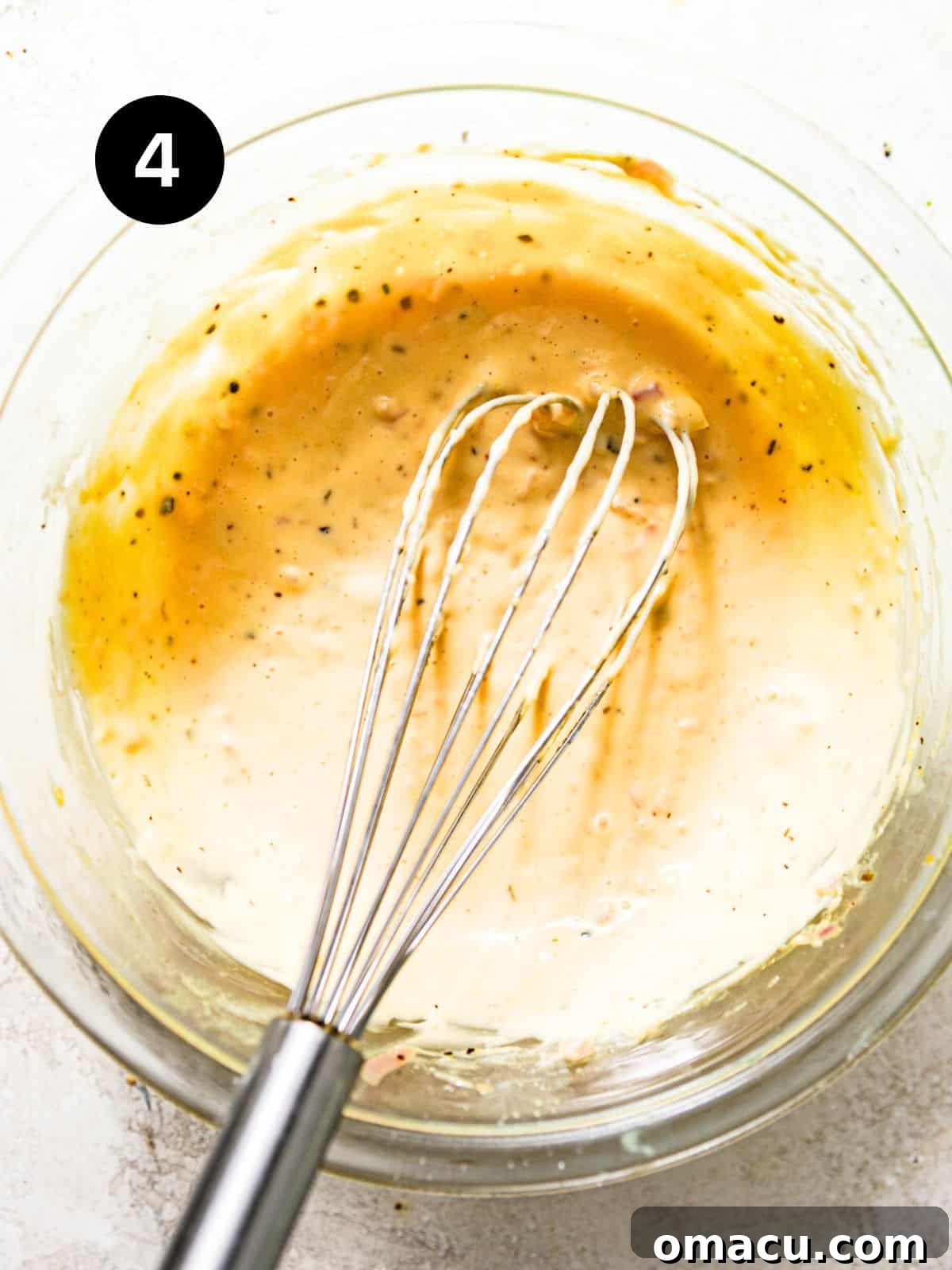
Step 4: Incorporate Butter and Finish. Slowly, gradually, and in small increments (about 1 tablespoon at a time), begin whisking in the melted salted butter into the egg yolk mixture. Whisk constantly and vigorously to ensure the butter emulsifies smoothly into the sauce. Continue this process until all the butter has been incorporated and the sauce is thick, creamy, and velvety. Be careful not to add the butter too quickly or the sauce may break. Once all the butter is added, remove the bowl from the heat. Stir in the fresh lemon juice, the remaining 1 tablespoon of chopped tarragon, and the minced garlic. Taste and season with kosher salt to your preference, remembering to be conservative. Set the béarnaise sauce aside, keeping it warm if possible, or gently reheat over the double boiler just before serving.
Part 2: Preparing the Ultimate Crispy Fries
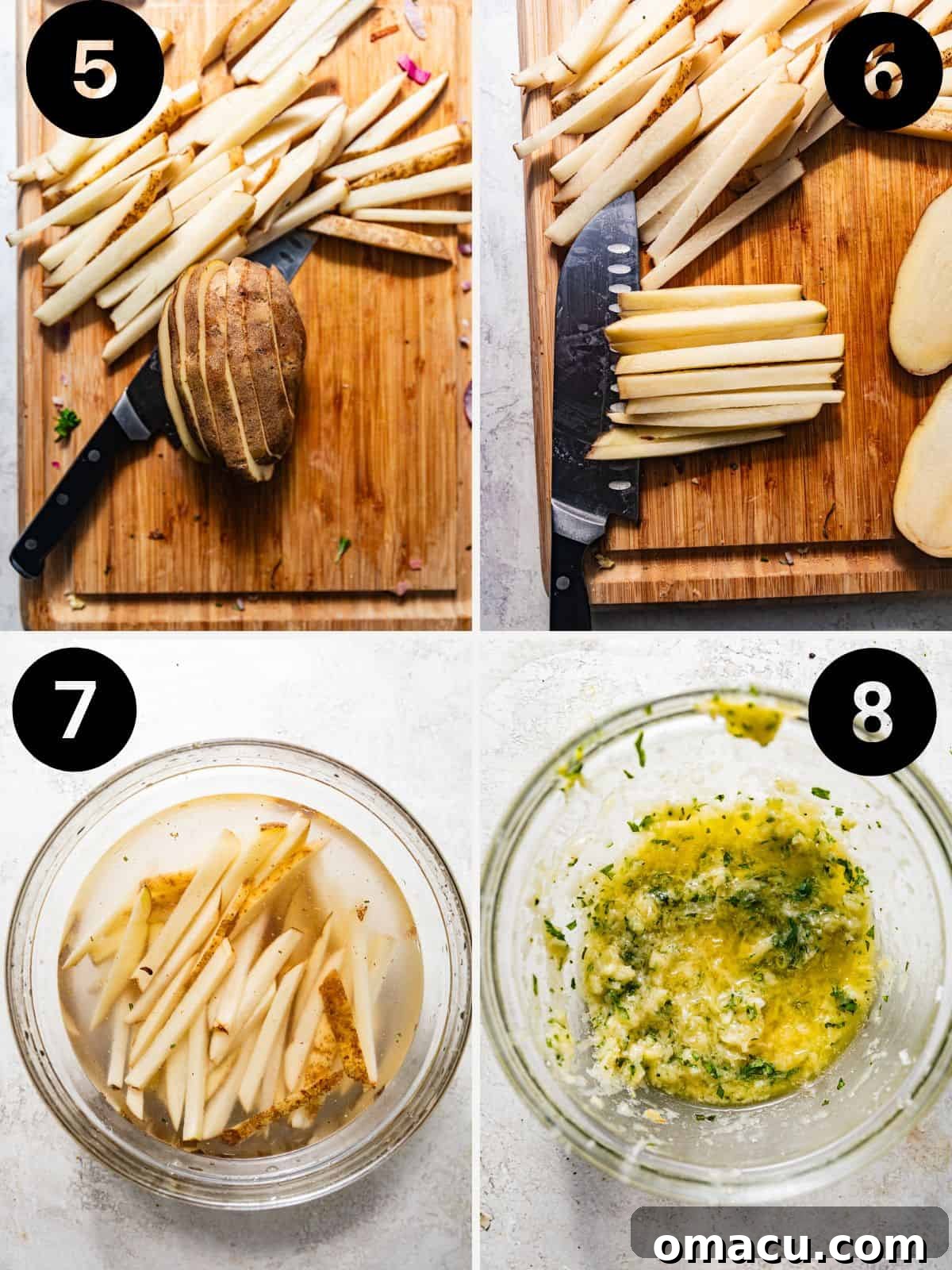
- Steps 5-8: Prepare Potatoes and Garlic Butter. Start by thoroughly washing the russet potatoes with cold water. Peel the potatoes and then slice them uniformly into 1/4-inch thick French fries. Place the cut potatoes into a large bowl of cold water and let them soak for at least 30 minutes (or up to a few hours in the fridge). Soaking removes excess starch, which is key for crispiness. After soaking, drain the water and rinse the fries again under cold water. Pat the fries completely dry with paper towels; any residual moisture will cause oil to splatter and prevent crisping. While the fries are soaking, prepare the garlic butter: in a small bowl, combine the melted butter, finely chopped fresh parsley, minced garlic cloves, and grated Parmesan cheese. Mix well and set aside.
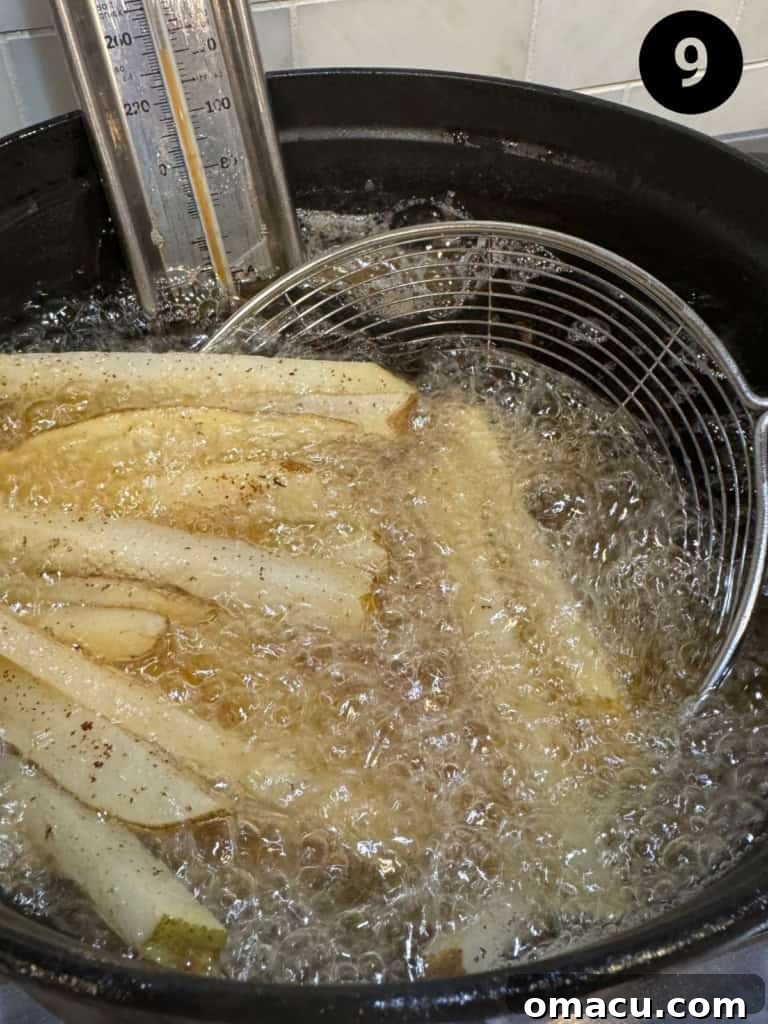
Step 9: First Fry. Pour enough vegetable oil into a large, heavy-bottomed pot or deep fryer to reach at least 2 inches in depth. Heat the oil to 300°F (150°C). This lower temperature is crucial for cooking the potatoes through without browning them too quickly. Carefully add the prepared fries to the hot oil in batches, ensuring not to overcrowd the pot. Fry each batch for approximately 6 minutes, until they are tender and slightly translucent but not yet golden. Remove the fries from the oil using a slotted spoon or spider and transfer them to a plate lined with paper towels to drain excess oil. Repeat with the remaining batches, allowing the oil temperature to return to 300°F between batches.
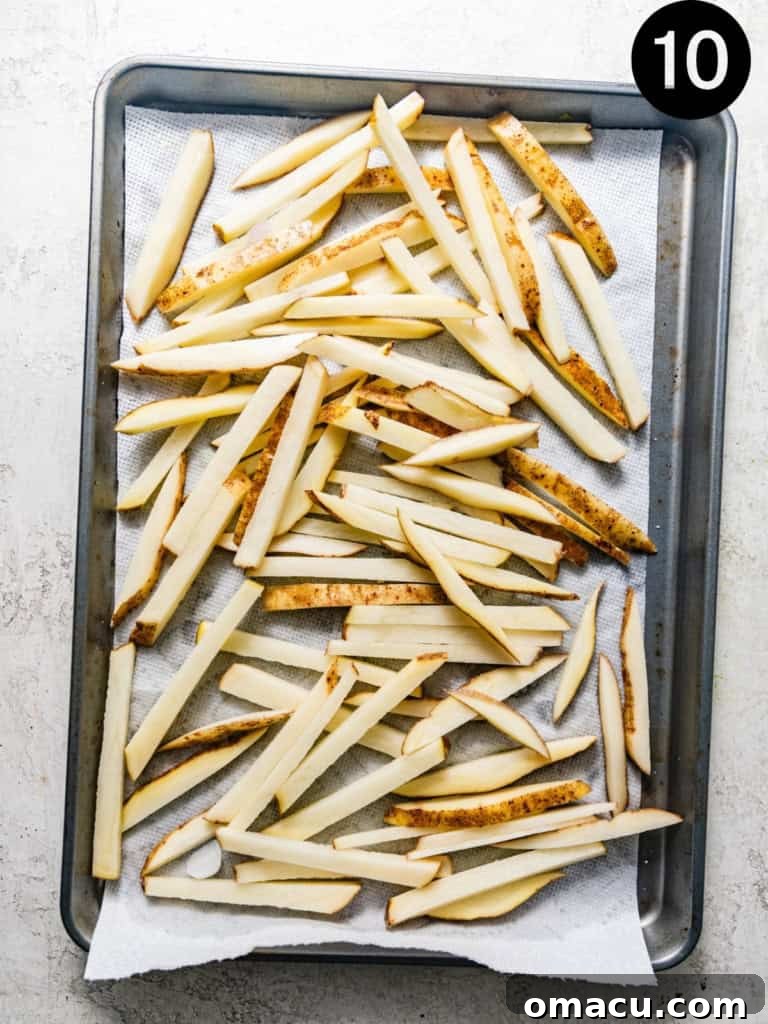
Step 10: Second Fry for Maximum Crispness. Once all fries have completed their first fry, increase the oil temperature to 380°F (195°C). This higher temperature will create the ultimate crispy exterior. Fry the potatoes again in batches for about 5 minutes, or until they achieve a beautiful golden brown color and are perfectly crispy. Once again, remove them from the oil and place them on fresh paper towels to drain any residual grease. Immediately transfer the hot, crispy fries into a large bowl and toss them thoroughly with the prepared garlic butter mixture until every fry is coated. Season with a little extra salt if desired.
Part 3: Perfectly Cooking the Ribeye Steak
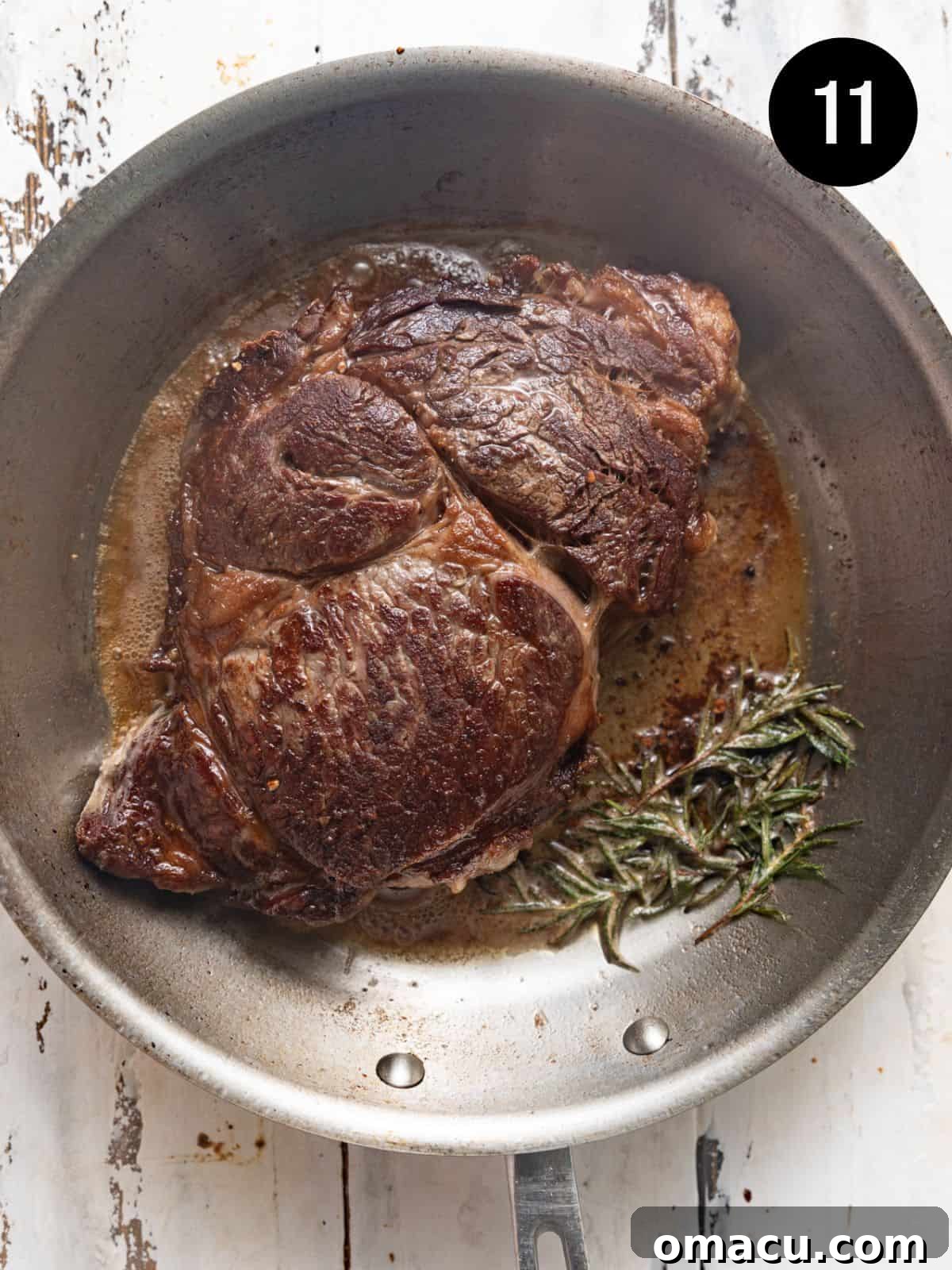
Step 11: Sear and Baste the Steak. Heat a large, heavy-bottomed pan or cast iron skillet over medium-high heat until it is smoking hot. A hot pan is essential for developing a deep, flavorful crust. Carefully place the seasoned ribeye steak into the hot skillet. Sear the steak for 3-4 minutes per side for a medium-rare to medium doneness. Adjust cooking time based on your preferred level of doneness (use a meat thermometer for accuracy). During the last 1-2 minutes of cooking, add 2 tablespoons of unsalted butter, two sprigs of fresh rosemary, and two cloves of garlic (lightly smashed) to the pan. Tilt the pan slightly and use a spoon to continuously baste the steak with the melted, aromatic butter. This technique helps to infuse the steak with incredible flavor and creates an even more delicious crust.
Once cooked to your desired doneness, immediately remove the ribeye from the skillet and place it on a cutting board. Crucially, let the steak rest for at least 10 minutes. Resting allows the juices to redistribute throughout the meat, resulting in a more tender and flavorful steak. After resting, slice the meat against the grain into desired portions.
How to Serve Your Gourmet Steak Frites
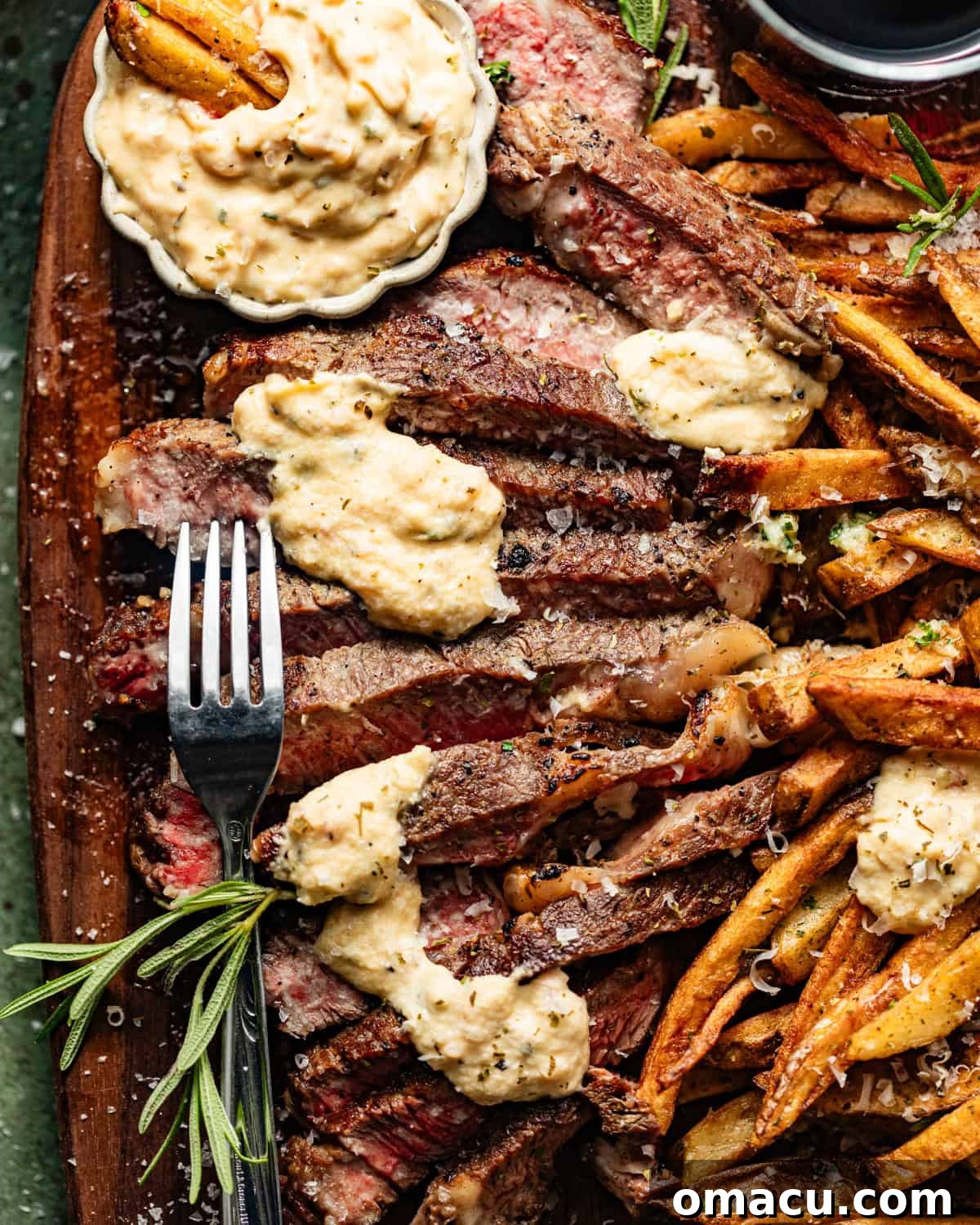
Presentation is key when serving a classic like steak frites. Arrange the sliced, rested steak alongside a generous portion of your crispy, garlic-butter-coated French fries. Spoon a decadent amount of the warm béarnaise sauce over the steak, allowing it to gently cascade down the sides. Place any remaining béarnaise sauce in a small bowl on the side, perfect for dipping those irresistible fries.
To complement the richness of the steak and fries, consider serving a simple, refreshing side dish. A crisp green salad with a light vinaigrette, such as a creamy balsamic dressing, provides a welcome freshness and cuts through the richness. During warmer months, a side of grilled vegetables (marinated asparagus, bell peppers, or zucchini) can add a delightful smoky flavor and additional nutrients without overwhelming the main dish. Pair with a medium-bodied red wine, such as a Cabernet Sauvignon or a Merlot, to complete the bistro experience.
Expert Pro Tips for Steak Frites Success
Mastering steak frites involves attention to detail. These expert tips will help you achieve restaurant-quality results every time:
- Precision Oil Temperature for Fries is Critical! To guarantee perfectly crispy fries, a candy thermometer (or deep-fry thermometer) is your best friend. Getting the oil temperature just right—300°F (150°C) for the first fry and 380°F (195°C) for the second—is the difference between soggy, greasy fries and golden, crunchy perfection. This step is absolutely critical.
- Never Skip the Double-Fry Method. This technique is non-negotiable for superior fries. Soaking the cut potatoes in cold water first removes excess starch, and then frying them twice (first at a lower temperature to cook through, then at a higher temperature to crisp and brown) ensures that ideal texture: tender inside, shatteringly crisp outside.
- Allow Your Steak to Rest. Patience is a virtue when cooking steak. After searing, it’s vital to allow the ribeye to rest undisturbed for at least 10 minutes before slicing. This resting period allows the muscle fibers to relax and the internal juices to redistribute evenly throughout the steak, preventing them from Gushing out when cut and resulting in a significantly more tender and flavorful piece of meat.
- Control Béarnaise Sauce Heat Carefully. When preparing the béarnaise sauce, constant whisking over a gentle double boiler is paramount. Keep the heat consistently low while whisking the egg yolks to prevent them from scrambling. Slow and steady emulsification ensures a smooth, creamy, and stable sauce. If the sauce becomes too thick, a teaspoon of warm water can help loosen it; if it begins to separate, vigorous whisking over a tiny bit of warmth can sometimes bring it back together.
- Baste the Steak for Enhanced Flavor and Crust. In the final minute or two of cooking, generously basting the steak with melted butter, fresh garlic, and rosemary sprigs adds an incredible depth of flavor and helps to achieve an even richer, golden-brown crust. The fragrant butter penetrates the exterior, elevating the entire experience.
- Use a Meat Thermometer for Perfect Doneness. Remove guesswork from cooking steak by investing in a reliable meat thermometer. This ensures you cook the steak precisely to your liking. Aim for 130-135°F (54-57°C) for medium-rare, or adjust according to your personal preference. Remember that the steak’s internal temperature will rise by a few degrees as it rests.
- Serve Béarnaise Sauce Warm. Béarnaise sauce is at its absolute best when served fresh and warm. If the sauce cools too much before serving, you can gently reheat it over a double boiler, whisking continuously until it returns to its smooth, creamy consistency. Avoid high heat, which can cause the sauce to break.
Storing and Reheating Steak Frites Leftovers
While steak frites is best enjoyed fresh, you can certainly store leftovers, though the fries may lose some of their initial crispness.
To store, separate the steak and fries into individual airtight containers. Refrigerate promptly for up to 3 days. Store the béarnaise sauce in a separate airtight container in the refrigerator for up to 2 days; it is more delicate than the other components.
When reheating the steak, the goal is to warm it through without overcooking it. Place the sliced steak in a skillet over medium-low heat with a tiny bit of butter or beef broth, just until warmed. Alternatively, you can gently warm it in an oven set to a low temperature (around 250°F / 120°C) for 10-15 minutes. For the fries, the best method to restore their crispiness is to reheat them in an air fryer at 400°F (200°C) for 3-5 minutes, or spread them in a single layer on a baking sheet and bake in an oven at 400°F (200°C) for 5-10 minutes until hot and crisp. Avoid microwaving, which will make them soggy.
Reheating béarnaise sauce requires care. Gently warm it over a double boiler on low heat, whisking constantly until it is smooth and warmed through. Do not let it boil, as high heat will cause the emulsion to break and the sauce to separate. If it starts to separate, whisking in a few drops of warm water or a tiny bit of fresh egg yolk can sometimes rescue it.
Frequently Asked Questions (FAQ) About Steak Frites
Absolutely! You can prepare the béarnaise sauce a few hours in advance and store it in the fridge, then gently reheat it over a double boiler just before serving. For the fries, you can wash, peel, slice, and soak the potatoes in cold water ahead of time. Keep them submerged in fresh cold water in the refrigerator until you’re ready to fry. However, for the absolute best texture, fry them fresh right before serving.
Steak frites can be made with various cuts of beef. Popular and traditional options include ribeye (my top recommendation for its marbling and flavor), New York strip, hanger steak, and skirt steak. Other cuts like sirloin or flank steak can also be used, depending on your preference for tenderness, flavor, and budget. The key is to select a quality cut and cook it properly.
The double-fry method is the secret to achieving perfectly crispy French fries with a fluffy interior. The first fry, at a lower temperature (300°F), cooks the potatoes through, softening them without browning. The second fry, at a higher temperature (380°F), rapidly crisps the exterior, creating that irresistible golden-brown crust. This two-stage process ensures a superior texture that single-frying cannot achieve.
To enjoy steak frites like a true connoisseur, slice the rested ribeye steak against the grain into tender, bite-sized pieces. Serve it immediately alongside the hot, crispy, garlic-butter-coated fries. Generously spoon the warm, creamy béarnaise sauce over both the steak and fries. You can also use any extra béarnaise as a dipping sauce for the fries. Each forkful should capture a piece of tender steak, a few crispy fries, and a dollop of rich sauce, creating a perfect balance of savory, crispy, and creamy flavors in every bite!
More Delicious Steak Recipes to Explore
Indulge in More Steak Favorites
Main Course
Garlic Butter Steak Bites and Potatoes
Main Course
Savory Steak Quesadilla
Main Course
Shrimp and Steak Fajitas
Main Course
The Ultimate Steak Butter (Cafe de Paris Butter)
Want more delicious and beautiful recipes delivered straight to your inbox? Subscribe to my newsletter, where you’ll be the FIRST to hear about new recipes and gain access to tantalizing, exclusive perks!
Also, if you decide to make this delicious Steak Frites recipe, please leave a star rating on the recipe card below and share your thoughts in the comments section! Don’t forget to tag @BritneyBreaksBread on Instagram and use the hashtag #britneybreaksbread so I can see your magnificent culinary creations!
Steak Frites Recipe
By Britney
Prep: 40 mins | Cook: 45 mins | Total: 1 hr 25 mins
Servings: 2
Steak frites is a classic French dish that pairs a juicy ribeye with crispy fries and a rich, flavorful béarnaise sauce. This indulgent recipe features bold flavors and timeless techniques for a restaurant-quality dinner at home.
Equipment
- Large Pot or deep fryer
- Cast Iron Skillet or Heavy-Bottomed Pan
- Tongs
- Small Saucepan
- Candy Thermometer (for measuring oil temperature for French fries)
- Meat Thermometer
Ingredients
For the French Fries:
- 2 Russet Potatoes
For the Garlic Butter for French Fries:
- 1 tbsp Fresh Parsley, chopped
- 2 Garlic cloves, minced
- 2 tbsp Parmesan cheese, grated
- 3 tbsp Unsalted Butter, melted
- Vegetable Oil, for frying (at least 2 inches deep)
For the Steak:
- 1 lb Ribeye Steak (about 1 to 1.5 inches thick)
- Salt and Black Pepper, to taste
- 1/2 tsp Garlic Powder
- 2 cloves Garlic, lightly smashed (for basting)
- 2 sprigs Fresh Rosemary (for basting)
- 2 tbsp Unsalted Butter (for basting)
For the Béarnaise Sauce:
- 1/4 cup Red Wine Vinegar
- 1/2 tsp Black Pepper
- 1 Shallot, minced
- 2 tbsp Fresh Tarragon, chopped (divided)
- 2 Egg Yolks
- 1/2 cup Salted Butter, melted and kept warm
- 2 tsp Fresh Lemon Juice
- 1 clove Garlic, minced (optional, for extra flavor)
- Kosher Salt, to taste (be conservative)
Instructions
- Prepare the Steak: Season the ribeye generously with salt, black pepper, and garlic powder. Set aside at room temperature.
- Make the Béarnaise Sauce – Vinegar Reduction: In a small saucepan, combine red wine vinegar, minced shallots, black pepper, and 1 tbsp of the chopped tarragon. Bring to a boil over medium heat, then reduce to a simmer and cook for 5-7 minutes until only about 2 tbsps of liquid remain. Pour the reduction into a heat-safe glass or metal bowl and let it cool completely.
- Combine Béarnaise Base: Once cooled, add 1 tbsp of water and the egg yolks to the vinegar reduction. Whisk to combine thoroughly.
- Emulsify Béarnaise: Add about 1 inch of water to a small saucepan and bring to a gentle simmer. Place the bowl with the egg yolk mixture over the simmering water (double boiler), ensuring the bottom of the bowl does not touch the water. Reduce heat to low and whisk continuously for 7-10 minutes until the mixture thickens and becomes frothy.
- Add Butter to Béarnaise: Slowly add the melted butter, 1 tbsp at a time, whisking constantly and vigorously to emulsify into the liquid. Continue until all butter is incorporated and the sauce is creamy and thick. Be careful not to overcook the egg yolks.
- Finish Béarnaise: Remove the bowl from the heat. Stir in the fresh lemon juice, the remaining 1 tbsp of tarragon, and the minced garlic (if using). Taste and season with kosher salt to your preference, being conservative. Set aside, keeping warm.
- Prepare French Fries – Wash and Cut: Wash the russet potatoes thoroughly with cold water, then pat them dry. Peel and slice the potatoes uniformly into 1/4-inch thick fries.
- Soak and Dry Fries: Place the cut potatoes into a large bowl of cold water and let them soak for 30 minutes. Drain the water, rinse the fries, and then pat them completely dry with paper towels.
- Prepare Garlic Butter for Fries: While the fries are soaking, combine the melted butter, chopped parsley, minced garlic cloves, and grated Parmesan in a small bowl. Mix well and set aside.
- First Fry (Cook Through): Preheat a pot of vegetable oil to 300°F (150°C). Add the dried fries in batches, being careful not to overcrowd the pot. Fry each batch for approximately 6 minutes, until tender but not browned. Remove with a slotted spoon to a paper towel-lined plate to drain. Repeat with remaining batches.
- Second Fry (Crisp Up): Increase the oil temperature to 380°F (195°C). Fry the potatoes again in batches for about 5 minutes, until they are golden brown and perfectly crispy. Transfer to fresh paper towels to drain excess grease.
- Coat Fries: Immediately transfer the hot, crispy fries to a large bowl and toss thoroughly with the prepared garlic butter mixture until evenly coated. Season with additional salt if needed.
- Cook the Steak – Sear: Heat a large, heavy-bottomed pan or cast iron skillet over medium-high heat until it is smoking hot. Place the seasoned steak in the hot skillet. Sear for 3-4 minutes per side for medium-rare to medium doneness, or until desired internal temperature is reached (use a meat thermometer).
- Baste and Rest Steak: During the last 1-2 minutes of cooking, add 2 tbsp of butter, the rosemary sprigs, and garlic cloves to the pan. Tilt the pan and continuously baste the steak with the melted, aromatic butter. Remove the ribeye from the skillet and let it rest on a cutting board for 10 minutes.
- Slice and Serve: After resting, slice the steak against the grain into desired portions. Serve immediately with the crispy garlic butter French fries. Spoon the béarnaise sauce generously over the steak and use the remainder as a delicious dip for the fries.
Notes
- Use a Candy Thermometer for Fries: Measuring oil temperature precisely is crucial for crispy, non-soggy fries. This is critical.
- Do Not Skip the Double-Fry: Soaking and double-frying ensures a perfect crispy exterior and fluffy interior.
- Let the Steak Rest: Resting allows juices to redistribute, making the steak more tender and flavorful.
- Control Béarnaise Heat Carefully: Whisk egg yolks over low heat on a double boiler to avoid scrambling them and ensure a smooth, creamy sauce.
- Baste Steak with Aromatics: Butter, garlic, and rosemary basting during the last minutes of cooking adds flavor and creates a beautiful crust.
- Use a Meat Thermometer: For accurate doneness, aim for 130-135°F (54-57°C) for medium-rare.
- Serve Béarnaise Warm: Béarnaise is best fresh and warm. Reheat gently over a double boiler if needed.
Nutrition Information (Approximate per serving)
Calories: 1327kcal, Carbohydrates: 49g, Protein: 58g, Fat: 102g, Saturated Fat: 57g, Polyunsaturated Fat: 5g, Monounsaturated Fat: 34g, Trans Fat: 3g, Cholesterol: 503mg, Sodium: 729mg, Potassium: 1867mg, Fiber: 4g, Sugar: 3g, Vitamin A: 2748IU, Vitamin C: 24mg, Calcium: 252mg, Iron: 9mg
Nutrition information is automatically calculated, so should only be used as an approximation.