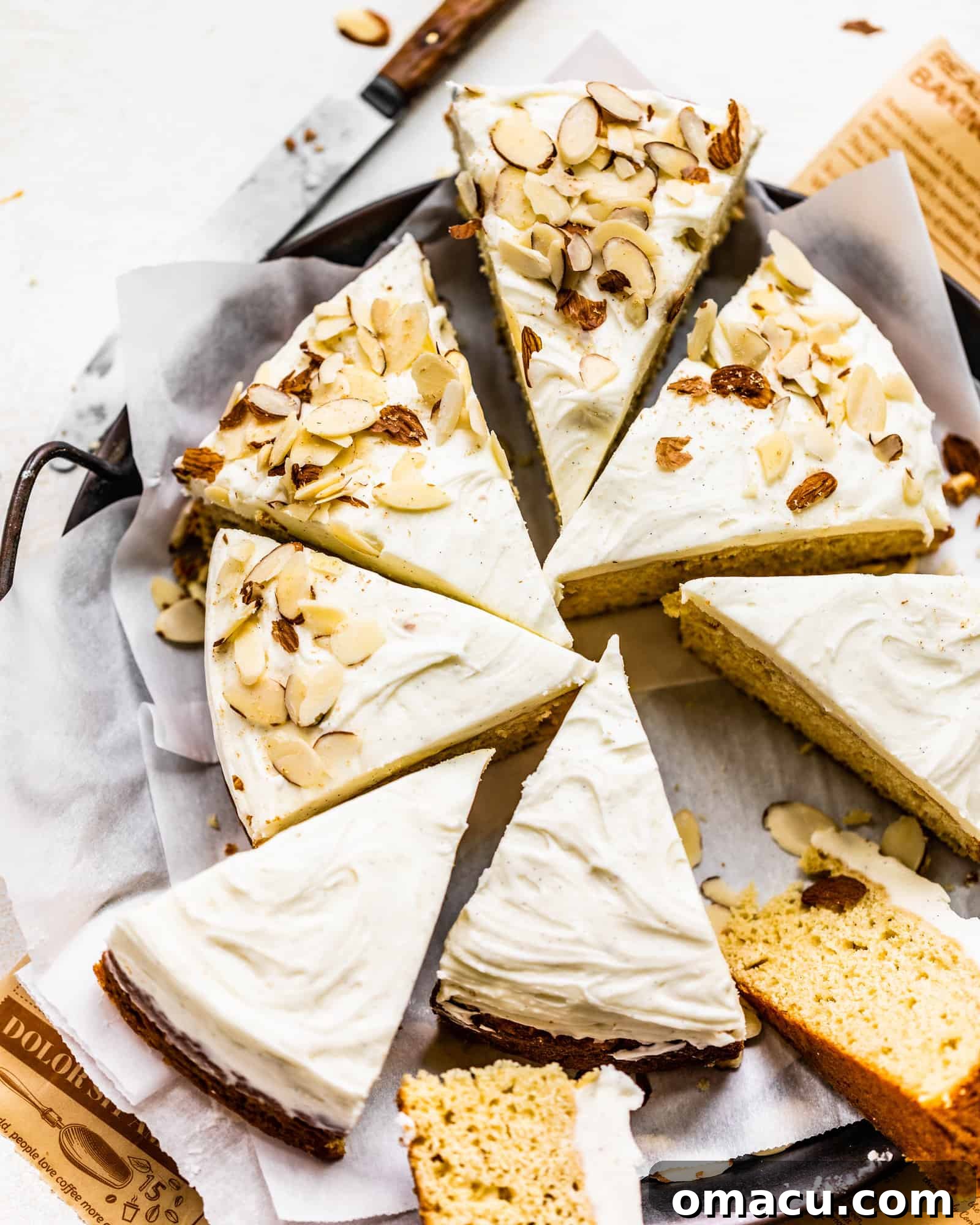
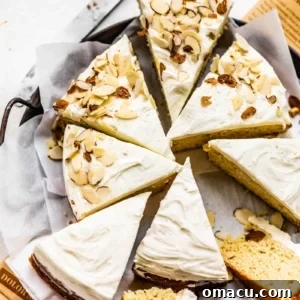
Prepare to be enchanted by this exquisitely light yet profoundly flavorful almond cake, crowned with a cloud of creamy, ethereal whipped mascarpone frosting. This recipe isn’t just about baking a cake; it’s about creating a moment of pure culinary delight. Crafted to be effortlessly simple, requiring just one bowl and no fussy stand mixer, it’s the perfect anytime dessert that promises to impress with minimal fuss. Its rich, buttery essence and fragrant almond notes make it an irresistible treat for any occasion, from casual family gatherings to elegant celebrations.
If you find yourself captivated by the delicate allure of sweet and fragrant almond-flavored desserts, this recipe is tailor-made for you. The cake itself boasts an incredibly soft, moist, and luxurious texture, beautifully complemented by the mascarpone frosting – a sweet, light, and airy confection whipped to absolute perfection. Together, they create a harmonious balance of flavors and textures, resulting in a dessert that is not only stunning to behold but also remarkably easy to prepare and utterly delicious.
For those who love to explore similar delightful confections, be sure to also try our Pistachio Ricotta Cake and the luscious Mascarpone Cheesecake.
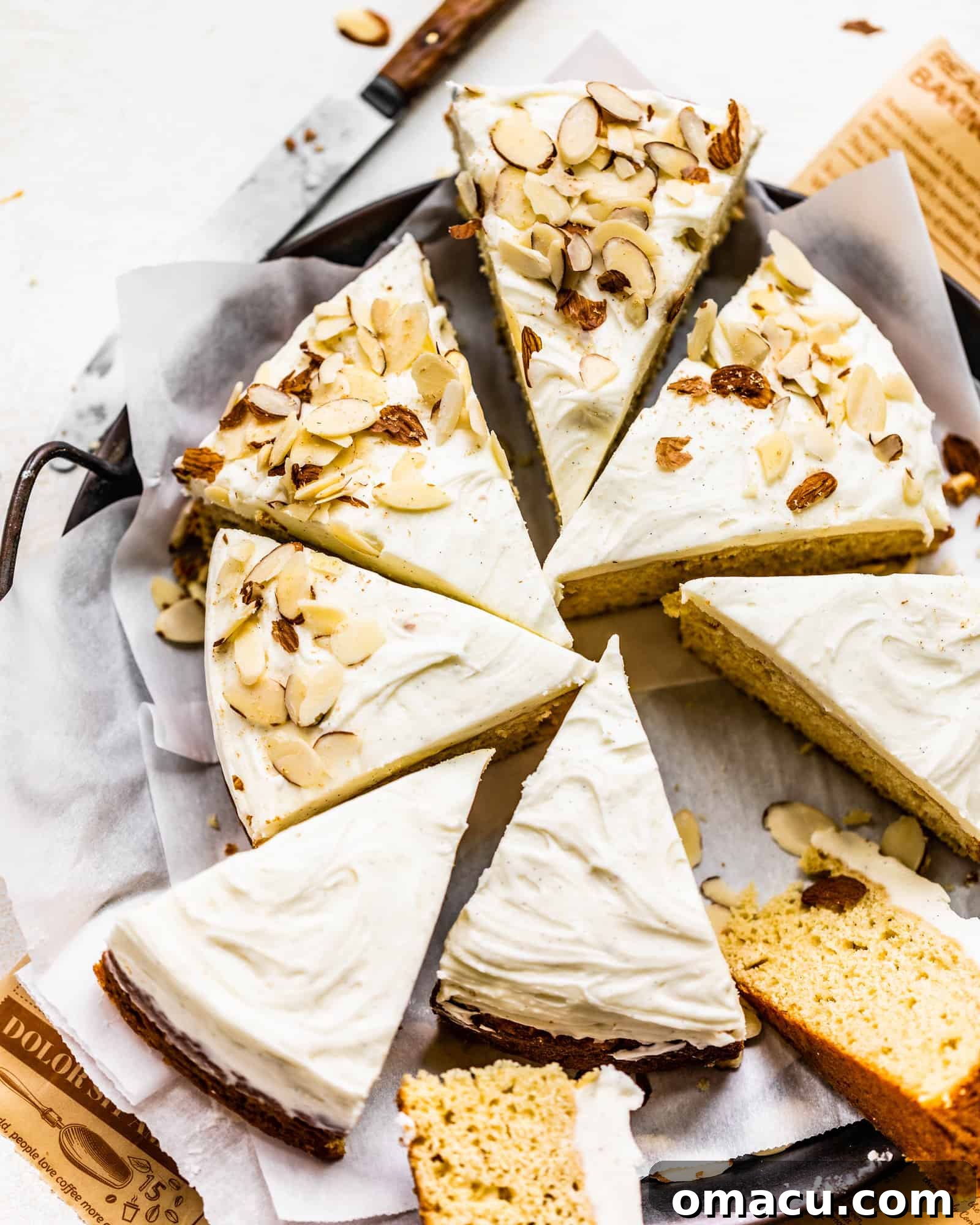
Table of Contents
- Why This Almond Cake Is a Must-Try
- Key Ingredients for the Perfect Almond Cake
- Recipe Substitutions & Dietary Adaptations
- How to Make This Irresistible Almond Cake
- Crafting the Dreamy Whipped Mascarpone Frosting
- Expert Tips for the Best Almond Cake
- Common Almond Cake Baking Troubleshooting
- Storing and Serving Your Almond Cake
- More Delightful Cake Recipes to Explore!
- Almond Cake with Whipped Mascarpone Frosting Recipe
Why This Almond Cake Is a Must-Try
Beyond its simple preparation, this almond cake stands out for several reasons. It masterfully balances the rich, nutty notes of almond with a tender, moist crumb that practically melts in your mouth. The secret lies in the harmonious combination of key ingredients and precise baking techniques, ensuring a cake that is never dry or dense. Topped with our signature whipped mascarpone frosting, it transforms into a dessert that feels both gourmet and comforting. Whether you’re a seasoned baker or new to the kitchen, this recipe is designed for success, delivering a consistently delicious result every time.
- Effortless Elegance: Achieves a sophisticated look and taste with minimal effort. The simple, clean flavors are universally appealing.
- One-Bowl Wonder: Simplifies cleanup and streamlines the baking process, making it perfect for busy schedules.
- Perfect Texture: Guarantees a soft, incredibly moist, and tender cake with every single slice, thanks to the addition of sour cream.
- Irresistible Flavor: A delightful blend of buttery richness and aromatic almond, profoundly enhanced by the sweet and tangy notes of creamy mascarpone.
- Versatile Dessert: Ideal for special occasions, elegant afternoon tea, a comforting weeknight treat, or simply as a stunning centerpiece for any gathering.
Key Ingredients for the Perfect Almond Cake
Every great cake starts with quality ingredients, and understanding their individual role is key to baking success and achieving that perfect tender crumb. Here’s a closer look at the stars of our almond cake:
- All-purpose flour – This forms the fundamental structure of our cake. It’s crucial to measure flour accurately by spooning it into your measuring cup and leveling it off with a straight edge, rather than scooping directly from the bag. Scooping compacts the flour, resulting in an excess amount that can lead to a dry, dense cake.
- Baking Powder and Baking Soda – These are the dynamic duo of leavening agents in this recipe. Baking powder is a double-acting leavener, reacting first with moisture and then again with heat, providing initial lift and sustained rise. Baking soda, on the other hand, requires an acidic component (like the sour cream in our recipe) to activate, producing carbon dioxide gas that helps the cake rise and contributes to its tender, open crumb.
- Brown Sugar and Granulated Sugar – The thoughtful combination of both sugars is pivotal for both flavor and moisture. Granulated sugar provides straightforward sweetness and aids in the beautiful browning of the cake’s crust. Brown sugar, with its molasses content, adds a deeper, more complex caramel-like flavor and, crucially, contributes significantly to the cake’s exceptional moistness and soft texture.
- Eggs – Serving as both a binding agent and a source of richness, eggs are indispensable. They help hold all the ingredients together, preventing the cake from crumbling. When beaten, eggs also incorporate air into the batter, which adds to the cake’s overall structure and lightness. The fat in the egg yolks contributes to the cake’s moisture and luxurious flavor. Always use room temperature eggs, as they emulsify more effectively with other ingredients, creating a smoother, more uniform batter.
- Almond Extract, Vanilla Extract, and Sliced Almonds – These ingredients are the very heart and soul of our almond cake’s identity. High-quality almond extract delivers that distinctive, sweet, and intensely aromatic almond flavor that defines this dessert. A touch of vanilla extract is added to round out the flavor profile, providing warmth and complexity that complements the almond beautifully. Sliced almonds are both incorporated into the batter for subtle texture and sprinkled generously on top for a beautiful, golden-brown finish and a delightful nutty crunch.
- Unsalted Butter and Sour Cream – These dairy components are absolutely vital for adding an incredible amount of moisture, tenderness, and rich flavor to the cake. Using unsalted butter allows you precise control over the overall salt content of your recipe. Both butter and sour cream must be at room temperature; this ensures they cream together smoothly with the sugars and emulsify properly with the other ingredients, creating a homogeneous and well-hydrated batter. Sour cream, with its slight tang, not only activates the baking soda but also contributes significantly to the cake’s incredibly moist and tender crumb, making it truly irresistible.
Recipe Substitutions & Dietary Adaptations
This almond cake recipe is wonderfully adaptable, making it possible to cater to various dietary needs or simply to work with what you have on hand. Don’t be afraid to experiment!
- To make this almond cake gluten-free, you can easily swap out the all-purpose flour for a high-quality 1-to-1 gluten-free baking flour blend. We highly recommend using a reputable brand like Bob’s Red Mill Gluten-Free 1-to-1 Baking Flour, as these blends are specifically formulated to mimic the texture and performance of traditional wheat flour in baking, ensuring a tender and delicious gluten-free result.
- For a dairy-free cake, successful substitutions are readily available. Replace the regular sour cream with a vegan sour cream alternative, and use a high-quality vegan butter (stick form is generally best for baking consistency) in place of the unsalted butter. For a dairy-free frosting, substitute mascarpone with a good quality vegan cream cheese alternative. For the heavy cream, use full-fat canned coconut cream that has been chilled overnight, scooping out only the thick cream from the top. Remember that all components, especially the vegan butter and cream cheese, should be at room temperature as specified in the original recipe to ensure proper emulsification.
- To make this recipe entirely vegan, follow all the instructions for making it dairy-free (as outlined above). Additionally, you will need to replace the two large eggs with two flax eggs. To prepare, simply mix 2 tablespoons of ground flaxseed meal with 6 tablespoons of water and let the mixture sit for 5-10 minutes until it thickens to a gel-like consistency. While the texture of the vegan cake might be slightly denser than the original, it will still yield a wonderfully flavorful and satisfying dessert.
- Nut Variations: While the recipe celebrates almonds, feel free to experiment with other nuts if you desire a different flavor profile. Finely ground pistachios, walnuts, or hazelnuts can be used in place of some of the almond flour (if using) or added alongside the sliced almonds. Just ensure they are finely ground to avoid a grainy texture. Remember to adjust the extract accordingly if you’re leaning into a new nut flavor (e.g., pistachio extract for a pistachio cake).
- Flavor Enhancements: To add another layer of aromatic complexity, consider grating in the zest of one lemon or orange with the wet ingredients. A pinch of ground cardamom or a dash of amaretto liqueur can also beautifully complement the almond flavor, elevating the cake to an even more gourmet experience.
How to Make This Irresistible Almond Cake
Baking this delightful almond cake is a straightforward process, designed for ease without compromising on taste or texture. Follow these detailed steps for a perfect, moist, and flavorful result every time:
- Prepare Your Pan and Oven: Begin by preheating your oven to 350°F (175°C). This ensures the oven is at a consistent temperature when the cake enters, promoting an even rise. Lightly grease and flour a 9-inch springform pan thoroughly. For extra assurance against sticking, you can also line the bottom of the pan with a circle of parchment paper. This preparation step is crucial for easy release of the delicate cake after baking.
- Creaming Method Mastery: In a large mixing bowl, combine the softened, room temperature unsalted butter with both the brown sugar and granulated sugar. Using a hand mixer (or a stand mixer fitted with the paddle attachment), beat these ingredients together on medium-high speed. Continue to beat for a good 3-5 minutes until the mixture becomes visibly pale in color, incredibly light, and fluffy. This creaming process is fundamental, as it incorporates air into the fat and sugar, which is vital for creating a tender and airy cake texture.
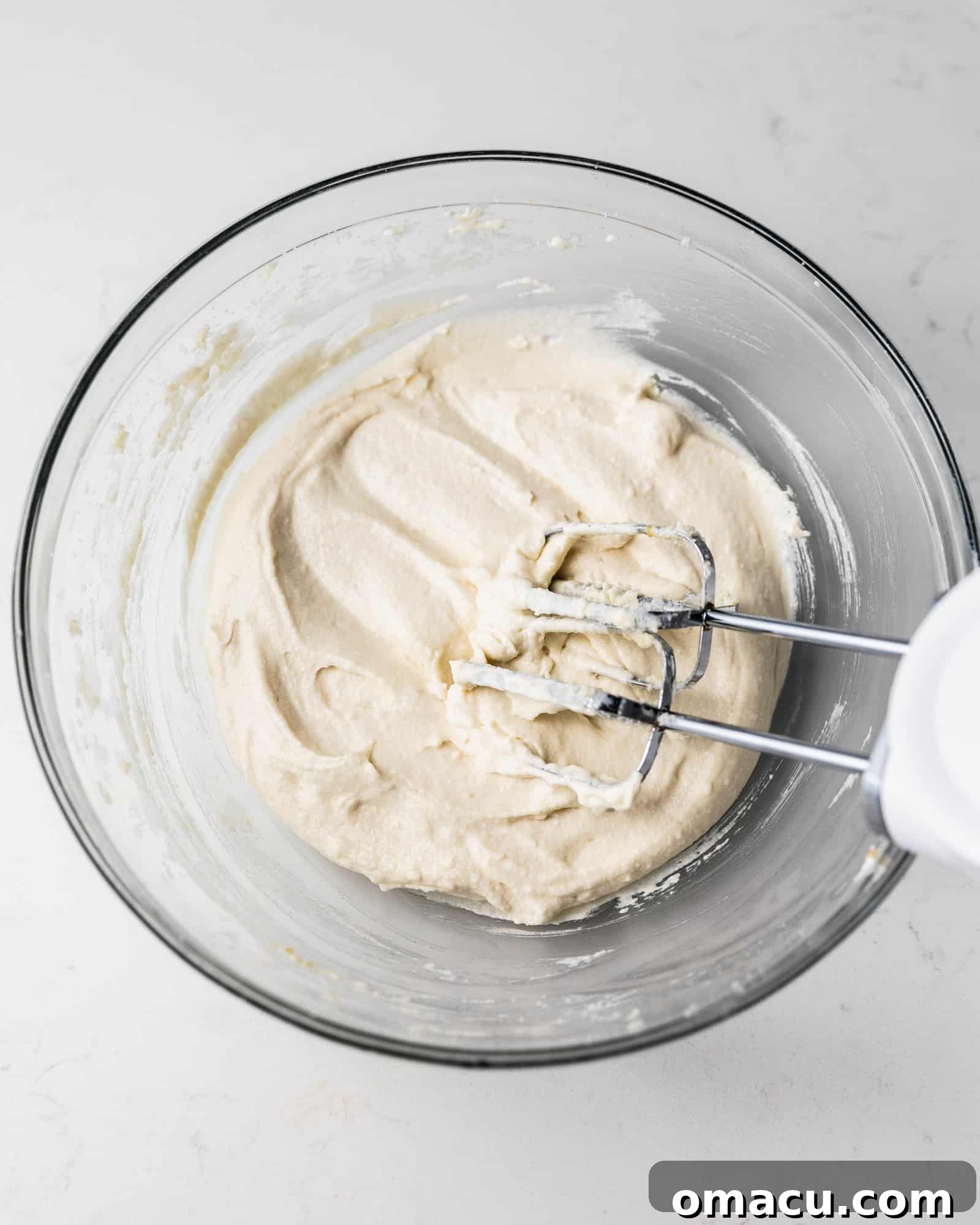
- Incorporate Wet Ingredients: Add the room temperature sour cream to the creamed butter and sugar mixture. Mix until it’s just fully incorporated, which should only take about 15-30 seconds. Next, crack in the large eggs, one at a time, ensuring each egg is fully blended into the batter before adding the next. This prevents the batter from curdling and helps maintain a smooth consistency. Finally, mix in the almond extract and vanilla extract. Continue mixing for another minute until the batter appears smooth, cohesive, and well-emulsified. Remember to scrape down the sides of the bowl with a spatula periodically to ensure all ingredients are thoroughly combined and no pockets of unmixed ingredients remain.
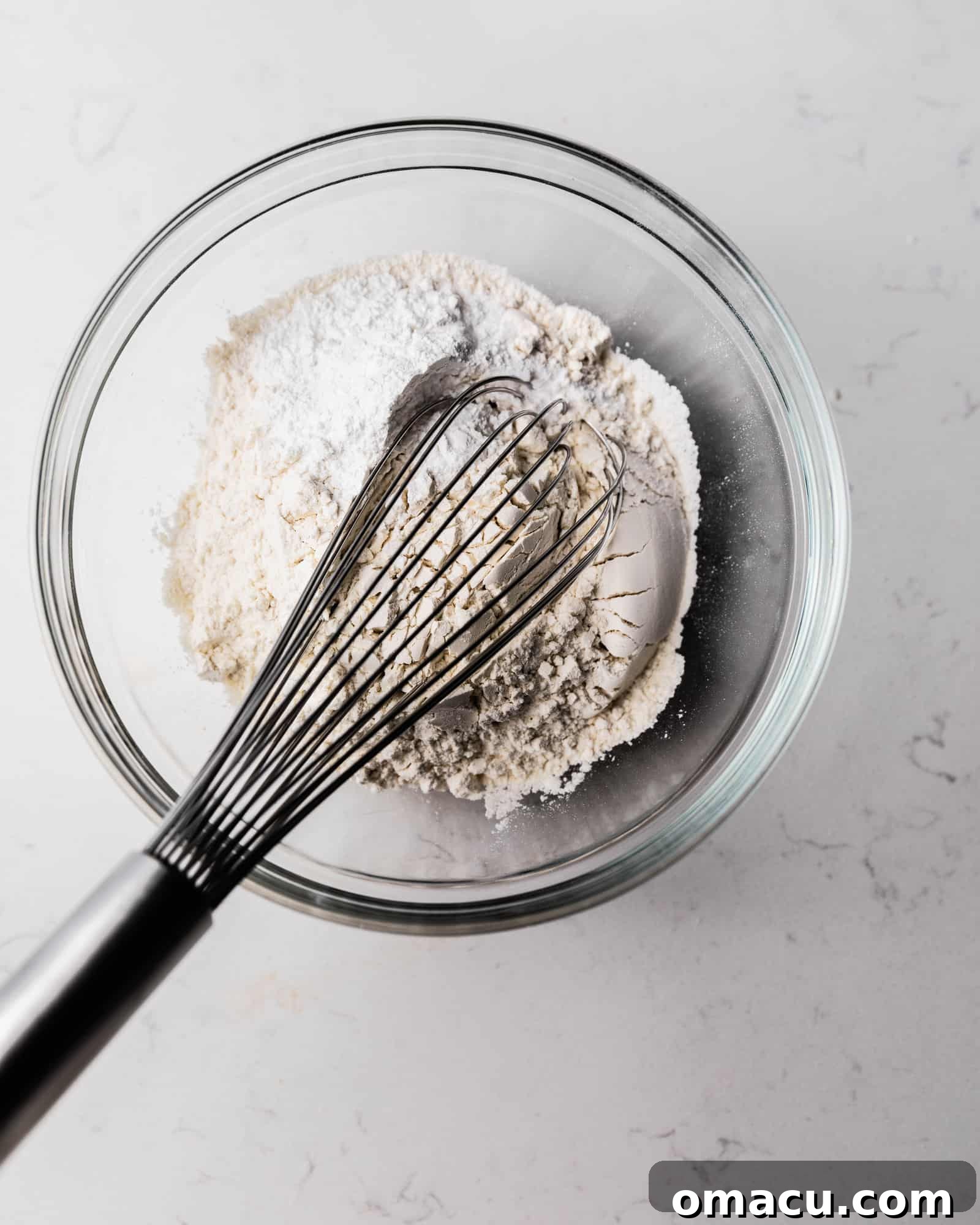
- Combine Dry Ingredients: In a separate, medium-sized bowl, whisk together the all-purpose flour, baking powder, baking soda, and kosher salt. It’s important to whisk these dry ingredients thoroughly to ensure that the leavening agents and salt are evenly distributed throughout the flour. This prevents lumps in your batter and guarantees uniform rising and seasoning throughout the cake.
- Fold in Dry Ingredients and Almonds: Gradually add the whisked dry ingredient mixture to the wet ingredients in three separate additions. After each addition, use a flat spatula or a large spoon to gently fold the batter until just combined. The key here is to mix minimally; stop folding as soon as you no longer see streaks of dry flour. Overmixing will develop the gluten in the flour too much, leading to a tough and rubbery cake. Once the flour is mostly incorporated, gently fold in 1/4 cup of the sliced almonds. Mix for only about 15 seconds more, just enough until no significant patches of dry flour remain and the almonds are evenly distributed.
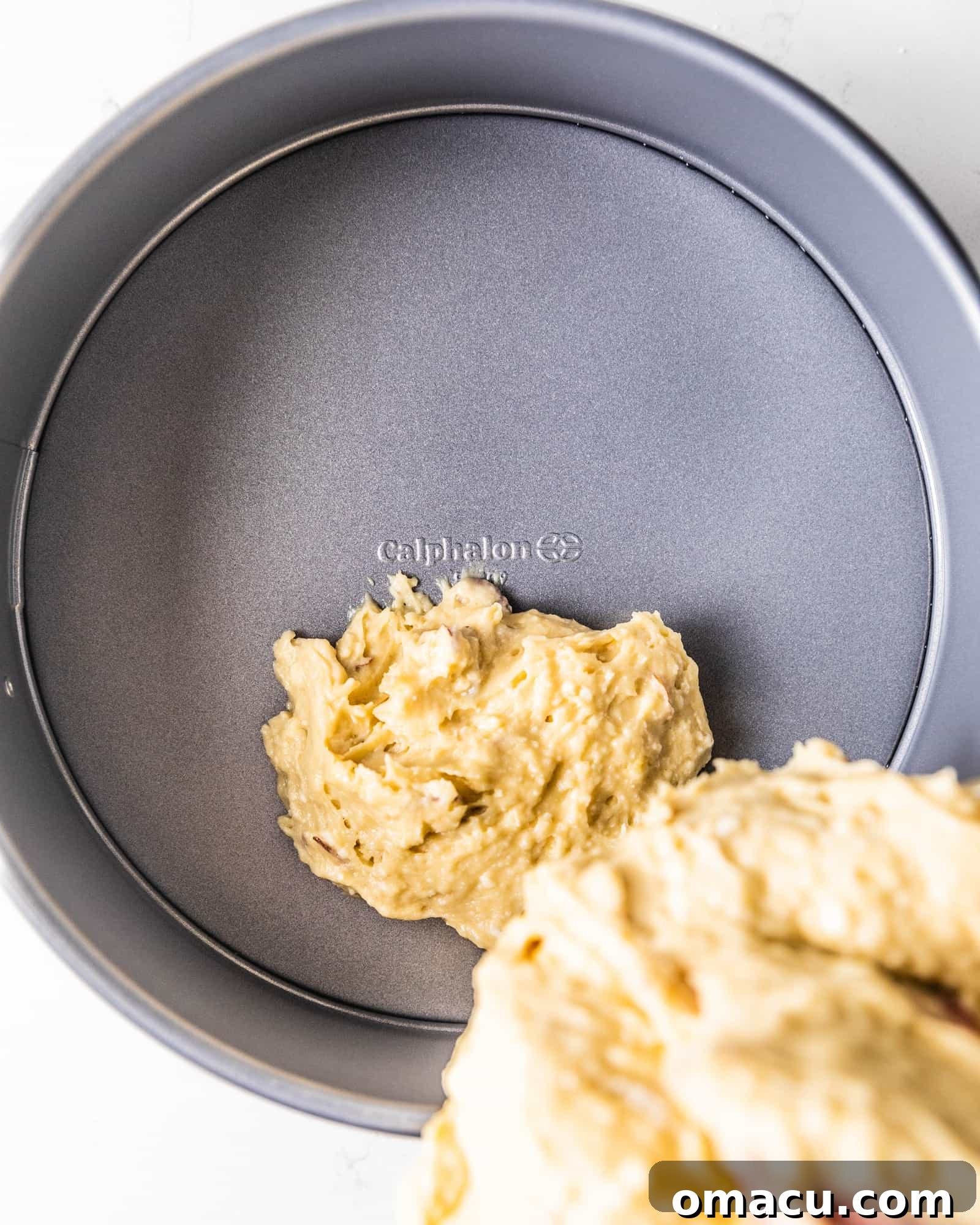
- Bake to Perfection: Pour the prepared almond cake batter evenly into your greased and floured 9-inch springform pan. Gently tap the pan on the counter a couple of times to release any large air bubbles. Place the pan in the preheated oven and bake for 35-40 minutes. The cake is done when a wooden toothpick or a thin skewer inserted into the very center comes out clean, or with just a few moist crumbs attached (not wet batter). Avoid opening the oven door too frequently during baking, especially in the first 25 minutes, as this can cause the cake to sink.
- Cool Completely: Once baked, carefully remove the cake from the oven. Let it cool in the springform pan on a wire rack for about 10-15 minutes. This allows the cake to set and firm up slightly. After this initial cooling, carefully release the springform collar and transfer the cake directly to the wire rack to cool completely. This step is absolutely critical before applying the frosting; if the cake is even slightly warm, the delicate mascarpone frosting will melt and slide off, ruining your beautiful presentation.
Crafting the Dreamy Whipped Mascarpone Frosting
The luscious whipped mascarpone frosting is the crowning glory of this almond cake, adding a layer of creamy indulgence that perfectly complements the cake’s delicate flavor and moist texture. Here’s how to whip up this ethereal topping:
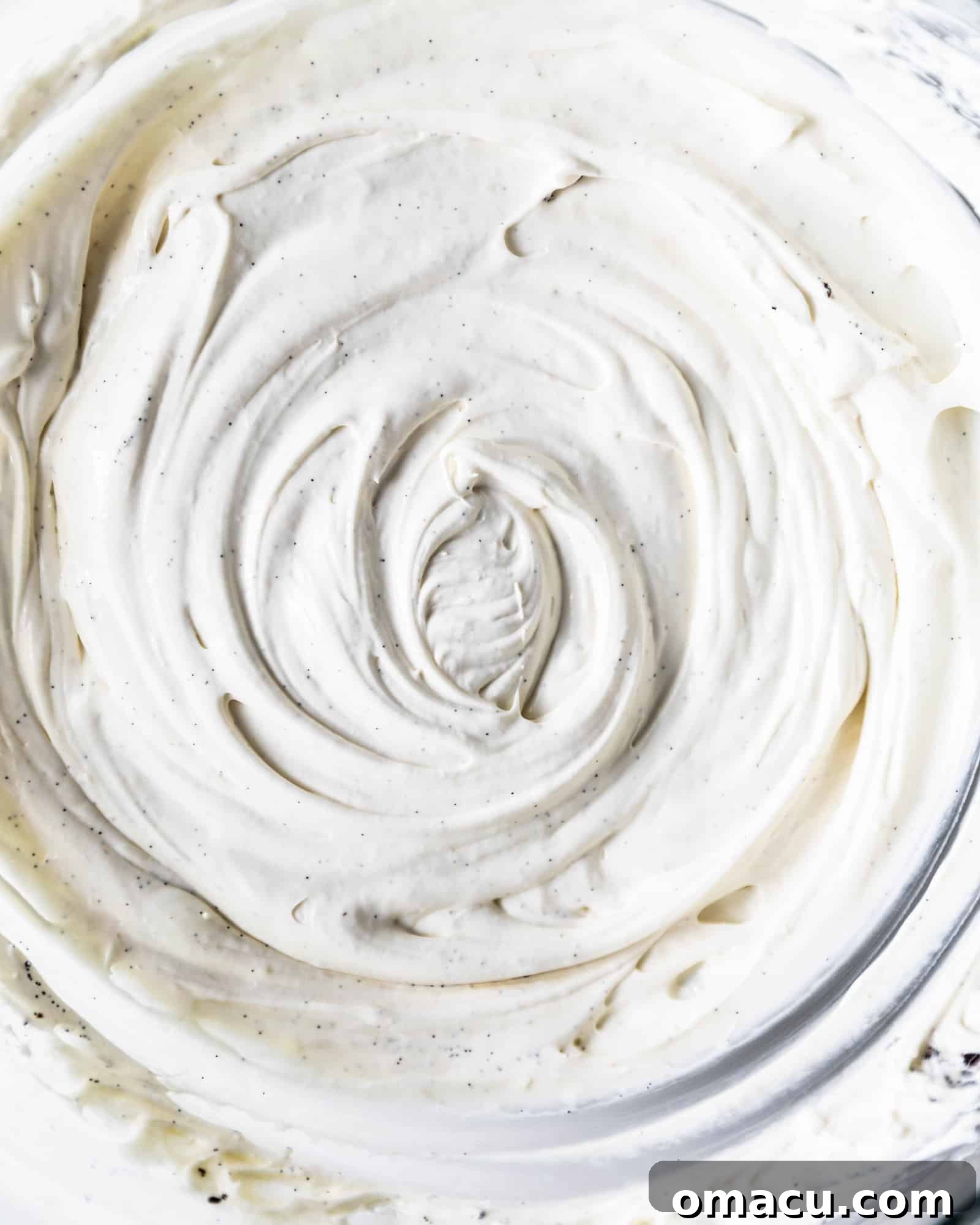
In a large mixing bowl, combine the room temperature mascarpone cheese, powdered sugar (also known as confectioners’ sugar), heavy cream, and the fragrant seeds meticulously scraped from one vanilla bean. If fresh vanilla beans are not readily available, a high-quality substitute is 2 teaspoons of pure vanilla extract. Using a hand mixer (or the whisk attachment of a stand mixer), begin mixing all these ingredients together on a low speed to ensure the powdered sugar doesn’t fly out of the bowl. Once combined, gradually increase the speed to medium-high. Whip the mixture until it transforms into a thick, fluffy frosting that holds soft peaks. It’s crucial to exercise caution here: mascarpone can curdle if beaten too vigorously or for an extended period. Stop mixing as soon as the desired consistency is achieved. If using a stand mixer, make sure to pause and scrape down the sides of the bowl periodically to ensure even whipping and a uniformly smooth frosting.
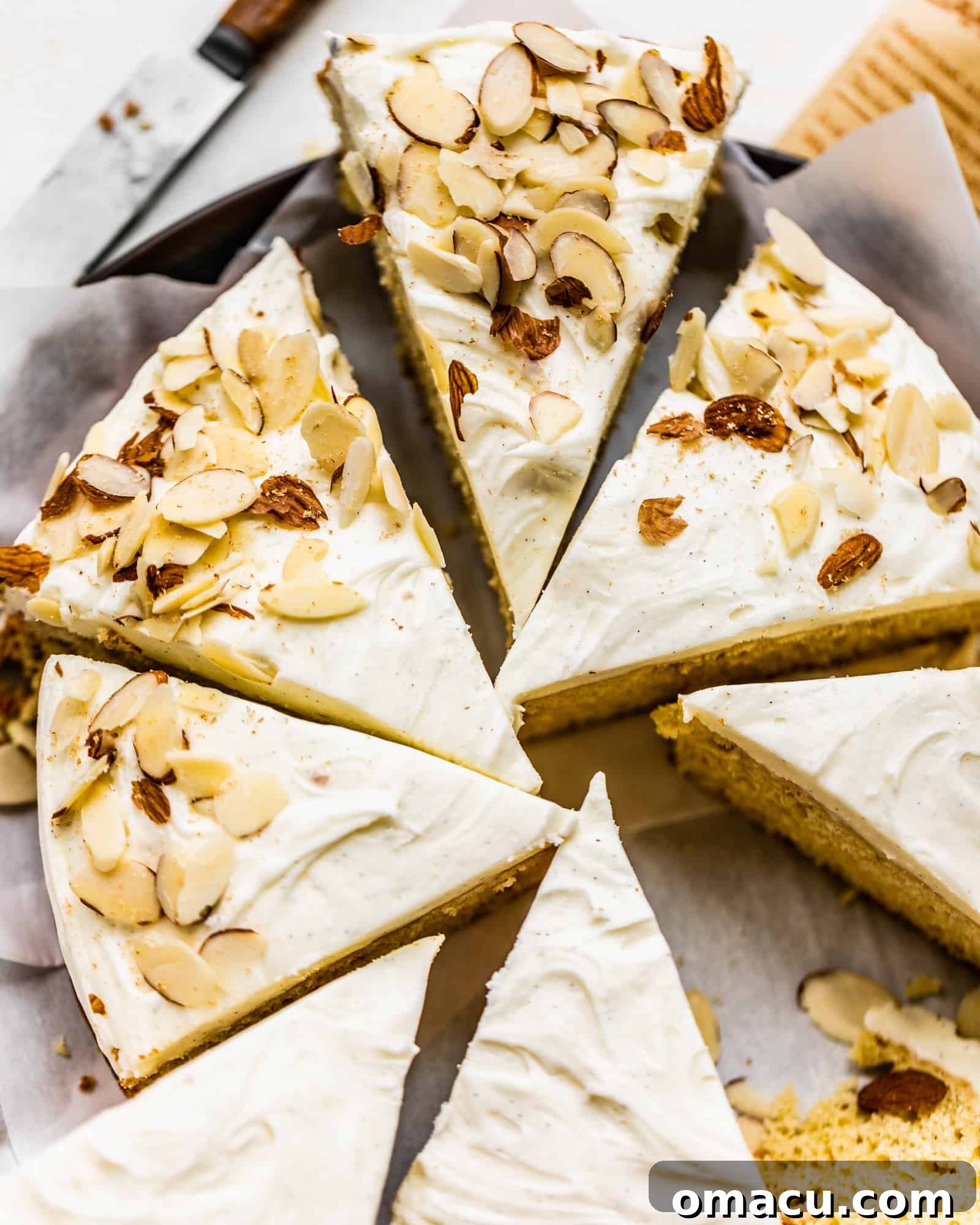
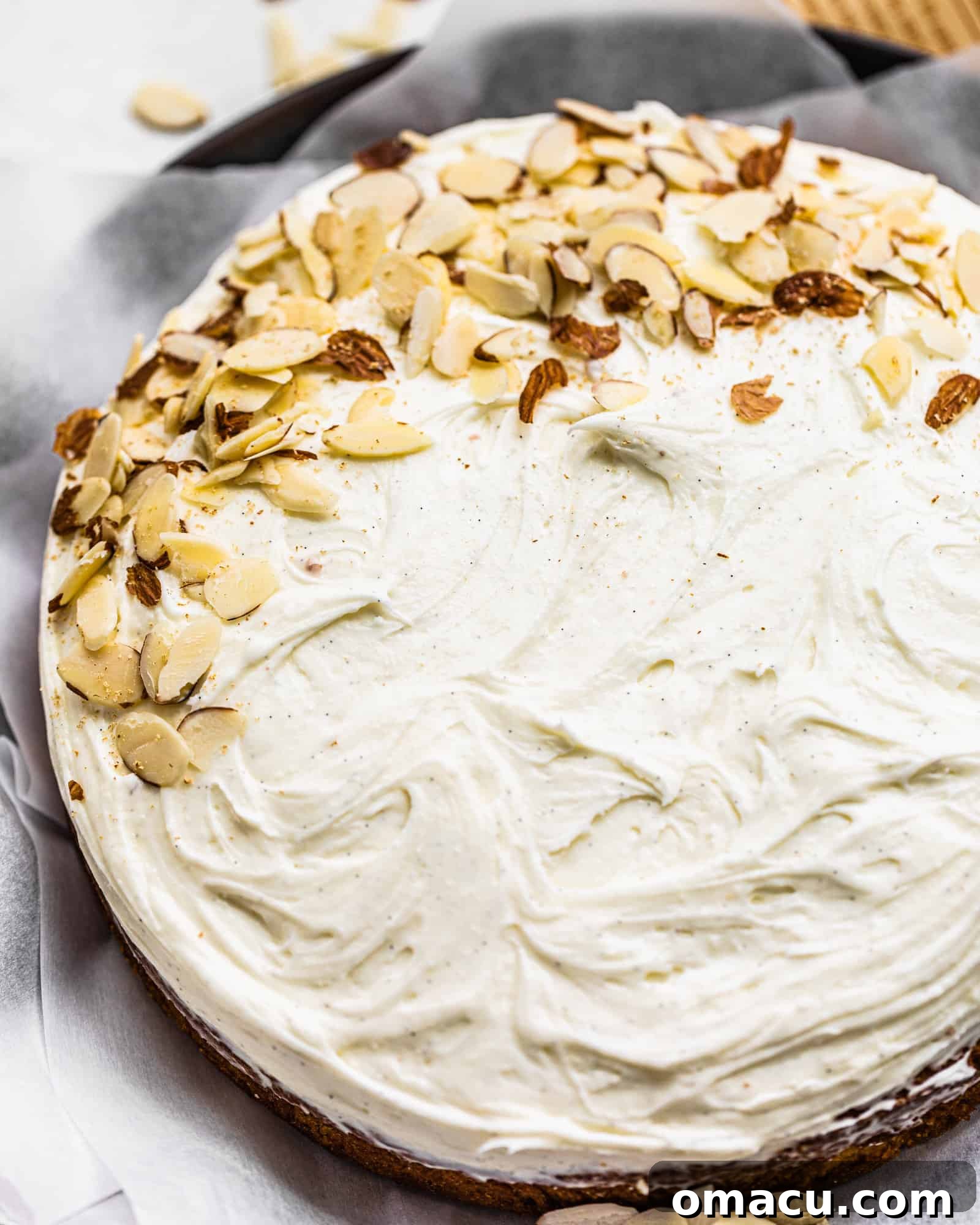
Once your delectable frosting is prepared, immediately place the bowl, covered, into the refrigerator to chill and stabilize for at least 30 minutes. This chilling period is essential; it allows the frosting to firm up, making it much easier to spread smoothly and ensuring it maintains its elegant shape on the cake. After your almond cake has cooled completely (and we mean COMPLETELY), retrieve the chilled frosting and generously spread it over the top of the cake. For an exquisite finish and an added layer of texture, garnish your frosted masterpiece with the remaining 1/4 cup of sliced almonds.
Expert Tips for the Best Almond Cake
Achieving a bakery-worthy almond cake is all about paying attention to a few key details and understanding the science behind baking. Here are some expert tips to ensure your cake turns out perfectly moist, flavorful, and beautifully frosted every single time:
- Ensure Your Cake is Completely Cool: This is arguably the most critical tip for any frosted cake. Before you even think about applying that delicious mascarpone layer, your almond cake absolutely must be cooled down to room temperature. If the cake is still even slightly warm, the delicate, dairy-rich mascarpone frosting will melt instantly, slide right off the cake, and create a messy situation, ruining both the presentation and the desired creamy texture. Patience is a true virtue in this step.
- Do Not Overmix Your Batter: Overmixing is the arch-nemesis of a tender cake. Once you add the dry ingredients to the wet, mix only until the flour streaks have just disappeared – this usually takes a quick 15-30 seconds of gentle folding. Overworking the gluten in the flour develops it too much, leading to a tough, chewy, and dry cake instead of the soft, moist, and airy crumb we’re aiming for.
- Measure Your Flour Properly: Accuracy in measuring flour is vital for cake consistency. Avoid the common mistake of scooping flour directly from the bag with your measuring cup, as this compacts the flour, resulting in a significantly larger amount than needed. Too much flour will lead to a dry, dense, and heavy cake. Instead, use the “spoon and level” method: lightly spoon the flour into your measuring cup until it’s overflowing, then level it off with the flat back of a knife or straight edge. This method ensures you get the correct amount and contributes to a perfectly fluffy and tender cake. For more detailed guidance, consult guides on how to measure flour correctly.
- Test the Cake’s Doneness Accurately: To confirm your cake is perfectly baked through without being overdone, insert a wooden toothpick or a thin skewer into the very center of the cake. If it comes out clean or with only a few moist crumbs attached (but no wet batter), the cake is ready. If there’s still wet batter, return the cake to the oven for another 5-7 minutes and test again. This prevents both underbaked stickiness and overbaked dryness.
- Chill Your Mascarpone Frosting: After preparing your whipped mascarpone frosting, it is highly beneficial to place it in the refrigerator for at least 30 minutes before spreading it on the cake. This chilling period allows the frosting to stabilize and firm up slightly, making it much easier to spread smoothly and ensuring it holds its beautiful shape on top of the cake, especially in warmer environments.
- Room Temperature Ingredients Are Key: This advice applies to both the cake batter and the frosting. For the cake, butter, eggs, and sour cream should all be at room temperature. This ensures they emulsify better, creating a smoother, more uniform batter that traps air more efficiently, leading to a lighter cake. For the frosting, room temperature mascarpone blends more easily and smoothly with other ingredients, creating a lump-free, creamy consistency. Plan ahead by taking these ingredients out of the refrigerator an hour or two before you begin your baking process.
- Don’t Skip the Parchment Paper: Even if you religiously grease and flour your springform pan, lining the bottom with a circle of parchment paper provides an invaluable extra layer of non-stick insurance. This makes it incredibly easy to release the cake from the pan, especially with delicate cakes like this almond one, preventing any frustrating sticking or accidental breakage during transfer.
- Toasting Almonds for Garnish: If you’re using sliced almonds for topping, consider lightly toasting them in a dry pan over medium-low heat for a few minutes until fragrant and golden. This intensifies their nutty flavor and adds an appealing crunch, elevating the final presentation and taste of your cake.
Common Almond Cake Baking Troubleshooting
Even experienced bakers encounter hiccups from time to time. Here are some common problems you might face when making this almond cake and their straightforward solutions:
- Cake is Dry or Crumbly:
- Culprit: This is most often due to overmixing the batter, which develops the gluten too much, or improper flour measurement (too much flour), or simply overbaking the cake.
- Solution: Ensure you measure your flour accurately using the spoon and level method. Mix the batter only until the ingredients are just combined, and no dry streaks remain. Always watch your baking time closely and test for doneness promptly, removing the cake from the oven as soon as it passes the toothpick test.
- Cake is Dense or Sunk in the Middle:
- Culprit: Several factors can contribute to this, including insufficient leavening (your baking powder or soda might be old), ingredients not being at room temperature (which affects emulsification and rise), or opening the oven door too early during baking, causing a sudden temperature drop.
- Solution: Always use fresh leavening agents; check their expiration dates. Make sure all your cold ingredients (butter, eggs, sour cream) are at proper room temperature. Avoid opening the oven door for at least the first two-thirds of the baking time.
- Mascarpone Frosting is Too Runny or Curdled:
- Culprit: This typically happens from overmixing the mascarpone (it can break easily), using mascarpone or heavy cream that is too warm, or not chilling the frosting before use.
- Solution: Use very cold heavy cream, but ensure your mascarpone is at room temperature for optimal whipping. Whip only until stiff peaks form and then stop immediately. Chill the frosting in the refrigerator for at least 30 minutes before attempting to spread it on the cake. If it curdles, sometimes adding a tablespoon of cold heavy cream and gently whisking by hand can help bring it back together, but prevention is best.
- Cake Sticking to the Pan:
- Culprit: This is usually a result of insufficient greasing and flouring of the pan, or neglecting to use parchment paper.
- Solution: Always generously grease and flour every surface of your springform pan. For extra security, especially with a cake that has a delicate crumb like this almond cake, make it a habit to line the bottom of your springform pan with a circle of parchment paper.
Storing and Serving Your Almond Cake
To ensure your delightful almond cake remains fresh and delicious for as long as possible, and to enjoy it at its absolute best, proper storage and serving techniques are essential, especially with its delicate mascarpone frosting:
- Storage: Given that the whipped mascarpone frosting is dairy-based, it is crucial to store the frosted almond cake in an airtight container in the refrigerator. It will keep beautifully for up to 3-4 days. This prevents the cake from drying out and keeps the frosting fresh and safe to eat.
- Serving: For optimal flavor and texture, we highly recommend removing the cake from the refrigerator about 30 minutes to an hour before serving. Allowing it to come closer to room temperature will soften the cake and the frosting slightly, significantly enhancing its moistness and allowing the nuanced almond and vanilla flavors to truly shine.
- Freezing: You can certainly freeze the unfrosted almond cake for future enjoyment. Once the cake has cooled completely, wrap it tightly in several layers of plastic wrap, and then an additional layer of aluminum foil. It can be frozen for up to 2-3 months. To thaw, simply transfer it to the refrigerator overnight before frosting and serving. While a frosted cake can also be frozen, be aware that the texture of the delicate mascarpone frosting may change slightly upon thawing.
- Pairing Suggestions: This elegant almond cake pairs beautifully with a wide array of beverages. Consider serving it with a freshly brewed cup of coffee, a delicate black or herbal tea, or for a more festive touch, a glass of sparkling wine or prosecco. For an extra treat, a scoop of vanilla bean ice cream or a dollop of fresh berries can elevate the dessert even further.
More Delightful Cake Recipes to Explore!
If you’ve thoroughly enjoyed baking and savoring this almond cake, we encourage you to broaden your baking horizons with these other fantastic and equally delicious cake recipes from our collection:
- Spiced Pear and Almond Cake
- Brown Butter Cinnamon Streusel Coffee Cake
- Strawberries and Cream Chocolate Cake
- Yellow Cake with Chocolate Buttercream
- Lemon Almond Pudding Cake
- Strawberry and Almond Buttermilk Cake
Want more delicious and beautiful recipes? Subscribe to our newsletter to receive the latest seasonal creations as soon as they’re released!
If you make this recipe, please leave a star rating on the recipe card and comment below! You can also tag @BritneyBreaksBread on Instagram and hashtag #britneybreaksbread so we can celebrate your beautiful creations!
Almond Cake with Whipped Mascarpone Frosting
Britney
15 mins
35 mins
8
Print Recipe
A delightfully light almond flavored cake full of buttery rich flavor, topped with a creamy whipped mascarpone frosting.
Equipment
-
9 inch springform pan
-
Mixing Bowls
-
Stand Mixer optional
-
Hand Mixer if not using a stand mixer
Ingredients
- 1/2 cup unsalted butter, room temperature
- 1/2 cup sour cream, room temperature
- 1/2 cup brown sugar
- 1/2 cup granulated sugar
- 2 large eggs, room temperature
- 2 tsps almond extract
- 1 tsp vanilla extract
- 2 1/2 cups all purpose flour
- 1 tsp baking powder
- 1/4 tsp baking soda
- 1/2 tsp kosher salt
- 1/2 cup sliced almonds (divided for batter and topping)
Whipped Mascarpone Frosting
- 8 oz mascarpone, room temperature
- 3 cups powdered sugar
- 2 tbsps heavy cream
- 1 vanilla bean, seeds scraped, or 2 tsps vanilla extract
Instructions
-
Preheat oven to 350 degrees F (175°C). Prepare a 9-inch springform pan by lightly greasing and flouring it, or lining the bottom with parchment paper for easy release.
-
In a large bowl, using a hand mixer (or in the bowl of a stand mixer with the paddle attachment), combine the room temperature unsalted butter, brown sugar, and granulated sugar. Beat together on medium-high speed for 3-5 minutes until the butter mixture becomes pale and fluffy.
-
Add the room temperature sour cream and mix until fully incorporated (about 15-30 seconds). Scrape down the sides of the bowl. Then, add the eggs one at a time, mixing well after each addition. Stir in the almond extract and vanilla extract. Continue mixing for another minute until the batter is smooth and well combined.
-
In a separate medium bowl, whisk together the all-purpose flour, baking powder, baking soda, and kosher salt to ensure even distribution. Gradually add the dry ingredients to the wet ingredients in three additions, folding gently with a flat spatula or spoon until just combined. Be careful not to overmix. Once most of the flour is incorporated, gently fold in 1/4 cup of the sliced almonds for about 15 seconds, until no dry flour patches remain.
-
Pour the almond cake batter evenly into the prepared springform pan. Bake for 35-40 minutes, or until a wooden toothpick inserted into the center comes out clean or with only a few moist crumbs.
-
While the cake is baking, prepare the whipped mascarpone frosting. In a large mixing bowl, using a hand mixer (or a stand mixer with the whisk attachment), combine the room temperature mascarpone cheese, powdered sugar, heavy cream, and the scraped seeds from one vanilla bean (or 2 teaspoons of vanilla extract). Mix on low speed to combine, then gradually increase to high speed and whip until a thick, fluffy frosting forms and holds soft peaks. Do not overmix. Place the finished frosting in the refrigerator to chill and stabilize.
-
Once the cake has cooled completely on a wire rack, apply the chilled whipped mascarpone frosting evenly over the top of the cake. Garnish with the remaining 1/4 cup of sliced almonds for an elegant finish. Slice and serve this delightful almond cake!
Nutrition
Calories: 797kcal, Carbohydrates: 106g, Protein: 11g, Fat: 37g, Saturated Fat: 19g, Polyunsaturated Fat: 3g, Monounsaturated Fat: 9g, Trans Fat: 1g, Cholesterol: 118mg, Sodium: 279mg, Potassium: 214mg, Fiber: 3g, Sugar: 71g, Vitamin A: 964IU, Vitamin C: 1mg, Calcium: 154mg, Iron: 3mg
Nutrition information is automatically calculated and should only be used as an approximation.
Tried this recipe?
Mention @BritneyBreaksBread or tag #BritneyBreaksBread!